
Why Your Air Compressor Won’t Shut Off & How to Fix It Fast
This post contains affiliate links. As an Amazon Associate, we earn from qualifying purchases.
An air compressor won’t shut off because the pressure switch is stuck closed, a significant air leak prevents the tank from reaching cut-out pressure, or the thermal overload protector has tripped and needs a reset. The fix is to first unplug the unit, bleed all air, then test the switch with a multimeter for continuity and inspect the entire system for leaks.
That diagnosis covers 95 percent of non-shutoff failures. The remaining five percent involve a failed unloader valve or a seized check valve, but you’ll know those by the specific sounds they make, a constant hiss or a motor that strains but never builds pressure.
What follows is a walkthrough of the three most common failures, how to tell them apart in under five minutes, and the one repair that almost always works. We’ll pull the specific pressure settings from Harbor Freight and Husky manuals so you know what numbers to expect, and outline the safety steps you cannot skip.
Key Takeaways
- Unplug the compressor and bleed the tank completely before touching anything. The pressure switch carries live voltage.
- A stuck pressure switch is the most common culprit. Test it with a multimeter; if it shows continuity when the tank is above the cut-out PSI, it’s failed.
- Large air leaks cause continuous running. Spray soapy water on all fittings, hoses, and the tank drain valve with the unit pressurized to find bubbles.
- Thermal overload protection will cut power if the motor overheats. For models like the Harbor Freight 3-gallon oil-free, the reset is to unplug for 15 minutes.
- If the pressure switch fails entirely, the safety valve will pop as a last resort. This is a critical warning to stop use immediately.
Why Won’t My Air Compressor Shut Off? (Diagnosis Steps)
Start with the obvious. Is the motor running non-stop, or does it cycle on and off rapidly without ever reaching a full stop? Continuous running points directly to the pressure switch or a massive leak. Rapid cycling suggests a smaller leak or a tool left partially open.
Your first move is always safety. Turn the power switch off and pull the plug from the wall. Then, open the drain valve or pull the ring on the safety valve to bleed all air from the tank. You cannot safely test electrical components with pressure in the system.
Before you start: The pressure switch carries 120V or 240V household current. Do not remove its cover until the unit is unplugged and depressurized. A shock from here is serious. Wear safety glasses when bleeding air; debris and condensation can spray out.
With the unit safe, follow this diagnostic tree. It’s based on the troubleshooting guide used by most OEM technicians.
| Symptom | Most Likely Cause | How to Confirm | Immediate Action |
|---|---|---|---|
| Motor runs, tank gauge rises slowly or not at all | Major air leak (drain valve, hose, fitting) | Listen for hissing. Spray soapy water on connections. | Find and seal leak. Replace damaged hose. |
| Motor runs, tank pressure rises to normal but motor continues | Stuck pressure switch | Tank at max PSI but switch clicks don’t stop motor. Test with multimeter. | Replace pressure switch. |
| Motor runs, gets very hot, shuts off then won’t restart | Thermal overload trip | Motor housing is hot to the touch. Common on small, oil-free compressors. | Unplug and let cool 15-30 mins. Check for ventilation blockage. |
| Motor cycles on/off every few seconds | Small air leak or failed check valve | Soap test for leaks. If none, listen for hiss from pump head after shutdown. | Fix leak. Replace check valve if internal. |
| Safety valve pops or leaks continuously | Pressure switch failure (cut-out too high or stuck) | Valve pops at or above tank’s max rated pressure (e.g., 200 PSI). | Stop use. Replace pressure switch and safety valve. |
The timeline matters. A compressor fighting a large leak might run for an hour before overheating. According to one OEM manual for a 10-gallon unit, if the system fails to reach shut-off pressure for 20 consecutive cycles (over an hour), the compressor will lock out and refuse to restart until the fault is cleared. That’s a built-in protection you’ve triggered.
Fixing a Stuck Pressure Switch
The pressure switch is a mechanical relay. It senses tank pressure via a small tube. At the pre-set “cut-out” pressure, a diaphragm inside moves, breaking the electrical circuit to the motor. When pressure drops to the “cut-in” point, the circuit closes and the motor starts again. A switch stuck in the “closed” position sends continuous power, so the motor never stops.
Where this goes sideways: Attempting to adjust the switch’s pressure range without knowing the factory settings. Over-tightening the adjustment nuts can strip the threads or damage the internal spring, making the switch unusable.
First, identify the switch. It’s a small, rectangular metal box with 1-4 electrical terminals, connected to the tank by a thin copper or plastic tube. The adjustment nuts are typically on top, one for cut-in, one for cut-out.
To test a suspected switch:
- Ensure the compressor is unplugged and depressurized.
- Remove the plastic or metal cover from the switch.
- Set a multimeter to continuity (the diode symbol).
- Place one probe on each of the two main motor terminal screws (not the ground).
- Have a helper plug in the unit and turn it on briefly. Do not touch the terminals. You should hear a beep (continuity) when the tank is empty, and the beep should stop when the tank reaches pressure. If the beep continues at full pressure, the switch contacts are fused.
Replacement is usually the best path. Universal pressure switches are available at hardware stores and online. You need to match the voltage (120V or 240V), the horsepower rating of your motor, and the port thread size. For a common home garage compressor, a 120V, 1.5 HP switch is standard.
When installing the new switch, note the wire positions with a photo before disconnecting the old one. Connect the thin pressure tube hand-tight, and use thread sealant on the port if it’s a metal-to-metal connection. Do not overtighten.
Tracking Down Air Leaks That Cause Running
If the pressure switch is working but the tank never reaches the cut-out point, you’re losing air faster than the pump can replace it. This forces the motor into a marathon it can’t win. The most common leak points are, in order: 1. The tank drain valve (left slightly open or worn). 2. Hose connections at the coupler or tool end. 3. The pressure switch itself (where the sensing tube connects). 4. The safety valve (a worn seal). 5. The check valve on the pump head (internal).
The Husky manual states condensate forms in the tank daily and should be drained every hour of use in humid conditions. A leaky drain valve left to drip is a direct path to a motor that never shuts off.
The soapy water test is definitive. Mix dish soap and water in a spray bottle. With the tank pressurized (but the motor off), spray the mixture over every fitting, connection, valve, and even the tank welds. Look for bubbles that grow and pop. Mark any leak with chalk or tape.
- Drain Valve Leak: Tighten it gently. If it still leaks, replace the valve. Consider an automatic drain valve for long-term maintenance.
- Hose/Coupler Leak: Tighten the fitting with a wrench. If the threads are damaged, replace the coupler or hose end.
- Safety Valve Leak: Pull the ring several times to reseat it. If it continues to weep, replace it immediately, it’s a critical safety device.
Fixing these leaks not only solves the shut-off problem but also saves your motor from early burnout and makes your shop air compressor more efficient.
Thermal Overload and Safety Resets
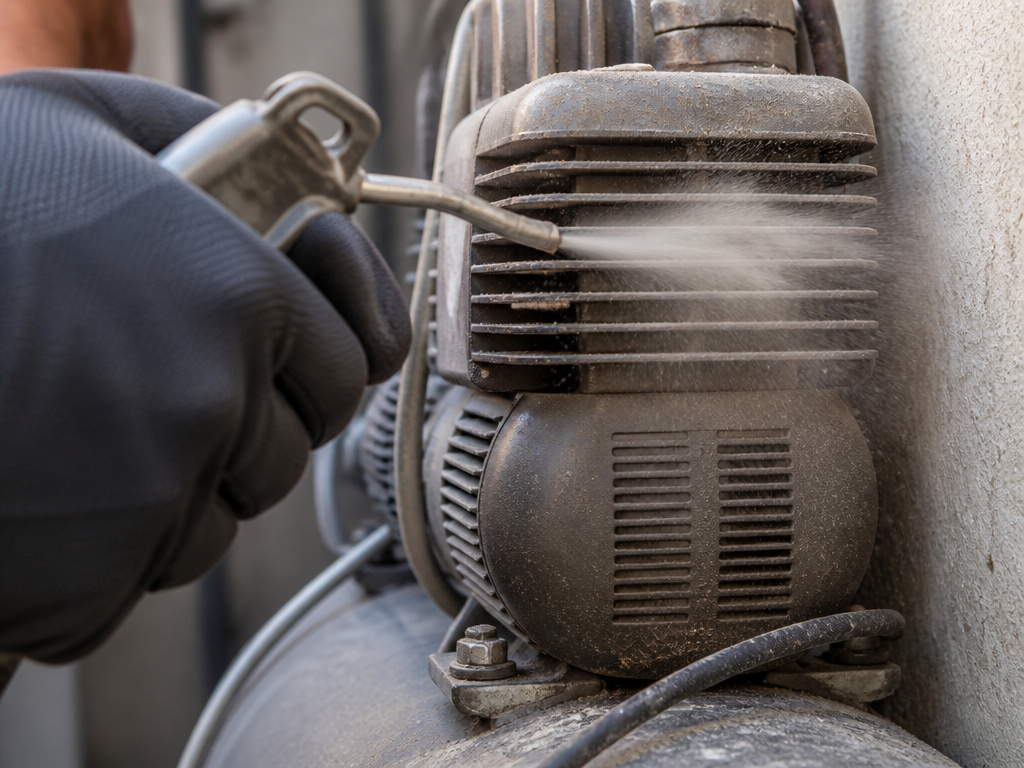
Smaller, oil-free compressors like the Harbor Freight 3-gallon model have a thermal overload protector inside the motor windings. If the motor temperature exceeds a safe limit, from continuous running, poor ventilation, or a low voltage supply, this device opens the circuit. The motor will stop suddenly, even if the pressure switch is calling for it to run.
The reset is passive. You must turn the unit off, unplug it, and wait for the motor to cool. The Harbor Freight manual specifies a 15-minute cooldown. Trying to restart it immediately will do nothing.
Common mistake: Placing the compressor in a closed cabinet or against a wall. These units need a clear 3-inch perimeter for airflow. Blocking the intake vents guarantees an overheated motor and a tripped overload.
If your compressor trips its overload regularly, check the environment. Is it covered in dust? Use compressed air to blow out the motor cooling fins and the pump head. Also, ensure you’re using a dedicated outlet and not a long, thin extension cord, which can cause voltage drop and increased amperage draw, generating more heat.
For larger, oil-lubricated compressors, overheating can still occur from low air compressor oil levels or a dirty air filter restricting intake. Both make the pump work harder.
The Role of the Safety Valve
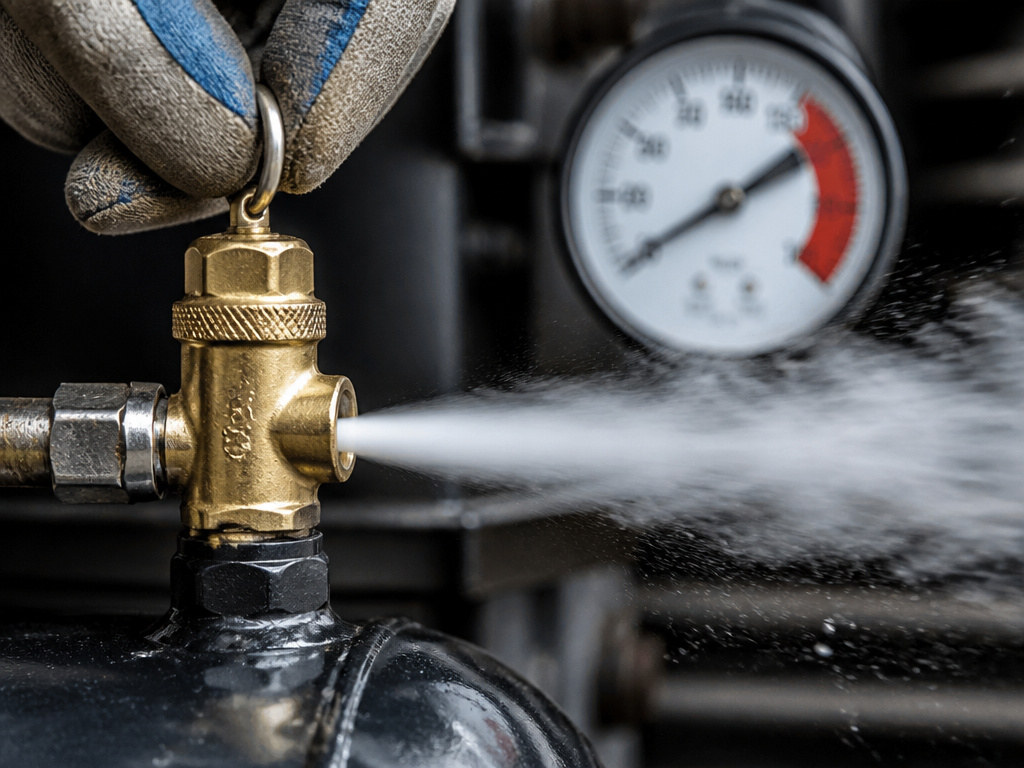
The safety valve is your last line of defense. If every other part of the proper shutdown procedure fails and the pressure switch doesn’t cut out, tank pressure will rise until it reaches the valve’s calibrated release point. The valve will pop open with a loud blast, venting air to prevent a tank rupture.
If your safety valve pops, your troubleshooting is over. The pressure switch has categorically failed. Do not continue to use the compressor. Replace both the pressure switch and the safety valve, as the valve’s seal may be compromised after a full-pressure event.
Testing the safety valve monthly is a good habit. With the tank pressurized, pull the ring briefly. You should hear a strong blast of air. If it’s stuck or only dribbles, replace it before your next project.
Frequently Asked Questions
Can a bad check valve cause an air compressor to run continuously?
Yes, but it typically causes rapid cycling, not continuous running. A failed check valve allows pressurized air from the tank to leak back into the pump head when the motor stops. This causes tank pressure to drop quickly, triggering the motor to restart almost immediately. You’ll hear a hiss from the pump area after shutdown.
What is the normal cut-out pressure for a home air compressor?
It varies by model. For a typical 20-30 gallon garage air compressor, cut-out is often between 150-175 PSI. For a small portable air compressor for tires, it may be 100-120 PSI. Always check the manual or the data plate on your tank. The Harbor Freight 27-gallon (model 56403) cuts out at 200 PSI.
Is it dangerous if my air compressor won’t shut off?
Yes. The immediate danger is motor burnout or a fire risk from overheating. The secondary danger is tank over-pressurization if the pressure switch fails and the safety valve also fails. This scenario is rare but represents a rupture hazard. Always address a non-shutting-off compressor immediately.
How do I know if my pressure switch is adjustable?
Look for two nuts or screws on top of the switch, often labeled “Range” and “Differential.” The larger “Range” nut sets the cut-out pressure. The smaller “Differential” nut sets the gap between cut-in and cut-out (usually 30-50 PSI). Not all switches are user-adjustable; some are sealed.
My compressor shuts off but won’t restart automatically. Is this the same problem?
No, that’s often the opposite. A compressor that won’t restart usually has a problem reaching the cut-in pressure due to a leak, or the pressure switch is stuck open. It can also be a failed start capacitor or a tripped thermal overload that hasn’t reset. Follow a troubleshooting guide for “won’t start” issues.
Before You Go
A compressor that runs without stopping is telling you something is wrong. Nine times out of ten, it’s a $30 pressure switch or a loose hose fitting. The fix is straightforward if you follow the safety sequence: unplug, bleed, test.
Invest the time in a proper diagnosis. Throwing parts at it is more expensive than the ten minutes it takes to spray soapy water on the connections or check the pressure switch setting with a meter. And if you’re in the market for a new unit, this experience informs the choice, look for models with accessible, serviceable components and clear manual guidance.
Keep the air in the tank and the motor off when it should be. That’s the whole game.
