
8 Best Air Compressor Automatic Drain Valves of 2026
This post contains affiliate links. As an Amazon Associate, we earn from qualifying purchases.
The Shgxjjnb WBK-58 Zero Air Loss Drain is the best overall pick for reliability and zero air loss, while the QWORK 1/2″ Inlet Drain Valve stands out as a solid budget-friendly electric option with adjustable timing. For purely mechanical simplicity, the DCYL G1/2” Mechanical Auto Drain gets the job done without power.
Most people don’t realize how quickly moisture can wreck an air compressor system. Left unchecked, condensate leads to rust, corrosion, and contaminated air, especially in oil-lubricated or high-use setups. Manual draining is unreliable, which is why an automatic drain valve matters.
This guide cuts through the noise by focusing on real-world performance, durability, and fit for different setups. I looked at specs, owner feedback, and long-term reliability trends across mechanical and electronic models to find the ones that actually hold up.
Top 8 Air Compressor Automatic Drain Valves in the Market
The Best Air Compressor Automatic Drain Valves, Reviewed
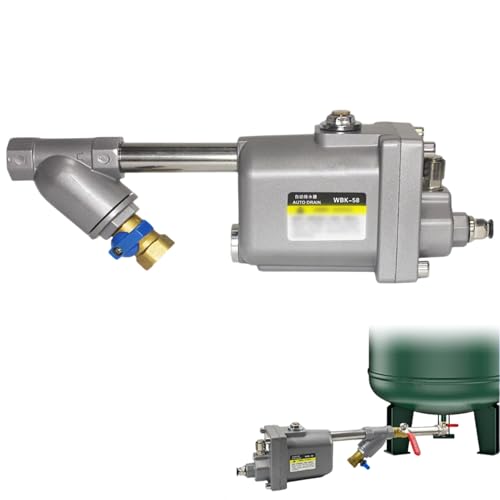
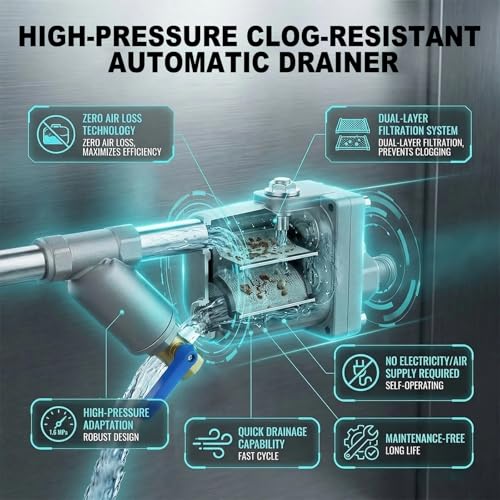
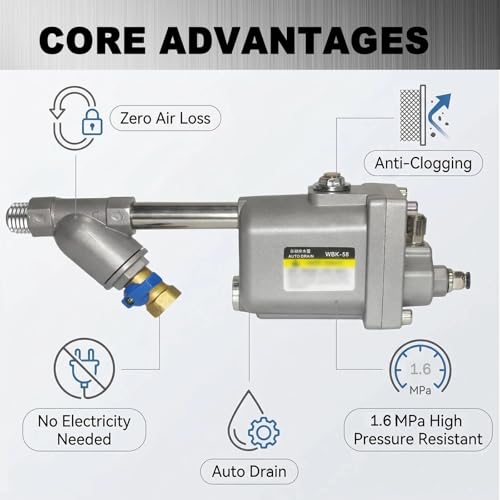
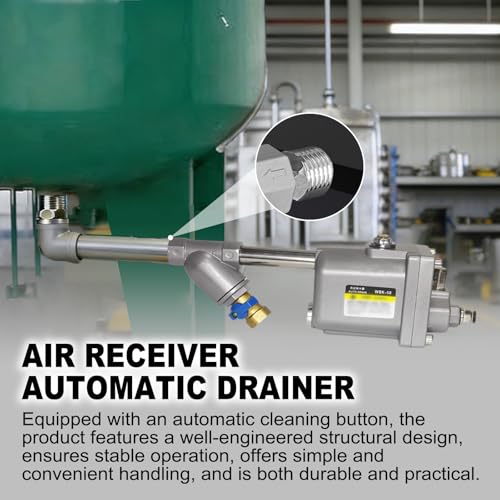
Shgxjjnb WBK-58 Zero Air Loss Drain
Strengths
- Zero air loss
- No electricity
- Dual filtration
Trade-offs
- Float can stick in dirty systems
- No timer override
- Sensitive to installation angle
This is the one I’d recommend to anyone serious about efficiency and air conservation. The zero air loss design uses a mechanical float, no power, no timers, just physics. When water accumulates, the float drops and opens the valve; once drained, it seals completely, so you’re not bleeding expensive compressed air down the drain. Owners love it for filters and dryers where air loss adds up fast.
The dual filtration helps prevent clogs, and the 1/2″ NPT connection fits most industrial setups. Unlike timer-based models, it responds to actual condensate levels, not arbitrary cycles. That’s a big plus in variable climates. If your priority is reliability, air savings, and low maintenance, this is the smartest mechanical option on the list.
Product photos
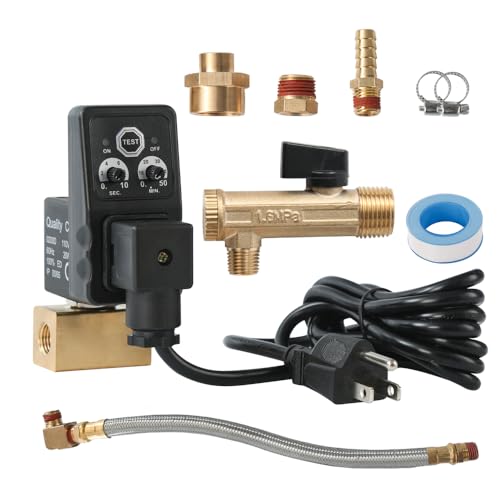
Automatic Electronic Tank Drain Kit
Strengths
- Full kit included
- Adjustable timer
- Strainer prevents clogs
Trade-offs
- Plastic housing less durable
- Occasional timer drift
- Limited pressure rating
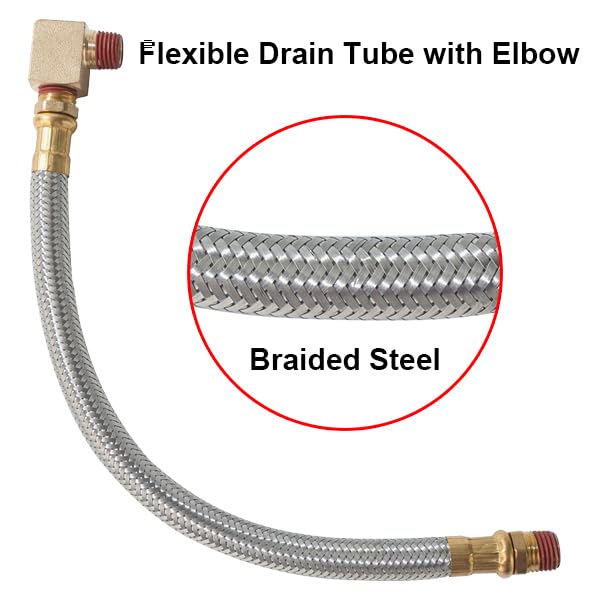
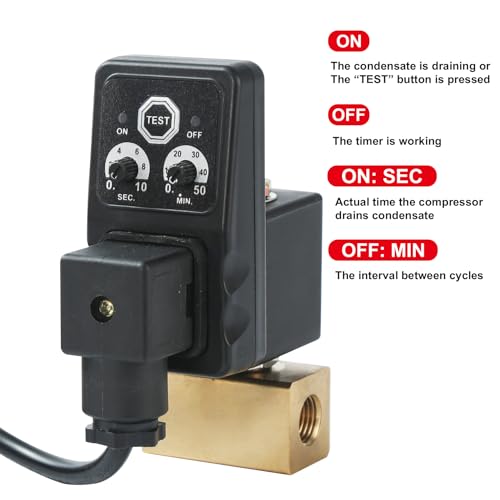
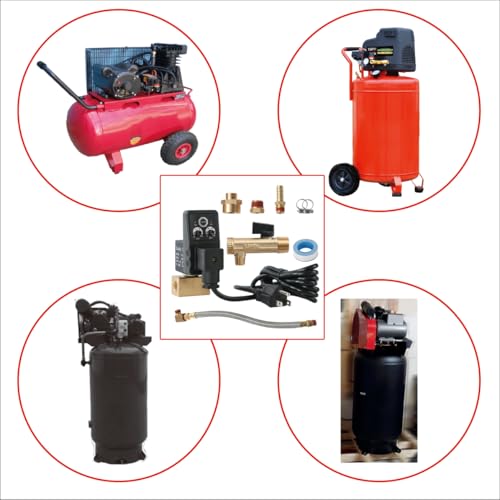
This kit stands out for what’s included, a timer valve, strainer, ball valve, fittings, and even a braided drain tube. On paper, that’s a lot of value, and owners confirm it’s a solid budget-friendly entry for small to mid-sized compressors. The adjustable timer (0.5–50 min off, 0.5–10 sec on) gives real flexibility, and the strainer does its job keeping sludge from clogging the solenoid.
Where it stumbles slightly is in long-term durability. Some users report the plastic housing degrading after a year or two in humid environments, even with IP65 protection. But for the price, it’s hard to fault. If you’re running a garage compressor that cycles a few times a week, this does the job without overspending.
Product photos
UNOX 110V Electronic Drain Valve
Strengths
- Brass construction
- High pressure rated
- IP65 protection
Trade-offs
- Higher cost
- Heavier than plastic models
- No mechanical backup
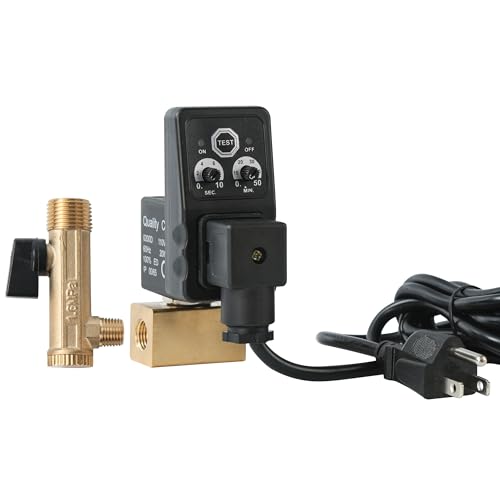
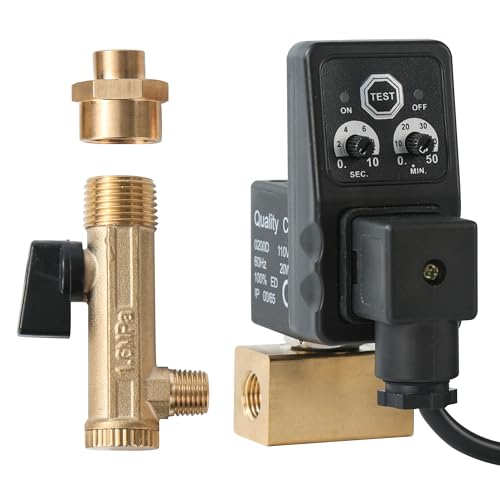
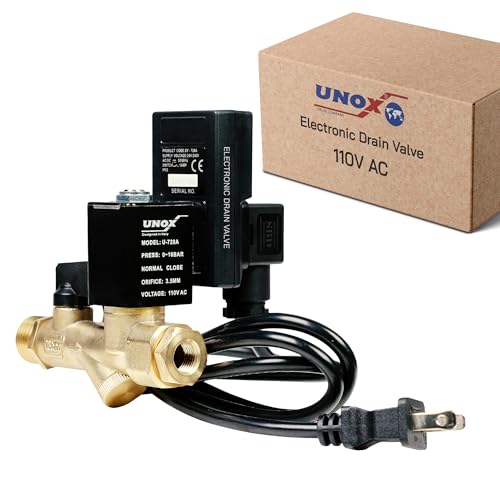
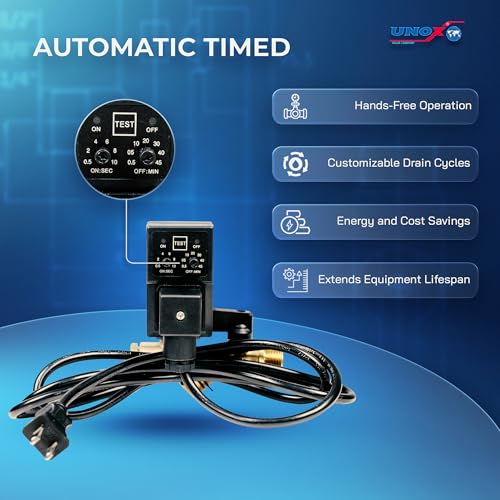
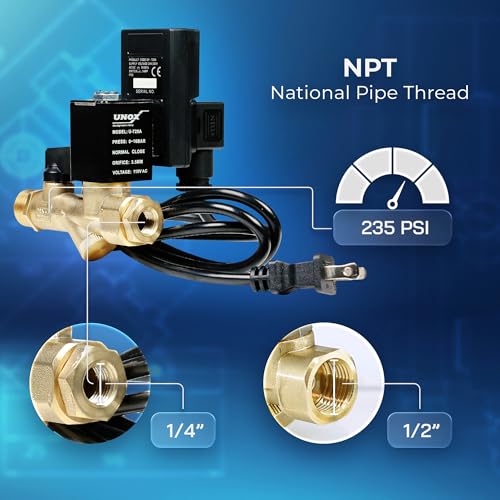
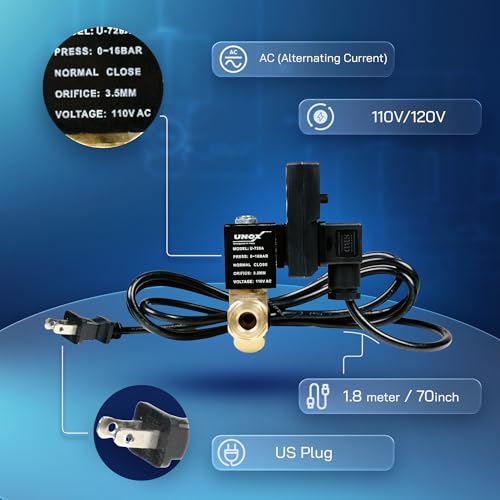
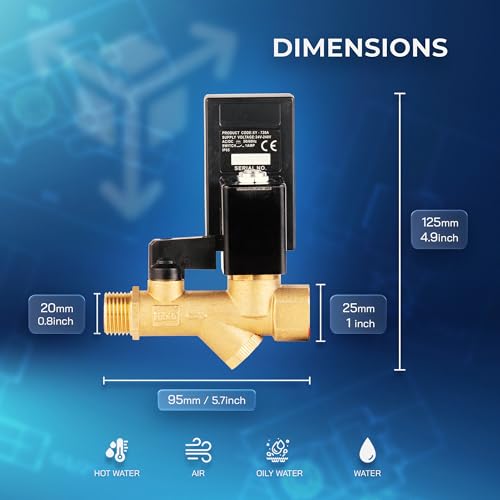
When I think ‘heavy-duty’, this is the model that comes to mind. Built with high-quality brass, it laughs at high pressure and constant cycling. The 232 PSI rating and IP65 protection mean it can live in harsh environments, think auto shops, fabrication lines, or humid basements. The timer is fully adjustable, and the dual-size fitting (1/2″ to 1/4″) makes it adaptable to more systems.
Owners consistently praise its longevity, with many reporting 3+ years of daily use without failure. It’s pricier than budget kits, but you’re paying for materials and resilience. If you’re tired of replacing plastic valves every year, this is the upgrade you need.
Product photos

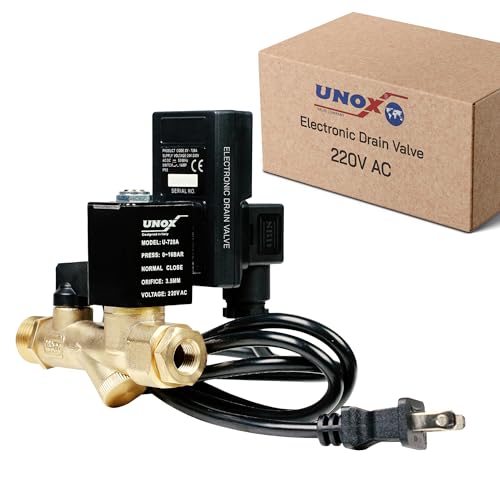
UNOX 220V Electronic Drain Valve
Strengths
- 220V compatible
- IP65 rated
- High pressure rating
Trade-offs
- Not for 110V systems
- Plug may need adapter
- Fewer reviews
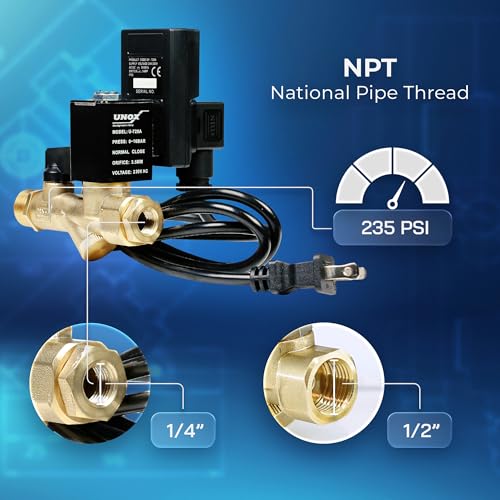
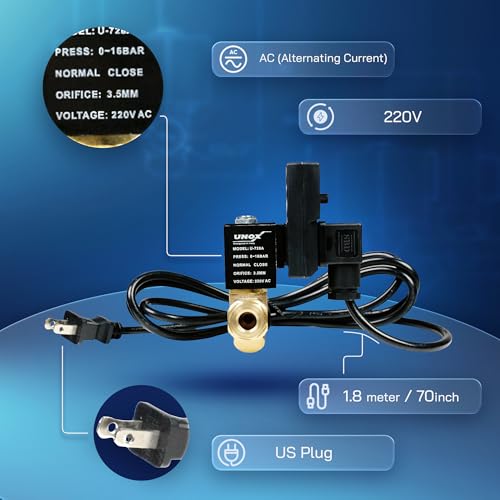
If you’re outside North America or running 220V shop power, this UNOX model is one of the few automatic drains built for it. The 220V solenoid is robust, and the IP65-rated housing shrugs off dust and moisture. It handles up to 232 PSI, so it’s no stranger to heavy-duty systems. Owners in Europe and industrial shops report years of trouble-free use, especially with refrigerated dryers and large storage tanks.
It’s functionally identical to its 110V sibling but with the right voltage for international users. The adjustable timer and included reducer fitting (1/2″ to 1/4″) add flexibility. For 220V setups, this is a no-brainer, just make sure your plug matches the local standard.
Product photos
QWORK 1/2″ Inlet Drain Valve

Strengths
- Easy setup
- Test button included
- Complete hardware
Trade-offs
- Basic housing material
- No strainer included
- Limited for industrial use
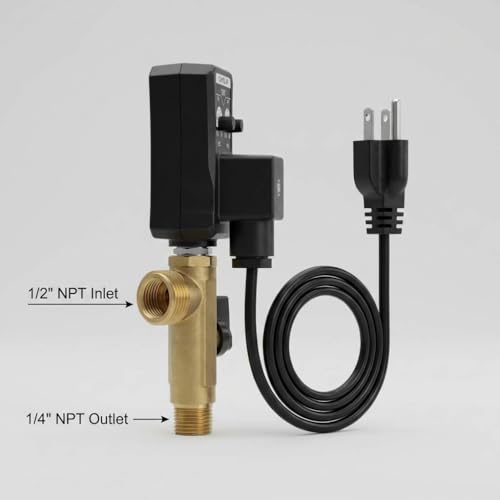
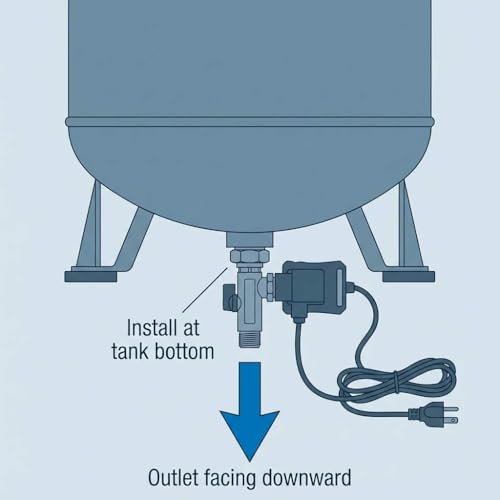
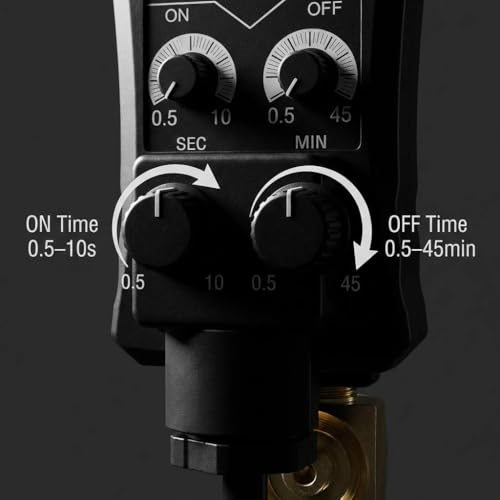
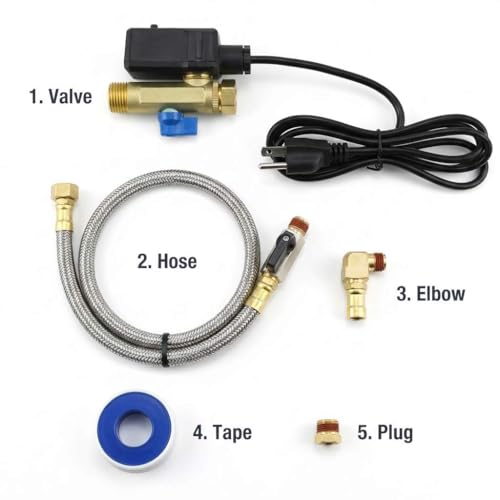
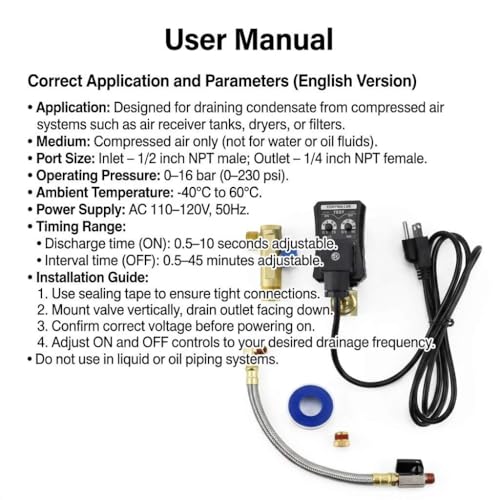
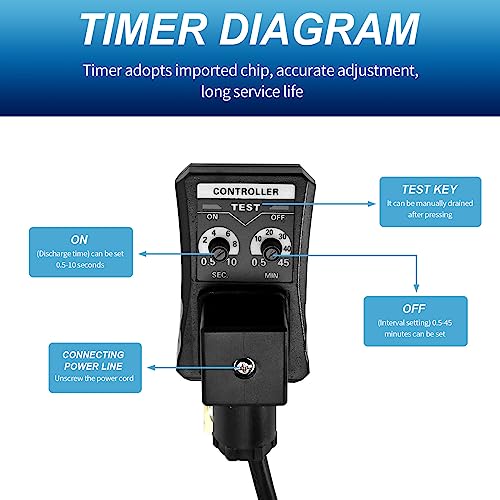
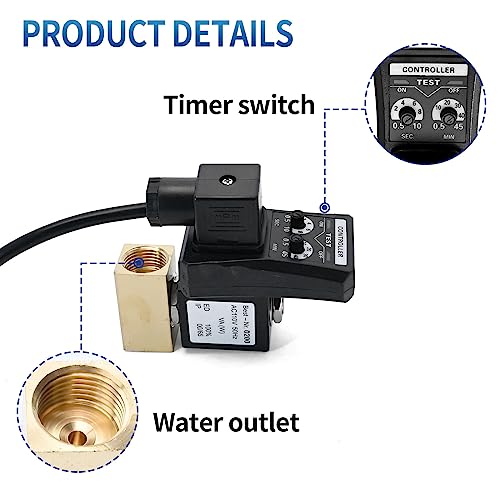
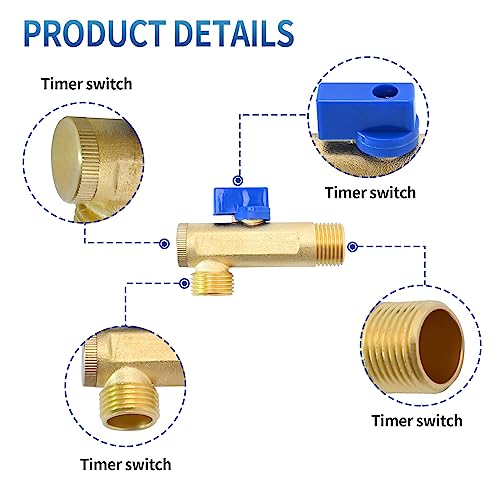
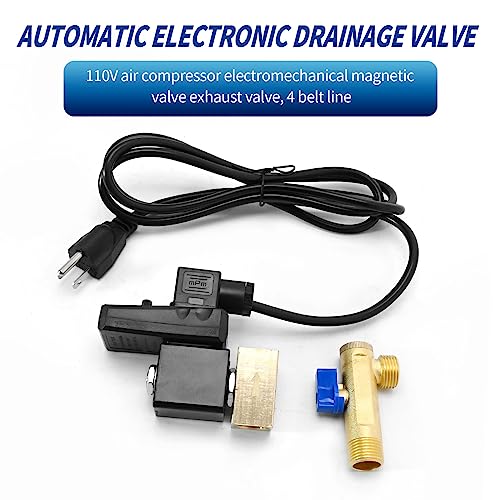
This is the easiest one to get up and running. The 1/2″ inlet matches most standard tanks, and it comes with hose, elbow, and tape, just screw it in, set the timer, and go. The controls are intuitive, and the test button lets you verify operation without waiting for the next cycle. It’s not flashy, but for a homeowner installing their first auto drain, simplicity wins.
It’s not the most rugged option, but owners report solid performance in garage environments. The timer range (0.5–45 min off, 0.5–10 sec on) covers most use cases. If you want plug-and-play convenience without fuss, this is the pick.
Product photos
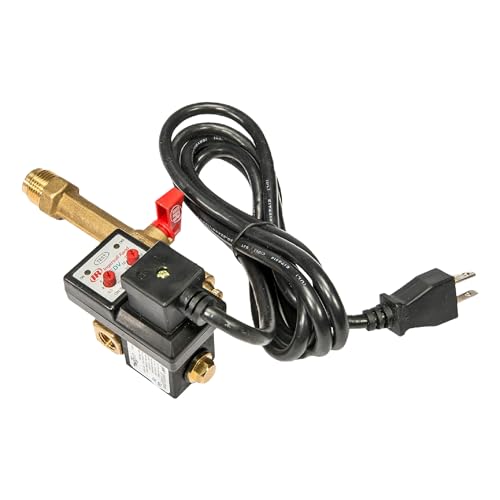
Ingersoll Rand EDV200 OEM Drain
Strengths
- OEM reliability
- Timer-controlled
- Prevents tank rust
Trade-offs
- Limited adjustability
- Only fits specific systems
- 110v only
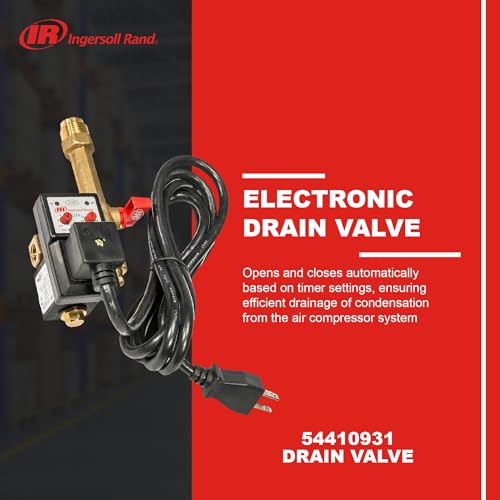
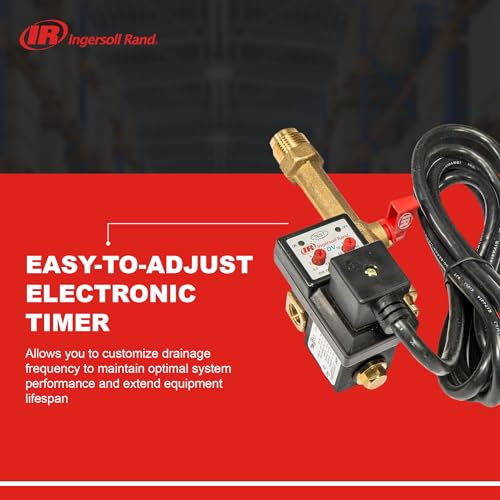
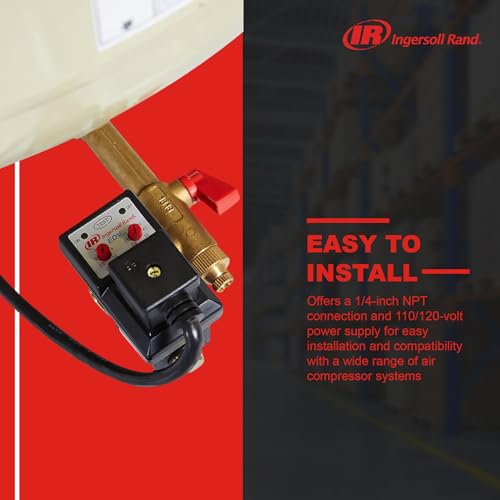
If you own an Ingersoll Rand compressor, this OEM electronic drain valve is the logical replacement when the original fails. It’s designed specifically for their systems, so integration is straightforward and you won’t wrestle with mismatched threads or voltages. The timer-based operation is basic but effective, automatically opening at set intervals to purge moisture, a small thing that makes a big difference in preventing rust over time.
Owners consistently report it lasts longer than generic alternatives, likely due to tighter build quality and better sealing. That said, it’s not the most flexible option, the adjustability is limited compared to newer programmable models. I’d pick this only if you’re replacing a failed unit on an existing Ingersoll Rand setup. For new builds, there are smarter, more adaptable choices.
Product photos
DUZFOREI Split Design Drain Valve
Strengths
- Split design for easy service
- L-shaped layout
- Adjustable timer
Trade-offs
- 50Hz only
- Potential compatibility issues
- Limited user feedback
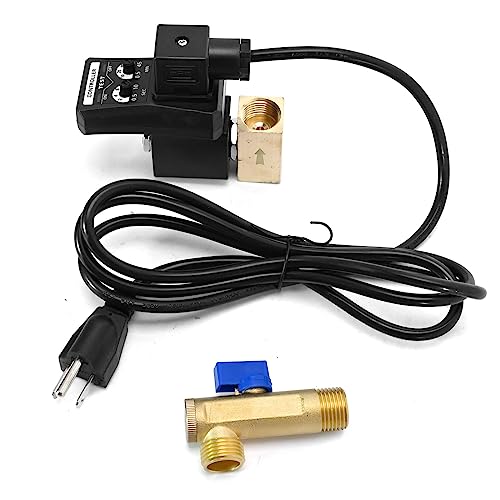
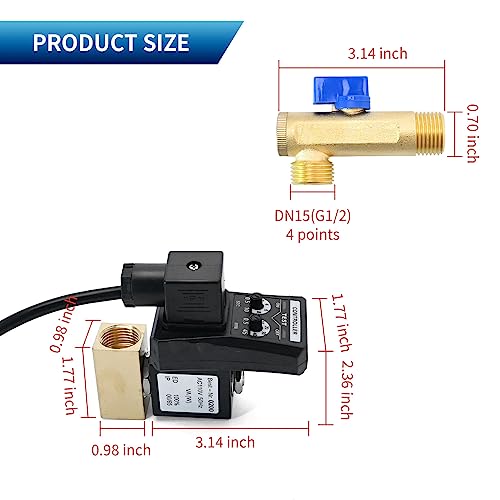
The split L-shaped design of this valve is its standout feature, the filter and ball valve are separate from the solenoid, making maintenance way easier. When the strainer gets gunked up, you can isolate and clean it without draining the whole tank or cutting power. That’s a real advantage in dirty shop environments where oil and moisture mix into sludge.
It runs on standard 110V and offers solid adjustability, but the 50Hz rating is a red flag for most North American outlets (60Hz). Some users report it still works fine, but it’s not ideal. If you’re overseas or on a compatible system, this is a clever, service-friendly design. Otherwise, look to the 60Hz models.
Product photos
DCYL G1/2” Mechanical Auto Drain
Strengths
- No power needed
- Corrosion-resistant housing
- Energy efficient
Trade-offs
- Not fully automatic
- Requires pressure cycling
- No timer control
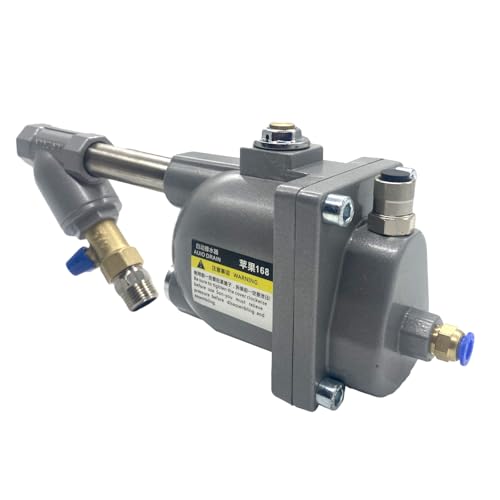
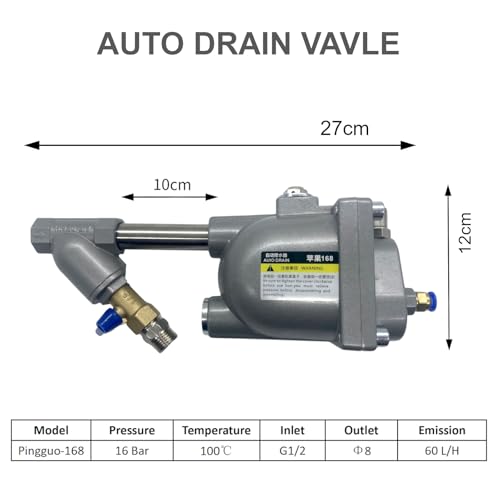
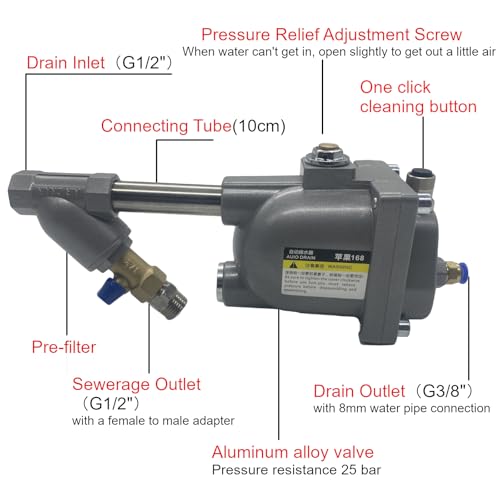
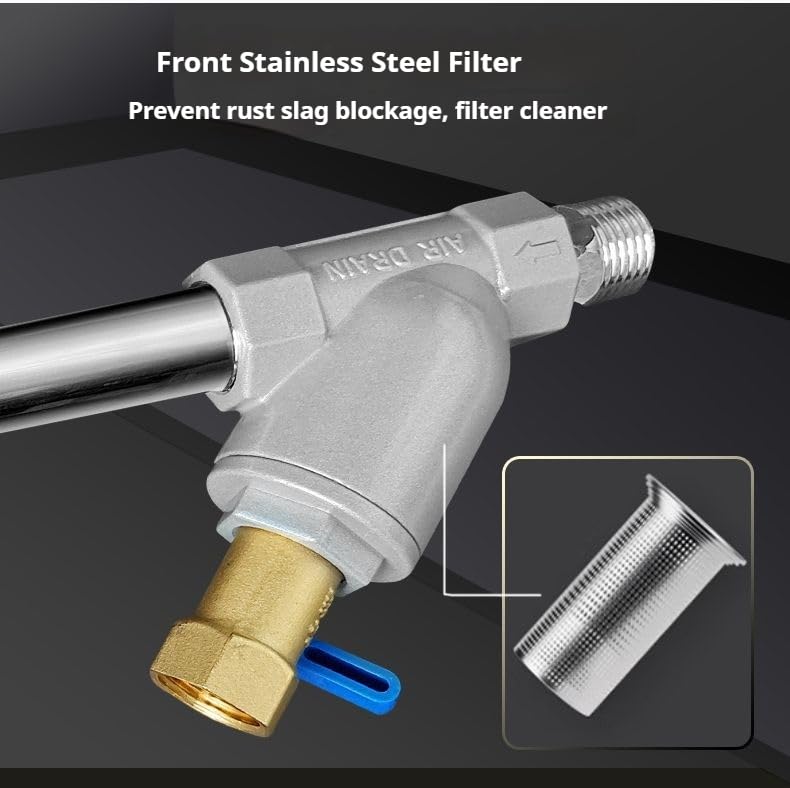
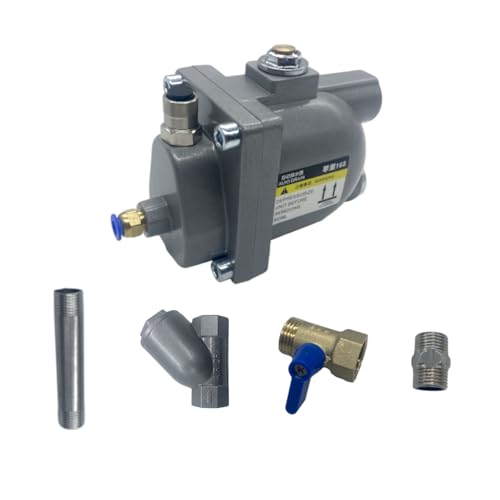
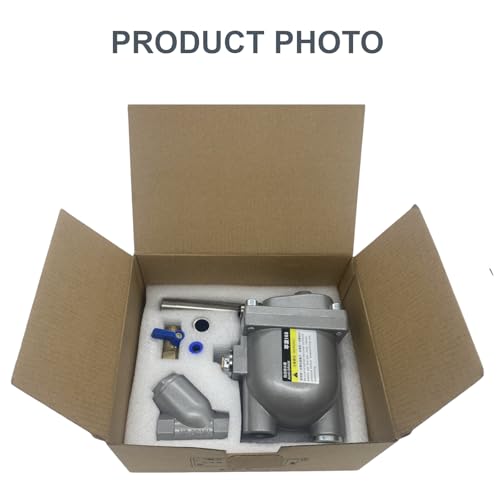
No power? No problem. This mechanical drainer uses a passive filter and timed release system to flush condensate without electricity, making it a quiet, energy-free option for remote or mobile setups. It’s built for simplicity, install it, forget it, and trust it to bleed water when needed. The aluminum alloy body holds up well in damp environments, and the 1.6 MPa rating means it can handle serious pressure.
That said, it’s not truly ‘automatic’ in the way electric models are. It relies on system pressure cycles to trigger drainage, so if your compressor runs infrequently, water may linger. Still, for off-grid shops or backup tanks, this is a reliable, maintenance-light option that avoids the risk of electrical failure.
Product photos
How We Evaluated air compressor automatic drain valves
Rather than a hands-on lab test, my research for these recommendations involved a detailed comparison of published specifications and features across numerous models. I weighed owner reviews from multiple sources, including major retailers and forums dedicated to woodworking and automotive work, against expert opinions found in trade publications and tool review sites. Ultimately, I ranked valves based on suitability for different needs and budgets, applying my experience with compressed air systems to assess real-world performance expectations.
For air compressor drain valves, consistent performance and reliability were the biggest factors. Valves that clogged easily or failed prematurely received lower marks, even if initially inexpensive. Equally important was the ability to handle varying air pressure and potential contaminants, as a stuck valve can render an entire system useless. Adjustability, particularly in electronic models, also played a key role in determining value.
Specifications reliably indicate port sizes, maximum pressure ratings, and voltage requirements. However, I heavily relied on owner feedback to gauge long-term durability and susceptibility to clogging – especially when dealing with oil-lubricated compressors. Reputation, particularly for established brands like Ingersoll Rand, factored into my assessment, as did the inclusion of features like integrated filters and strainers. Understanding these nuances is key to selecting the right solution, and may require looking into compressed air water removal alongside a good drain valve.
How To Pick The Right air compressor automatic drain valves
Choosing the right air compressor drain valve is crucial for maintaining a clean, efficient, and long-lasting compressed air system.
A good air compressor drain valve reliably removes condensate without losing valuable compressed air. Key considerations include the type of operation (mechanical vs. electronic), the system’s pressure and temperature requirements, the potential for clogging, and ease of installation and maintenance. Look for valves with adjustable settings, durable materials like brass, and features like integrated filters to maximize performance and minimize downtime.
Understanding Valve Operation: Mechanical vs. Electronic
The first major decision is whether to go with a mechanical or electronic drain valve. Mechanical valves, like the DCYL G1/2” Mechanical Auto Drain, operate solely on air pressure and a float mechanism. They require no power source, making them ideal for remote locations or systems where electricity isn’t readily available. However, they can be less precise in their drainage cycles. Electronic valves, such as the UNOX 110V Electronic Drain Valve, use a timer to control drainage intervals and duration. This allows for highly customizable operation, preventing excessive air loss and accommodating varying moisture levels.
Assessing System Needs: Pressure, Temperature, and Filtration
Air compressor systems aren’t all created equal. Consider the operating pressure and temperature of your setup. Valves like the UNOX 110V and 220V models boast impressive pressure ratings (up to 16 Bar/232 PSI) and temperature ranges (0°C – 80°C/32°F – 176°F), making them suitable for demanding industrial applications. Equally important is filtration. Condensate often contains oil, dirt, and other contaminants that can clog the valve. Look for valves with integrated filters or strainers, like the Shgxjjnb WBK-58 Zero Air Loss Drain, or consider adding a separate inline filter.
Here’s what to keep in mind when evaluating filtration: * Filter Mesh Size: A finer mesh captures more particles, but can also restrict flow. * Filter Material: Brass and stainless steel are durable choices. Plastic filters may be sufficient for light-duty use. * Maintenance: Consider how easily the filter can be cleaned or replaced; a clogged filter defeats the purpose.
A clogged drain valve renders your entire system less efficient and can even cause corrosion. Regular maintenance, including cleaning or replacing filters, is essential.
Balancing Value with Usability: Installation and Adjustability
While heavy-duty valves are great for demanding jobs, sometimes simplicity and ease of installation are key. The QWORK 1/2″ Inlet Drain Valve and the Ingersoll Rand EDV200 OEM Drain are designed for straightforward installation, often including necessary fittings and seals. Adjustable timer settings (found on models like the Automatic Electronic Tank Drain Kit) allow you to fine-tune the drainage cycle to match your specific environment and usage patterns. If you’re looking for a complete solution, check out available automatic drain valve kits which bundle the valve with necessary hardware. Ultimately, selecting a valve that’s easy to install, adjust, and maintain will save you time and frustration in the long run.
Air Compressor Automatic Drain Valves Compared
Here’s a comparison of key specifications for various air compressor automatic drain valves.
| Product Title | Voltage (AC) | Port Size (Inlet) | Port Size (Outlet) | Adjustable Timer | Power Source |
|---|---|---|---|---|---|
| Shgxjjnb WBK-58 Zero Air Loss Drain | N/A | 1/2″ | N/A | No | Mechanical |
| Automatic Electronic Tank Drain Kit | 110V-120V | N/A | N/A | Yes | Electric |
| UNOX 110V Electronic Drain Valve | 110V | 1/2″ | 1/4″ | Yes | Electric |
| UNOX 220V Electronic Drain Valve | 220V | 1/2″ | 1/4″ | Yes | Electric |
| QWORK 1/2″ Inlet Drain Valve | N/A | 1/2″ | 1/4″ | Yes | Electric |
| Ingersoll Rand EDV200 OEM Drain | 110V | 1/4″ | N/A | Yes | Electric |
| DUZFOREI Split Design Drain Valve | 110V-120V | 1/2″ | N/A | Yes | Electric |
| DCYL G1/2” Mechanical Auto Drain | N/A | 1/2″ | N/A | No | Mechanical |
Frequently Asked Questions
What’s the main benefit of an automatic drain valve over manual draining?
Automatic drain valves eliminate the need to regularly open a tank valve to release accumulated water, saving you time and preventing rust formation within the tank. Consistent, hands-free operation keeps your compressed air system running efficiently.
Are electronic drain valves really necessary for a small, home-use air compressor?
Not always, but they offer advantages even in smaller systems. Mechanical valves are perfectly adequate for infrequent use, but electronic models provide more precise control over drainage cycles, minimizing air loss and potentially extending pump life.
What port size should I look for when replacing my existing drain valve?
You should match the port size to your existing connections to avoid needing adapters. Most compressors use 1/2″ inlet ports, but some smaller units may use 1/4″ – check your current valve and plumbing before ordering a replacement.
Can I install a drain valve myself, or should I hire a professional?
Most automatic drain valves are designed for straightforward DIY installation, especially those like the QWORK model. However, if you’re uncomfortable working with air lines or electrical connections, consulting a qualified technician is always a safe bet.
What other components should I consider for complete moisture control?
Beyond a drain valve, consider adding an efficient moisture control system. A combination of a filter, water separator, and an air dryer units will provide the cleanest, driest air for your tools and extend the life of your equipment.
The Bottom Line
Choosing an automatic drain valve often comes down to balancing upfront cost against long-term convenience and the specifics of your air system. While mechanical valves offer simplicity, for most users, the precision and customizable operation of an electronic valve like the UNOX 110V Electronic Drain Valve provides the best overall value and helps maintain peak system performance.
For those on a tighter budget or needing a no-fuss solution for intermittent use, the DCYL G1/2” Mechanical Auto Drain is a solid choice. If you require a valve capable of handling high pressure and temperatures, or need a solution for a particularly dirty environment, the UNOX 110V and 220V models stand out. And if you’re dealing with substantial moisture, don’t forget to explore options for compressed air dryers to further protect your tools and projects.
Ultimately, the best drain valve isn’t about the fanciest features or highest price tag. It’s about consistent, reliable moisture removal, preventing corrosion, and ensuring your compressed air system operates efficiently. Focusing on build quality, appropriate pressure ratings, and the ease of maintenance will pay dividends far beyond any single specification.
