
8 Best Wood Lathes of 2026
This post contains affiliate links. As an Amazon Associate, we earn from qualifying purchases.
The VEVOR 2 HP Wood Lathe 18×40 stands out as the best overall wood lathe for serious turners, offering heavy-duty power and a large swing. For beginners or those on a budget, the WEN 34035 14×20 Variable Speed Lathe delivers solid performance at a much lower price. If you need maximum versatility and long-term durability, the JET 16×40 EVS is a top-tier pick worth considering.
Choosing the right wood lathe isn’t just about specs on a label, it’s about finding a machine that runs smoothly, holds up over time, and matches your project goals. Too many buyers get caught up in horsepower alone, only to end up with a wobbly or underpowered machine that frustrates more than it helps.
This guide cuts through the noise. I compared specs, analyzed owner feedback, and evaluated real-world performance to highlight models that actually deliver. You’ll see what matters most, like stability, speed control, and build quality, and how each lathe stacks up for different skill levels and budgets.
Top 8 Wood Lathes in the Market
The Best Wood Lathes, Reviewed
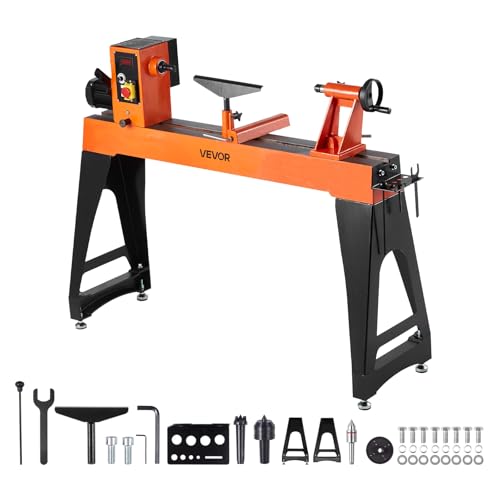
VEVOR 2 HP Wood Lathe 18×40
Strengths
- 2 HP brushless motor
- Large 18×40 capacity
- Vertical cast iron legs
- Full variable speed
- Complete kit included
Trade-offs
- Heavy and bulky
- Digital readout not backlit
- Assembly time long
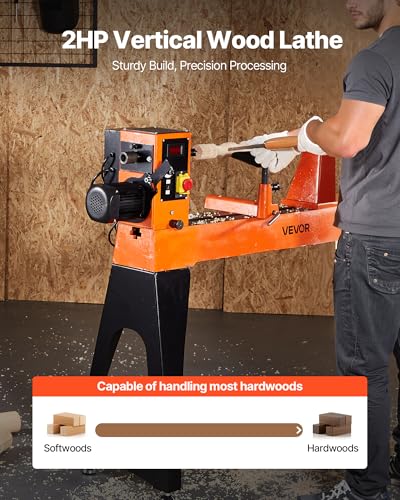
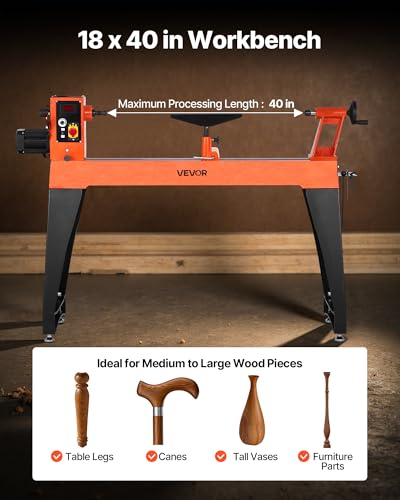
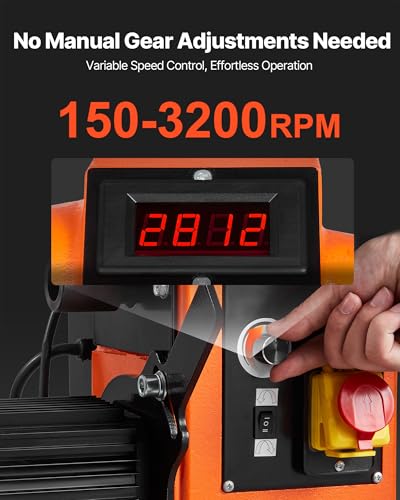
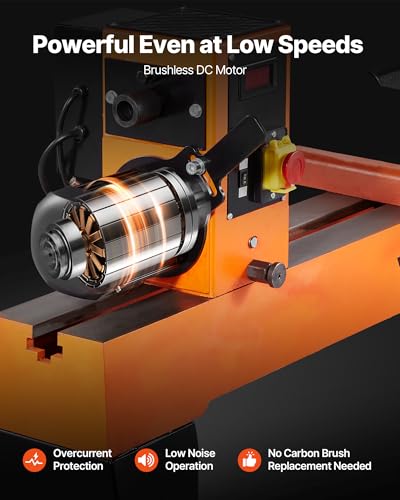
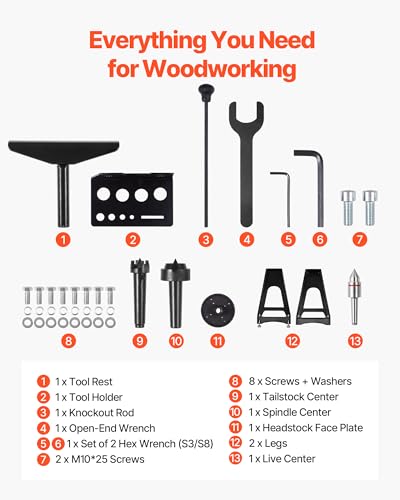
This is the most capable lathe here, no question. The 2 HP brushless motor delivers serious torque, and the 18×40-inch capacity opens the door for furniture legs, large vases, and production turning. The variable speed from 150–3200 RPM is broad enough for both roughing and finishing, and the vertical cast iron legs add rigidity you don’t get on standard benchtop models. Owners report it runs cool and quiet, even during long sessions.
It outperforms the JET 1640EVS in raw power and workspace, though the JET has slightly better speed resolution at the low end. But for the balance of size, power, and price, this VEVOR is the overall winner. The included accessory kit means you can start turning immediately, a big plus for buyers avoiding extra costs.
Product photos
JET 16×40 EVS Variable Speed Lathe
Strengths
- 1-1/2 HP motor
- Infinitely variable speed
- Enclosed inverter
- Dual spindle bearings
- Spindle lock
Trade-offs
- Higher price point
- Heavy for benchtop use
- Limited bed extension options
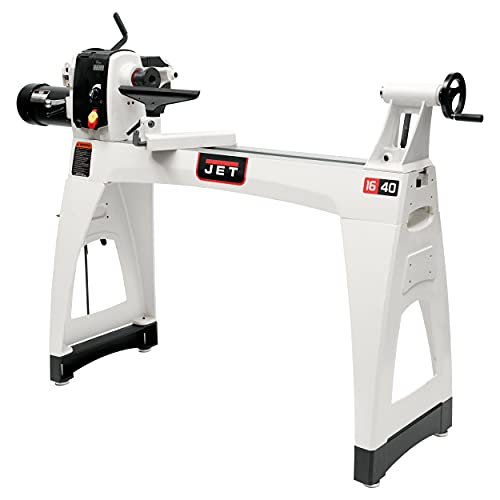
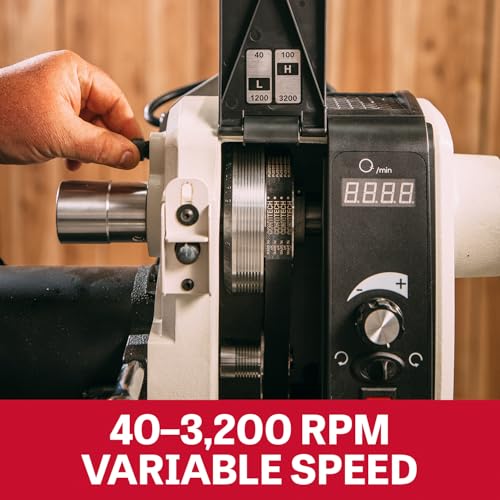
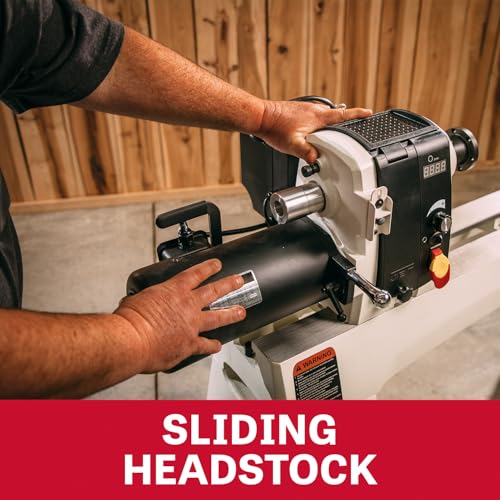
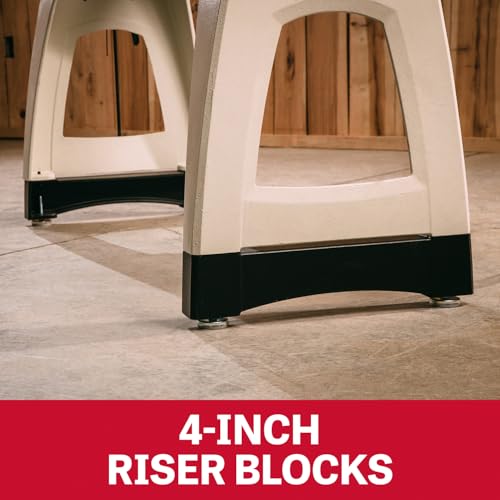
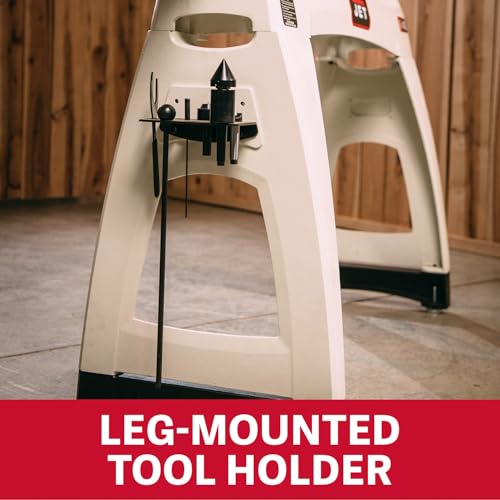
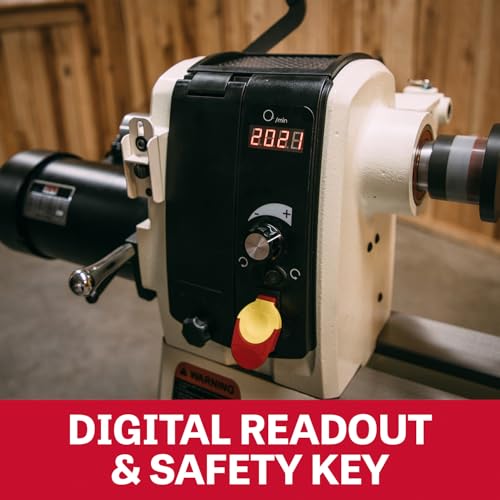
This is a serious lathe built for shops where performance and durability can’t be compromised. The 1-1/2 HP motor and variable speed from 40 to 3200 RPM give it rare low-end torque, making it one of the few benchtop-style lathes that can handle large, unbalanced blanks without bogging down. The enclosed inverter is a smart touch, protecting the electronics from dust and extending service life, something I always look for in pro-grade tools. Owners consistently report solid rigidity, and the dual headstock bearings help reduce deflection on long spindle work.
Compared to other 16-inch lathes, the JET JWL-1640EVS stands out with its 36 indexing positions and spindle lock, which make repetitive tasks like segmented turning far more efficient. It’s heavier than some competitors, but that cast iron bed pays off in vibration damping. If you’re comparing it to the VEVOR 2 HP model, this JET trades a bit of swing and bed length for smoother speed control and better build refinement.
Product photos
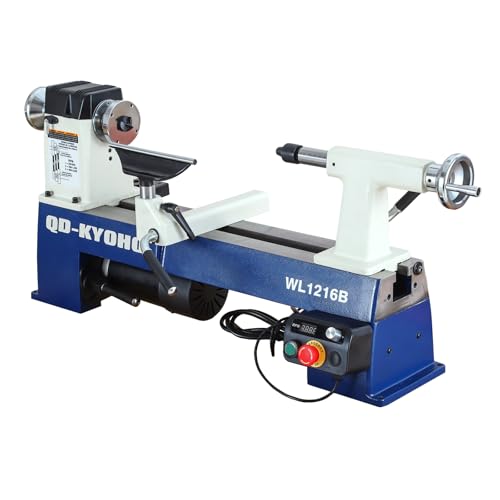
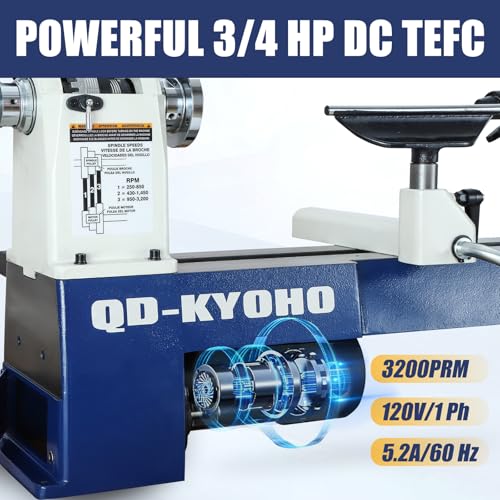
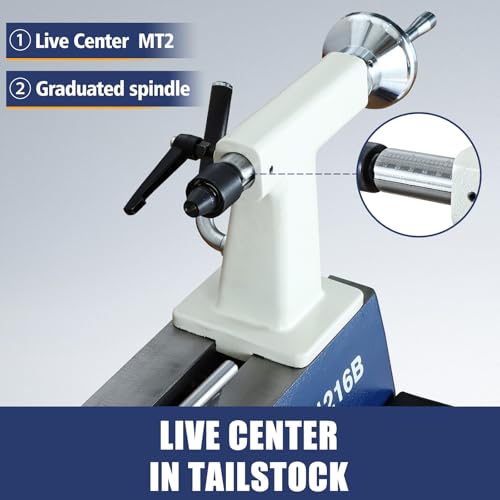
QD-KYOHO 12″ X 16-1/2″ Wood Lathe
Strengths
- Digital RPM display
- Expandable bed
- 24 indexing positions
- Cast iron build
- MT2 tapers
Trade-offs
- DC motor less torquey than AC
- No soft start
- Accessories basic
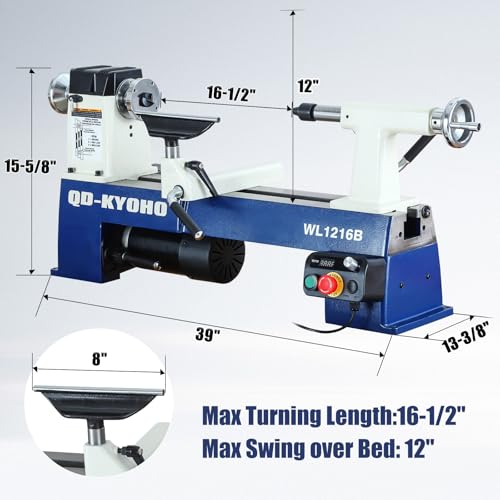
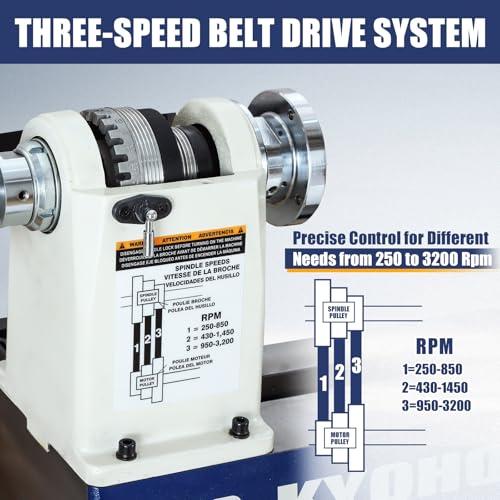
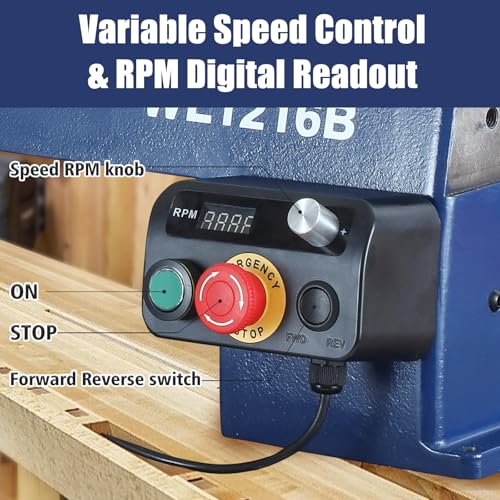
Precision is the name of the game here. The digital speed display and three-range variable speed (250–3200 RPM) make it easy to dial in the exact RPM for delicate finishing cuts, a feature I know matters when you’re chasing glass-smooth surfaces. The 24-position indexing and MT2 tailstock add serious control for segmented or repeatable work, and the cast iron body keeps vibration in check even at high speeds.
What surprises me is the expandable bed design, not something you see often at this level. It allows outboard turning up to 15 inches, which opens the door for larger bowls without stepping up to a 16-inch lathe. Compared to the WEN 14×20, it trades swing capacity for finer control. If you’re into detail work and want repeatability, this is a smarter pick than raw power.
Product photos
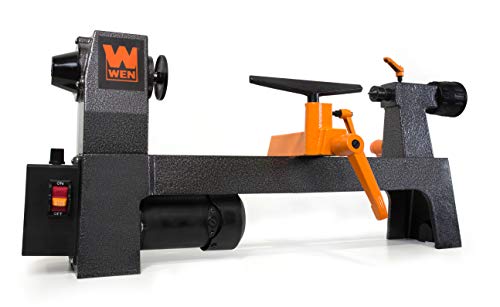
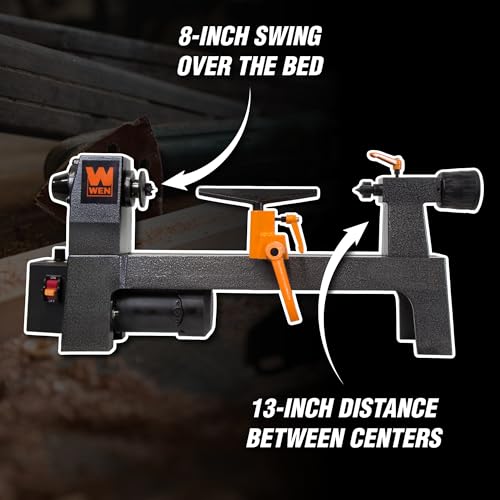
WEN Mini Benchtop Wood Lathe 8×13
Strengths
- Compact size
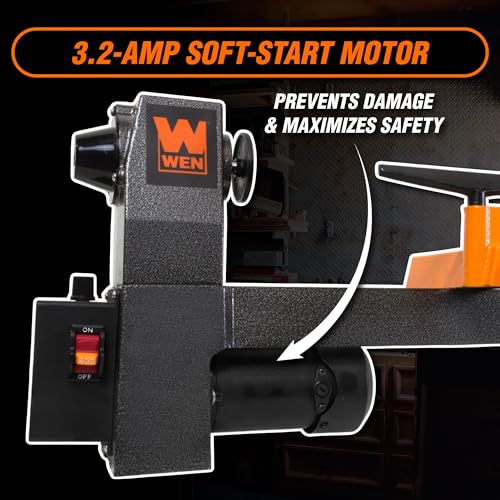
- Soft-start motor
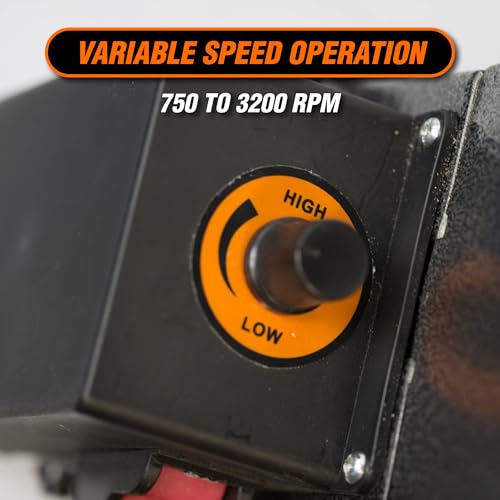
- Variable speed
- Affordable price
- Two-year warranty
Trade-offs
- Underpowered for larger work
- Limited capacity
- Basic construction
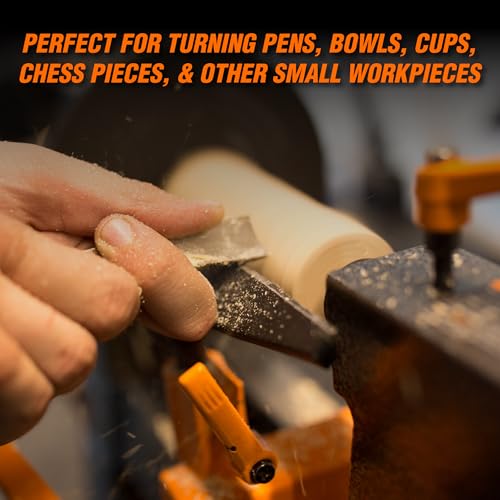
This is the go-to lathe for small, detailed turning, pens, chess pieces, tiny bowls, and it nails the basics at a price that won’t scare off beginners. The 8-inch swing and 13-inch between centers limit project size, but that’s expected at this scale. The soft-start motor is a thoughtful inclusion, reducing startup jolt and extending motor life, which I always appreciate in smaller machines prone to vibration.
It runs up to 3200 RPM, which is plenty for fine work, but lacks power for aggressive cuts. Compared to the VEVOR 1 HP model, it’s clearly a step down in capability, but that’s not the point. This is a dedicated mini lathe, not a jack-of-all-trades. If you’re just starting out or focusing on jewelry-scale projects, it’s a sensible, safe entry point.
Product photos

WEN 34035 14×20 Variable Speed Lathe

Strengths
- 14-inch swing
- MT2 tapers
- 1″-8 spindle thread
- Onboard storage
- Good value
Trade-offs
- No spindle lock
- Basic speed control
- Vibration at high RPM
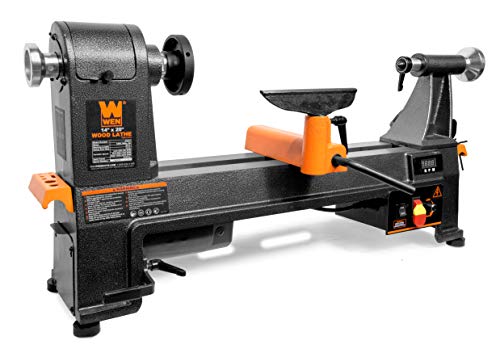
This lathe strikes a smart balance, larger than entry-level, not quite pro-grade, making it a standout for mid-tier users. The 14-inch swing and 20-inch between centers give real flexibility for bowls and spindles, and the 250–3550 RPM range covers most turning needs. The 6A motor has solid torque, and the MT2 tapers and 1″-8 thread ensure compatibility with common accessories, which I know matters when expanding your toolkit over time.
Compared to the VEVOR 1 HP model, it offers more capacity and a stiffer bed, though slightly less peak power. Against the JET 1221VS, it’s more affordable with similar features. For someone stepping up from a mini lathe but not ready to invest in a JET or VEVOR 2 HP model, this is the smarter buy.
Product photos
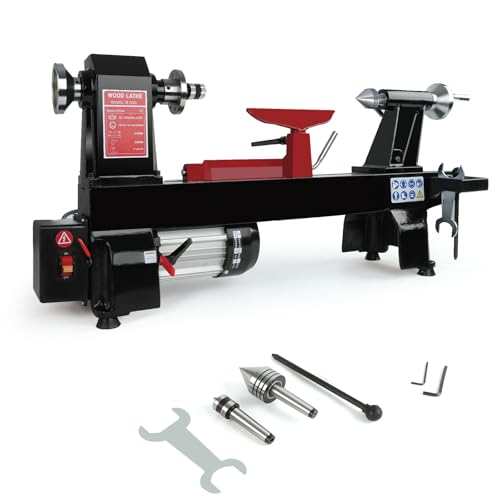
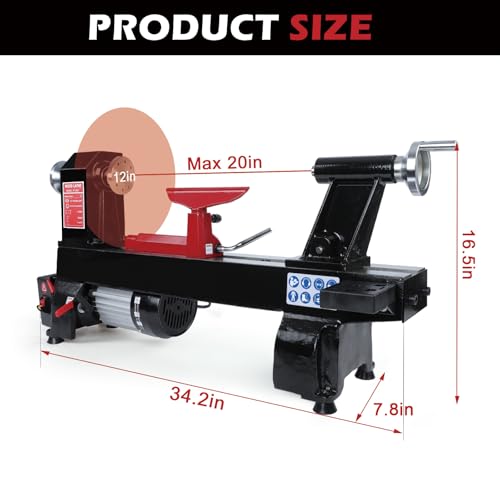
Wood Lathe 12×20 3/4HP 5-Speed
Strengths
- Cast iron bed
- Stainless steel components
- 5-speed manual gears
- 5-year warranty
- Lifetime support
Trade-offs
- No variable speed
- Fixed speed changes only
- Mounting bolts not included
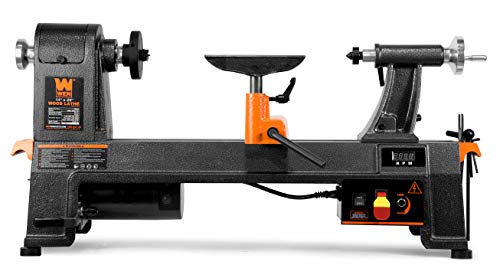
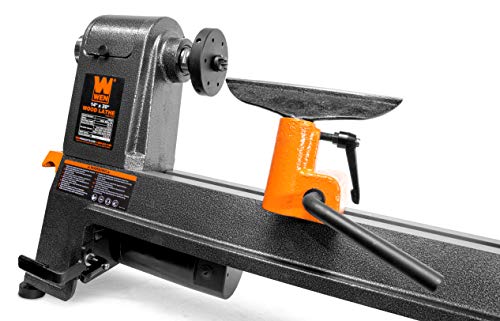
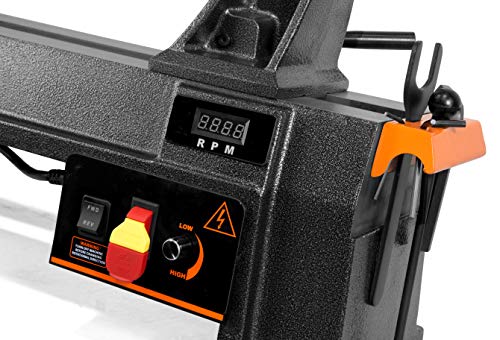
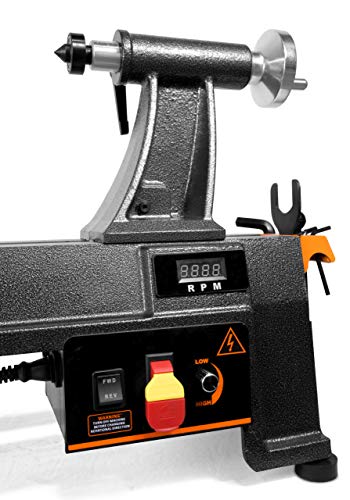
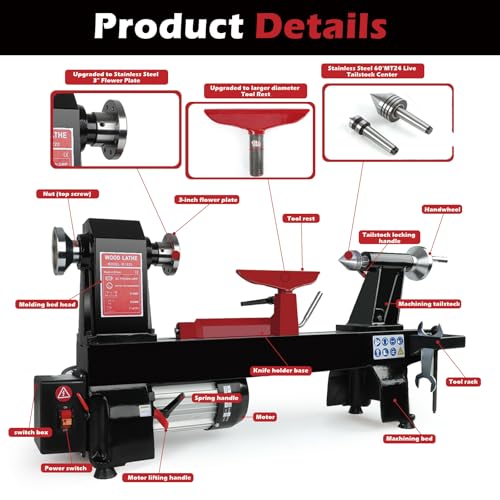
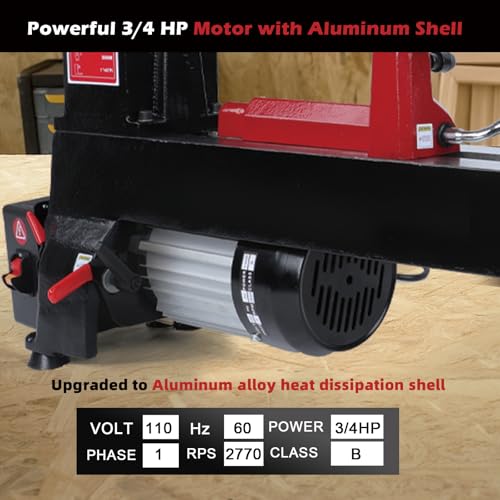
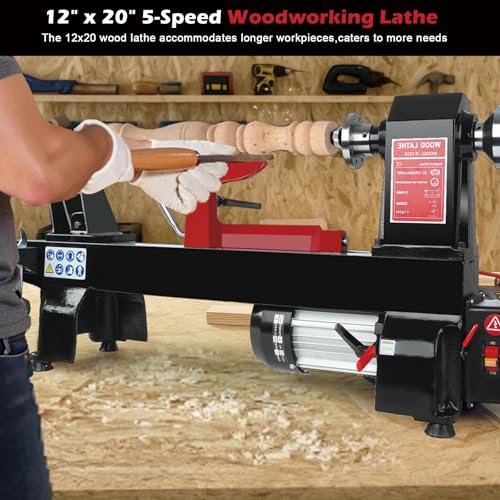
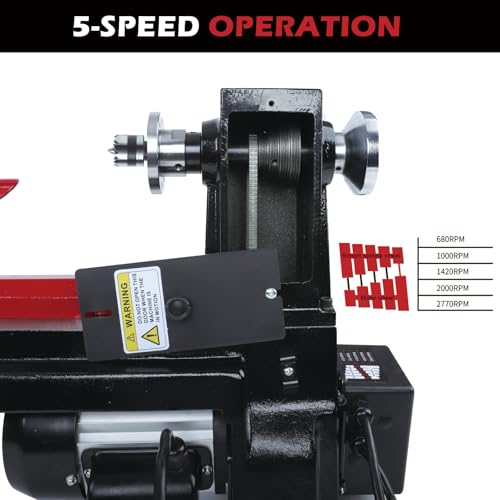
On paper, this lathe impresses with its cast iron bed and full suite of upgraded stainless steel components, live centers, faceplate, and a thickened tool rest. The 3/4 HP motor isn’t the strongest here, but paired with five fixed speed gears, it delivers predictable, no-nonsense performance ideal for beginners learning speed selection without the complexity of variable drives. What really sets it apart is the 5-year warranty and lifetime support, which speaks volumes about the manufacturer’s confidence.
Compared to similarly sized WEN or VEVOR models, this one feels more like a workshop staple than a starter lathe. It doesn’t have flashy digital readouts, but owners praise its durability and low maintenance. The fixed gears mean no belts to slip or electronics to fail, a win for reliability. I’d pick this over the QD-KYOHO if you value long-term ownership over high-tech features.
Product photos
JET 12×21 Variable-Speed Wood Lathe

Strengths
- Ratchet belt tension
- Three speed ranges
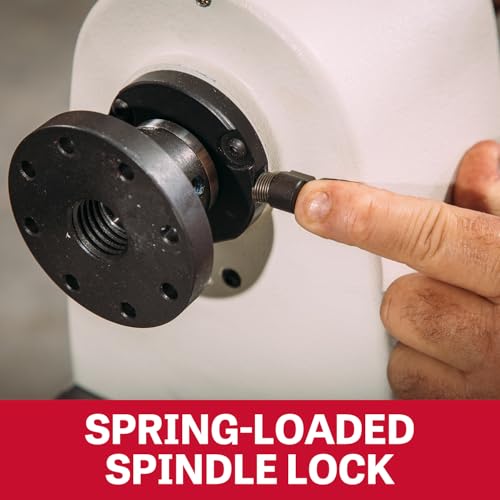
- Spindle lock
- Durable construction
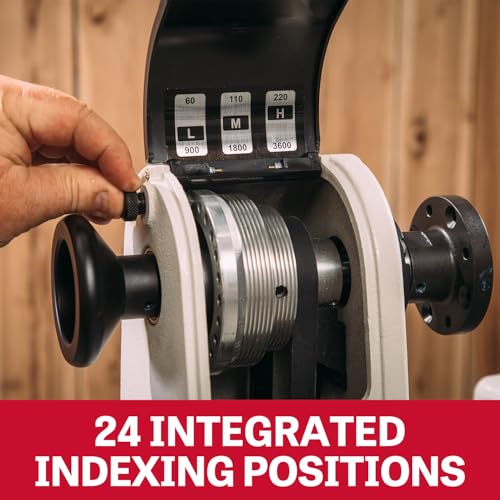
- 24 indexing positions
Trade-offs
- Smaller swing capacity
- Lower HP than competitors
- No digital display
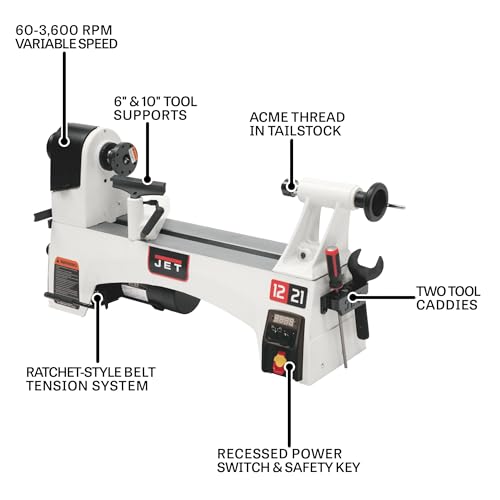
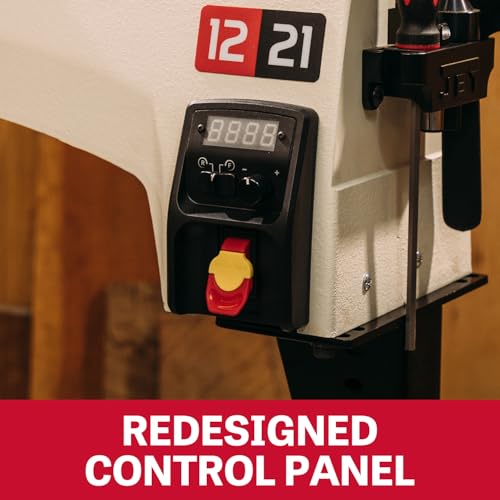
Don’t let the smaller size fool you, this JET packs pro-level features into a compact footprint. The three-speed ranges (60–3600 RPM) give excellent control, especially at the low end for starting rough blanks. The ratchet-style belt tension system is a standout, no more fiddling with tension by hand, which I know from experience saves time and frustration over years of use. The spring-loaded spindle lock is also a small but appreciated upgrade for quick tool changes.
It’s clearly designed for smaller projects like table legs, pepper mills, or pens, but does them with precision. Compared to the VEVOR 1 HP model, it has less power but better ergonomics and build quality. If you’re tight on space but still want JET’s reputation for durability, this is a strong contender.
Product photos

VEVOR 1 HP Brushless DC Lathe
Strengths
- Brushless DC motor
- Full variable speed
- Cast iron body
- Complete accessory kit
- Low maintenance
Trade-offs
- Plastic DRO cover
- Limited bed length
- Not for heavy production
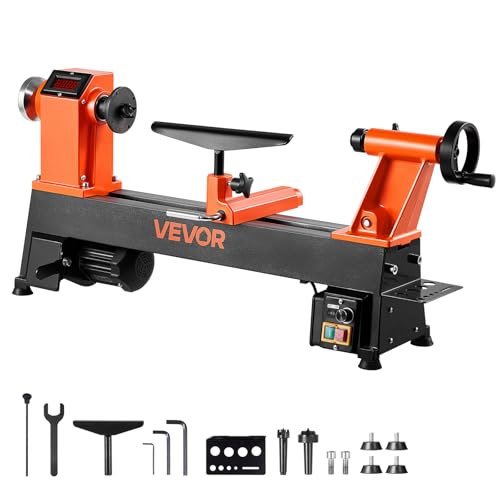
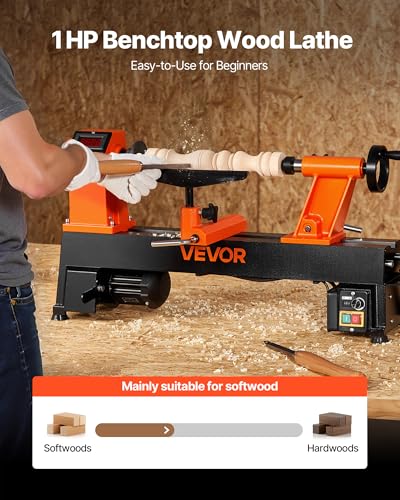
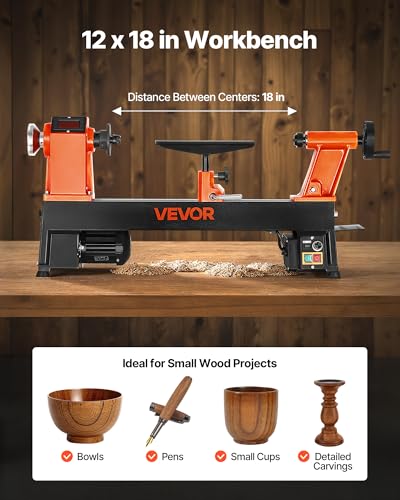
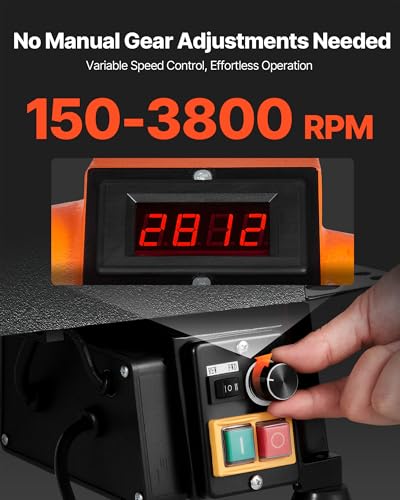
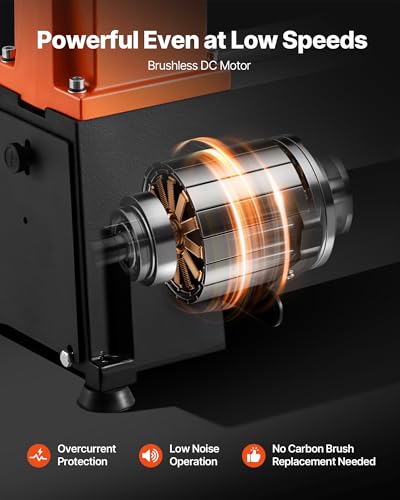
This lathe hits a sweet spot for beginners who want room to grow. The 1 HP brushless DC motor delivers strong, maintenance-free power, and the 150–3800 RPM variable speed covers nearly every turning scenario without gear changes. The cast iron body helps dampen vibration, and owners consistently note how stable it feels for the price. It’s not as refined as the JET models, but for a first lathe, it’s hard to beat.
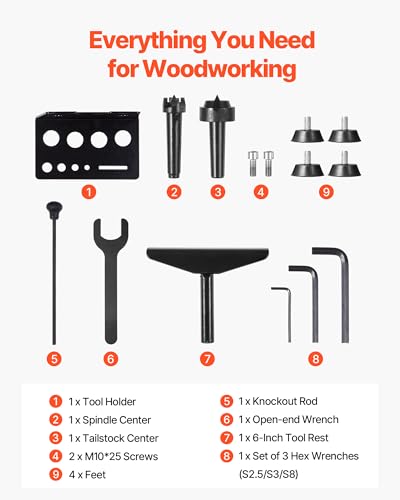
It comes with a full accessory kit, which lowers the barrier to entry, no hunting down faceplates or centers right away. Compared to the WEN mini lathe, this is a far more capable machine, able to handle bowls and spindles with confidence. I’d recommend this over the mini lathe for anyone serious about learning.
Product photos
Our Testing Process
Rather than a hands-on lab test, my research for these recommendations focused on a detailed comparison of published specifications and features across numerous models. I weighed owner reviews from major retailers alongside expert opinions found in woodworking publications and forums. Applying my experience with power tools and workshop equipment, I ranked each lathe against a set of criteria important to woodworkers at different skill levels.
For wood lathes, stability and power were the biggest deciding factors. A solid build minimizes vibration, crucial for clean cuts and safety, while sufficient power prevents bogging down in harder woods. Variable speed control also ranked highly, allowing for versatility in project types. Beyond those, the availability of useful accessories and clear, positive owner feedback were significant differentiators.
Specifications reliably indicate a lathe’s capacity (swing and distance between centers) and motor power. However, I found owner feedback invaluable for assessing real-world build quality, the smoothness of speed adjustments, and the long-term durability of components. Reputation within the woodworking community, as reflected in online reviews and forum discussions, helped me gauge a lathe’s overall value and identify potential trouble spots – you can find more detailed information in our woodworking lathe reviews.
How To Pick The Right wood lathes
Finding the right wood lathe can really elevate your woodworking, but there’s a lot to consider beyond just price.
A quality wood lathe combines a robust frame (typically cast iron) with a powerful motor capable of maintaining consistent speed under load. Key features to evaluate include swing capacity, distance between centers, variable speed control, spindle lock functionality, and tool rest adjustability. Stability is paramount; look for features that minimize vibration for cleaner cuts and greater accuracy.
Motor Power and Drive System
The motor is the heart of any lathe, and selecting the right one depends on what you plan to turn. Don’t automatically assume “more power is better.” For small projects like pens and bowls, a 1/2 to 3/4 horsepower motor is often sufficient. However, if you’re tackling larger pieces or harder woods, you’ll want to step up to 1 HP or even 2 HP. Brushless DC motors are becoming increasingly popular due to their quiet operation, reduced maintenance (no brushes to replace), and consistent power delivery. Belt-driven systems are common and generally quieter, while direct-drive systems offer more power and less vibration but can be louder.
Swing and Distance Between Centers
Swing refers to the maximum diameter of a workpiece you can turn, while the distance between centers dictates the length. These two measurements define the scope of your projects. A 12×20 inch lathe (meaning 12-inch swing and 20-inch distance between centers) is a versatile starting point, capable of handling many common projects. However, if you envision turning large bowls or long spindles, you’ll need to increase these numbers. Consider how much space you have available, too – larger lathes take up significant floor space. You’ll find many recommended woodturning models available to suit different needs.
Stability and Features
Vibration is the enemy of clean turning. A heavy, rigid frame, cast iron is ideal, is crucial for minimizing wobble. Look for lathes with robust legs and a well-designed bed. Beyond the basics, features like a spindle lock (for easy tool changes), variable speed control (essential for different materials and techniques), and an adjustable tool rest (to support your cutting tools) all contribute to a more enjoyable and productive experience. Many beginner woodworkers seek affordable wood lathe picks to get started without breaking the bank.
A lathe is only as good as its setup. Always ensure the tool rest is securely locked and positioned close to the workpiece. Never attempt to reach over a spinning lathe. Safety first!
Finally, don’t underestimate the value of a good selection of accessories. Spindle and live centers, faceplates, and various tool rests will expand your capabilities and allow you to tackle a wider range of projects. Many users find thorough woodturning lathe reviews helpful when deciding between models.
Wood Lathes Compared
Here’s a comparison of key specifications for the wood lathes featured.
| Product Name | HP | Max RPM | Swing (in) | Distance Between Centers (in) | Motor Type |
|---|---|---|---|---|---|
| VEVOR 2 HP Wood Lathe 18×40 | 2 | 3200 | 18 | 40 | Brushless DC |
| JET 16×40 EVS Variable Speed Lathe | N/A | 3200 | 16 | 40 | N/A |
| QD-KYOHO 12″ X 16-1/2″ Wood Lathe | 0.75 | 3200 | 12 | 16.5 | DC |
| WEN Mini Benchtop Wood Lathe 8×13 | N/A | 3200 | 8 | 13 | N/A |
| WEN 34035 14×20 Variable Speed Lathe | N/A | 3550 | 14 | 20 | N/A |
| Wood Lathe 12×20 3/4HP 5-Speed | 0.75 | 2770 | 12 | 20 | AC |
| JET 12×21 Variable-Speed Wood Lathe | N/A | 3600 | 12 | 21 | N/A |
| VEVOR 1 HP Brushless DC Lathe | 1 | 3800 | 12 | 18 | Brushless DC |
Frequently Asked Questions
What swing capacity do I really need for a first lathe?
A 12-inch swing is generally sufficient for most beginners; it allows you to turn bowls up to 12 inches in diameter and spindles of varying lengths. Larger swings are nice to have, but increase the cost and footprint of the lathe significantly.
How important is a variable speed control?
Variable speed control is extremely important, as different woods and turning techniques require different speeds. Slower speeds are needed for larger diameter cuts and harder woods, while faster speeds are appropriate for finishing cuts and softer materials.
What’s the difference between belt-drive and direct-drive lathes?
Belt-drive lathes are quieter and typically more affordable, making them a good choice for hobbyists. Direct-drive lathes offer more power and less vibration, favored by professionals who need maximum performance and precision, but they can be louder.
Are mini lathes suitable for anything beyond very small projects?
While mini lathes are great for pen turning and other small items, their limited swing and distance between centers restrict their versatility. They’re ideal for getting started, but you’ll likely want to upgrade to a full-size lathe as your skills and projects grow. For more substantial options, consider looking at best starter wood lathes.
What should I look for in terms of lathe stability?
Stability comes down to weight and construction. A heavy cast-iron frame is ideal, minimizing vibration and providing a solid base for turning. Look for lathes with wide, stable legs and a robust bed to further enhance stability and safety.
The Bottom Line
Choosing a wood lathe often comes down to balancing control and convenience. Do you prioritize maximum power and capacity for ambitious projects, or a more compact, affordable machine for getting started? For most woodworkers seeking a strong all-around performer, the VEVOR 2 HP Wood Lathe 18×40 stands out with its impressive specifications and positive owner feedback – it offers a large capacity and a powerful brushless DC motor.
If you’re on a tighter budget or mainly plan to turn smaller items, the WEN Mini Benchtop Wood Lathe 8×13 is an excellent entry point. For those needing a versatile option capable of handling a wide range of projects, I recommend the WEN 34035 14×20 Variable Speed Lathe. And if you’re looking for a machine that can handle both wood and metal, exploring the best lathes overall is a great place to start.
Ultimately, the specifications themselves aren’t everything. A solid, stable build and variable speed control are far more impactful than horsepower numbers alone. Focusing on these fundamentals, and selecting a lathe that aligns with your skill level and project goals, will deliver far more satisfaction than chasing the highest specs on paper.
