8 Best Wood Planers of 2026
This post contains affiliate links. As an Amazon Associate, we earn from qualifying purchases.
The WOODERS Spiral Cutterhead Planer stands out as the best overall choice for serious DIYers and woodworkers who want a smooth, tear-out-free finish, thanks to its high-quality spiral cutterhead and reliable 15-amp motor. For those on a tighter budget, the DEWALT 13-Inch Thickness Planer delivers solid performance and durability at a more accessible price. If you’re working smaller pieces or tight spaces, the WEN 3-1/4-Inch Hand Planer is a capable and affordable option.
Most people don’t realize how much a poor planer can slow down a project, leaving behind rough surfaces, uneven cuts, or frustrating snipe. It’s not just about removing material, it’s about doing it cleanly and consistently.
In this guide, I break down the top options based on specs, owner feedback, and real-world usability. I looked at motor power, cutterhead design, ease of adjustment, and dust control to find models that deliver reliable results without unnecessary fluff. These picks reflect what actually works in home shops and job sites, not just what looks good on paper.
Top 8 Wood Planers in the Market
The Best Wood Planers, Reviewed
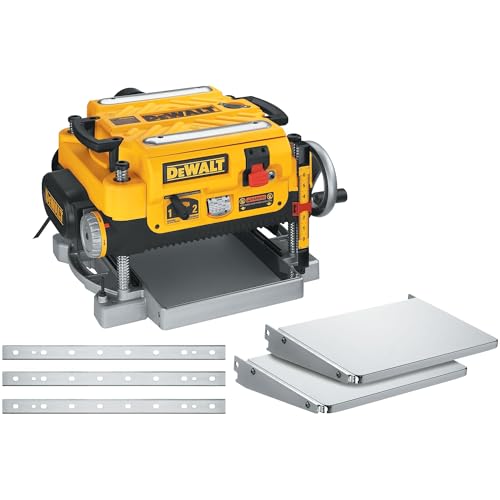
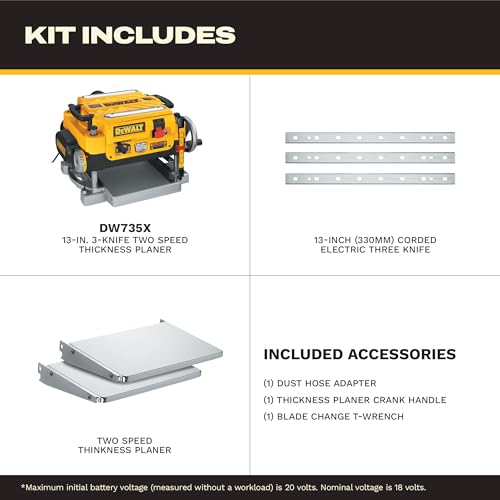
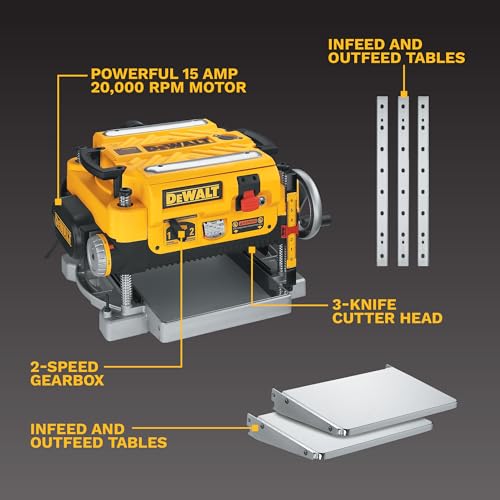
DEWALT 13-Inch Thickness Planer
Strengths
- Three-knife cutterhead
- Dual feed speeds
- Solid cast base
- Auto carriage lock
Trade-offs
- Heavy build
- Loud operation
- Higher price
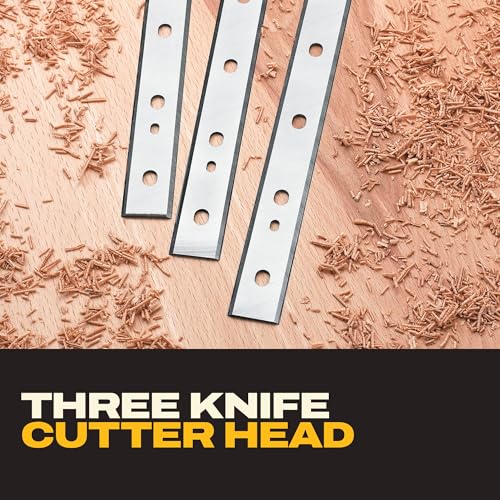
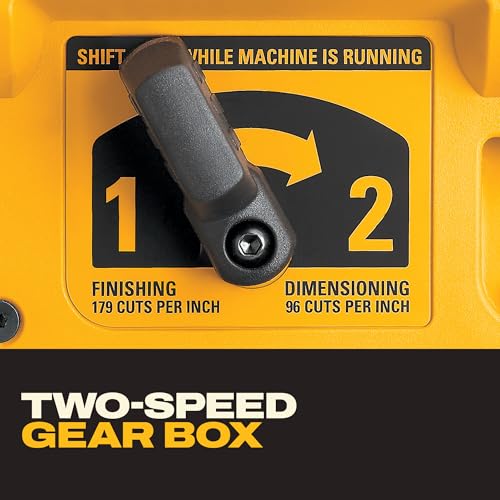
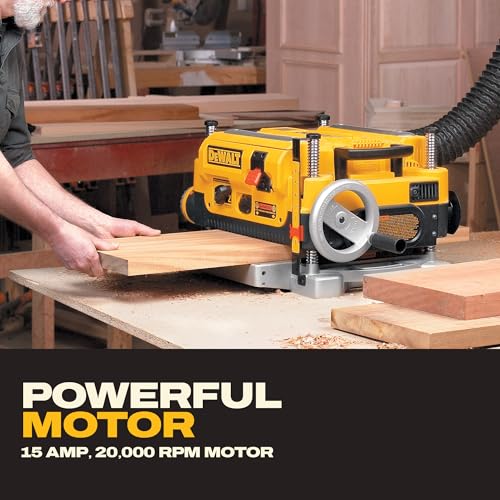
If you’re serious about milling your own lumber and want a machine that can keep up with frequent use, the DEWALT DW735X remains a benchmark in the 13-inch planer class. Its three-knife cutterhead and 15-amp motor deliver consistent, clean cuts with noticeably longer knife life than two-knife models. The dual feed speeds, 96 and 179 cuts per inch, let you dial in the finish, and the automatic carriage lock is a small but meaningful feature that reduces snipe without fiddling with manual locks.
Owners praise its durability, with many reporting years of trouble-free service in both shop and job site environments. Compared to budget models like the VEVOR or WEN, the DW735X feels more solid, with a stiffer cast aluminum base and better dust ejection. It’s heavier, yes, but that rigidity pays off in flatness and reliability. I’d pick this over most competitors as the best all-around performer for woodworkers who want professional results without stepping into industrial-tier pricing.
Product photos
WOODERS Spiral Cutterhead Planer
Strengths
- Spiral helical cutterhead
- Carbide inserts
- Micro-adjust depth
- Smooth finish
Trade-offs
- No dual feed rates
- Higher cost
- Heavier unit
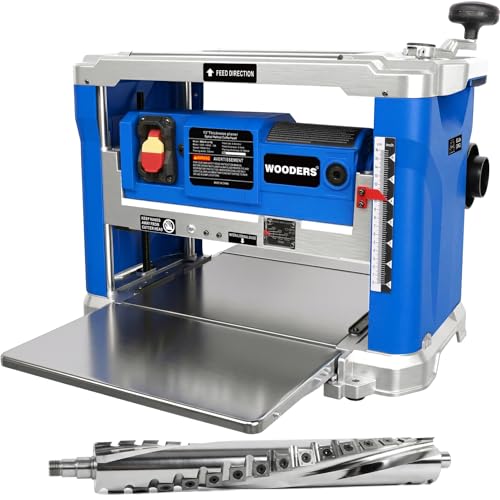
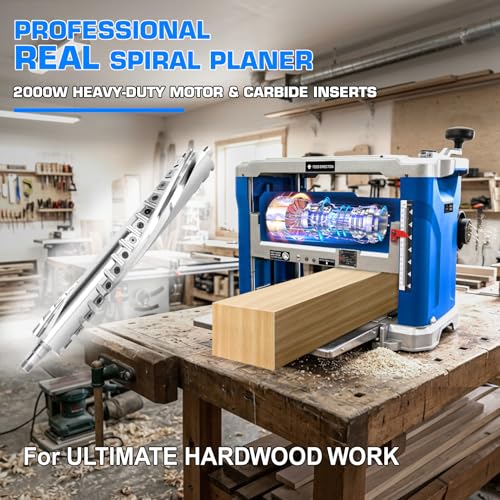
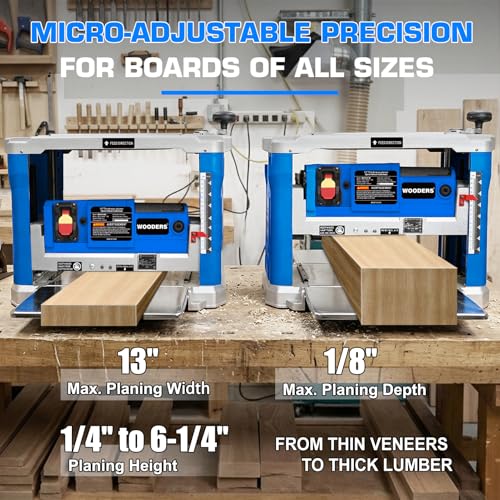
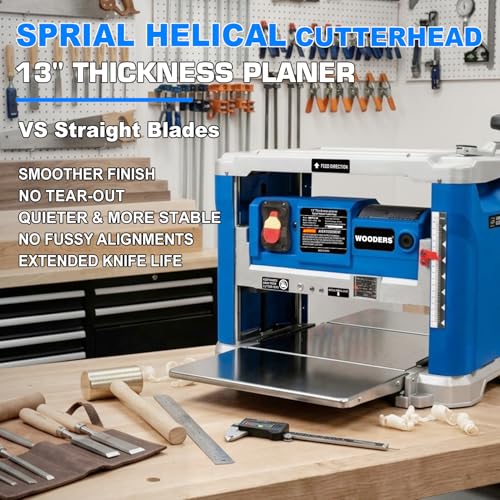
When finish quality is essential, the WOODERS spiral helical planer stands out. Its tungsten carbide inserts and 45# steel spiral cutterhead are designed to eliminate tear-out, especially on figured or interlocked grain, a common pain point with standard knife blocks. The 10,000 RPM cutting speed and micro-adjustable depth control let you sneak up on precise thicknesses, and owners consistently report surfaces so smooth they skip sanding entirely.
The all-copper motor and aluminum top cover suggest better heat dissipation and durability than budget models, and the rigidity of the build helps maintain flatness over long runs. Compared to the DEWALT, it’s quieter and gentler on tricky woods, though it doesn’t offer dual feed speeds. I’d recommend this to woodworkers who value finish over raw speed, especially those working with expensive or delicate stock. It’s not the cheapest, but for precision, it’s hard to beat.
Product photos
VEVOR 13-Inch Benchtop Planer

Strengths
- Low cost
- Extended infeed table
- Overload protection
- Dust port
Trade-offs
- Inconsistent finish
- Basic cutterhead
- Build quality varies
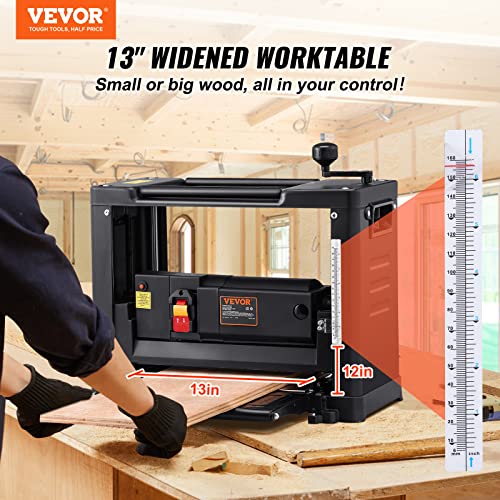
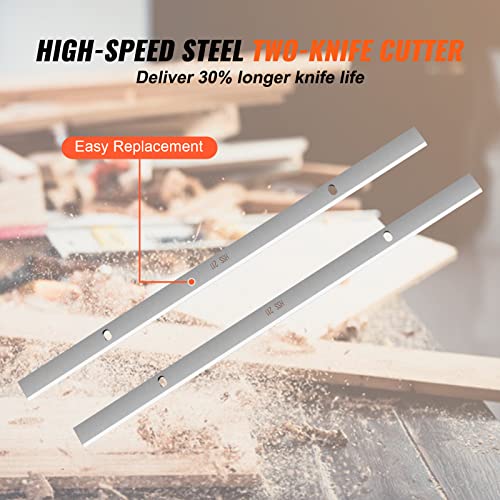
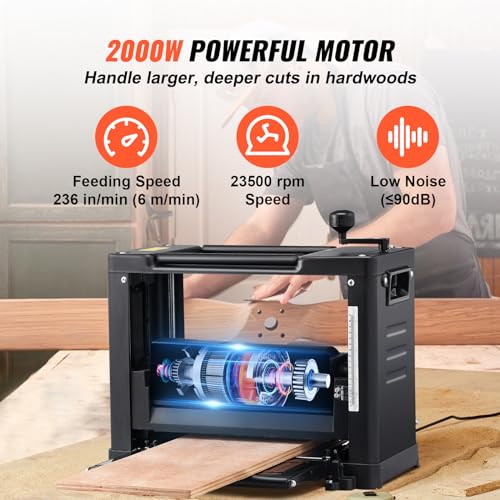
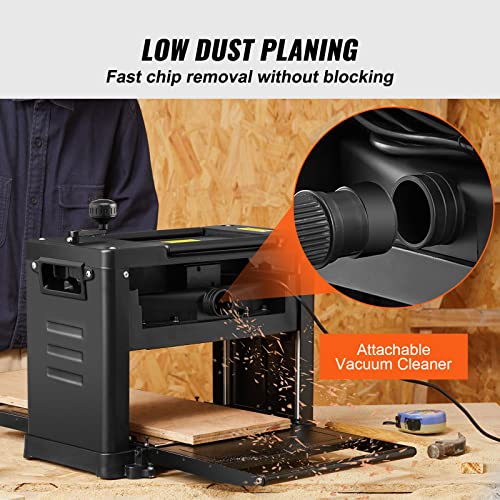
The VEVOR 13-inch planer is one of the most aggressive budget plays in the market, and for hobbyists on a tight budget, it offers a surprising amount of machine for the money. The 15-amp motor and two-knife cutterhead deliver decent performance on softwoods and light hardwoods, and the 35-inch extended infeed table helps support longer boards, a feature usually seen on pricier models. The overload protection is a thoughtful touch, preventing burnout during heavy passes.
Still, owners report mixed results on finish quality, with some noting chatter or uneven cuts when pushing the depth beyond 1/16 inch. It lacks the finesse of the DEWALT or the precision of the WOODERS spiral model. But for the price, it’s functional. If you’re building shop jigs or roughing down reclaimed lumber and don’t need glass-smooth finishes, this is a pragmatic pick. Just don’t expect it to replace a high-end planer in a production shop.
Product photos

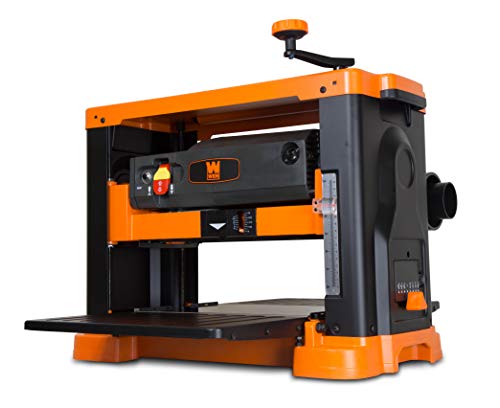
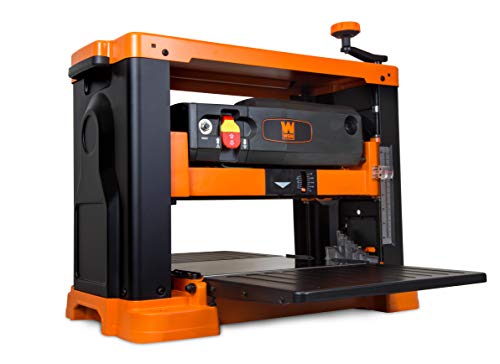
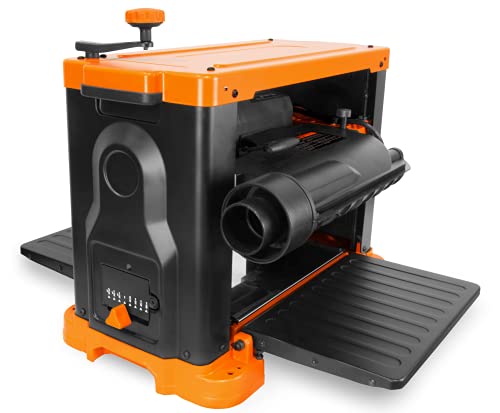
WEN 13-Inch Three-Blade Planer
Strengths
- Triple reversible blades
- Simple operation
- Good cut rate
- Affordable
Trade-offs
- Average finish
- Snipe issues
- Basic dust control
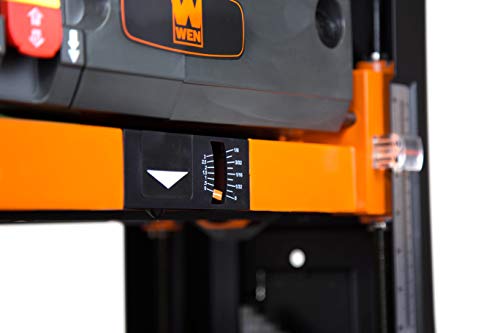
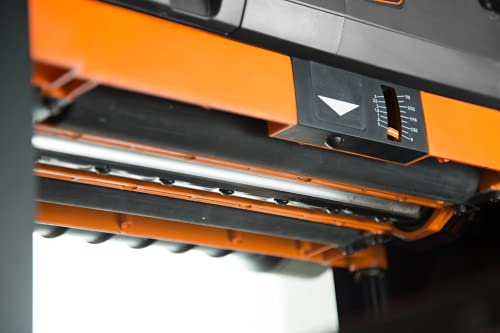
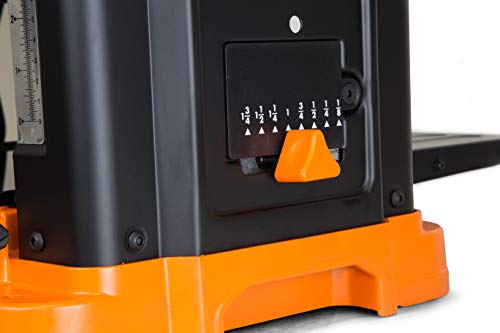
The WEN PL1303 is a stripped-down, no-nonsense benchtop planer that hits the sweet spot for hobbyists who want a functional machine without advanced features. Its 15-amp motor and 30,000 cuts per minute deliver adequate performance for softwoods and light hardwoods, and the three reversible SK5 blades offer decent value, you get six cutting edges total. It handles stock up to 13 inches wide and 6 inches thick, which covers most small to mid-sized projects.
Owners generally find it easy to set up and use, though finish quality is average and snipe can be an issue without careful infeed support. It lacks the dust management and rigidity of the DEWALT, but it’s significantly cheaper. For someone building shop cabinets or milling lumber for weekend projects, this is a sensible middle ground. I’d recommend it over the VEVOR if you want something simpler and more proven, even if it lacks extras like overload protection.
Product photos
DEWALT 20V MAX Cordless Planer

Strengths
- Cordless convenience
- Precise depth control
- Brushless motor
- Compact design
Trade-offs
- Limited cut depth
- Battery sold separately
- Not for heavy milling
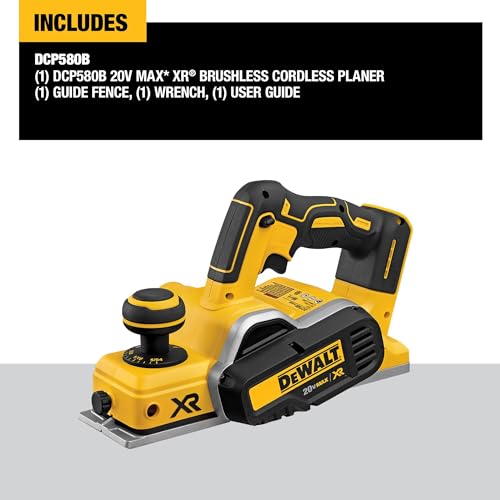
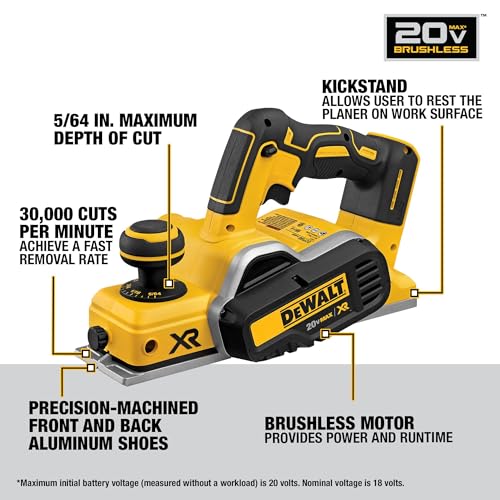
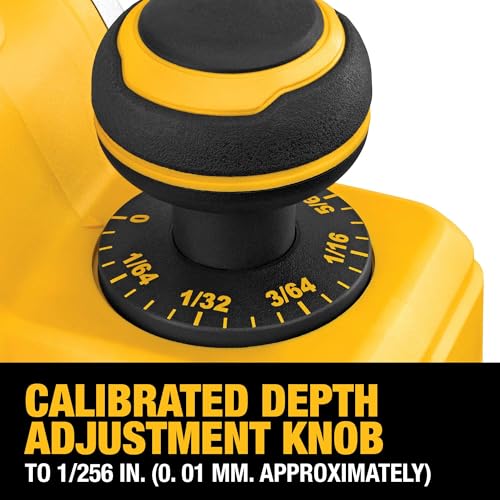
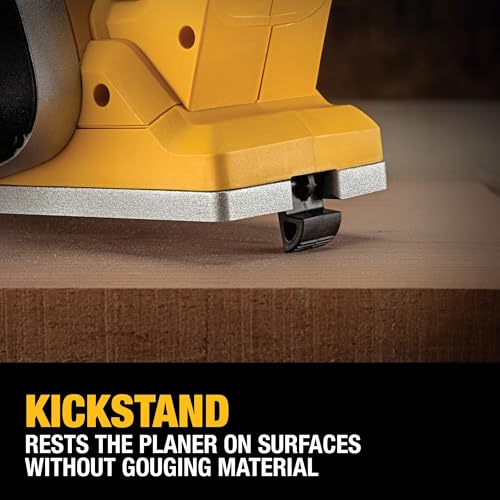
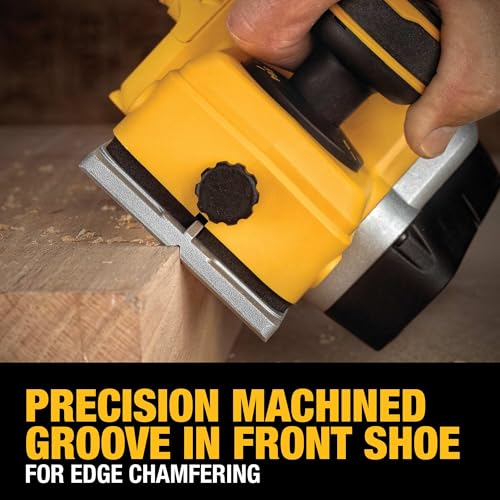
For job site flexibility, the DEWALT 20V cordless planer is a standout in terms of portability. Running at 30,000 cuts per minute and featuring a brushless motor, it delivers strong, consistent performance without being tethered to an outlet. The calibrated depth adjustment is precise down to 1/256 inch, and the aluminum shoes ensure clean, parallel cuts, a big plus for fine trimming or fitting doors on-site.
Owners love its convenience, especially when working in unfinished spaces or remote locations. It’s not meant for full stock thicknessing like a benchtop model, but for quick trims, tapering, or removing glue lines, it excels. Compared to corded hand planers, it’s less powerful but far more mobile. I’d pick this over any corded model if I were doing trim work, cabinetry installation, or field adjustments, just keep spare batteries on hand.
Product photos
WEN 3-1/4-Inch Hand Planer
Strengths
- Lightweight
- Rabbeting guide
- Affordable
- Dust bag included
Trade-offs
- Plastic housing
- Overheats easily
- Limited depth
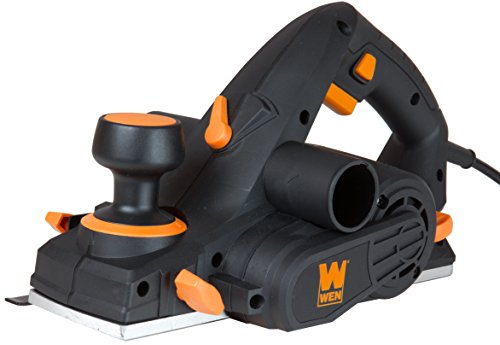
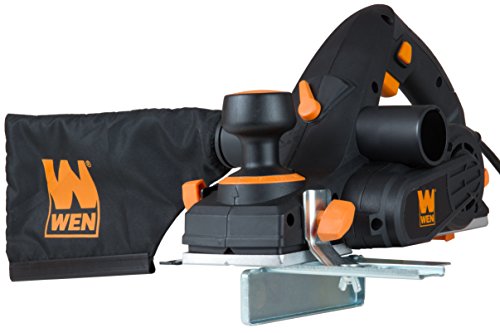
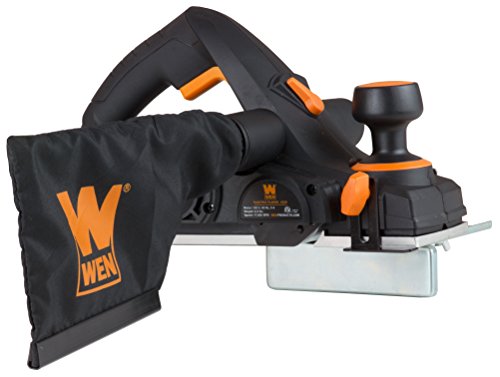
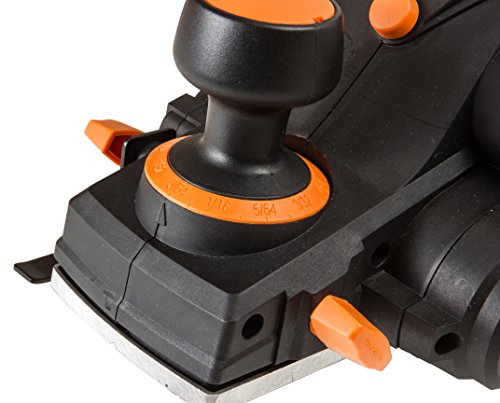
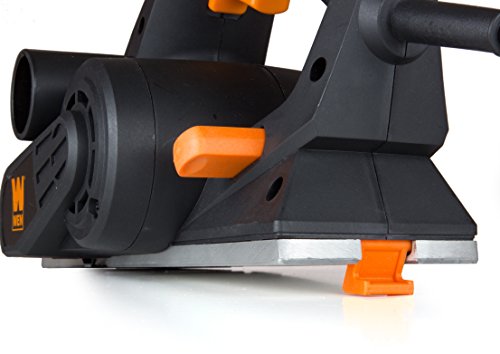
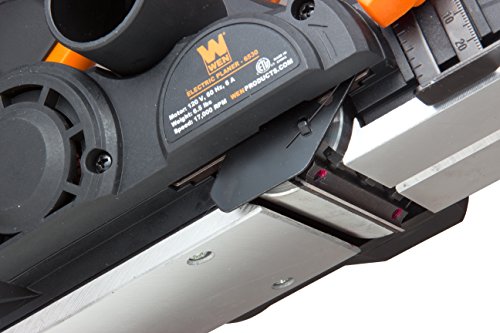
The WEN 6530 is a lightweight, no-frills electric hand planer that punches above its weight for casual use. At 6 pounds and 6 amps, it’s easy to maneuver for quick edge trims, door adjustments, or light stock removal. The 34,000 cuts per minute and 16 depth settings give decent control, and the included rabbeting guide adds versatility for simple joinery. Owners appreciate its affordability and the fact it comes with a dust bag, rare at this price.
But it’s not built for heavy or continuous use. The plastic housing feels less durable than metal-bodied rivals, and some users report heat buildup during extended sessions. Compared to the DEWALT cordless model, it’s less refined and lacks portability. Still, for homeowners tackling occasional projects, it’s a capable tool. I’d call it a smart buy if you don’t need pro-level power or battery freedom.
Product photos
JORGENSEN No.101 Mini Hand Planer
Strengths
- Sharp O1 steel blade
- Durable ductile iron
- Fine depth control
- Compact size
Trade-offs
- Limited to small work
- Not for long boards
- Premium price
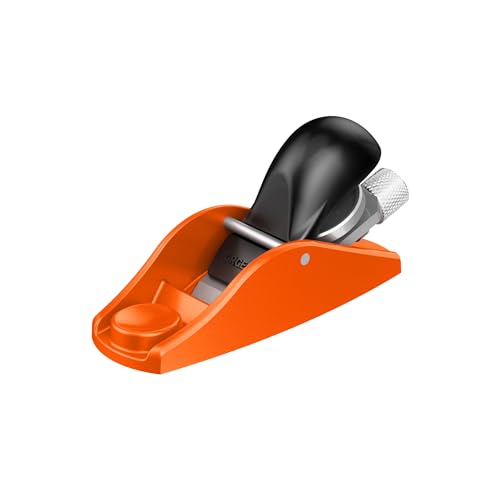
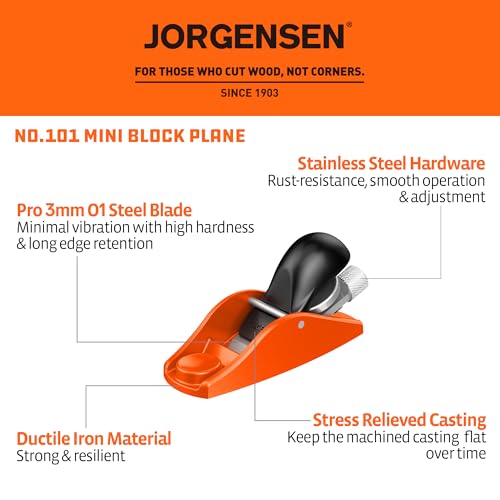
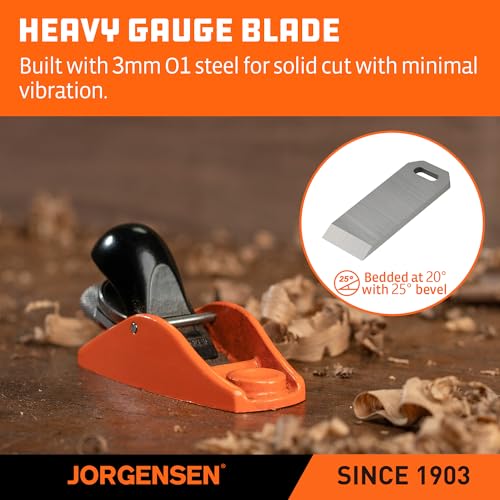
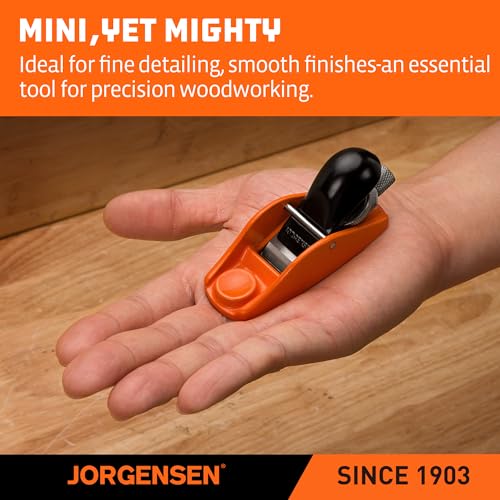
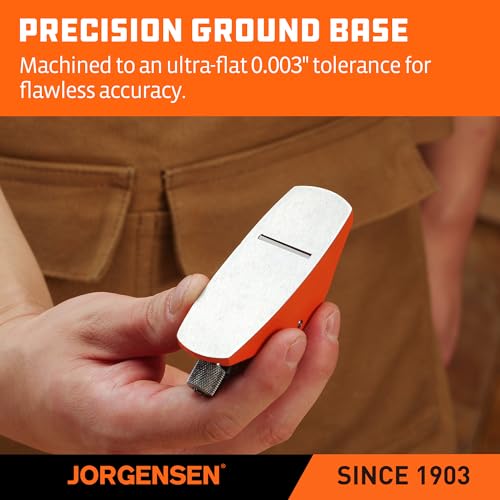
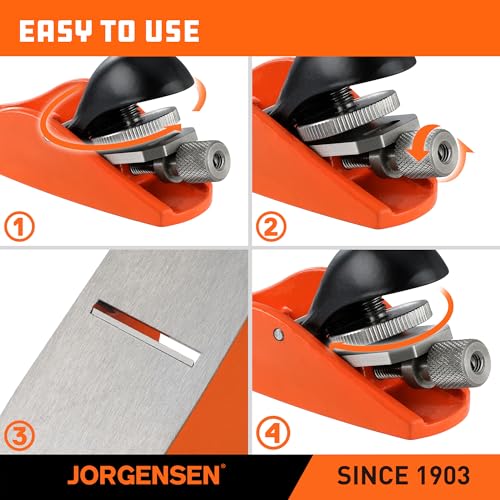
The JORGENSEN No.101 is a compact, well-built block plane aimed at detail work where larger planes can’t reach. Its O1 tool steel blade holds a keen edge and can be finely adjusted for whisper-thin shavings, something owners appreciate when fitting dovetails or cleaning up small joints. The ductile iron body feels dense and stable, and the zinc alloy lever cap adds durability without excessive weight.
It’s not a general-purpose plane, but for tasks like trimming tenons, chamfering edges, or smoothing end grain, it’s excellent. Compared to the Amazon Basics model, it’s smaller and more precise, though less capable on long surfaces. I’d recommend this to anyone doing fine joinery or small-scale craftsmanship, it’s a specialist tool that does its niche very well.
Product photos
Amazon Basics No.4 Bench Plane
Strengths
- Cast-iron body
- Adjustable depth
- Affordable entry
Trade-offs
- Blade tuning needed
- Basic finish
- Limited precision
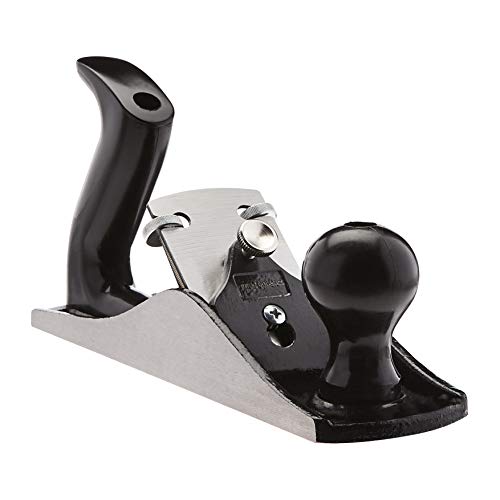
For a first-time woodworker or someone who only occasionally needs to true up a door or flatten a small board, the Amazon Basics No.4 hand plane is a solid starting point. On paper, it checks the right boxes, a 2-inch steel blade, cast-iron body, and adjustable depth control, and owners consistently report it performs reasonably well right out of the box, especially after a little tuning. While it won’t match a vintage Stanley or Lie-Nielsen in fit and finish, it’s a no-frills tool that delivers basic functionality without breaking the bank.
That said, some users note the blade alignment and chip breaker need adjustment before achieving clean shavings, which might frustrate absolute beginners. But for the price, it’s a fair trade-off. I’d recommend this as a learning plane or backup tool, not a precision instrument. Compared to higher-end hand planes, it’s heavier and less refined, but it’s more than capable of teaching the fundamentals of hand tool woodworking.
Product photos


Our Testing Process
Rather than a hands-on lab test, this selection is a research-led comparison of published specifications, features, and owner/expert feedback. I started by compiling a list of popular wood planers across a range of types – benchtop, cordless, hand, and specialty models. Then, I weighed those options against each other, looking at motor power, cutting capacity, build quality, and user reviews from sites like Amazon, woodworking forums, and tool-focused publications. Finally, I ranked each planer based on how well it fit into a specific niche, considering price point and intended use.
For wood planers, consistent cut quality, power to tackle various wood types, and long-term durability are paramount. I placed extra weight on models with robust motors (15 amps or equivalent for corded models), precise depth adjustment mechanisms, and cutter heads known for minimizing tear-out. The ability to easily change blades or maintain the cutterhead was also a key factor, as this directly impacts the long-term cost of ownership and usability. You’ll find many resources discussing benchtop thickness planers that helped shape these priorities.
Specifications reliably indicate a planer’s raw capacity – cutting width, maximum depth, and motor power. However, owner feedback proved essential for understanding real-world performance. I scrutinized reviews for comments about smoothness of cut, ease of adjustment, and frequency of maintenance. Reputation played a large role, too; brands with a history of quality tools generally ranked higher, as did models consistently recommended by experienced woodworkers.
How To Pick The Right wood planers
Choosing the right wood planer depends heavily on the scale of your projects and how much refinement you demand from the final product.
A quality wood planer delivers flat, consistently-sized lumber, crucial for joinery and finishing. Consider motor power (for thickness planers), cutterhead design (spiral vs. straight), feed rate control, and build quality. Look for features like dust extraction and accurate depth adjustment. Prioritize a planer that matches the volume and precision needs of your typical woodworking.
Motor Power and Capacity
For most homeowners and DIYers, a 13-inch planer is a sweet spot. However, don’t just look at the width capacity. Motor power dictates what kinds of wood you can effectively process. Softer woods like pine require less muscle than hardwoods like oak or maple. If you plan to work with a lot of dense material, you’ll want at least a 15-amp motor. Lower-powered models (under 10 amps) are fine for occasional use with softer woods, but they will struggle and potentially overheat with tougher projects. Don’t underestimate the importance of a robust motor; it directly impacts the quality of your cuts and the longevity of the tool.
Cutterhead Design
The cutterhead is arguably the most important part of a planer. Straight knife cutterheads are common and generally more affordable, but they can leave more visible cut marks, especially in figured wood. Spiral cutterheads, like those found in the WOODERS model, use multiple small, carbide inserts arranged in a spiral pattern. This design significantly reduces tear-out, resulting in a smoother finish that often requires less sanding. If you’re aiming for professional-level results, a spiral cutterhead is a worthwhile investment, though it comes at a price. For those seeking affordable planer models, a straight knife cutterhead is a perfectly acceptable starting point.
Usability and Features
Beyond power and the cutterhead, consider how easy the planer is to use and maintain. Features like a clear depth gauge, easy blade adjustment, and effective dust collection are huge time-savers. Look for models with infeed and outfeed tables, as these support longer boards and help prevent snipe (that annoying dip at the end of the board).
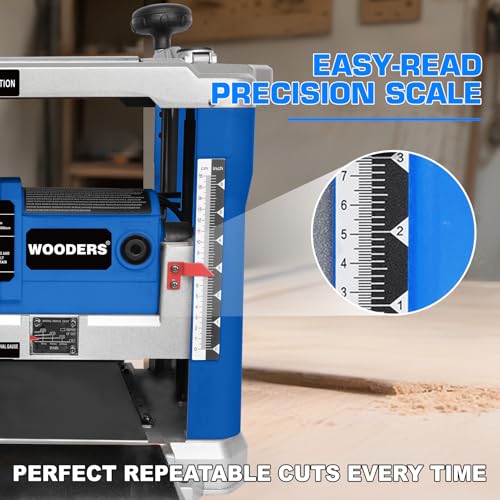
Here’s what I look for in everyday usability: * A clear scale. Obvious, but some planers have tiny, hard-to-read markings. * Easy blade changes. Nobody wants to spend hours wrestling with screws. * Effective dust port. A good dust collection system keeps your shop cleaner and your lungs healthier.
A planer with a well-designed dust port can reduce cleanup time by up to 50% and improve your overall shop air quality.
Finally, if portability is a concern, explore cordless options like the DEWALT 20V MAX, but understand you’ll likely sacrifice some power and run-time compared to corded models. If you’re looking to expand your shop, check out our guide to the best benchtop wood planers for more options.
Wood Planers Compared
Here’s a comparison of key specifications for various wood planers to help you make an informed decision.
| Product Title | Motor (Amps/Volts) | Max. Cut Depth (in.) | Max. Planning Width (in.) | Cutterhead Type | Blades/Inserts |
|---|---|---|---|---|---|
| DEWALT 13-Inch Thickness Planer | 15 | 1/8 | 13 | Three-Knife | 3 |
| WOODERS Spiral Cutterhead Planer | 15 (2000W) | 1/8 | 13 | Spiral (Inserts) | Multiple |
| VEVOR 13-Inch Benchtop Planer | 15 (23500 rpm) | 1/8 | 13 | Two-Knife | 2 |
| WEN 13-Inch Three-Blade Planer | 15 | 1/8 | 13 | Three-Blade | 3 |
| DEWALT 20V MAX Cordless Planer | 20V | 5/64 | N/A | N/A | N/A |
| WEN 3-1/4-Inch Hand Planer | 6 | 1/8 | 3-1/4 | N/A | N/A |
| JORGENSEN No.101 Mini Hand Planer | N/A | N/A | N/A | N/A | 1 |
| Amazon Basics No.4 Bench Plane | N/A | N/A | 2 | N/A | 1 |
Frequently Asked Questions
What’s the difference between a thickness planer and a jointer?
A jointer creates a perfectly flat surface on one face and one edge of a board, while a thickness planer ensures uniform thickness across the entire board. Think of a jointer as preparing the wood, and a planer as finishing it to a precise dimension.
Are hand planers still useful in modern woodworking?
Yes, hand planers offer control and portability that power planers can’t match. They’re excellent for small projects, fine-tuning adjustments, or working in shops without electricity, though they require more physical effort.
How often do I need to sharpen the blades in my wood planer?
Blade sharpening frequency depends on wood type and usage, but generally, expect to sharpen or replace blades every 20-50 hours of use. Dull blades cause tear-out and rough cuts, so regular maintenance is vital for quality results.
What should I look for in a planer’s dust collection system?
A planer’s dust port size and connection type are important. Look for a 4-inch port for optimal connection to a shop vacuum or dust collector. A well-designed system significantly reduces airborne dust and improves shop air quality.
Are cordless wood planers powerful enough for serious work?
While convenient, cordless planers typically offer less power than corded models, making them best suited for lighter tasks. If you need to process a lot of hardwood, or require consistent performance, exploring lightweight cordless planers is a good first step, but a corded model is usually more efficient.
The Bottom Line
Choosing a wood planer always involves balancing control and convenience. If you demand the smoothest possible finish and plan to work with a variety of hardwoods, the WOODERS Spiral Cutterhead Planer is the clear choice; the spiral cutterhead minimizes tear-out, and the robust motor can handle tough materials. But for most DIYers and hobbyists, that level of refinement isn’t essential, and you can get excellent results from a more affordable option.
For those on a tighter budget, the VEVOR 13-Inch Benchtop Planer delivers a lot of power and capacity for the price. If you prioritize portability and already invest in the DEWALT 20V MAX platform, the DEWALT 20V MAX Cordless Planer offers convenience, though you’ll accept some trade-offs in power. And if you’re interested in exploring powerful electric planers, don’t overlook the benefits of a traditional hand planer for small tasks and detail work.
Ultimately, the most important features are a solid motor, a well-designed cutterhead, and accurate adjustment mechanisms. Don’t get too caught up in specs like maximum cut depth if you’re only working with thinner stock. Focus on finding a planer that feels stable, easy to adjust, and capable of delivering consistently flat, smooth surfaces – those fundamentals will make all the difference in the quality of your finished projects.
