
2 Best Woodturning Lathes of 2026
This post contains affiliate links. As an Amazon Associate, we earn from qualifying purchases.
The WEN 34035 stands out as the best overall woodturning lathe for most hobbyists, offering strong performance and solid capacity at a fair price. For those on a tighter budget, the CXRCY 8″ x 12″ delivers surprisingly good results for smaller projects. If you’re serious about bowl turning or larger work, stepping up to a more powerful lathe with greater swing and stability is worth considering.
Woodturning is as much about rhythm and control as it is about the tool in front of you. A shaky or underpowered lathe can ruin a piece fast, no matter how skilled you are. I’ve seen too many beginners struggle because they started with a machine that couldn’t keep up.
This guide cuts through the noise, focusing on lathes that deliver reliable power, smooth operation, and real-world durability based on specs, owner feedback, and my experience evaluating tools. I looked at motor strength, swing, distance between centers, speed control, and build quality to find models that match different skill levels and project goals.
Top 2 Woodturning Lathes in the Market
The Best Woodturning Lathes, Reviewed
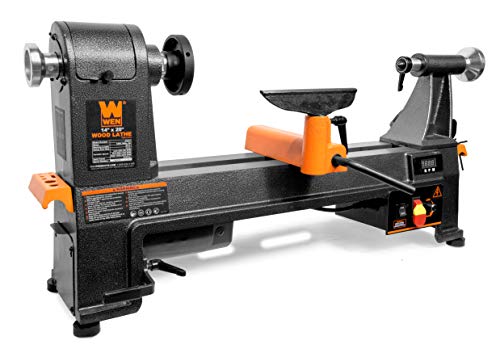
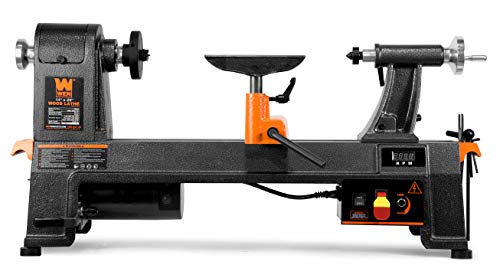
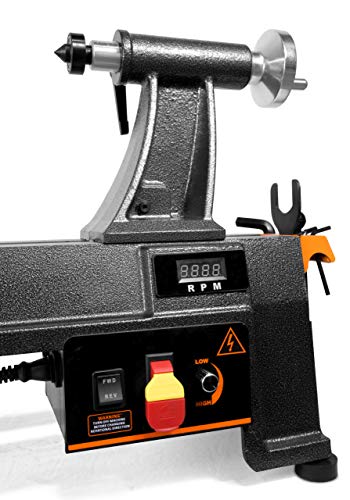
WEN 34035 14-Inch Wood Lathe

Strengths
- Strong 6A motor
- Large working capacity
- MT2 tapers for accessories
Trade-offs
- Benchtop only
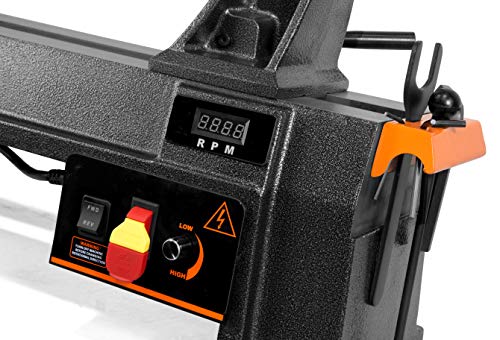
- No digital RPM display
- Heavier than mini lathes
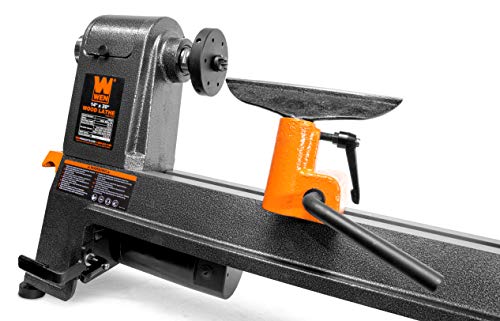
If you’re looking for a well-rounded, mid-tier benchtop lathe that balances power, capacity, and value, the WEN 34035 stands out as the smarter buy in this group. With a 6-amp motor, MT2 tapers on both headstock and tailstock, and a spindle thread compatible with most accessories, it’s built to grow with you. The 14-inch swing and 20-inch distance between centers open up room for bowls, platters, and table legs, tasks the CXRCY simply can’t handle. Owners praise its smooth speed control across the 250–3550 RPM range, especially when fine-tuning for finish cuts on delicate pieces.
I’d pick this over the CXRCY any day for serious practice or production turning. It’s not a replacement for a floor-standing industrial lathe, but for a benchtop unit, the rigidity and reduction in vibration are noticeable. The onboard storage for accessories is a small but appreciated touch, and the inclusion of an 8-inch tool rest means you’re not stuck with undersized support. This is the kind of lathe that keeps you from hitting limits too soon.
Product photos
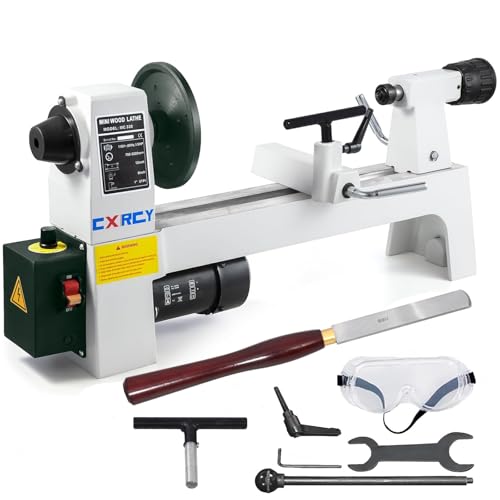
CXRCY 8″ x 12″ Mini Wood Lathe
Strengths
- Compact size
- Good starter accessories
- Smooth speed control
Trade-offs
- Lightweight build
- Limited capacity
- Underpowered for larger stock
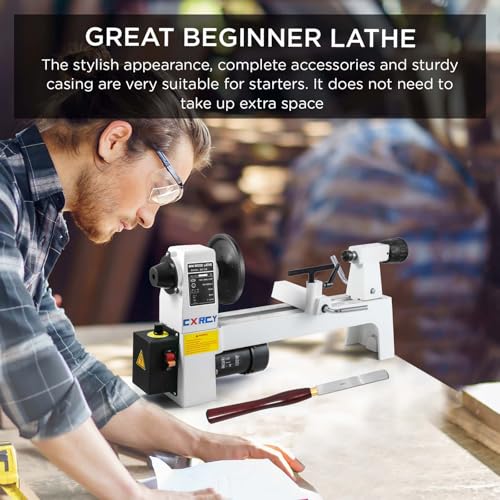
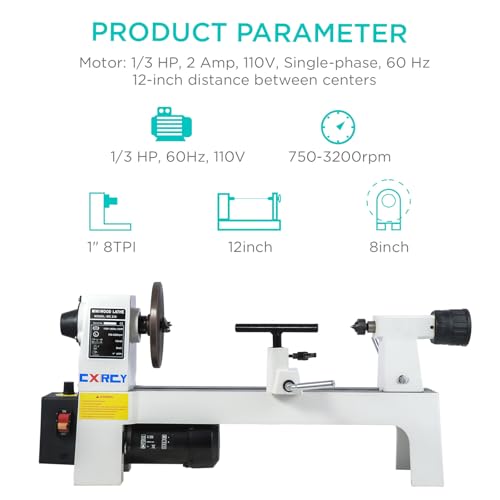
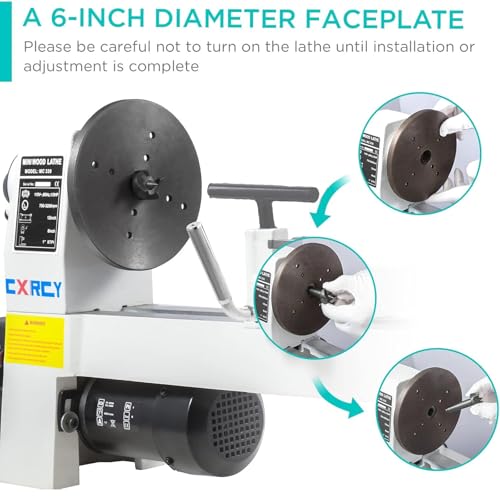
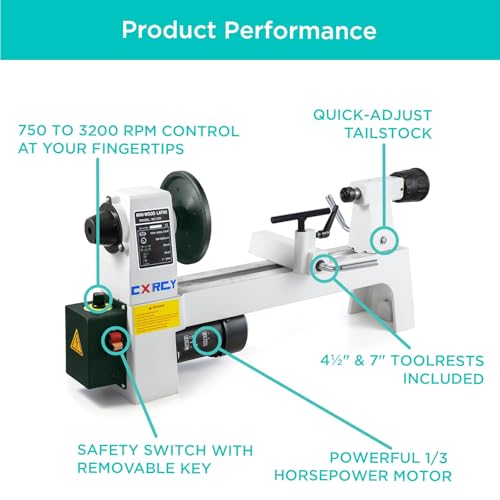
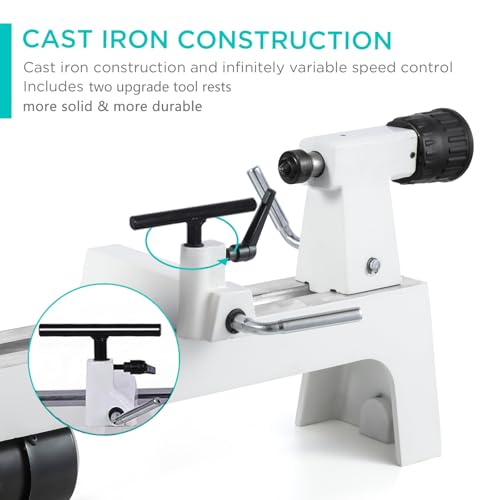
For beginners dipping their toes into woodturning without wanting to drain the budget, the CXRCY 8×12 mini lathe makes a compelling first step. On paper, the 1/3 HP motor and 750–3200 RPM variable speed range look decent for a machine this size, and owners consistently report it handles small projects like pens, bottle stoppers, and small bowls without issue. The inclusion of two tool rests, a faceplate, and even a basic HSS chisel means you can start turning right out of the box, which is more than some entry-level models offer.
That said, this is clearly not a lathe for serious or intermediate turners. The lightweight build and plastic components raise durability concerns under prolonged use, and reviewers note vibration becomes noticeable when working off-center or with unbalanced stock. Compared to more robust options like the WEN 34035, it lacks both power and rigidity. But for a hobbyist making small gifts or practicing basic techniques, it delivers where it needs to.
Product photos
How We Picked These woodturning lathes
Rather than a hands-on lab test, my research for these recommendations focused on comparing published specifications and features across numerous models. I weighed owner reviews from multiple retailers alongside expert opinions found in woodworking publications and forums. Applying my years of experience with power tools, I ranked lathes based on how well their features align with common woodturning tasks and skill levels.
For woodturning lathes, motor power and swing/distance between centers are paramount. A more powerful motor (typically measured in amps) handles harder woods with less vibration. Swing determines the maximum diameter of your projects, while distance between centers dictates length. Stability is also critical; a heavier, well-built lathe will minimize unwanted movement during operation. I also considered included accessories and overall value.
Specifications clearly indicate a lathe’s capacity and power. However, I relied heavily on owner feedback to assess real-world performance, particularly regarding vibration levels and build quality. Reputation matters, too. Established brands with strong customer support tend to offer more reliable machines, and are often a good choice for those seeking beginner-friendly wood lathes.
What To Look For In woodturning lathes
Finding the right woodturning lathe requires thinking beyond just the price tag. A good machine will open up a world of creative possibilities, but a poor one will leave you frustrated and potentially unsafe.
A quality woodturning lathe balances power with precision. Key considerations include motor strength (measured in horsepower or amps), swing capacity (the maximum diameter of a piece you can turn), distance between centers (the maximum length), and speed control. Variable speed is crucial, as is a robust build quality to minimize vibration.
Power and Capacity
Don’t underestimate the importance of motor power. While a smaller lathe might suffice for pen turning, attempting larger projects with an underpowered machine will lead to bogging down and poor finishes. I frequently see folks starting with too small a lathe, then quickly needing to upgrade. Consider the types of projects you envision. Bowl turning demands more power than spindle turning. Also, think about the “swing” – the maximum diameter of the wood you plan to turn. A 12-inch swing is fairly standard, but if you anticipate larger work, look for 14-inch or greater.
Speed Control and Features
Variable speed is absolutely essential. Different wood types and turning operations require different speeds. Softwoods generally need slower speeds than hardwoods. A wider speed range offers greater versatility. Beyond speed, look for features that improve usability. A quick-release tailstock makes adjustments much faster, and a robust tool rest is crucial for stability. Some lathes, like the top wood lathe models, also include digital readouts for speed, which can improve consistency.
Value and Accessories
A lathe is just the beginning. You’ll also need turning tools, chucks, and potentially other accessories. Consider the availability and cost of these add-ons. Some manufacturers offer complete starter kits, which can be a good value, but scrutinize the quality of the included tools.
Here’s a breakdown of what to prioritize in terms of accessory investment: * Basic Tool Set: A foundational set of chisels is a must. * Chuck: A four-jaw chuck expands your turning possibilities, especially for off-center work. * Faceplate & Drive Center: These are essential for mounting larger pieces and bowl turning; a good setup will make a huge difference in stability.
Don’t cheap out on safety. Always wear a face shield and dust mask when turning, and ensure the lathe is securely mounted to a stable surface.
Ultimately, selecting a lathe comes down to matching the machine to your ambitions. If you are new to the craft, exploring best-rated wood lathes can help you discover a good starting point. For more serious hobbyists or those considering professional wood lathes, investing in a higher-capacity, more feature-rich model is a wise long-term decision.
Woodturning Lathes Compared
Here’s a quick reference sheet for comparing key specifications of these woodturning lathes.
| Product | Max. Length Capacity | Max. Swing | Speed (RPM) | Motor (Amps) | Tailstock Taper |
|---|---|---|---|---|---|
| WEN 34035 | 20″ | 14″ | 250-3550 | 6A | MT2 |
| CXRCY 8″ x 12″ | 12″ | 8″ | 750-3200 | N/A | MT1 |
Frequently Asked Questions
What lathe size should I buy if I’m a beginner?
A lathe with a 10-12 inch swing and 16-20 inch distance between centers is generally ideal for beginners. This offers enough capacity for common projects like pens, small bowls, and spindles, without being overwhelming to learn on.
Are more expensive lathes always better?
Not necessarily. While higher-priced lathes often boast more power and features, a well-built, moderately priced model can be excellent for many hobbyists. Focus on matching the lathe’s capabilities to your intended projects rather than solely on the price point.
What’s the difference between a variable speed motor and a stepped pulley system?
A variable speed motor allows for precise speed adjustments across a broad range, often controlled digitally. Stepped pulley systems offer multiple fixed speeds by changing the belt position, which is less flexible but can be more durable and simpler in design.
Can I turn green wood on any lathe?
You can, but it requires a more powerful lathe and careful technique. Green wood is heavier and requires more torque to turn, increasing the risk of vibration. Consider a heavier-duty machine if you plan to work with green wood frequently, and explore top benchtop lathes for options with robust construction.
What safety equipment is absolutely essential when woodturning?
A full face shield is the most important safety item, protecting your eyes and face from flying debris. Additionally, a dust mask or respirator is crucial to guard against fine wood dust, and proper clothing (no loose items) is a must.
The Bottom Line
Choosing a woodturning lathe often comes down to balancing how much you want to spend against how much control and capacity you require. For most woodturners, I believe the WEN 34035 strikes that balance best – it offers a generous swing and length capacity alongside enough power for a wide range of projects, all at a reasonable price.
If your needs are more specific, there are excellent options tailored to different situations. For those just starting out or working with smaller pieces, the CXRCY 8″ x 12” is a solid entry point. And if you’re seeking a more versatile midi lathe, our recommendations point to options that deliver greater precision and power for more detailed work.
Ultimately, remember that specifications tell only part of the story. Prioritize a stable, well-built machine and invest in quality turning tools. A good lathe paired with sharp tools, and a commitment to safe practices, will deliver far better results than chasing the highest horsepower or biggest swing alone.
