
8 Best Thickness Planers of 2026
This post contains affiliate links. As an Amazon Associate, we earn from qualifying purchases.
The DEWALT 13-Inch Planer stands out as the best overall thickness planer for most woodworkers, combining reliable performance and solid build quality. For those on a tighter budget, the FINDBUYTOOL 13-Inch Planer offers a surprising value with its helical cutterhead. If you need maximum width capacity, the JET 20-Inch Planer is the clear choice.
Most people shopping for a thickness planer quickly realize it’s not just about shaving wood, it’s about consistency, durability, and avoiding frustrating flaws like snipe or tear-out. Too many buyers end up with underpowered machines or outdated blade systems that struggle with real-world demands.
This guide cuts through the noise. I focused on motor strength, cutterhead design, and real-world feedback to identify models that deliver clean, accurate results over time. These picks reflect what actually matters in the shop, not just spec-sheet numbers.
Top 8 Thickness Planers in the Market
The Best Thickness Planers, Reviewed
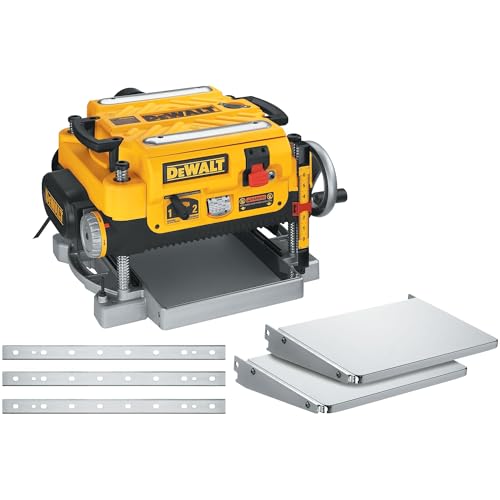
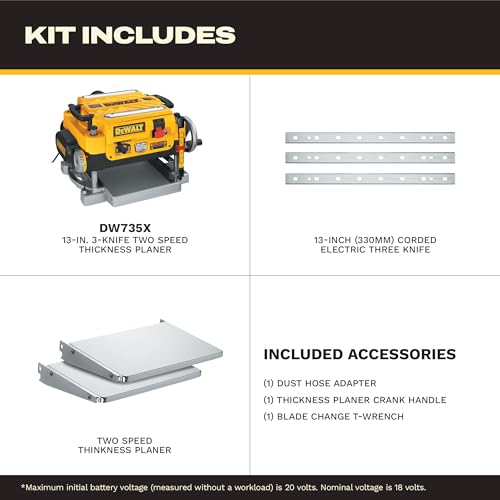
DEWALT 13-Inch Thickness Planer
Strengths
- Two-speed gearbox
- Fan-assisted chip ejection
- Automatic snipe reduction
- Stiff cast aluminum base
- Includes extra knives
Trade-offs
- Loud under load
- Dust collection could be better
- Heavy for benchtop
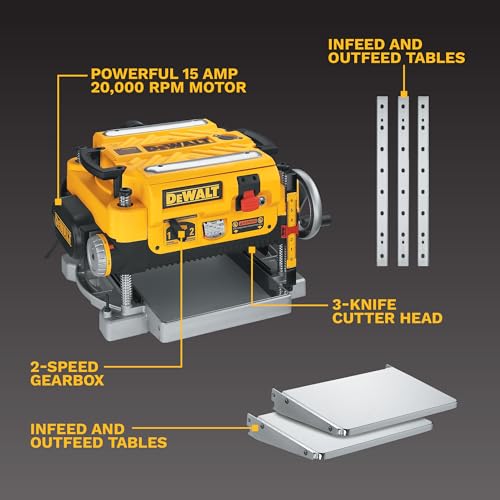
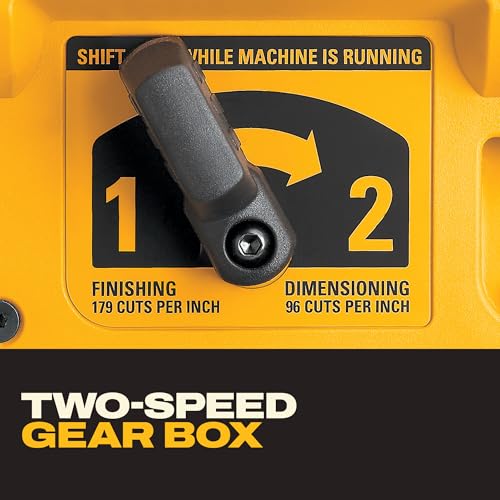
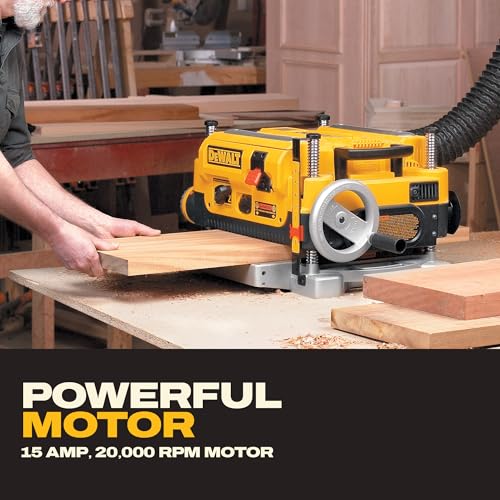
The DEWALT DW735X is the benchmark in the 13-inch class for a reason. Its cast aluminum base is noticeably stiffer than most competitors, and the automatic carriage lock is one of the best anti-snipe systems you’ll find at any price. The two-speed gearbox lets you choose between 96 and 179 cuts per inch, so you can rip through rough stock or creep across figured maple with zero tear-out.
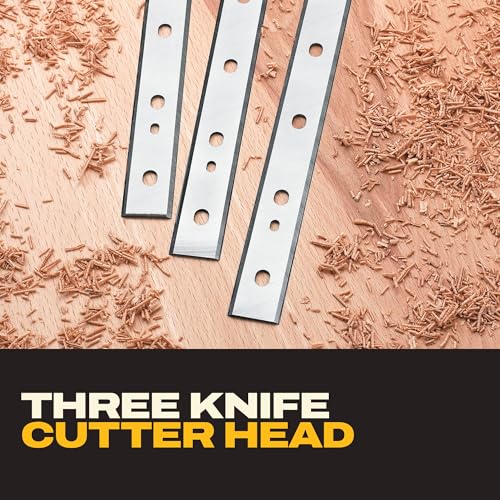
Owners consistently praise the fan-assisted chip ejection, it keeps the cutterhead clear and the work area cleaner. Combined with the extra set of knives and 3-year warranty, this is the complete package. I’d pick it over the VEVOR and WEN models any day for its balance of performance, durability, and user-friendly design.
Product photos
FINDBUYTOOL 13-Inch Helical Planer
Strengths
- Helical carbide cutterhead
- Ball-screw depth control
- 2-speed feed
- LED work lights
- 6 preset thickness stops
Trade-offs
- Heavy and bulky
- Steeper learning curve
- Brand support less proven
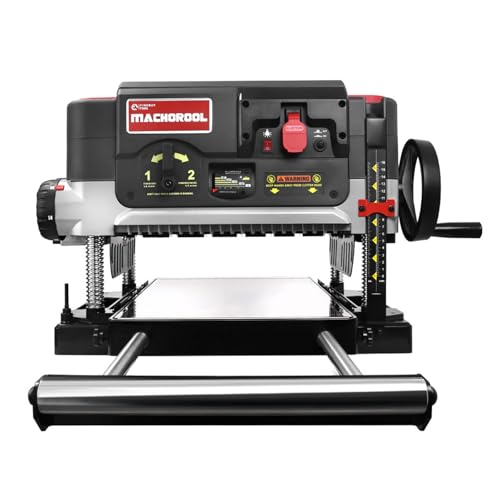
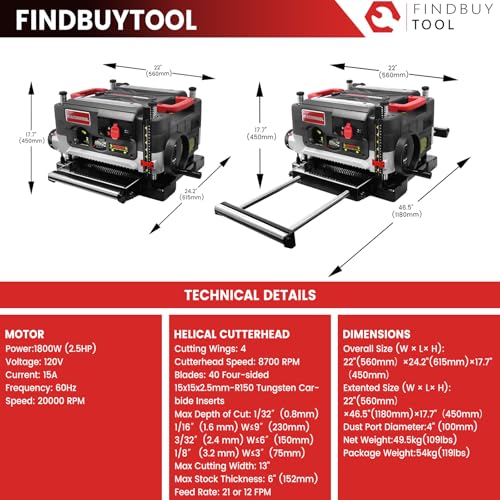
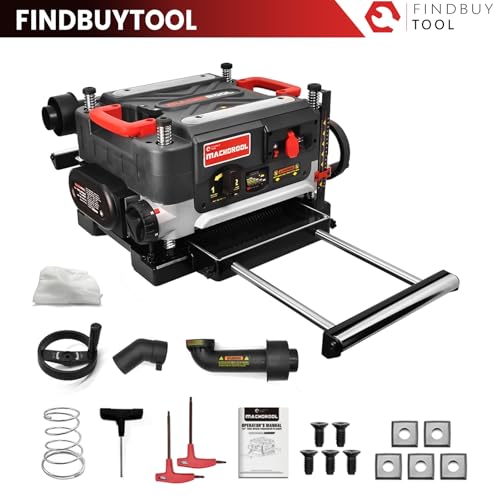
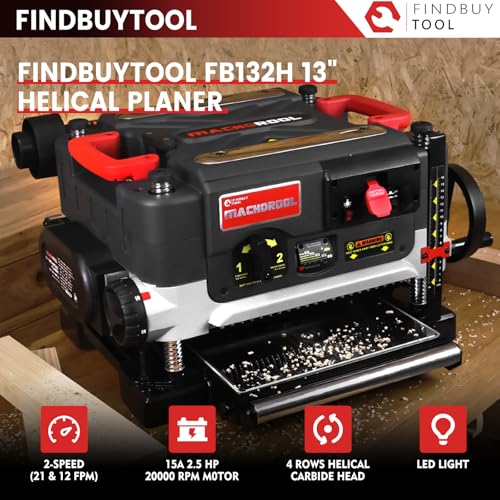
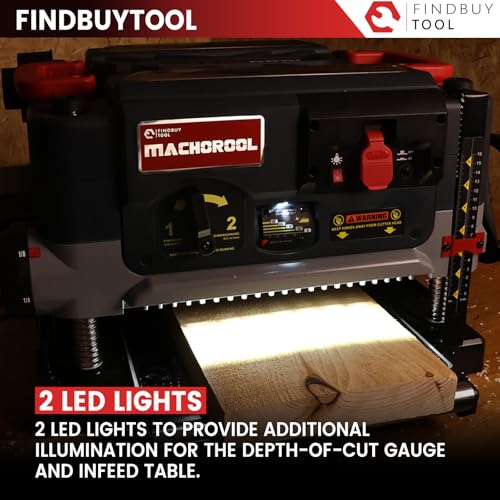
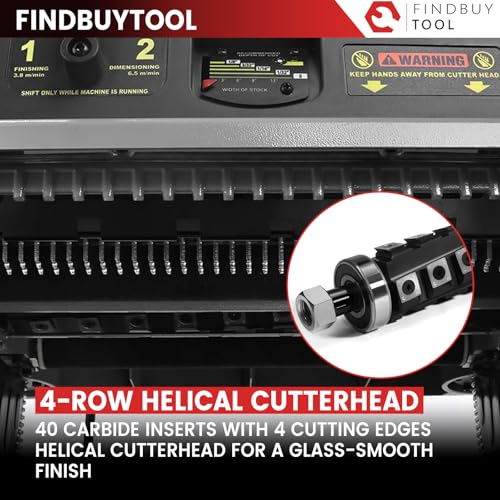
This FINDBUYTOOL model brings pro-level features into the benchtop space, the helical cutterhead with 40 carbide inserts is a standout for hardwood work, offering dramatically longer life and smoother cuts than traditional knife blocks. The 2.5HP motor and ball-screw depth adjustment (±0.05mm) deliver precision you’d expect in a much more expensive machine, and the LED lights and preset thickness turrets add real workshop convenience.
Owners report excellent finish quality on maple and walnut, and the 95% chip ejection rate means less clogging. It’s heavier and more complex than basic planers, but if you’re working with expensive hardwoods and need repeatable accuracy, this is the one to beat. I’d pick it over the DEWALT for dedicated fine woodworking.
Product photos
WEN 13-Inch Three-Blade Planer
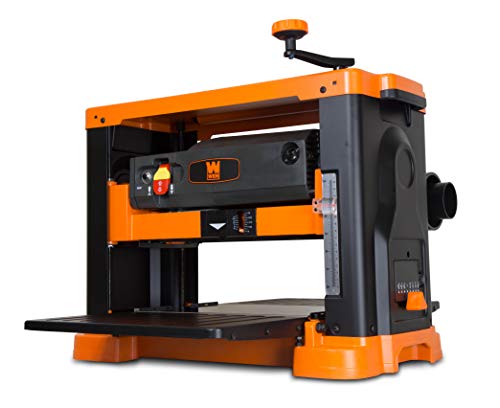
Strengths
- Low cost
- Three reversible blades
- Lightweight
- Simple operation
- 15A motor
Trade-offs
- Basic dust collection
- No speed control
- Limited stability
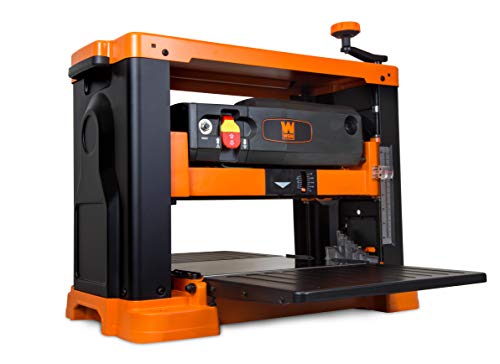
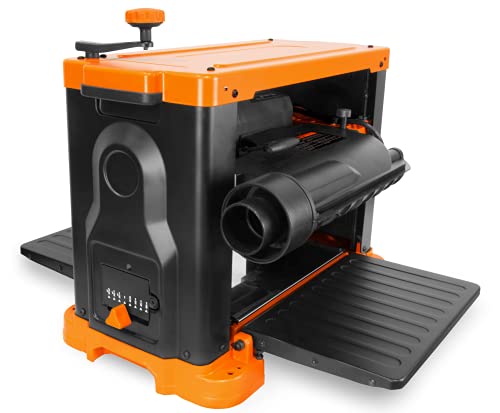
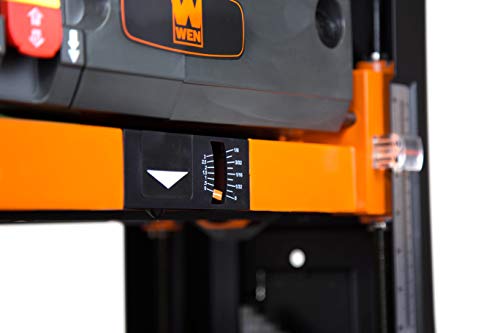
The WEN PL1303 is the bare-bones budget king, affordable, lightweight, and surprisingly capable for softwoods and light hardwood work. With a 15A motor and 30,000 cuts per minute, it moves wood quickly, and the three reversible SK5 steel blades give you some longevity. It lacks fancy features like speed control or preset stops, but for flattening pine or poplar for shop projects, it gets the job done.
Owners say it’s noisier and wobblier than pricier models, and dust collection is basically an afterthought. But if you’re just starting out or only plane occasionally, this is the model that lets you dip your toes without overspending. I wouldn’t trust it for daily use, but for light-duty tasks, it’s a solid entry point.
Product photos
VEVOR 13-Inch Two-Blade Planer

Strengths
- 2000W high-speed motor
- Cast iron bed
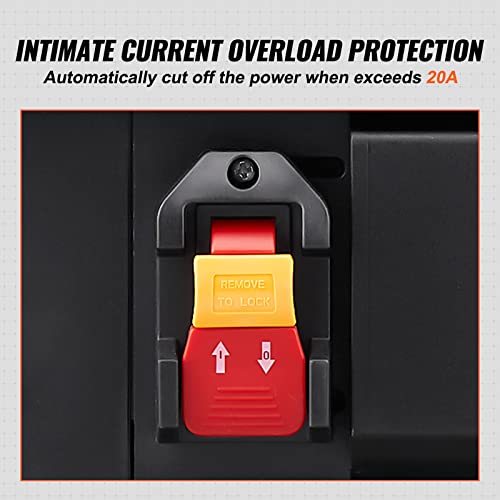
- Overload protection
- 35″ total table support
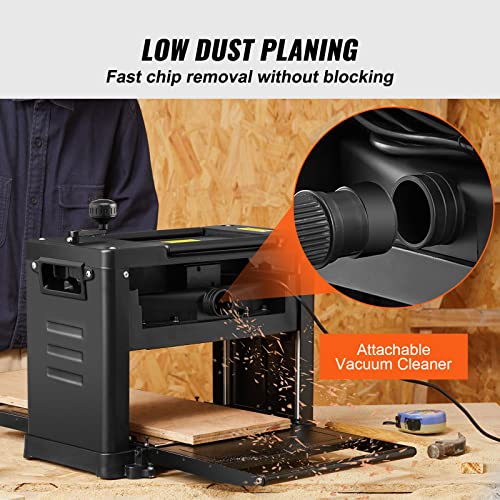
- Vacuum dust port
Trade-offs
- Two-knife cutterhead
- No speed adjustment
- No depth presets
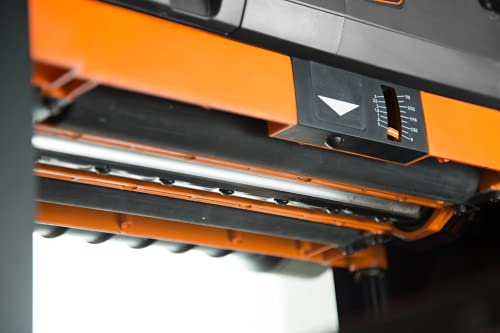
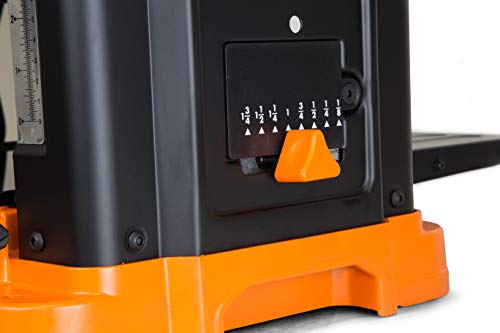
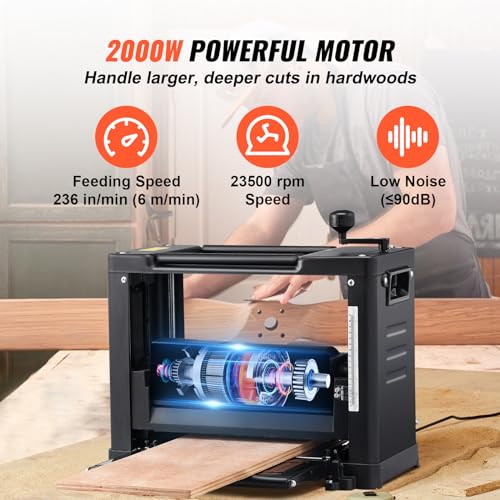
This two-blade VEVOR planer shares the same 2000W motor and cast iron foundation as its three-blade sibling, but drops the variable feed rate. That makes it less flexible when working with curly or interlocked grain, where slower speeds really help reduce tear-out. Still, for straight stock removal on pine or poplar, the 23,500 rpm cutterhead moves wood fast, and owners consistently report it’s one of the more stable budget builds in this category.
It’s not flashy, no preset stops or onboard blade storage, but the overload protection and solid table extensions add real value. If you’re on a tight budget and mostly flatten rough-sawn softwoods, this is the smarter buy over the pricier VEVOR three-blade version.
Product photos
VEVOR 13-Inch Two-Speed Planer
Strengths
- Three-knife cutterhead
- Dual feed speeds
- Cast iron bed
- 35″ total table length
- Vacuum-ready dust port
Trade-offs
- No onboard storage
- Heavy for benchtop
- Some durability concerns
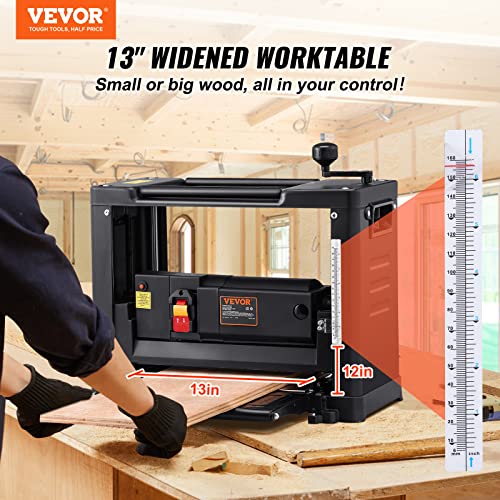
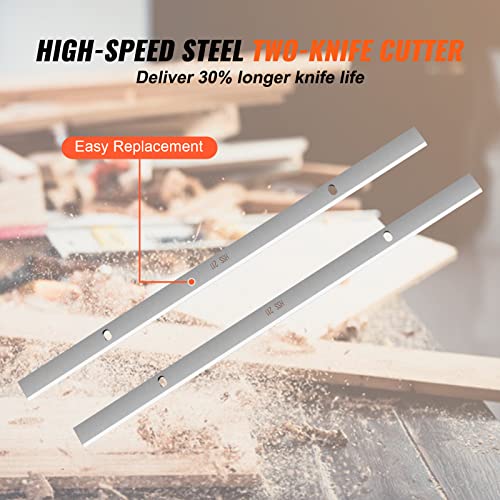
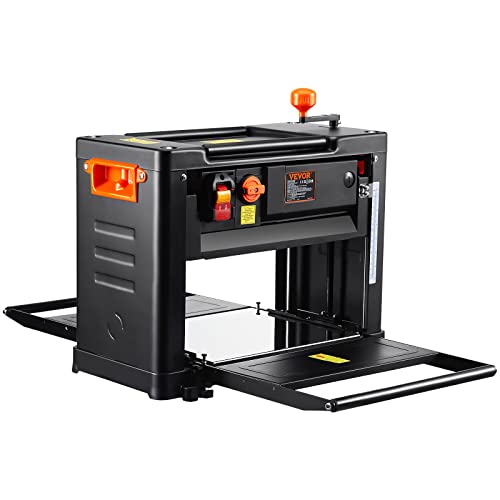
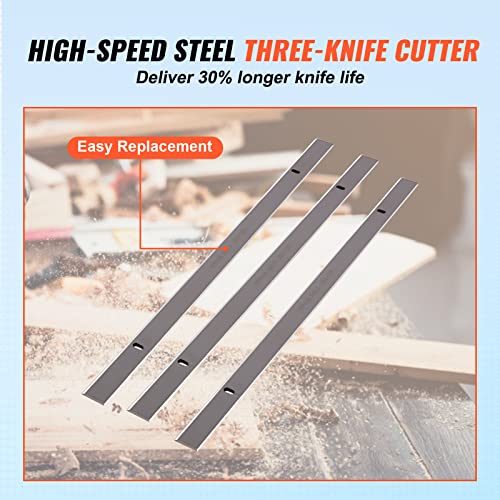
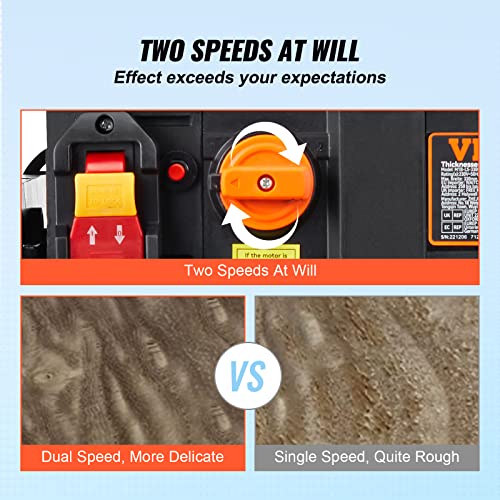
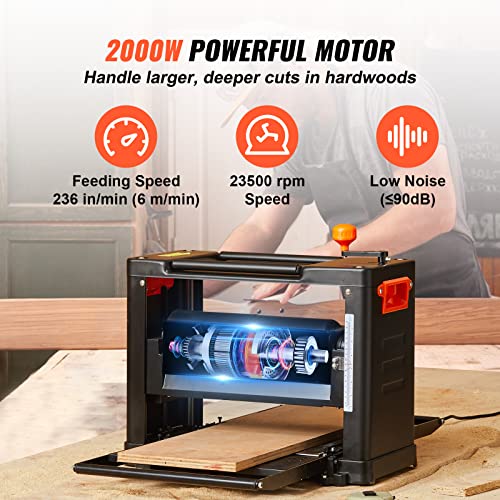
This VEVOR three-blade model stands out in the budget 13-inch class with its dual-speed gearbox and solid HRC55-60 hardened steel cutterhead. On paper, the 2000W motor and 23,500 rpm spindle speed suggest aggressive cutting power, and owners report it handles maple and walnut with fewer passes than basic two-knife models. The ability to drop to 15 fpm for figured wood is a real advantage when you’re chasing a glass-smooth surface.
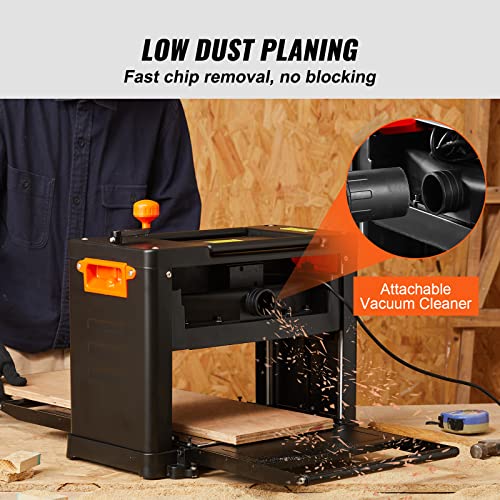
I’d still want to see how it holds up after a few hundred board feet, some users note increased vibration over time, but the cast iron bed and 35-inch total table length do help minimize snipe, especially when paired with a shop vacuum. For the price, it’s a strong contender if you value finish quality over brand-name reliability.
Product photos

VEVOR 13-Inch Foldable Planer
Strengths
- Foldable, portable design
- Detachable stand
- Electromagnetic safety switch
- Dust exhaust port
- Compact footprint
Trade-offs
- Lower spindle speed
- Struggles with hardwoods
- Basic blade system
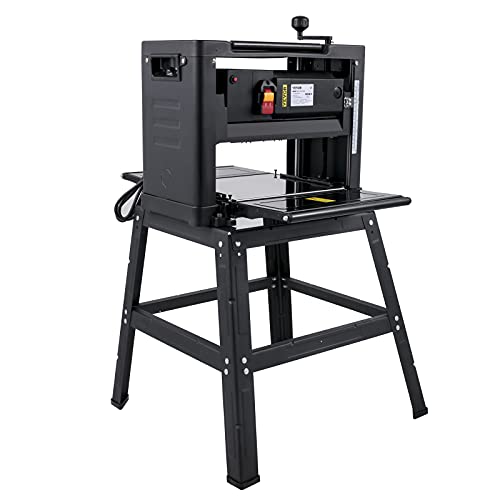
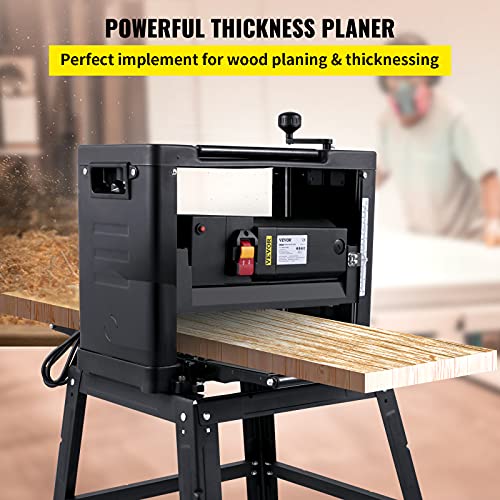
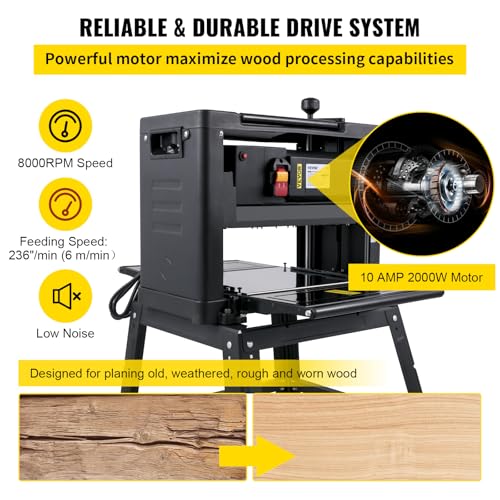
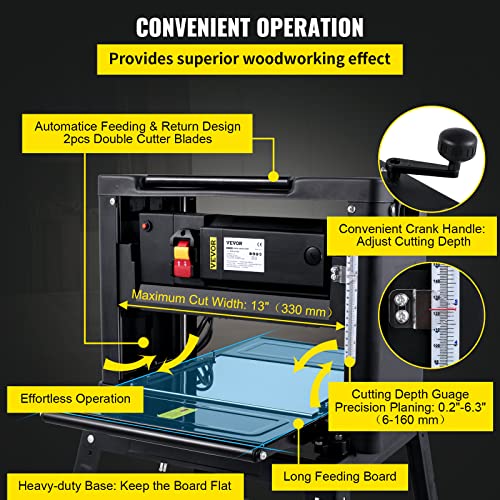
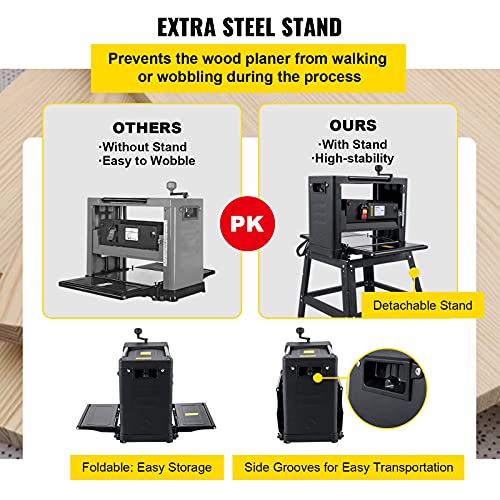
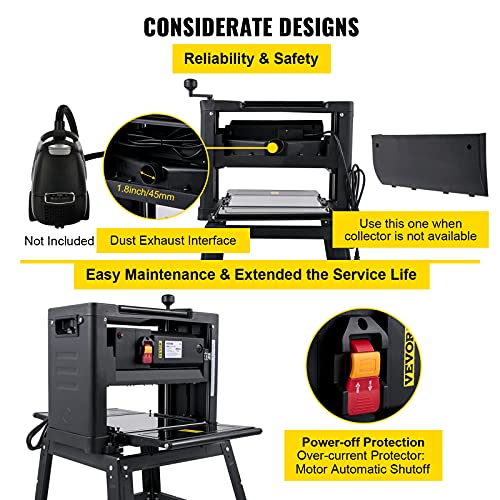
This VEVOR model leans hard into portability with its foldable tables, detachable stand, and compact footprint. The 1800W motor and 8000 rpm blade speed seem underpowered compared to others in this list, and owners report it struggles with dense hardwoods in deeper passes. The double HSS blades are serviceable, but they’re no match for the carbide or hardened steel heads on higher-end models.
Where it wins is mobility, ABS grooves on the base make it easy to move, and the electromagnetic safety switch adds peace of mind. If you’re working in a shared garage or need to cart your gear to job sites, this design makes sense. But for consistent stock removal, it’s a compromise.
Product photos
JET 20-Inch Helical Planer

Strengths
- 20-inch capacity
- Helical carbide cutterhead
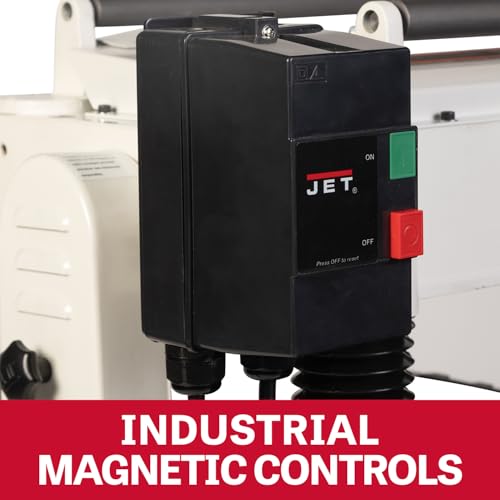
- 5-HP industrial motor
- Welded steel base
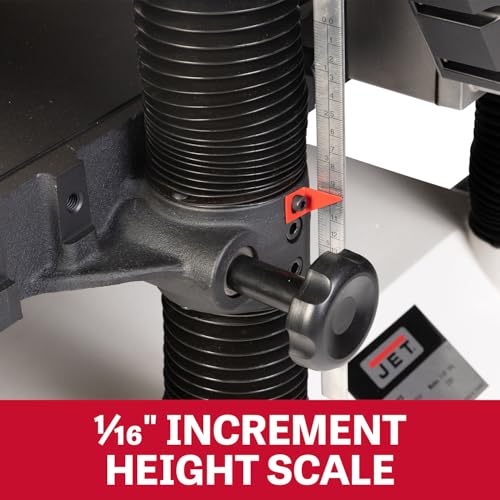
- Fine 1/16″ depth control
Trade-offs
- Requires 230V power
- Large footprint
- High price point
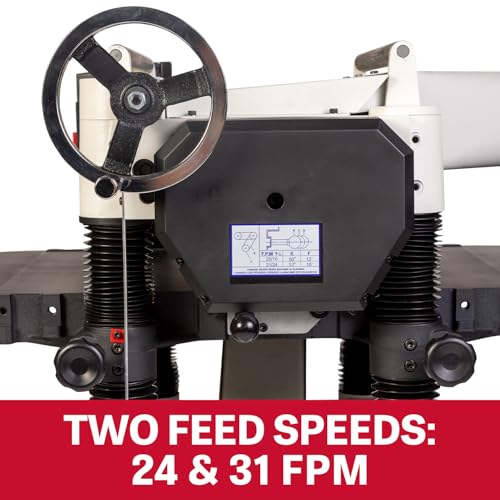
When you need to plane wide slabs or large panels, the JET 20-inch model is in a different league. The helical cutterhead with carbide inserts delivers a buttery finish with minimal tear-out, and the 5-HP TEFC motor powers through oak and exotic hardwoods without bogging down. The 230V requirement means it’s not for casual users, but for serious shops, that single-phase industrial motor offers rock-solid torque.
Owners highlight the positive gear drive and 1/16-inch depth increments for precision, and the welded steel base kills vibration. It’s overkill for most DIYers, but if you regularly work with wide stock, this is the real deal. Compared to 13-inch models, it’s not just bigger, it’s built to a higher standard.
Product photos

Ridgid 13-Inch Planer
Strengths
- Self-aligning reversible blades
- Lead-screw depth control
- Onboard tool storage
- Snipe-reducing tables
- Trusted long-term build
Trade-offs
- Heavier than newer models
- No dual feed speeds
- Dated dust collection
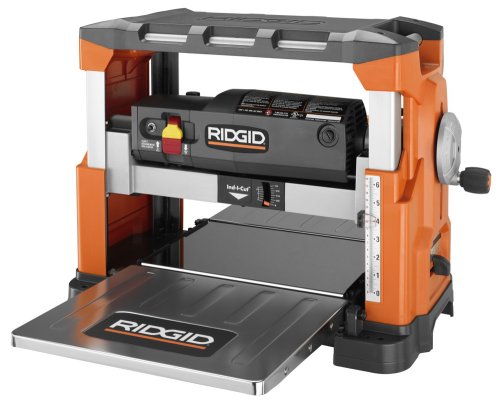
The Ridgid R4330 has been a staple in home shops for years, and for good reason, the three-blade cutterhead and self-indexing blades make changes fast and alignment foolproof. Owners love that you don’t need shims or feeler gauges; the system just works. The precision lead-screw depth adjustment also delivers consistent results across wide boards, and the folding tables with overhang support meaningfully reduce snipe.
It’s not the most powerful planer here, but the build quality and thoughtful details like onboard blade storage make it a joy to use. Compared to newer Chinese-made models, it trades some raw speed for reliability and ease of maintenance. If you hate wrestling with blade setups, this one’s worth the premium.
Product photos
How We Picked These thickness planers
Rather than a hands-on lab test, this selection is a research-led comparison of published specifications, features, and – crucially – owner and expert reviews. I began by compiling a list of popular models, then compared motor power, cutting depth capacity, feed rates, and cutterhead design. Next, I weighed owner feedback from multiple sources, looking for consistent praise or complaints regarding accuracy, ease of use, and long-term reliability. Finally, I applied my experience with woodworking tools to rank these planers against key performance indicators.
For thickness planers, the cutterhead type and motor power were heavily weighted. A helical cutterhead offers a significantly longer lifespan and smoother cut quality than traditional straight knives, justifying a higher price point. Equally important is a robust motor; tackling hardwoods demands consistent power to avoid bogging down and producing uneven results. These two factors directly influence the quality and efficiency of the planing process.
Specifications reliably indicate a planer’s maximum cutting depth and feed rate, providing a baseline for capability. However, judging build quality, smoothness of operation, and the likelihood of snipe (an undesirable taper at the end of a board) required examining owner feedback and established woodworking publications. Reputation and consistent positive reviews were key indicators of long-term performance and value, informing our recommendations in this thickness planer buying guide.
What To Look For In thickness planers
Finding the right thickness planer can make a huge difference in the quality of your woodworking projects.
A good thickness planer delivers consistently flat, parallel surfaces with minimal tear-out. Key considerations include motor power for handling different wood species, cutterhead design for smoothness and longevity, and feed rate control for optimizing cut quality. Look for models with robust build quality, accurate depth adjustment, and effective dust collection.
Motor Power and Material Capacity
Don’t underestimate the importance of a powerful motor. Softer woods like pine require less power, but tackling hardwoods like oak or maple demands a robust engine. A 15-amp motor is a good starting point for general use, but if you plan on working with a lot of dense material, stepping up to a 2000W (or higher) motor is a wise investment. Beyond power, pay attention to the maximum board width and thickness the planer can handle. Most 13-inch planers can accommodate boards up to 6 inches thick, but some specialized models, like the JET 20-Inch, can handle considerably more.
Cutterhead Design: Straight Knives vs. Helical
The cutterhead is arguably the most important component of a thickness planer. Traditional planers use straight, replaceable blades. These are affordable, but require frequent sharpening and can be prone to tear-out, especially in figured wood. Helical cutterheads, featuring multiple carbide inserts, are becoming increasingly popular. While more expensive upfront, they offer significantly longer blade life, smoother cuts, and reduced tear-out. If you frequently work with challenging wood, exploring helical head planers is a good idea.
- Blade life is a major factor: Carbide inserts in helical heads last much longer than traditional steel blades.
- Noise level varies: Helical heads generally produce a quieter operation due to the increased number of cutting edges.
- Cost differences are substantial: Straight-knife planers are typically more affordable initially, but the cost of blade replacements adds up over time, whereas investing in a helical head upfront can save money in the long run.
Practicality and Features
Beyond the core mechanics, consider features that enhance usability. A good thickness planer should have a clear and accurate depth adjustment mechanism. Look for models with a digital readout or a well-marked scale. Dust collection is also crucial; a planer generates a lot of shavings, and a good dust port (ideally 4 inches) connected to a shop vac will keep your workspace clean and improve visibility. For hobbyists and those with limited space, exploring compact thickness planers can be a great option.
A planer with easily accessible blade changing mechanisms can save you a lot of time and frustration. Don’t underestimate this convenience factor.
Thickness Planers Compared
Here’s a comparison of key specifications for popular thickness planers.
| Product Name | Max. Cutting Width | Max. Cutting Depth | Motor HP | Feed Rate (FPM) | Cutterhead Type | Dust Port (in.) |
|---|---|---|---|---|---|---|
| DEWALT 13-Inch Planer | 13 in | 1/8 in | N/A | 96 / 179 | Three-Blade | N/A |
| FINDBUYTOOL 13-Inch Planer | 13 in | 1/8 in | 2.5 | 12 / 21 | Helical | 4 |
| WEN 13-Inch Planer | 13 in | 1/8 in | N/A | 26 | Three-Blade | N/A |
| VEVOR 13-Inch Two-Blade | 13 in | 6.3 in | N/A | 236 | Two-Blade | N/A |
| VEVOR 13-Inch Two-Speed | 13 in | 6.3 in | N/A | 15 / 24 | Three-Blade | N/A |
| VEVOR 13-Inch Foldable | 13 in | 6.3 in | 1.8 | N/A | Two-Blade | 1.8/2 |
| JET 20-Inch Planer | 20 in | N/A | 5 | N/A | Helical | N/A |
| Ridgid 13-Inch Planer | 13 in | N/A | N/A | N/A | Three-Blade | N/A |
Frequently Asked Questions
What level of dust collection should I expect from a thickness planer?
A 4-inch dust port is ideal for efficient dust removal, connecting directly to a shop vacuum or dust collection system. While many planers include a port, the actual collection efficiency varies; owner reviews often detail how well a specific model manages shavings.
Are helical cutterheads really worth the extra cost?
Yes, helical cutterheads offer a superior cutting experience. Though more expensive initially, they provide a smoother finish, quieter operation, and significantly longer blade life compared to traditional straight knives.
How much snipe is typical with thickness planers?
Some snipe (a slight taper at the beginning and end of a board) is common with most thickness planers. However, models with precise feed rollers and well-designed infeed/outfeed tables minimize this issue; look for owner feedback regarding snipe control.
What’s the difference between a 13-inch and a 20-inch planer?
The inch measurement refers to the maximum width of material the planer can handle. A 20-inch planer is designed for wider boards, often used in professional settings, while 13-inch models are generally sufficient for hobbyists and most DIY projects. For those seeking planers under $400, a 13-inch model is typically the best option.
Can I use a thickness planer on treated lumber?
While technically possible, it’s generally not recommended to plane treated lumber. The heat generated during the process can release potentially harmful chemicals from the treatment; always wear a respirator and ensure adequate ventilation if you choose to do so.
The Bottom Line
Choosing a thickness planer always involves balancing what you want with what you’re willing to spend. Ultimately, the FINDBUYTOOL 13-Inch Planer strikes the best balance of features, power, and price for most woodworkers. It offers a helical cutterhead, a significant upgrade over straight-knife designs, without the substantial cost of higher-end models.
For those prioritizing affordability, the WEN 13-Inch Planer is a solid choice, and if you’re specifically looking for affordable thickness planers, it’s hard to beat. If you need to handle very wide boards or demand the utmost in precision and power, the JET 20-Inch Planer is in a class of its own, though it comes at a premium price. And for hobbyists needing a compact option, the VEVOR 13-Inch Foldable is worth a look.
Don’t get too caught up in chasing the highest horsepower or the most features. Consistent accuracy, a sharp cutterhead (whether straight or helical), and a well-built frame are far more important than any single specification. Focus on these fundamentals, and you’ll be well-equipped to create smooth, flat lumber for years to come.
