8 Best Table Saw Blades of 2026
This post contains affiliate links. As an Amazon Associate, we earn from qualifying purchases.
The Freud LU83R010 stands out as the best overall tablesaw blade, delivering clean, precise cuts across a range of materials. For those watching their budget, the WEN BL1060 offers solid performance at a fraction of the cost, while the CMT Orange 10-Inch Combination blade excels as a versatile all-rounder for mixed tasks.
Choosing the right blade can make the difference between a frustrating cut and a flawless one. Too many DIYers buy based on price or tooth count alone, only to deal with burn marks, chipping, or premature dulling.
As someone who’s spent years breaking down how tools perform in real workshops, I focused this guide on what actually matters, carbide quality, tooth geometry, kerf width, and real-world feedback. These picks are based on specs, owner experiences, and how well each blade serves its intended purpose.
Top 7 Tablesaw Blades in the Market
The Best Tablesaw Blades, Reviewed
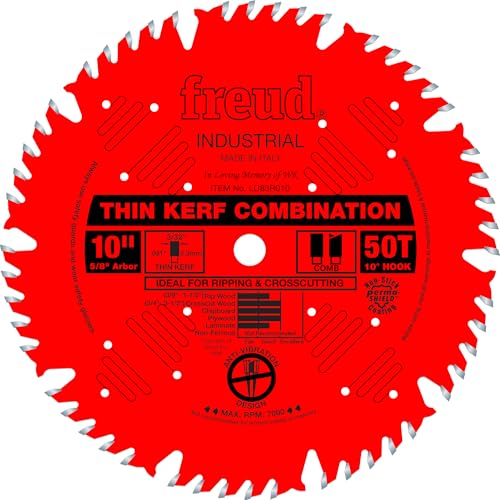
Freud LU83R010 10-Inch 50T Blade
Strengths
- TiCo carbide blend
- Non-stick coating
- Anti-vibration design
- Thin kerf
Trade-offs
- Not specialty-grade
- Coating wears over time
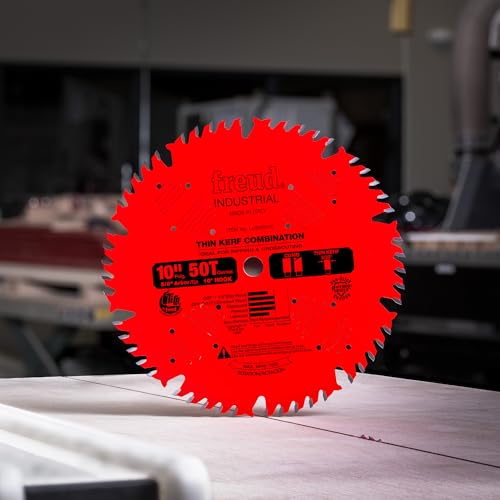
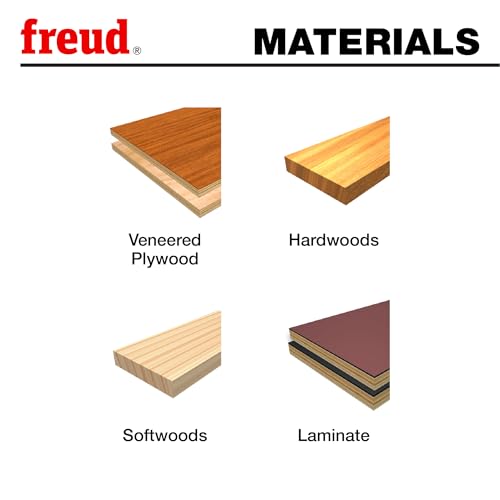
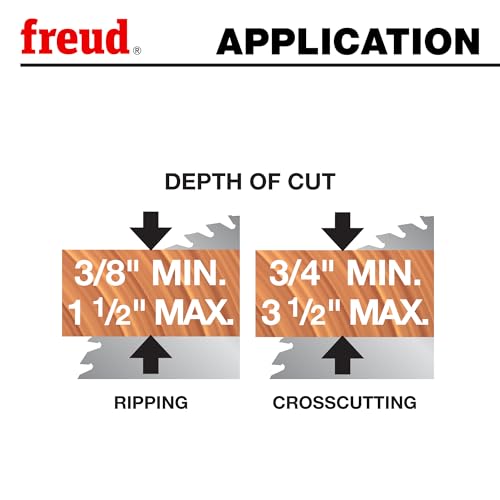
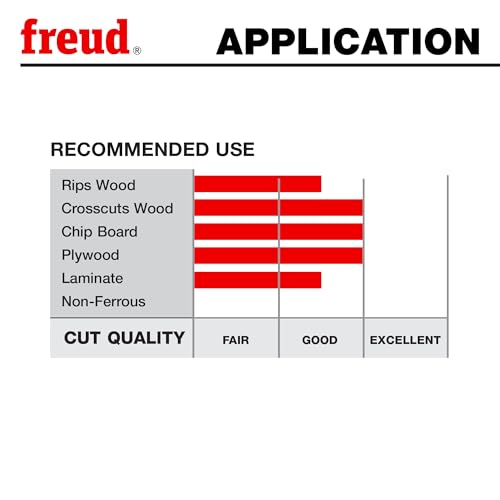
Freud hits the sweet spot with this 50-tooth thin-kerf combo blade. The TiCo carbide blend is no gimmick, it’s a real reason this blade stays sharp longer under heavy use. Add in the Perma Shield coating and anti-vibration design, and you’ve got a blade that resists gunk buildup and runs smoother than most in its class. Owners frequently cite its versatility, cutting cleanly across plywood, hardwood, and even laminates without constant changes.
It’s not the absolute best at ripping or fine crosscuts, but it’s very good at both, which is the whole point. Compared to the CMT 256.050.10, it’s lighter on price and slightly better in vibration control. For someone running a home shop and doing mixed projects, this is the smarter buy.
Product photos
CMT Orange 10-Inch Combination Blade
Strengths
- Hybrid tooth design
- Laser-cut vents
- Low noise
- Precision tensioning
Trade-offs
- Expensive
- Heavy for some saws
- Overkill for casual use
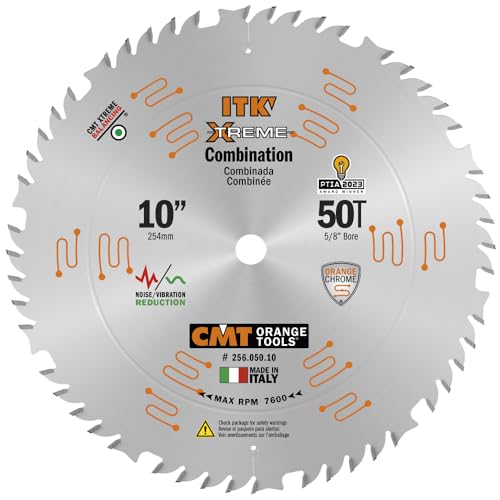
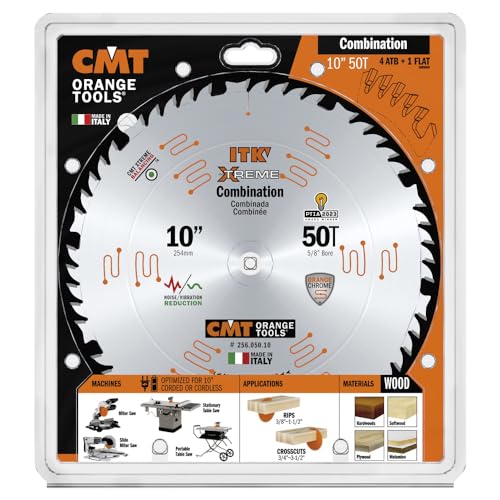
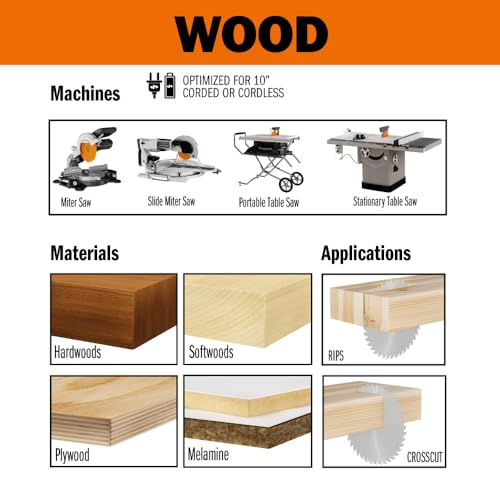
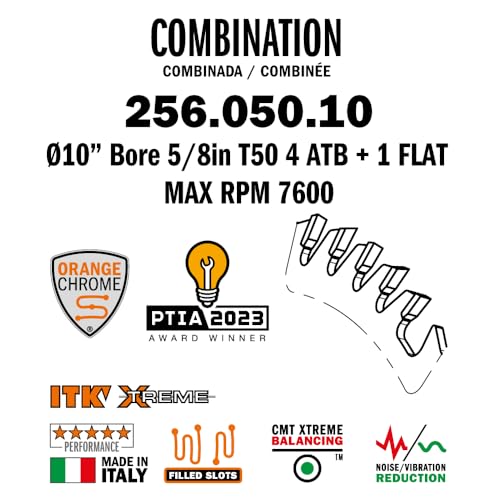
CMT’s 256.050.10 is a precision-engineered combo blade that leans into quality materials and smart design. The 4° alternate top bevel (ATB) with 15 flat-top raker teeth gives it a hybrid edge profile, great for clean crosscuts while still handling rips better than most. The laser-cut stabilizer vents and polymer-filled expansion slots are serious features usually found on high-end blades, and owners report noticeably less noise and run-out.
It’s heavier than most combo blades, which helps with stability, but also means it demands more from your saw’s motor. Priced higher than Freud’s LU83R010, it’s justified only if you’re picky about cut quality and vibration. For most home users, the Freud is enough. But if you want the best-engineered combo blade, this is it.
Product photos
FOXBC 10-Inch 80-Tooth Blade

Strengths
- High tooth count
- Clean crosscuts
- Low vibration
Trade-offs
- Slow feed rate
- Not for ripping
- Blade burn risk
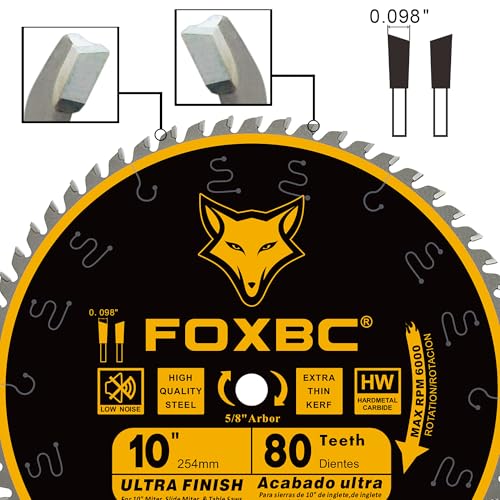
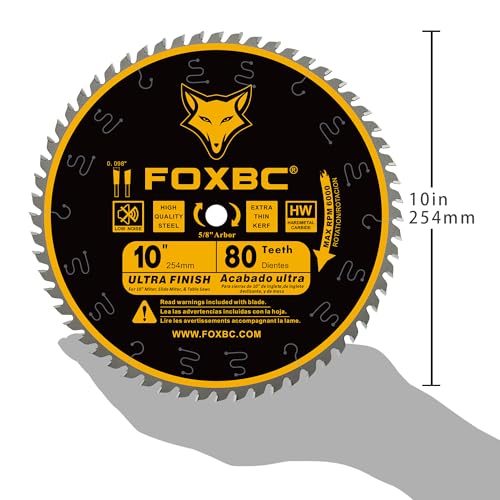
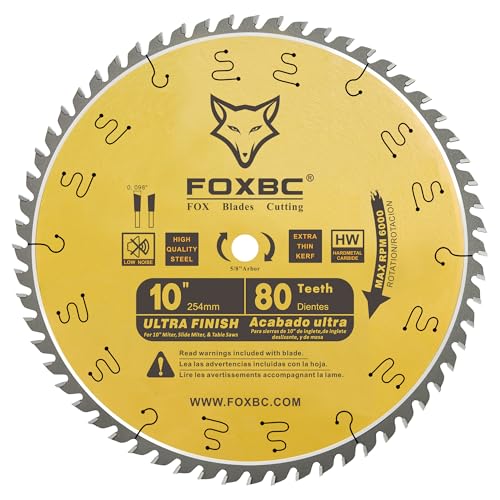
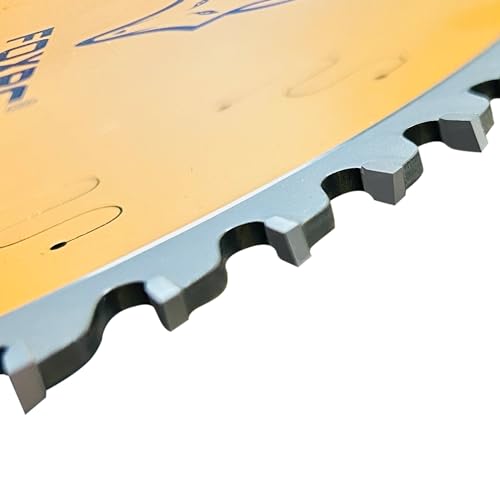
With 80 teeth and an ATB grind, this blade is clearly targeted at fine crosscutting, and the numbers back it up. The high tooth count and thin kerf suggest clean, slow passes with minimal tear-out, especially on plywood and melamine. Reviewers note smooth cuts on hardwoods like oak and pine, and the spec sheet confirms it’s optimized for finish work. It’s the kind of blade you’d swap in when making final cuts for trim or cabinetry.
It won’t rip well, no blade this toothy ever does, and pushing it too fast could lead to burning. But for crosscuts where appearance matters, this FOXBC holds up better than its price implies. Compared to the Diablo D1060X, it lacks the branded coating and shock-resistant features, but for weekend woodworkers, the difference may not justify the cost jump.
Product photos

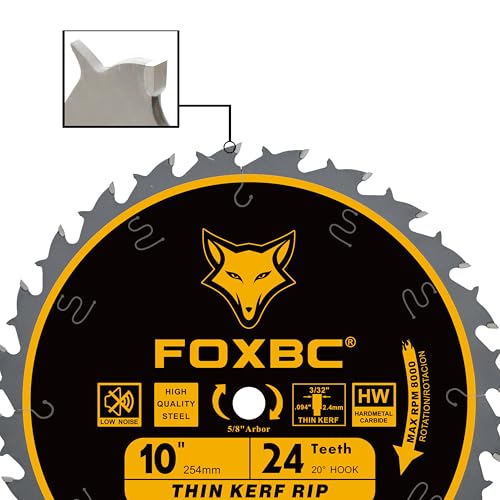
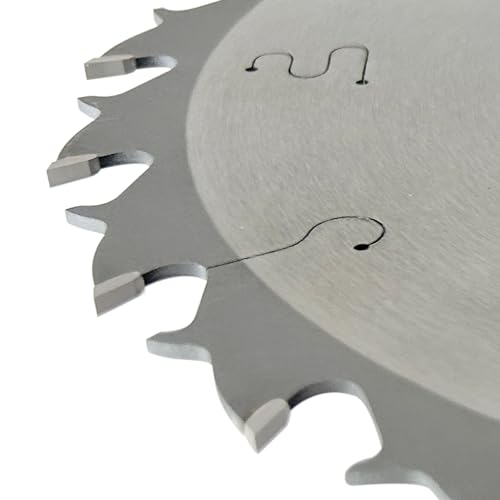
FOXBC 10-Inch 24-Tooth Rip Blade

Strengths
- Thin kerf
- Aggressive hook angle
- High tooth durability
Trade-offs
- Poor crosscut finish
- Limited precision
- Not for fine work
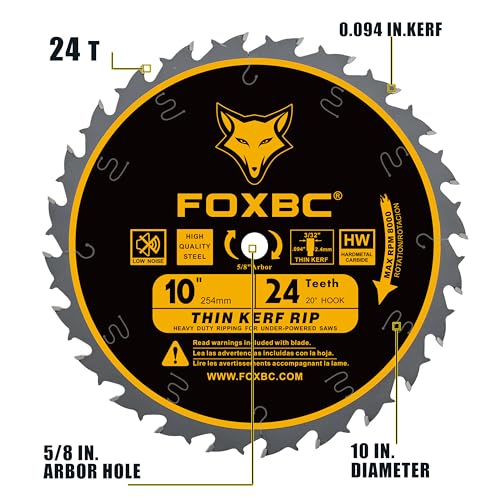
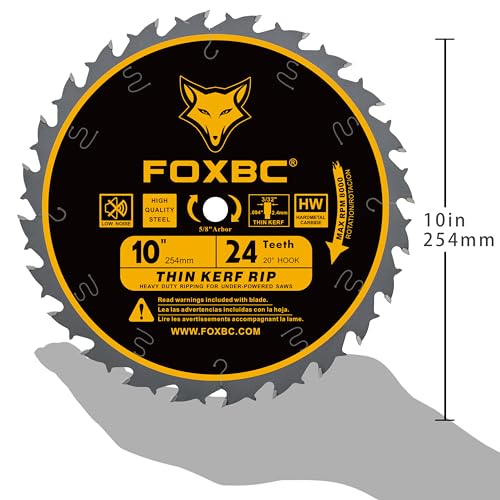
This 24-tooth rip blade is built for speed and aggression, and that shows in its design. With a 20° hook angle and thin kerf, it’s engineered to chew through thick softwood and hardwood with minimal resistance. On paper, the specs make it a solid contender for long ripping passes where clean edges aren’t the priority. Owners consistently report fast cuts and low strain on mid-power saws, which makes sense given the reduced kerf and aggressive tooth layout.
Still, don’t expect this blade to crosscut cleanly, it’ll leave tear-out on plywood or hardwood ends. But that’s not its job. Compared to pricier rip blades from Freud or CMT, it holds its own in durability, likely thanks to the high-density tungsten carbide. For pure ripping grunt on a budget, it’s hard to argue with the value.
Product photos
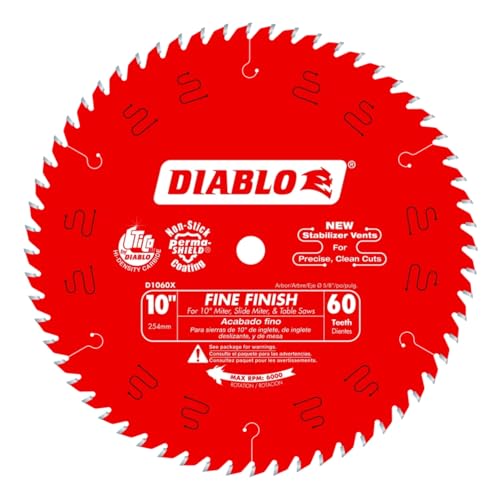
Diablo D1060X 10-Inch 60T Blade
Strengths
- Durable carbide
- Sharp out of box
- Excellent edge life
Trade-offs
- Higher price
- Some vibration
- No coating
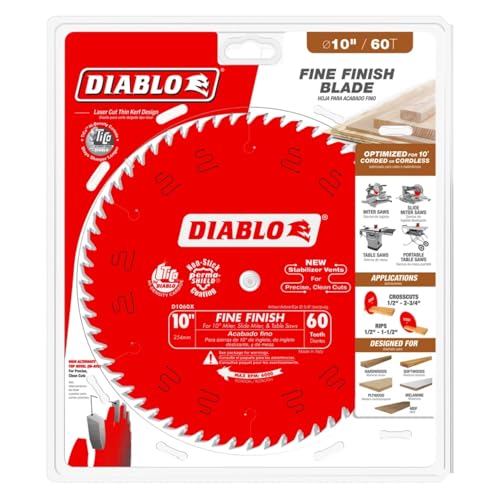
Diablo’s D1060X leans hard into durability, and the shock-resistant carbide tips are its headline feature. With 60 high-ATB teeth and a .098” kerf, it’s designed to handle repeated crosscuts through tough materials without chipping. The brand’s reputation for longevity comes from real-world use, and owners consistently report these blades staying sharp longer than budget options, even when cutting abrasive materials like melamine or MDF.
It’s not the fastest blade, and the lack of anti-vibration tech means it can hum louder than Freud’s offerings. But if you’re running a shop where blades get abused and downtime is costly, this one’s built to endure. Compared to the WEN BL1060, it’s clearly in a different class, better materials, better edge retention.
Product photos
WEN BL1060 10-Inch 60-Tooth Blade
Strengths
- Low cost
- Clean finish
- Lightweight
Trade-offs
- Short edge life
- No anti-vibration tech
- Basic materials
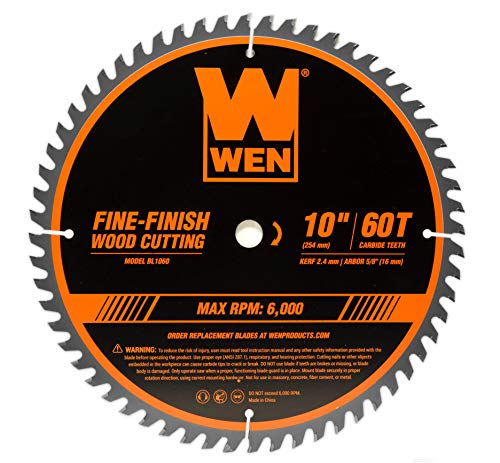
The WEN BL1060 is the budget play, and it delivers exactly that. With 60 teeth and an ultra-thin kerf, it’s designed for clean crosscuts on hardwood and plywood without straining your saw. It’s not flashy: no special coating, no laser-cut vents. But for the price, it cuts cleanly and stays stable. Owners consistently say it outperforms expectations, especially for trim work or cabinet-grade cuts where you’d normally reach for a more expensive blade.
It won’t hold an edge like a Diablo or Freud, and heavy use will wear it down fast. But for occasional fine cuts, it’s hard to beat. Compared to the FOXBC 80T, it’s less aggressive but more accessible. My pick for anyone who only needs a fine-cut blade once in a while.
Product photos


Ryltanks 10-Inch 3-Blade Combo Pack
Strengths
- Great variety
- Value-packed
- Low vibration
Trade-offs
- Shorter lifespan
- Inconsistent sharpening
- Lower durability
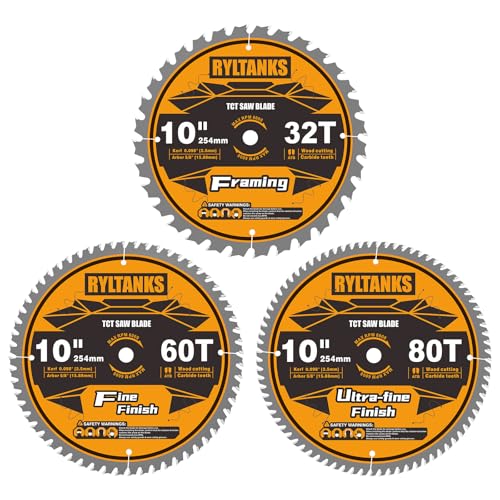
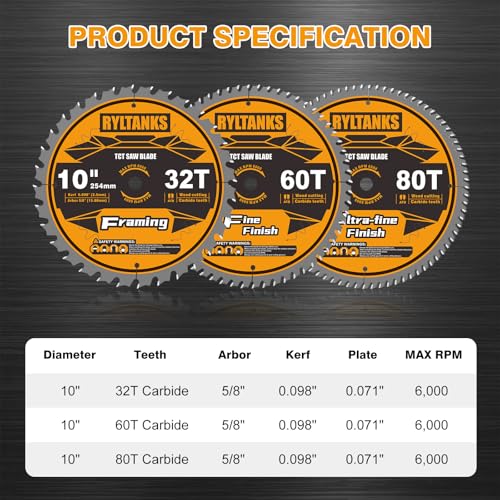
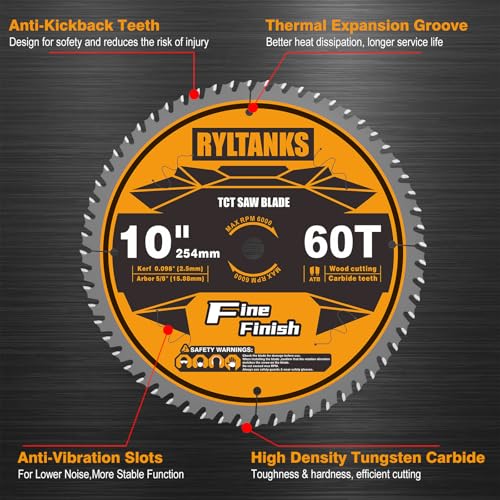
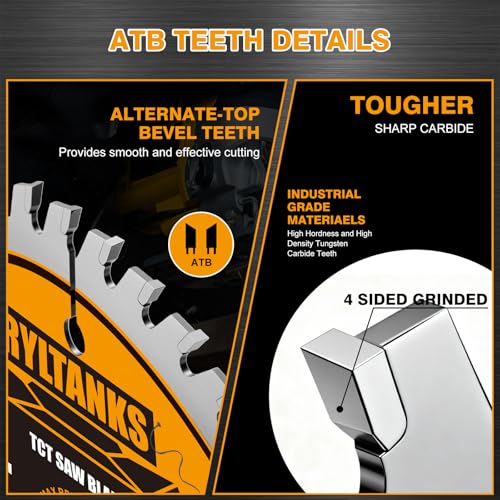
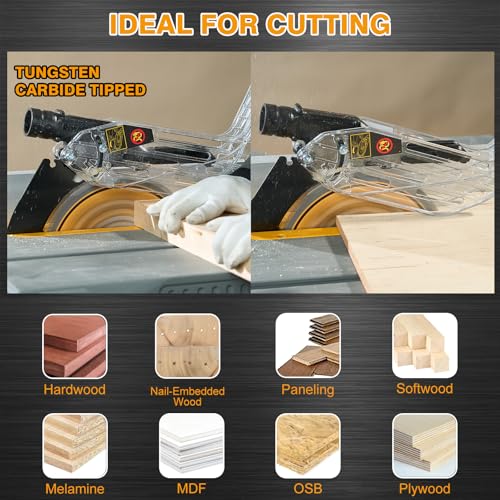
Three blades for the price of one premium option? That’s the Ryltanks pitch, and it works, if you accept some compromises. The 32T, 60T, and 80T set covers framing, general work, and fine finish cuts, making it ideal for someone who doesn’t want to stock multiple brands. The 80T blade delivers surprisingly clean crosscuts on plywood and melamine, and the thin kerf design helps lower-powered saws keep up.
But don’t expect these to last years. Owners report decent sharpness at first, but faster dulling compared to Freud or Diablo. Still, for a weekend warrior who needs flexibility without investing heavily, this pack makes sense. Compared to buying three WEN blades, you get better variety and similar build quality.
Product photos

How We Picked These tablesaw blades
Rather than a hands-on lab test, this was a research-led comparison of published specifications and owner feedback. I looked at blade geometry (tooth count, kerf, hook angle), carbide quality, and construction details across numerous models. Then, I weighed owner reviews from major retailers alongside expert opinions from woodworking publications and forums to get a sense of real-world performance and durability. Finally, I ranked blades based on how well they met the needs of different cutting tasks.
For tablesaw blades, tooth count and carbide quality are paramount. A higher tooth count generally means a cleaner, finer finish, but sacrifices speed. The type of carbide and its density directly impact how long the blade stays sharp and how well it handles abrasive materials. Beyond that, features like blade stabilization and anti-vibration designs play a significant role in cut quality and operator comfort.
Specifications clearly establish a blade’s physical characteristics, like kerf and tooth count. However, owner feedback and reputation proved crucial for assessing long-term durability and real-world performance. Reports on chipping, burn marks, and how well a blade holds an edge were vital. Knowing when and how to hone table saw blades is also key to maximizing blade life and value.
How To Choose The tablesaw blades
Picking the right tablesaw blade is about more than just tooth count. It’s about matching the blade’s design to the material you’re cutting and the type of cut you need to make.
A quality tablesaw blade delivers clean, accurate cuts with minimal waste. Key considerations include carbide quality, tooth geometry (ATB, flat top, etc.), kerf width, blade plate thickness, and anti-vibration features. Users should also assess compatibility with their saw’s arbor size and maximum RPM.
Tooth Count and Cut Type
The number of teeth on a blade drastically affects the kind of cut you get. More teeth generally mean a cleaner, finer finish, but slower cutting speeds. Conversely, fewer teeth rip through material faster, but sacrifice some finish quality. I often recommend having a selection of blades on hand rather than trying to find a single “do-it-all” option. Don’t fall into the trap of thinking higher tooth counts are always better. A blade designed for ripping won’t perform well for crosscuts, and vice-versa.
Kerf and Power Requirements
Understanding saw blade kerf is crucial for efficient cutting. Kerf refers to the width of the cut the blade makes. Thinner kerf blades (like those around .098″) remove less material, requiring less power from your saw and resulting in faster cuts, especially in thicker stock. However, thinner kerf blades can sometimes be more prone to wandering. To learn more about this, check out our guide to understand saw blade kerf. Consider your saw’s motor power and the types of materials you frequently cut when selecting a kerf.
Blade Quality and Materials
Don’t skimp on the carbide. Blades with high-quality tungsten carbide tips will hold an edge much longer and withstand more abuse. Look for blades with a high carbide content and a robust blade plate.
Here’s how to think about carbide quality:
- C1/C2: Acceptable for hobbyists and occasional use.
- C3/C4: A good balance of price and performance for serious DIYers.
- TiCo: Premium carbide blends offering exceptional durability and edge retention – often found in the top 10-inch blades.
A blade is an investment. Spending a little more upfront for a quality blade will save you money in the long run by reducing the frequency of replacements and improving cut quality.
Tablesaw Blades Compared
Here’s a comparison of key specifications for the tablesaw blades featured.
| Blade Title | Tooth Count | Kerf (in) | Arbor Size (in) | Best For | Material |
|---|---|---|---|---|---|
| Freud LU83R010 | 50 | N/A | 5/8 | Best Overall | Wood, Chip Board, Plywood, Laminate |
| CMT Orange 10-Inch Combination | N/A | N/A | 5/8 | Best Combination Cut | Soft & Hardwood, Plywood |
| FOXBC 10-Inch 80-Tooth | 80 | 0.098 | 5/8 | Best Fine Finish | Wood, Oak, Pine, Melamine, Plywood |
| FOXBC 10-Inch 24-Tooth Rip | 24 | 0.094 | 5/8 | Best Ripping Performance | Hard & Softwood, Chipboard, Laminates |
| Diablo D1060X | 60 | N/A | N/A | Best Durability | N/A |
| WEN BL1060 | 60 | 0.010 | 5/8 | Best Budget Friendly | Hard & Softwoods |
| Ryltanks 10-Inch 3-Blade | 32/60/80 | 0.098 | 5/8 | Best Value Pack | Hardwoods, Softwoods, Plywood, OSB |
| CMT Orange 10-Inch Ripping | N/A | N/A | N/A | Best for Hardwood Rip | Hardwoods, OSB, Plywood |
Frequently Asked Questions
What tooth count is best for cutting plywood?
A blade with 60-80 teeth is generally best for plywood. Higher tooth counts minimize tear-out, delivering a cleaner edge on this material, and are ideal for cabinet work.
Can I use a blade designed for ripping to make crosscuts?
You can, but the results won’t be optimal. Ripping blades have fewer teeth and a more aggressive hook angle, which means they’re designed for speed through the grain, not the clean, precise cuts needed for crosscuts.
What does “full kerf” mean, and is it always better?
Full kerf refers to a wider blade kerf (typically around .125 inches) that removes more material. While it offers more stability and can be better for thick stock, it requires more power and creates more waste, so thin kerf table saw blades are often preferable for most DIY projects.
How often should I replace my tablesaw blade?
Replacement frequency depends on usage and material cut. If you notice excessive runout, chipped teeth, or difficulty achieving clean cuts despite sharpening, it’s time for a new blade.
Are more expensive blades always better quality?
Not always, but generally, you get what you pay for. Higher-priced blades often use superior carbide grades and more precise manufacturing processes. However, matching the blade to the task is more important than simply buying the most expensive option.
The Bottom Line
Choosing a tablesaw blade always involves trade-offs between cut quality, speed, and price. Ultimately, for a blend of performance across a wide range of projects, the Freud LU83R010 stands out as the strongest all-around choice. It consistently receives high marks for delivering clean cuts in various materials, and its construction suggests good durability.
However, specializing your blades pays off. If you’re primarily focused on rough cuts and maximizing ripping speed, the FOXBC 10-Inch 24-Tooth Rip blade is the clear winner. For those on a tighter budget, the WEN BL1060 provides surprisingly good performance for the price, and if you want a variety of options without breaking the bank, the Ryltanks 10-Inch 3-Blade pack is a smart way to go.
Don’t get too caught up in chasing the latest specs or highest tooth counts. Prioritize good carbide quality and a blade geometry suited to your most common cuts. Regularly maintain blade performance with cleaning and proper sharpening, and you’ll find any well-chosen blade will deliver years of accurate, efficient cuts.
