
8 Best Table Saws of 2026
This post contains affiliate links. As an Amazon Associate, we earn from qualifying purchases.
The BOSCH GTS15-10 stands out as the best overall tablesaw for most users, combining solid performance, a dependable rack-and-pinion fence, and strong safety features. For budget-minded DIYers, the SKIL SPT99-11 offers solid value without sacrificing essential functionality, while the Evolution R10TS brings unique versatility for those cutting metal or demanding materials.
Most people shopping for a tablesaw aren’t just buying a tool, they’re trying to avoid frustration, wasted materials, and dangerous setups. Too many saws on the market look good on paper but fall short when it counts, especially in fence accuracy and long-term durability.
This guide cuts through the noise by focusing on specs that matter, motor reliability, rip capacity, fence design, and real-world feedback from owners who’ve used these saws for everything from deck builds to shop furniture. These picks are based on that research, not hype.
Top 8 Tablesaws in the Market
The Best Tablesaws, Reviewed
BOSCH GTS15-10 Table Saw

Strengths
- Soft-start motor
- Gravity-Rise stand
- Rack and pinion fence
- On-tool storage
- Electronic speed regulation
Trade-offs
- No dado plate included
- Slightly heavier than rivals
The Bosch GTS15-10 stands out in the crowded portable tablesaw market by balancing smart engineering with real-world usability. The Gravity-Rise Stand is a standout for solo movers, owners consistently report how much easier it makes setup and transport compared to basic folding stands. Combine that with a 32+ inch rip capacity and a soft-start 15-amp motor, and you’ve got a saw that keeps up with demanding job-site workflows without bogging down.
I appreciate the attention to detail in the fence system. The color-coded rack-and-pinion rip fence is a small touch, but it makes on-the-fly adjustments faster and more intuitive, especially in low-light conditions. The Smart Guard System also gets high marks in owner feedback for being less obstructive than most, offering visibility without sacrificing safety. If you’re someone who values precision and ease of use over raw power, this is one of the more refined choices in its class.
Product photos


Evolution R10TS 10″ Jobsite Saw

Strengths
- Cuts wood and metal
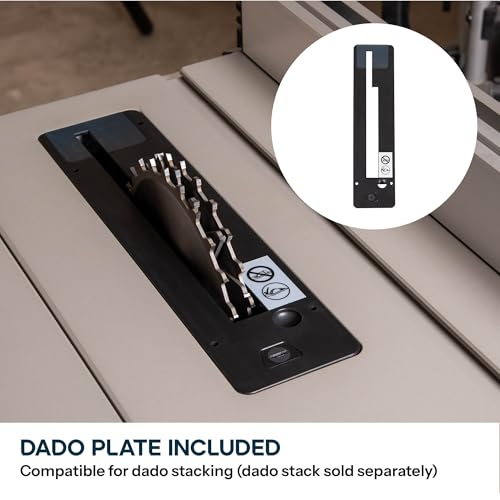
- Dado plate included
- Zero-clearance throat
- Electronic brake
- Cross-cut sled
Trade-offs
- No stand included
- 26” rip capacity
- Vibration on hard materials
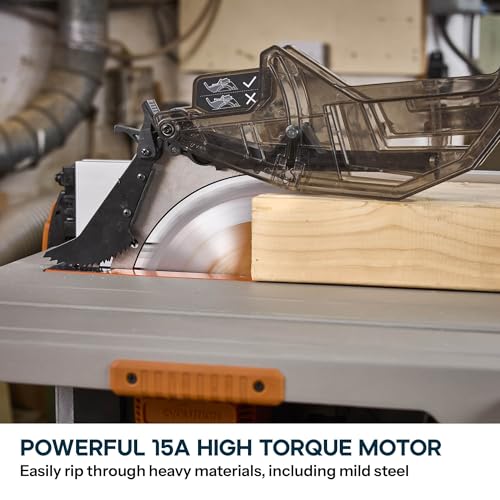
The Evolution R10TS is nearly identical to the R10TBLX but without the stand included, making it a better value if you already have one or prefer a bare tool. What it keeps is the multi-material cutting ability, thanks to a high-torque 15A motor and a blade designed for wood, aluminum, and mild steel. That’s a rare combo in this price range and gives it an edge over pure wood-cutting saws.
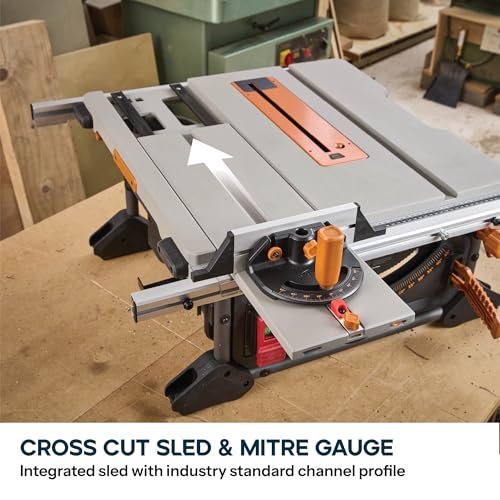
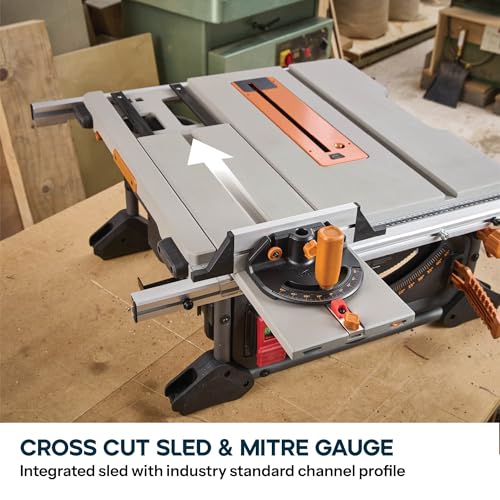
It also includes the zero-clearance throat plate, dado plate, and cross-cut sled, which most brands sell separately. The electronic blade brake brings real safety benefits, and the fence is accurate enough for cabinetry. The 26-inch rip is its main limitation, so it’s not ideal for sheet goods. But for a dedicated woodworking or metalworking job box, this is one of the most versatile bare saws available.
Product photos
DEWALT DWE7491RS Rolling Table Saw

Strengths
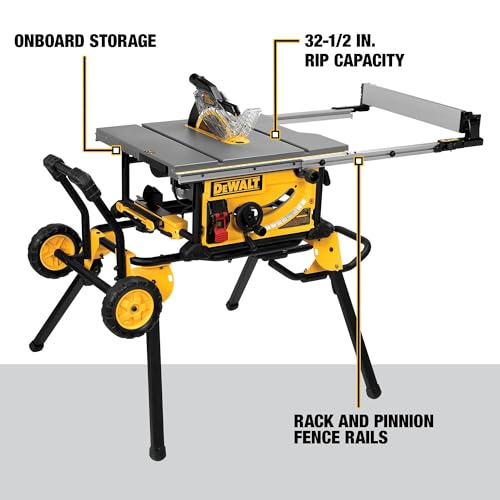
- 32-1/2” rip capacity
- Rolling stand included
- Onboard storage
- 3-year warranty
- Dust collection port
Trade-offs
- Heavy setup
- No soft start
- Stand bulkier than others
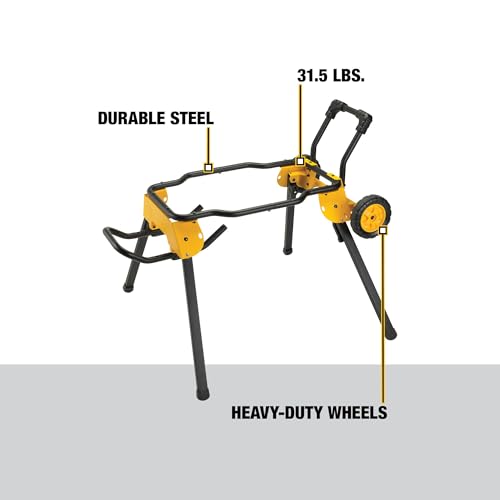
When you need to rip full sheets or wide shelving, the DWE7491RS earns its keep with a 32-1/2 inch rip capacity, one of the best in the portable class. The telescoping rolling stand is robust and rolls smoothly, and the fence system is the same trusted rack-and-pinion design DeWalt uses in their top models. This is the go-to for finish carpenters and cabinet makers who need consistent, long-rip accuracy.
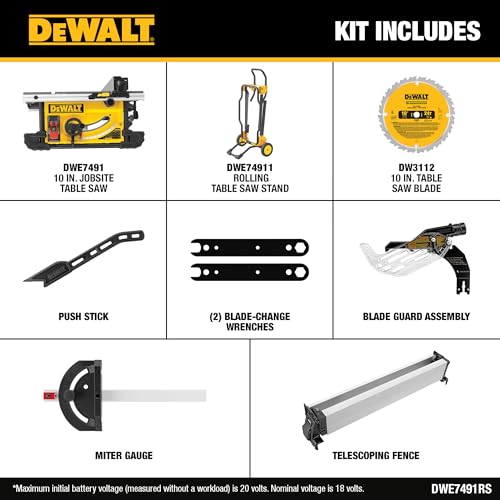
It also includes a 3-year warranty and a full suite of accessories, from push stick to blade wrenches, so you’re not hunting for add-ons. The 15-amp motor holds speed well, and the dust port connects easily to shop vacs. Where it falls short is weight, it’s heavier than the Bosch GTS15-10, and the stand, while stable, takes more effort to collapse. But if ripping wide stock is your main task, this is the most capable option here.
Product photos
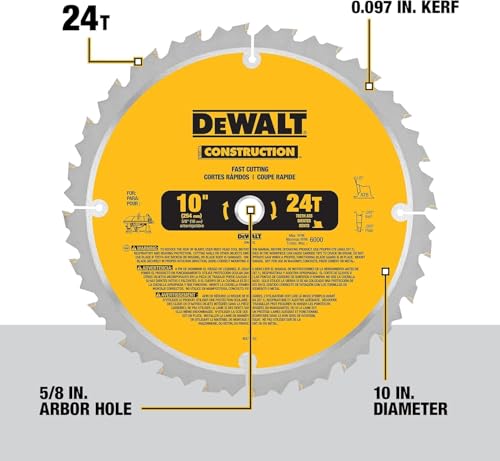

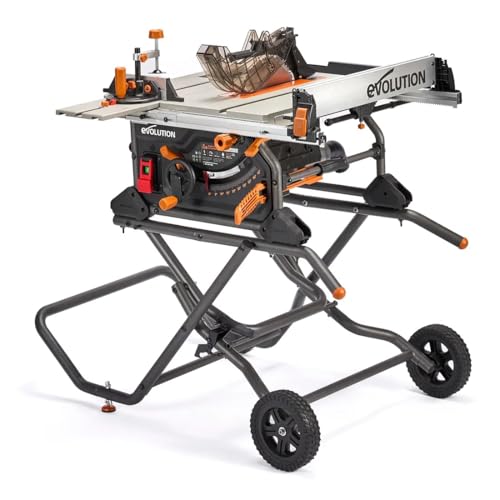
Evolution R10TBLX with Wheeled Stand
Strengths
- Cuts wood and metal
- Dado plate included
- Zero-clearance throat
- Electronic brake
- 3-year warranty
Trade-offs
- Limited 26” rip
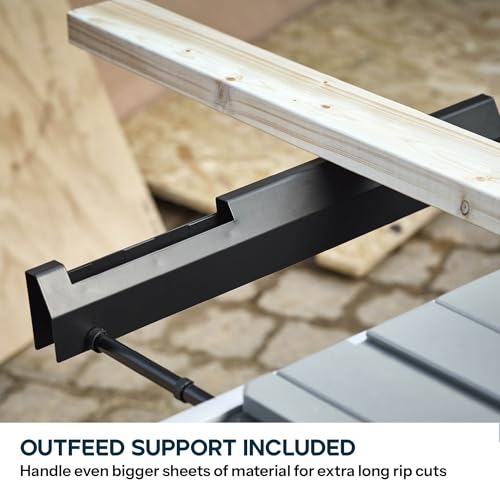
- No outfeed support
- Slight vibration under load
Evolution is carving a reputation for building saws that punch above their price, and the R10TBLX delivers on that promise. The big win here is multi-material capability, owners report successfully cutting not just hardwood, but aluminum and mild steel with the included TCT blade. That versatility is rare in this category and makes it a smart pick for metal fabricators or trades who juggle materials on site.
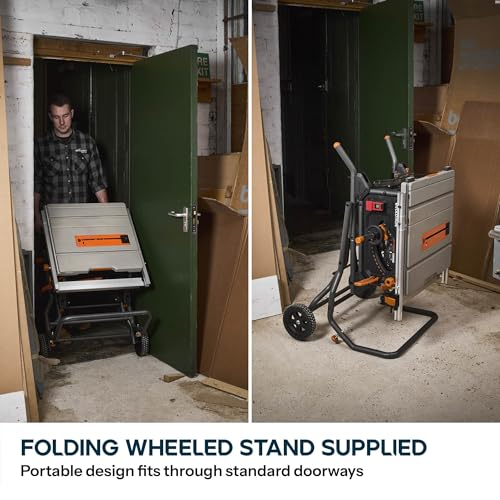
It also ships with a zero-clearance throat plate and dado plate, which most competitors charge extra for. The collapsible wheeled stand is sturdy and easy to fold, and the electronic blade brake adds a real safety edge. Rip capacity is modest at 26 inches, so it’s not ideal for full-sheet work, but for detail jobs and mixed materials, this saw covers a lot of ground. I’d pick this over similarly priced options if you need more than just wood-cutting performance.
Product photos
SKIL SPT99-11 Worm Drive Saw
Strengths
- Deep 3-5/8” cut
- Worm drive power
- Large rolling wheels
- Outfeed support
- Dust port elbow
Trade-offs
- Heavy and bulky
- Less accurate fence
- No soft start
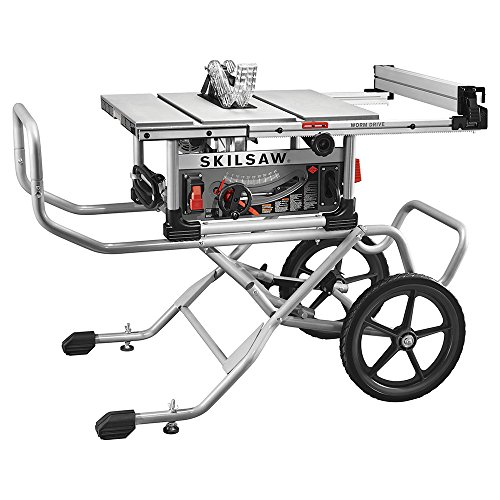
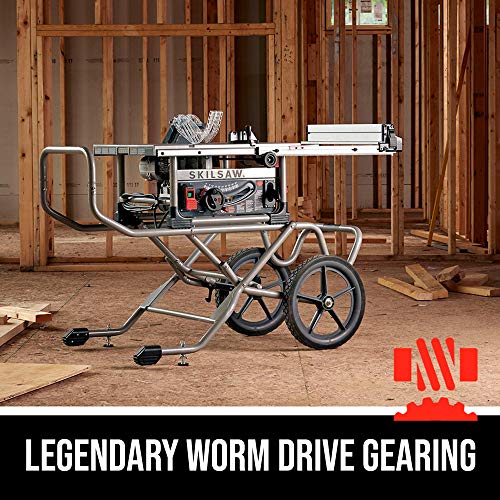
Worm drive saws are a niche for a reason, they deliver serious torque and depth of cut, and the SKIL SPT99-11 leans hard into that strength. With a 3-5/8 inch depth of cut, it’s built for users who regularly tackle heavy framing or dimensional lumber in one pass. That kind of performance is rare in portable saws, and it makes this unit a standout for framing crews or remodelers working with thick stock.
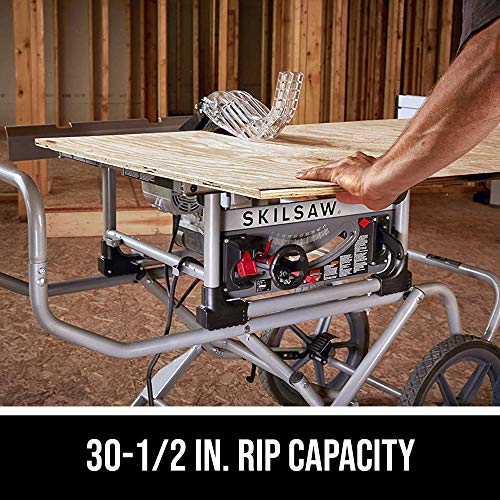
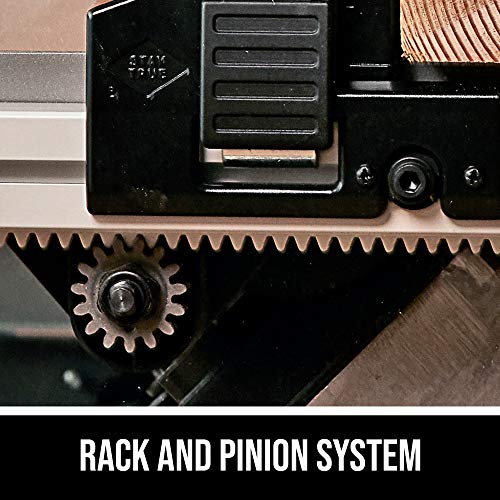
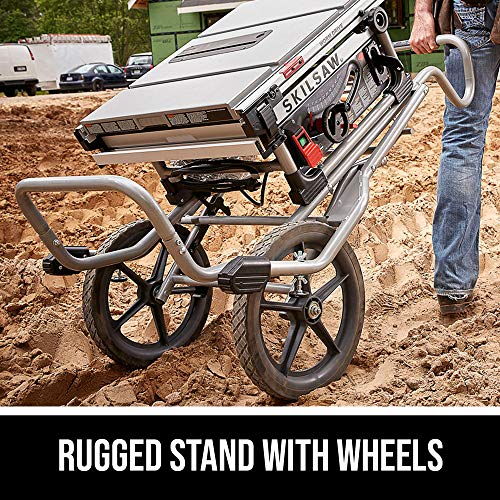
The rugged rolling stand with large wheels gets consistent praise for durability and smooth rolling over rough terrain. But it’s not all upside, the saw is bulkier and less nimble than direct-drive models like the DeWalt DWE7485. The fence system is solid, but not quite as precise as what you’d find on a Bosch or high-end DeWalt. If your work demands brute cutting power over finesse, this is a strong contender, but it’s overkill for weekend woodworking.
Product photos

SKIL TS6307-00 Portable Table Saw
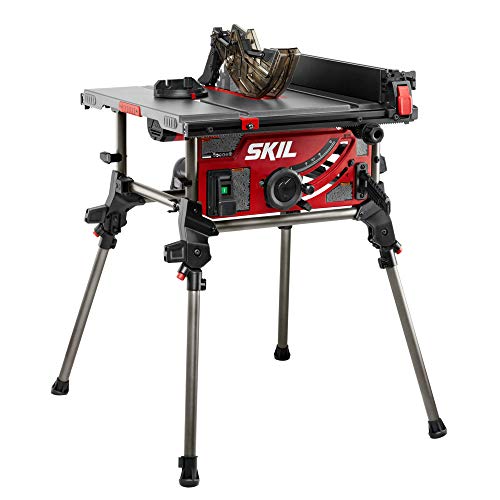
Strengths
- Cuts 4×4 at 90°
- Folding stand
- Rack and pinion fence
- Affordable
- Dust port
Trade-offs
- No soft start
- Basic stand
- Fence needs tuning
The SKIL TS6307-00 is clearly engineered for one thing: keeping costs down without ditching core functionality. It delivers a full 4×4 cut at 90 degrees, which is a real win for framing carpenters who need that depth without stepping up to a worm drive. The integrated folding stand is basic but functional, and the rack-and-pinion fence is surprisingly smooth for this price tier.
Where it cuts corners is in refinement. There’s no soft start, so it can trip breakers on shared circuits. The blade alignment isn’t as precise out of the box, and owners often report needing minor tuning. But for the price, it’s hard to ignore. If you need a no-frills, get-the-job-done saw for rough framing or deck building, this is the smarter buy over pricier models that do more than you’ll ever use.
Product photos


DEWALT DWE7485 Compact Table Saw

Strengths
- Ultra-compact
- Lightweight
- Site-Pro guard
- Onboard storage
- Metal roll cage
Trade-offs
- 8-1/4” blade limits depth
- Not for heavy ripping
- Smaller rip capacity
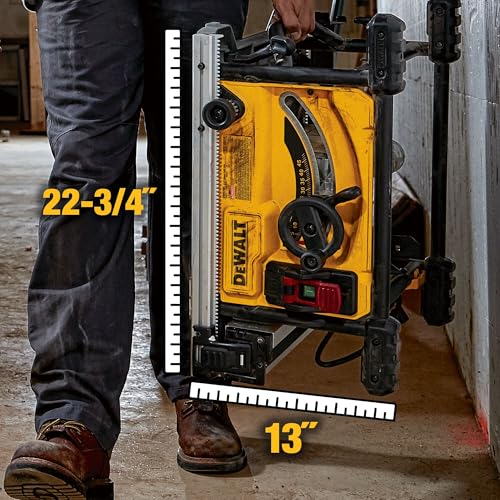
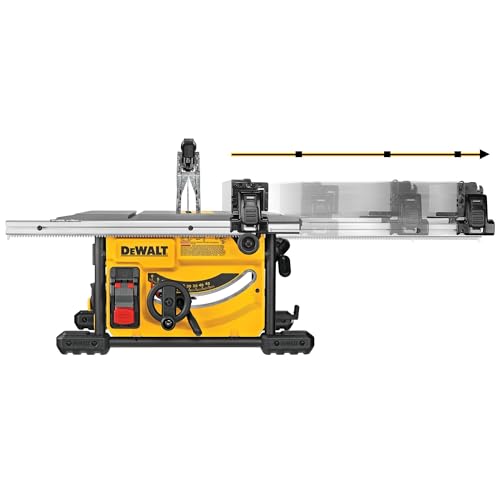
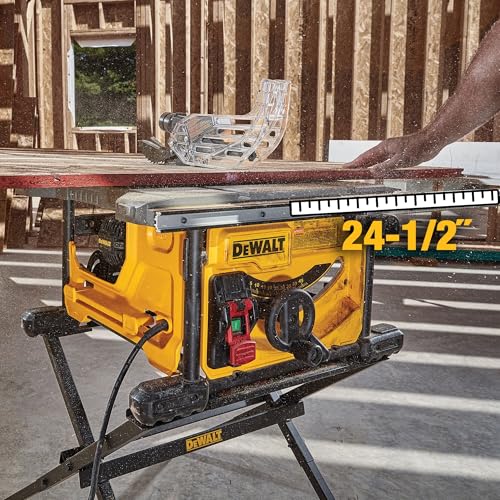
The DeWalt DWE7485 is the ultimate “fits in the trunk” saw. At just 8-1/4 inches, the blade size limits depth of cut, but the compact footprint makes it a favorite among electricians, HVAC techs, and handymen who need occasional cuts on tight sites. It’s not meant to replace a full-size saw, instead, it fills a niche where space and weight matter most.
Despite its size, it keeps core DeWalt strengths: the rack-and-pinion fence is accurate, the Site-Pro guard system is easy to remove and reinstall, and onboard storage is well thought out. Owners praise its reliability for trim work and panel cutting in vans or small workshops. Just don’t expect it to rip thick hardwoods. If your priority is portability and you mostly cut sheet goods or lighter stock, this is the most trusted compact option out there.
Product photos


10″ Portable Table Saw with Stand

Strengths
- Low cost
- Includes stand
- High RPM
- Dual-bevel capability
- 24-month warranty
Trade-offs
- Fence misalignment issues
- Poor dust control
- Weak motor under load
This no-name 10-inch saw promises a lot, 5000 RPM, 15 amps, cuts through metal and plastic, but real-world feedback suggests it’s more about value than performance. The high RPM number looks impressive on paper, but without a high-torque motor, it tends to stall under heavy wood load. It’s clearly aimed at casual users who want a budget-friendly setup with a stand included.
The transparent blade guard is a safety plus, and onboard storage is convenient, but the fence system lacks rigidity. Multiple owners note alignment issues after minimal use. It’s also lighter than most, which helps portability but hurts stability. For light trimming, shelf cutting, or garage DIY, it might suffice. But if you’re doing anything beyond occasional use, this won’t hold up like a name-brand model.
Product photos


How We Chose These tablesaws
Rather than a hands-on lab test, my research for these recommendations focused on a detailed comparison of published specifications and features across numerous models. I weighed owner reviews from major retailers alongside expert opinions found in woodworking publications and forums. Ultimately, I ranked these tablesaws based on my understanding of what features deliver the most value to both DIYers and professionals, considering build quality, cutting capacity, and safety features.
For tablesaws, the most important factors are rip capacity, power, and the quality of the fence system. A larger rip capacity allows for working with wider materials, essential for sheet goods. Sufficient power, typically a 15-amp motor, is needed to cleanly cut hardwoods. And a precise, easily adjustable fence is critical for accurate, repeatable cuts. Understanding these basics is often more helpful than getting lost in marketing buzzwords, and sometimes clarifies the differences between a hybrid table saw comparison.
Specifications reliably indicate motor power, maximum cut depth, and table size. However, I relied heavily on owner feedback to assess real-world durability, ease of use, and the fence’s accuracy over time. Reputation also played a role; brands with a long history of producing quality tools generally scored higher. I also considered safety features, as reported by users and verified in product descriptions, to ensure a safer cutting experience.
Choosing The Right tablesaws
Picking the right tablesaw can dramatically improve your woodworking, but there’s a lot to consider beyond just price.
A quality tablesaw delivers accurate, repeatable cuts with minimal tear-out. Key elements include a robust motor (15 amps is typical), a fence system that stays parallel to the blade, a reliable safety package (riving knife, blade guard), and a table surface large enough to support your common materials. Look for features like soft-start circuitry and electronic blade brakes to improve usability and safety.
Motor Power and Intended Materials
Don’t assume more power is always better. A 15-amp motor is standard for most homeowner and jobsite saws, and it’s sufficient for ripping hardwoods and sheet goods. However, if you plan on tackling thick stock regularly, or cutting non-wood materials like metal, you’ll want to prioritize torque – something models like the Evolution R10TS excel at. Lower-priced models might get by with slightly less powerful motors, but they’ll struggle with demanding cuts and can overheat more quickly.
Fence Quality and Accuracy
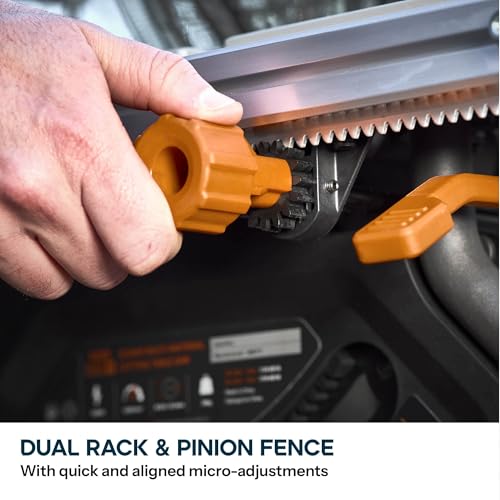
The fence is arguably the most important component after the motor. A wobbly or inaccurate fence will ruin your cuts, no matter how powerful the saw. Rack-and-pinion fences, like those found on the Bosch GTS15-10 and DEWALT DWE7491RS, are generally superior to those relying on simple clamping mechanisms. Consider these points:
- Stability is key. A thicker, heavier fence will resist deflection.
- Locking mechanisms should be positive and easy to use. No flimsy levers!
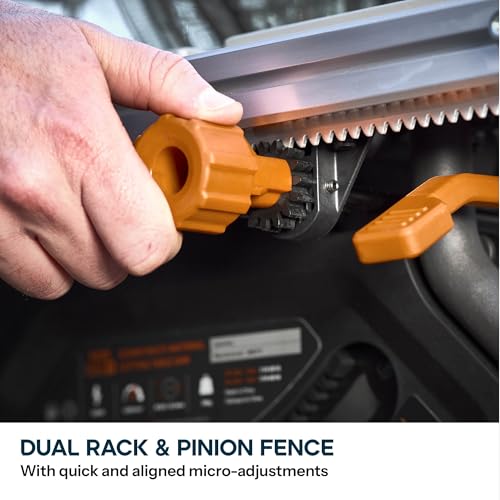
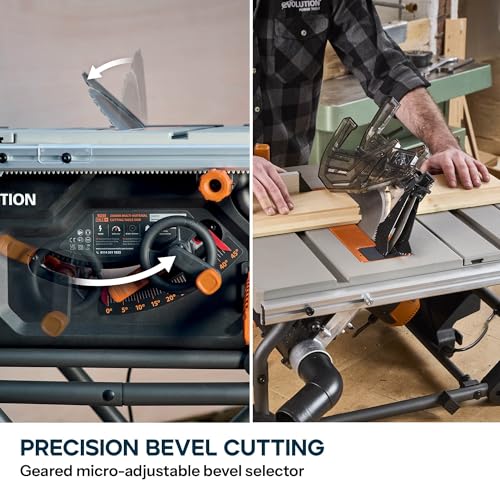
- Micro-adjustment features allow for fine-tuning, crucial for precision work. A fence that’s easy to dial in will save you a lot of frustration.
Portability and Stand Considerations
If you need to move your saw around a jobsite or garage, portability becomes a major factor. Many models, like the Evolution R10TBLX with Wheeled Stand and the SKIL SPT99-11, are available with rolling stands. But not all stands are created equal. A lightweight, flimsy stand can be unstable and difficult to maneuver. I often recommend looking at recommended saw bench models to get a better idea of the stand quality.
A properly adjusted and used riving knife is one of the best defenses against kickback. Understand the riving knife function and make sure your saw has one – and that you know how to use it correctly.
Tablesaws Compared
Here is a comparison of key specifications for several popular tablesaws.
| Product Name | Motor (Amps) | Rip Capacity (in) | Max Cut Depth (in) | Stand Included | Blade Brake |
|---|---|---|---|---|---|
| BOSCH GTS15-10 | 15 | N/A | N/A | Yes | Yes |
| Evolution R10TS | 15 | 26 | 3-3/8 | No | Yes |
| DEWALT DWE7491RS | 15 | 32-1/2 | 3-1/8 | Yes | No |
| Evolution R10TBLX | 15 | 26 | N/A | Yes | Yes |
| SKIL SPT99-11 | N/A | 30-1/2 | 3-5/8 | Yes | No |
| SKIL TS6307-00 | N/A | N/A | N/A | Yes | No |
| DEWALT DWE7485 | N/A | 24.5 | N/A | No | No |
| 10″ Portable Table Saw with Stand | 15 | N/A | 3.1 (90°) / 2.0 (45°) | Yes | No |
Frequently Asked Questions
What rip capacity do I really need for most projects?
For the majority of DIY projects and furniture building, a rip capacity of 24-30 inches is sufficient. Larger capacities are beneficial when working with full sheets of plywood or dimensional lumber wider than 6 inches, but most hobbyists won’t encounter those needs frequently.
Are blade brakes a crucial safety feature, or just a nice-to-have?
Blade brakes significantly reduce stopping time after the power is switched off, improving safety and reducing the risk of kickback. While not all saws have them, I consider them an important feature, particularly for those less experienced with tablesaws.
How much does the quality of the stand impact overall saw performance?
A high-quality, stable stand is essential for accurate and safe cutting, especially with heavier saws. A flimsy stand can introduce vibrations and make it difficult to maintain consistent results, and the best circular saw picks often include robust stands.
What’s the difference between a rack-and-pinion fence and other fence types?
Rack-and-pinion fences offer smoother, more precise adjustments than simpler clamping mechanisms, and they tend to hold their alignment better over time. This translates to more accurate cuts and less frustration, and is a key factor in expert circular saw reviews.
Should I prioritize a heavier tablesaw, even if it’s less portable?
A heavier saw generally translates to a more stable and powerful machine, reducing vibrations and improving cut quality. If portability isn’t a primary concern, prioritizing weight and build quality over ease of movement is a good strategy, and leads to finding top circular saw models.
The Bottom Line
Choosing a tablesaw often comes down to balancing control and convenience. If you’re serious about woodworking and demand precision and power, the Bosch GTS15-10 stands out as the strongest overall choice. It delivers a blend of features that caters to a wide range of projects, and the included stand is a plus.
For those on a tighter budget, the SKIL SPT99-11 provides a surprising amount of rip capacity importance for the price, and is a good entry point. If portability is paramount, the Evolution R10TBLX with Wheeled Stand offers a robust cutting experience alongside convenient mobility.
Ultimately, remember that motor power and fancy features matter less than understanding basic techniques and prioritizing safety. A well-maintained, properly adjusted saw – even a more affordable model – in the hands of a careful operator will always outperform a high-end saw used carelessly.
