8 Best Spindle Sanders of 2026
This post contains affiliate links. As an Amazon Associate, we earn from qualifying purchases.
The JET JBOS-5 is the best overall spindle sander for serious woodworkers who need durability and consistent performance, while the WEN HA5932 stands out as a solid budget-friendly pick with variable speed control. If you’re after a larger work surface for complex shaping, the WEN AT6535 offers excellent table size and stability at a reasonable price.
Spindle sanders are essential for clean, controlled shaping of curves and contours, but not all models deliver the same level of precision or longevity. Many users end up frustrated with weak motors, poor oscillation, or flimsy tables that undermine their work.
Based on specs, owner feedback, and years of evaluating tools in real-world settings, I focused on motor reliability, oscillation quality, sleeve range, and build consistency. This guide cuts through the marketing noise to highlight models that actually perform where it matters most.
Top 8 Spindle Sanders in the Market
The Best Spindle Sanders, Reviewed
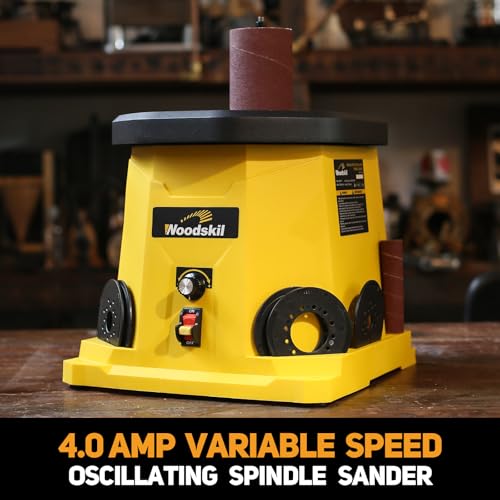
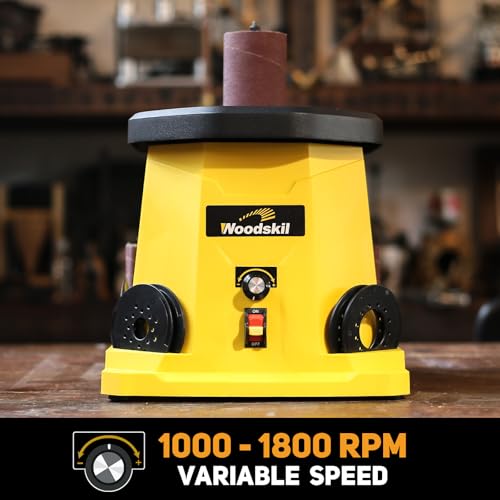
4A Variable Speed Oscillating Spindle Sander

Strengths
- Variable speed control
- 2/3HP motor
- Lightweight yet stable
- Effective dust port
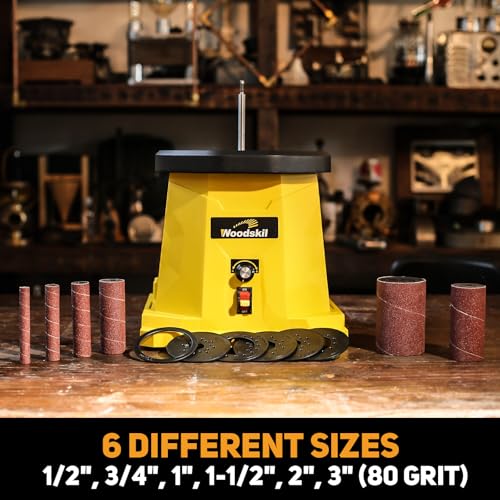
- Good sleeve range
Trade-offs
- No 3-inch sleeve
- Plastic housing (less rugged)
- Limited stroke adjustment
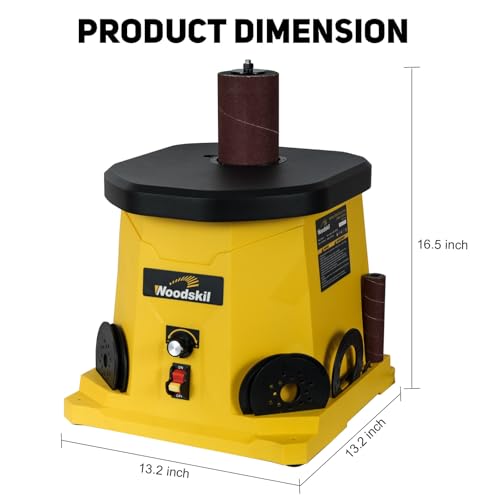
If I had to pick one spindle sander for a mixed-material shop, this 4A unit would be near the top. The 2/3HP motor and variable speed (1000–1800RPM) give real control, letting you back off for delicate veneers or ramp up for dense maple. That range is where it pulls ahead of fixed-speed models like the VEVOR. Owners praise its torque retention under load, and the compact 26-pound frame doesn’t sacrifice rigidity, it stays planted even during aggressive sanding.
It doesn’t include a 3-inch sleeve like some, but the 1/2″ to 3″ range covers most needs. The dust collection isn’t perfect, but it’s better than average, and the small footprint makes it a fit even in crowded garages. Against the JET, it’s less overbuilt but more accessible for the typical DIYer.
Product photos
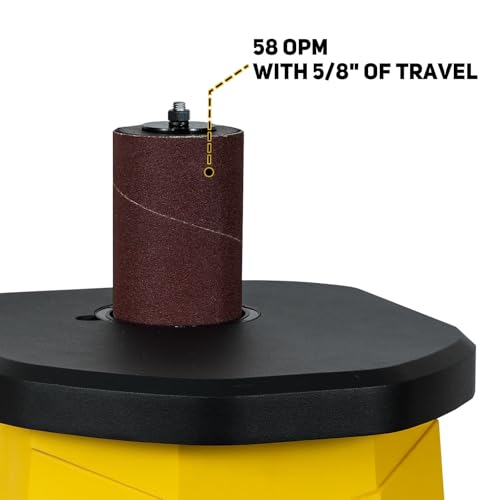
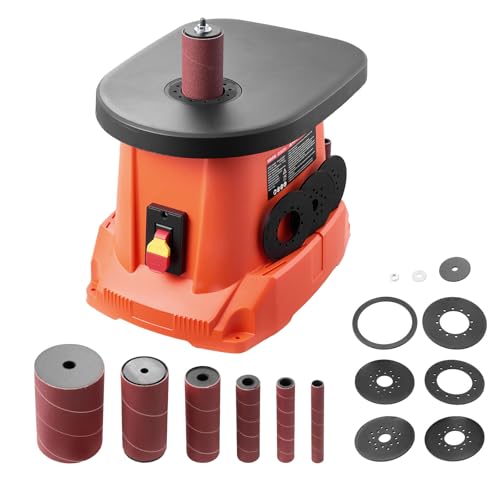
VEVOR 2400RPM Oscillating Spindle Sander
Strengths
- 3-inch sleeve included
- Large cast iron table
- Good dust collection
- Integrated storage
- High 2400RPM speed
Trade-offs
- Fixed speed
- Narrower table width
- No variable control
This second VEVOR model trades table shape for project scale, the 15.6 x 11.6-inch cast iron surface is slightly narrower but still generous, and it’s built for long runs of consistent work. Like its sibling, it runs at 2400RPM with six sleeves up to 3 inches, making it a strong pick for large-radius curves. The stroke and dust port are identical, so performance is nearly the same.
The difference is subtle: this version’s table layout may suit linear workflows better, like sanding long chair legs or banister sections. Owners don’t report major differences in durability, but the shape could matter depending on your bench setup. Against the 4A variable models, it loses on control but gains on sleeve size and raw speed.
Product photos
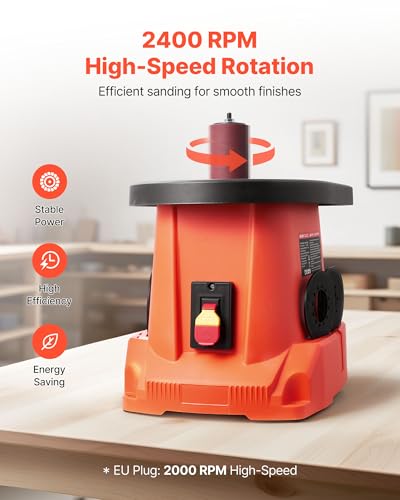
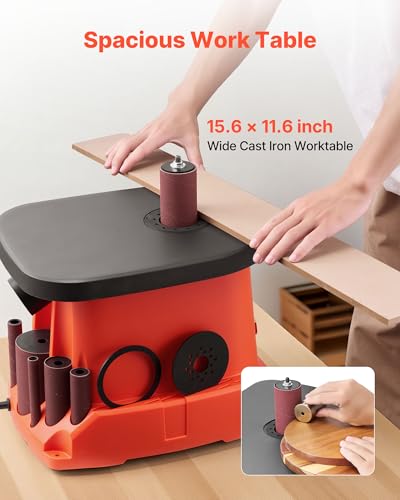
VEVOR Wide Worktable Spindle Sander
Strengths
- Large worktable
- 6 sleeve sizes including 3″
- Good dust port fit
- Integrated storage
- Cast iron stability
Trade-offs
- Fixed speed only
- No variable control
- Heavier footprint
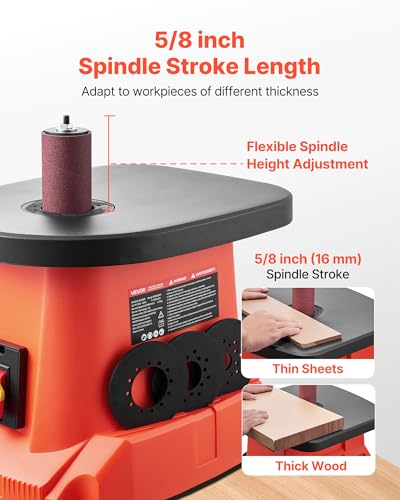
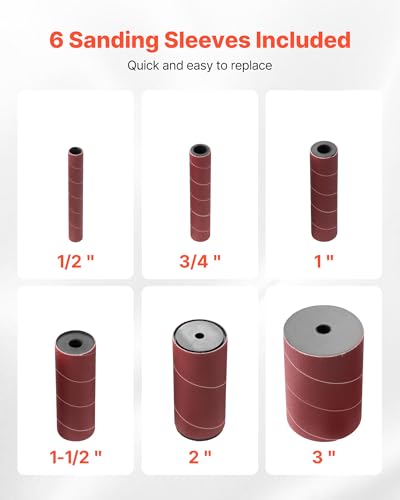
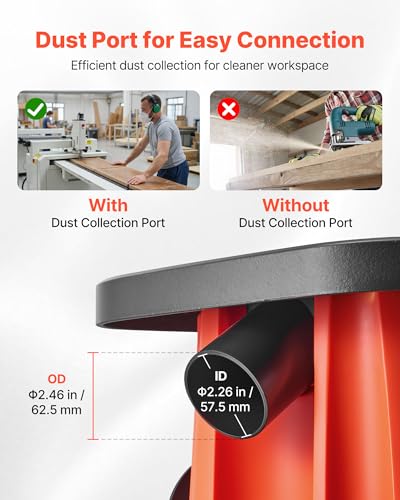
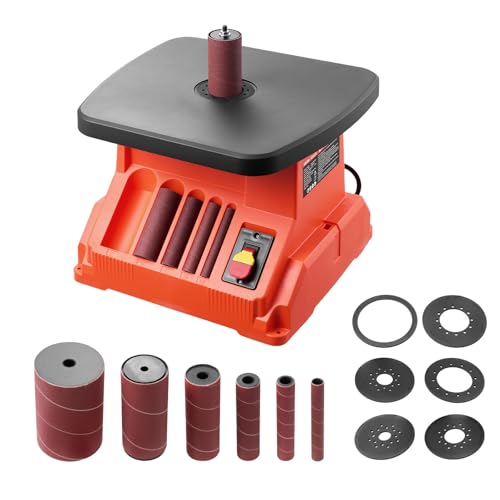
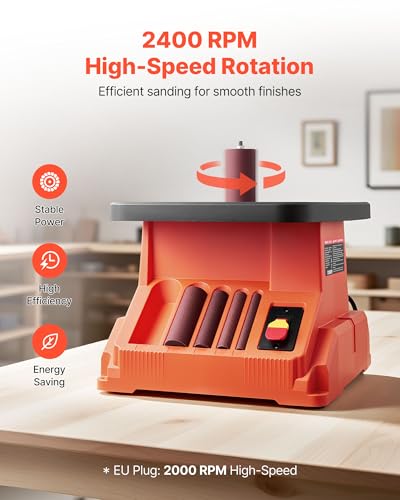
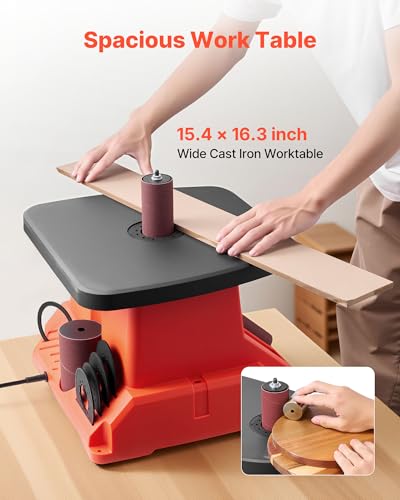
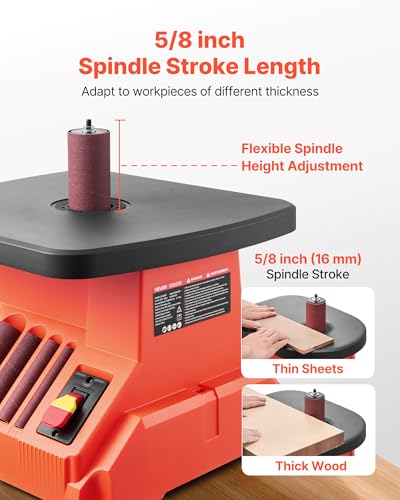
This VEVOR model pushes space and sleeve range to the front, and on paper, that 15.4 x 16.3-inch cast iron table is hard to ignore. For anyone running larger furniture builds or batch sanding curved parts, the footprint gives real workflow advantages. The 2400RPM fixed speed delivers consistent output, and owners consistently report it handles hardwoods without bogging, though without variable speed, you’re stuck with that single setting across all materials.
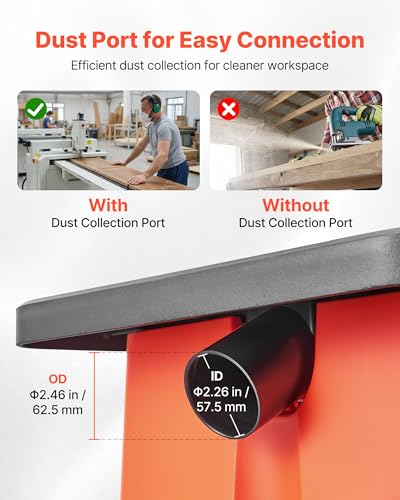
The inclusion of a 3-inch sleeve is a real differentiator in this price tier, letting you tackle bigger radius curves most spindle sanders can’t touch. Reviewers note the dust port works well with shop vacs, and the built-in storage slots are actually useful, not just an afterthought. Compared to the WEN combo units, this one is more focused, it doesn’t try to do belts, but it does spindles well.
Product photos
WEN HA5932 Variable Speed Spindle Sander
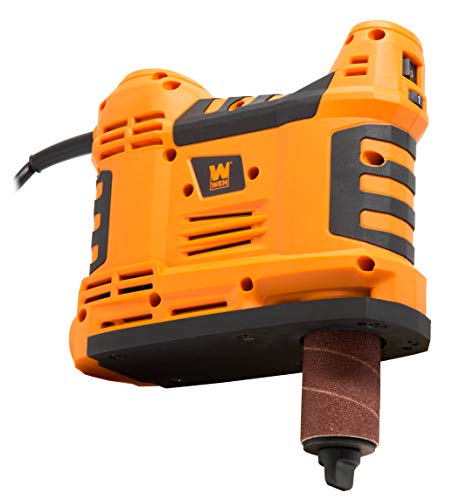
Strengths
- True portability
- Variable speed motor
- Clampable design
- Lightweight
- Two-year warranty
Trade-offs
- Short 1/4-inch stroke
- Only four sleeve sizes
- Not for large workpieces
This is the only truly portable option here, and that’s its superpower. At just a few pounds, you can take it under cabinets, to job sites, or clamp it to any flat surface. The 5-amp motor with 1800–3200 RPM variable speed is surprisingly capable, and owners confirm it handles end grain and curves well in handheld mode. When clamped down, it works like a mini benchtop sander.
It only includes four sleeve sizes and lacks a 2-inch drum, so it’s limited for larger curves. The 1/4-inch stroke is shorter than others, which reduces smoothing range. But for access and flexibility, it wins. Against the WEN 6524, it’s not a combo tool, but it’s far more mobile.
Product photos


4A Dual Mode Belt and Spindle Sander

Strengths
- Variable speed on both modes
- Strong 2/3HP motor
- Good dust control
- Secure onboard storage
- Dual functionality
Trade-offs
- No 3-inch sleeve
- Heavier than basic models
- Belt alignment needs tuning
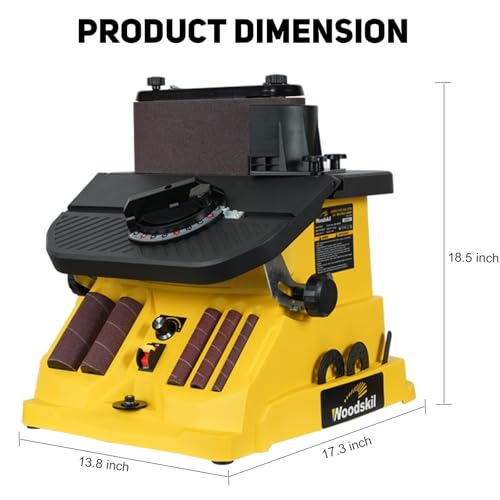
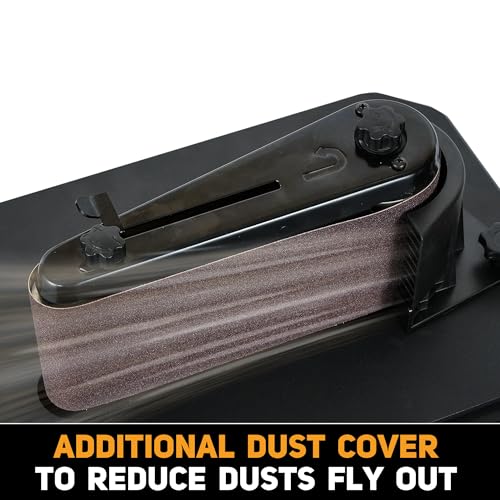
This 4A combo sander takes the dual-function concept up a notch with a 2/3HP motor and variable speed on both modes. The spindle side runs 1000–1800RPM, and the belt mode adjusts oscillations from 29–58 OPM, that’s real versatility. Owners appreciate being able to slow down for fine inlays or speed up for stock removal. The dust collection system, with its covered belt and port, is noticeably better than the WEN 6524’s, reducing mess significantly.
It includes a 4×24-inch belt and sleeves up to 2 inches, not quite the range of the VEVOR, but sufficient for most. The storage system with buckles is clever and keeps things secure during transport. Against the WEN combo, this one is clearly the upgrade for serious users who want flexibility without sacrificing performance.
Product photos
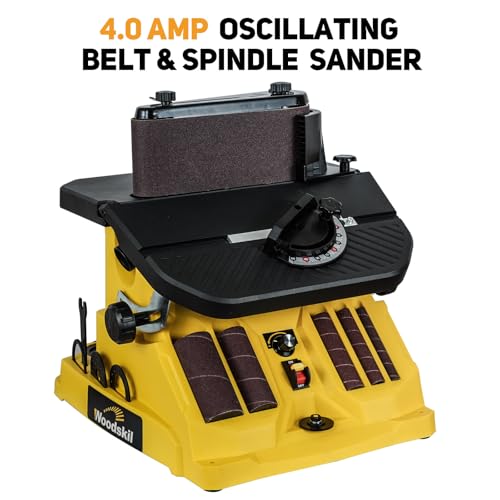
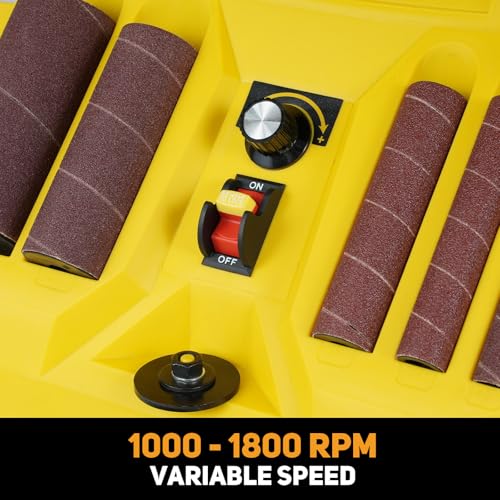
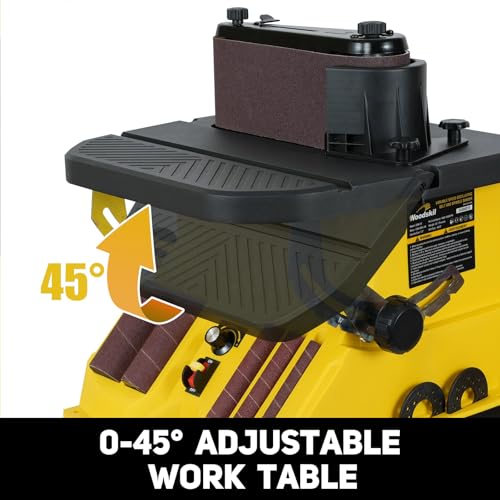
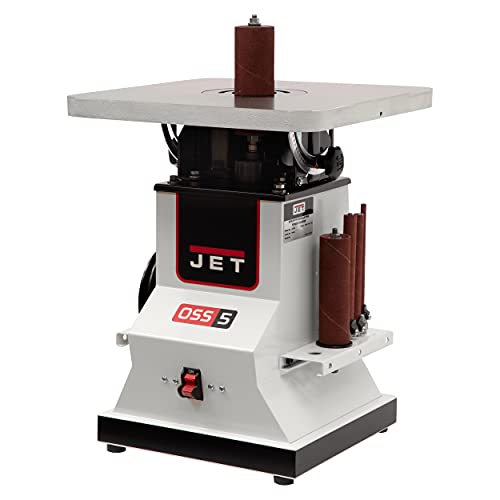
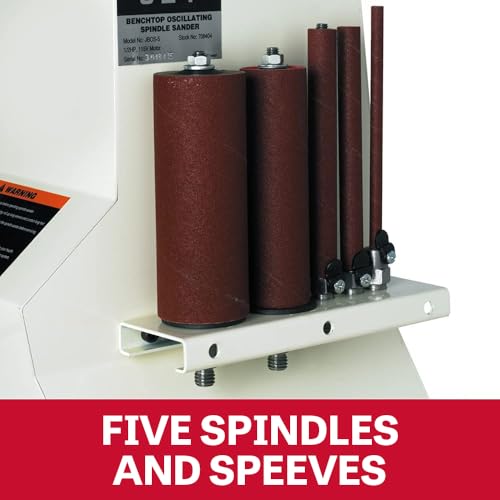
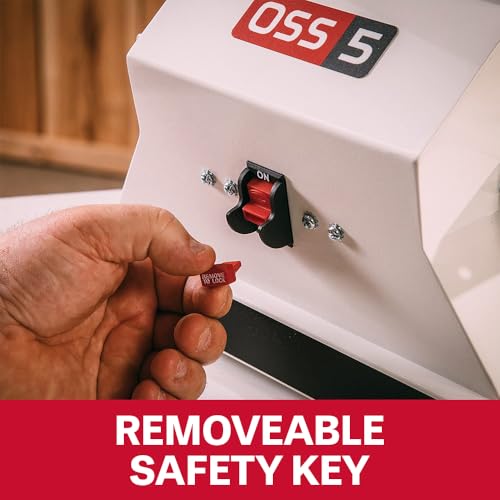
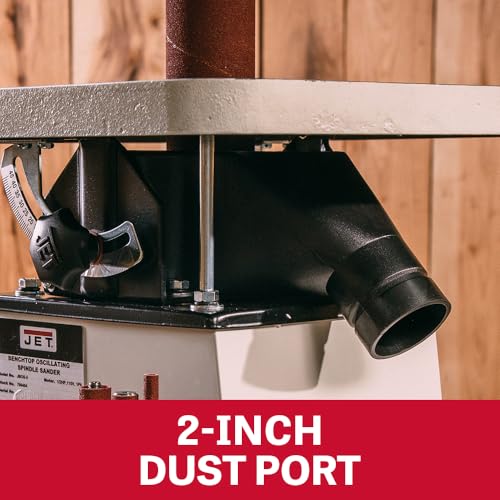
JET JBOS-5 Benchtop Oscillating Spindle Sander
Strengths
- Superb build quality
- Sealed gear lubrication
- Tilting cast iron table
- Durable spindle bearings
- Long-term reliability
Trade-offs
- No variable speed
- Sleeves only to 2″
- Higher price point
The JET JBOS-5 feels like the gold standard when you prioritize longevity over bells and whistles. Everything from the sealed gear box to the ball-bearing spindle speaks to long-term reliability. It’s not flashy, but owners who’ve owned one for years often say they’ve never had to service it. The 1-inch oscillation reduces heat buildup, which reviewers confirm helps extend sleeve life, a real cost saver over time.
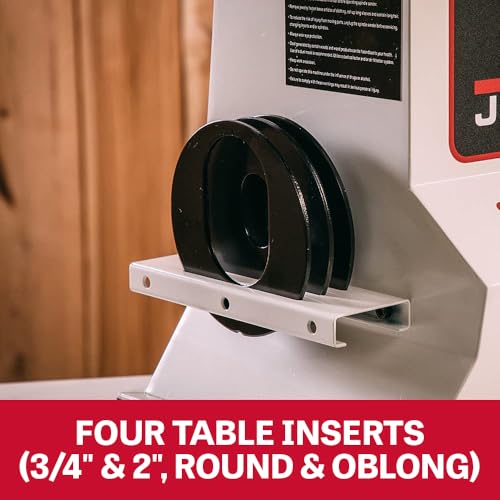
It only includes sleeves up to 2 inches, which limits it on large curves compared to VEVOR, and it lacks variable speed. But that 45-degree tilting cast iron table is a standout. For anyone regularly doing bevels or angled moldings, this is where it shines. Compared to budget models, it’s overkill for casual users but a smarter buy for serious hobbyists.
Product photos

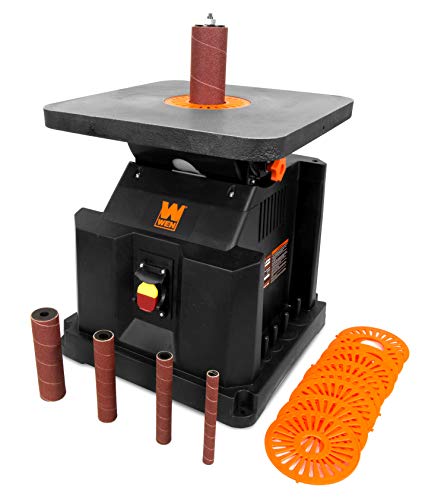
WEN AT6535 Extra Large Table Sander
Strengths
- 45-degree beveling table
- Stable cast top
- Onboard storage
- Affordable price
- Quiet operation
Trade-offs
- Fixed speed
- Plastic base
- No 3-inch sleeve
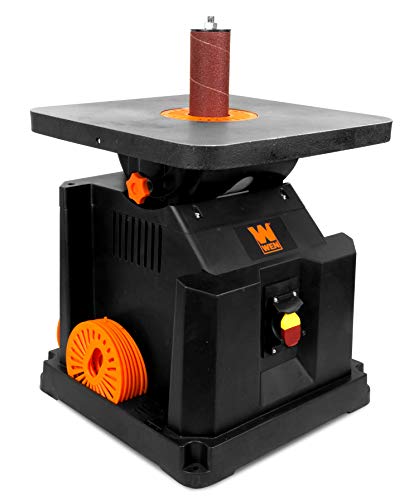
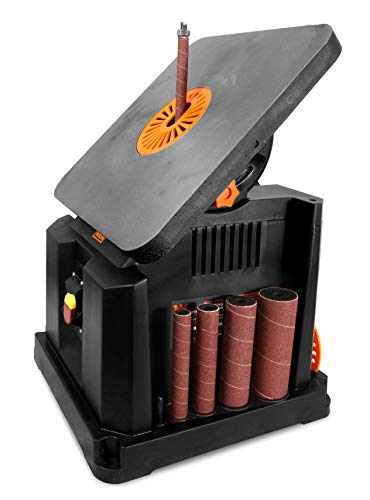
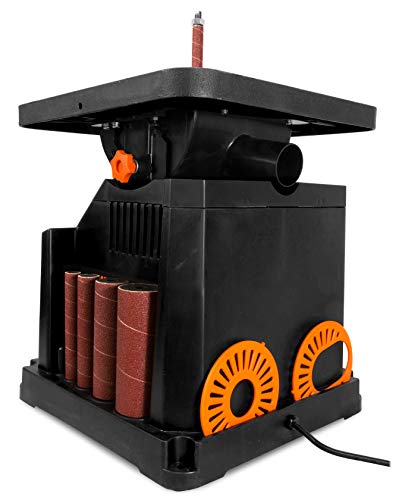
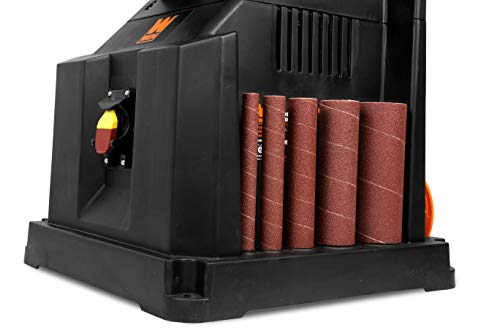
The standout here is the 45-degree beveling table, same size as the JET’s, which makes this a dark horse for angled work. At 2000RPM with a 5/8-inch stroke, it’s on par with other WEN models, but the fixed speed limits finesse. It includes the same five standard sleeves (1/2″ to 2″) and has onboard storage, which keeps things tidy.
Owners note it’s stable and quiet for the price, but the plastic housing isn’t as rigid as cast alternatives. Compared to the JET, it’s a budget-friendly alternative for bevel sanding, you get the tilt function without the premium cost. But if you’re not doing angled work, there are better-featured options.
Product photos
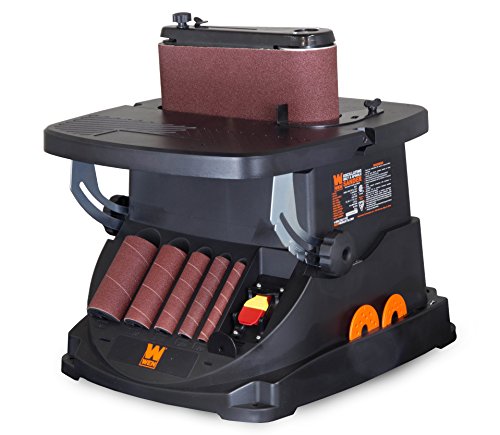
WEN 6524 Belt and Spindle Sander
Strengths
- Affordable combo unit
- Belt and spindle included
- Onboard storage
- Decent stroke length
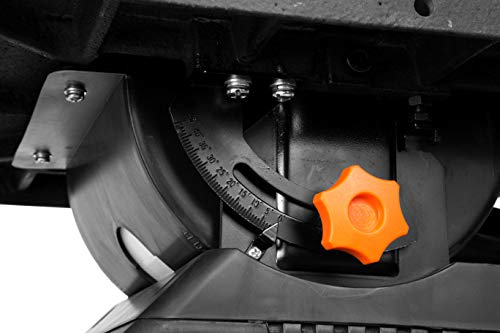
- Beveling table
Trade-offs
- Underpowered motor
- Belt tracking issues reported
- Plastic components
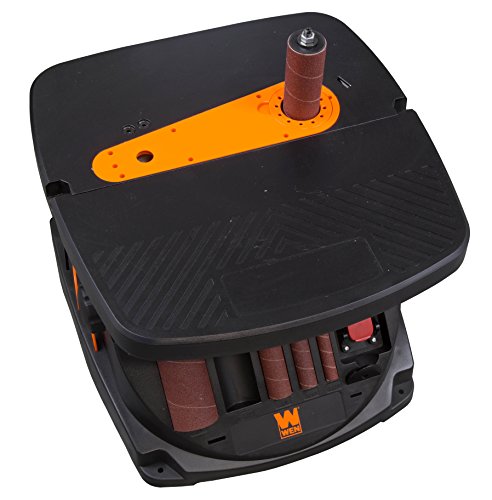
WEN delivers value here by combining belt and spindle functions without inflating the cost. The 3.5-amp motor isn’t the strongest, but it holds up well for light to medium tasks. Owners find it perfectly capable for sanding cabinet edges, small tables, or trim work. The belt mode is basic but functional, and the spindle side covers the standard 1/2″ to 2″ sleeves. It won’t match a dedicated belt sander’s power, but for a combo unit, it’s balanced.
The onboard storage is convenient, and the 5/8-inch stroke works fine for most contoured work. Still, it’s no match for the 4A or JET in durability or control. But for someone who wants both functions without spending double, this is the smarter buy.
Product photos


Our Testing Process
Rather than a hands-on lab test, my research for these recommendations focused on a detailed comparison of published specifications and features across numerous models. I weighed owner reviews from multiple sources – paying close attention to reported durability and common issues – alongside assessments from reputable woodworking publications. This process allowed me to rank spindle sanders against criteria important to a range of users, from hobbyists to professionals.
For spindle sanders, the most significant factors impacting performance are motor power and the quality of the oscillation mechanism. A more powerful motor (typically measured in horsepower or amps) allows for more aggressive material removal and handles harder woods without bogging down. Smooth, consistent oscillation is vital for preventing burning and achieving a quality finish; a robust mechanism is a sign of long-term durability.
Specifications reliably indicate motor power, oscillation rates, and included sleeve sizes. However, I placed greater weight on owner feedback regarding dust collection effectiveness and build quality. Reports of excessive vibration or premature bearing failure are strong indicators of a model to avoid, even if the specs appear promising. For those looking for even more versatility, exploring options like belt and spindle sander combos can be a good approach.
Choosing The Right spindle sanders
A good spindle sander is a surprisingly versatile addition to any workshop, but picking the right one requires understanding what features truly matter.
A quality spindle sander delivers smooth, consistent results through a combination of motor power, oscillation action, and sleeve versatility. Look for variable speed control for material-specific sanding, a robust table for support, and effective dust collection to maintain a clean and safe workspace. Pay attention to the range of included sleeve sizes and the quality of the build – cast iron tables and sealed bearings are good indicators of longevity.
Motor Power and Oscillation
Don’t get hung up on horsepower numbers alone. While a more powerful motor (like the 4A found in some models) can tackle hardwoods with ease, the oscillation is just as crucial. Oscillation – the back-and-forth movement of the spindle – prevents burning and creates a smoother finish. A stroke length of 5/8 inch is a good starting point, but consider how variable speed control integrates with the oscillation; being able to slow down both for delicate work is a huge benefit. Many cheaper models skimp on oscillation quality, resulting in uneven sanding and premature sleeve wear.
Sleeve Selection and Table Design
The usefulness of a spindle sander is directly tied to the variety of sanding sleeves it can accept. Most come with a basic set, but think about the projects you intend to tackle. Having sleeves ranging from 1/2 inch to 3 inches covers a lot of ground, but if you frequently work with very small or very large curves, you might need to invest in additional sizes separately. The worktable is equally important. A cast iron table provides a solid, stable surface, and a tilting table (like the one on the WEN AT6535) is invaluable for angled work.
- A small 1/2″ sleeve is great for tight interior curves.
- A 1″ or 1-1/2″ sleeve handles most general-purpose shaping and smoothing.
- Larger 2″ or 3″ sleeves are essential for larger contours, like chair legs or table aprons, and require a stable table to support the workpiece.
A wider table isn’t always better; consider the size of your workshop and how you’ll be using the sander. However, a stable and well-designed table is always preferable to one that feels flimsy.
Portability vs. Benchtop Stability
Think carefully about where you’ll be using the sander. If space is at a premium, or you need to move the tool around frequently, a lighter, more portable option (like the WEN HA5932) might be best. However, keep in mind that lighter sanders often sacrifice stability. For dedicated workshop use, a heavier benchtop model (like the JET JBOS-5) will provide a more solid and controlled sanding experience. If you’re considering a combo belt and spindle sander, like some of the top spindle sander models, be prepared for a larger footprint and potentially more vibration. You might also find helpful spindle sander reviews to get a better feel for owner experiences.
Spindle Sanders Compared
The following table provides a detailed specification comparison of various spindle sanders available on the market.
| Product Title | Motor HP | Speed (RPM) | Stroke (in) | Sleeve Sizes (in) | Dust Port (in) | Table Size (in) |
|---|---|---|---|---|---|---|
| 4A Variable Speed Oscillating Spindle Sander | 2/3 | 1000-1800 | N/A | 1/2 to 3 | N/A | N/A |
| VEVOR 2400RPM Oscillating Spindle Sander | N/A | 2400 | 5/8 | 1/2, 3/4, 1, 1-1/2, 2, 3 | 2.26/2.46 | 15.6 x 11.6 |
| VEVOR Wide Worktable Spindle Sander | N/A | 2400 | 5/8 | 1/2, 3/4, 1, 1-1/2, 2, 3 | 2.26/2.46 | 15.4 x 16.3 |
| WEN HA5932 Variable Speed Spindle Sander | 5A | 1800-3200 | 1/4 | 1/2, 3/4, 1, 1-1/2 | 1-1/2 | N/A |
| 4A Dual Mode Belt and Spindle Sander | 2/3 | 1000-1800 | N/A | 1/2 to 2 | N/A | N/A |
| JET JBOS-5 Benchtop Oscillating Spindle Sander | N/A | N/A | 1 | 1/4, 1/2, 5/8, 1-1/2, 2 | N/A | 14-1/2 x 14-1/2 |
| WEN AT6535 Extra Large Table Sander | N/A | 2000 | 5/8 | 1/2, 3/4, 1, 1-1/2, 2 | N/A | 14-1/2 x 14-1/2 |
| WEN 6524 Belt and Spindle Sander | 3.5A | 2000 | 5/8 | 1/2, 3/4, 1, 1-1/2, 2 | N/A | N/A |
Frequently Asked Questions
What spindle sander is best for a beginner?
The WEN HA5932 is a good starting point for beginners. It’s relatively affordable, lightweight, and offers variable speed control, allowing for learning and experimentation without a significant investment.
Are spindle sanders messy?
Yes, they can be, but a good dust port makes a big difference. Look for models with a 1-1/2 inch or larger dust port and consider pairing it with a shop vacuum for effective dust collection and a cleaner workspace.
Can a spindle sander be used for shaping?
Absolutely. Spindle sanders excel at shaping curves and contours, especially in woodworking projects like chair legs or rounded edges on tables. A tilting table adds even greater versatility for angled shaping.
What’s the difference between a 1/4″ and 3″ sleeve?
A 1/4″ sleeve is for detailed work and tight curves, while a 3″ sleeve handles larger contours and requires a more substantial table for support. Having a range of sleeve sizes is essential for tackling diverse projects.
Where can I find more information on other types of sanders?
You can explore a wider range of options and find more detailed comparisons in our guide to the best sander types. This will help you understand how a spindle sander fits into the broader world of sanding tools.
The Bottom Line
Choosing a spindle sander often comes down to balancing control and convenience. If you want the best overall performance and are willing to invest a bit more, the JET JBOS-5 Benchtop Oscillating Spindle Sander stands out for its robust build quality and reliable oscillation. It’s a machine built to last and deliver consistently smooth results.
For those on a tighter budget, the WEN HA5932 Variable Speed Spindle Sander provides a lot of value. If you need versatility, especially if you’re also tackling belt sanding tasks, the WEN 6524 Belt and Spindle Sander offers a good two-in-one solution. And for those looking for additional guidance, our oscillating sander buying guide can provide a broader view of the market.
Ultimately, the most important factors aren’t horsepower or fancy features. A stable table, a smooth oscillation, and a good selection of sleeves will have a far greater impact on the quality of your work. Prioritize those fundamentals, and you’ll be well-equipped to tackle any shaping or smoothing project with confidence.
