
7 Best Split Beam Torque Wrenches 2026
This post contains affiliate links. As an Amazon Associate, we earn from qualifying purchases.
The TEKTON 1/2 Inch Split Beam Torque Wrench is the best overall pick for its reliable accuracy, solid build, and straightforward design. For those on a budget, the TEKTON 3/8 Inch Split Beam Torque Wrench delivers the same quality at a lower price. If you need extra reach in tight spots, the Capri Tools 1/2″ Flex-Head Split Beam Wrench stands out with its pivoting head and smooth action.
If you’ve ever stripped a bolt or worried about under-torquing a critical fastener, you know how crucial precision matters. A poor-quality wrench can cost you time, damage parts, or worse, create a safety risk.
As someone who’s spent years helping DIYers and pros choose the right tools, I focused this guide on real-world performance, durability, and ease of use. These picks are based on specs, owner feedback, and the features that actually make a difference when you’re on the job.
Top 7 Split Beam Torque Wrenches in the Market
The Best Split Beam Torque Wrenches, Reviewed
TEKTON 1/2 Inch Split Beam Torque Wrench

Strengths
- Wide 40-250 ft-lb range
- Thumbscrew adjustment
- ASME certified
Trade-offs
- No flex head
- Fixed head limits access
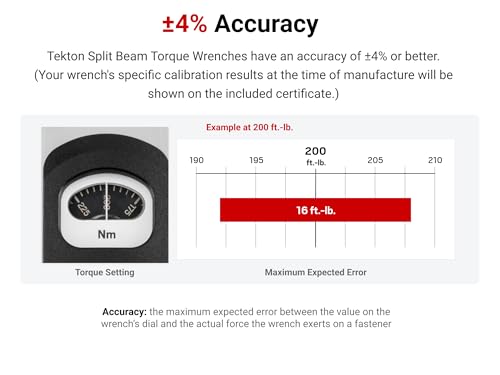
If I had to pick one 1/2-inch split beam for general shop use, the TEKTON TRQ62203 would be my default recommendation. It starts at 40 ft-lbs, giving it broader range than the Capri model, and still hits 250 with the same +-4% accuracy. The thumbscrew adjustment is smooth, and the flip-up cover locking mechanism is a standout feature, reviewers note it prevents accidental setting changes better than twist-style locks.
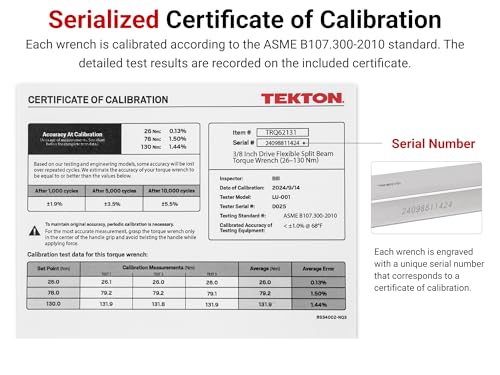
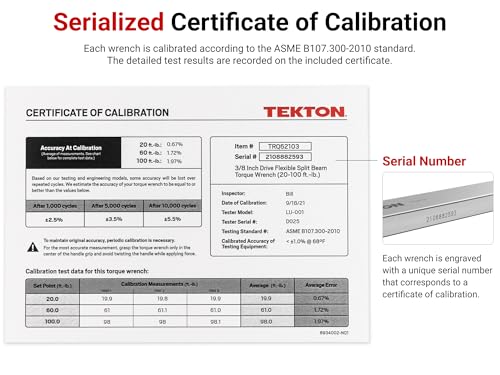
The included calibration certificate and ASME compliance mean it’s ready for jobs where traceability matters. It lacks a flex head, so you’ll need swivels or u-joints in tight spots, but the 72-tooth ratchet compensates somewhat. For most users, this is the smarter buy over pricier names that don’t offer better real-world performance.
Product photos
Olsa Tools 1/2″ Split Beam Torque Wrench

Strengths
- 15° flex head
- Loud click signal
- Knob-type adjustment
Trade-offs
- No sub-50 ft-lb capability
- Slightly bulkier head
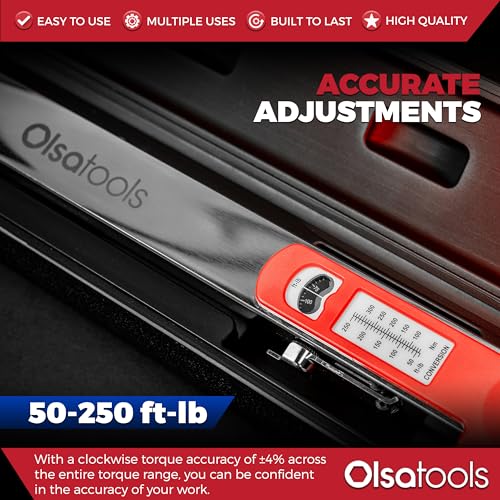
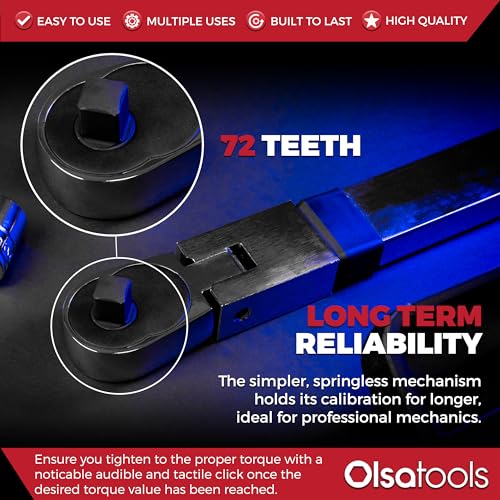
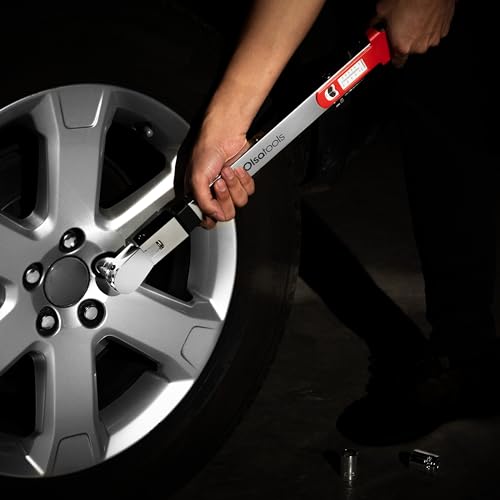
Olsa packs a lot of pro-focused features into this wrench: a 15° flex head, 72-tooth ratchet, loud click signal, and a knob-style torque adjuster that owners say is faster than twist handles. The build feels industrial, and the emphasis on heavy-duty steel and 10,000-cycle validation suggests durability beyond weekend use.
It shares the 50-250 ft-lb range with the Capri, but the locking lever and cleaner adjustment system give it an edge in usability. Compared to the TEKTON, it trades some low-end range for better head articulation. For mobile technicians or shops doing repetitive high-torque work, this one delivers strong value without cutting corners on certification.
Product photos
TEKTON 2-Piece Split Beam Torque Wrench Set
Strengths
- Covers light and heavy torque
- Matched design pair
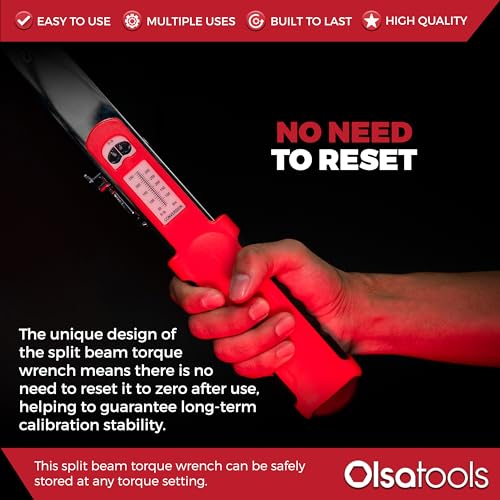
- No reset needed
Trade-offs
- No flex heads
- Slightly higher cost
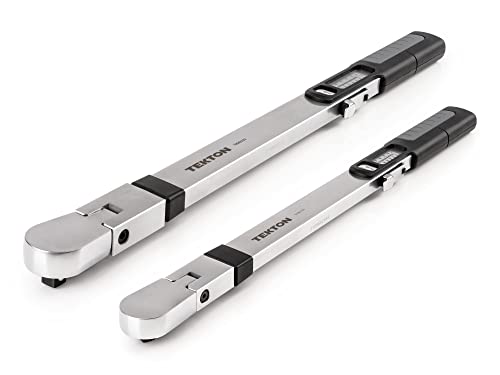
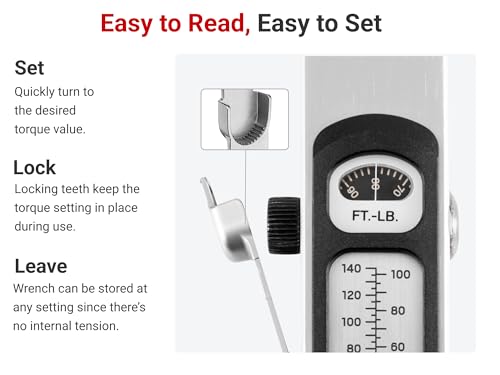
The TEKTON 2-piece set is my pick for most home shops, it gives you the right tool for both light and heavy jobs without forcing compromises. The 3/8” wrench handles 20-100 ft-lbs, the 1/2” covers 40-250, and both share the same reliable thumbscrew adjust and flip-up lock design.
Having both in calibrated, no-reset split beam formats means you’re covered across 90% of automotive fastening tasks. Owners consistently say this set replaces multiple click wrenches and reduces clutter. Compared to the QUENCHING set, it lacks flex heads but gains TEKTON’s stronger reputation for consistency. For most buyers, this is the complete package.
Product photos
Capri Tools 1/2″ Flex-Head Split Beam Wrench

Strengths
- Flex-head design
- No reset required
- Certified accuracy
Trade-offs
- Limited low-end range
- Heavier than some
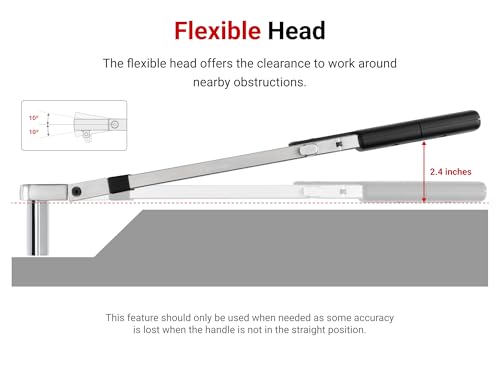
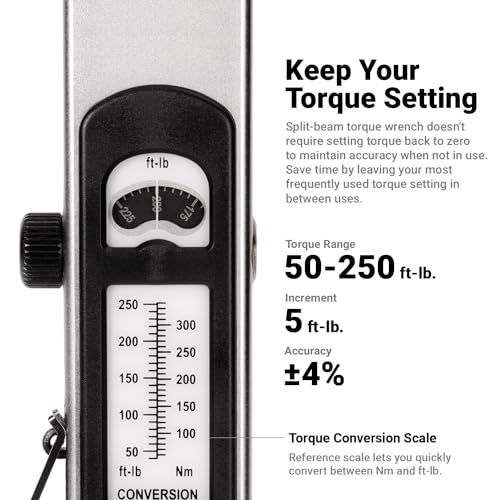
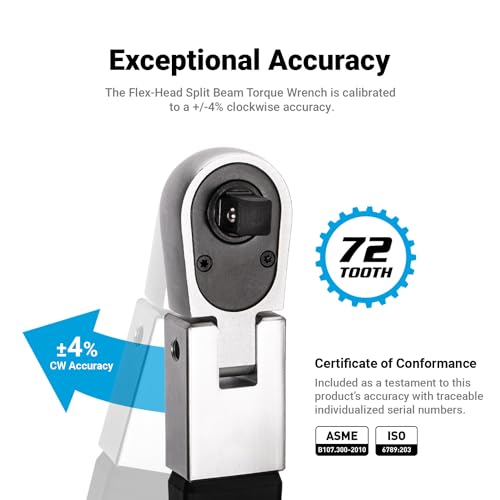
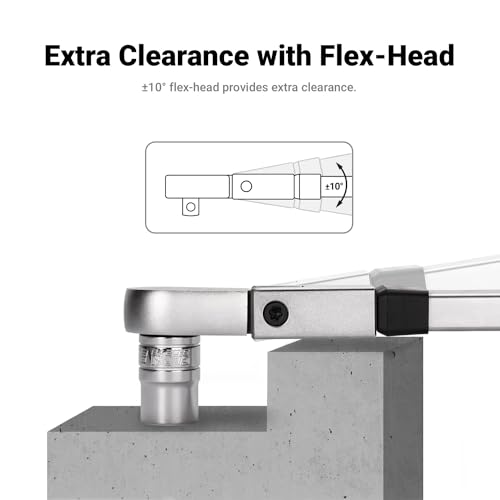
The Capri Tools flex-head split beam stands out in a crowded field by combining smart design with solid accuracy. Its 72-tooth ratchet with a 10% flex head gives real-world usability in tight engine bays, and the ability to leave it set between uses is a practical win for anyone who values workflow efficiency. On paper, the +-4% CW accuracy and included certificate of conformance meet professional expectations.
Owners consistently report confidence in its repeatable performance, especially for high-torque tasks like axle nuts or suspension work. Compared to basic click-style wrenches, this one avoids spring degradation concerns, and the ergonomic handle helps reduce hand fatigue during extended sessions. It doesn’t have the lowest starting torque in class, but for the 50-250 ft-lbs sweet spot, it holds its own.
Product photos
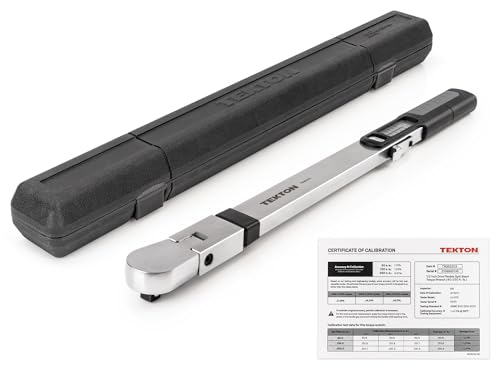
TEKTON 3/8 Inch Split Beam Torque Wrench
Strengths
- Precise low-torque range
- Thumbscrew adjust
- ASME compliant
Trade-offs
- Limited to light tasks
- No flex head
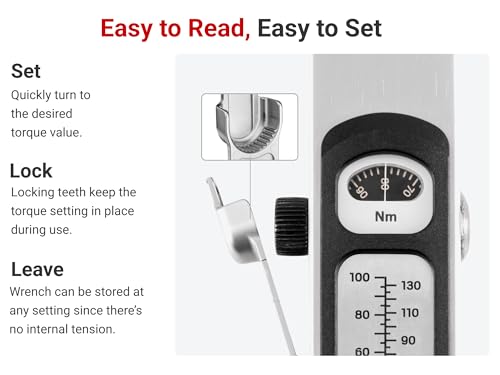
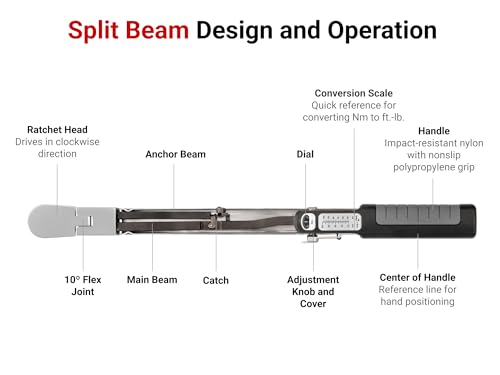
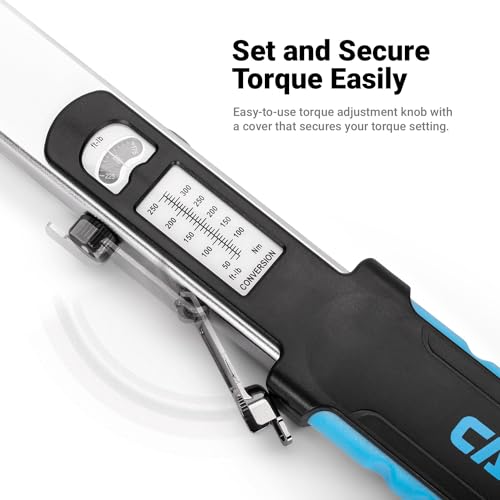
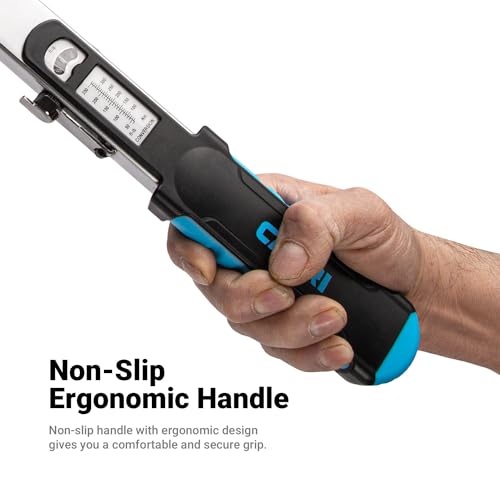
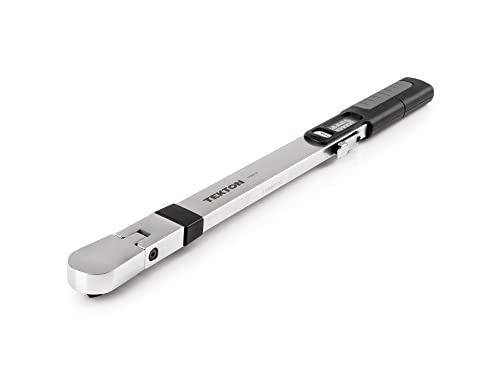
For light-duty work, the TEKTON 3/8” split beam is a quiet standout. Its 20-100 ft-lb range hits the sweet spot for intake manifolds, oil pans, and smaller suspension parts. The same smooth thumbscrew and flip-up lock from the 1/2” model are here, and the +-4% accuracy holds across the range.
It’s one of the few dedicated small-drive split beams with full certification, and owners appreciate not having to baby it. Compared to using a 1/2” wrench with adapters, this one offers better control and less risk of over-torque. If your work lives in the 20-100 ft-lb zone, this is the cleanest solution.
Product photos
QUENCHING 3/8″ & 1/2″ Split Beam Wrench Set
Strengths
- Dual drive sizes
- Wide combined range
- Durable construction
Trade-offs
- No flex heads
- Set not ideal for single-drive users
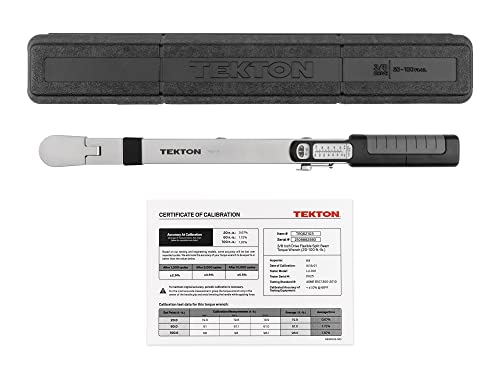
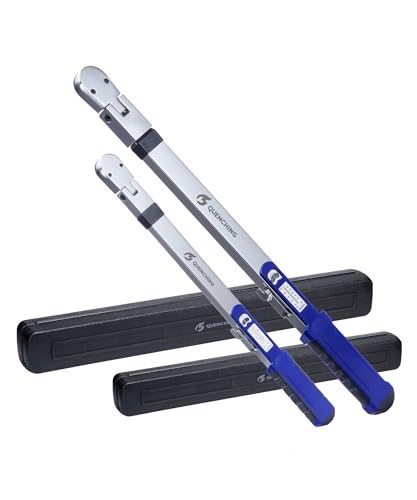
The QUENCHING dual-drive set is built with the automotive technician in mind, its 3/8” and 1/2” wrenches cover 20-250 ft-lbs, bridging light and heavy tasks in one package. The chrome vanadium steel and 10,000-cycle validation suggest long-term resilience in shop environments where tools get hammered.
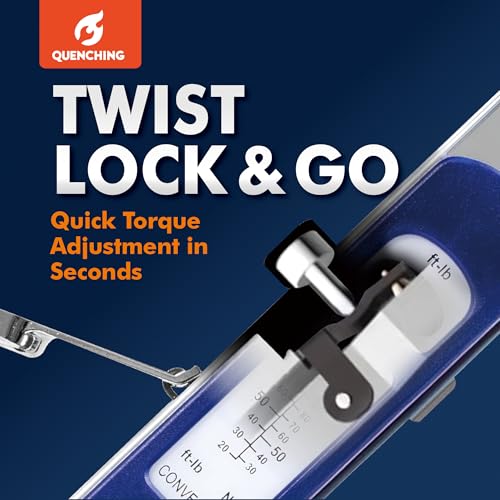
Owners highlight the no-reset benefit and consistent click feedback, especially on lug nuts and control arms. While it lacks individual flex heads, the split beam design ensures long-term accuracy without spring fatigue. Compared to buying two separate wrenches, this set delivers real value for shops needing both drives without doubling down on brands.
Product photos


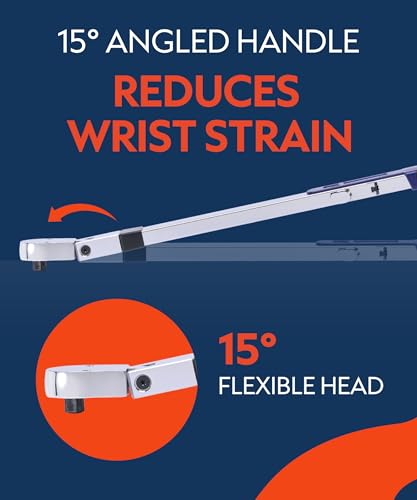
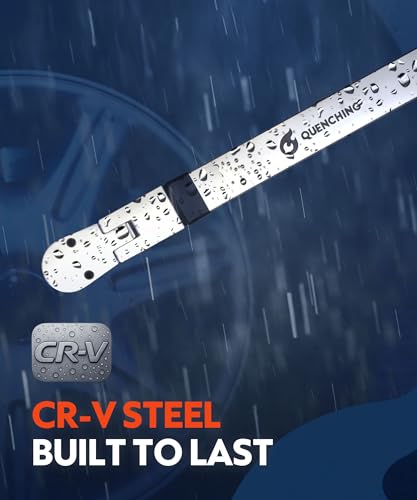
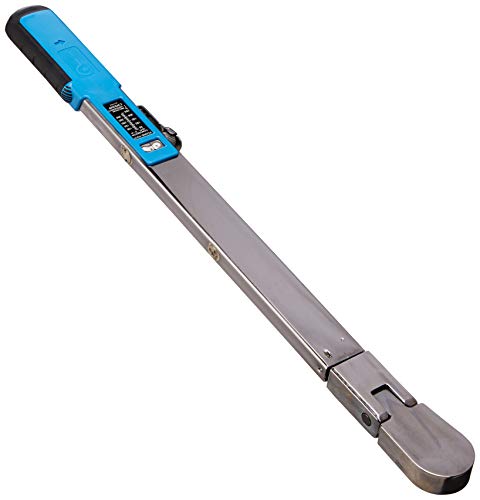
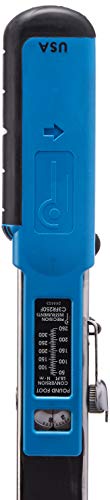
Precision Instruments 1/2″ Flex Head Torque Wrench
Strengths
- Low upfront cost
- Flex head
- Decent reach
Trade-offs
- Poor documentation
- Inconsistent accuracy reports
- No calibration certificate
This Precision Instruments model shows up in budget searches for a reason, it’s one of the oldest split beam designs still circulating. The listing gives almost no specs beyond mentioning reach for tight spaces, and owner feedback is mixed. Some say it holds calibration well, while others report early drift and vague scale readability.
It’s hard to recommend confidently when better-documented options exist at similar or only slightly higher prices. The lack of a detailed certificate, unclear calibration standard, and sparse feature set make it a gamble. If budget is the only driver, fine, but there are more trustworthy ways to save.
Product photos
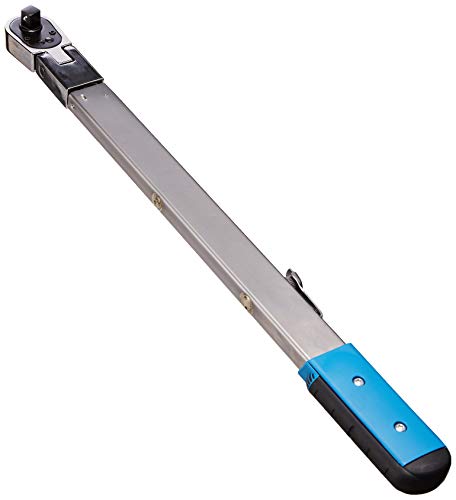
How We Evaluated split beam torque wrenches
Rather than a hands-on lab test, my research focused on comparing published specifications and features across numerous split beam torque wrench models. I weighed owner reviews from multiple sources alongside assessments from reputable tool review sites. This allowed me to build a ranking based on accuracy, durability, and usability – the qualities I’ve found matter most over years of working with tools.
For split beam wrenches, accuracy and the ability to maintain calibration are paramount. I prioritized wrenches with a ±4% accuracy rating across their entire range, and those that don’t require resetting to zero between uses, as this design reduces potential for error. The convenience of a flex head and the breadth of torque range offered were also significant factors in my evaluations.
Specifications clearly indicate a wrench’s torque range and accuracy claims. However, I judged long-term reliability and real-world usability heavily from owner feedback. Owners’ experiences with calibration holding over time, the smoothness of the adjustment mechanism, and overall build quality provided insight beyond what any spec sheet could reveal. You might also find adjustable click torque wrenches offer a different approach to precision.
Choosing The Right split beam torque wrenches
A good split beam torque wrench is essential for any job where fastener tightness matters, and choosing the right one requires understanding a few key differences.
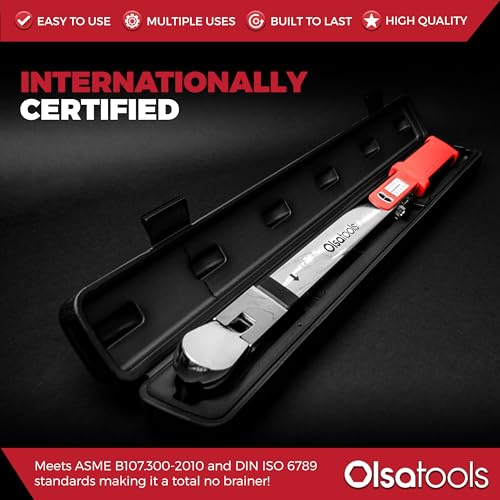
A quality split beam torque wrench prioritizes accuracy (within ±4% is standard), durability through materials like chrome vanadium steel, and a clear, easy-to-read scale. Look for wrenches calibrated to ASME B107.300-2010 standards with a certificate of calibration included. The wrench should also feature a robust ratcheting mechanism and a comfortable grip for repeated use.
Torque Range and Drive Size
First, match the wrench’s torque range to the tasks you’ll be performing. There’s no point in buying a 250 ft-lb wrench if you only work on small engines needing 80 ft-lbs or less. Drive size (3/8 inch, 1/2 inch, etc.) is equally important; it needs to match your sockets. If you frequently work on vehicles, a 1/2 inch drive is a good starting point. For smaller applications, a 3/8 inch drive will suffice. Consider a set, like the QUENCHING 3/8″ & 1/2″ Split Beam Wrench Set, if you need versatility.
Accuracy and Calibration
Accuracy is paramount with torque wrenches. While most decent split beam wrenches claim ±4% accuracy, look for those that come with a certificate of calibration. This verifies the wrench was tested and meets industry standards. A serialized wrench is also a good sign; it indicates traceability in case of any issues. Keep in mind that even the most accurate wrench requires careful use and proper storage. It’s also worth noting that unlike clicker-type wrenches, split beam wrenches don’t require resetting to zero after each use, which adds convenience.
Features and Usability
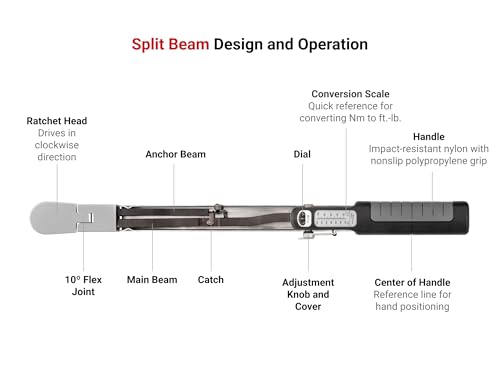
Beyond the core functionality, consider features that improve usability. A flex-head, like on the Capri Tools 1/2″ Flex-Head Split Beam Wrench, can be a lifesaver when working in tight spaces. A clear scale with both foot-pounds and Newton-meters is helpful for those who work with metric fasteners.
Here’s what I often suggest to folks looking for a step up: * A simple scale: easy to read at a glance. * A rugged case: protects your investment during storage and transport. * A comfortable grip: prevents hand fatigue during extended use, especially important for those needing industrial-grade torque wrenches.
A torque wrench is only as good as its user. Always pull smoothly and steadily – jerking or rushing can lead to inaccurate readings and damaged fasteners.
Split Beam Torque Wrenches Compared
Here’s a comparison of key specifications for several split beam torque wrenches.
| Product Name | Drive Size | Torque Range (ft-lb) | Accuracy | Flex Head | Reset Required |
|---|---|---|---|---|---|
| TEKTON 1/2 Inch Split Beam Torque Wrench | 1/2 in. | 40-250 | ±4% | No | No |
| Olsa Tools 1/2″ Split Beam Torque Wrench | 1/2 in. | 50-250 | ±4% | No | No |
| TEKTON 2-Piece Split Beam Torque Wrench Set | 3/8 & 1/2 in | 20-100 / 40-250 | ±4% | No | No |
| Capri Tools 1/2″ Flex-Head Split Beam Wrench | 1/2 in. | 50-250 | ±4% | Yes | No |
| TEKTON 3/8 Inch Split Beam Torque Wrench | 3/8 in. | 20-100 | ±4% | No | No |
| QUENCHING 3/8″ & 1/2″ Split Beam Wrench Set | 3/8 & 1/2 in | N/A | ±4% | No | No |
| Precision Instruments 1/2″ Flex Head Torque Wrench | 1/2 in. | N/A | N/A | Yes | N/A |
Frequently Asked Questions
What’s the difference between a split beam and a click-type torque wrench?
A split beam wrench displays torque via a needle on a scale, offering a continuous reading, while click-type wrenches “break” when the set torque is reached. Split beam designs don’t require resetting to zero after each use, which some users find more convenient and potentially more accurate over repeated applications.
How often should a split beam torque wrench be calibrated?
While split beam wrenches are known for holding their calibration well, I recommend having them checked annually, or after 5,000 cycles, whichever comes first. Regular calibration ensures continued accuracy, particularly for critical applications where precise torque is essential.
Can a split beam torque wrench be used on both inch and metric fasteners?
Many split beam torque wrenches feature dual scales, displaying readings in both foot-pounds and Newton-meters. This makes them versatile enough to handle both inch and metric fasteners without needing to perform conversions in your head.
What drive size should I choose for my split beam torque wrench?
The drive size depends on the size of the fasteners you’ll be tightening. If you commonly work on automotive projects, a 1/2-inch drive is often the best choice. If you need something for smaller jobs, consider 3/8-inch drive torque wrenches or a set including both sizes.
What’s the best way to store a split beam torque wrench to maintain its accuracy?
Always store your wrench in a protective case, and set the torque to the lowest setting when not in use. This relieves stress on the internal components and helps maintain calibration over time. Avoid dropping the wrench, as impact can affect its accuracy.
The Bottom Line
Choosing a split beam torque wrench really comes down to balancing how much control you want with how much you’re willing to spend. While features like flex heads are nice, the core function – accurate tightening – is what matters most. For the best overall combination of accuracy, build quality, and value, I recommend the TEKTON 1/2 Inch Split Beam Torque Wrench.
If you need to cover a wider range of fastener sizes, or are looking for versatile torque wrench options, the QUENCHING 3/8″ & 1/2″ Split Beam Wrench Set provides excellent coverage. For those wanting the convenience of a flex head without breaking the bank, the Capri Tools 1/2″ Flex-Head Split Beam Wrench is a solid choice.
Ultimately, remember that a torque wrench is a precision instrument. Prioritize a wrench with a clear scale, a comfortable grip, and – most importantly – consistent accuracy within the ±4% range. Don’t get hung up on fancy features if they don’t contribute to getting a reliable, repeatable torque reading.
