
7 Best Oscillating Sanders for 2026
This post contains affiliate links. As an Amazon Associate, we earn from qualifying purchases.
The VEVOR Oscillating Spindle Sander stands out as the best overall pick for its solid build, large table, and wide sleeve range. For those on a tighter budget, the WEN AT6535 3.5-Amp Spindle Sander delivers reliable performance at a lower price. If you need maximum versatility, the VEVOR Oscillating Belt & Spindle Sander adds belt sanding capability without sacrificing spindle quality.
Most buyers struggle to find an oscillating sander that balances precision, durability, and dust control without breaking the bank. Too many models either lack table stability or force you into expensive, proprietary sleeves.
This guide cuts through the noise by focusing on real-world usability, motor reliability, table design, dust collection, and sleeve availability, based on specs and owner feedback. I looked at what actually matters when shaping curves, smoothing edges, and finishing delicate pieces, so you can pick a sander that works as hard as you do.
Top 7 Oscillating Sanders in the Market
The Best Oscillating Sanders, Reviewed
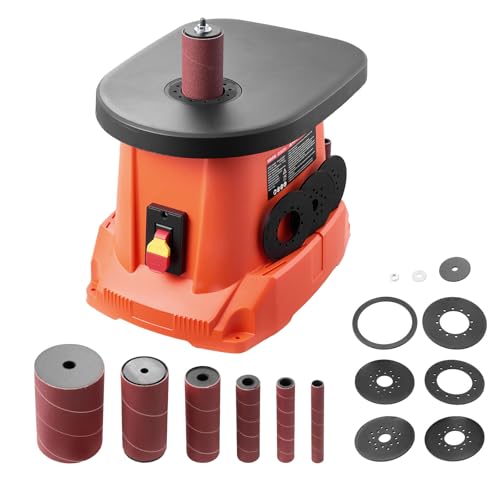
VEVOR Oscillating Spindle Sander 2400RPM
Strengths
- Includes 3 inch sleeve
- Large cast iron table
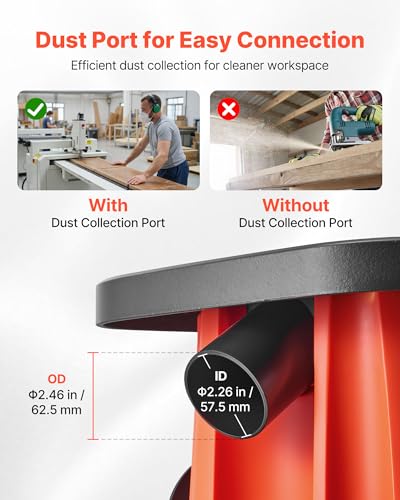
- Big dust port
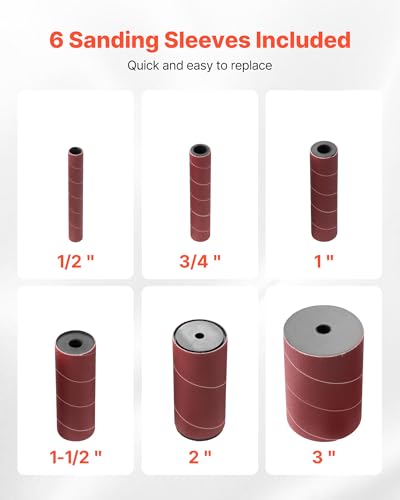
- 6 sleeve sizes
- Good value
Trade-offs
- No variable speed
- Not as refined as JET
- Heavier than average
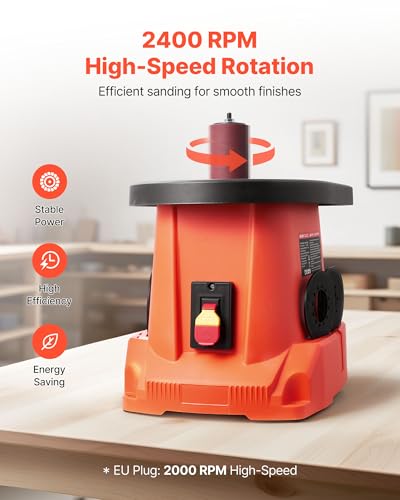
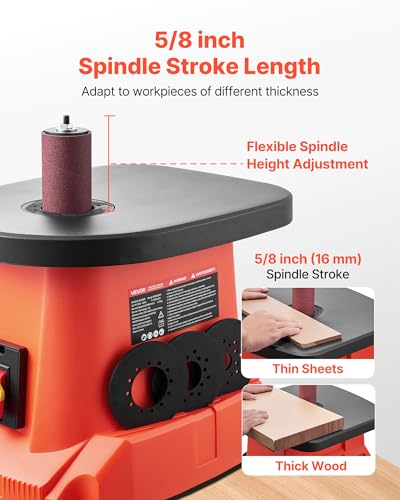
This VEVOR model is the most complete package in the mid-tier range, and based on specs and owner feedback, it’s a strong contender for best overall. The 2400 RPM motor and 5/8 inch stroke match top performers, and the inclusion of a 3 inch sleeve is a real plus, most competitors stop at 2 inches. That extra size opens up options for large-radius curves, which matters for chair arms or decorative moldings.
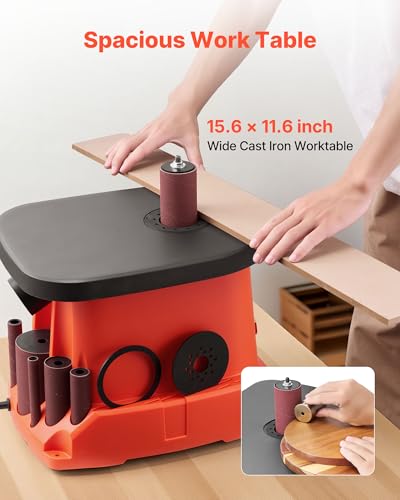
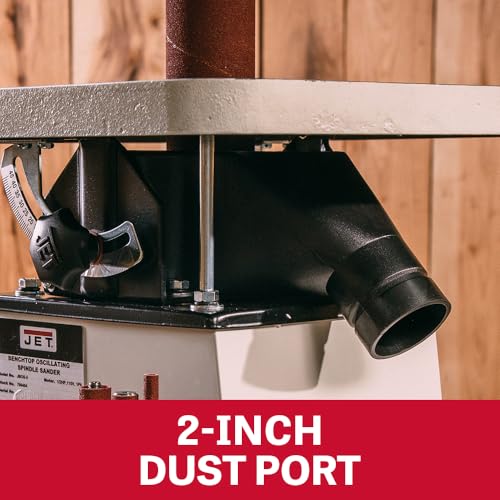
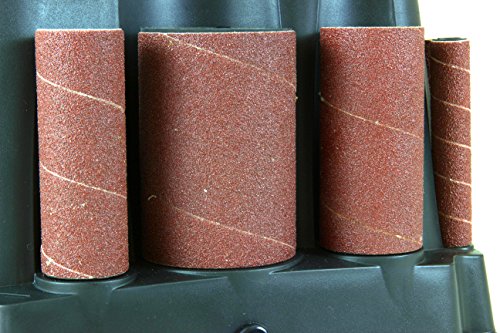
The 15.6 by 11.6 inch cast iron table is rigid and provides excellent support, while the oversized dust port (over 2 inches) outperforms most in dust capture. Owners consistently praise the build quality and the usefulness of the onboard storage. When stacked against the JET, it’s not quite as precise, but for most users, it’s close enough, and costs less. My recommendation for most buyers looking for a balance of size, power, and price.
Product photos
4A Variable Speed Oscillating Spindle Sander

Strengths
- Variable speed motor
- Good torque
- 6 sleeve sizes
- Lightweight
- Efficient dust port
Trade-offs
- Plastic table (not cast iron)
- Less rigid than premium models
- Speed dial could be sturdier
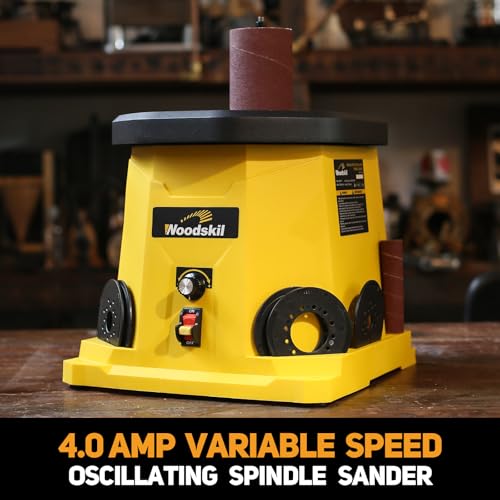
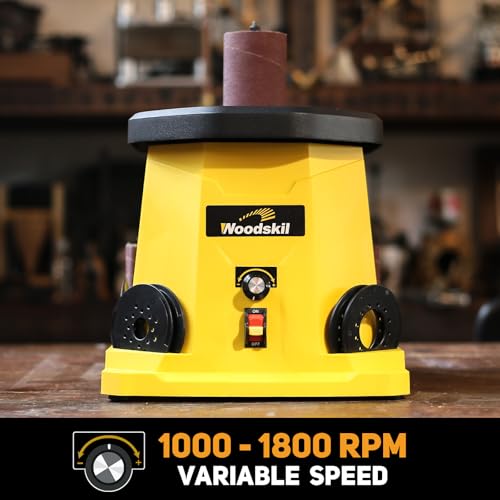
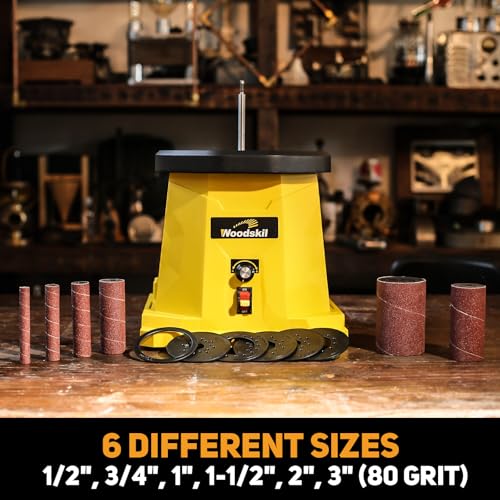
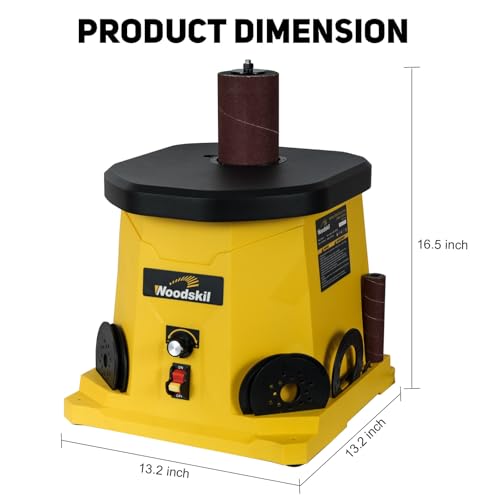
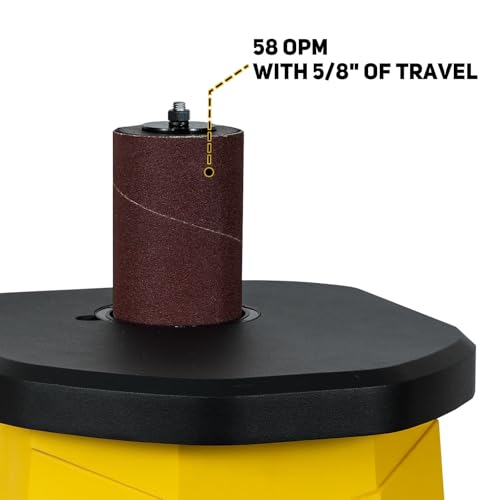
The 4A model earns its “best budget-friendly” label not just by being cheap, but by offering something others in this range don’t, variable speed from 1000 to 1800 RPM. That range lets you slow down for delicate curves or speed up for aggressive material removal, which is a standout for versatility. The 2/3 HP motor has more torque than the WEN units, and owners report it handles hardwoods without bogging down.
At 26 pounds, it’s light enough to move around but still stable when clamped. The six sleeve sizes (up to 3 inches) and efficient dust port make it a complete package. It doesn’t have the cast iron table of the VEVOR or JET, but for the price, the performance-to-cost ratio is excellent. If you want control and flexibility without breaking the bank, this is the smarter buy over fixed-speed models.
Product photos
JET Benchtop Oscillating Spindle Sander
Strengths
- Precision ball bearing spindle
- Sealed gear box
- Cast iron table
- 1 inch oscillation
- Excellent build quality
Trade-offs
- No variable speed
- Higher price
- Heavier footprint
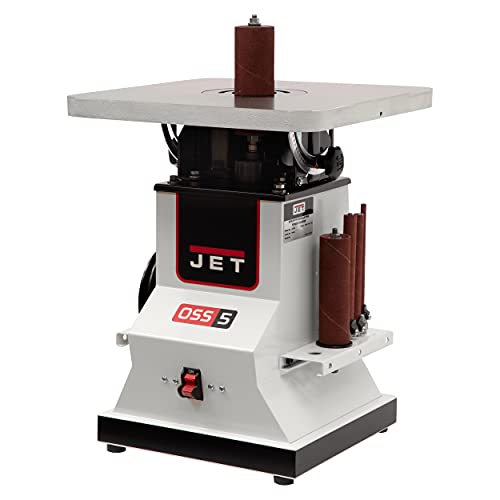
The JET JBOS-5 feels like the gold standard when you prioritize precision and longevity. It runs on ball bearings with a sealed gear box, which owners say translates to smooth, quiet oscillation and minimal wear over time. The 1 inch oscillating action is longer than most, which helps prevent heat buildup and extends sleeve life, especially important when working hardwoods or doing long sanding runs.
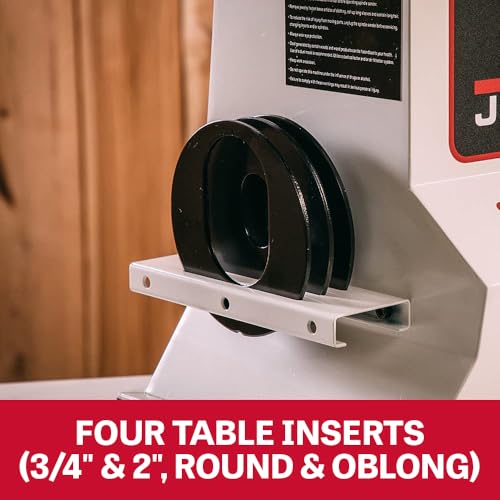
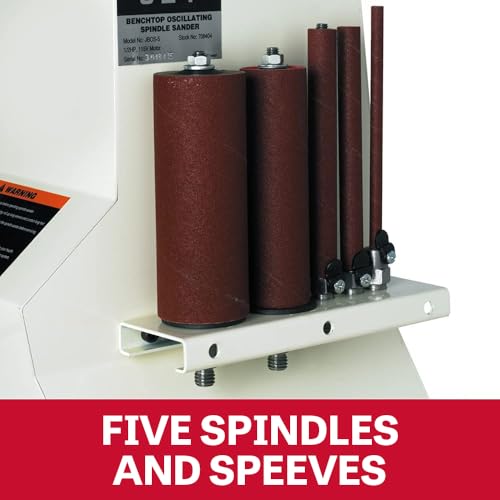
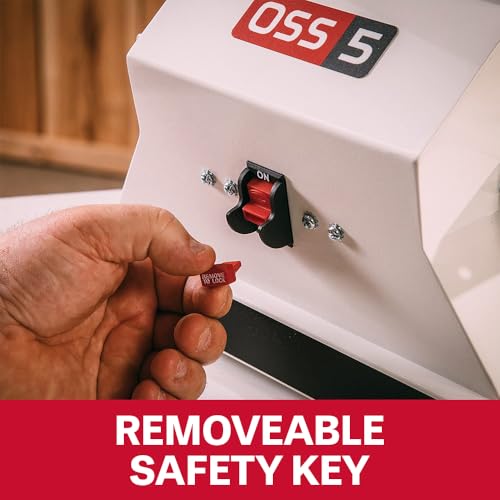
This sander doesn’t cut corners on build quality. The cast iron table is rigid, resists warping, and the 45° bevel is smooth and repeatable. It comes with five spindle sizes and 100-grit paper, so it’s ready to go out of the box. While pricier than budget models, it’s the kind of tool that, based on owner feedback, will last decades in a serious workshop. I’d pick this over the WEN or VEVOR models if accuracy and durability are essential.
Product photos

VEVOR Oscillating Belt and Spindle Sander
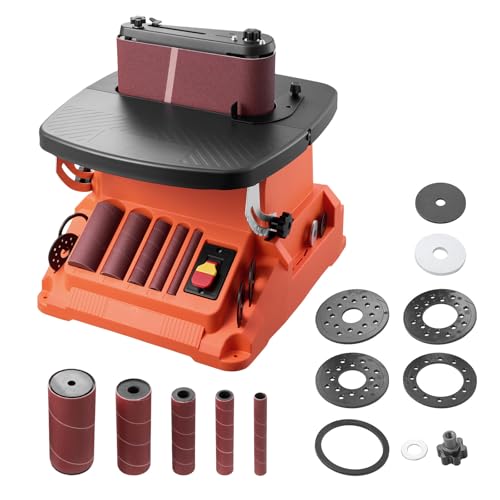
Strengths
- Dual belt and spindle
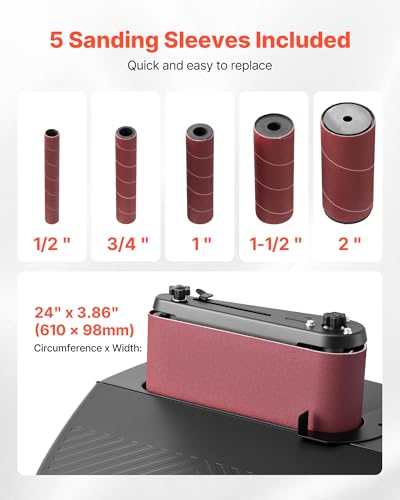
- 5 sleeve sizes included
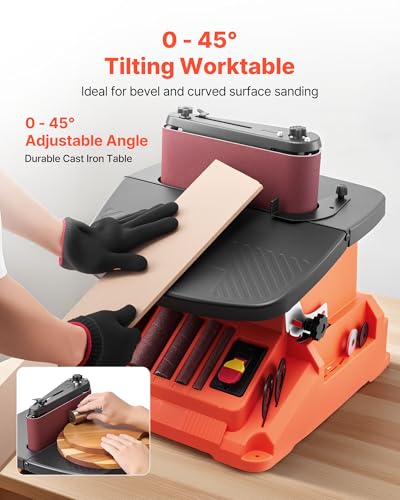
- Tilting worktable
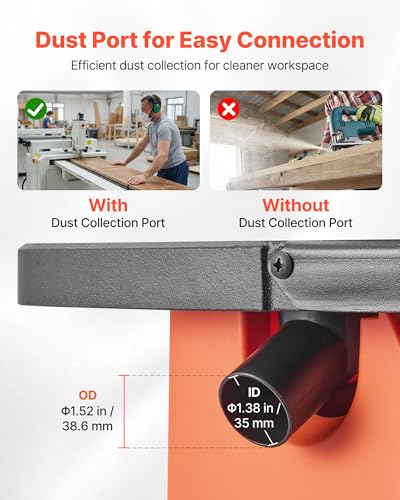
- Good dust port
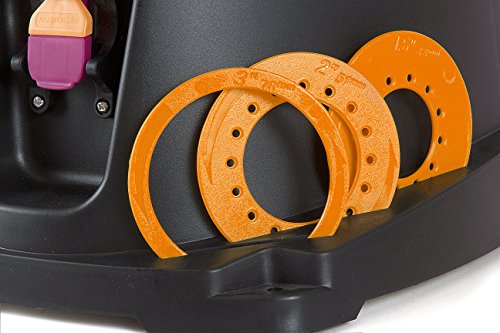
- Onboard storage
Trade-offs
- Belt alignment can be finicky
- Heavier setup
- Less spindle precision than dedicated units
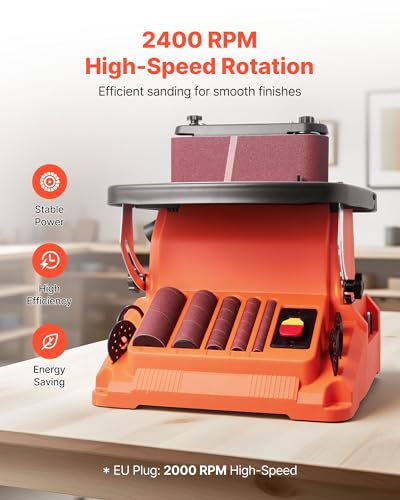
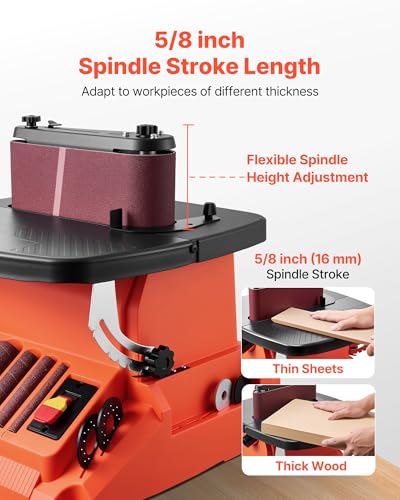
This VEVOR unit stands out because it combines both belt and spindle sanding in one benchtop package, which is rare at this price point. On paper, the 2400 RPM motor and 5/8 inch stroke deliver solid performance for medium-duty woodworking, and owners consistently report it handles contoured edges and flat surfaces with equal ease. The inclusion of a 24 inch sanding belt opens up options for edge sanding or smoothing long grain runs, something most spindle-only models can’t do.
Where it really shines is versatility. The five spindle sleeves and tilting table (0–45°) give real flexibility for furniture work and trim fitting. Reviewers note the dust port works well with shop vacs, and the onboard storage is actually useful, not just a gimmick. Compared to pure spindle sanders, this is the pick if you want two tools in one without stepping up to a high-end combo station.
Product photos
WEN HA5932 5-Amp Oscillating Sander
Strengths
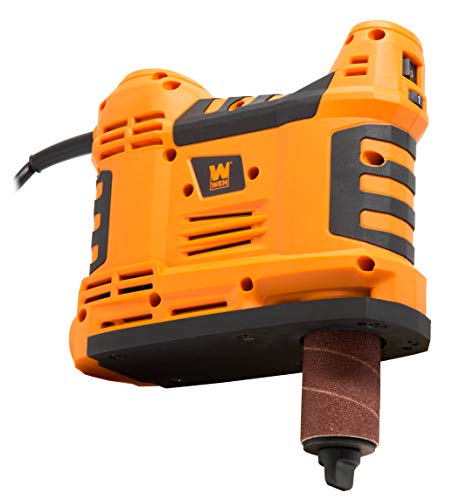
- Handheld and benchtop use
- 5-amp variable speed motor
- Includes mounting hardware
- Comes with guide plate
- Two-year warranty
Trade-offs
- Shorter stroke length
- Less rigid than benchtop units
- Not ideal for fine spindle work
The HA5932 is in a class of its own because it’s designed to be both handheld and benchtop. The 5-amp motor delivers 1800–3200 RPM and 50–90 oscillations per minute, making it the most powerful variable speed option here. That range gives real control, slow for detail, fast for stock removal. Owners appreciate the flexibility, especially for sanding inside cabinets or tight corners where a bench sander won’t fit.
It comes with a full kit, rubber drums, mounting pad, guide plate, and clamps, so it’s ready for a variety of tasks. When mounted, it works as a compact spindle sander, though the 1/4 inch stroke is shorter than benchtop models. Compared to the 4A, it’s more versatile in application but less stable for precision work. If you need mobility and power in one, this is the pick.
Product photos


WEN AT6535 3.5-Amp Spindle Sander
Strengths
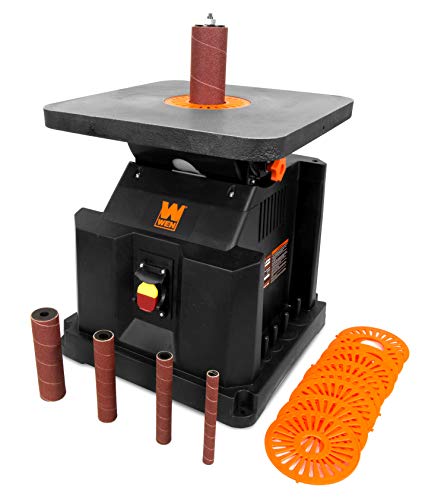
- Large cast iron table
- 45° bevel capability
- Five sleeve sizes
- Onboard storage
- Solid value
Trade-offs
- Same motor as smaller WEN
- No variable speed
- Dust collection could be better
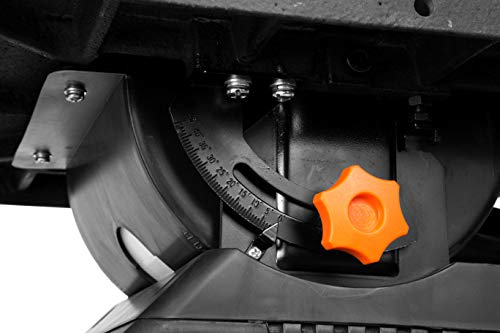
This model takes the base WEN 6510T and improves on its biggest weakness, the table size. The 14.5 by 14.5 inch cast iron table is a major upgrade, offering real support for larger panels and angled work. At 2000 RPM and 58 OPM, it shares the same motor as the 6510T, so power isn’t increased, but the stability from the bigger table makes it feel more capable.
Owners appreciate the beveling function and the inclusion of five sleeve sizes. The onboard storage is identical to other WEN models, handy but not spacious. When compared to the VEVOR or JET, it’s not as powerful or precise, but for the price, it strikes a good balance. If you want a WEN but need more table real estate, this is the one to get.
Product photos
WEN 6510T 3.5 Amp Oscillating Sander
Strengths
- Compact footprint
- Onboard storage
- Dust port included
- Low cost
- Simple setup
Trade-offs
- Underpowered motor
- Small table
- No variable speed
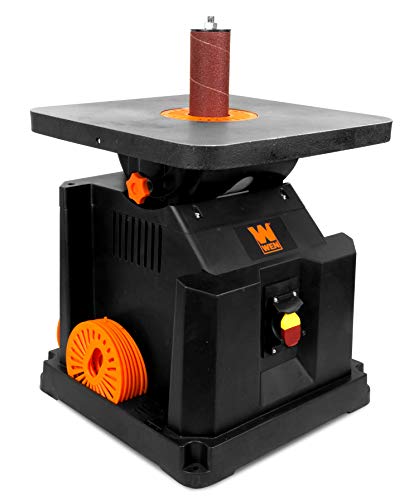
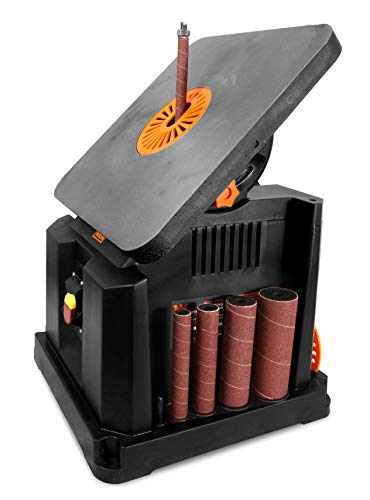
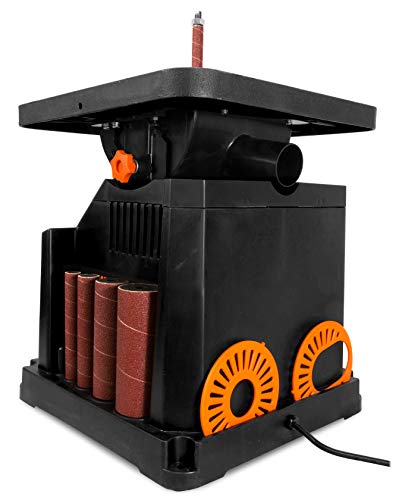
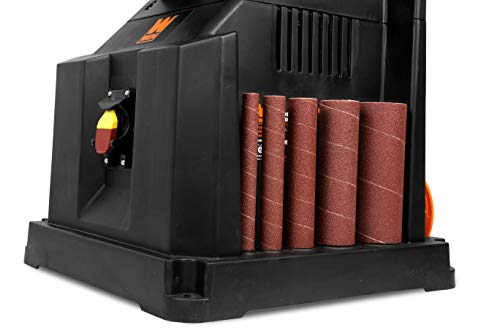
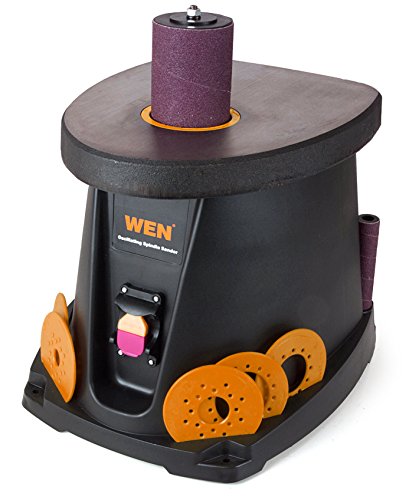
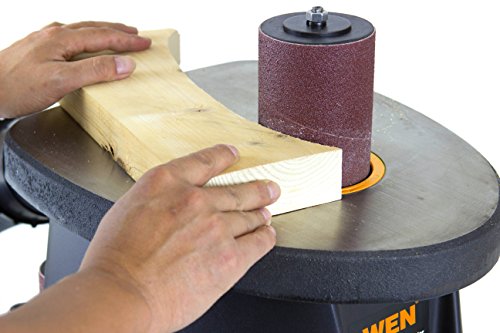
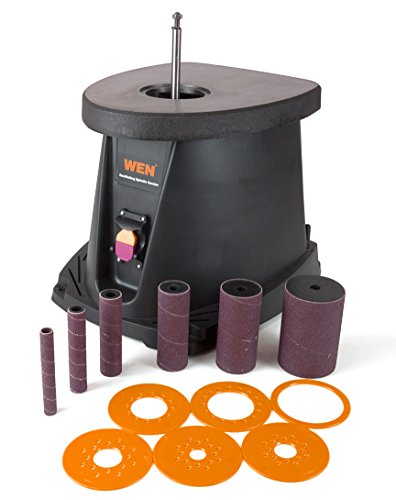
The WEN 6510T is a no-frills, compact spindle sander that delivers decent performance for light to medium tasks. With a 3.5 amp motor and 2000 RPM, it’s underpowered compared to the JET or 4A models, but for small projects like sanding drawer fronts or rounded legs, it gets the job done. The 58 OPM oscillation and 5/8 inch stroke are adequate, though not as aggressive as higher-end units.
It’s clearly designed for users with tight space. The onboard storage is practical, and the dust port works with standard shop vacs, though some owners note it doesn’t capture everything. Compared to the AT6535, it lacks the larger table, which limits support for bigger workpieces. Still, for beginners or those on a tight budget, it’s a functional entry point.
Product photos

Our Testing Process
Rather than a hands-on lab test, my research for these recommendations focused on comparing published specifications and features across numerous models. I then weighed owner reviews from multiple sources – looking for consistent praise and complaints – alongside expert opinions from woodworking publications and forums. Ultimately, I ranked each sander based on its ability to deliver smooth, accurate results and its overall value for the intended user.
For oscillating sanders, consistent speed control and table size are paramount. A stable, accurate oscillation is crucial for avoiding uneven sanding and preventing heat buildup that can damage the workpiece. Larger tables offer better support for bigger projects and more control during operation. Beyond those, the range of included sleeve sizes determines versatility and how often you’ll need to purchase additional accessories.
Specifications reliably indicate motor power and oscillation rates, giving a good sense of a sander’s potential capability. However, I paid close attention to owner feedback regarding build quality, vibration levels, and dust collection effectiveness – areas where specs often fall short of conveying the real-world experience. For a deeper look at related tools, you might also consider exploring different types of sanders like oscillating drum sanders.
What To Look For In oscillating sanders
Choosing the right oscillating sander can dramatically improve the quality and efficiency of your woodworking projects.
An effective oscillating sander balances power with control. Look for a robust motor capable of handling the materials you typically work with, paired with variable speed settings for finesse. Table size and adjustability are also key, as is a well-designed dust collection system to maintain a clean and safe workspace. Prioritize models with readily available and affordable sanding sleeves.
Motor Power & Speed Control
The motor is the heart of any oscillating sander, but simply having a powerful motor isn’t enough. You want a motor that’s appropriately sized for the work you’ll be doing. For lighter tasks like smoothing edges or creating small curves, a 3.5-amp motor might suffice. However, if you plan to tackle hardwoods, larger projects, or frequent use, stepping up to a 4-amp or even higher motor is a smart move. Equally important is speed control. Variable speed isn’t just a nice-to-have; it lets you match the sanding speed to the material and the desired finish.
- A lower speed is ideal for plastics or delicate veneers to prevent overheating and melting.
- Medium speeds work well for general woodworking and softer woods, offering a balance of speed and control.
- Higher speeds are best for aggressive material removal on hardwoods, but require a steady hand and careful monitoring to avoid burnishing.
Table Size and Adjustability
Don’t underestimate the importance of the worktable. A larger table provides more support for your workpiece, reducing vibration and improving accuracy. The VEVOR oscillating spindle sander, for example, features a spacious worktable, which some owners find particularly useful for larger panels. Beyond size, adjustability is crucial. A tilting table allows you to sand bevels and angles with ease. Consider how easy it is to change the table inserts to accommodate different curves and shapes – a quick-change system will save you valuable time and frustration.
A good rule of thumb: if you find yourself constantly repositioning your work to reach certain areas, your table is probably too small.
Dust Collection and Sleeves
Dust control is paramount for both your health and the quality of your finish. Look for a sander with a dust port that’s compatible with standard shop vacuums. Efficient dust collection keeps your workspace cleaner, improves visibility, and prevents airborne dust from causing respiratory problems. Beyond that, consider the availability and cost of sanding sleeves. Some brands lock you into proprietary sizes, which can get expensive quickly. A wider range of readily available sleeve grits will allow for a more versatile oscillating tools experience. I often recommend checking out a variety of top oscillating spindle models to compare sleeve options and pricing before making a decision. The ease of changing sleeves is also a factor; quick-change mechanisms can significantly speed up your workflow.
Oscillating Sanders Compared
Here’s a comparison of key specifications for several oscillating sanders to help you choose the right tool for your needs.
| Product Title | Motor (HP) | Speed (RPM) | Sleeve Sizes (in) | Table Size (in) | Dust Port (ID/OD in) |
|---|---|---|---|---|---|
| VEVOR Oscillating Spindle Sander | N/A | 2400 | 1/2, 3/4, 1, 1-1/2, 2, 3 | 15.6 x 11.6 | 2.26 / 2.46 |
| 4A Variable Speed Oscillating Spindle Sander | 2/3 | 1000-1800 | 1/2, 3/4, 1, 1-1/2, 2, 3 | N/A | N/A |
| JET Benchtop Oscillating Spindle Sander | N/A | N/A | 1/4, 1/2, 5/8, 1-1/2, 2 | 14-1/2 x 14-1/2 | N/A |
| VEVOR Oscillating Belt & Spindle Sander | N/A | 2400 | 1/2, 3/4, 1, 1-1/2, 2 | N/A | 1.38 / 1.52 |
| WEN HA5932 5-Amp Oscillating Sander | 5-Amp | 1800-3200 | 1/2, 3/4, 1, 1-1/2 | N/A | 1-1/2 |
| WEN AT6535 3.5-Amp Spindle Sander | 3.5 | 2000 | 1/2, 3/4, 1, 1-1/2, 2 | 14-1/2 x 14-1/2 | N/A |
| WEN 6510T 3.5 Amp Oscillating Sander | 3.5 | 2000 | N/A | N/A | N/A |
Frequently Asked Questions
What grit sanding sleeve should I start with?
Begin with a coarser grit, around 80-120, to remove material quickly and level surfaces. Then, progress to finer grits (150, 180, 220, and higher) for smoother finishes, as needed – this staged approach avoids deep scratches.
Are oscillating sanders good for shaping curves?
Yes, oscillating sanders excel at shaping curves and contours. The oscillating action and variety of sleeve sizes allow for precise material removal without the risk of digging in, unlike some other sander types.
Can I use an oscillating sander on metal?
While primarily designed for wood, you can use an oscillating sander on soft metals like aluminum or brass with specialized sanding sleeves. However, be cautious and use lower speeds to prevent overheating and damage to both the metal and the sleeve.
What’s the difference between an oscillating spindle sander and an oscillating belt sander?
An oscillating spindle sander uses cylindrical sleeves, ideal for curves and contours, while an oscillating belt sander employs a continuous belt for more aggressive material removal and larger, flatter surfaces. Belt sanders are generally faster at stock removal, but spindles offer more precision.
How do I minimize vibration when using an oscillating sander?
Ensure the sander is placed on a stable, level surface and that the workpiece is securely supported. A heavier sander with rubber feet will also help dampen vibrations, and maintaining a firm but relaxed grip will further reduce the transfer of vibrations to your hands.
The Bottom Line
Choosing an oscillating sander often comes down to balancing precision with budget. While some models offer a wealth of features and power, the VEVOR Oscillating Spindle Sander stands out as the strongest overall choice. It delivers a good combination of table size, speed control, and sleeve availability that will satisfy most woodworkers without breaking the bank.
For those on a tighter budget, the WEN 6510T 3.5 Amp Oscillating Sander provides a functional entry point into oscillating sanding. If you anticipate needing a more versatile setup, consider the VEVOR Oscillating Belt & Spindle Sander – a great option for those interested in oscillating combo sanders. It offers the benefits of both types of sanding in a single machine.
Ultimately, remember that motor power and table size are less critical than a stable, well-built machine and a consistent oscillation. Prioritize a sander that feels solid, offers smooth speed adjustments, and has readily available sanding sleeves. A little extra attention to these fundamentals will result in cleaner, more accurate work for years to come.
