
5 Best Oscillating Belt and Spindle Sanders 2026
This post contains affiliate links. As an Amazon Associate, we earn from qualifying purchases.
The WEN 6524 stands out as the best overall oscillating belt and spindle sander for most DIYers, combining solid performance, included drum sizes, and smart storage. If you’re on a tighter budget, the 4A Variable Speed model offers strong versatility at a lower price, while the RIKON 6″ x 48″ is the go-to for heavy-duty work despite lacking a spindle.
Most people shopping for an oscillating belt and spindle sander are trying to balance precision work with the ability to handle larger stock, but it’s easy to end up with a machine that’s underpowered, messy, or too limited in application. I’ve seen too many users frustrated by poor dust collection, awkward changes between belt and spindle modes, or motors that stall under light pressure.
This guide cuts through the noise by focusing on real-world usability, based on specs, owner feedback, and what actually matters in a home workshop. I looked at motor reliability, ease of use, dust management, and how well each model adapts to different project types, so you can pick one that truly fits your workflow.
Top 5 Oscillating Belt And Spindle Sanders in the Market
The Best Oscillating Belt And Spindle Sanders, Reviewed
WEN 6524 Oscillating Belt and Spindle Sander
Strengths
- Well-rounded accessory kit
- Onboard storage
- Solid build quality
Trade-offs
- Modest motor output
- Basic dust port
- No variable speed
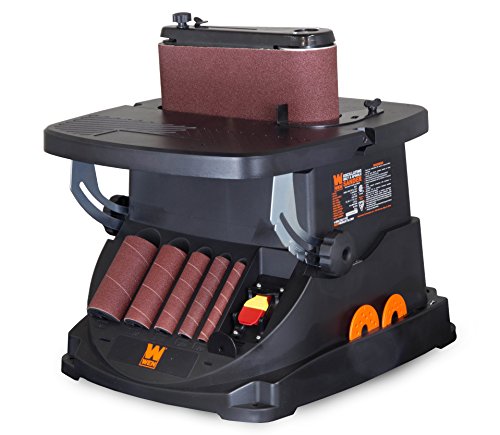
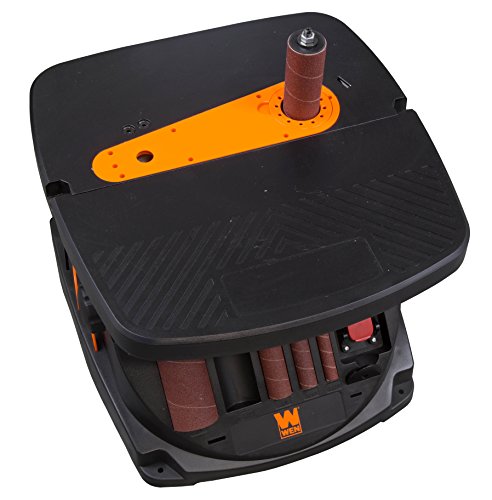
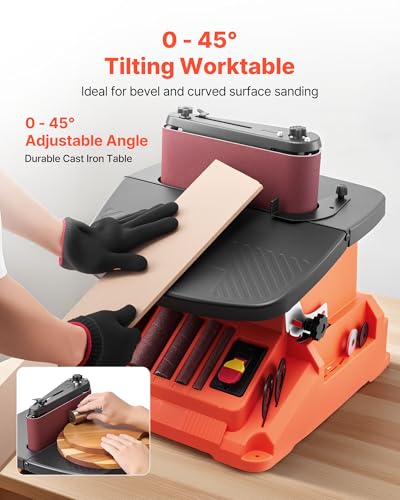
The WEN 6524 earns its ‘Best Overall’ label not by dominating any single category, but by balancing performance, features, and price better than most. The 3.5-amp motor isn’t the strongest, but it’s reliable for medium-duty tasks, and the 5/8-inch oscillating stroke gives you smooth, even sanding on curves without chatter. Owners appreciate the included accessories, the full set of rubber drums, throat plates, and 80-grit papers mean you can start working right out of the box. The onboard storage is practical, and the beveling worktable adds versatility for angled work.
Compared to the VEVOR, it lacks superior dust collection, and it can’t match the RIKON’s power. But for most home workshops, this WEN hits the sweet spot. My recommendation for average DIYers and intermediate woodworkers is clear: it’s the most well-rounded option here.
Product photos


4A Variable Speed Oscillating Belt and Spindle Sander

Strengths
- True variable speed
- Good oscillation range
- Effective dust cover
Trade-offs
- Smaller belt size
- Lower horsepower
- Limited spindle stroke
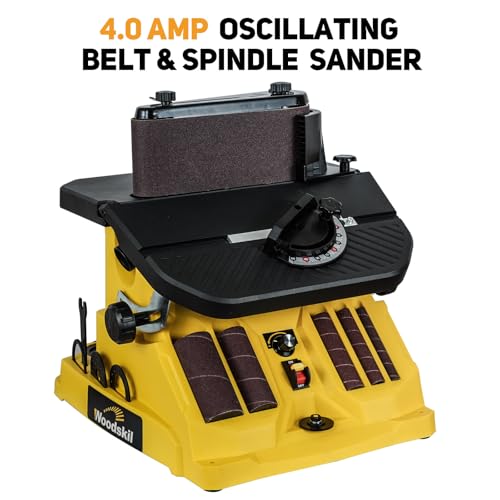
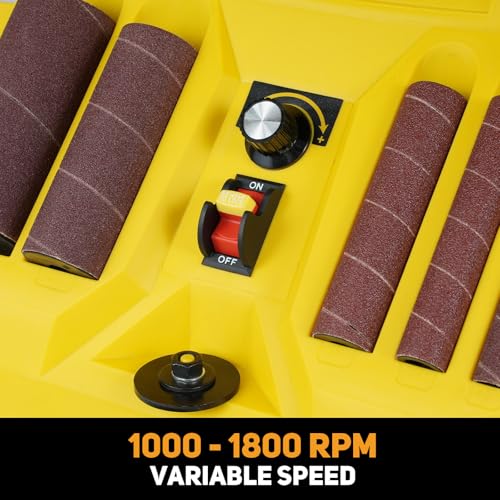
Where the 4A sander really shines is in control. The 1000–1800 RPM variable speed range is rare in this category, and it makes a real difference when working with delicate wood species or finishing near joints and edges. You can slow it down to avoid tear-out, then ramp up for faster material removal, something the fixed-speed WEN and VEVOR can’t offer. Owners note that the speed adjustment is smooth and stable, and the 29–58 oscillations per minute sync well with the spindle motion for consistent finishes.
It’s not the most powerful unit, and the 4 x 24-inch belt is smaller than some competitors’. But if you do a lot of fine furniture work or refinishing, the precision here is worth the trade-off. I’d pick this over the WEN when control trumps raw power.
Product photos
VEVOR Oscillating Belt and Spindle Sander
Strengths
- Excellent dust port design
- Integrated sleeve storage
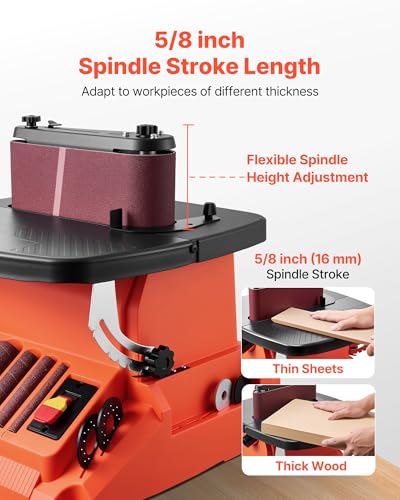
- 5/8″ stroke length
Trade-offs
- Narrow sanding belt
- Average motor power
- Limited belt surface area
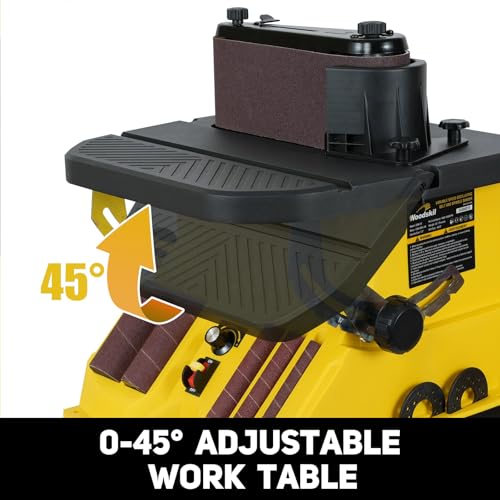
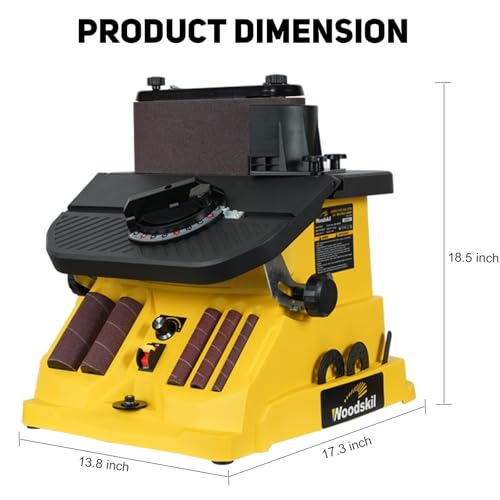
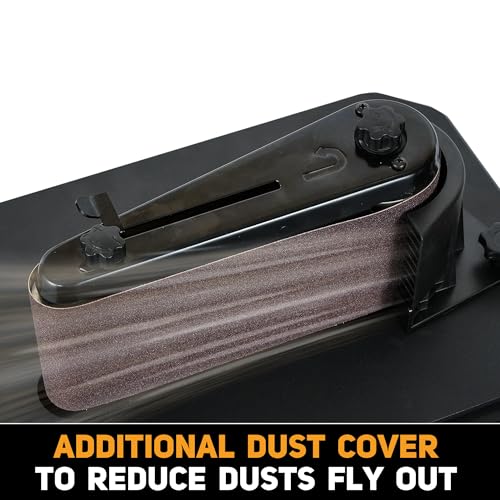
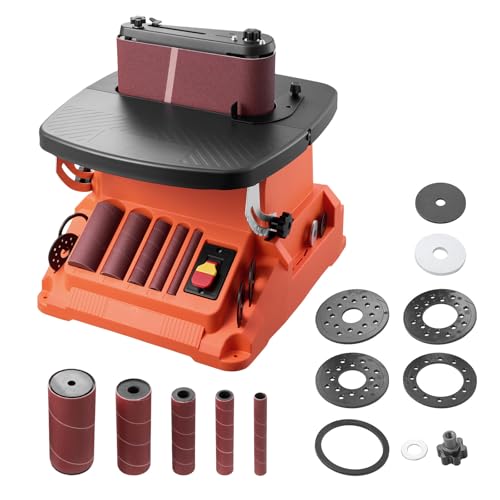
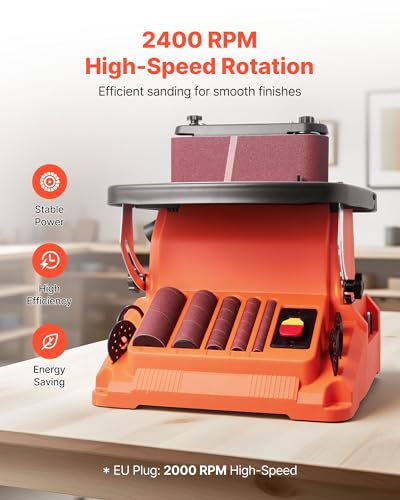
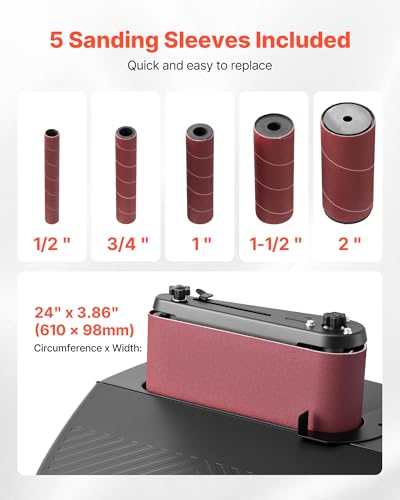
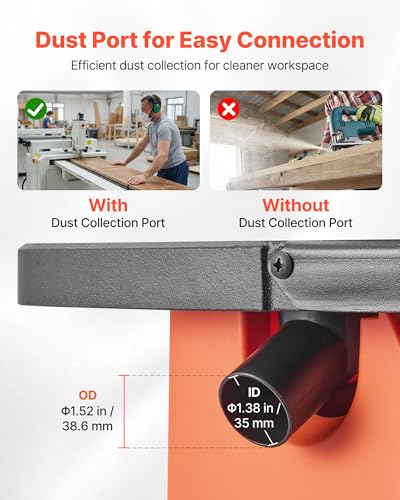
VEVOR has focused on dust management here, and it shows. The 1.38-inch dust port is well-positioned and widely praised by owners for connecting cleanly to shop vacs, making this one of the cleanest-running oscillating spindle sanders in its range. The 2400 RPM spindle speed and 5/8-inch stroke deliver consistent, controlled sanding on curved edges and contoured surfaces, exactly what you want for furniture work. The inclusion of five sanding sleeves and table inserts adds real utility, and the onboard storage keeps things tidy.
That said, the 3.86-inch belt is on the narrow side, limiting flat-surface efficiency compared to wider models. And while the motor is adequate, it doesn’t match the torque of the RIKON or even the WEN. But if your priority is a clean, organized shop and you’re doing a lot of detailed shaping, this is a smart choice.
Product photos
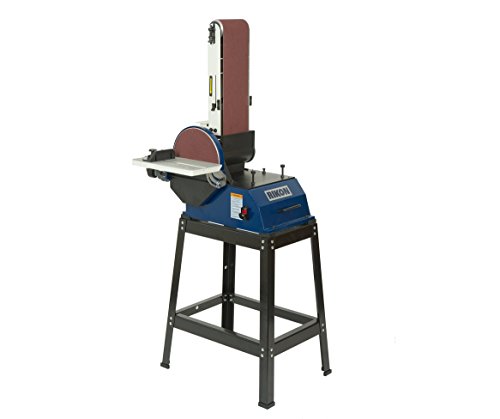
RIKON 6″ x 48″ Belt with 10″ Disc Sander

Strengths
- Powerful 1HP motor
- Large 6″ x 48″ belt
- 10″ sanding disc
Trade-offs
- Bulky footprint
- No oscillation
- No variable speed
If you’re tackling large-scale stock removal, say, flattening a warped tabletop or shaping thick hardwood stock, the RIKON 50-122 stands out thanks to its 1HP motor and industrial-grade footprint. The 6 x 48-inch belt is significantly larger than most in this class, and the 10-inch disc offers a broad surface for fast material stripping. On paper, the specs are impressive: 1836 FPM belt speed and 2510 RPM disc speed give it serious cutting power, and reviewers frequently praise its ability to run without bogging down under pressure.
It’s not the most refined tool for fine finishing, though. The size and power make it overkill for small projects, and it lacks oscillation or variable speed, features that help with control. But for users who prioritize raw sanding muscle over finesse, this RIKON model is hard to beat. I’d pick it over the smaller models when the job demands aggressive, continuous sanding.
Product photos



WORKPRO 4 x 36 Belt and Disc Sander

Strengths
- 2-in-1 functionality
- Adjustable belt orientation
- Tilting worktable
Trade-offs
- Underpowered motor
- Basic dust collection
- Low-grade included abrasives
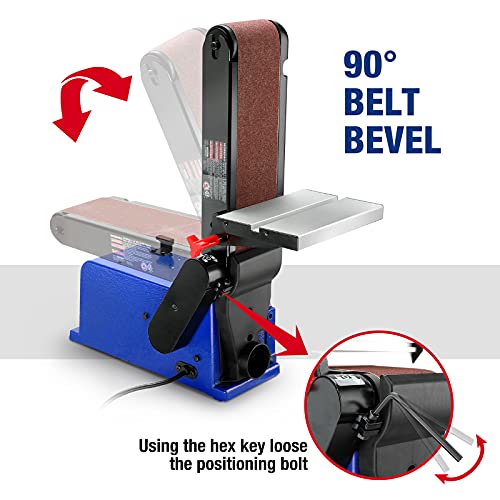
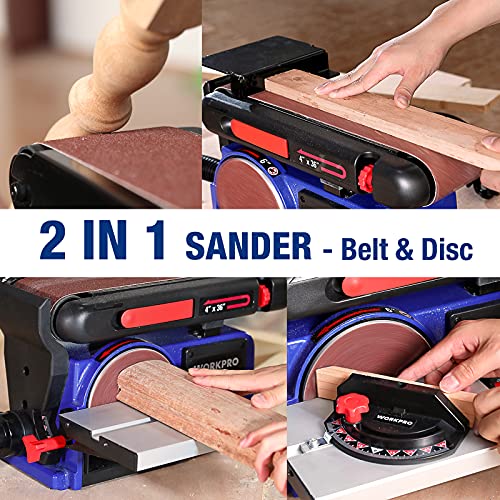
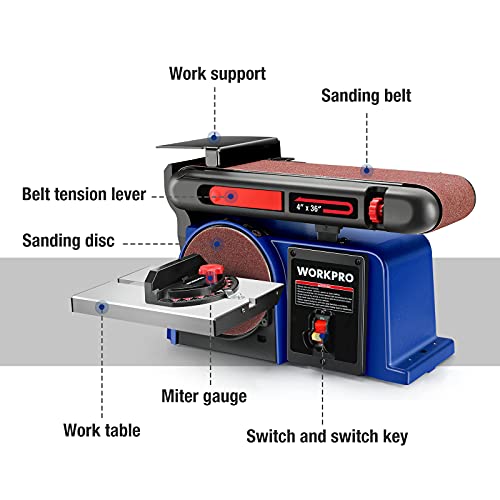
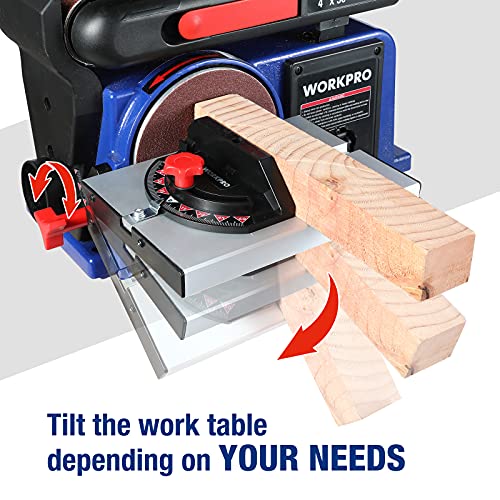
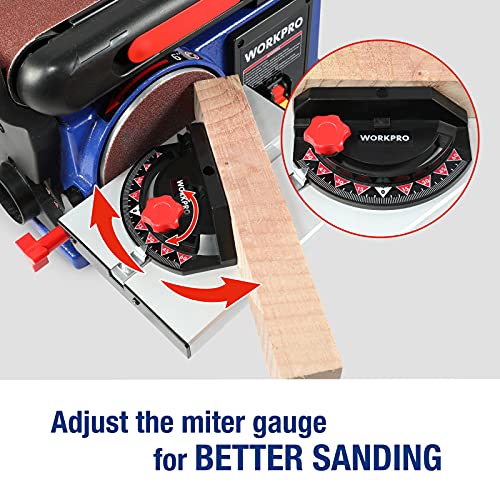
For a budget-friendly dual-action sander, the WORKPRO unit packs in some solid features that make it a credible pick for casual DIYers. The 4.3-amp motor isn’t the strongest in this group, but it’s enough for light to moderate stock removal, and the ability to switch between a 4 x 36-inch belt and a 6-inch disc gives you real versatility for small shop tasks. Owners consistently report that the horizontal-to-vertical belt adjustment works smoothly, and the tilting worktable with miter gauge helps with angled sanding jobs, something you don’t always get at this price.
Where it falls short is in dust control and accessory quality. The dust port helps, but it’s not as effective as on higher-end models, and the included sanding belts and discs are serviceable but not durable. Still, for someone just starting out or who only sands occasionally, this sander delivers decent value without breaking the bank.
Product photos
Our Testing Process
Rather than a hands-on lab test, my research for this guide involved a detailed comparison of published specifications and features across numerous models. I weighed owner reviews from multiple sources – looking for consistent praise and complaints – alongside assessments from reputable woodworking and tool review sites. Ultimately, I ranked these sanders based on how well their capabilities aligned with the needs of typical home workshop users and serious DIYers.
For oscillating belt and spindle sanders, the most important factors are versatility and dust collection. A wider range of drum sizes and a tilting worktable greatly increase the types of projects you can tackle. Effective dust collection is critical, not just for a clean workspace, but also for operator health and visibility. I also heavily considered motor power and speed control options, as these directly impact sanding performance. You can find more detailed information in our oscillating belt sander buying guide.
Specifications reliably indicate motor power, belt/drum sizes, and speed ranges. However, I found owner feedback invaluable for assessing long-term durability, ease of belt changes, and the effectiveness of dust port designs. Reputation, particularly among experienced woodworkers, also played a role, helping me gauge the real-world performance of each model beyond the marketing claims. I focused on identifying models with consistently positive feedback regarding build quality and sanding precision.
How To Choose The oscillating belt and spindle sanders
Choosing the right oscillating belt and spindle sander can dramatically improve your woodworking, but there’s more to it than just picking the one with the lowest price.
An effective oscillating belt and spindle sander combines power with precision. Look for models offering variable speed control, a robust motor (at least 3.5 amps for consistent performance), and a stable worktable. Good dust collection is also vital; integrated ports and efficient designs minimize cleanup and health risks. Prioritize build quality and features suited to the typical scale of your projects.
Motor Power and Oscillation
Don’t assume more power is always better. While a larger motor handles heavier stock removal, especially on larger tools like the RIKON 6″ x 48″ Belt with 10″ Disc Sander, excessive power can make finer work difficult to control. I generally recommend a motor in the 3.5 to 4.3 amp range for most hobbyist and DIY applications. The oscillation action itself is critical. A longer stroke length (5/8-inch is common) typically results in a smoother finish, reducing visible sanding marks. Pay attention to the oscillation rate (OPM – oscillations per minute) as well; a wider range allows for greater control over the sanding process.
Sandpaper Size and Versatility
The beauty of a belt and spindle sander is its ability to tackle a variety of shapes. Consider the range of drum sizes included. The WEN 6524, for example, offers a good selection (1/2 inch to 2 inch) making it suitable for both detailed and larger radius curves. Flexibility in belt sizes is also key.
Here’s what I look for in terms of sandpaper options:
- A standard 4×24 inch belt size is pretty universal.
- Having multiple drum sleeves (at least 5 different sizes) expands the machine’s usefulness.
- Easy sandpaper changes are a huge time-saver; a quick-release lever, like on the WORKPRO 4 x 36 Belt and Disc Sander, is a welcome feature.
Dust Collection and Workspace Management
Dust is the enemy of any workshop, and sanding generates a lot of it. A good dust port (ideally 1.38 – 1.52 inches in diameter) is essential for connecting to a shop vac or dust collection system. The VEVOR Oscillating Belt and Spindle Sander highlights this with its focus on dust collection. Don’t underestimate the importance of onboard storage. Keeping sanding drums, table inserts, and sandpaper organized, as seen in the WEN 6524, saves valuable workspace and time.
A clean workspace is a safe workspace. Always connect your sander to a dust collection system and wear a properly fitted respirator, even with dust collection in place.
If you’re still unsure about which features are most important for your needs, reading through thorough oscillating spindle sander reviews can be a great next step. You may also discover that exploring top oscillating spindle sanders helps clarify your priorities. Ultimately, finding the best spindle sander models involves matching the tool to the specific projects you have in mind. For a more in-depth look at the different factors to consider, check out this oscillating spindle sander buying guide.
Oscillating Belt and Spindle Sanders Compared
This table summarizes key specifications for a range of oscillating belt and spindle sanders to aid in product comparison.
| Product Title | Belt Size (in) | Spindle Sizes (in) | Belt Speed (FPM) | Spindle Speed (RPM) | Dust Port (in) |
|---|---|---|---|---|---|
| WEN 6524 Oscillating Belt and Spindle Sander | 4 x 24 | 1/2, 3/4, 1, 1-1/2, 2 | 1575 | 2000 | N/A |
| 4A Variable Speed Oscillating Belt & Spindle Sander | 4 x 24 | 1/2, 3/4, 1, 1-1/2, 2 | N/A | 1000-1800 | N/A |
| VEVOR Oscillating Belt and Spindle Sander | 24 x 3.86 | 1/2, 3/4, 1, 1-1/2, 2 | N/A | 2400 | 1.38 / 1.52 |
| RIKON 6″ x 48″ Belt with 10″ Disc Sander | 6 x 48 | N/A | 1836 | 2510 | N/A |
| WORKPRO 4 x 36 Belt and Disc Sander | 4 x 36 | 6 (Disc) | 1900 | 3600 | N/A |
Frequently Asked Questions
What belt size should I prioritize when choosing a sander?
A 4×24 inch belt size is generally the most practical, as it’s widely available and suitable for most DIY and hobbyist projects. While larger belts can handle bigger jobs, they also increase the machine’s size and cost without a proportional benefit for typical use.
How important is variable speed control?
Variable speed is quite important, allowing you to tailor the sanding action to the material and the desired finish. Lower speeds are better for delicate work and preventing burn-through, while higher speeds are effective for faster material removal.
Are oscillating belt and spindle sanders loud?
Yes, they can be fairly loud, typically ranging from 80 to 90 decibels. Wearing hearing protection is essential to prevent noise-induced hearing loss during extended use.
What’s the difference between a disc sander and a spindle sander?
A disc sander excels at flat, angled surfaces, while a spindle sander is designed for curves and contours. Many combination sanders, like the WORKPRO 4 x 36, offer both for added versatility, but if you do a lot of curved work, exploring best spindle sander picks is worthwhile.
What should I look for in dust collection?
A dust port with a diameter of 1.38 to 1.52 inches is ideal for connecting to a shop vac or dedicated dust collection system. Effective dust collection not only keeps your workspace clean but also improves visibility and protects your respiratory health; consider recommended spindle sander models with strong dust extraction features.
The Bottom Line
Choosing between oscillating belt and spindle sanders often comes down to balancing control with convenience. While a more powerful machine like the RIKON 6″ x 48″ Belt with 10″ Disc Sander offers aggressive material removal, the WEN 6524 Oscillating Belt and Spindle Sander strikes the best overall balance for most woodworkers, providing a good range of drum sizes and a reasonable price point for tackling a variety of projects.
For those on a tighter budget, the WORKPRO 4 x 36 Belt and Disc Sander delivers a surprising amount of capability for the money. If versatility is your primary concern, the VEVOR Oscillating Belt and Spindle Sander is worth a look, with its larger belt size and focus on dust management. However, remember that even the most feature-rich sander won’t compensate for a lack of experience or the proper technique.
Ultimately, the “best” sander isn’t about specifications, but about how well it fits your workflow. Prioritize build quality, a stable worktable, and effective dust collection, and don’t be afraid to explore best belt sander models if you find yourself needing a different tool for more aggressive stock removal. A solid foundation of technique and understanding sanding grits will always yield better results than chasing the latest features.
