
7 Best Sawzall Blades for Fiberglass 2026
This post contains affiliate links. As an Amazon Associate, we earn from qualifying purchases.
The Diablo 9″ Diamond Grit Reciprocating Saw Blade is the best overall for cutting fiberglass, delivering clean, fast cuts with serious durability. For a budget-friendly pick, the PAYA TOOLS 9″ Carbide-Grit Blade offers solid performance without breaking the bank. If you need precision on curved cuts, the 4″ Carbide Scrolling Blade stands out as the most versatile option.
Fiberglass is brutal on blades. It’s abrasive, layered, and unforgiving, if you use the wrong blade, you’ll burn through it in minutes and still end up with a ragged, uneven edge. Most standard bi-metal blades aren’t built for this job, and that’s where the wrong choice turns a simple cut into a frustrating mess.
This guide cuts through the noise. I compared specs and real-world feedback to find blades that actually hold up. You’ll learn what separates a blade that lasts from one that quits early, and how to match the right length, grit, and design to your specific fiberglass task.
Top 7 Sawzall Blade For Fiberglass in the Market
The Best Sawzall Blade For Fiberglass, Reviewed
TOLESA 9″ Bi-Metal Sawzall Blade 5-Pack

Strengths
- Bi-metal with cobalt
- Aggressive tooth geometry
- High tooth density
- 5-pack value
- Universal shank
Trade-offs
- Rougher cut finish
- Teeth can dull on pure abrasives
- Not for precision
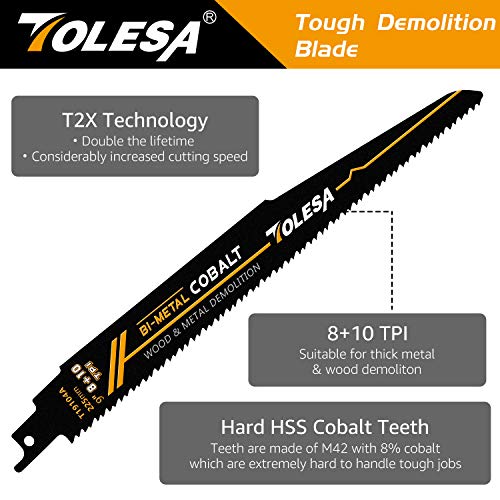
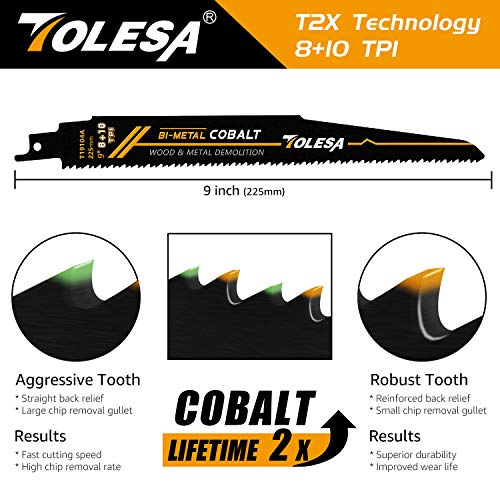
I’d pick this set over the others if you’re dealing with mixed materials, especially fiberglass reinforced with metal fibers or nails. The bi-metal construction with 8% cobalt handles heat better, and the 8+10 TPI design balances speed and durability. Reviewers note it cuts faster through composite fiberglass panels than grit-edge blades, but leaves a rougher edge.
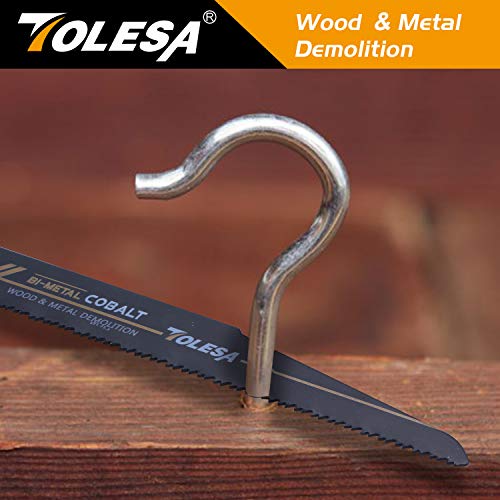
It’s not a pure fiberglass specialist, but its versatility makes it the smart buy for demolition crews or renovators who don’t want to swap blades constantly. The 5-pack also adds real value over smaller counts.
Product photos


PAYA TOOLS 9″ Diamond-Grit Reciprocating Saw Blade
Strengths
- Diamond-grit edge
- 9-inch reach
- Thin kerf
- Reinforced body
Trade-offs
- Not for fine curves
- Slight flex in soft materials
- No anti-corrosion coating
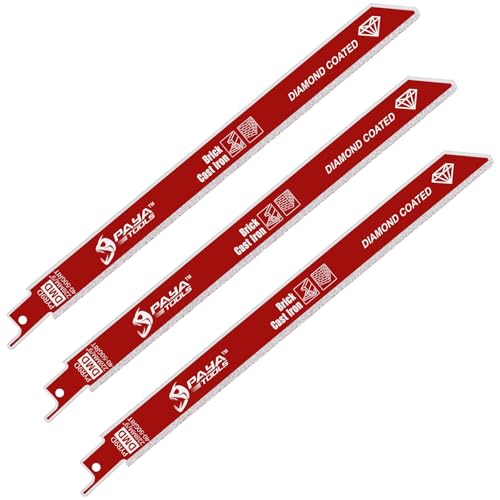
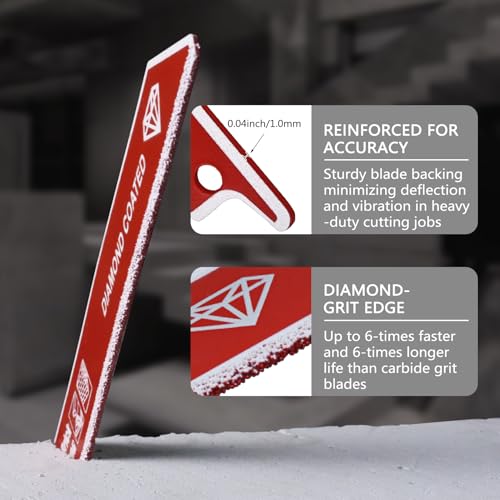
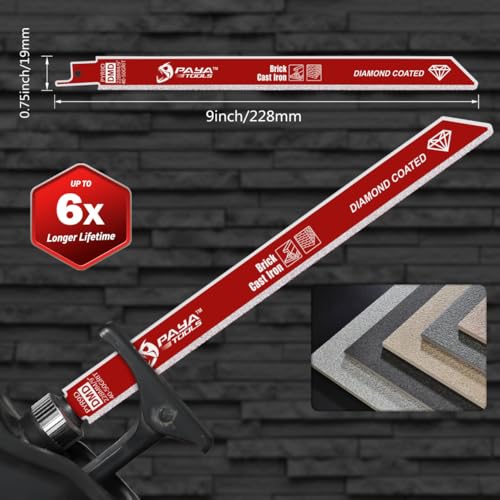
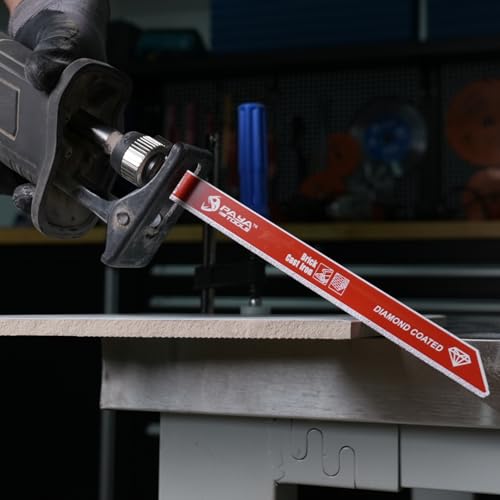
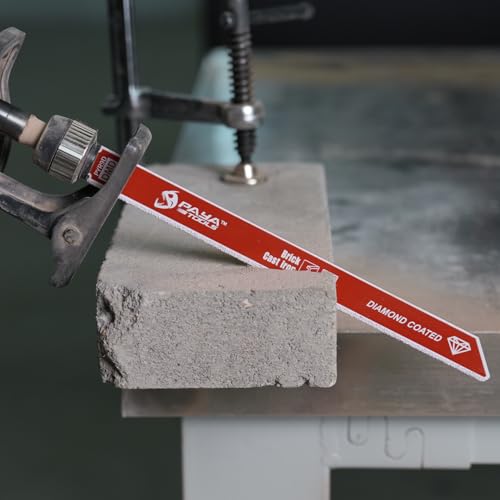
The diamond-grit edge on this 9-inch blade is where it really pulls ahead, owners say it lasts noticeably longer than standard carbide when cutting through dense fiberglass-reinforced panels. On paper, the thin kerf design should reduce drag, and feedback confirms it slices faster with less vibration than bulkier alternatives. The reinforced body keeps it stable, even when pushing through thick sections.
It’s nearly identical in specs to the HAPU HARPOW and Diablo options, but priced lower, which is why it stands out as a value pick. For most homeowners tackling one-off projects, this blade delivers pro-level performance without the pro price tag.
Product photos

Diablo 9″ Diamond Grit Reciprocating Saw Blade
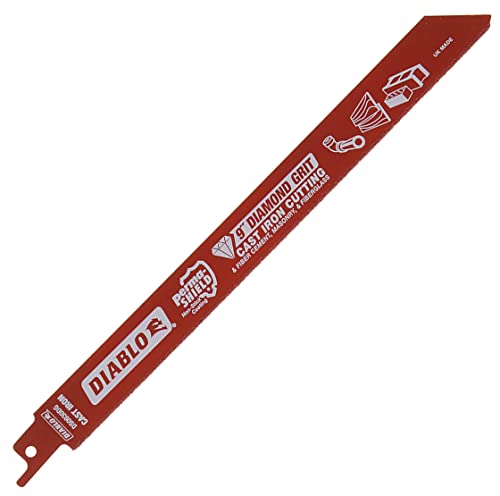
Strengths
- Diamond-grit edge
- Perma-Shield coating
- Thin kerf
- Reinforced body
- 6X life claim
Trade-offs
- Highest cost
- Overkill for light jobs
- Only 1 blade
This is the benchmark blade in this category. The diamond-grit edge backed by Perma-Shield coating means it resists heat and gumming better than any other on this list. For cutting resin-rich fiberglass, like boat hulls or tanks, this blade stays cooler and cuts longer. The reinforced body keeps it straight, even under high load, and the thin kerf helps maintain speed without sacrificing control.
It’s the most expensive option, but owners consistently say it earns its price through fewer replacements. If you’re doing serious demolition on fiberglass-infused materials, this is the one I’d trust.
Product photos

HAPU HARPOW 9″ Diamond-Grit Reciprocating Saw Blade
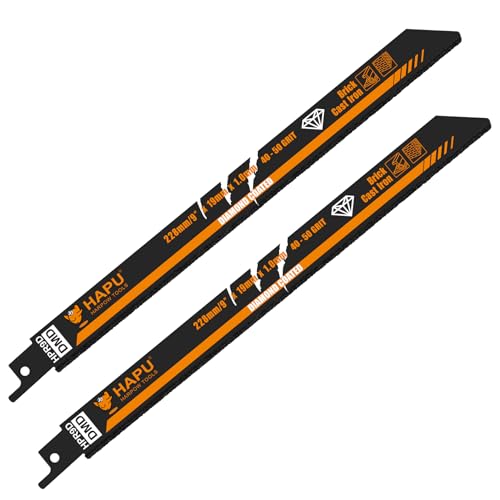
Strengths
- Diamond-grit edge
- Long 9-inch reach
- Reinforced body
- Thin kerf
Trade-offs
- No anti-gumming coating
- Resin buildup possible
- Only 2 blades per pack
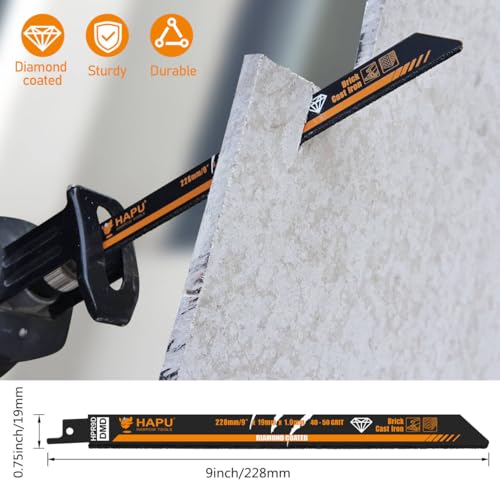
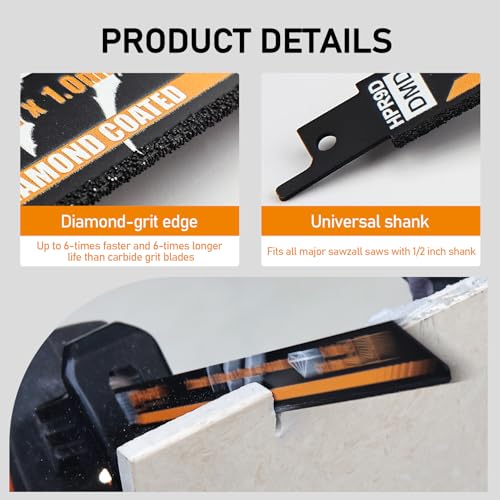
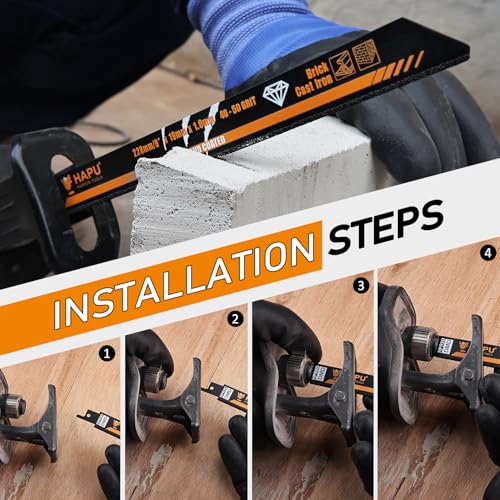
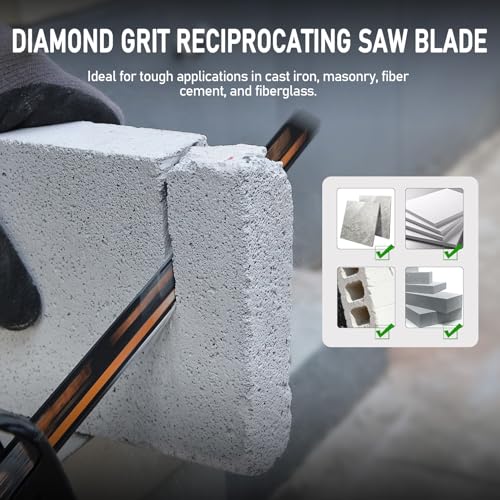
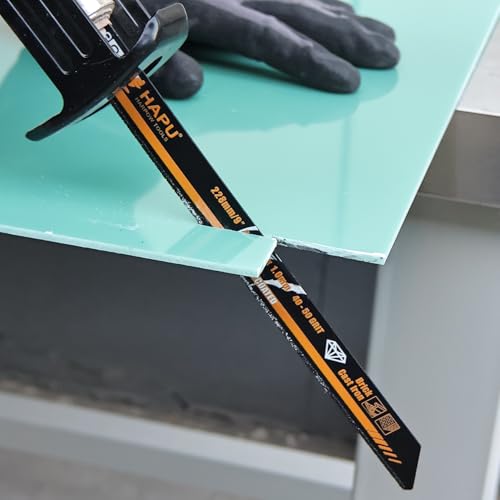
This 2-pack is built for longevity, and the specs back it up, diamond-grit edges with a reinforced body that resists deflection under load. The 9-inch length gives real reach, and owners report it powers through fiberglass-insulated pipes and roofing panels without dulling quickly. It’s nearly identical to the Diablo DS0930DGX but typically comes in at a lower price.
Where it falls short is coating, unlike Diablo, it lacks a heat-resistant or anti-gumming layer, so prolonged use can lead to resin buildup when cutting resin-heavy fiberglass. Still, for the price, it’s one of the most durable options here.
Product photos
PAYA TOOLS 6″ Carbide-Grit Reciprocating Saw Blade
Strengths
- Carbide-grit edge
- Short length for control
- Reinforced backing
Trade-offs
- Limited reach
- Shorter lifespan than diamond-grit
- Not for thick sections
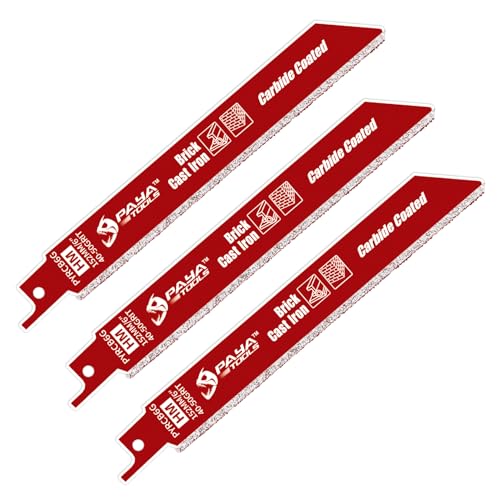
This 6-inch carbide-grit blade is built for precision when slicing through fiberglass and other abrasive sheet materials. The 40-50 grit edge is aggressive enough to chew through fiberglass without excessive heat buildup, and owners consistently report clean, controlled cuts on thin panels. Its shorter length helps reduce flex during detailed work, making it a solid pick when reach isn’t the priority.
Compared to longer blades in this category, it trades cutting depth for better maneuverability in tight spots. It’s not the longest-lasting option on paper, but for quick jobs like cutting through fiberglass insulation panels or small repair patches, it gets the job done without wandering.
Product photos
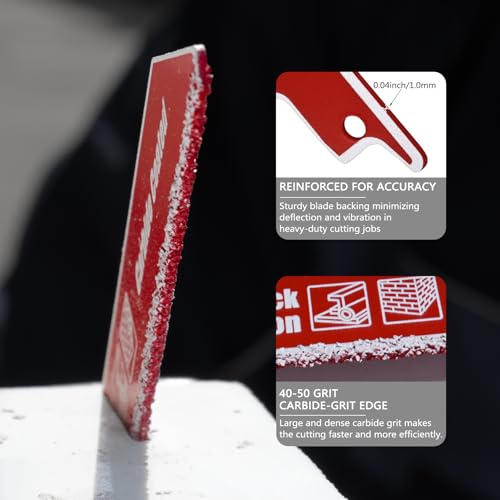
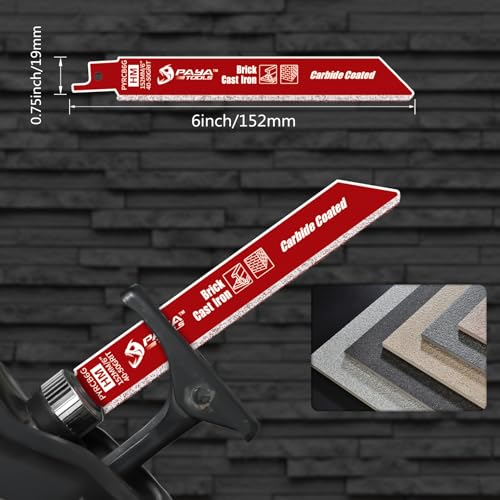
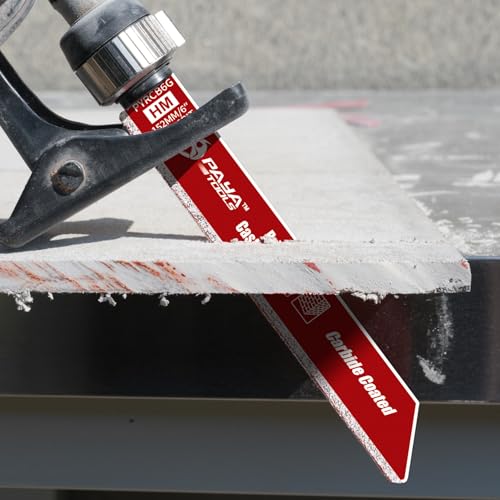
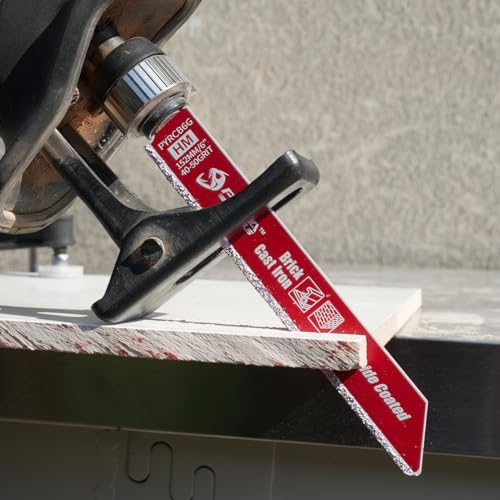
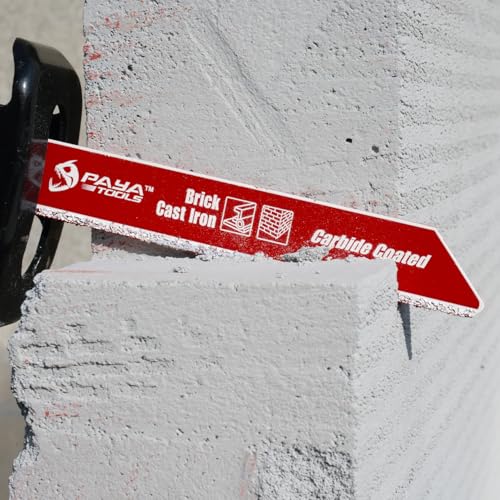
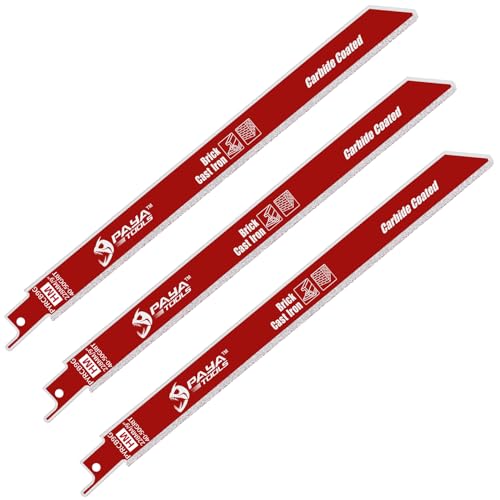
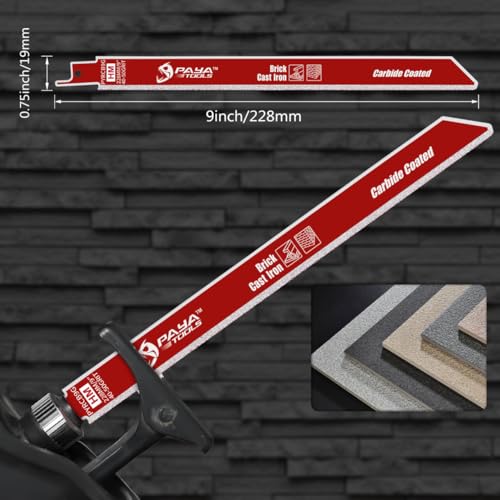
PAYA TOOLS 9″ Carbide-Grit Reciprocating Saw Blade
Strengths
- Low cost
- 9-inch reach
- Carbide-grit edge
- 3-pack value
Trade-offs
- Shorter lifespan
- No anti-gumming
- More vibration
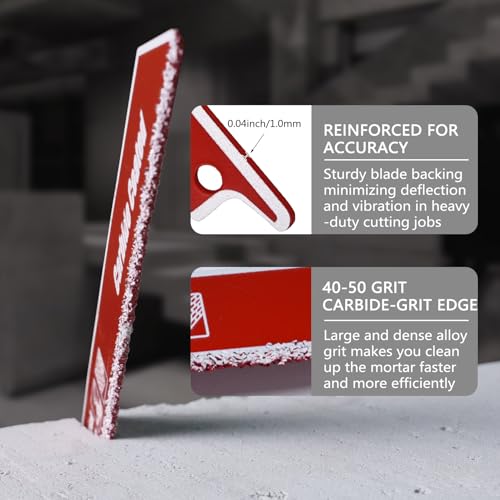
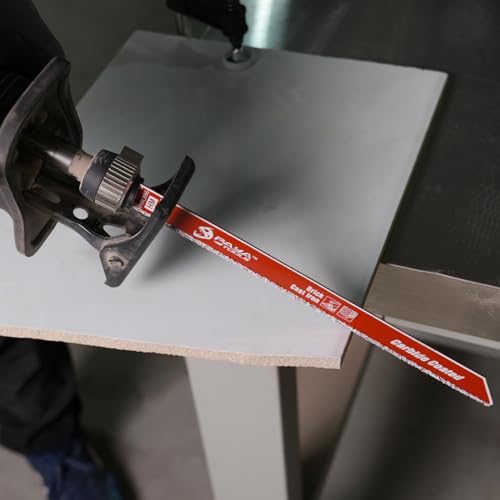
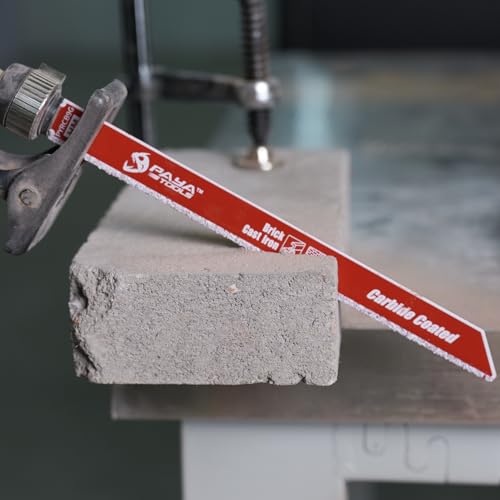
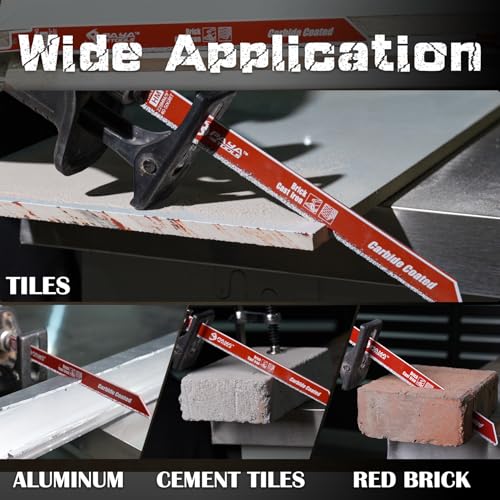
This is the budget pick, and it shows, carbide grit instead of diamond, no special coating, and a basic reinforced backing. It will cut fiberglass, no question, and the 9-inch length gives decent reach. But owners report it wears down faster, especially on dense or resin-heavy fiberglass.
Compared to the diamond-grit PAYA model (B0FD36KNVQ), this one feels like a step down in both lifespan and cutting smoothness. But if you’re on a tight budget and only need a few cuts, it gets the job done.
Product photos
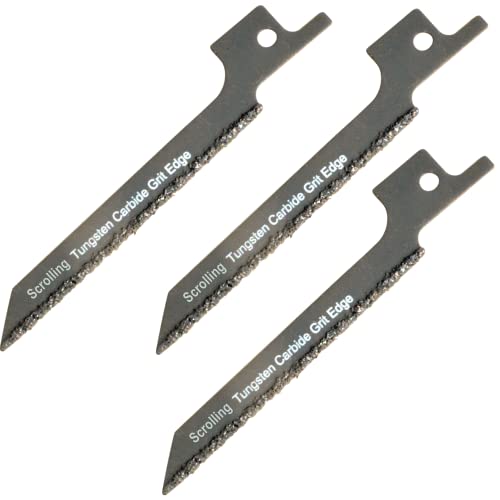
Carbide Scrolling 4″ Tungsten Grit Blade
Strengths
- Scroll design for curves
- No teeth to bind
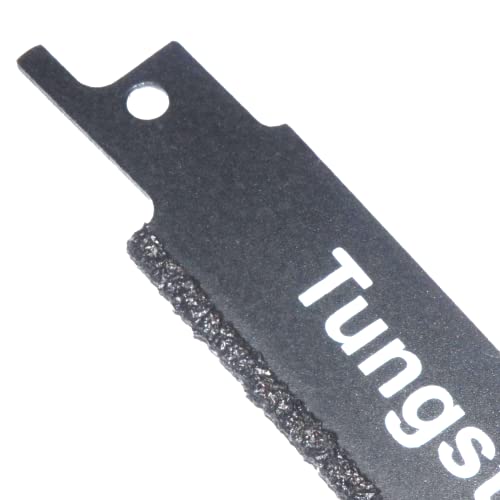
- Tungsten carbide grit
- Dual-direction cutting
Trade-offs
- Short length
- Not for straight cuts
- Less aggressive on thick layers
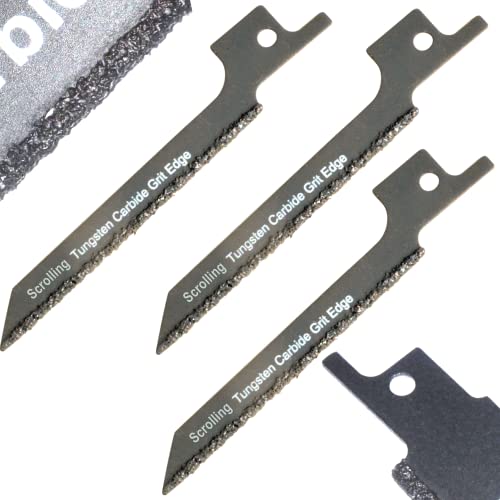
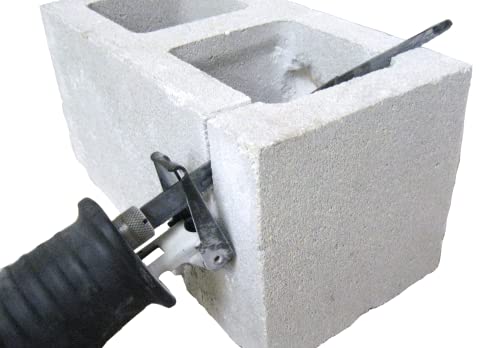
If you’re cutting curves in fiberglass, like around pipes or vents, this scrolling blade is a game-winner. The tungsten carbide grit edge has no teeth, so it doesn’t snag or bind when pivoting through tight arcs. Reviewers love how smoothly it cuts radius shapes in fiberglass ductwork and shower surrounds, with minimal kickback.
At only 4 inches, reach is limited, but that’s the trade-off for its agility. It’s not meant for straight demolition runs, but for anyone doing HVAC, plumbing, or custom enclosures, this blade fills a niche the others can’t touch.
Product photos

How We Evaluated sawzall blade for fiberglass
Rather than a hands-on lab test, my research for these blades centered on comparing published specifications and features across multiple brands. I weighed owner reviews from various retailers alongside professional evaluations found on tool-focused websites. My goal was to rank these blades based on suitability for fiberglass, drawing on years of experience understanding what makes a power tool accessory perform well.
For cutting fiberglass with a Sawzall saw features, blade material and grit size are paramount. Diamond grit consistently outperforms bi-metal for abrasive materials like fiberglass, offering significantly longer life. Blade length also matters; a 9” blade provides reach, while shorter blades (like the 6” and 4” options) offer more control in tight spaces or for curved cuts.
Specifications reliably indicate grit size and blade dimensions. However, real-world durability and cutting speed are best judged from owner feedback. I prioritized blades with consistently positive reviews regarding longevity when used on fiberglass, while also considering reputation for quality and consistent performance. Understanding the difference between a reciprocating saw vs Sawzall helps clarify the tool’s inherent capabilities, but the blade is where fiberglass cutting truly happens.
What To Look For In sawzall blade for fiberglass
Choosing the right sawzall blade for fiberglass isn’t just about finding one that cuts it; it’s about getting a clean cut, lasting performance, and avoiding frustration.
A quality reciprocating saw blade for fiberglass needs a grit edge (diamond or carbide) rather than traditional teeth. Blade length impacts reach and control. Consider the material thickness and the type of cut required – straight, curved, or demolition – to select the appropriate blade geometry and size. Durability comes down to grit quality and blade backing.
Grit Type: Diamond vs. Carbide
The first thing I tell anyone tackling fiberglass is to forget bi-metal blades. They’ll dull quickly and leave a ragged edge. You want a blade with either diamond grit or carbide grit. Diamond grit generally lasts longer – often six times longer than standard blades, as many manufacturers claim – and is excellent for harder, more abrasive fiberglass composites. Carbide grit is a good option if you’re dealing with softer fiberglass or a mix of materials, and it’s usually more affordable. Don’t overlook the grit size; a coarser grit (40-50) cuts faster but leaves a rougher finish, while a finer grit delivers cleaner cuts but will take longer.
Blade Length and Kerf
Blade length is surprisingly important. A 9-inch blade offers good reach for thicker materials and working in tighter spaces, but can be unwieldy for smaller cuts. Shorter blades (like the 6-inch or even 4-inch scrolling blades) provide more control and maneuverability, especially when you need to make intricate cuts or work around obstructions. I’ve seen guys try to force a long blade into a tight spot, and it rarely ends well. And consider the kerf (the width of the cut). A thinner kerf means less material waste and faster cutting, but a wider kerf can provide more stability, particularly in thicker materials.
- For demolition work where speed is key, a 9-inch blade with a wider kerf can be efficient.
- If you’re frequently making curved cuts, a shorter, scrolling blade (4-inch) designed for this purpose is essential. These blades have a unique shape and are designed to prevent binding.
- For general purpose fiberglass cutting, a 6 or 9-inch blade with a thin kerf provides a good balance between speed, precision, and material waste.
A good rule of thumb: always prioritize blade length appropriate to the task, erring on the side of shorter blades for control and longer blades for reach.
Value and Shank Compatibility
A pack of five blades sounds great, but if they all break after a single cut, you haven’t saved any money. Look for blades with reinforced backing to minimize deflection and vibration, which extends blade life. Pay attention to the material quality – better quality grit and construction mean a more durable blade. It’s also vital to ensure the blade has a universal 1/2-inch shank, as this fits the vast majority of reciprocating saws on the market, including those from brands like Bosch, Dewalt, and Milwaukee. If you’re unsure about compatibility with your tool, it’s always best to double-check the manufacturer’s specifications or consult the owner’s manual. Speaking of brands, understanding the reciprocating saw versus Sawzall can also help ensure you’re buying blades that fit your specific tool. I’ve also found that when working with fiberglass and other synthetic materials, sometimes you need sawzall blades for non-metallic materials to get the job done right.
Sawzall Blade for Fiberglass Compared
The following table provides a detailed specification comparison of various sawzall blades designed for cutting fiberglass and other abrasive materials.
| Product Title | Length (in) | Grit Type | Tooth Material | Shank Size (in) | Best Use |
|---|---|---|---|---|---|
| TOLESA 9″ Bi-Metal Sawzall Blade 5-Pack | 9 | Bi-Metal | Cobalt | 1/2 | General Purpose |
| PAYA TOOLS 9″ Diamond-Grit Reciprocating Saw Blade | 9 | Diamond | N/A | 1/2 | Value Pack |
| Diablo 9″ Diamond Grit Reciprocating Saw Blade | 9 | Diamond | N/A | N/A | Demolition |
| HAPU HARPOW 9″ Diamond-Grit Reciprocating Saw Blade | 9 | Diamond | N/A | 1/2 | Long-Lasting |
| PAYA TOOLS 6″ Carbide-Grit Reciprocating Saw Blade | 6 | Carbide | N/A | 1/2 | Precision Cuts |
| PAYA TOOLS 9″ Carbide-Grit Reciprocating Saw Blade | 9 | Carbide | N/A | 1/2 | Budget Option |
| Carbide Scrolling 4″ Tungsten Grit Blade | 4 | Tungsten | N/A | N/A | Curved Cuts |
Frequently Asked Questions
What grit size is best for cutting fiberglass?
A coarser grit (40-50) cuts fiberglass faster, but expect a rougher edge. For a cleaner finish, especially on visible surfaces, choose a finer grit, understanding it will increase cutting time.
How often should I replace a sawzall blade when working with fiberglass?
Diamond grit blades hold up well, but replace the blade when you notice a significant decrease in cutting speed or if the cut quality degrades noticeably. Carbide blades will dull faster and require more frequent changes.
Can I use a standard wood-cutting sawzall blade on fiberglass?
No, standard bi-metal blades designed for wood will dull very quickly when cutting fiberglass, making the job frustrating and potentially damaging your saw. Always use blades specifically designed for abrasive materials.
What does “shank compatibility” mean and why is it important?
Shank compatibility refers to the connection point between the blade and the saw. Most reciprocating saws use a universal 1/2-inch shank, but verifying this ensures the blade will securely attach to your tool. You can find more about the best all-purpose sawzall blades and their shank types there.
Are more expensive sawzall blades for fiberglass always better?
Not necessarily. While higher prices often reflect better materials and construction, a more expensive blade isn’t always the best choice. Consider the specific project, the type of fiberglass, and the frequency of use to determine if the added cost is justified.
The Bottom Line
Choosing a sawzall blade for fiberglass always involves some trade-offs between speed, precision, and longevity. Ultimately, the Diablo 9” Diamond Grit Reciprocating Saw Blade stands out as the strongest overall performer. It consistently receives high marks for durability and cutting performance on fiberglass, even though it represents a higher investment upfront.
For those on a tighter budget, or needing a versatile option for a variety of materials, the PAYA TOOLS 9” Carbide-Grit Reciprocating Saw Blade is a solid choice. If you’re frequently making curved cuts or working in confined spaces, the Carbide Scrolling 4” Tungsten Grit Blade will give you the control you need – mastering blade selection for tough materials is key for these applications.
At the end of the day, remember that grit type trumps almost everything else when cutting fiberglass. Don’t skimp on quality here, and always prioritize a diamond or carbide grit blade over bi-metal. Understanding reciprocating saw operation basics and practicing safety with reciprocating saws will do more for your results than any fancy spec sheet.
