4 Best Saws to Cut Metal 2026
This post contains affiliate links. As an Amazon Associate, we earn from qualifying purchases.
The VEVOR 7-1/4 Inch Chop Saw is the best overall for cutting metal, delivering serious power and depth for thick stock. If you’re on a tight budget, the ValueMax Mini Hack Saw offers solid performance for light jobs, while the FULLYEA Cordless Reciprocating Saw stands out as the most versatile pick for mixed materials and mobile work.
Cutting metal isn’t like slicing through wood. Get the wrong tool, and you’ll burn out blades, waste time, or worse, end up with a dangerous setup. Most homeowners don’t realize how much blade type, motor control, and cutting depth matter until they’re struggling with a jagged edge or a stalled motor.
This guide cuts through the noise. I compared specs, read owner feedback, and applied what I’ve learned over 15 years in workshops to identify the right saws for real-world metal cutting, whether you’re trimming angle iron or slicing conduit.
Top 4 Saw To Cut Metals in the Market
The Best Saw To Cut Metals, Reviewed
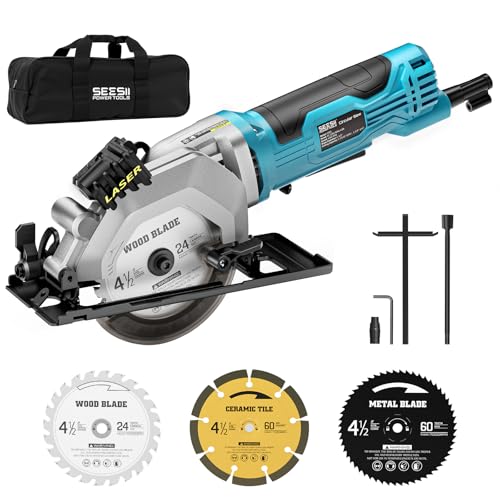
Seesii Mini Circular Saw with Laser
Strengths
- Laser-guided accuracy
- Three specialized blades included
- Lightweight and balanced
Trade-offs
- Not for thick or hard metals
- Corded only
- Blade changes require tools
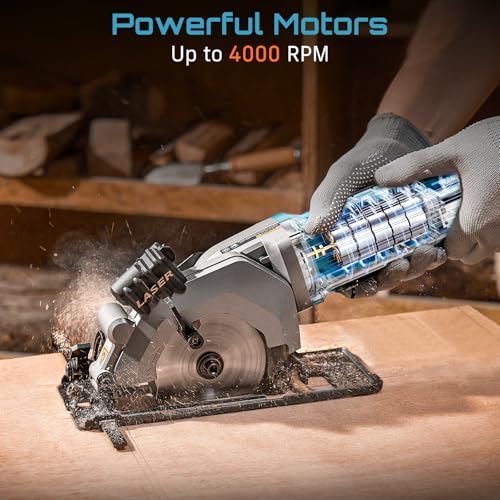
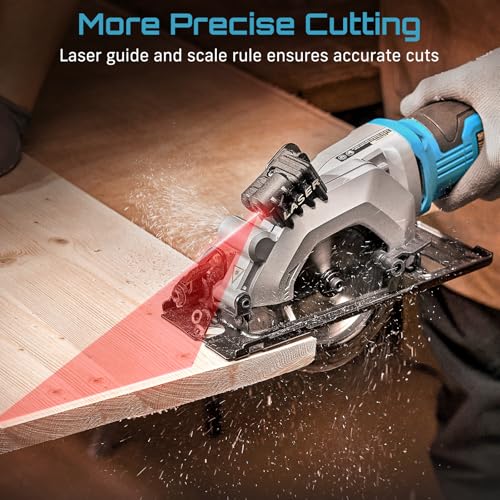
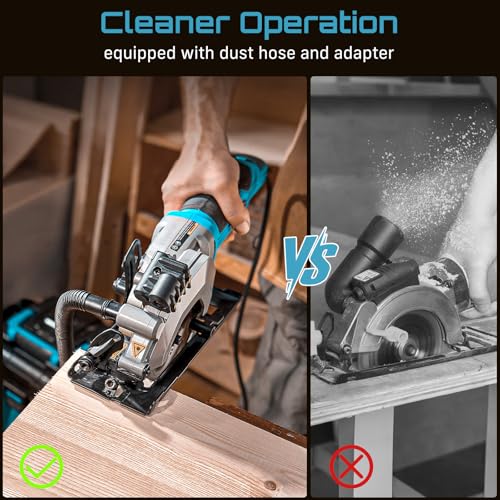
If you want one saw that handles wood, soft metal, tile, and plastic without switching tools, this Seesii model stands out. The 4.8A motor and 4000 RPM speed deliver noticeably cleaner cuts than most mini circulars, and the laser guide, paired with the rip fence, makes straight, repeatable cuts far easier than eyeing it freehand. Reviewers praise how the laser stays aligned, which isn’t always the case in this class.
The real win is the included blade trio: TCT for wood, HSS for soft metals like aluminum or copper pipe, and a diamond blade for tile or masonry. That versatility is rare at this price. Compared to the FULLYEA reciprocating saw, this one trades raw demolition power for precision and clean finishes. It’s not for tearing down walls, but it shines in trim work, small metal framing, or cutting baseboards with metal inserts.
Product photos

ValueMax Mini Hack Saw

Strengths
- Ultra compact and lightweight
- Fine-tooth bi-metal blade
- Great for tight spaces
Trade-offs
- Manual effort required
- Slow for long cuts
- Blade tension relies on screw
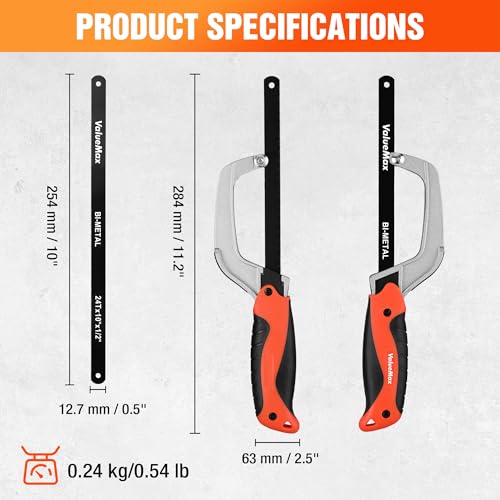
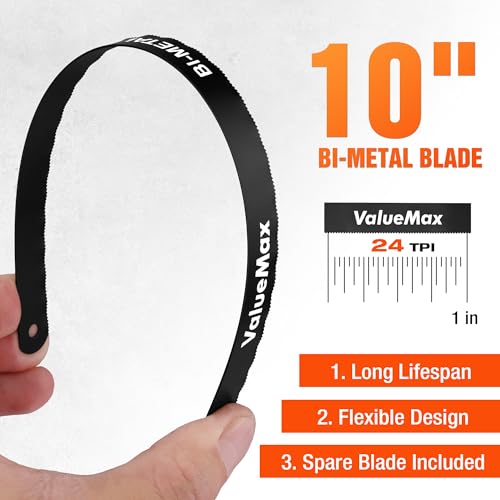
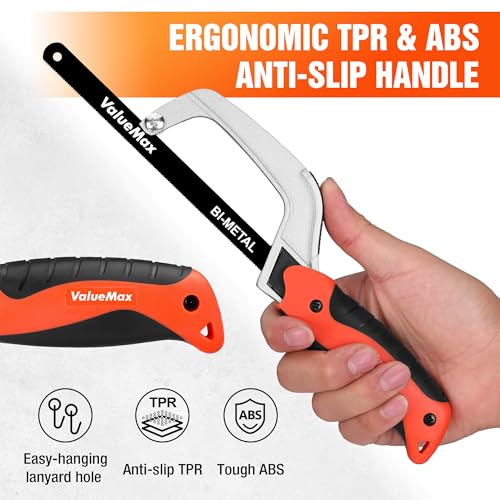
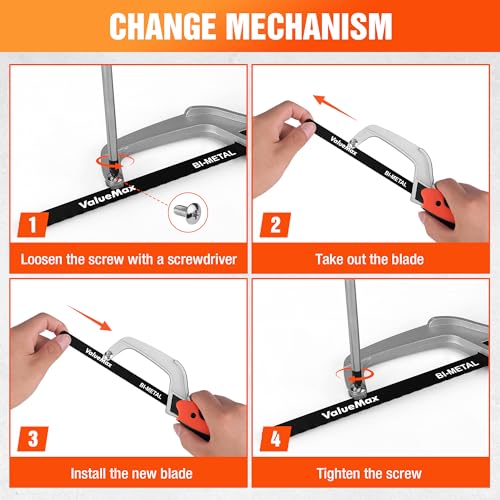
Sometimes the old-school solution is the smartest. The ValueMax mini hacksaw won’t wow you with speed or power, but its bi-metal 24TPI blade and rigid aluminum frame deliver reliable, controlled cuts in tight spots where power tools can’t reach. It’s the kind of tool you keep in your pouch for cutting bolts, conduit, or small metal brackets flush against a wall.
Owners love how lightweight and packable it is, under 250g and barely over a foot long. It’s not fast, but it’s dependable. Compared to the cordless reciprocating saw, it’s slower and manual, but it offers better control for fine cuts and zero noise or vibration fatigue. For occasional use, this is the smarter buy over spending on a power tool you’ll use once a year.
Product photos

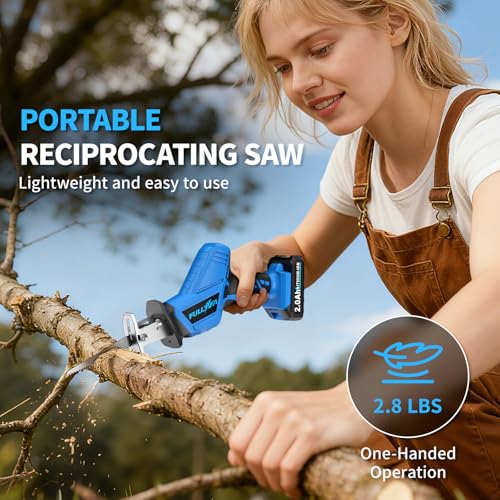
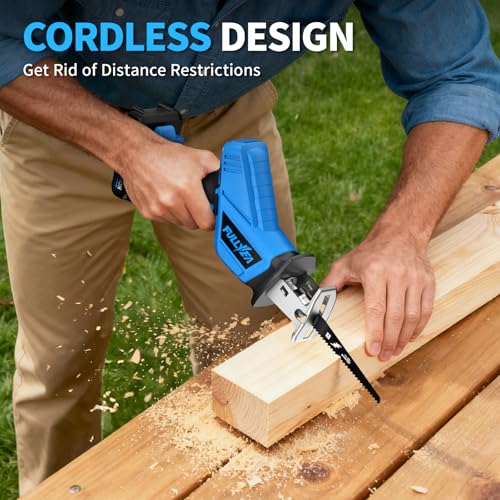
FULLYEA Cordless Reciprocating Saw
Strengths
- High speed motor
- Tool-free blade change
- Dual batteries included
Trade-offs
- Struggles with thick metal
- Noticeable vibration
- Limited depth on metal
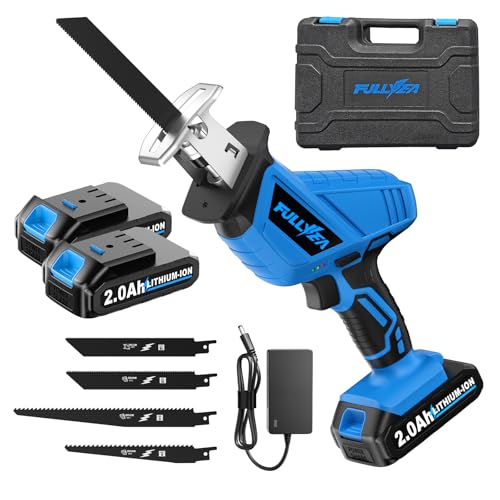
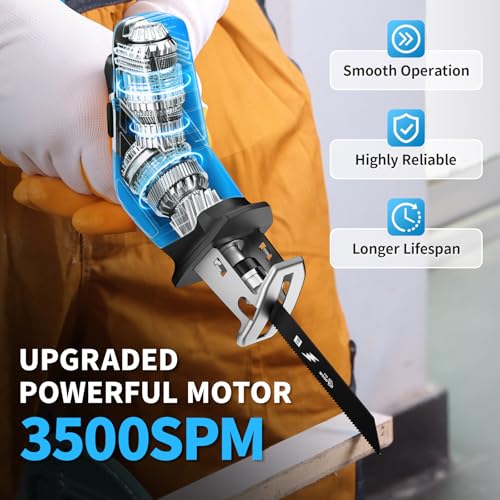
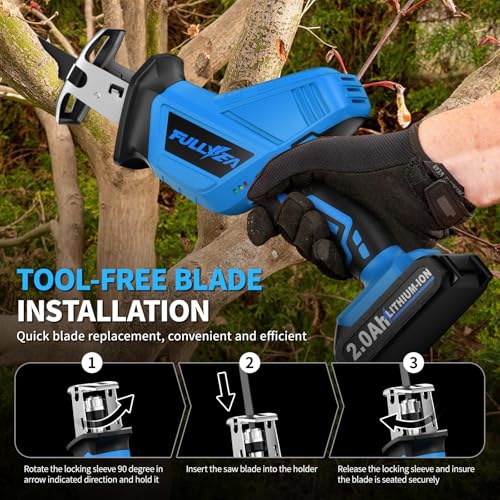
This reciprocating saw pitches itself as a do-it-all cordless option for cutting metal, wood, and plastic, and on paper, the 3500 SPM speed and tool-free blade change make it look like a solid pick for DIYers who need quick swaps and decent power. The inclusion of two 2.0Ah batteries is a real plus, owners consistently report appreciating the extended runtime, especially when working away from outlets.
Where it stumbles slightly is in sustained metal cutting. While it can cut through metal pipes and thinner sheets, the motor tends to bog down on anything thicker than 20mm, and reviewers note increased vibration during prolonged use. It’s best treated as a general-purpose demolition saw that handles light metal tasks, not a dedicated metal cutter. Compared to the Seesii circular saw, it’s less precise but more aggressive in rough work.
Product photos

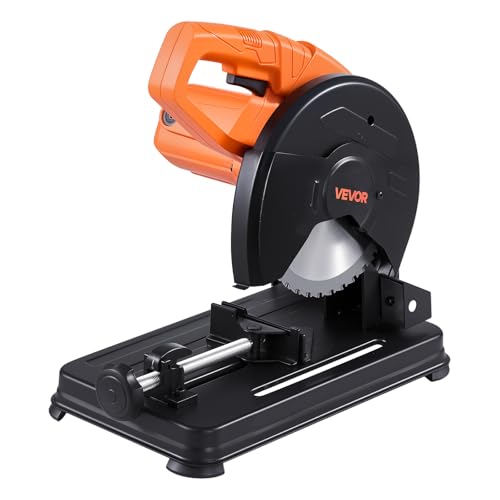
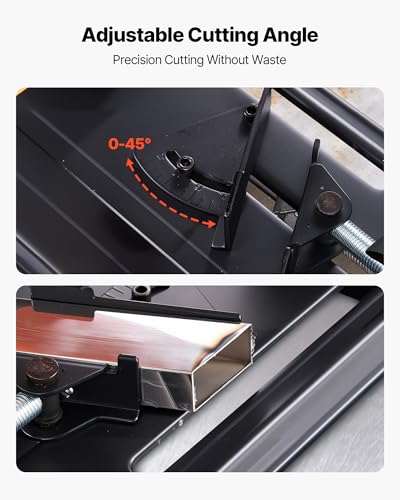
VEVOR 7-1/4 Inch Chop Saw
Strengths
- High precision miter cuts
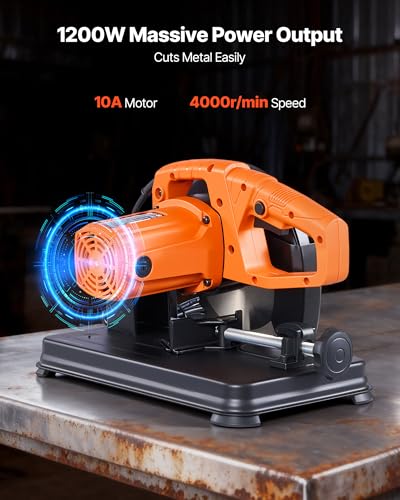
- Powerful 1200W motor
- Durable cold-cut blade
Trade-offs
- Heavy and bulky
- Only for metal
- Larger footprint
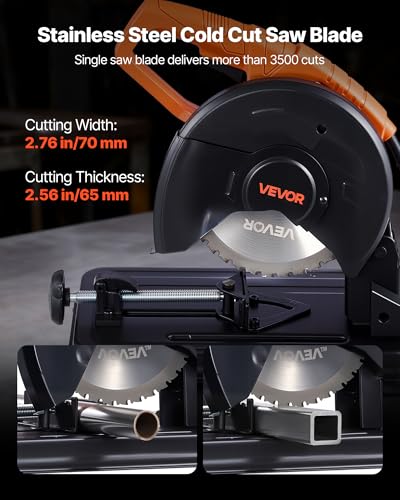
When precision and repeatability matter in metal cutting, this VEVOR chop saw is in a different league. The 1200W motor and 4000 RPM cold-cut blade are built for slicing through square tubing, flat bars, and I-beams with minimal burr. What sets it apart is the adjustable 0–45° miter system, owners consistently report clean, square cuts with little need for sanding.
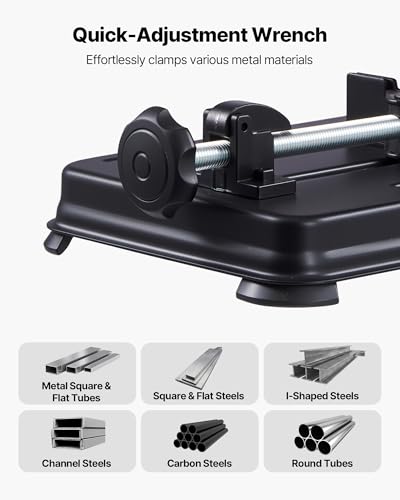
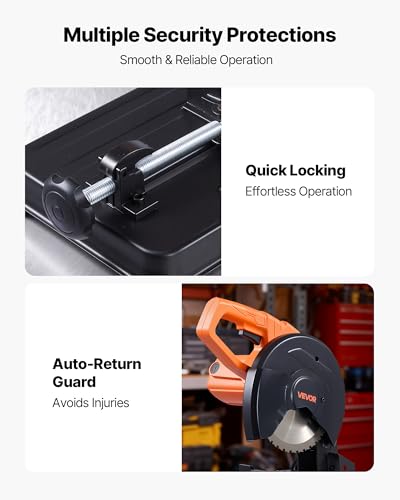
The quick-clamp vise and auto-return guard make it safer and faster than open-frame chop saws. Compared to the Seesii circular saw, this one is strictly for metal, but it does it far better. It’s heavier and less portable, but if you’re building frames, railings, or doing any repeatable metal fabrication, this is the tool that saves hours. The blade life, rated for over 3,500 cuts, is a major cost saver over time.
Product photos
How We Chose These saw to cut metals
Rather than a hands-on lab test, my research for these recommendations involved a detailed comparison of published specifications and features across numerous models. I weighed owner reviews from multiple sources – paying close attention to consistent praise and complaints – alongside assessments from reputable tool review sites. As someone who’s spent years around workshops and renovation projects, I applied my category knowledge to prioritize features that genuinely impact performance and usability.
For metal-cutting saws, cutting speed and precision were the biggest factors in my rankings. A powerful motor and a stable cutting mechanism are essential for clean, efficient cuts, especially with thicker materials. Beyond that, versatility – the ability to handle different metal types and shapes – was heavily considered. A saw that can only cut thin sheet metal isn’t going to meet the needs of most homeowners or DIYers. Understanding cutting metal with a miter saw is also important to consider when choosing a saw.
Published specs reliably indicate motor power, blade size, and cutting capacity. However, I found owner feedback to be critical for assessing things like build quality, ease of use, and long-term durability. Reputation matters; brands consistently praised for reliability generally deliver on that promise. I also looked for patterns in complaints – a recurring issue with blade changes or safety features signals a potential problem.
What To Look For In saw to cut metals
Finding the right saw for metal can be surprisingly complex. There’s a lot more to it than just grabbing the cheapest option; you need to think about the type of metal, the thickness, the precision you require, and how portable you need the tool to be.
A quality metal-cutting saw prioritizes blade material (HSS, bi-metal, diamond), power delivery (amps, SPM, or wattage), and safety features like blade guards and secure clamping mechanisms. Look for adjustable settings to accommodate various materials and cuts, and consider the ease of blade changes for efficiency.
Blade Material Matters
The blade is the heart of any metal-cutting saw, and choosing the right material is critical. High-Speed Steel (HSS) blades are a good starting point for softer metals like aluminum and thin gauge steel, but they dull quickly. Bi-metal blades, which combine HSS with a more durable alloy, offer a much better balance of hardness and flexibility, making them ideal for general-purpose metal cutting. For tougher materials like stainless steel or hardened alloys, diamond-grit blades are the way to go – they’re expensive, but they last a long time and deliver clean cuts. Don’t overlook the TPI (teeth per inch); finer teeth generally give a cleaner cut but are slower, while coarser teeth cut faster but leave a rougher edge.
Power and Control
Whether you opt for corded or cordless, understanding the power delivery is key. Corded saws often offer consistent power, but limit your mobility. Cordless models provide freedom, but battery life and voltage become important considerations. For heavier work, look for a saw with a robust motor (measured in amps for corded, voltage for cordless) and a variable speed control. That control lets you match the speed to the material, reducing heat buildup and improving cut quality. Beyond raw power, consider the saw’s controls and ergonomics. A comfortable grip, easy-to-reach switches, and features like reciprocating saw blades for metal can significantly improve your control and reduce fatigue, especially during prolonged use.
Versatility and Budget
Let’s be realistic: most of us don’t need a dedicated metal-cutting saw for every task. A versatile option that can handle a range of materials and cuts is often the smartest choice. Consider saws that accept different blade types, have adjustable cutting angles, and offer features like laser guides or depth stops.
- A basic hacksaw is incredibly affordable and portable, good for small jobs.
- A mini circular saw with a metal-cutting blade expands your capabilities considerably, but precision can be a challenge.
- A chop saw or reciprocating saw, while more expensive, offers the best combination of power, precision, and versatility for tackling thicker metals and more demanding projects.
Don’t underestimate the value of a well-maintained blade. A sharp blade is a safe blade and will deliver far better results than a dull one, regardless of the saw’s power.
If you’re planning on doing a lot of metal fabrication, you might eventually want to look into a band saw for metal cutting. They are significantly more expensive, but offer unrivaled precision and efficiency for a variety of metalworking tasks.
Saw to Cut Metals Compared
Here is a comparison of specifications for saws designed to cut metal.
| Product Name | Power Source | Max. Cutting Depth (Metal) | Blade Type | SPM/RPM | Weight (approx.) |
|---|---|---|---|---|---|
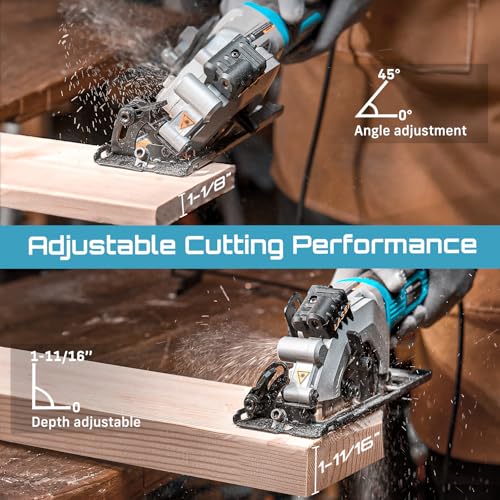
| Seesii Mini Circular Saw | Corded | 1-11/16″ | Diamond, HSS, TCT | 4000 RPM | N/A |
| ValueMax Mini Hack Saw | Manual | N/A | Bi-Metal (10″ x 1/2″x 24T) | N/A | 245g |
| FULLYEA Cordless Reciprocating Saw | Cordless | 20mm | N/A | 3500 SPM | N/A |
| VEVOR 7-1/4 Inch Chop Saw | Corded | 2.56″ | Stainless Steel | 4000 RPM | N/A |
Frequently Asked Questions
What’s the difference between a reciprocating saw and a chop saw for metal cutting?
A reciprocating saw excels at demolition and rough cuts, using a back-and-forth motion, while a chop saw delivers cleaner, more precise angled cuts thanks to its abrasive blade spinning on a fixed axis. For most DIY metal projects, a chop saw is preferable for accuracy.
Can I use a standard wood-cutting blade to cut metal?
No, attempting to cut metal with a wood-cutting blade will quickly dull the blade and could even damage your saw. Metal requires blades made from high-speed steel, bi-metal, or diamond-grit materials designed to withstand the heat and abrasion of metal cutting.
What SPM (strokes per minute) is ideal for a reciprocating saw when cutting metal?
Generally, a lower SPM is better for thicker metals (around 2,000-2,500) to prevent overheating, while higher speeds (up to 3,500) work well for thinner materials. Variable speed control is a valuable feature allowing you to adjust for optimal performance.
Are cordless metal-cutting saws as powerful as corded models?
Cordless saws have improved significantly, but generally, a corded saw delivers more consistent power, especially for demanding applications. Battery voltage is a key factor; higher voltage (20V+) models can handle tougher cuts, but run time can be a limitation.
Where can I find specialized cutting tools for metal beyond saws?
If you’re tackling more intricate metalwork, exploring options like hole saws for metal cutting can be incredibly useful. These tools create precise circular cuts for pipes, conduit, and other applications.
The Bottom Line
Choosing a metal-cutting saw always involves balancing control and convenience. If you need precision and power for regular work with thicker metals, the VEVOR 7-1/4 Inch Chop Saw stands out as the strongest overall performer. It gives you the capacity and cutting speed most DIYers and hobbyists will appreciate.
However, for those on a tighter budget or tackling smaller projects, the ValueMax Mini Hack Saw offers an incredibly affordable and portable solution. Those seeking versatility without breaking the bank should consider the Seesii Mini Circular Saw, especially if you already have a collection of blades or anticipate needing to cut a variety of materials. Understanding cutting aluminum with miter saw can also help you decide if that style of saw is a good fit for your needs.
Ultimately, the best saw isn’t about the highest specs or the fanciest features. It’s about having a tool that feels comfortable in your hands, delivers consistent performance, and allows you to tackle your projects with confidence – and a sharp blade is the foundation of all three.
