
7 Best TIG Welding Gloves of 2026
This post contains affiliate links. As an Amazon Associate, we earn from qualifying purchases.
The IRONCAT Kidskin TIG Welding Gloves stand out as the top choice for precision work, offering unmatched dexterity and a snug, second-skin fit. For those on a budget, the YESWELDER Premium Goatskin TIG Gloves deliver solid performance and heat resistance without the high price tag. If you need extra reach and heavy-duty protection, the TOPDC 16-Inch Heat Resistant Gloves bring strong construction and extended coverage to the table.
TIG welding is unforgiving, too much bulk and you lose control, too little protection and you risk burns or long-term damage. Most buyers struggle to find a glove that doesn’t sacrifice feel for safety.
In this guide, I break down the top options based on material quality, owner feedback, and real-world performance. These picks reflect what matters most: dexterity for fine control, heat resistance for safety, and durability that lasts beyond a few welds.
Top 7 Tig Welding Gloves in the Market
The Best Tig Welding Gloves, Reviewed
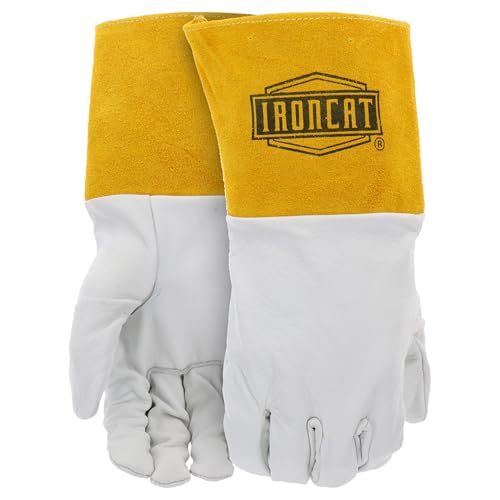
IRONCAT Kidskin TIG Welding Gloves
Strengths
- Kidskin leather
- Kevlar thread
- Extended cuff
- Straight thumb
- Lightweight feel
Trade-offs
- Less abrasion resistance
- Cuff not insulated
- Not for heavy-duty use
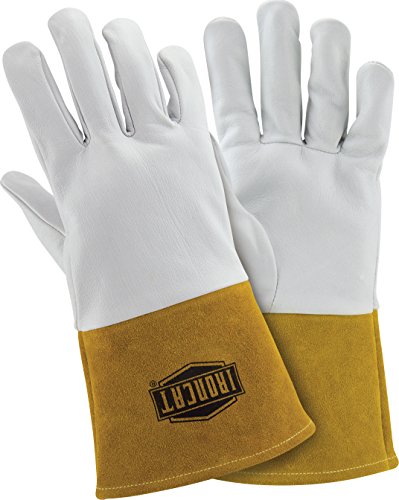
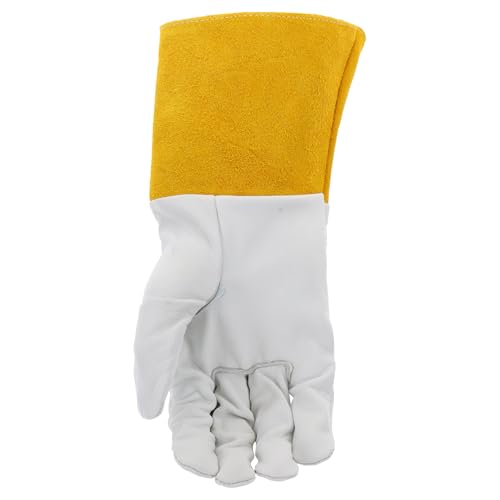
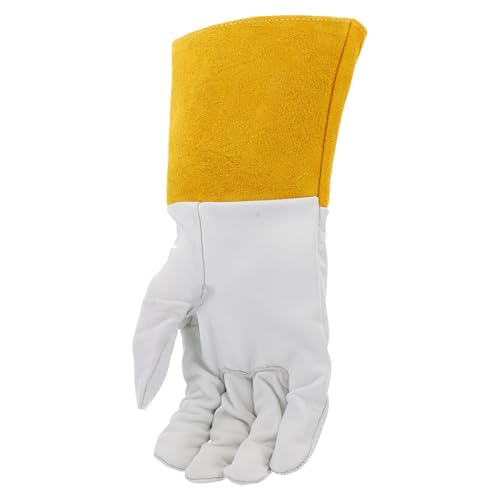
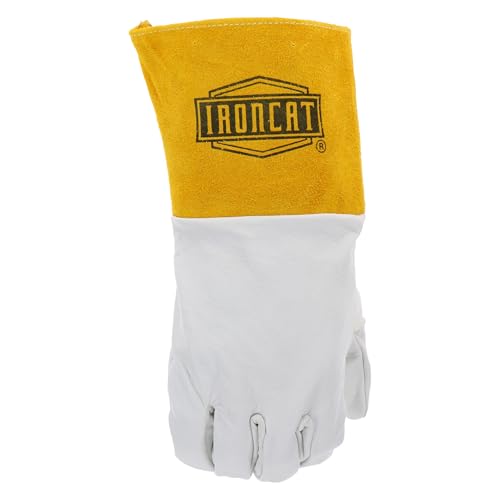
IRONCAT’s kidskin gloves have earned their ‘Best Overall’ label through a balance of dexterity, comfort, and real-world durability. The top grain kidskin feels buttery right out of the box, and the straight thumb design improves grip, a small detail that makes a difference during long welds. The 4-inch gold cuff offers more forearm protection than many competitors in this class.
Reviewers note these hold up surprisingly well even in semi-pro settings, which speaks to the quality of the Kevlar thread and consistent stitching. While not the most heat-resistant, they deliver where it counts for most users: reliable performance without breaking the bank. When compared to bulkier goatskin models, these feel more natural on the hand.
Product photos

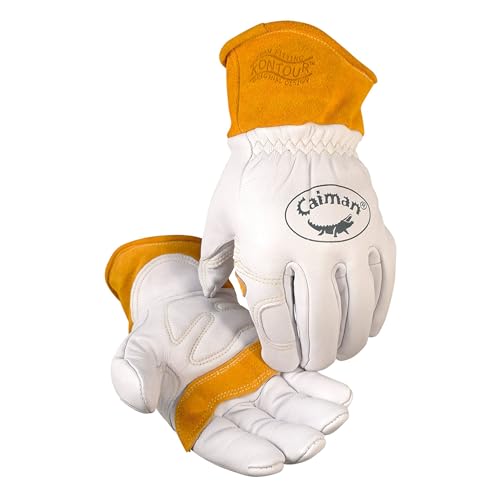
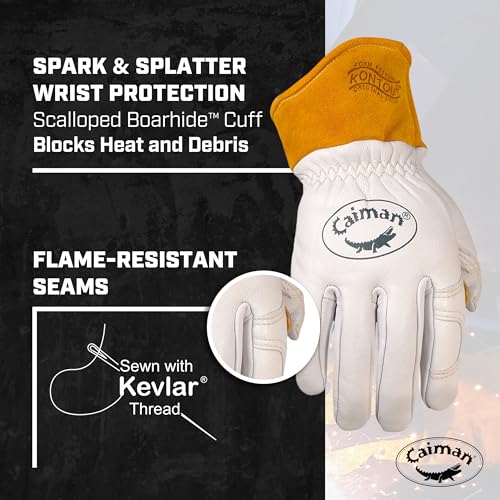
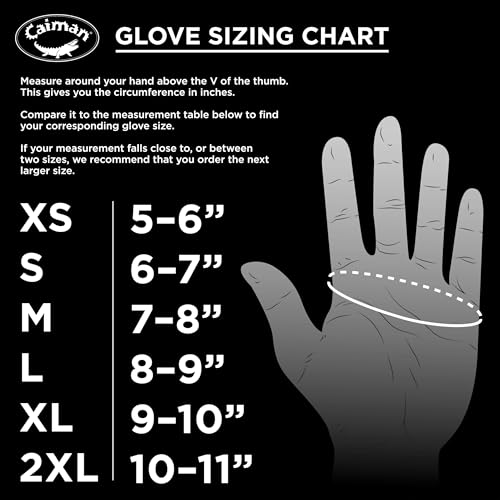
Caiman Wool-Insulated TIG/MIG Gloves
Strengths
- Wool insulated back
- Boarhide palm
- Kontour fit
- Reinforced thumb
- Scalloped cuff
Trade-offs
- Overheats in warm shops
- Heavier than others
- Not for hot environments
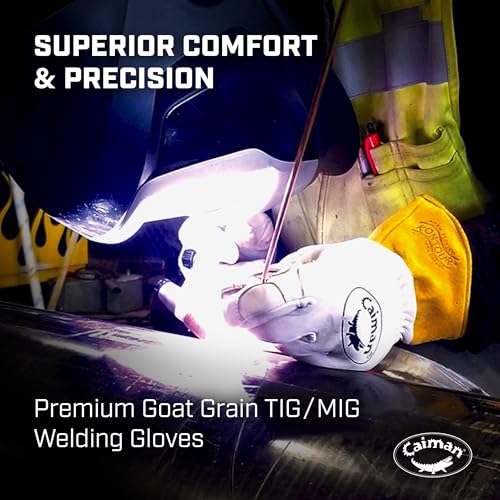
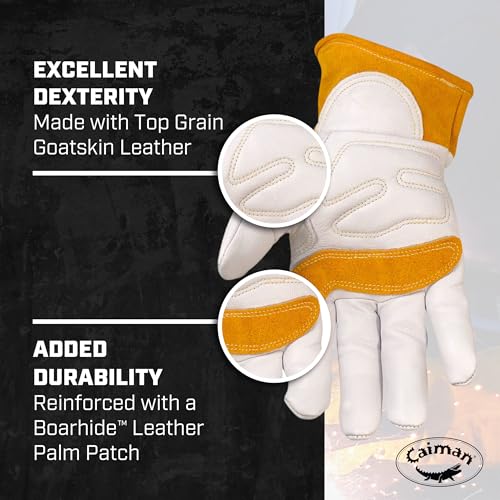
Cold shop? These are your gloves. The wool-insulated back is the real differentiator here, most TIG gloves focus on breathability, but Caiman went the opposite direction for winter welders. The boarhide palm patch and reinforced thumb saddle add serious durability, and the Kontour design ensures a snug, natural fit that reduces fatigue.
Owners in colder climates praise the thermal comfort, though some note they can get warm in summer. The scalloped cuff helps deflect sparks while still covering the wrist well. Compared to other Caiman models, this one trades a bit of breathability for warmth, a trade I’d make if I’m welding in an unheated garage.
Product photos

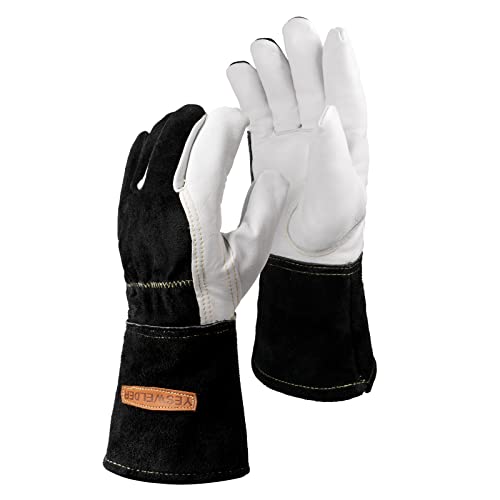
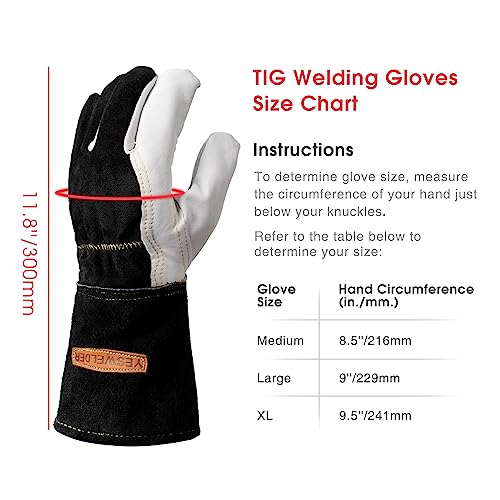
YESWELDER Premium Goatskin TIG Gloves
Strengths
- Affordable price
- Goatskin leather
- Kevlar stitching
- Reinforced palm
- Multi-use design
Trade-offs
- Stiff initially
- Basic packaging
- Inconsistent sizing
If budget matters but you still want solid performance, these YESWELDER gloves are a smart pick. The top grain goatskin is soft yet durable, and the keystone thumb design improves ergonomics, a feature usually seen on pricier models. The unlined palm boosts dexterity, which owners say makes them excellent for TIG work where fingertip feel is crucial.
They’re not as refined as Lincoln or Caiman offerings, but the Kevlar stitching and reinforced high-wear zones mean they last. Many users report using them beyond welding, for grilling, gardening, even demolition, which speaks to their versatility. Compared to IRONCAT, they’re slightly stiffer out of the box but break in quickly.
Product photos


Lincoln Electric Premium TIG Gloves
Strengths
- Top grain leather
- Kevlar stitching
- Padded palm
- Side reinforcement
- Three-piece fingers
Trade-offs
- Limited heat protection
- No extended cuff
- Not for heavy spatter
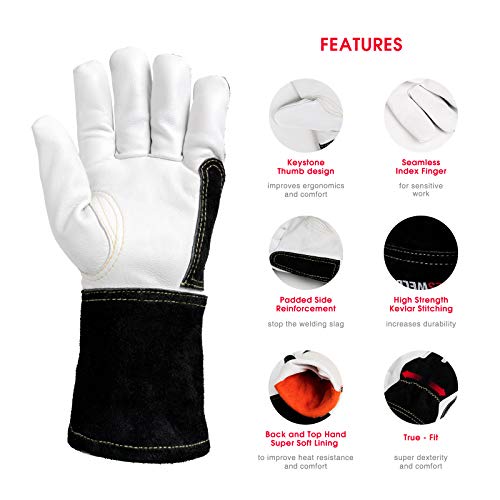
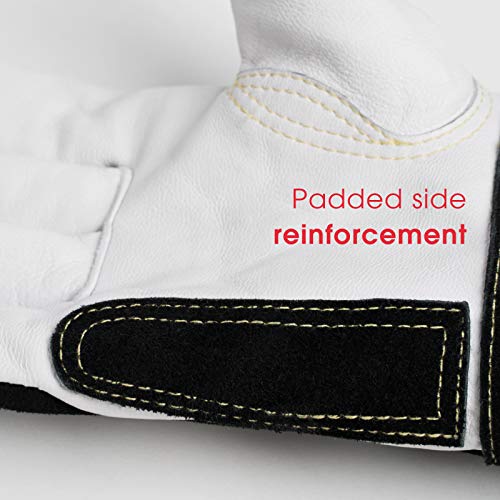
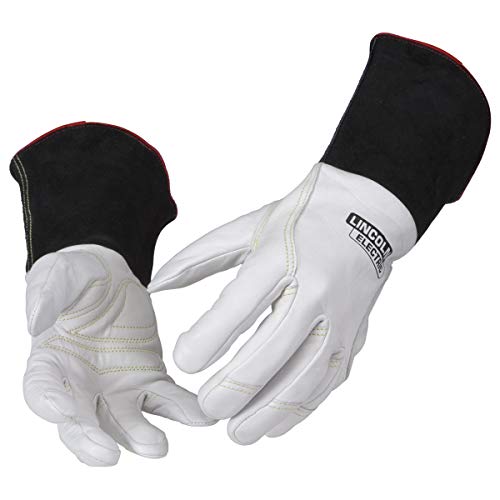
These gloves stand out in the high-dexterity category thanks to their soft top grain leather and thoughtful three-piece finger design. The keystone thumb and unlined palm are smart touches that prioritize feel and control, which matters when you’re feeding TIG filler rods with precision. On paper, this build is ideal for welders who value sensitivity over brute heat resistance.
Owners consistently report these gloves wear well under frequent use, especially in shop environments where fine manipulation is more critical than handling molten spatter. Compared to bulkier options, these trade a bit of forearm coverage for agility, a fair compromise for detailed work. I’d pick these over heavier models if you’re doing thin-gauge or artistic welding.
Product photos


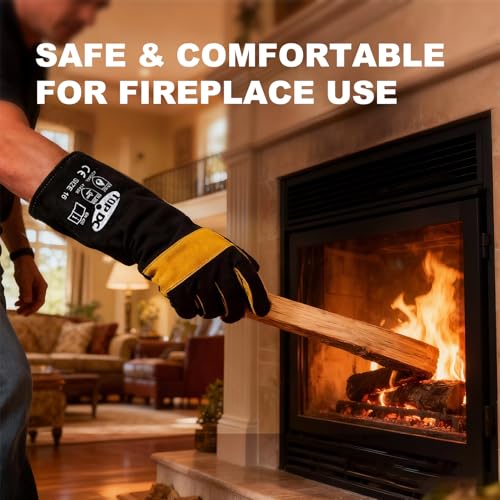
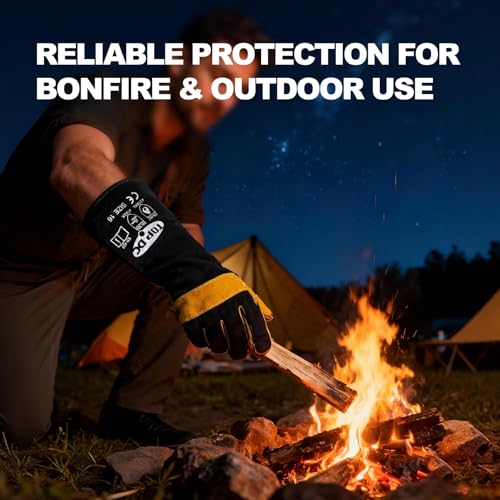
TOPDC 16-Inch Heat Resistant Gloves
Strengths
- 16-inch length
- 932°F rated
- Double stitching
- Fully lined
- Multi-environment use
Trade-offs
- Low dexterity
- Bulky design
- Poor finger control
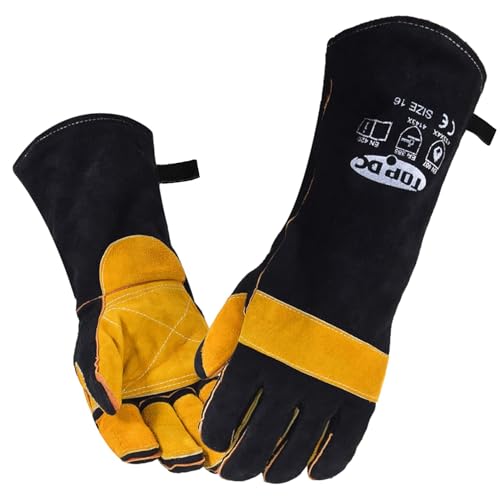
These gloves aren’t just for welding, they’re built like fire-rescue gear. The 16-inch length and 932°F heat rating make them overkill for most TIG work, but perfect if you’re dealing with forges, furnaces, or heavy spatter. The double-stitched Kevlar seams and fully lined interior add serious protection, and the cotton lining improves breathability despite the bulk.
They’re not dexterous, no surprise there, but owners using them for blacksmithing, BBQ pits, or foundry work say they’re worth the trade-off. Compared to standard TIG gloves, these are the armored SUV of the bunch. I wouldn’t use them for precision welding, but for high-risk, high-heat tasks, they’re a strong pick.
Product photos



Caiman Premium Goat Grain Gloves

Strengths
- Kontour fit
- Split cowhide back
- Extended cuff
- Patented wrist design
- Form-fitting fingers
Trade-offs
- Higher price
- Less heat resistance
- Not for extreme cold
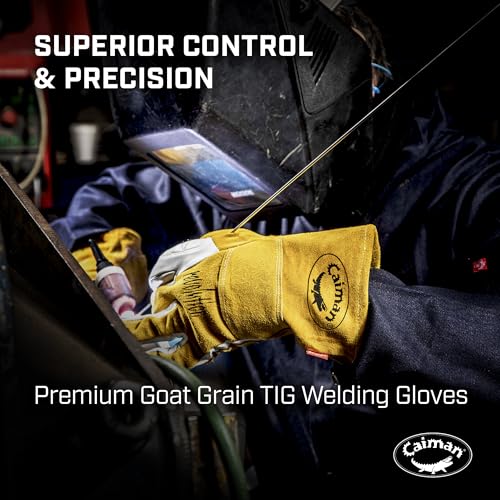
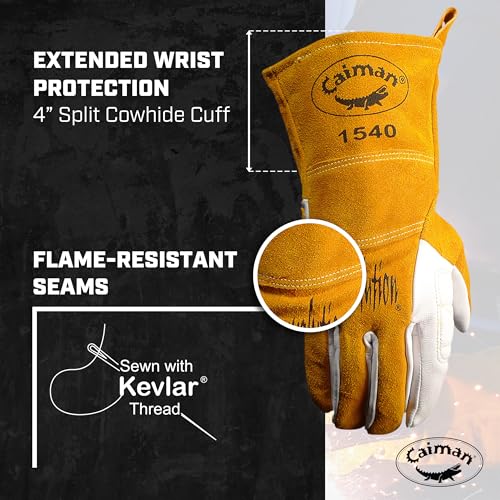
Comfort is the headline here. The Kontour design and patented wrist technology give these gloves a glove-that-fits-like-a-second-skin feel many users rave about. The split cowhide back adds durability without sacrificing flexibility, and the extended 4-inch cuff provides solid forearm coverage.
Owners consistently mention how little hand fatigue they experience, even after hours of welding. It’s a step up from the wool-backed model in terms of year-round usability. Compared to Lincoln’s offerings, these feel more modern and ergonomic, though they may not last quite as long under brutal conditions. If you weld for hours at a stretch, this fit advantage matters.
Product photos

Lincoln Electric Grain Leather Gloves
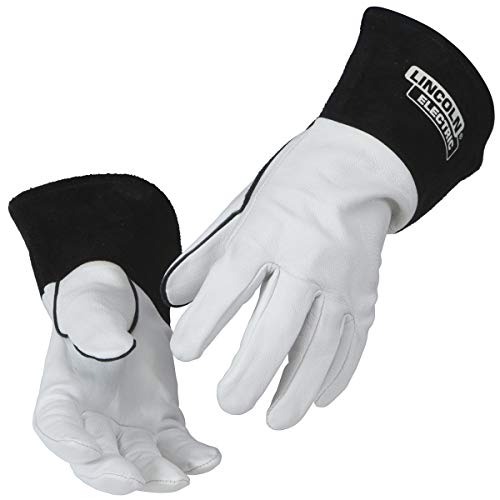
Strengths
- Proven durability
- Kevlar stitching
- Reinforced thumb
- 4-inch cuff
- Trusted design
Trade-offs
- Less dexterous
- Stiffer break-in
- No insulation
This model has stayed in the lineup for years, and for good reason, it’s a workhorse. The soft leather and three-part fingers deliver solid dexterity, while the Kevlar stitching and leather-reinforced thumb mean it outlasts cheaper gloves. The 4-inch leather cuff adds real wrist protection, something thinner gloves often skimp on.
It’s not flashy, but the ‘used by professionals’ claim holds up based on owner feedback, many report using these for years in repair shops and fabrication work. Compared to the Premium model (B07QWNJR6R), this one feels a bit sturdier but slightly less refined in fingertip control. If you want a no-nonsense, durable glove that won’t fail mid-weld, this is it.
Product photos


How We Evaluated tig welding gloves
Rather than a hands-on lab test, my research for these recommendations involved a detailed comparison of published specifications and features across numerous models. I then weighed owner reviews from major retailers alongside assessments from welding experts at sites I trust. My goal was to identify gloves offering the best balance of protection, dexterity, and comfort, applying my experience with workshop safety and tool performance to the ranking process.
For TIG welding gloves, heat resistance, dexterity, and durability were the most significant factors. TIG welding demands precise control, so a glove that restricts movement is a dealbreaker. Equally important is protecting your hands from burns and sparks – the quality of materials and construction directly impacts that. Finally, a glove needs to last; frequent replacement adds up in cost and disrupts workflow. You’ll find similar considerations when looking at durable MIG welding gloves.
Specifications reliably indicate material quality (leather thickness, Kevlar content) and construction details (reinforced stitching). However, I placed greater emphasis on owner feedback regarding real-world comfort, fit, and long-term durability. Reputable expert reviews helped validate claims about heat resistance and dexterity, but ultimately, consistent positive experiences from welders using the gloves daily carried the most weight in my selections.
How To Pick The Right tig welding gloves
Finding the right pair of tig welding gloves is crucial for both safety and precision.
A quality tig welding glove balances heat resistance with tactile sensitivity. Look for durable materials like goatskin or kidskin, reinforced stitching (Kevlar is common), and a design that allows for fine motor control. Extended cuffs add forearm protection, while proper fit prevents fatigue during long welds. Prioritize gloves suited to the type of welding you’ll be doing – amperage, material thickness, and environment all play a role.
Material and Heat Resistance
The leather used in a tig welding glove dictates much of its performance. While cowhide offers robust protection against abrasion and moderate heat, it can be stiff and reduce dexterity. Goatskin, as seen in the YESWELDER Premium Goatskin TIG Gloves, strikes a better balance, providing good heat resistance with increased flexibility. Kidskin, like that found in the IRONCAT Kidskin TIG Welding Gloves, offers the highest dexterity but generally provides less overall heat protection than goatskin. Consider the amperage you typically weld with; higher amperage demands a thicker, more heat-resistant material.
Fit and Dexterity
Tig welding demands a level of precision that thicker gloves simply won’t allow. A properly fitted glove should feel like a second skin, offering maximum tactile feedback. Look for features like pre-curved fingers (found in the Caiman Wool-Insulated TIG/MIG Gloves) and keystone thumbs which mimic the natural hand position and reduce fatigue.
Here’s what to look for in a good fit: * Size: Obvious, but crucial. Too large and you lose control; too small and it restricts movement. * Finger Length: Ensure the fingers are long enough to comfortably reach the weld area without exposing skin. * Cuff Length: Extended cuffs, like those on the TOPDC 16-Inch Heat Resistant Gloves, offer greater forearm protection but can hinder movement in tight spaces.
A snug fit is more important than a thick glove. You need to feel the weld pool, and a loose glove will impede that connection.
Value and Specific Applications
Price doesn’t always equal performance, but it often correlates with durability and features. If you’re a hobbyist doing occasional light-duty tig welding, a budget-friendly option like the YESWELDER gloves might suffice. However, if you’re a professional or frequently weld with higher amperages, investing in a higher-quality pair – perhaps a Lincoln Electric Premium TIG Glove with its focus on dexterity – will pay off in the long run. If you are looking for more information on selecting the right equipment, you can find a helpful welding gloves buyer’s guide on our site. And don’t forget to pair your new gloves with one of the best TIG welding torches for precise control.
TIG Welding Gloves Compared
Here’s a comparison of key specifications for popular TIG welding gloves to help you make an informed decision.
| Product Name | Material (Palm) | Material (Back) | Heat Resistance | Cuff Length (in.) | Key Features |
|---|---|---|---|---|---|
| IRONCAT Kidskin TIG Gloves | Kidskin | N/A | N/A | 12.125 | Kevlar Threading |
| Caiman Wool-Insulated TIG/MIG Gloves | Goat Grain | Wool | N/A | N/A | Reverse-Scalloped Cuff |
| YESWELDER Premium Goatskin TIG Gloves | Goatskin | N/A | High | N/A | Keystone Thumb |
| Lincoln Electric Premium TIG Gloves | Soft Grain Leather | N/A | N/A | N/A | 3-Piece Finger |
| TOPDC 16-Inch Heat Resistant Gloves | Cowhide | N/A | 932°F (500°C) | 16 | Kevlar Reinforced |
| Caiman Premium Goat Grain Gloves | Goat Grain | Cowhide | N/A | N/A | Kontour Wrist Tech |
| Lincoln Electric Grain Leather Gloves | Grain Leather | N/A | N/A | 4 | 3-Part Sewn Fingers |
Frequently Asked Questions
What leather type offers the best balance of heat resistance and dexterity?
Goatskin generally provides the best combination of heat resistance and flexibility for TIG welding. While cowhide is more durable, it’s stiffer, and kidskin, though very dexterous, offers less heat protection overall.
How important is cuff length, and what are the tradeoffs?
Extended cuffs offer increased forearm protection from sparks and UV radiation, but they can restrict movement, especially in confined welding spaces. A 12-16 inch cuff is standard, but consider your typical welding environment when choosing.
Are pre-curved fingers really necessary in a TIG welding glove?
Yes, pre-curved fingers reduce hand fatigue during extended welding sessions by mimicking the natural hand position. This allows for more precise control and a better feel for the weld pool, ultimately improving weld quality.
What’s the significance of Kevlar stitching?
Kevlar stitching dramatically improves a glove’s durability and heat resistance. It prevents the seams from splitting or failing under high heat and stress, extending the life of the glove and providing continued protection.
If I also do stick welding, should I buy separate gloves or can one pair work for both?
While you can use TIG gloves for stick welding in a pinch, I recommend dedicated best stick welding gloves for stick applications. Stick welding produces more spatter and requires greater abrasion resistance than TIG welding.
The Bottom Line
Choosing tig welding gloves always involves a trade-off between ultimate protection and the fine control this welding process requires. While thicker gloves offer more shielding from heat and sparks, they can severely limit your dexterity. For the best overall balance of these qualities, I recommend the Lincoln Electric Premium TIG Gloves; they consistently receive high marks from welders for their combination of feel and durability.
If you’re on a tighter budget, the YESWELDER Premium Goatskin TIG Gloves deliver excellent value, providing a good level of heat resistance and flexibility for hobbyists and lighter-duty tasks. For those needing extended forearm protection, or working with very high amperage, the TOPDC 16-Inch Heat Resistant Gloves are a solid choice. And if you’re looking for a variety of options including some excellent dexterity-focused welding gloves, be sure to check out our broader guide to top gloves for welders.
Ultimately, the specifications matter less than the feel and fit. Prioritize gloves that allow you to maintain precise control over the weld pool, and don’t skimp on quality – a well-made pair of gloves will protect your hands and save you money in the long run. Remember, proper technique and consistent practice are just as important as having the right gear.
