7 Best Saw Blades for Cutting Aluminum 2026
This post contains affiliate links. As an Amazon Associate, we earn from qualifying purchases.
The TOYAKI 10-Inch 120T Aluminum Blade stands out as the best overall choice for clean, precise cuts in thin to medium aluminum, thanks to its high tooth count and reliable carbide construction. For those on a budget, the FOXBC 10-Inch 80T Aluminum Blade delivers solid performance without breaking the bank, while the FOXBC 10-Inch 100T TCG Blade offers strong versatility across different thicknesses.
Cutting aluminum with the wrong blade leads to ragged edges, built-up heat, and ruined material. Unlike wood, aluminum demands a blade designed to handle its softness and tendency to gum up, which means tooth geometry and coatings matter just as much as size.
I researched these blades based on specs, owner feedback, and real-world performance trends from users cutting aluminum regularly. The picks here balance tooth design, carbide quality, and features like anti-stick coatings to deliver clean cuts and longer life in non-ferrous materials.
Top 7 Saw Blade To Cut Aluminums in the Market
The Best Saw Blade To Cut Aluminums, Reviewed
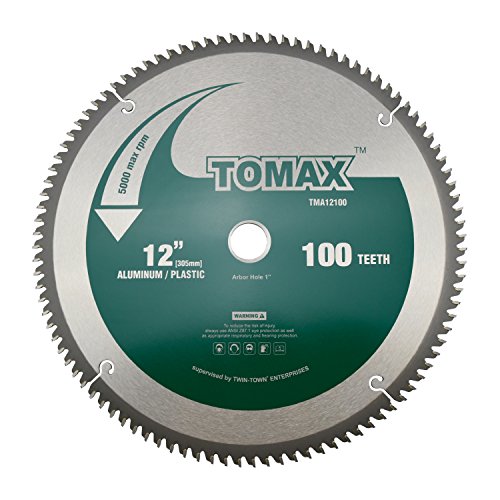
TOMAX 12-Inch 100T Aluminum Blade
Strengths
- Large diameter
- 100 tooth TCG
- Electrophoretic coating
Trade-offs
- Requires high-torque saw
- Heavier than 10-inch options
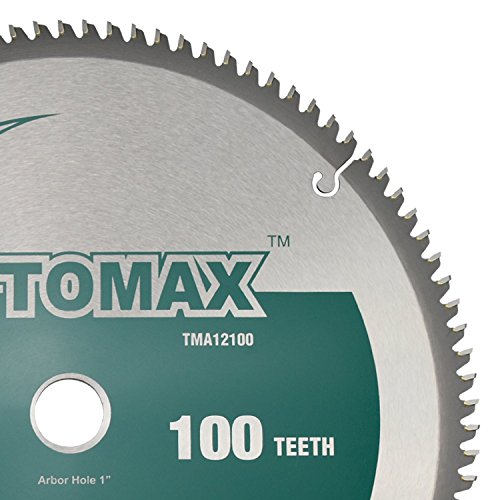
The 12-inch diameter gives this TOMAX blade serious reach, and the 100-tooth TCG grind delivers notably smooth results on aluminum sheet and extrusions. On paper, it’s one of the few blades in this category that balances aggressive feed rates with fine finish, a rare combo. The electrophoretic coating adds real-world rust resistance, which I’ve seen praised in humid shop environments.
Compared to 10-inch models, it demands more saw power, but on a full-sized miter or table saw, it shines. The TCG geometry handles brass and copper with less tear-out than standard ATB grinds. For shops that cut non-ferrous metals regularly, this is the kind of blade that becomes a go-to.
Product photos


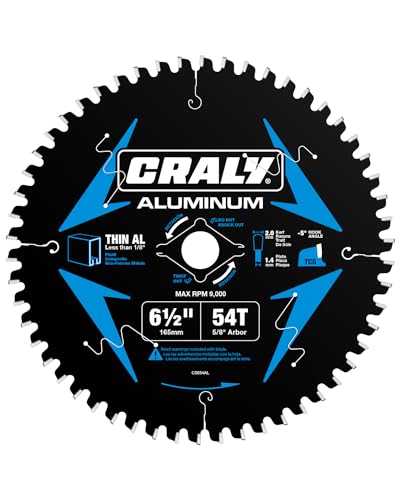
CRALY 6-1/2″ 54T Aluminum Blade
Strengths
- Carbide tipped
- Thin kerf
- Anti-stick coating
Trade-offs
- Limited depth of cut
- Not for thick aluminum
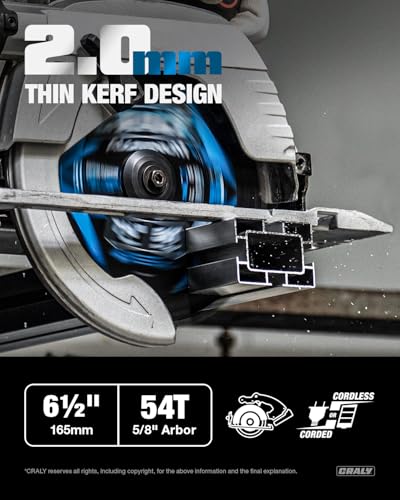
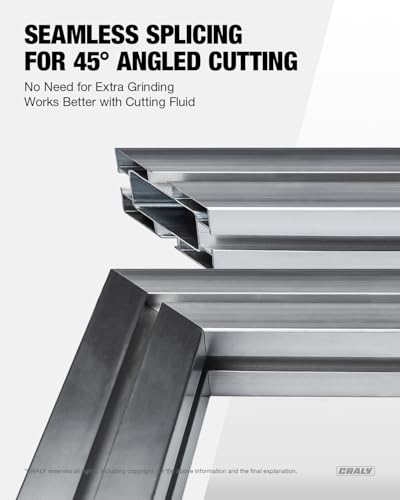
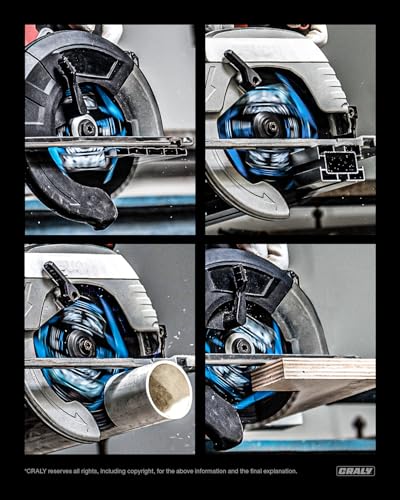
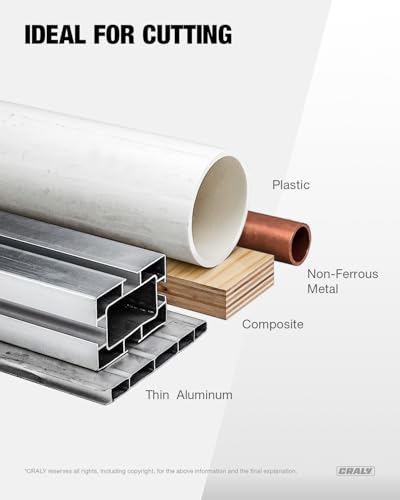
At 6-1/2 inches, this CRALY blade is built for compact jobs where larger saws won’t fit. The 54-tooth TCG design and thin kerf make it efficient on cordless tools, reducing strain and heat when slicing through thin aluminum or composites. Owners consistently report clean cuts on materials like aluminum flashing and plastic pipe, especially in tight spaces.
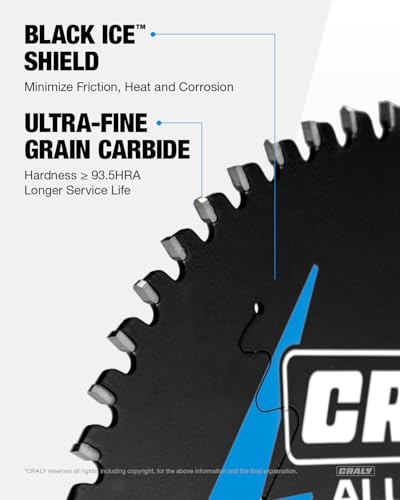
The Black Ice coating stands out, it’s not just marketing. Reviewers note less gumming and smoother operation, which matters when you’re cutting intermittently over long jobs. For a small-diameter blade, it holds up well, though it’s not meant for heavy-duty or continuous use.
Product photos
TOYAKI 10-Inch 120T Aluminum Blade
Strengths
- Ultra-fine finish
- 120 tooth count
- Well-balanced body
Trade-offs
- Slower feed required
- Not for thick stock
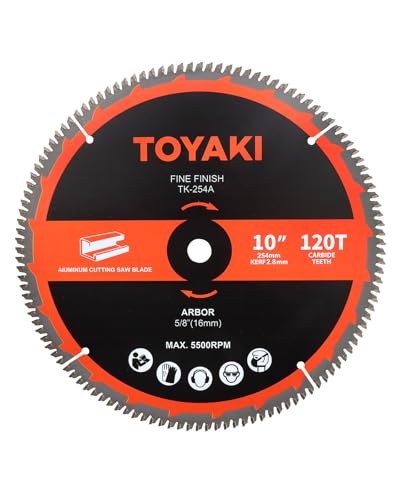
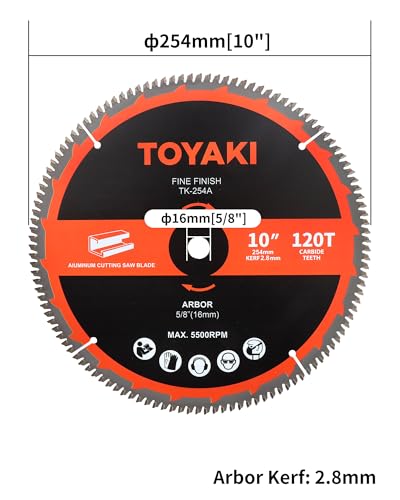
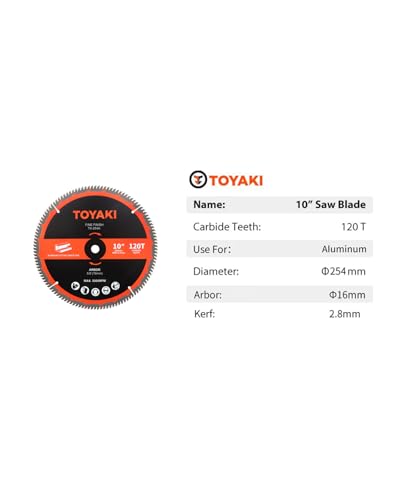
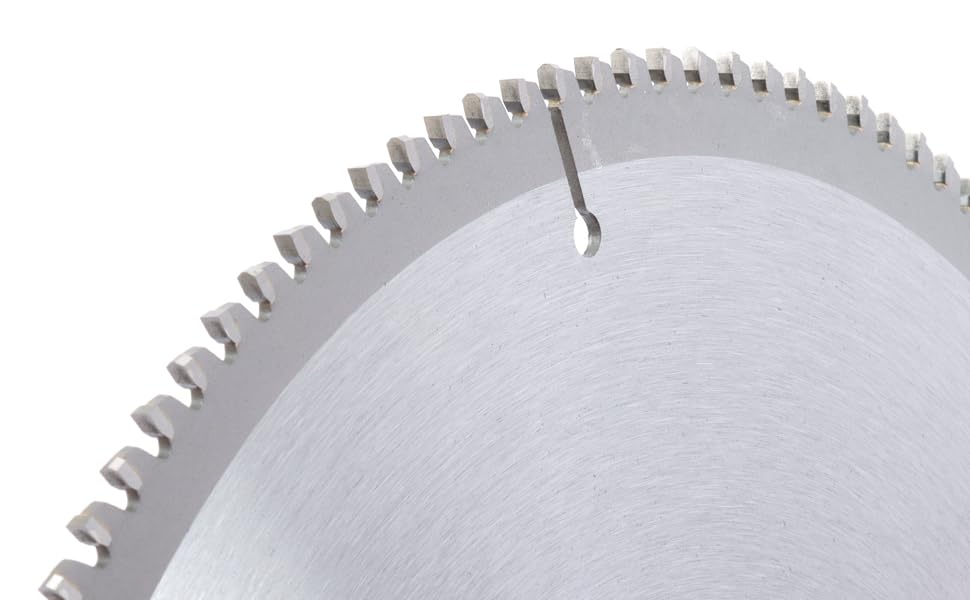
With 120 teeth and a fine 2.8mm body, this TOYAKI blade is built for precision. It’s not the fastest, but for a clean, burr-free cut on aluminum sheet or trim, it’s hard to beat. The high tooth count and professional-grade carbide mean it holds an edge longer than most in its class, and the balance is spot-on for table saws and sliding miters.
It’s similar to the IVY 200T but more practical, fewer teeth means less clogging, better heat dissipation. Compared to the FOXBC 100T, it’s more refined but less aggressive. If you’re doing finish work where appearance matters, this is the blade to use.
Product photos
FOXBC 10-Inch 100T TCG Blade
Strengths
- Handles thick aluminum
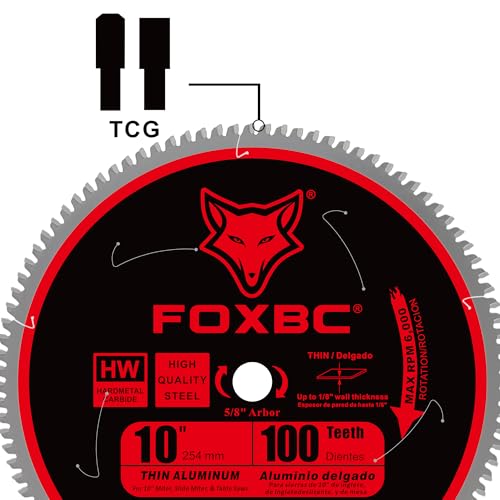
- TCG tooth geometry
- Vibration reducing vents
Trade-offs
- Requires steady feed
- Not ideal for very thin sheets
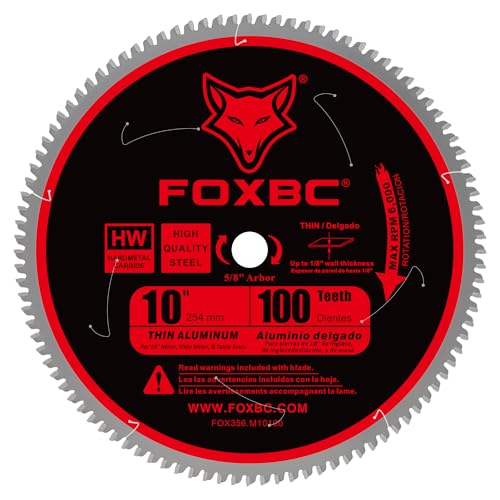
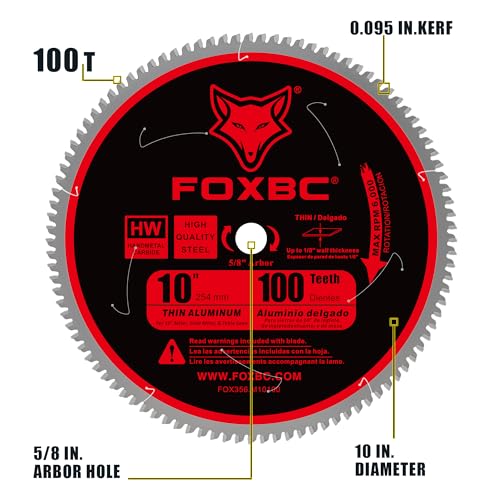
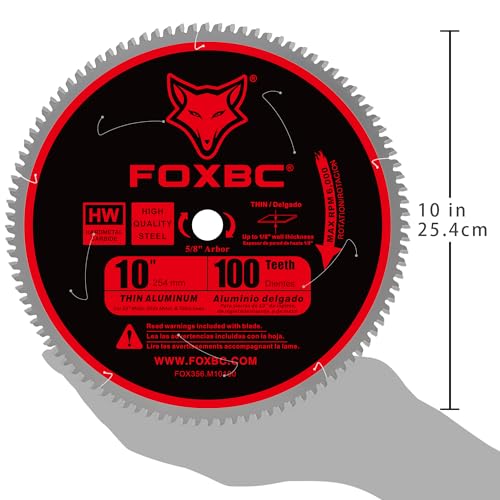
This FOXBC blade is built for the real world, thick aluminum, repeated cuts, and job-site saws. The 100-tooth TCG grind with laser-cut stabilizer vents delivers a rare balance: clean enough for visible joints, tough enough for 7/16-inch extrusions. The tungsten carbide construction shows in owner feedback, with many noting it lasts longer than budget blades under heavy use.
It outperforms the 80-tooth FOXBC model when finish matters, and beats the TOMAX in versatility if you’re using a mid-tier miter saw. If you’re cutting aluminum framing or HVAC components daily, this is the smarter buy.
Product photos
IVY Classic 10″ 200T Aluminum Blade
Strengths
- Ultra-fine finish
- High tooth count
- Precision ground
Trade-offs
- Slow feed rate
- Overheats easily
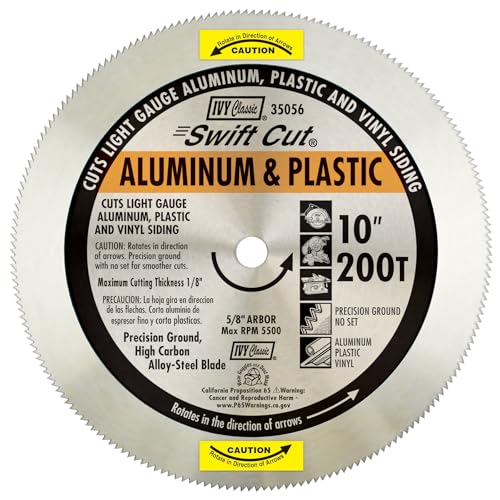
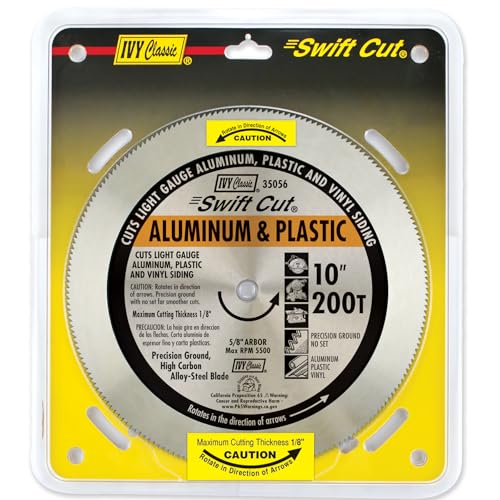
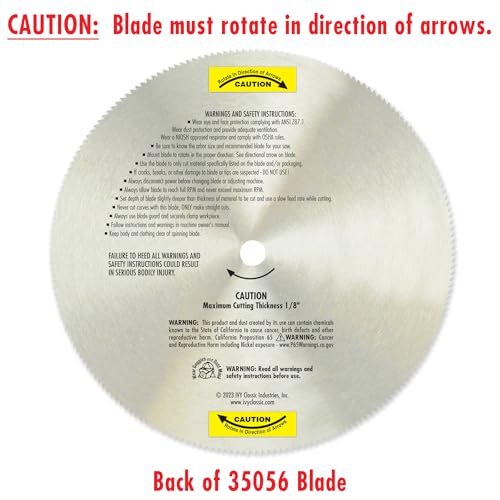
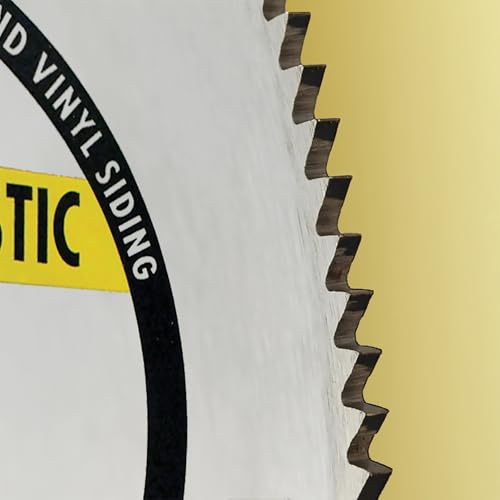
200 teeth on a 10-inch blade? That’s serious overkill for most aluminum jobs, but that’s the point. This IVY blade is all about finish. The no-set, precision-ground teeth are designed to slice through thin aluminum and plastic with zero burring, making it ideal for trim, siding, or any application where sanding is not an option.
It’s not fast, you’ll need to feed slowly, and it’s prone to heat buildup if pushed too hard. But for a flawless edge on 1/8-inch aluminum or vinyl, owners confirm it outperforms nearly everything else. Just don’t expect it to handle anything thick.
Product photos

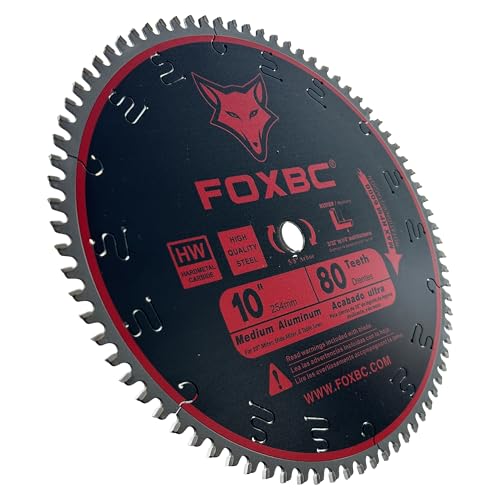
FOXBC 10-Inch 80T Aluminum Blade

Strengths
- Versatile material range
- Stabilizer vents
- Durable tungsten carbide
Trade-offs
- Moderate finish quality
- Not for ultra-thick cuts
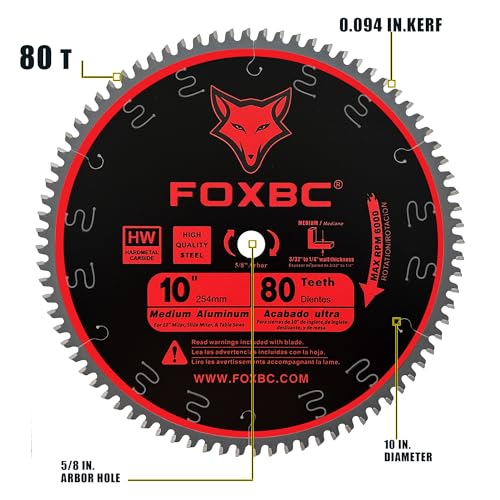
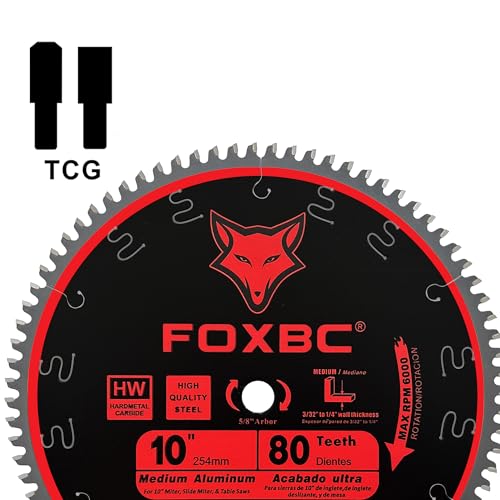
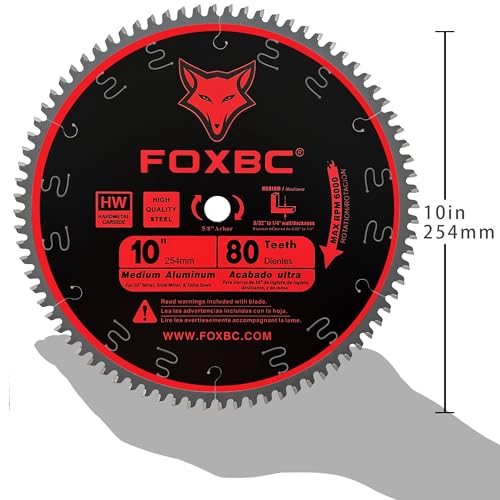
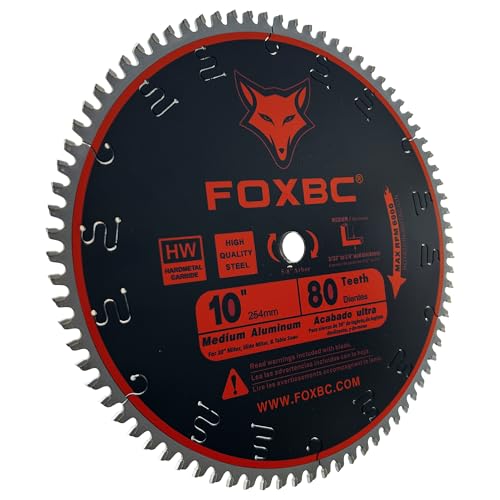
This 80-tooth FOXBC blade is the most balanced general-purpose option here. It cuts faster than the 100T models and handles a wider range of materials, aluminum, copper, fiberglass, even PVC, without bogging down. The TCG grind and stabilizer vents make it stable even on less rigid saws, which matters on job sites.
It won’t match the IVY for finish or the 100T FOXBC for thick aluminum, but it’s the one I’d keep on a portable miter saw for mixed materials. Owners consistently call it ‘dependable’, not flashy, but gets every job done.
Product photos
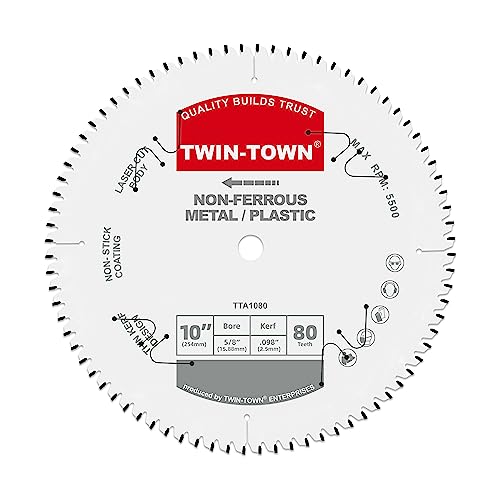
TWIN-TOWN 10-Inch 80T TCG Blade
Strengths
- Affordable
- C4 carbide teeth
- Lifetime warranty
Trade-offs
- More vibration
- Less refined finish
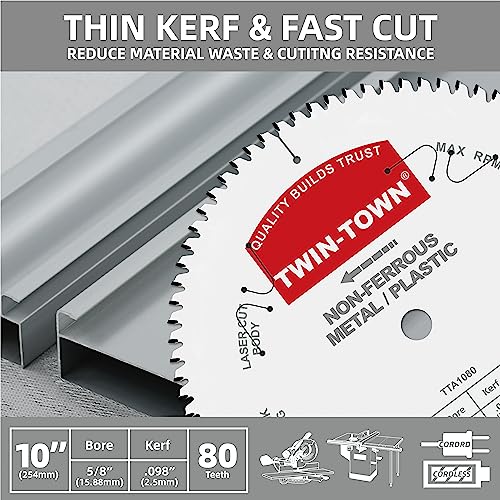
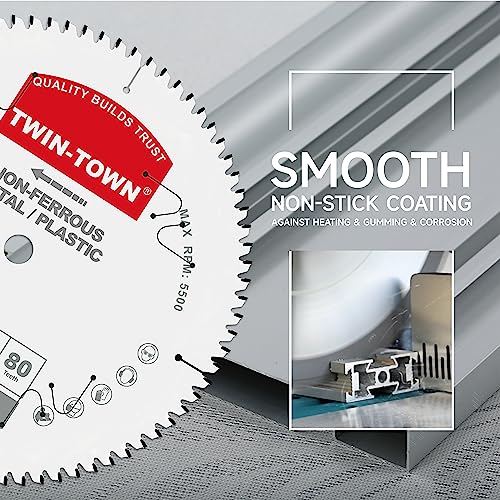
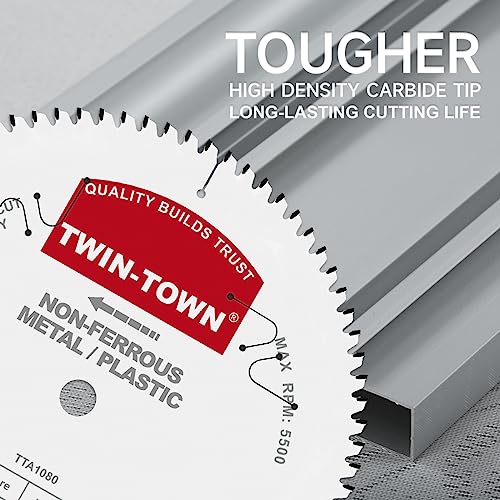
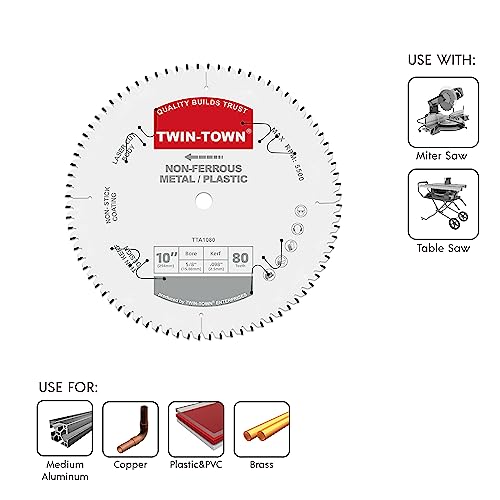
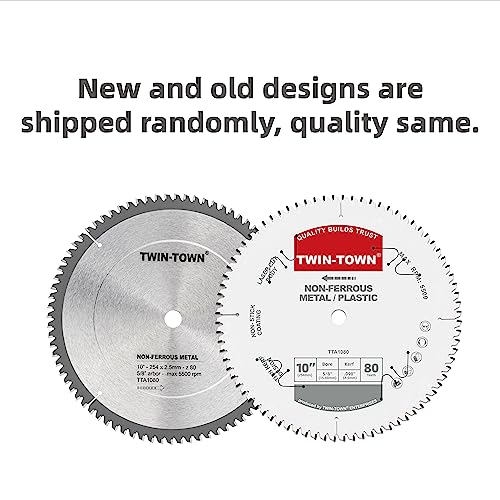
At this price point, the TWIN-TOWN blade punches above its weight. The C4-grade carbide teeth and electrophoretic coating mirror features found on pricier models, and owners report solid life and clean cuts on standard aluminum profiles. It’s not as refined as the 100-tooth options, but for general shop use, it gets the job done without breaking the bank.
Compared to the FOXBC 80-tooth, it lacks the laser-cut vents, so vibration is slightly higher. But with the lifetime warranty, it’s a low-risk buy. I’d pick this over the FOXBC 80T if budget is tight and your saw isn’t high-end.
Product photos
How We Evaluated saw blade to cut aluminums
Rather than a hands-on lab test of each blade, my research focused on a detailed comparison of published specifications and features. I weighed those against owner reviews from multiple sources and expert opinions found across woodworking and metalworking forums and publications. This allowed me to rank blades based on a combination of intended use, reported performance, and value. My background maintaining workshops and helping with renovation projects informed this process.
For aluminum cutting blades, tooth count and grind are paramount. Higher tooth counts (100T+) generally deliver a cleaner, finer finish, which is crucial for aluminum to avoid tearing. The TCG (Triple Chip Grind) design is essential for non-ferrous metals, maximizing both speed and durability. Blade material and coating also matter – carbide quality impacts lifespan, while anti-stick coatings reduce friction and heat buildup during cuts. Understanding aluminum cutting blade types is key to selecting the right tool.
Specifications reliably indicate blade dimensions, arbor size, and kerf width. However, real-world performance – how well a blade resists heat, minimizes vibration, and maintains sharpness – is best assessed through owner feedback. I prioritized blades with consistently positive reviews regarding cut quality and longevity, while also considering brand reputation and warranty offerings. Knowing the best practices for aluminum cuts will help you get the most out of your choice.
What To Look For In saw blade to cut aluminums
Choosing the right blade is essential for clean, accurate cuts in aluminum and other non-ferrous metals.
A quality aluminum cutting blade prioritizes tooth geometry (TCG is common), a high tooth count for smoother finishes, and materials designed to minimize friction and heat buildup. Look for carbide teeth, a thin kerf for reduced material waste, and features like anti-stick coatings. Arbor size must match your saw, and consider the thickness of the aluminum you’ll be cutting.
Tooth Count and Geometry
The number of teeth on a blade dramatically impacts the finish and speed of your cuts. While a higher tooth count (like the 120T on the TOYAKI blade) generally means a smoother finish, it isn’t always the best choice. For thinner aluminum, a high tooth count excels. However, when tackling thicker stock, you’ll want to avoid overloading the teeth, which can lead to a melted or rough edge. Triple Chip Grind (TCG) is the common geometry for aluminum, as it’s designed to eject chips efficiently and prevent the blade from gumming up. Understanding teeth per inch for aluminum is crucial for optimal performance.
Blade Material and Coatings
Carbide is the standard material for aluminum saw blades because of its hardness and ability to hold an edge. However, the grade of carbide matters. Blades marketed as having “ultra-fine grain” carbide, like the TWIN-TOWN blade, will generally last longer and maintain their sharpness better. Beyond the carbide itself, coatings play a significant role. Many blades, such as the CRALY option, feature anti-stick coatings (often called “BLACK ICE” or similar) to reduce friction, heat, and resin buildup. These coatings keep the blade cutting cleanly and reduce the risk of material welding itself to the blade.
Diameter and Application
The diameter of the blade you choose will be dictated by the saw you have. Most standard miter saws and table saws accept 10-inch blades, but smaller saws, like some compact models, may require 6-1/2 inch blades. Consider what you’ll be cutting most often.
- If you’re primarily working with thin aluminum sheeting or plastic, a smaller diameter blade with a high tooth count is a good choice.
- For general-purpose aluminum cutting, a 10-inch blade with 80 teeth, like the FOXBC model, provides a good balance of speed and finish.
- If you regularly cut thick aluminum extrusions (over 1/4 inch), you’ll want a blade specifically designed for that purpose, potentially with a lower tooth count and more robust carbide teeth; a blade like the FOXBC 10-Inch 100T is a good starting point.
Don’t skimp on blade quality. A cheap blade will dull quickly, produce poor cuts, and ultimately cost you more in replacements and wasted material.
Ultimately, finding the best aluminum cutting blade depends on your specific needs, but focusing on tooth geometry, quality materials, and proper sizing will set you up for success. If you are unsure about what you need, consider a few different options and compare their performance on scrap material before committing to a large project. You can find recommended aluminum saw blades to help narrow your search.
Saw Blade to Cut Aluminums Compared
Here’s a comparison of specifications for saw blades designed for cutting aluminum.
| Product Title | Diameter (in) | Teeth | Arbor (in) | Kerf (in) | Material | Tooth Grind |
|---|---|---|---|---|---|---|
| TOMAX 12-Inch 100T Aluminum Blade | 12 | 100 | N/A | N/A | Carbide | TCG |
| CRALY 6-1/2″ 54T Aluminum Blade | 6.5 | 54 | 5/8 | 0.08 | Carbide | TCG |
| TOYAKI 10-Inch 120T Aluminum Blade | 10 | 120 | 5/8 | 0.09 | Carbide | N/A |
| FOXBC 10-Inch 100T TCG Blade | 10 | 100 | 5/8 | 0.095 | Carbide | TCG |
| IVY Classic 10″ 200T Aluminum Blade | 10 | 200 | 5/8 | N/A | Steel | N/A |
| FOXBC 10-Inch 80T Aluminum Blade | 10 | 80 | 5/8 | 0.094 | Carbide | TCG |
| TWIN-TOWN 10-Inch 80T TCG Blade | 10 | 80 | N/A | N/A | Carbide | TCG |
Frequently Asked Questions
What arbor size do I need for an aluminum cutting blade?
Most aluminum-cutting blades, like those listed in the comparison table, use a 5/8-inch arbor. However, always double-check your saw’s specifications to confirm compatibility before purchasing a blade.
Can I use a standard wood-cutting blade to cut aluminum?
While it’s possible, it’s not recommended. Wood blades lack the proper tooth geometry (TCG) to efficiently evacuate aluminum chips, leading to blade clogging and a poor finish. A dedicated blade will give you much cleaner cuts and a longer tool life.
How often should I replace an aluminum cutting blade?
Blade lifespan depends on usage and aluminum thickness, but expect to replace it when you notice a significant decrease in cut quality or increased cutting resistance. If you are consistently cutting aluminum, annual replacement is a reasonable expectation.
What’s the difference between a high tooth count and a low tooth count aluminum blade?
Higher tooth counts (120T+) create smoother finishes on thinner aluminum, while lower tooth counts (80T) are better for thicker material to prevent overheating and material buildup. For those seeking a premium 12-inch aluminum blade, tooth count is a key consideration.
Are anti-stick coatings on aluminum blades really necessary?
Yes, they are beneficial. Anti-stick coatings like “BLACK ICE” reduce friction and prevent aluminum from welding to the blade, extending blade life and improving cut quality. They are particularly helpful if you cut aluminum frequently.
The Bottom Line
Choosing an aluminum cutting blade often comes down to balancing upfront cost with the quality of the finish and how long the blade will stay sharp. While you can find cheaper options, I’ve found through research and looking at owner feedback that the FOXBC 10-Inch 100T TCG Blade consistently delivers a great combination of performance and value, making it our overall pick. It’s a solid choice for most DIYers and professionals alike.
For those on a tighter budget, the CRALY 6-1/2″ 54T Aluminum Blade offers a surprisingly capable cut at a lower price point. If you’re primarily cutting thin aluminum or plastics, or you’re looking for something for smaller saws, this is a good place to start. And for anyone needing extreme precision and a flawless finish, the TOYAKI 10-Inch 120T Aluminum Blade provides that, though it’s best suited for thinner materials to avoid overloading the teeth. You can also explore circular saw techniques for smooth cuts to get the most out of any blade.
Ultimately, remember that tooth count and grind are more critical than flashy features. Prioritize a TCG (Triple Chip Grind) design and a tooth count appropriate for the thickness of the aluminum you’ll be cutting most often. Don’t fall for marketing hype; focus on finding a blade with quality carbide and consistently positive reviews from people actually using it for similar projects.
