7 Best Pruning Tools of 2026
This post contains affiliate links. As an Amazon Associate, we earn from qualifying purchases.
The Upgraded Electric Pruning Shears stand out as the best overall choice for their power, precision, and smart features, while the Fiskars Bypass Pruning Shears are a solid budget-friendly pick that delivers reliable performance season after season. For those needing extra use on thicker branches, the Fiskars 28-Inch Power-Lever Lopper offers excellent reach and cutting strength.
If you’re like me, you’ve probably wasted time and energy struggling with dull, awkward pruning tools that make a simple garden chore feel like a chore on your hands and back. Bad shears crush stems, bind up, or wear you out fast, especially when you’re tackling a full day of trimming.
As someone who’s spent years evaluating tools for real-world use, I focused on what actually matters: blade quality, cutting capacity, and comfort over time. These picks are based on specs, owner feedback, and design traits that signal long-term reliability, not just flashy features or brand hype.
Top 7 Pruning Tools in the Market
The Best Pruning Tools, Reviewed
Upgraded Electric Pruning Shears

Strengths
- Brushless motor power
- Dual batteries included
- Real-time LCD display
Trade-offs
- Heavier than manual shears
- Less precision on small cuts
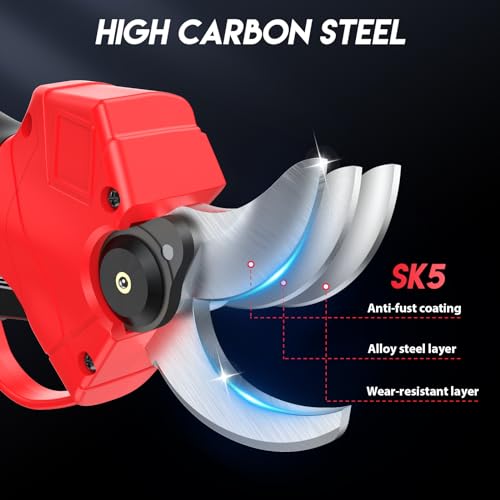
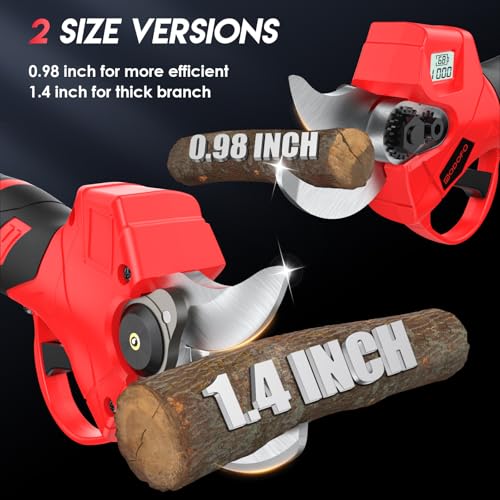
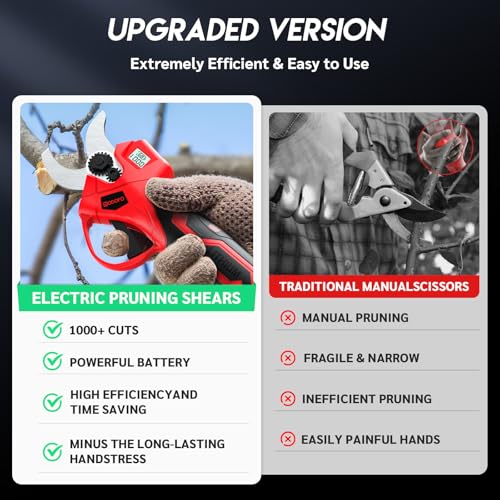
This electric model brings serious convenience to repetitive pruning, especially if you’re working on a large property or managing fruit trees. The brushless motor handles up to 1.4-inch branches with ease, and the dual batteries mean you can swap and keep going, a major plus over single-battery competitors. The LCD display showing battery life and cut count is actually useful, not just a gimmick.
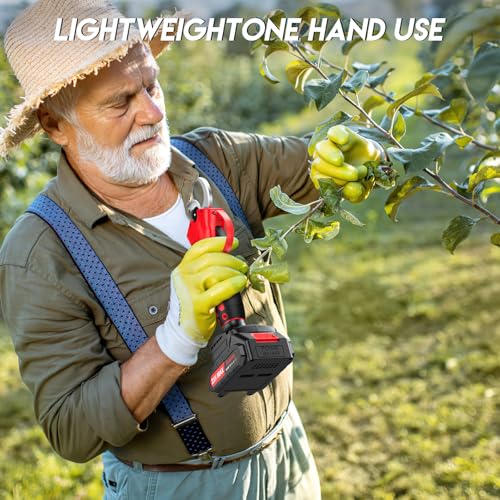
Owners praise how fast it gets through thick stems without hand strain, which makes it a standout for users with arthritis or fatigue issues. But it’s bulkier than manual shears, and the weight becomes noticeable after long sessions. Compared to the Fiskars bypass models, it’s not as precise for fine work. But for overall efficiency, it earns the ‘Best Overall’ label.
Product photos

Fiskars Bypass Pruning Shears
Strengths
- Affordable price
- Sap groove design
- Lifetime warranty
Trade-offs
- Smaller cut capacity
- No replaceable blade
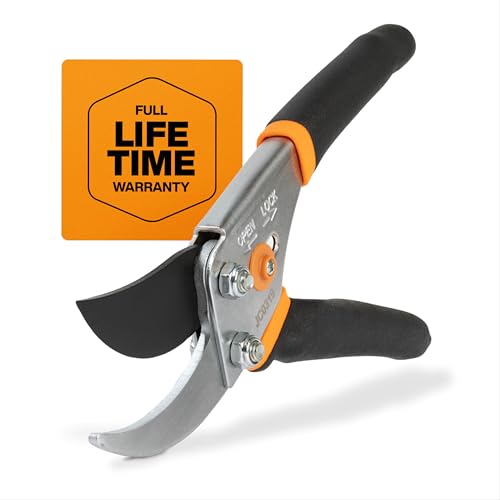
This is the bare-bones workhorse of the Fiskars lineup, and that’s why it’s the best budget pick. It handles up to 5/8-inch stems cleanly, thanks to the bypass blade and low-friction coating. The all-steel construction feels solid, and the sap groove prevents sticking, a small but meaningful detail that keeps it working smoothly during long sessions.
It lacks the replaceable blade or forged build of the more expensive Fiskars model, but for basic garden maintenance, it’s more than capable. Owners report it lasts for years with simple care, wipe it down, oil the blade occasionally. Compared to the VOTREK or electric models, it’s less specialized, but it’s also much more affordable. For beginners or occasional users, this is the smart entry point.
Product photos


Fiskars 28-Inch Power-Lever Lopper
Strengths
- High use design
- Sharp precision blade
- SoftGrip comfort handles
Trade-offs
- Heavier than standard loppers
- Bulkier for small jobs
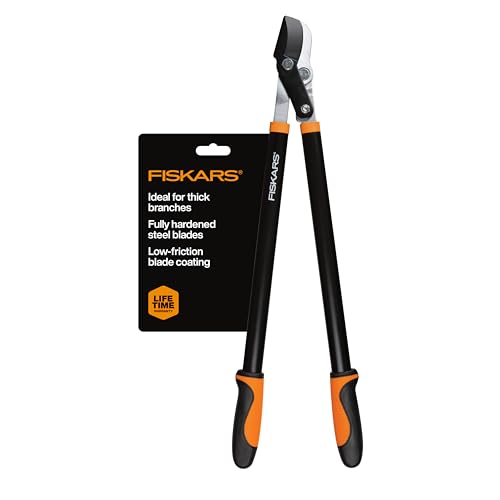
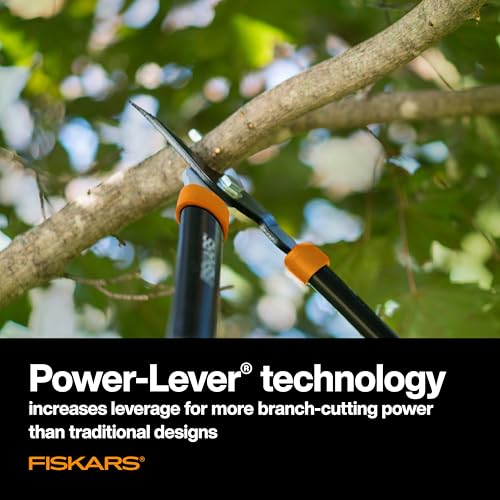
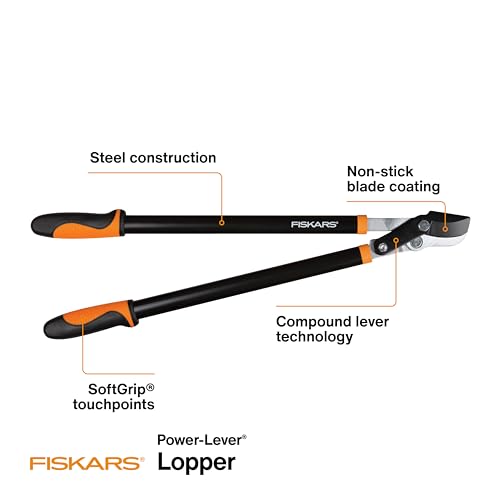
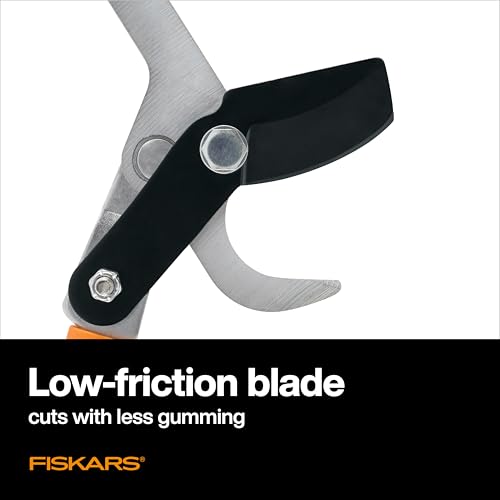
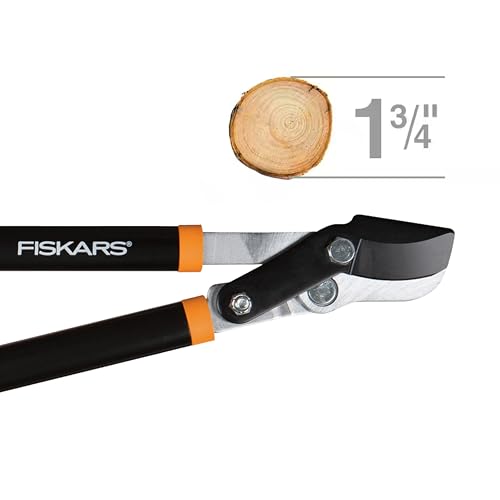
When you’re dealing with branches up to 1.75 inches, use is everything, and this lopper delivers. The Power-Lever compound action multiplies your force significantly, making it easier to cut through thick, stubborn limbs without straining your hands. Reviewers note it outperforms standard bypass loppers, especially for older gardeners or those with limited hand strength.
The low-friction coating helps reduce sap buildup and rust, which matters when you’re working on resinous evergreens or pruning in humid conditions. At 28 inches, it’s long enough for good reach but still manageable in tight spaces. Compared to cheaper loppers, this one holds its edge longer and feels more durable. It’s heavier than some, but that’s the trade-off for the power boost.
Product photos

YRTSH 3-Piece Pruning Combo Set

Strengths
- Complete 3-piece set
- Compound use lopper
- Ergonomic soft-grip handles
Trade-offs
- Not premium-grade build
- Blades may dull faster
For someone setting up a toolkit from scratch, this 3-piece set offers exceptional value. You get a 26-inch compound-action lopper, 23-inch hedge shears, and 8-inch pruning shears, all with coated alloy steel blades that stay sharp longer than budget-grade tools. The compound lopper delivers up to 4x use, which makes thick branch cutting far less tiring.
Reviewers note the grips are comfortable and the tools feel balanced for the price. They’re not as refined as standalone premium models, but for the cost, the performance is solid. Compared to buying each piece separately, this set saves money and covers most common pruning needs. If you’re maintaining a full yard, this is the most practical starting point.
Product photos


VOTREK Pruning Shears
Strengths
- Arthritis-friendly design
- Sealed jam-proof spring
- Non-stick blade coating
Trade-offs
- Lower cut capacity
- Not for thick branches
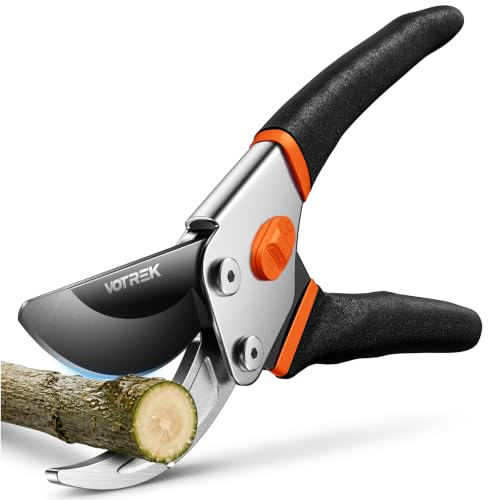
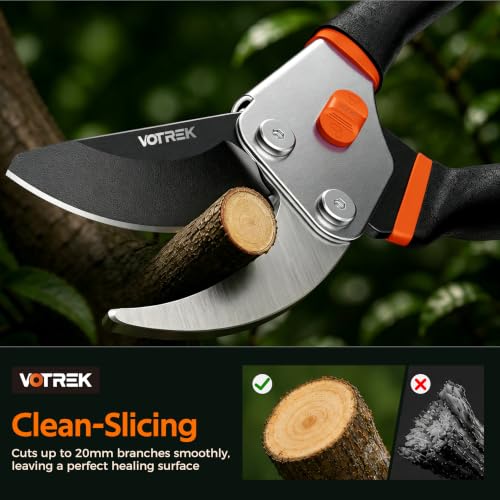
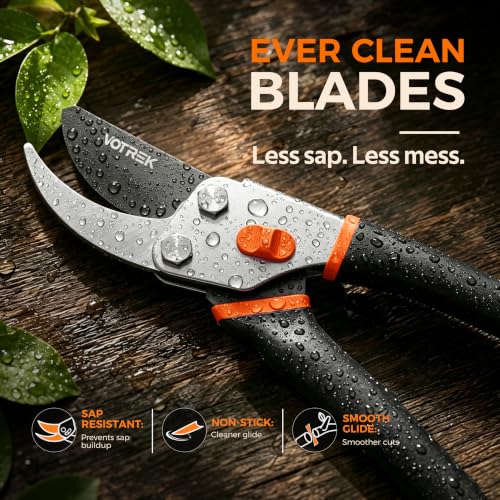
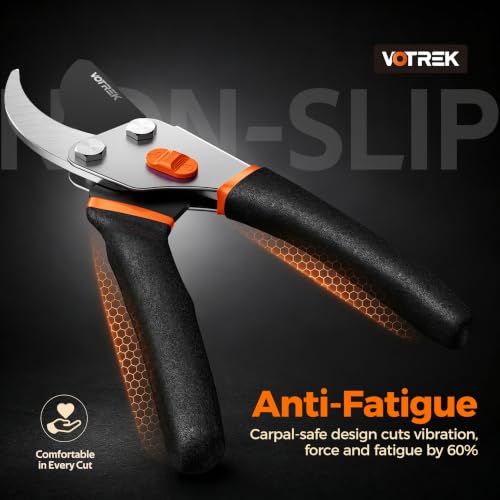
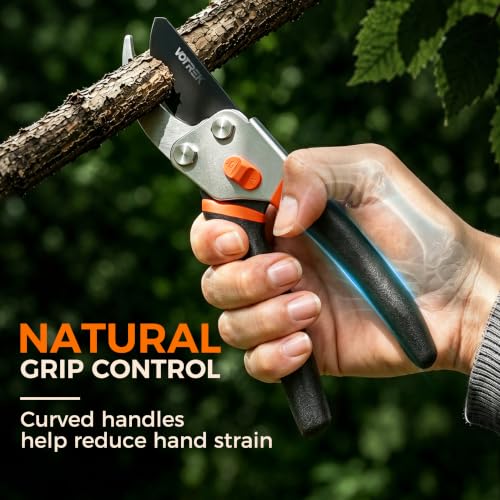
If hand fatigue or arthritis is a concern, this model deserves serious attention. The sealed, jam-proof spring and ergonomic grip are designed specifically to reduce resistance and strain, and owners with weak grip strength consistently say it makes a difference. The SK5 steel blade stays sharp and resists sap buildup thanks to the non-stick coating, which means less cleaning and better performance on sticky plants like roses.
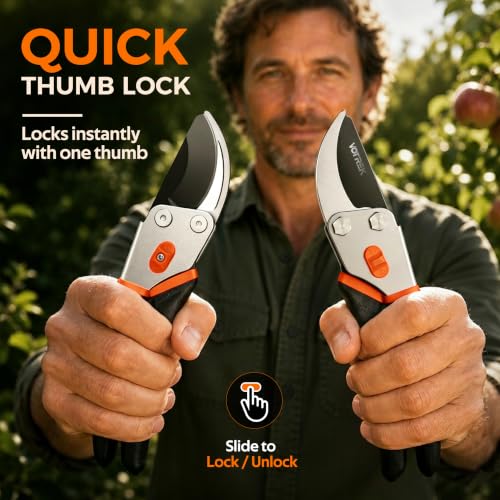
It’s not the strongest in the group, rated for up to 0.8 inches, but it excels in comfort and reliability. The thumb lock is easy to use, even with gloves, and the compact size fits smaller hands well. Compared to the basic Fiskars budget model, this one feels more refined and user-focused. For accessibility, it’s hard to beat.
Product photos
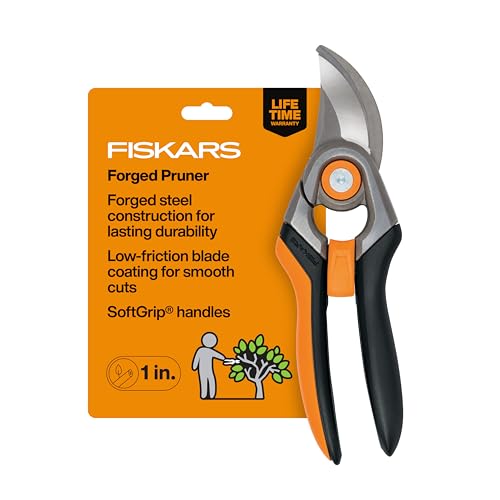
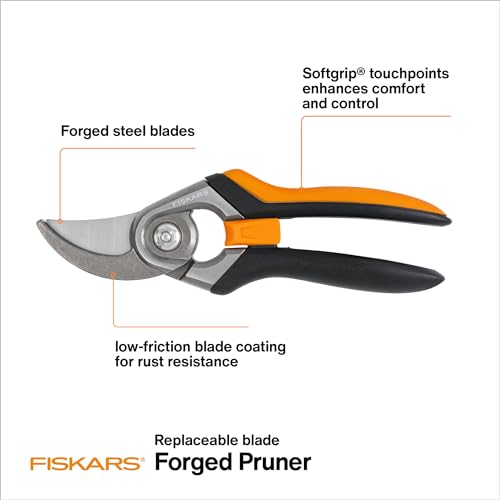
Fiskars Forged Steel Pruning Shears
Strengths
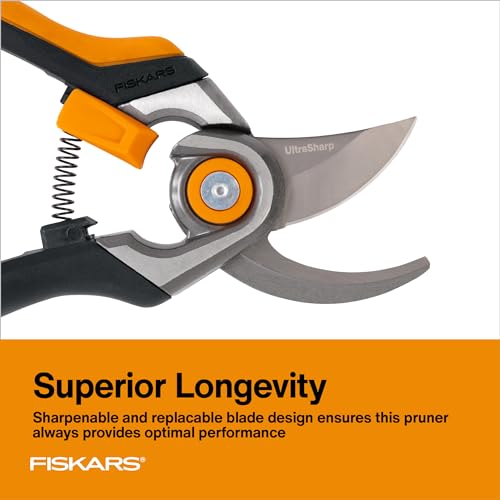
- Replaceable steel blade
- Forged steel build
- Rust-resistant coating
Trade-offs
- Heavier than basic models
- Pricier than entry-level
This is the Fiskars model I’d pick if I wanted one pair of shears to last for years. The forged steel construction gives it serious durability, and the replaceable blade is a standout, when it eventually dulls, you don’t toss the whole tool. That’s rare at this price tier and a big reason why owners rate it so highly for long-term use.
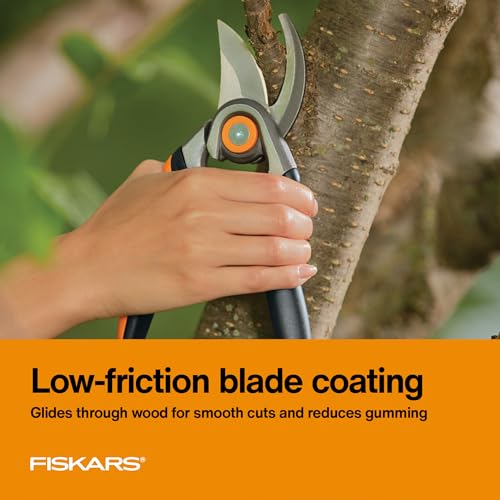
It handles up to 1-inch branches with confidence, and the low-friction coating keeps sap from gumming up the works. The SoftGrip handle reduces fatigue, though it’s not quite as refined as some premium ergonomic designs. Compared to their smaller 5/8-inch model, this one is noticeably more capable for serious gardeners. If you prune frequently, this is the smarter buy.
Product photos
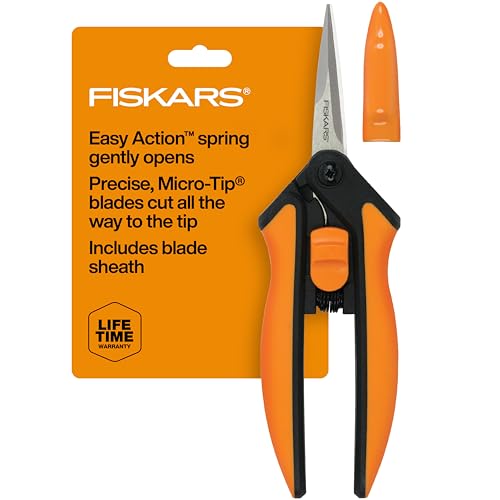
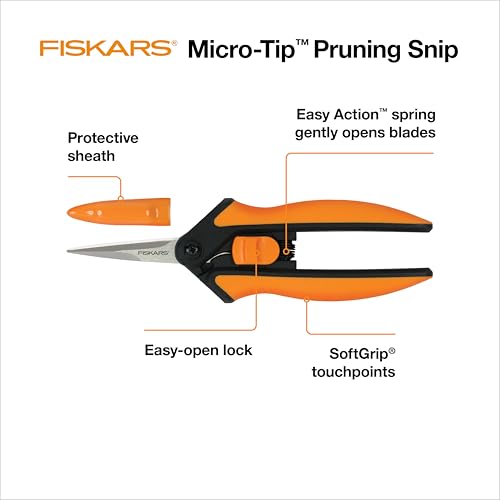
Fiskars 6″ Micro-Tip Pruning Scissors
Strengths
- Sharp micro-tip blades
- Clean cut performance
- Lifetime warranty
Trade-offs
- Not for thick stems
- Limited use
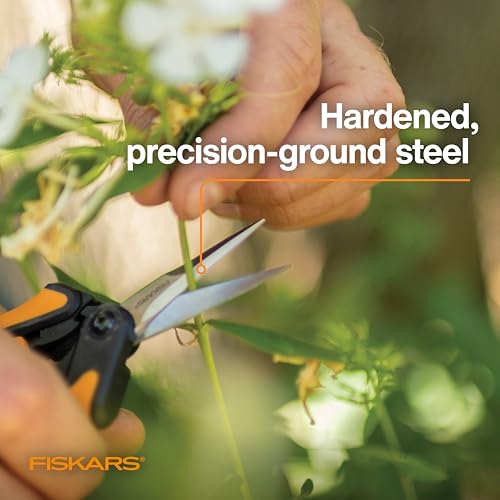
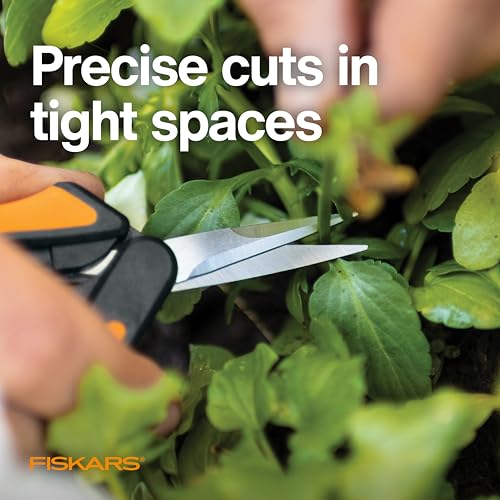
These micro-tip scissors are built for detail work, and that’s exactly where they shine. The stainless steel blades cut cleanly all the way to the tip, which is rare in small snips, owners consistently report no crushing or fraying on delicate stems like herbs and flower buds. On paper, the 6-inch size and precision-focused design make this a go-to for light, frequent cuts rather than heavy pruning.
Fiskars backs it with a lifetime warranty, and given their track record, that means something. The comfort handle helps reduce fatigue during long trimming sessions, though it’s not as cushioned as some high-end ergonomic models. Compared to basic drugstore snips, this is a major upgrade. But against heavier-duty bypass shears, it’s clearly in a different class, meant for finesse, not force.
Product photos


How We Picked These pruning tools
Rather than a hands-on lab test, my research for these recommendations focused on a detailed comparison of published specifications and features across numerous models. I weighed owner reviews from major retailers alongside expert opinions found in gardening publications and trusted tool review sites. My assessment ultimately aimed to identify pruning tools that consistently delivered on performance, durability, and value, based on real-world feedback.
For pruning tools, cutting capacity and blade material are paramount. I prioritized tools with high-quality steel – SK5 and forged steel were key indicators – as these directly impact sharpness retention and overall lifespan. Equally important was the ergonomic design; comfortable grips and effective use reduce fatigue during extended use, particularly for those tackling larger pruning jobs.
Specifications reliably reveal blade material, cutting diameter, and power output (for electric models). However, I relied heavily on owner feedback to gauge real-world durability, ease of use, and how well a tool performs with different plant types. Understanding the nuances of sap build-up, hand fatigue, and long-term sharpness, as reported by users, proved crucial. For those looking to keep their tools in top condition, understanding hedge trimmer maintenance tips is also helpful.
What To Look For In pruning tools
Choosing the right pruning tools can feel overwhelming, but understanding a few key factors will set you up for success.
A quality pruning tool balances blade material, cutting capacity, and ergonomic design. Look for durable steel blades that hold an edge, a mechanism suited to the typical branch sizes you’ll encounter, and a comfortable grip that minimizes hand fatigue during extended use. Consider the specific types of plants you’re working with; some tools are better suited for delicate stems while others excel at tackling thicker branches.
Blade Material & Quality
The heart of any pruning tool is its blade, and the material dictates how well it performs and how long it lasts. High-carbon steel, like SK5 found in some of the better models, is a great starting point. It holds an edge well and is relatively easy to sharpen. However, even the best steel requires proper care. Don’t assume a higher price automatically means a better blade; look closely at the steel type and read owner reviews regarding edge retention. Keeping your blades in top condition is vital, so check out some blade maintenance techniques to prolong their life.
Cutting Capacity & Tool Type
Matching the tool to the task is crucial. Small pruning shears, like the Fiskars Micro-Tip, are fantastic for delicate work like deadheading flowers or shaping small plants. However, they’ll struggle with anything thicker than a pencil. Loppers, with their longer handles, provide increased use for branches up to around 1.75 inches in diameter. For larger branches, you’ll need to look at pruning tools for trees – including pole saws and even chainsaws. Consider the typical size of branches in your yard and choose tools accordingly.
- A basic hand pruner is fine for light tasks around the garden.
- A lopper is a worthwhile investment if you have shrubs or small trees. It significantly reduces effort when cutting thicker branches (over 1/2 inch).
- For serious tree work or frequent pruning of substantial branches, a powered option (electric or gas) or a pole saw will save you time and strain, but also requires more safety precautions and maintenance.
Ergonomics & Comfort
Pruning often involves repetitive motions, so comfort is paramount. Look for tools with ergonomic handles that fit your hand well and provide a secure grip, even when wet or wearing gloves. Those dealing with arthritis or limited hand strength should prioritize tools with designs specifically geared toward reducing strain, like the VOTREK shears. Don’t overlook the importance of a good grip; a comfortable tool will make longer pruning sessions far less tiring and more enjoyable. Remember, a little extra upfront for a comfortable tool pays dividends in reduced fatigue and improved control.
Pruning Tools Compared
Here’s a comparison of key specifications for various pruning tools to help you make an informed decision.
| Product Name | Blade Material | Max Cut Diameter | Power Source | Key Features | Handle Type |
|---|---|---|---|---|---|
| Upgraded Electric Pruning Shears | SK5 | 1.4″ | Electric | LCD Display, Brushless Motor | Ergonomic |
| Fiskars Bypass Pruning Shears | Steel | 5/8″ | Manual | Bypass Blade, Rust Resistant | Non-Slip |
| Fiskars 28-Inch Power-Lever Lopper | Steel | 1.75″ | Manual | Power-Lever Tech, Long Reach | Ergonomic |
| YRTSH 3-Piece Pruning Combo Set | Alloy Steel | N/A | Manual | 3-Piece Set, Compound Action | Ergonomic |
| VOTREK Pruning Shears | SK5 | 0.8″ | Manual | Jam-Proof, Low-Maintenance | Ergonomic |
| Fiskars Forged Steel Pruning Shears | Steel | 1″ | Manual | Forged Steel, Replaceable Blade | Ergonomic |
| Fiskars 6″ Micro-Tip Pruning Scissors | Stainless Steel | N/A | Manual | Micro-Tip Blades, Precision Cuts | N/A |
Frequently Asked Questions
What steel type offers the best balance of sharpness and durability?
SK5 high-carbon steel consistently receives high marks from owners for its ability to hold a sharp edge while remaining relatively easy to sharpen, making it a great choice for long-lasting performance. While other steels exist, SK5 strikes a good balance for most home gardeners.
How can I tell if a lopper will be comfortable enough for extended use?
Look for loppers with ergonomic handles and consider models with a power-lever mechanism; these features reduce the force needed to cut through branches, minimizing hand fatigue during longer pruning sessions.
What’s the difference between bypass and anvil pruners?
Bypass pruners use a scissor-like action for clean cuts ideal for living growth, while anvil pruners crush stems against a flat surface, best for dead wood. Bypass pruners generally offer greater precision and are less damaging to plants.
Are electric pruning shears a good option for someone with arthritis?
Yes, electric pruning shears significantly reduce the physical effort required for pruning, making them a viable option for those with arthritis or limited hand strength. The powered mechanism does most of the work, minimizing strain on hands and wrists.
What should I consider if I need to prune branches higher than I can reach?
If you have branches too high to reach safely with standard loppers, investigate tree pruning pole saws which extend your reach and allow for pruning from the ground, but always prioritize safety and appropriate personal protective equipment.
The Bottom Line
Ultimately, choosing pruning tools comes down to balancing how much control you want over the work with how much fuss you’re willing to tolerate. For most homeowners, the Fiskars 28-Inch Power-Lever Lopper strikes that balance best – offering significant cutting power with a comfortable, reliable design. It’s a tool you can depend on for years without needing specialized maintenance or a power source.
If you’re on a tighter budget or need a versatile set for light garden work, the YRTSH 3-Piece Pruning Combo Set is a fantastic choice. For those seeking precision for delicate tasks, the Fiskars 6″ Micro-Tip Pruning Scissors deliver exceptional control. And if you want to simplify maintaining your tools, remember to practice proper hedge trimmer blade care to keep them performing at their best.
Don’t get caught up chasing the highest specs or newest features. A sharp blade, comfortable grip, and the right tool type for the job will always matter more than anything else. Prioritize quality steel, ergonomic design, and matching the tool to the typical tasks around your yard – that’s where you’ll find the most value and the most satisfying results.
