
7 Best Tools for Pruning Trees 2026
This post contains affiliate links. As an Amazon Associate, we earn from qualifying purchases.
The Fiskars 12ft Extendable Pruner stands out as the best overall choice for most homeowners, combining reliable reach with smooth cutting action. For tight budgets, the DECERK 8.5″ Titanium Pruning Shears deliver solid performance on smaller branches, while the Suchtale 14ft 2-in-1 Pole Saw offers the most versatility if you’re dealing with thicker limbs and taller trees.
Pruning isn’t just about tidying up your yard, it’s about keeping your trees healthy and your property safe. Too often, people end up with tools that bind on cuts, feel heavy after ten minutes, or can’t reach the branches that actually need trimming.
This guide cuts through the noise by focusing on real-world usability. I compared top models based on cutting capacity, reach, blade quality, and what actual owners report about durability and comfort. These picks aren’t just spec-sheet winners, they’re tools that consistently perform where it matters.
Top 7 Tools For Pruning Trees in the Market
The Best Tools For Pruning Trees, Reviewed
VEVOR 27ft Extendable Pole Saw
Strengths
- 27-foot maximum reach
- Lightweight fiberglass pole
- Includes saw and scissors
Trade-offs
- Awkward balance at full length
- No rotating head
- Assembly takes time
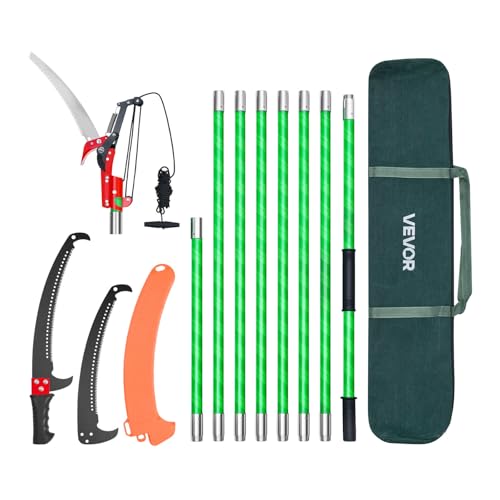
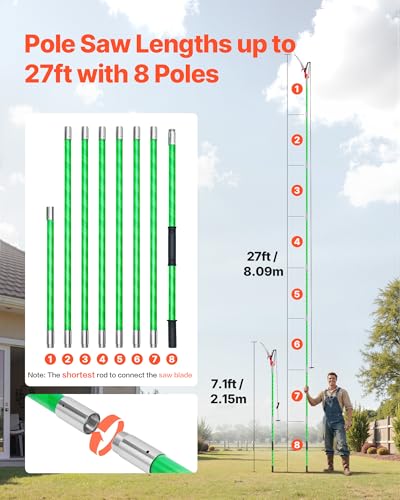
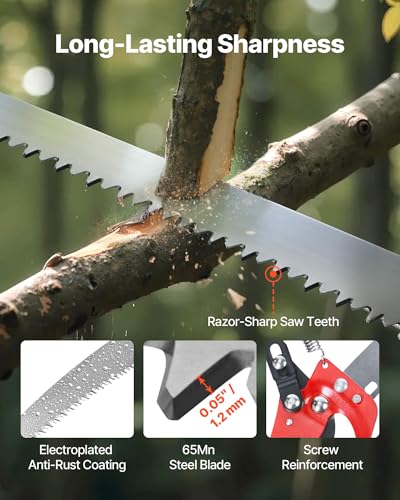
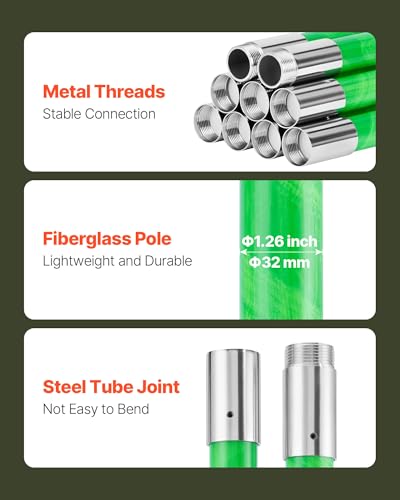
At 27 feet, this is the longest manual pole saw here, and that reach makes it a standout for two-story trees or large yards. The 8-section fiberglass pole is surprisingly lightweight for its size, and the threaded metal connections inspire confidence in stability. Owners praise the tool-free assembly and the included carrying bag, which makes transport and storage genuinely convenient.
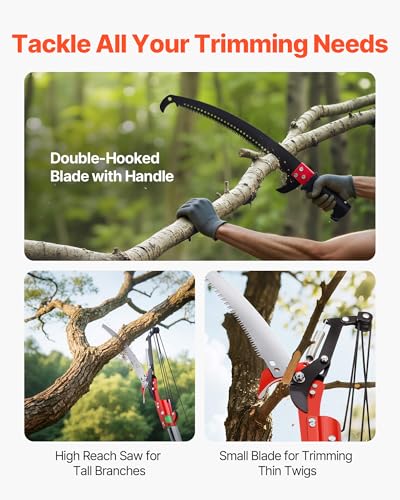
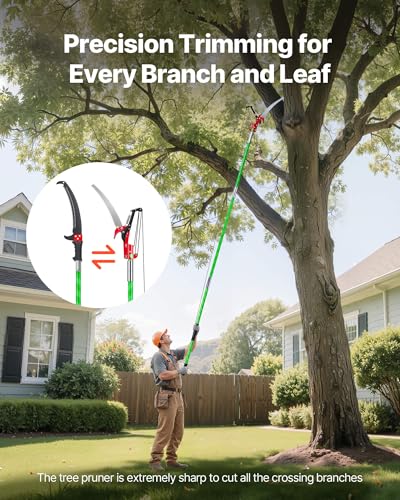
It comes with dual-hook blades and a small saw, giving you flexibility for different branch types. The 65Mn steel holds an edge better than basic carbon steel, though it won’t match premium coatings. Where it falls short is ergonomics: at full extension, use becomes awkward, and you’ll want back support for prolonged use. Still, for the price, it delivers serious capability. I’d pick this over shorter models if you’re regularly trimming high palms or overgrown shade trees.
Product photos
YRTSH 41″ Heavy Duty Loppers

Strengths
- 2-inch cut capacity
- Compound action use
- Extendable 28-41 inch handle
Trade-offs
- Bulky for storage
- No safety lock
- Overkill for light pruning
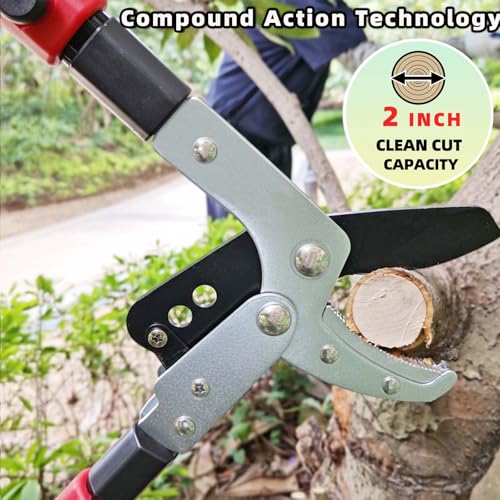
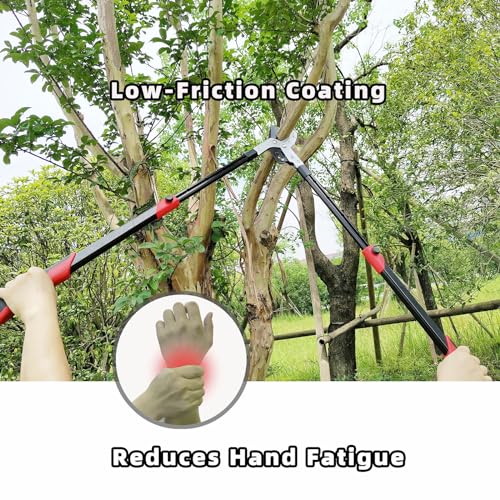
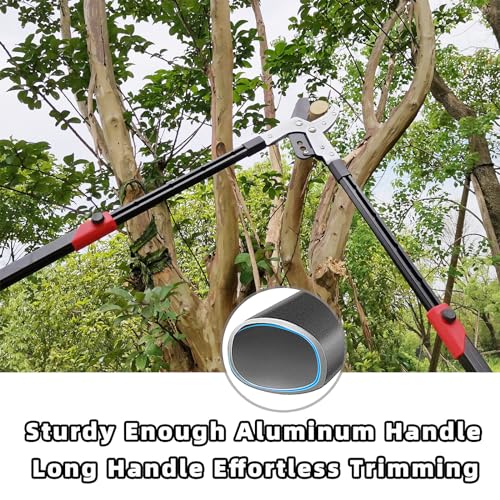
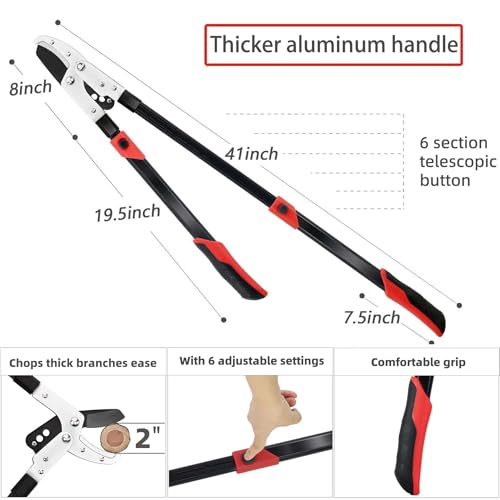
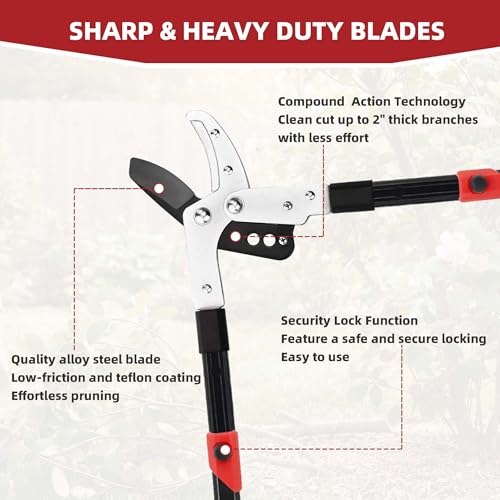
When you’re dealing with thick, stubborn limbs, this YRTSH lopper is built to deliver. With a 2-inch cutting capacity and compound action use, it multiplies your force significantly, owners report slicing through dense branches with minimal effort, even for older users. The 6-step extendable handle (up to 41 inches) gives you ground-level access to higher limbs, reducing the need for a ladder in many cases.
The aluminum handles are sturdy without being heavy, and the rubber grips stay comfortable over long sessions. It’s not the most compact tool, but that’s the trade-off for power. Compared to the Loppers for Tree Trimming set, this is the serious upgrade for real workload. I’d pick this over standard loppers if you’re maintaining orchards, thick hedges, or mature trees where branch diameter regularly exceeds 1.5 inches.
Product photos
Fiskars 12ft Extendable Pruner

Strengths
- Rotating head
- Lightweight aluminum pole
- Double-grind saw blade
Trade-offs
- Max 12-foot reach
- No pruning scissors included
- Not for thick branches
Fiskars brings its reputation for smart design to this lightweight pole pruner, and it shows. At under five pounds and extending to 12 feet, it’s one of the easiest to maneuver overhead, perfect for users who want to avoid fatigue during frequent pruning. The chain-drive gearing gives real mechanical advantage, and the double-grind saw blade cuts aggressively with less clogging, even in sap-heavy limbs.
The rotating head is a standout for angled cuts, letting you position the blade without repositioning the entire pole. Owners consistently note how much cleaner and faster their cuts are compared to fixed-head models. It’s not the longest or most powerful, but for precision and ease of use, it’s hard to beat. Compared to the VEVOR, it sacrifices reach for control, my recommendation for single-story homes where agility matters more than extreme height.
Product photos


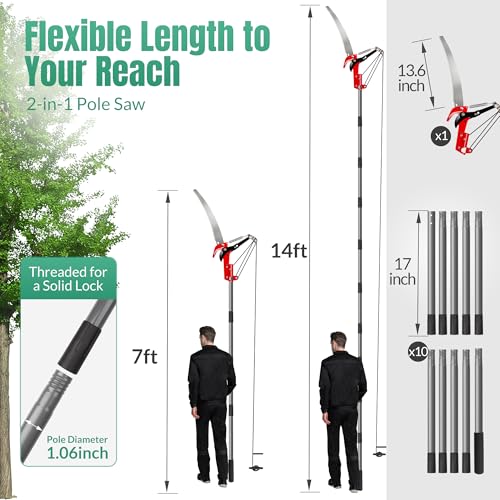
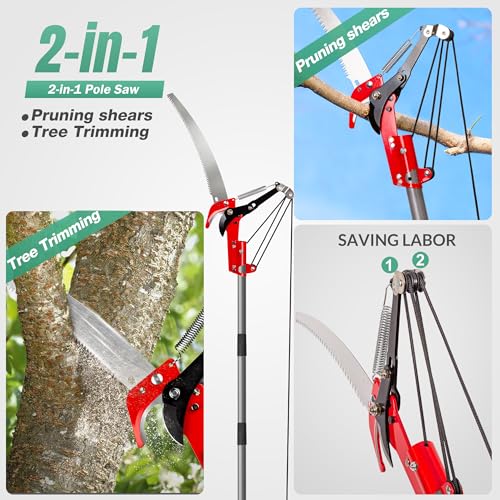
Suchtale 14ft 2-in-1 Pole Saw
Strengths
- 2-in-1 saw and scissors
- Quadruple pulley system
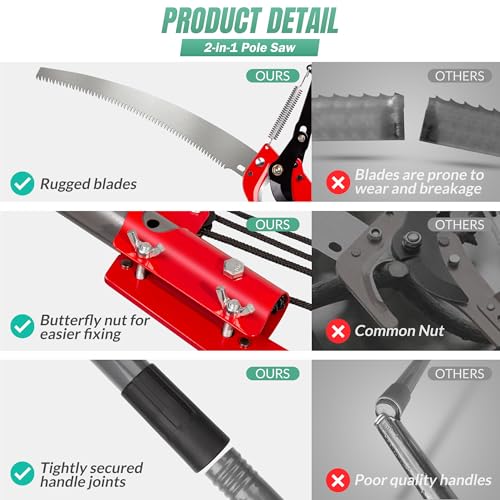
- Reinforced locking joints
Trade-offs
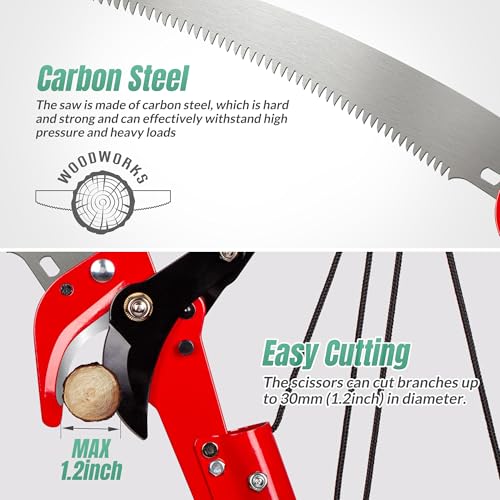
- Limited to 1.2-inch cuts
- No rotating head
- Not for thick hardwood
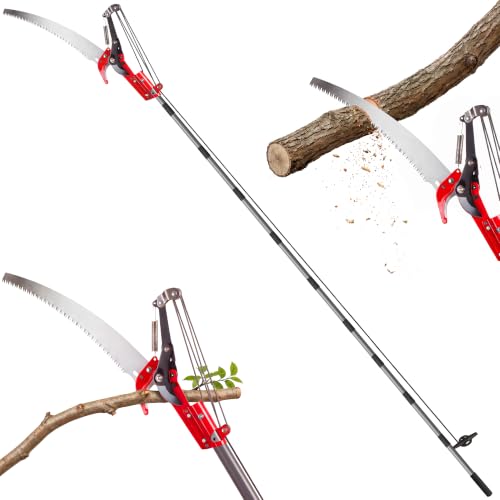
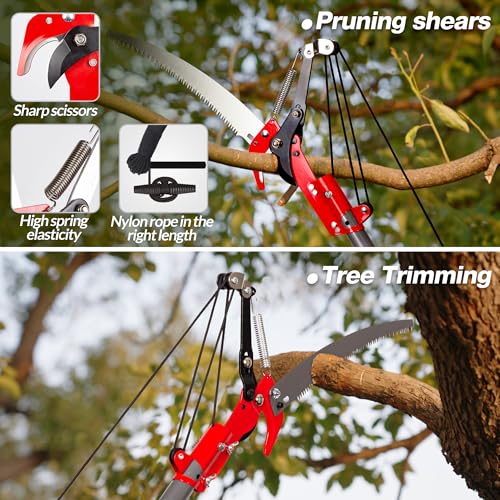
This 2-in-1 pruner stands out for homeowners who want versatility without switching tools mid-job. The combination of a steel saw blade and pruning scissors gives it real utility across branch sizes, and the quadruple pulley system is a smart design that genuinely reduces effort, owners consistently report less strain during extended trimming sessions. On paper, the 14-foot reach is solid for single-story homes, though it’s not the longest in this category.
Where it shines is stability: the reinforced threaded joints help minimize wobbling, which is a common complaint with cheaper pole pruners. Compared to basic models that rattle apart, this one feels more engineered than assembled. It won’t replace a powered saw for heavy limbs, but for routine palm or fruit tree upkeep, it’s a practical, no-fuss option.
Product photos
DECERK 8.5″ Titanium Pruning Shears
Strengths
- Lever-assist cutting power
- Titanium-coated SK5 blade
- Durable anodized body
Trade-offs
- Heavier than standard pruners
- Lever mechanism requires maintenance
- Not for quick, repetitive snips
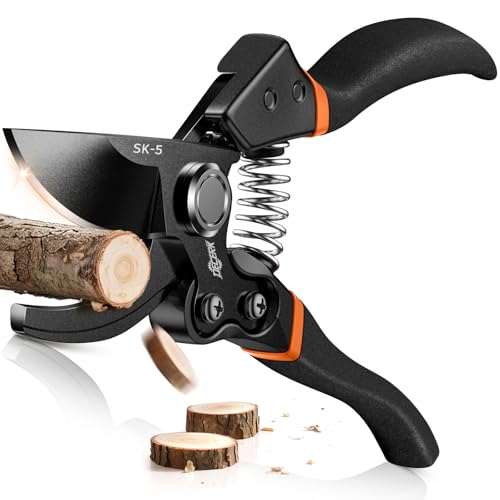
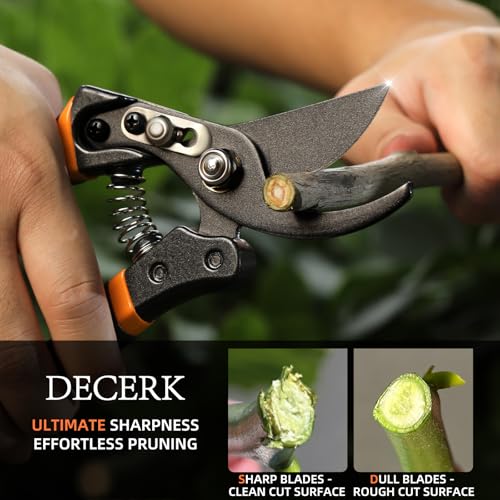
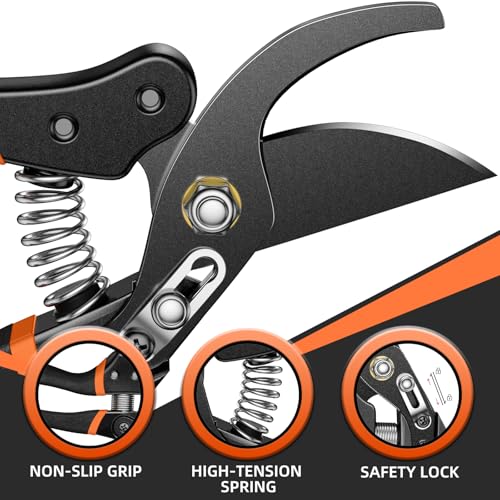
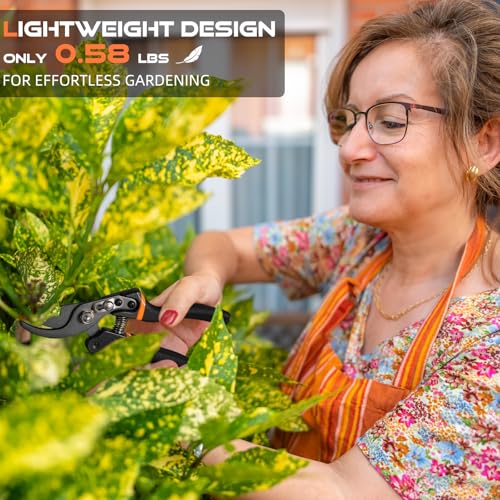
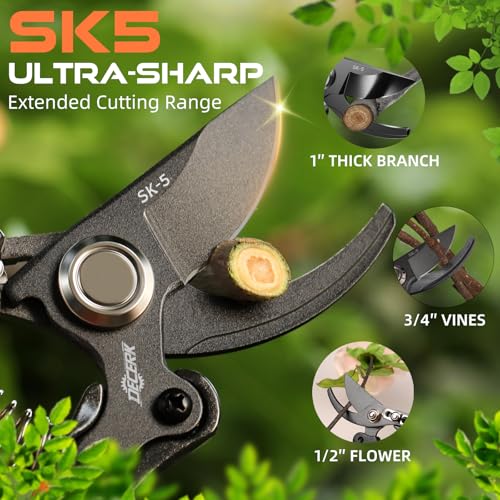
These shears are engineered for precision and durability, with a lever-assist mechanism that triples cutting force, making them ideal for thick, fibrous stems up to 1 inch. The titanium-coated SK5 steel blade is impressively hardy, and owners confirm it stays sharp through hundreds of cuts, even in woody rose canes or fruit tree spurs. The anodized aluminum body and high-hardness screws add structural integrity that outlasts typical pruners.
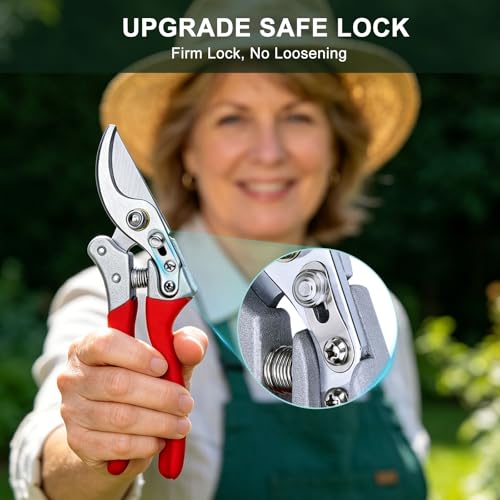
What sets them apart is the lever technology: it’s not just ergonomic, it changes what hand pruners can handle. While the Kynup shears focus on comfort, these focus on performance, especially for users who need power without loppers. The one-handed safety lock is intuitive, and the cushioned grips reduce strain. For detailed work where you need high cutting force in a compact tool, this is my top pick.
Product photos
Kynup 8.6″ Left-Handed Pruners
Strengths
- True left-hand usability
- SK5 stainless steel blades
- SoftGrip ergonomic handles
Trade-offs
- Not for thick, knotted wood
- Blades may need frequent wipe-down
- Shorter reach than loppers
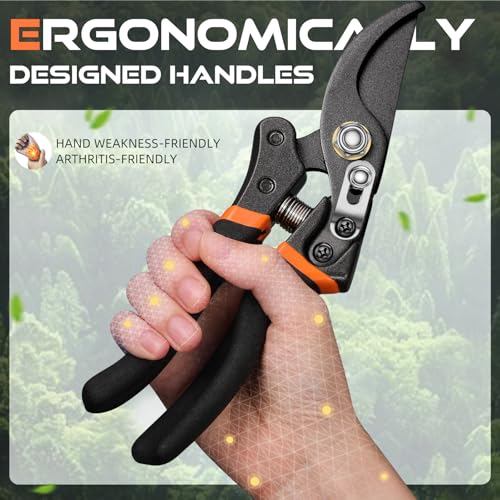
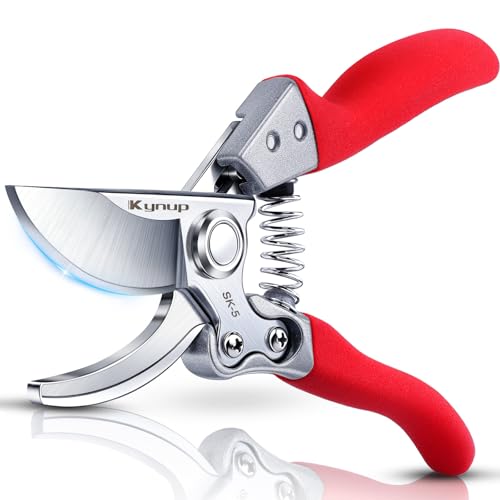
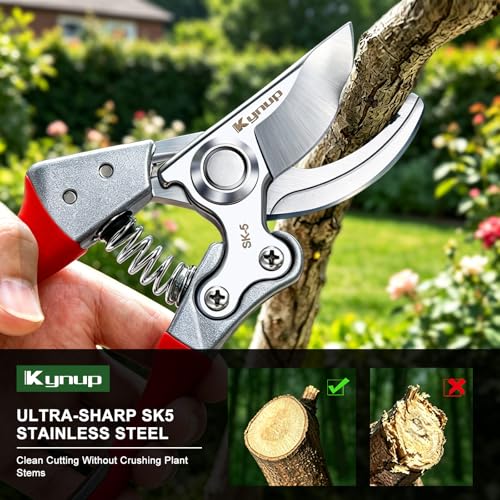
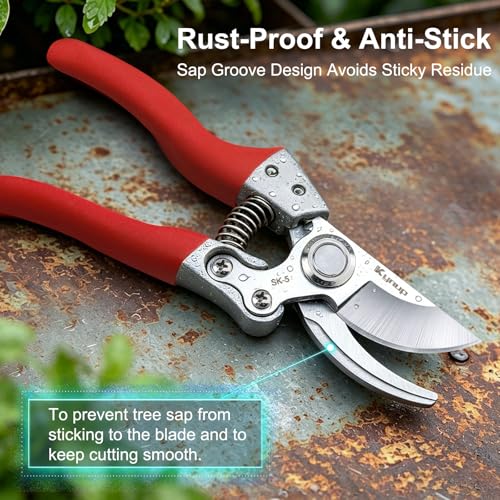
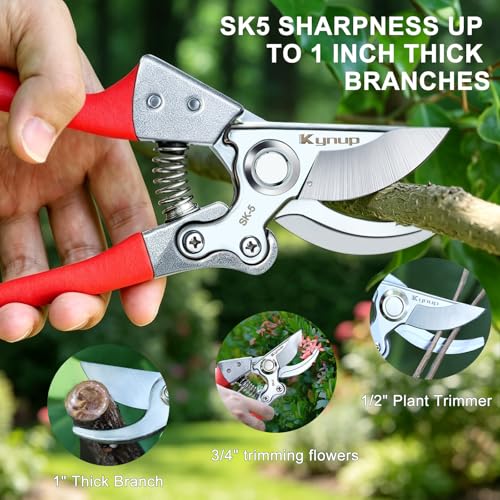
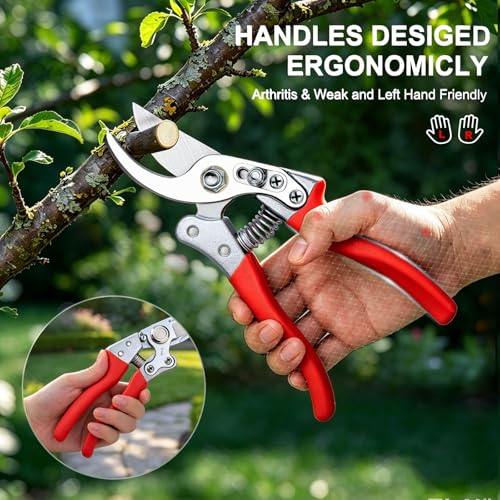
If you’re looking for hand pruners that prioritize comfort and longevity, these Kynup shears are a strong contender, especially for gardeners with arthritis or weaker grip strength. The SK5 stainless steel blades hold an edge well, and owners confirm they slice cleanly through 1-inch branches without crushing stems, which matters for plant health. The SoftGrip handles aren’t just marketing fluff; multiple reviewers mention reduced hand fatigue after long pruning sessions.
Being fully left-hand compatible is a rare and valuable feature in this category. Most pruners claim ambidextrous use but perform poorly in reverse, but these are genuinely balanced. The bright red handles also make them easy to spot in dense foliage, a small but appreciated detail. While not the most heavy-duty option here, they’re ideal for precision work where control beats brute force.
Product photos
Loppers Pruning Set 15″
Strengths
- Affordable two-piece set
- Teflon-coated SK-5 blades
- Lightweight and compact
Trade-offs
- Limited cutting capacity
- Not for heavy hardwood
- Plastic handles less durable
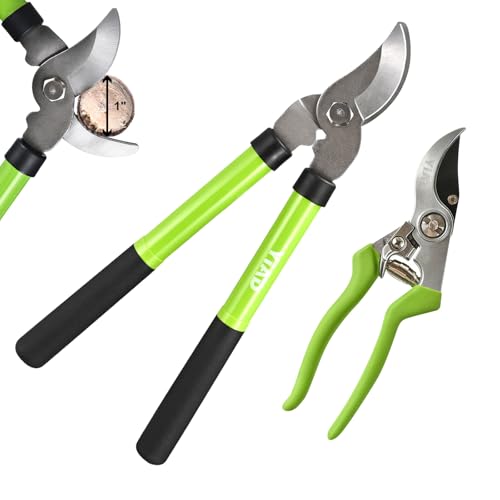
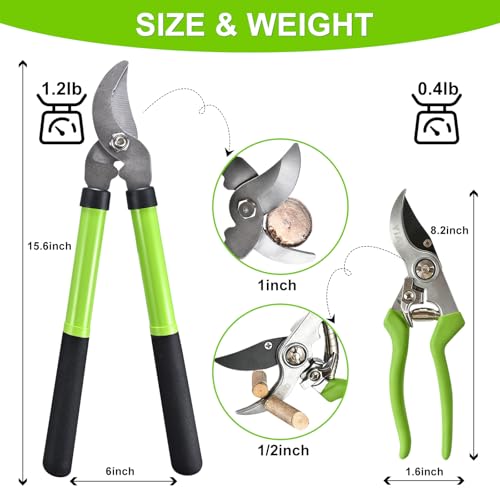
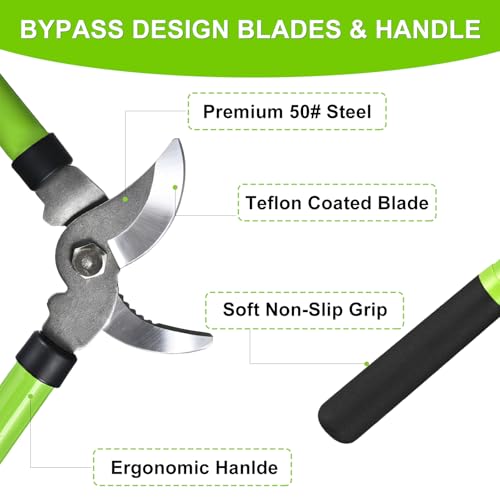
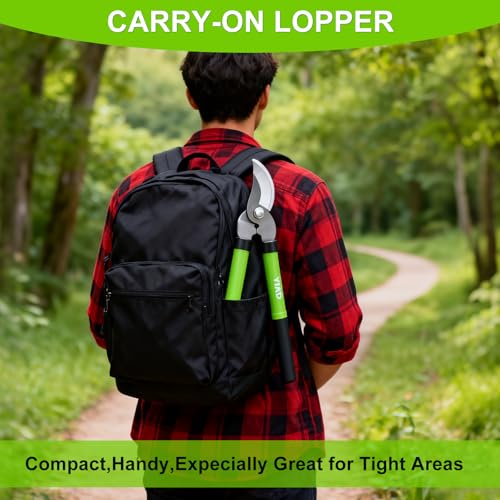
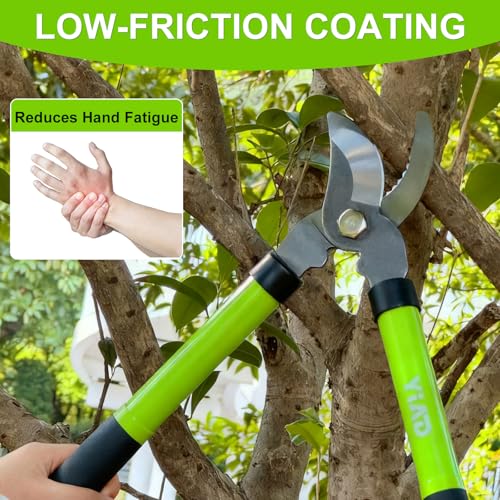
This budget-friendly set delivers solid value with two well-built tools: 15-inch loppers and 8-inch hand pruners. The SK-5 steel blades with Teflon coating resist rust and sap, and the bypass design ensures clean cuts up to 1 inch, critical for plant healing. At just 0.91 pounds, the loppers are among the lightest in class, and the ergonomic TPR grips make them accessible for women, seniors, or anyone with limited hand strength.
The one-click safety lock and finger guard add real utility, and the compact size means they’re easy to stash in a garden bag. While they won’t chew through 2-inch oak limbs like the YRTSH model, they handle typical yard work with ease. For beginners or casual gardeners, this set covers the basics without overspending. The Fiskars pruner is better for height, but this combo wins on versatility and portability.
Product photos

How We Picked These tools for pruning trees
I approached this guide to tree pruning tools by researching the specifications and features of numerous models, then weighing those against owner reviews and expert opinions from reputable gardening sites. Rather than a hands-on lab test, this is a research-led comparison focused on identifying common strengths and weaknesses across different types of pruners. I prioritized models appearing consistently well-regarded in multiple sources, and considered the breadth of tasks each tool could handle.
For tools designed to tackle tree pruning, cutting capacity and reach were the most important factors. A tool’s ability to cleanly cut branches of varying thickness – without excessive effort – directly impacts both the quality of the pruning and the user’s experience. Equally crucial is reach; the ability to trim higher branches safely from the ground, minimizing ladder use, is a significant benefit for many homeowners.
Specifications reliably tell you about blade material (like SK5 steel or titanium coatings) and maximum cutting diameter, which provides a baseline for capability. However, owner feedback proved invaluable in judging long-term durability, ease of use, and the effectiveness of features like safety locks and ergonomic grips. Understanding effective tree cutting practices is also critical, and owner reviews often reveal how well a tool performs in real-world scenarios.
How To Choose The tools for pruning trees
Picking the right pruning shears, or pole pruners, can make a huge difference in both the quality of your work and how much effort it takes. It’s easy to get lost in specs, but focusing on a few key areas will quickly narrow down the options.
A good pruning tool prioritizes sharpness, durability, and ergonomic design. Blade material (high-carbon steel is preferred) affects longevity and cutting power. Consider the diameter of branches you typically cut, the reach needed, and features like shock absorption or safety locks. Look for tools with comfortable grips and a robust locking mechanism.
Blade Material and Cutting Capacity
The heart of any pruning shear is the blade, and that’s where quality really matters. While stainless steel is resistant to rust, high-carbon steel (like SK5) holds an edge much longer and provides a cleaner cut. Don’t automatically assume a longer blade is better; a shorter, sharper blade is often more precise for delicate work. Consider what you’ll be pruning most often. If you’re dealing with branches thicker than 1 inch regularly, you’ll want to seriously consider loppers instead. I often recommend looking at pruning shears reviews to get a feel for what other users are saying about blade retention.
Reach and Maneuverability
For lower branches and general garden maintenance, hand pruners are ideal. However, for higher branches, a pole pruner becomes essential. Think carefully about the height you need to reach. A 12-foot extendable pruner might sound impressive, but it can become unwieldy if you don’t actually need that much reach.
Here’s a quick guide to pole pruner lengths: * 8-10 feet: Good for general shrub and lower branch trimming. * 10-14 feet: Suitable for most residential tree pruning tasks. * 14+ feet: Typically needed for taller trees and professional use.
Remember that longer poles add weight and reduce control. It’s far better to have a slightly shorter, more manageable tool than one that’s difficult to operate safely.
Ergonomics and Comfort
Pruning can be surprisingly strenuous. Repeated cuts put a lot of stress on your hands, wrists, and shoulders. Look for shears with cushioned grips, especially if you have arthritis or other joint issues. A good rule of thumb is:
If a pruning tool doesn’t feel comfortable in your hand within a few minutes of holding it, it’s probably not the right one for you.
Don’t underestimate the importance of a comfortable grip. Beyond that, consider features like a safety lock. A well-designed safety lock keeps the blades closed during storage and transport, protecting you and those around you. If you’re regularly dealing with dense shrubs or hedges, you might also want to investigate best uses for hedge trimmers as a complementary tool.
Tools for Pruning Trees Compared
Here’s a comparison of key specifications for various tree pruning tools to help you make an informed decision.
| Product Title | Max Cut Capacity | Extension Length | Blade Material | Weight (approx.) | Special Features |
|---|---|---|---|---|---|
| VEVOR 27ft Extendable Pole Saw | N/A | 27ft | 65Mn Steel | N/A | Dual-hook blades, Scissors |
| YRTSH 41″ Heavy Duty Loppers | Thick Branches | 41″ | Alloy Steel | N/A | Compound action |
| Fiskars 12ft Extendable Pruner | N/A | 12ft | Steel | <5lbs | Chain-drive gearing |
| Suchtale 14ft 2-in-1 Pole Saw | 1.2″ | 14ft | Steel | N/A | 2-in-1, Quadruple Pulley |
| DECERK 8.5″ Titanium Pruning Shears | 1″ | N/A | SK5 Steel | N/A | Titanium coating |
| Kynup 8.6″ Left-Handed Pruners | 1″ | N/A | SK5 Stainless Steel | N/A | Left-handed friendly |
| Loppers Pruning Set 15″ | 1″ | N/A | SK-5 Steel | 0.91/0.6lbs | Teflon coating |
Frequently Asked Questions
What’s the difference between pruning shears, loppers, and pole pruners?
Pruning shears are for small branches (under ¾ inch), loppers offer more use for thicker branches (up to 2 inches), and pole pruners extend your reach for higher branches, think of them as loppers on a long handle. Choosing the right one depends on the typical size and location of the branches you need to cut.
Can I use regular garden shears to prune tree branches?
No, standard garden shears lack the strength and sharpness needed for tree branches, and attempting to cut thicker branches can damage the shears or create a ragged cut that harms the tree. Tree pruning requires tools specifically designed for the task, such as pruning shears, loppers, or pole pruners.
What blade material offers the best long-term performance?
While stainless steel resists rust, high-carbon steel (like SK5) holds a sharper edge for longer and is generally preferred for clean, efficient cuts. A titanium coating can further enhance blade durability and reduce friction, but a well-maintained SK5 blade will still outperform most stainless steel options.
How do I know what length of pole pruner I need?
Consider the highest branches you realistically need to reach while staying safely on the ground. For most homeowners, a 10-14 foot pole pruner is sufficient, but if you have particularly tall trees, you might consider top-rated pruning pole saws extending up to 15 or 20 feet.
Are battery-powered pruning shears a good investment?
Battery-powered shears can reduce hand fatigue, but they typically lack the cutting power of manual shears for larger branches, and you’ll need to factor in the cost of batteries and charging. They are worth considering if you have extensive pruning needs or limited hand strength, but aren’t a substitute for a quality manual tool for larger jobs.
The Bottom Line
Ultimately, choosing the best tree pruning tools comes down to balancing control with convenience. You can spend a lot of time and money chasing the highest specs, but the VEVOR 27ft Extendable Pole Saw strikes a great balance for homeowners needing serious reach without sacrificing cutting power. It’s a versatile option that covers a lot of ground, and height, for the price.
For those with more specific needs, we have some clear recommendations. If you’re on a budget, the DECERK 8.5″ Titanium Pruning Shears offer excellent value and a surprisingly durable blade. If you need serious cutting power for thicker branches, the YRTSH 41″ Heavy Duty Loppers are a strong choice, and for left-handed gardeners, the Kynup 8.6″ Left-Handed Pruners deliver a comfortable and effective solution. Understanding your hedge trimmer branch cutting ability can also inform your decisions.
Don’t get too hung up on fancy features or materials. Sharpness, a comfortable grip, and the right reach for your trees are far more important than any individual specification. Focus on those fundamentals, and you’ll be well-equipped to keep your trees healthy and your property looking its best.
