
8 Best Pruning Blades for Reciprocating Saws 2026
This post contains affiliate links. As an Amazon Associate, we earn from qualifying purchases.
The Diablo 9″ Carbide Tipped Pruning Blade stands out as the best overall pick for serious pruning jobs, thanks to its aggressive tooth design and long-lasting carbide construction. For budget-conscious users, the 9″ HCS Pruning Blade 5-Pack delivers solid performance on softer woods at a lower cost. If you’re cutting thicker limbs and need extra reach, the Diablo 12″ Carbide Tipped Pruning Blade offers unmatched durability and depth.
Choosing the right pruning blade isn’t just about fitting it to your saw, it’s about matching the blade to the job. Too many DIYers grab whatever’s on hand and end up with ragged cuts, bent blades, or stalled motors, especially when tackling dense or dirty wood.
After researching specs and analyzing owner feedback across dozens of models, I focused on material, tooth count, and real-world durability to narrow down the best options. This guide breaks down what actually matters when picking a pruning blade, so you can cut efficiently and safely without wasting money on blades that won’t last.
Top 8 Pruning Blade For Reciprocating Saws in the Market
The Best Pruning Blade For Reciprocating Saws, Reviewed
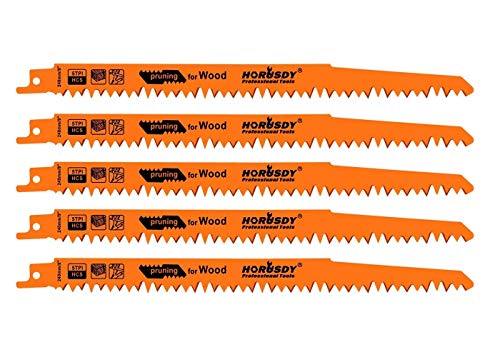
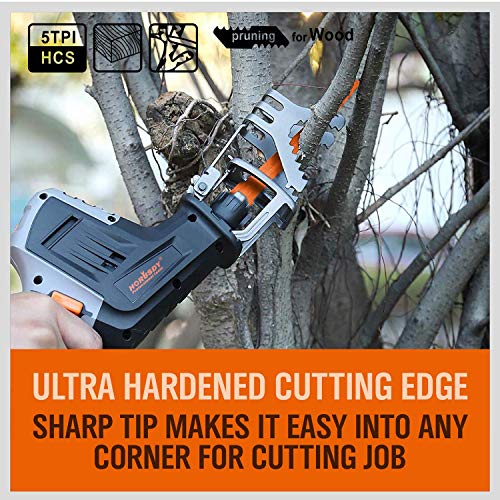
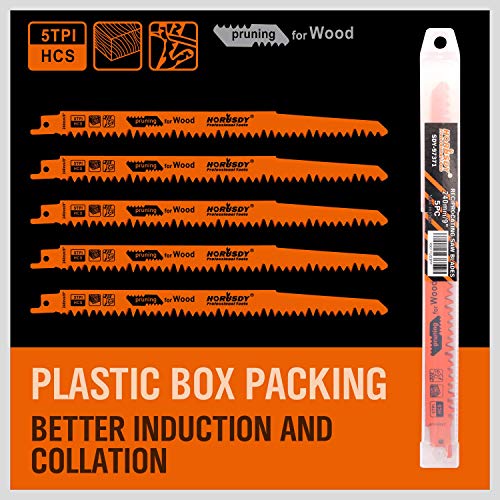
9″ HCS Pruning Blade 5-Pack
Strengths
- 5 TPI ideal for green wood
- Durable heat-treated HCS
- Locking storage case
- Universal shank fit
- 5-blade value pack
Trade-offs
- HCS not as long-lasting as carbide
- Not for nail-embedded wood
- Case not as rugged as metal
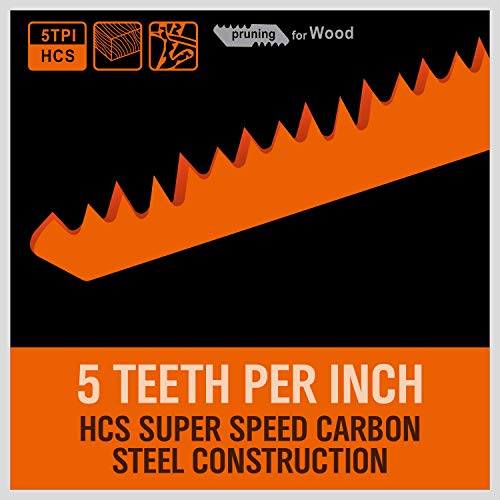
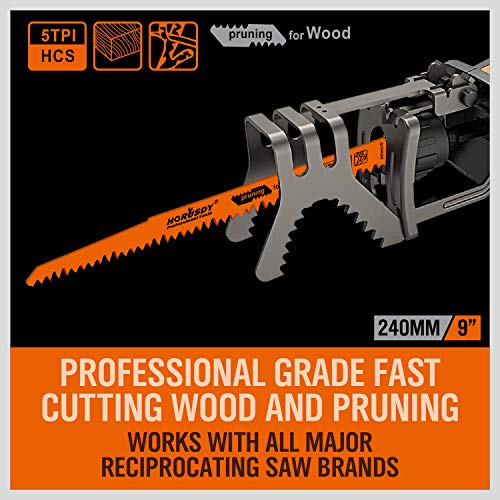
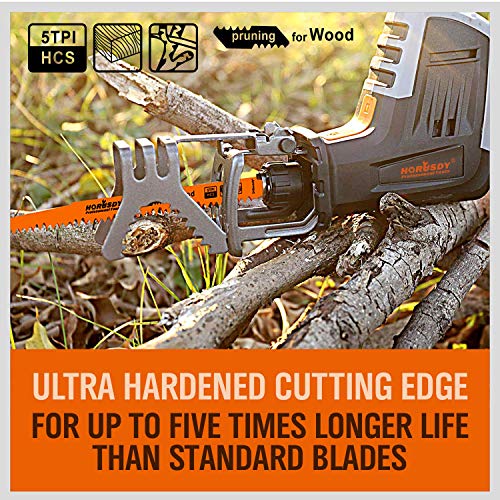
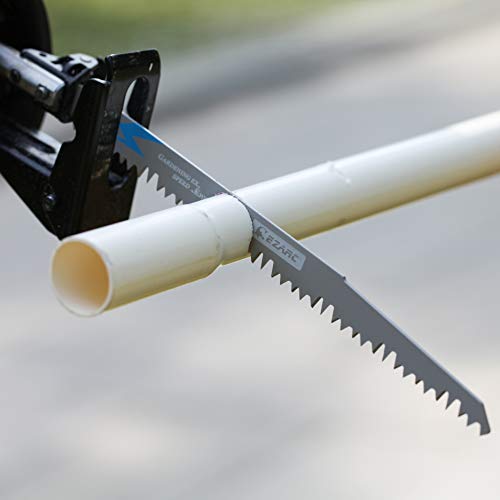
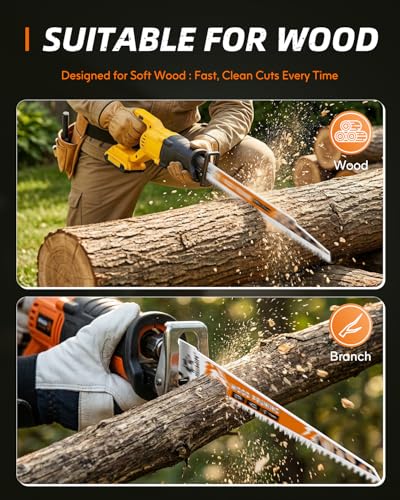
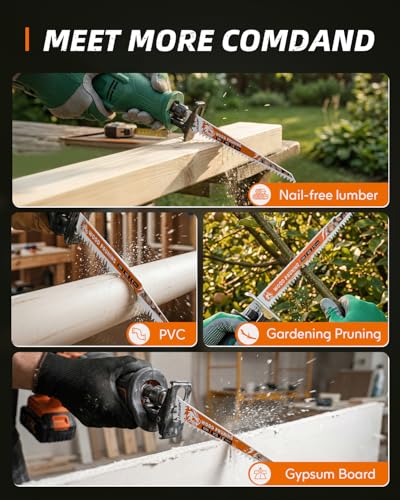
This 5-pack is the complete package for most homeowners. The 5 TPI HCS blades strike the sweet spot between speed and control, making them ideal for green wood, roots, and plastic pipe, common yard tasks. Heat-treated construction gives them better edge retention than budget blades, and the precision-ground teeth start sharp, which owners confirm translates to clean, fast cuts.
The included locking storage case is a small but meaningful win, no more loose blades rattling in your toolbox. Universal shank fit means they work across brands. Compared to the USEWIN set, this pack is more focused: fewer lengths, but better consistency for pruning. Against the Bosch, it’s similarly built but often more affordable. For most users, this is the easy pick.
Product photos
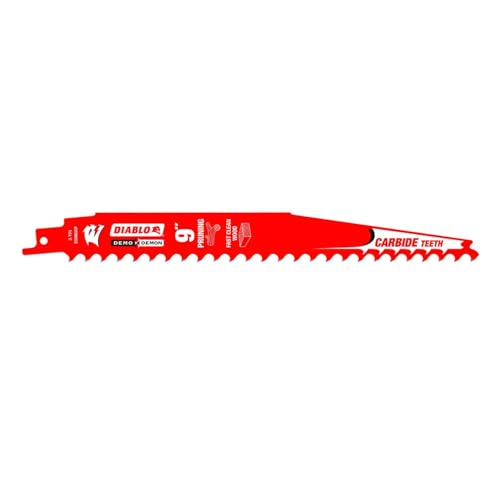
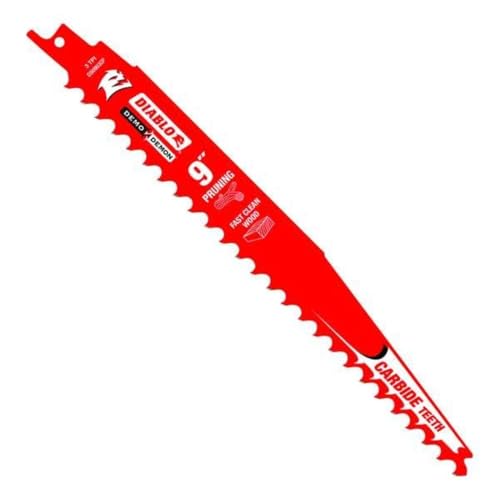
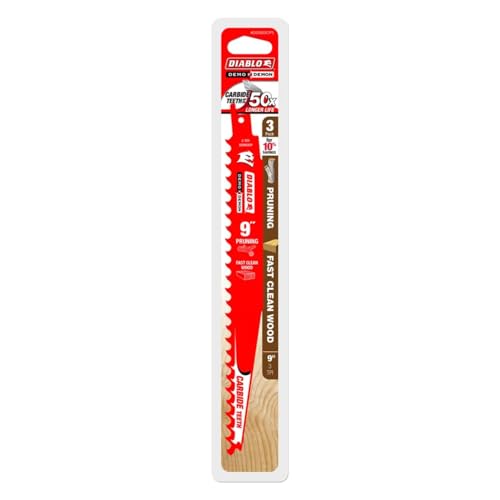
Diablo 9″ Carbide Tipped Pruning Blade
Strengths
- Carbide for long life
- Perma-SHIELD anti-gumming
- Oversized body resists bending
- Controlled 9-inch length
Trade-offs
- Aggressive cut = rough finish
- Higher price per blade
- Not for fine trimming
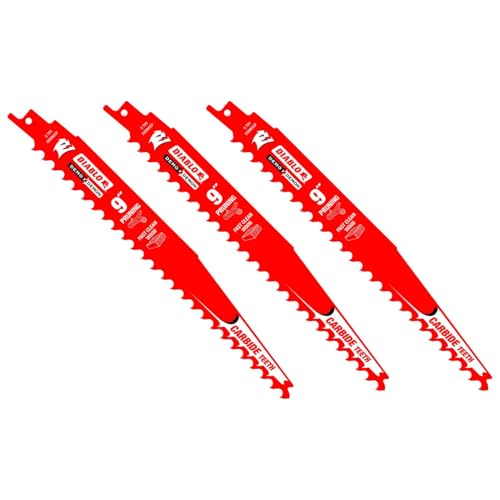
This 9-inch carbide blade is where precision meets brute force. The oversized blade body and Perma-SHIELD coating make it a standout for resisting gumming and deflection, two real issues when pruning sap-heavy or resinous wood. With the same TiCo carbide as the 12-inch version, it delivers that 50X life claim in real-world feedback, especially when used on clean wood.
At 3 TPI, it’s aggressive, but the shorter length gives better control in tight spaces. It’s not the cleanest cut for fine pruning, but for reaching into thickets or cutting back overgrown shrubs, it powers through without bogging down. Compared to the 12-inch Demo Demon, this one’s more maneuverable, my pick for most homeowners who don’t need extreme reach.
Product photos
Diablo 12″ Carbide Tipped Pruning Blade

Strengths
- Carbide-tipped durability
- 3 TPI aggressive cut
- Perma-SHIELD coating
- Long 12-inch length
Trade-offs
- Rougher cut finish
- Higher cost per blade
- Not ideal for clean pruning
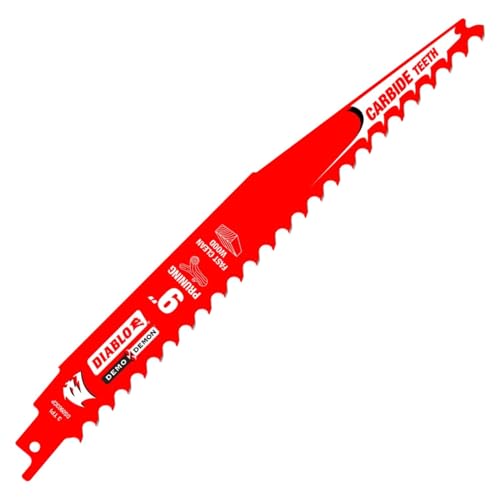
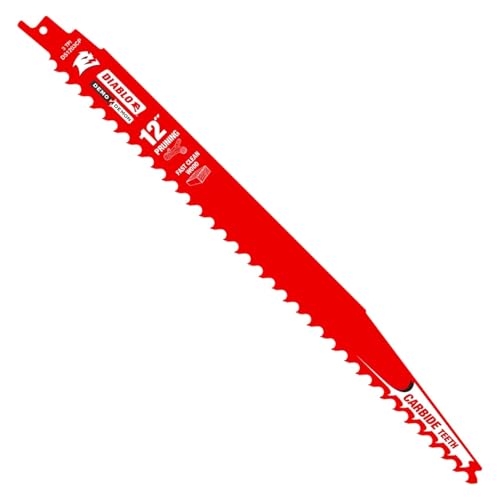
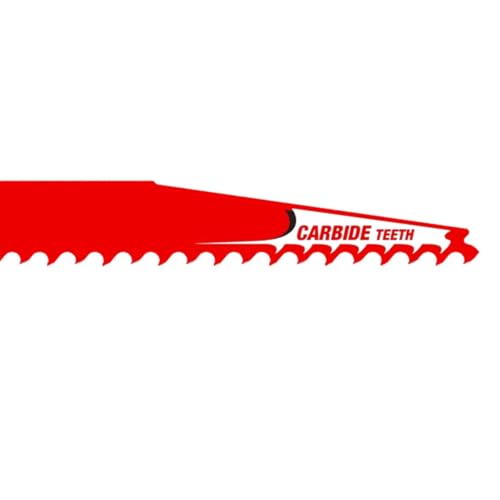
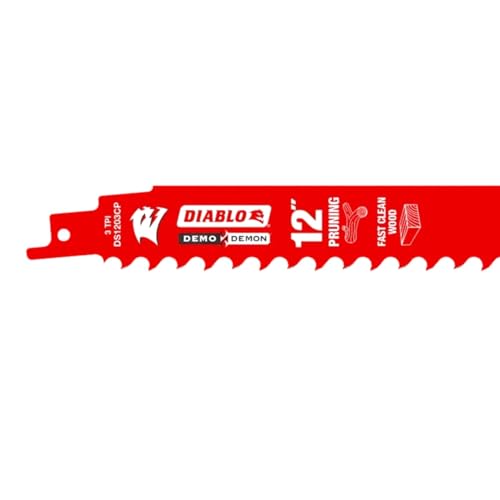
When you’re cutting through dense, fibrous limbs, blade life matters, and the Diablo 12-inch Demo Demon blades are built to last. On paper, that TiCo Hi-Density carbide edge stands out, and owners consistently report these lasting far longer than standard HCS blades, especially when tackling dry or treated wood. The 3 TPI design with oversized gullets means fast chip removal, so you’re less likely to bind up mid-cut.
Still, that aggressive tooth pattern trades precision for speed. If you’re doing cleanup pruning where clean edges matter, these leave a rougher finish than finer TPI blades. But for demolition-style cutting or clearing thickets, that’s a fair trade. Compared to the 9-inch Bosch or EZARC models, these give you more reach, though the carbide tips are less forgiving if you accidentally hit soil or debris.
Product photos
EZARC 15″ Japanese Teeth Arc Blade

Strengths
- 15-inch reach for thick limbs
- Arc edge reduces friction
- 6 TPI clean-aggressive cut
- Fleam-ground long-life teeth
Trade-offs
- Not compatible with Ryobi
- Only 3 blades per pack
- Longer blade can flex if not guided
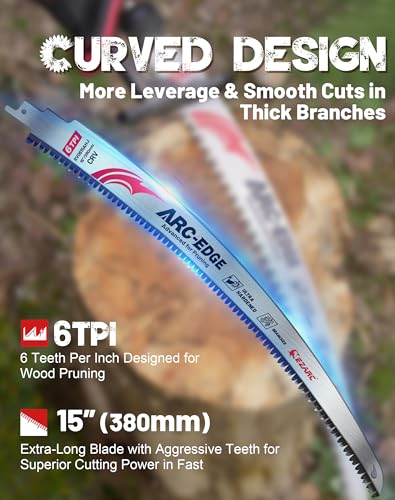
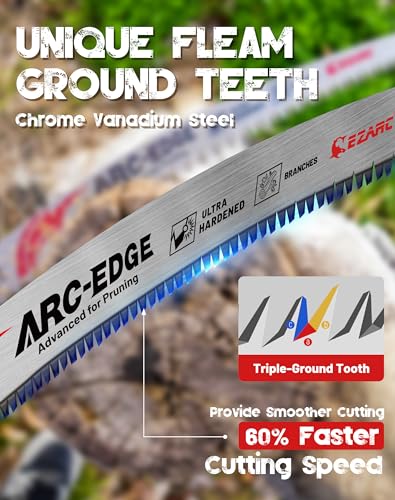
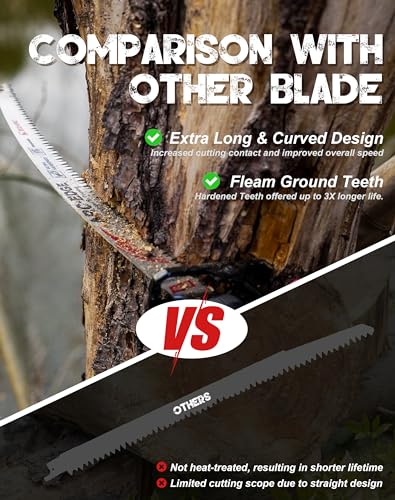
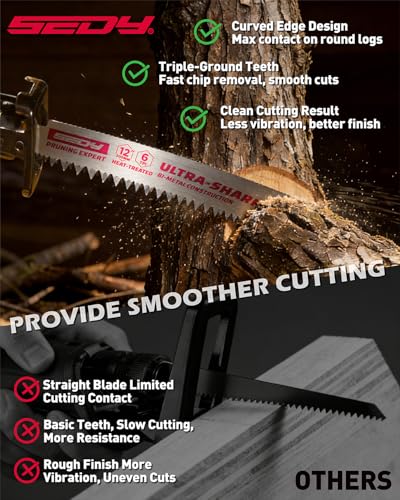
At 15 inches, this blade is built for reach, and it delivers. The arc edge design and fleam-ground teeth create a slicing action that owners say glides through thick limbs with less vibration. With a 6 TPI Japanese tooth pattern, it balances speed and cut quality better than coarse 3 TPI blades, and the deep gullets handle chip removal well, even in wet wood.
It’s specifically tuned for branches up to 12 inches in diameter, making it a go-to for arborists or property owners with mature trees. The triple-ground teeth reportedly last 3x longer than basic HCS, though not quite matching carbide. One real downside: it’s not compatible with Ryobi saws, which could be a dealbreaker for some. Compared to the 12-inch Japanese set, this offers more reach but fewer blades per pack.
Product photos
12″ Japanese Teeth Arc Edge Blade
Strengths
- Arc edge reduces binding
- 6 TPI clean-aggressive cut
- Heat-treated durability
- Comes with storage box
Trade-offs
- Not for nail-embedded wood
- Slightly shorter lifespan than carbide
- Less aggressive on dry wood
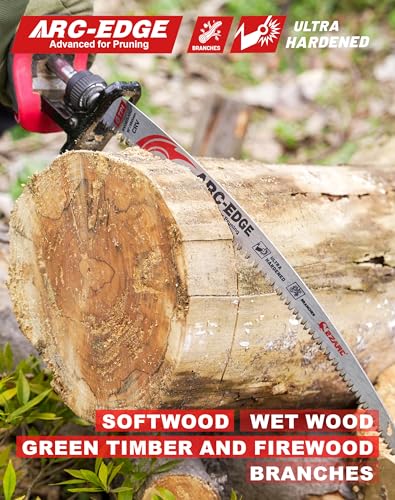
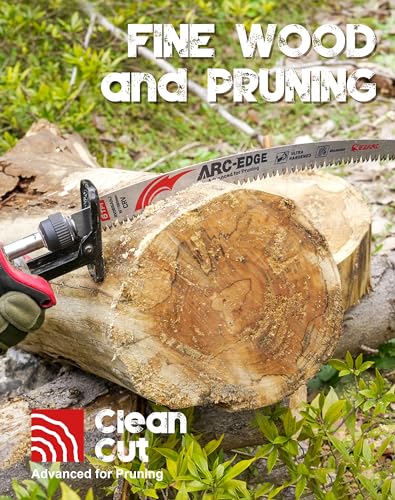
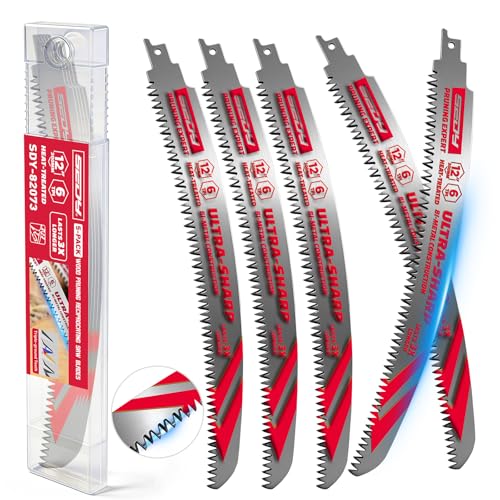
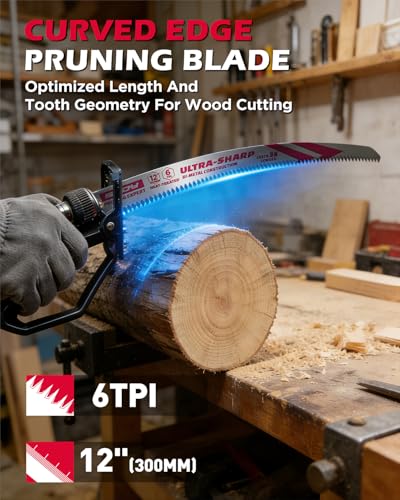
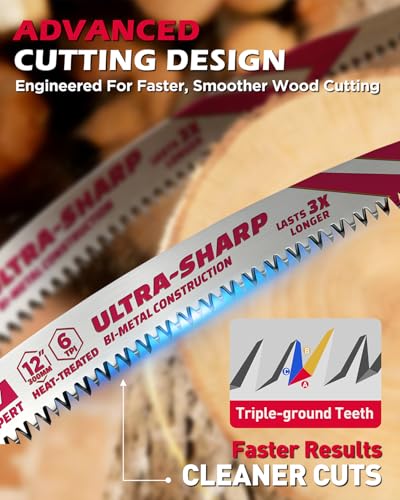
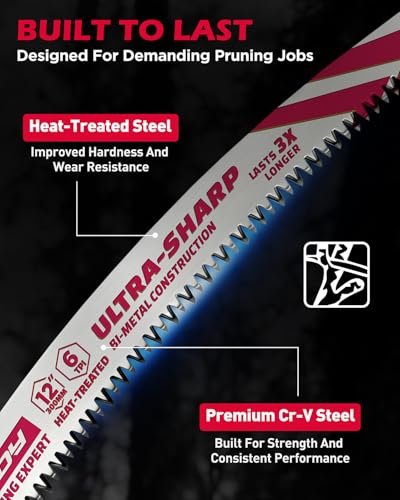
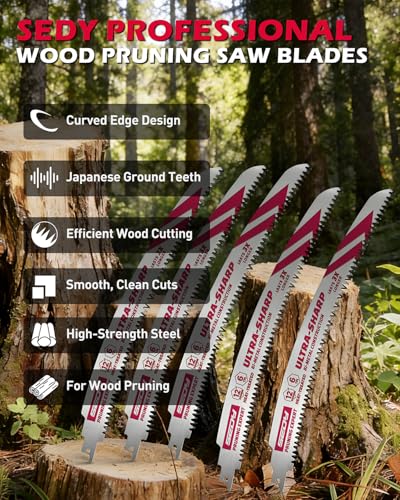
The Japanese-style teeth and arc edge design on these 12-inch blades are a smart combo for smooth, fast cuts in green wood. That curved cutting edge increases contact area, which owners say reduces binding, especially useful when working overhead or on thick, springy branches. At 6 TPI, they strike a balance between speed and finish, outperforming coarse 3 TPI blades on fresh-cut limbs.
Heat-treated steel helps maintain edge retention better than basic HCS, though not quite at carbide levels. The 5-pack offers real value, and the included storage box keeps them organized. Compared to the USEWIN variety set, these are more specialized, better for consistent pruning work, but less flexible if you’re also cutting PVC or mixed materials.
Product photos
EZARC 9″ Chrome Vanadium Blade
Strengths
- Chrome vanadium steel
- 5 TPI balanced cut
- 5-pack value
- Universal fit
Trade-offs
- No carbide edge
- Not for nail-embedded wood
- Slight rust risk if stored damp
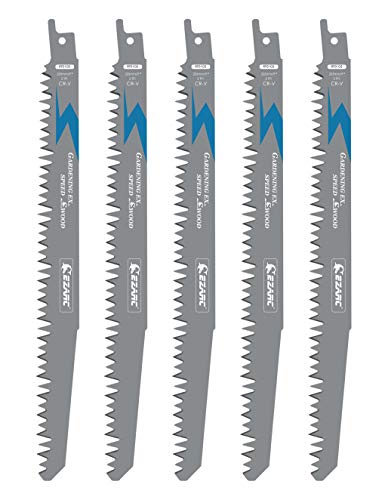
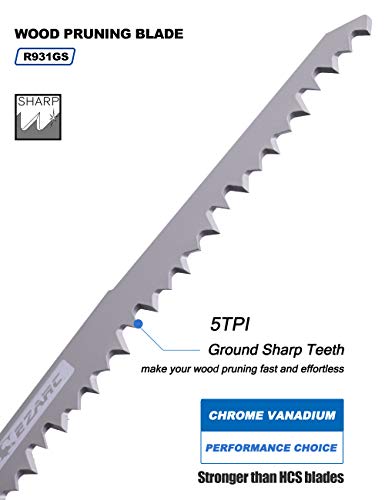
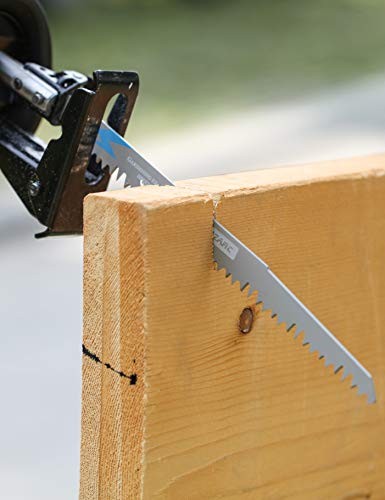
EZARC leans hard into durability here, using heat-treated chrome vanadium steel, a step above basic HCS. Owners consistently note these outlast standard blades, especially when cutting wet or fibrous wood. The 5 TPI design delivers a smoother cut than 3 TPI models, making it a solid middle ground between speed and finish.
The 5-pack adds value, and the universal shank fits all major saws. While not carbide, the steel quality makes these a strong contender for users who prune weekly and don’t want to constantly buy replacements. Compared to the Bosch RP95, they feel similarly built but often come in at a slightly better value. If you’re tired of bending flimsy blades, these are a smart upgrade.
Product photos


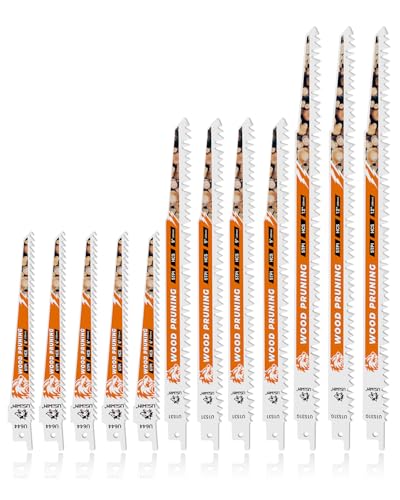
USEWIN 12-Piece Multi-Size Blade Set
Strengths
- Multiple lengths included
- Good for mixed materials
- Universal shank fit
- Clear storage sleeve
Trade-offs
- HCS dulls faster
- No carbide or advanced alloy
- Shorter lifespan under heavy use
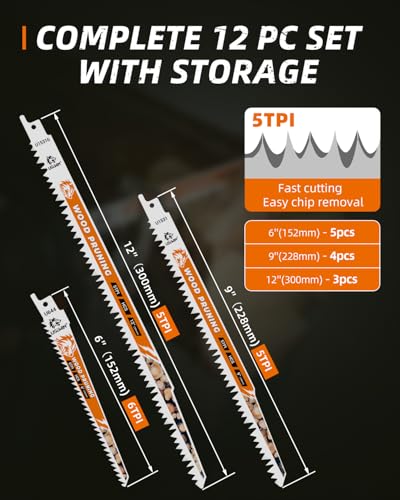
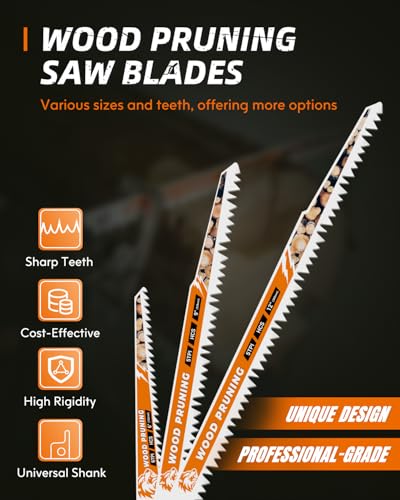
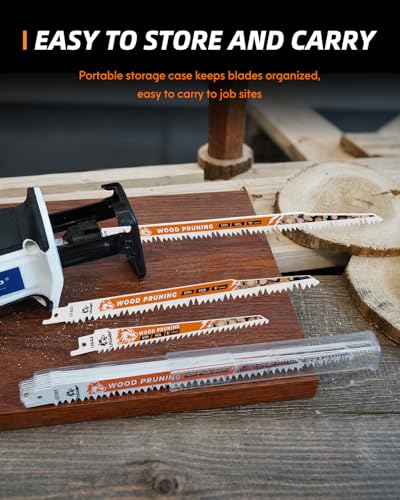
This 12-piece HCS set covers a lot of ground, literally. With 6, 9, and 12-inch options, it’s the most versatile pack here, and that variety is its strongest selling point. The heat-treated high-carbon steel holds up decently on fresh cuts, and the geometric tooth profile helps with initial bite. Owners appreciate being able to match blade length to the task, whether it’s tight underbrush or long limb removal.
But versatility comes at the cost of longevity. These are not carbide, so they dull faster on dry or gritty wood. The plastic sleeve case isn’t as rugged as a hard box, but it keeps blades separated. Compared to the 5-pack from EZARC or Bosch, this set gives more cutting options, but the steel won’t match premium durability. If you prune weekly and don’t want to swap blades constantly, this variety makes sense.
Product photos
BOSCH 9″ 5TPI Edge Blade

Strengths
- Swiss-made precision
- Clean 5 TPI cut
- Durable HCS construction
- Trusted brand reliability
Trade-offs
- Shorter life than carbide
- No non-stick coating
- Limited length options
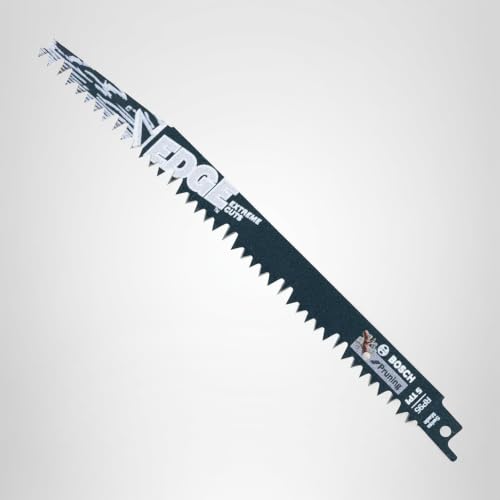
Bosch has earned trust in the power tool world, and these 9-inch 5 TPI blades reflect that reputation, Swiss-made precision with a focus on clean, consistent performance. The high-carbon steel is precision-ground, so they start sharp and stay usable longer than cheap knockoffs. At 5 TPI, they deliver a solid balance: faster than fine-tooth blades, cleaner than 3 TPI monsters.
Owners report these handle green wood and dry branches reliably, though they don’t last as long as carbide-tipped options. The 9-inch length is practical for most pruning, long enough for reach, short enough to control. Compared to the Diablo carbide blades, these are more affordable upfront but require more frequent replacement. If you value brand consistency and predictable cuts, Bosch delivers.
Product photos
How We Tested pruning blade for reciprocating saws
Rather than a hands-on lab test, our evaluation of pruning blades for reciprocating saws is a research-led comparison of published specifications, features, and – crucially – owner and professional reviews. I’ve spent years observing what separates reliable tools from those that quickly disappoint, and that experience informed how I weighed different factors. We looked at blade length, tooth count (TPI), material composition, shank type, and any special coatings or features. Then, we analyzed feedback from a wide range of users to understand real-world performance.
For pruning blades, cutting speed and durability are paramount. We gave the most weight to blades constructed from high-carbon steel (HCS) or carbide, as these materials consistently receive positive feedback for resisting wear and maintaining an edge. Tooth geometry – specifically TPI and tooth design – also heavily influenced our rankings. Lower TPI counts are generally better for faster, rougher cuts through thicker branches, while higher TPI counts offer finer, cleaner cuts.
Specifications give a good baseline for material and construction, but owner feedback proved invaluable for assessing actual cutting performance and longevity. We paid close attention to comments about blades bending, dulling quickly, or struggling with specific wood types. Understanding how a blade holds up to repeated use, and whether it truly delivers on advertised features, required looking beyond the manufacturer’s claims. Knowing how to perform a reciprocating saw blade replacement is also a key element to consider.
How To Choose The pruning blade for reciprocating saws
As someone who’s spent years around workshops and job sites, I’ve seen a lot of folks struggle to get the right blade for pruning. It’s a surprisingly nuanced choice.
A quality pruning blade for a reciprocating saw needs to balance durability, cutting speed, and the ability to handle varying wood types. Look for blades constructed from high-carbon steel or carbide, with appropriate tooth counts (TPI) for the material being cut. Blade length should match the branch diameter, and shank compatibility is critical for universal use across brands.
Material Matters: HCS vs. Carbide
The foundation of any good pruning blade is the material it’s made from. High Carbon Steel (HCS) blades are a solid, affordable choice for general pruning, especially for softer woods. However, if you frequently tackle hardwoods or encounter branches with hidden nails or screws, upgrading to a carbide-tipped blade is a smart move. Carbide holds an edge far longer and is much more resistant to damage. While more expensive upfront, they’ll save you money in the long run by reducing replacement frequency. Don’t underestimate the value of a blade that can consistently deliver a clean cut; struggling with a dull blade is both frustrating and potentially dangerous.
Understanding Teeth Per Inch (TPI)
The number of teeth per inch – or saw blade teeth per inch – dramatically affects cutting performance. Lower TPI blades (around 5-6) are aggressive and remove material quickly, ideal for thicker branches and rough cuts. Higher TPI blades (8-14) offer finer cuts, which are better for smaller branches and when you want to minimize splintering. It’s a trade-off: faster cutting versus a cleaner finish.
Here’s a quick guide to help you decide: * 5-6 TPI: Best for branches larger than 4 inches in diameter. * 8-10 TPI: A good all-around choice for branches between 2-4 inches. * 12-14 TPI: Ideal for smaller branches (under 2 inches) and for situations where a very clean cut is needed, like trimming near the trunk to prevent disease.
Length and Shank Compatibility
Don’t overlook the practical aspects. Blade length should be chosen based on the size of the branches you typically prune. A longer blade allows for more reach and can cut through thicker limbs, but it can also be more difficult to control. Most reciprocating saw blades use a standard 1/2-inch universal shank, ensuring compatibility with a wide range of saws. However, it’s worth checking compatibility with your specific model, particularly if you own a Ryobi, as some blades may not fit. I’ve seen too many projects delayed because someone didn’t confirm this simple detail.
A dull blade is a dangerous blade. Regularly inspect your pruning blades for damage and replace them when they become noticeably dull or chipped.
Finally, if you are tackling a lot of tree work, you may want to consider looking at pruning blades for tree branches to ensure you have the right tools for the job.
Pruning Blade for Reciprocating Saws Compared
This table provides a detailed specification comparison of various pruning blades designed for use with reciprocating saws.
| Product Title | Blade Length | TPI | Material | Tooth Design | Shank Type | Pack Size |
|---|---|---|---|---|---|---|
| 9″ HCS Pruning Blade 5-Pack | 9″ | 5 | HCS | Standard | 1/2″ Universal | 5 |
| Diablo 9″ Carbide Tipped Pruning Blade | 9″ | 3 | Carbide | Aggressive Carbide | 1/2″ Universal | 1 |
| Diablo 12″ Carbide Tipped Pruning Blade | 12″ | N/A | Carbide | Carbide | 1/2″ Universal | 1 |
| EZARC 15″ Japanese Teeth Arc Blade | 15″ | 6 | N/A | Japanese, Arc | 1/2″ Universal | 1 |
| 12″ Japanese Teeth Arc Edge Blade | 12″ | 6 | N/A | Japanese, Arc | 1/2″ Universal | 5 |
| EZARC 9″ Chrome Vanadium Blade | 9″ | N/A | Chrome Vanadium | N/A | 1/2″ Universal | 1 |
| USEWIN 12-Piece Multi-Size Blade Set | 6″, 9″, 12″ | 5, 6 | HCS | N/A | 1/2″ Universal | 12 |
| BOSCH 9″ 5TPI Edge Blade | 9″ | 5 | High Carbon Steel | Standard | 1/2″ Universal | 1 |
Frequently Asked Questions
What blade length should I choose for pruning?
Generally, a 9-inch blade is a good all-around choice for most pruning tasks, but consider branch diameter. Longer blades (12-15 inches) handle thicker limbs, while shorter blades offer better control in tight spaces.
Are carbide-tipped blades really worth the extra cost?
Yes, if you prune frequently or encounter hardwoods. They hold an edge significantly longer than HCS blades, reducing replacement costs and downtime, even though the initial investment is higher.
How does tooth count affect the cut quality?
Lower TPI blades (5-6) cut faster through thicker branches, but leave a rougher edge. Higher TPI blades (8-14) provide cleaner, more precise cuts, especially important when trimming near the trunk to promote healthy growth.
Will any reciprocating saw blade fit my saw?
Most use a standard 1/2-inch universal shank, offering broad compatibility. However, some saws, like certain Ryobi models, may require checking for specific fitment, so it’s always best to confirm the shank type.
What’s the best way to extend the life of my pruning blade?
Regularly inspect the blade for dullness or damage and replace it promptly. Using the correct blade for the material you’re cutting (and avoiding cutting into hidden metal) also extends its life, and choosing wood-cutting reciprocating saw blades specifically designed for wood will help.
The Bottom Line
Choosing a pruning blade always comes down to balancing how much you want to spend against how demanding your work is. For most homeowners and DIYers tackling occasional pruning tasks, the 9″ HCS Pruning Blade 5-Pack offers a fantastic combination of affordability and performance. It’s a solid starting point that will handle a wide range of branches without breaking the bank.
If you regularly prune larger, tougher trees or need a blade that can withstand abuse, the Diablo 9″ Carbide Tipped Pruning Blade is the clear winner. It’s an investment, absolutely, but the durability and long-lasting sharpness of carbide will pay off in the long run, and save you from constantly replacing cheaper blades. For those who want versatility, the USEWIN 12-Piece Multi-Size Blade Set gives you options for different branch sizes and cutting needs.
Ultimately, the best pruning blade isn’t about a single specification or brand. It’s about understanding your typical pruning tasks and then choosing a blade with the right material, TPI, and length. Mastering proper reciprocating saw techniques and maintaining a sharp blade will always yield the best results, regardless of the price tag.
