
5 Best Oscillating Drum Sanders for 2026
This post contains affiliate links. As an Amazon Associate, we earn from qualifying purchases.
The JET 22-Inch Oscillating Drum Sander stands out as the best overall for serious woodworkers who need wide-capacity, consistent performance with advanced features like SandSmart feed control. For those on a tighter budget, the VEVOR 22″ Drum Sander with Stand delivers solid specs and a full-width bed at a much lower price point. If space is limited, the JET 10-Inch Benchtop model offers real precision for smaller jobs.
Most people shopping for an oscillating drum sander are tired of uneven finishes, snipe, and finicky adjustments that turn sanding into a chore instead of the final touch it should be. It’s not just about removing material, it’s about doing it smoothly, predictably, and without constant tweaking.
In this guide, I break down the top models based on specs, owner feedback, and what actually matters in real shop use, from motor reliability and conveyor feed to dust collection and ease of setup. These picks reflect what delivers the best balance of performance, durability, and value for both frequent users and serious DIYers.
Top 5 Oscillating Drum Sanders in the Market
The Best Oscillating Drum Sanders, Reviewed
JET 22-Inch Oscillating Drum Sander

Strengths
- Excellent stability
- Oscillating drum reduces heat
- SandSmart overload protection
Trade-offs
- Higher price point
- Heavier footprint
- Longer setup time
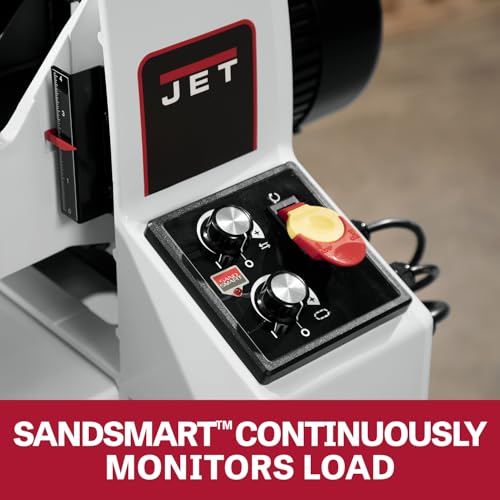
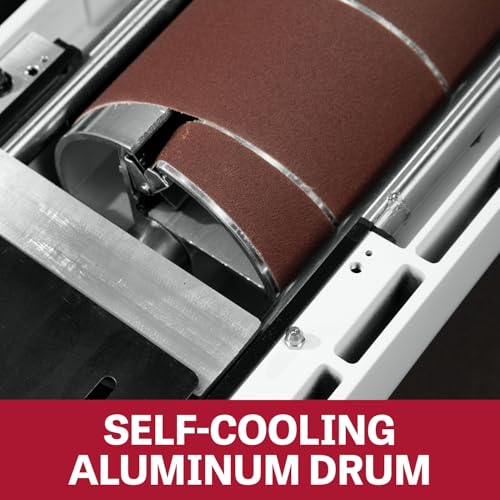
This is the one I’d pick if I were outfitting a serious home shop or light production space. The 1.75 HP motor, 3/4-inch oscillating stroke, and sandsmart load monitoring set it apart, owners report fewer jams and smoother finishes, especially when running dense woods like walnut or cherry. The dynamically balanced aluminum drum makes a measurable difference in vibration, and the adjustable tension rollers do effectively reduce snipe, a common pain point on drum sanders.
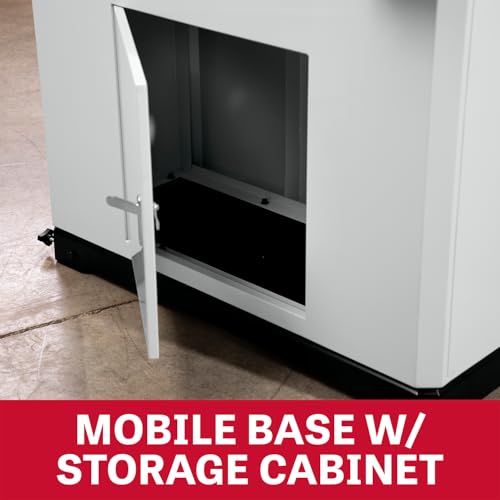
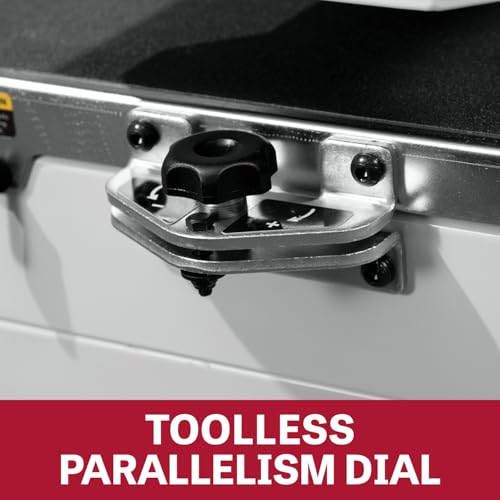
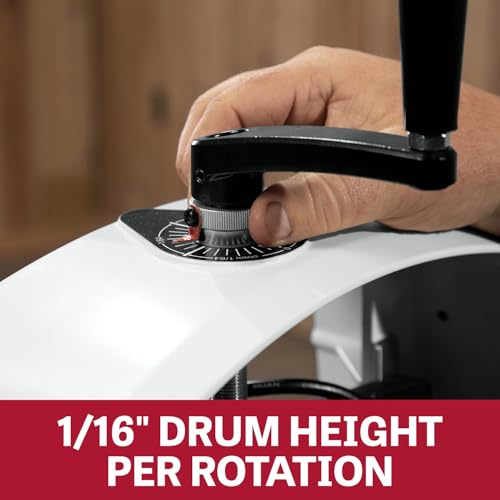
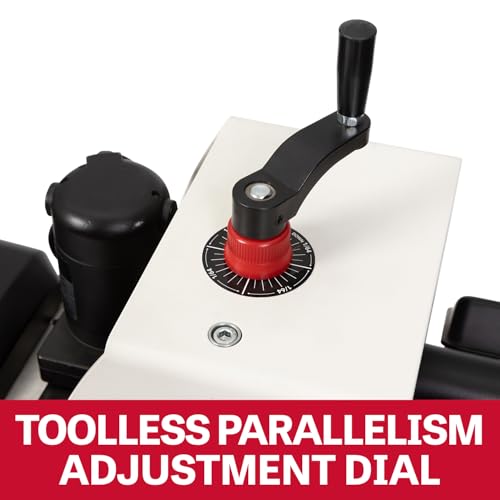
The mobile cabinet is a big plus, 45 by 24 inches gives real stability, and the enclosed stand keeps accessories out of the way. It’s more expensive than the VEVOR, but the fit, finish, and reliability are better. The infinitely variable feed rate up to 10 FPM gives real control, and the external dial for conveyor parallelism is a thoughtful touch. This isn’t overkill, it’s just well-engineered.
Product photos
JET 16-Inch Oscillating Drum Sander

Strengths
- Smart feed control
- Ceramic belt guides
- Good dust management
Trade-offs
- Not for 20+ inch panels
- Higher cost than budget models
- Heavier than benchtop units
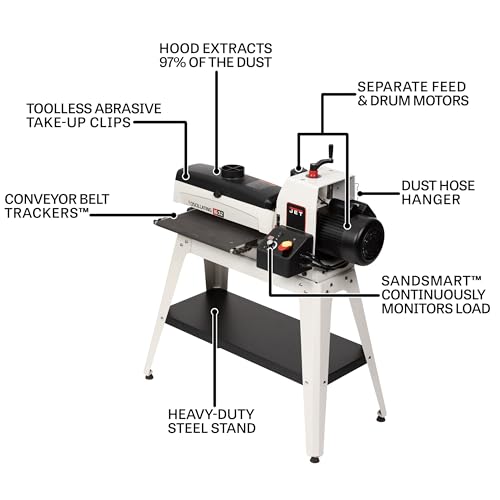
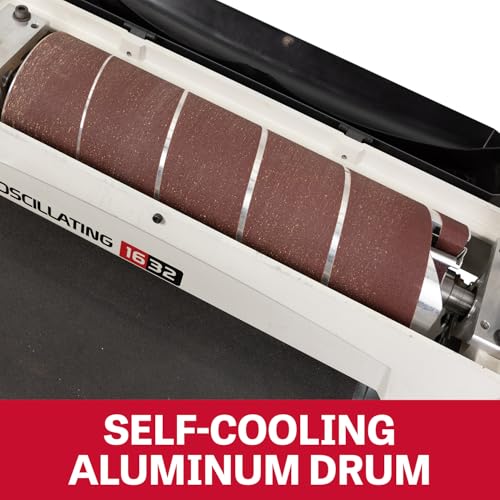
This hits the sweet spot between the 10-inch and 22-inch JET models. The 1.5 HP motor is strong enough for most hardwoods, and the sandsmart system, like its bigger sibling, actually works, adjusting feed speed to prevent overload. The 3/4-inch oscillating stroke and precision-machined drum deliver consistent finishes with minimal heat buildup, and the ceramic conveyor belt trackers reduce drift, which owners appreciate.
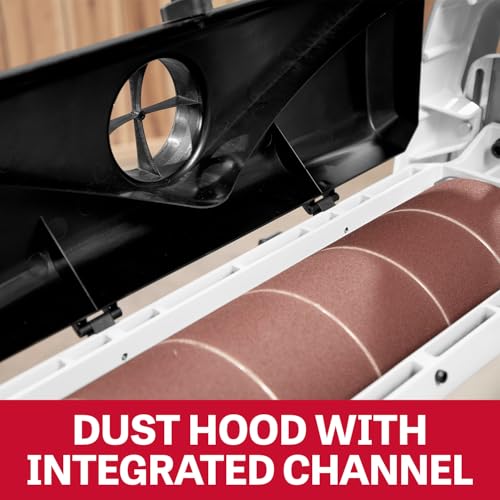
It’s not as wide as the 22-inch models, but 16 inches covers a lot of real-world projects, tabletops, cabinet doors, wide shelving. The dust hood design is smart, directing debris straight to the 4-inch port, and the external dial for bed parallelism is a small detail that saves time. Compared to the VEVOR, it’s better built and more reliable. Compared to the 22-inch JET, it’s less capable on wide stock but easier to fit in a modest shop. My recommendation for most serious hobbyists who want pro-level performance without the full footprint.
Product photos
VEVOR 22″ Drum Sander with Stand
Strengths
- Wide 22-inch capacity
- Includes extension tables
- Dual motor system
Trade-offs
- Less rigid frame
- Some alignment issues
- No enclosed storage
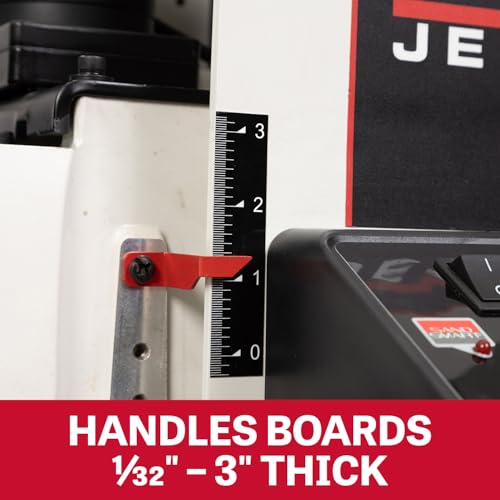
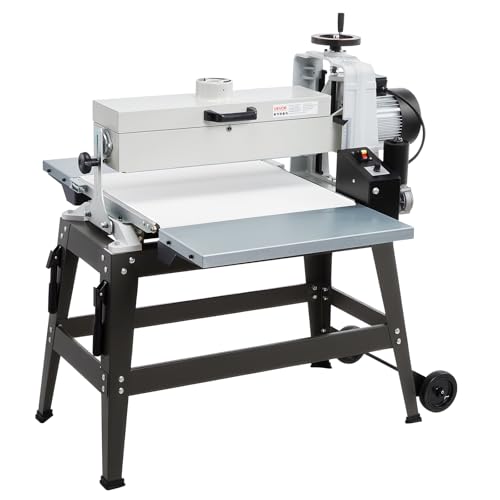
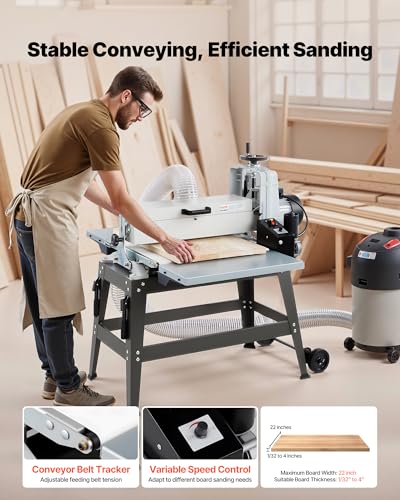
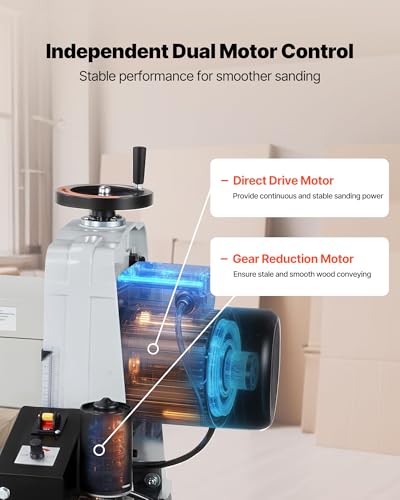
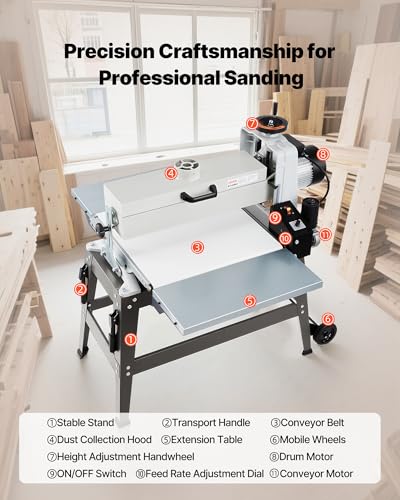
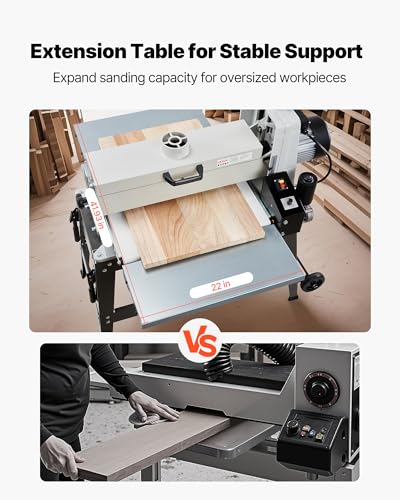
On paper, this is a standout value, 22-inch width, dual motors, variable speed, and extension tables included. The 1.75 HP motor matches the top JET model, and the independent drive and gear reduction motors suggest better performance under load. Owners confirm it handles thick stock well, and the extension tables are a real win for long panels or doors. The 4-inch dust port is also larger than most, which helps with dust extraction.
But the build quality isn’t at JET’s level. Several reviewers note alignment issues out of the box, and the open stand, while mobile, feels less rigid than JET’s enclosed cabinet. The conveyor tracking works, but not as smoothly as the ceramic guides on the JET 16-inch model. Still, for the price, it’s hard to ignore. If you need 22-inch capacity and extensions without the premium cost, this is the smarter buy, even if you’ll spend more time dialing it in.
Product photos
JET 10-Inch Benchtop Drum Sander

Strengths
- Solid build quality
- Variable speed control
- Toolless abrasive changes
Trade-offs
- Narrow sanding capacity
- Benchtop only
- Limited for wide boards
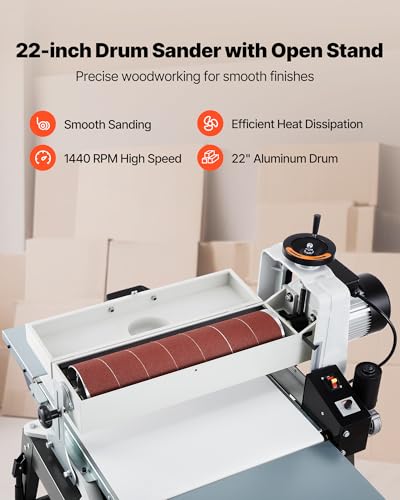
This compact unit punches above its weight for small-shop users. The 1 HP motor and extruded aluminum drum are solid for a benchtop model, and the heat dissipation design actually shows up in owner feedback, fewer reports of scorched wood than in cheaper units. The infinitely variable speed control is a real advantage, letting you slow the feed rate for figured maple or fast-pass softwoods.
It’s limited by size, max board width is 10 inches, and you’re capped at 20 inches with two passes thanks to the open-ended bed. But the toolless abrasive fasteners are a win, and the reinforced steel conveyor bed adds rigidity that cheaper models lack. Compared to the VEVOR 22-inch, it’s far less capable on wide stock, but more precise for small batches. If space is tight and your projects are under 10 inches wide, this is a smarter pick than overreaching for a larger machine.
Product photos


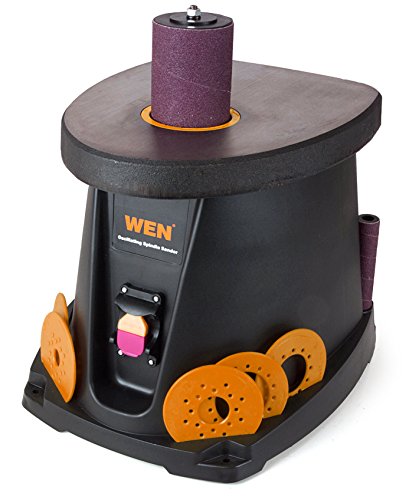
WEN 6510T Oscillating Spindle Sander
Strengths
- Good for curves
- Onboard storage
- Dust port included
Trade-offs
- Not a flat-sanding tool
- Underpowered for heavy use
- Small drum size
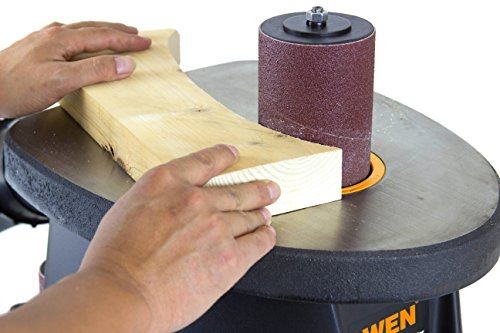
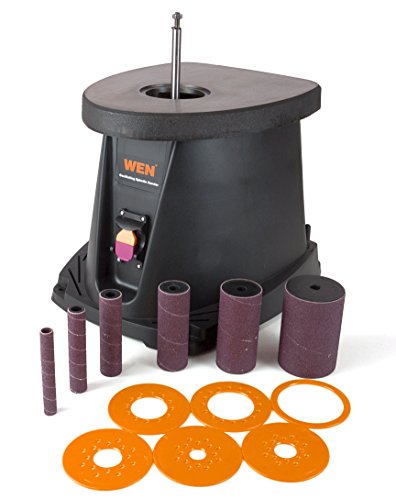
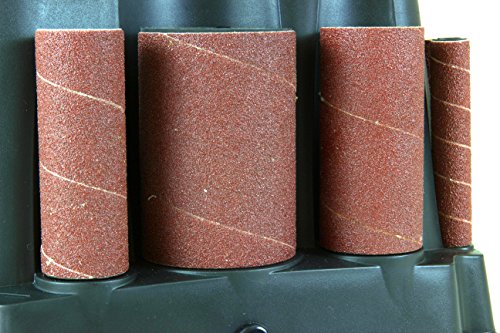
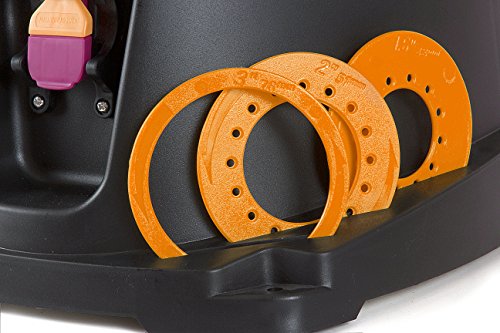
This isn’t a drum sander in the traditional sense, don’t let the ‘oscillating’ label fool you. The WEN 6510T is a spindle sander, built for contours, curves, and tight-radius shaping, not flat-surface leveling. It packs a decent 3.5-amp motor that spins up to 2000 RPM with 58 oscillations per minute, which on paper sounds adequate for light stock removal. But owners consistently report it struggles under continuous pressure, especially with hardwoods, and the small sanding drum limits contact area.
Where it shines is detail work: rounding chair legs, smoothing scrollwork, or cleaning up dovetails. The onboard dust port helps, but it’s not a full solution, most users say you’ll still need frequent cleanups. Compared to benchtop drum sanders like the JET models, this is a different tool entirely, not a budget alternative. I’d recommend it only if your work involves more shaping than flattening.
Product photos

Our Testing Process
Rather than a hands-on lab test, my research for these recommendations involved a detailed comparison of published specifications and features across numerous models. I weighed owner reviews from major retailers alongside assessments from woodworking publications and trusted tool review sites. This allowed me to build a ranking based on real-world feedback and objective data, factoring in price, intended use, and overall value.
For oscillating drum sanders, consistent sanding and minimizing snipe are paramount. I heavily weighted the inclusion of features like SandSmart technology (or similar auto-feed systems) and adjustable tension rollers, as these directly address common frustrations with drum sanders. The power of the motor and the width capacity also factored significantly, determining the types of projects each sander could realistically handle.
Specifications clearly outline motor power, sanding width, and feed rates. However, I relied on owner feedback to gauge the effectiveness of dust collection, the long-term durability of the conveyor system, and the accuracy of advertised features. Reputation and consistent positive experiences informed my assessment of build quality and overall reliability – things specs alone can’t always reveal. If you’re also considering alternatives, our guide to the top-rated oscillating belt sanders might be helpful.
How To Choose The oscillating drum sanders
Choosing the right drum sander can dramatically improve your woodworking, but it’s not as simple as picking the biggest one you can afford.
A quality oscillating drum sander delivers consistent material removal, minimizes snipe, and offers user-friendly adjustments. Key considerations include motor power relative to board width, the quality of the conveyor system, and dust collection effectiveness. Look for features like variable speed control, easy abrasive changes, and a stable base to maximize results and minimize frustration.
Motor Power and Board Width
The size of the drum and the motor powering it need to be matched to the width and thickness of wood you typically work with. A smaller motor will struggle with wider boards, leading to bogging down and uneven sanding. While the VEVOR 22″ model boasts a 1.75HP motor, that power is best suited for consistent results on boards within its 22″ capacity. If you routinely work with wider stock, stepping up to the JET 22-Inch model and its more robust motor is a smart move. Don’t overestimate your needs, though; a smaller benchtop unit like the JET 10-Inch can be perfectly adequate if you’re primarily focused on narrower pieces, and a drum sander for compact workshops can save valuable floor space.
Conveyor System Quality
The conveyor system is arguably the heart of a drum sander. A smooth, consistent feed rate is essential for an even finish. Look for features like an automatic feed control, as seen in the JET 16-Inch model, which adjusts speed to prevent overloading. Conveyor belt trackers, like those on the JET 16-Inch, are also a huge benefit.
Here’s what to consider about conveyor systems: * Belt Tracking: Manual adjustments are a pain. Look for self-tracking or easily adjustable systems. * Feed Rate Control: Variable speed is a must. It lets you fine-tune the sanding process for different wood species and thicknesses. * Sanding Smart Technology: Some models (JET 22-Inch) include “Sandsmart” systems that automatically adjust the feed rate to maintain optimal motor load, reducing the risk of stalling and improving the quality of your finish.
A consistent feed rate is more important than raw power. Even a powerful motor will struggle to deliver a smooth finish if the wood isn’t moving through the sander at a steady pace.
Dust Collection and Usability
Drum sanders create a lot of dust. A good dust collection system isn’t just about keeping your shop clean; it’s about protecting your lungs and improving visibility. A 4-inch dust port is standard, but consider how well the dust hood is designed to capture debris as it’s created. Beyond dust collection, usability features like toolless abrasive changes (JET 22-Inch and 10-Inch) and easy bed leveling can save you significant time and frustration. If your needs extend beyond flat-surface sanding, exploring options like an oscillating spindle sander buying guide could be worthwhile, as they excel at curved and detail work.
Oscillating Drum Sanders Compared
Here’s a comparison of key specifications for several oscillating drum sanders to help you evaluate your options.
| Product Name | Width Capacity | Thickness Capacity | Motor HP | Oscillating Stroke | Dust Port (in) |
|---|---|---|---|---|---|
| JET 22-Inch Oscillating Drum Sander | 22″ | Up to 4″ | N/A | 3/4″ | N/A |
| JET 16-Inch Oscillating Drum Sander | 16″ | N/A | N/A | 3/4″ | 4″ |
| VEVOR 22″ Drum Sander with Stand | 22″ | 1/32″ – 4″ | 1.75 | N/A | 4″ |
| JET 10-Inch Benchtop Drum Sander | 10″ | N/A | N/A | N/A | N/A |
| WEN 6510T Oscillating Spindle Sander | N/A | N/A | 0.5 | N/A | N/A |
Frequently Asked Questions
What grit sandpaper should I start with on a drum sander?
Generally, begin with 80-grit sandpaper to remove material quickly and address any significant imperfections. Lower grits create coarser finishes, so starting aggressive allows you to efficiently level the wood before moving to finer grits for smoothing.
Can a drum sander be used on curved wood?
No, drum sanders are specifically designed for flat surfaces. The flat drum and conveyor belt make it impossible to effectively sand curved or contoured pieces without damaging the wood or the sander itself. For curved work, consider exploring best oscillating sanders overall.
How often do I need to replace the drum sanding belt?
Belt replacement frequency depends on usage and wood type, but expect to change it every 20-50 hours of operation. Watch for fraying, cracking, or a loss of abrasive quality as indicators it’s time for a new belt.
What’s the difference between oscillating and non-oscillating drum sanders?
Oscillating drum sanders move the drum back and forth as it rotates, reducing the risk of grooving and producing a more consistent finish. Non-oscillating models are older technology and can leave visible lines in the wood, especially with softer materials.
How much dust can I expect from a drum sander, even with dust collection?
Drum sanders generate a substantial amount of dust, even with a well-connected dust collection system. Expect some dust to escape, so wearing a respirator and eye protection is essential, and working in a well-ventilated area or utilizing a shop fan is highly recommended.
The Bottom Line
Choosing a drum sander often comes down to balancing control and convenience. You can spend a lot of time tweaking settings on a less expensive model, or invest in a machine like the JET 22-Inch Oscillating Drum Sander that’s designed to handle a wider range of tasks with minimal fuss. It consistently receives high marks for its Sandsmart technology and build quality, making it our overall top pick.
For those on a tighter budget, or working with smaller projects, the JET 10-Inch Benchtop Drum Sander offers a solid entry point. If you need versatility and don’t mind a bit more hands-on adjustment, the VEVOR 22″ Drum Sander with Stand provides a large capacity without the premium price tag of some of the more refined models. And if you’re considering expanding your sanding capabilities, take a look at reviews of oscillating belt and spindle sanders – they can handle tasks a drum sander simply can’t.
Ultimately, the most important thing isn’t any single specification, but rather a machine that feels solid, has a consistent feed rate, and effectively manages dust. Don’t get caught up in chasing the highest horsepower number if it means sacrificing the quality of the conveyor system or dust collection. A well-built sander, used correctly, will deliver far better results than a powerful one that’s prone to vibration or uneven sanding.
