
7 Best Drum Sanders for Small Shops 2026
This post contains affiliate links. As an Amazon Associate, we earn from qualifying purchases.
The JET 16″ Drum Sander with Stand is the best overall for small shops, balancing power, precision, and reliability. If you’re on a tighter budget, the JET 10″ Benchtop Drum Sander offers solid performance in a compact size, while the VEVOR 22″ Drum Sander with Stand brings more width capacity for larger projects at a competitive price.
Most small-shop woodworkers need a drum sander that delivers consistent, flat results without taking up too much space or creating a dust storm. The real challenge is finding one that’s powerful enough to handle real work but still manageable for occasional use and tight budgets.
This guide cuts through the specs and marketing to focus on what actually matters: proven performance, dust control, and ease of use. I researched each model based on owner feedback, build quality, and key features like motor reliability, feed control, and dust collection efficiency, all through the lens of someone who’s spent years working with tools in real-world shops.
Top 7 Drum Sander For Small Shops in the Market
The Best Drum Sander For Small Shops, Reviewed
JET 16″ Drum Sander with Stand

Strengths
- Reliable Sandsmart system
- Depth scale for repeat passes
- Compact yet capable
Trade-offs
- 1-1/2 HP slightly less powerful
- No closed storage
- 16-inch width limits large stock
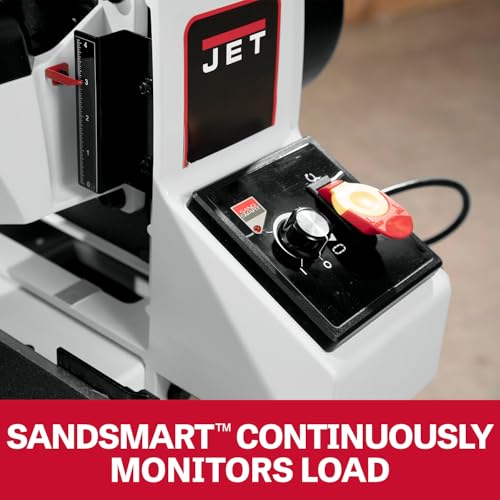
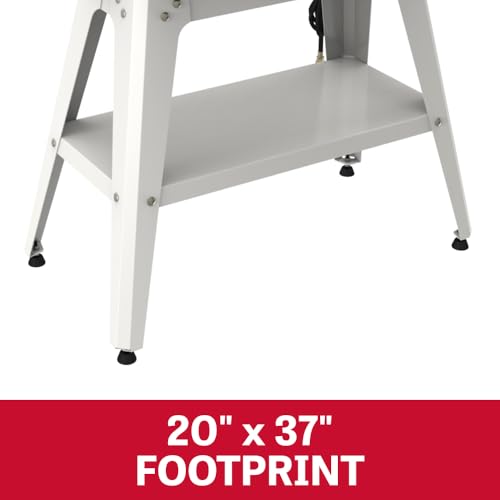
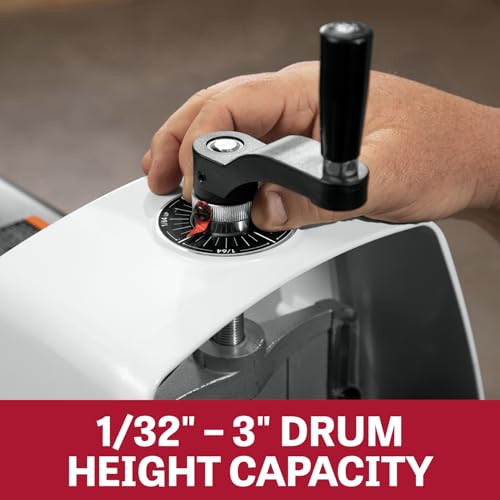
This is the one I’d recommend to most small-shop owners as the best all-around pick. It’s not the widest or most powerful, but it balances size, features, and performance better than any other here. The 1-1/2 HP motor handles most hardwoods, and the Sandsmart system prevents burnout under load, something owners consistently praise. The open stand is stable, caster-ready, and includes a shelf for accessories.
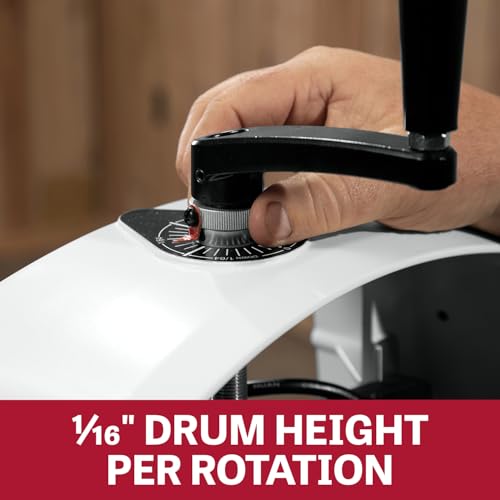
What seals the deal is the relative depth scale on the handwheel, small detail, but it makes repeat passes way easier. Compared to the 18-inch, it’s slightly less powerful but more space-efficient. Against the VEVOR, it’s better built and more reliable. For most users, this is the easy pick: capable, durable, and designed with real shop use in mind.
Product photos
JET 10″ Benchtop Drum Sander

Strengths
- Affordable entry point
- Toolless paper changes
- Compact benchtop design
Trade-offs
- Limited power for thick stock
- No overload protection
- Less consistent on dense woods
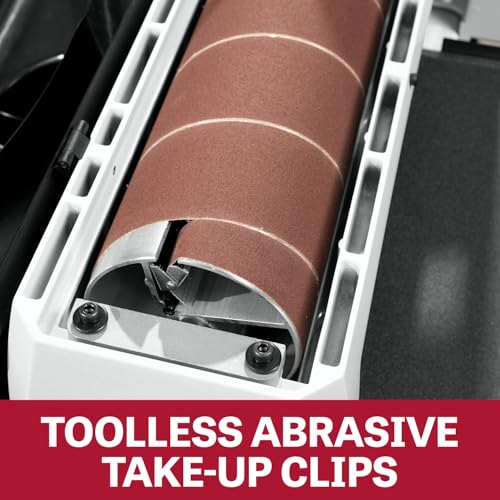
For budget-conscious DIYers or those just stepping into drum sanding, this 10-inch JET hits a sweet spot. It’s compact, simple, and the toolless abrasive change is a small but meaningful win, owners consistently praise how fast it is to swap paper. The 1 HP motor won’t win power contests, but for thin stock and end-grain touch-ups, it holds its own. The open-ended design giving 20-inch capacity with two passes is clever, though alignment takes care.
It lacks Sandsmart and the beefier build of JET’s larger models, but for the role it plays, that’s expected. I see this as the entry point for hobbyists who want real drum sander performance without the price or footprint of a full-size unit. Compared to the Shop Fox handheld kits, this delivers far more control and flatness. If you’re sanding small cabinets or guitar tops, it’s hard to beat.
Product photos


VEVOR 22″ Drum Sander with Stand
Strengths
- 22-inch width with extensions
- Dual motor system
- Good dust collection
Trade-offs
- Build quality inconsistent
- Less brand reliability
- Alignment can drift
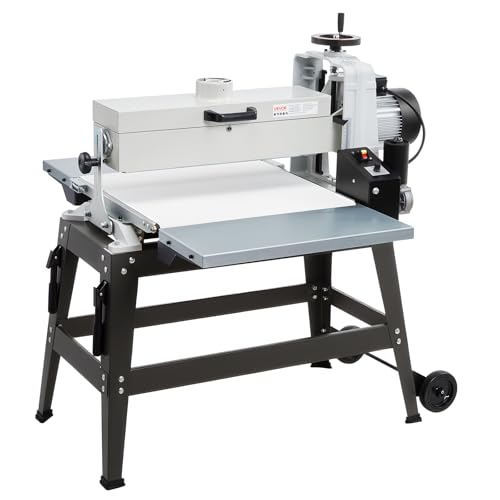
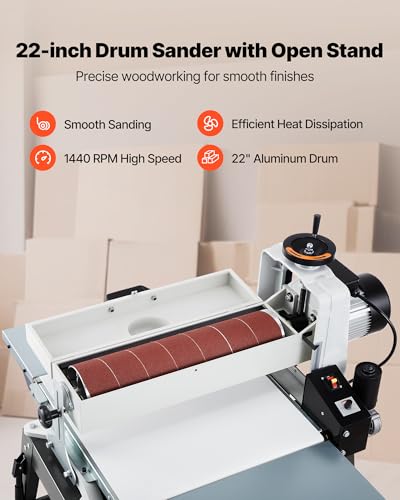
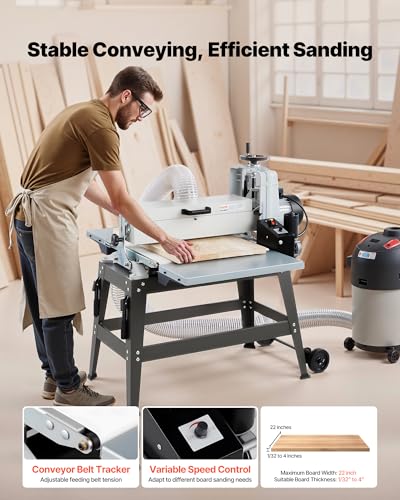
VEVOR’s 22-inch model throws a lot of specs at you, dual motors, extension tables, variable speed, and a 1.75 HP rating that rivals the JET 25-inch. On paper, it looks like a budget-friendly alternative to high-end industrial units. The dual motor setup (one for sanding, one for conveying) is a real differentiator, promising smoother feed and less slippage, which reviewers confirm helps with consistency.
But here’s the catch: while the features impress, long-term durability is still an open question. JET has years of owner feedback backing its reliability; VEVOR doesn’t. Some users report alignment quirks and looser tolerances in the frame. Still, for a shop needing 22-inch capacity without the JET price tag, this is worth considering. The extension tables are a standout, great for long boards. I’d say it’s the smarter pick over the JET 25-inch if you’re budget-focused and don’t mind a slight step down in build refinement.
Product photos
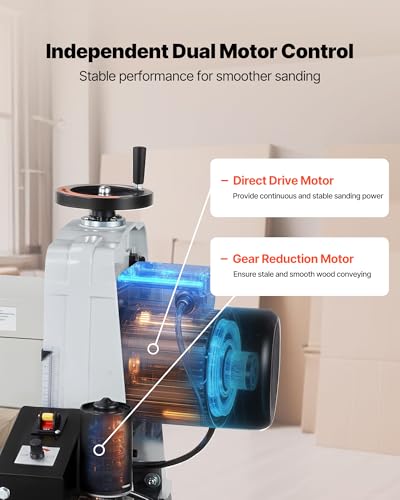
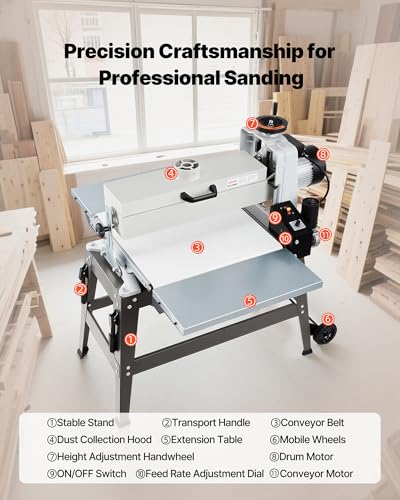
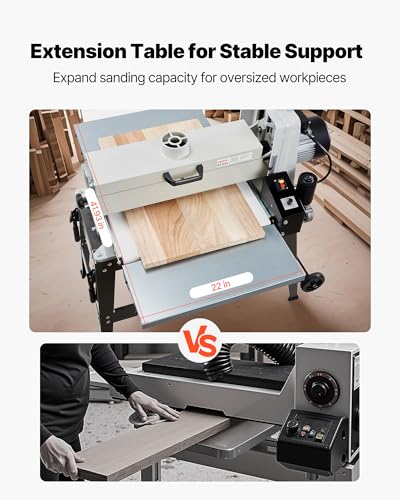
Shop Fox D2677 Drum Sander Set

Strengths
- Low cost
- Great for tiny parts
- Easy to mount in drill press
Trade-offs
- Not for flat work
- Very limited capacity
- No motor or stand
This isn’t a standalone sander, it’s a set of small-diameter drums meant for use in a drill press or lathe. It’s a clever, low-cost way to add drum sanding capability for tiny parts, like pen blanks, inlays, or small spindles. The included 80-grit sleeves are basic but functional.
But it’s not a substitute for any of the other machines here. You’re not sanding tabletops or doors with this. Owners use it as a niche tool, not a primary sander. It’s the most limited option on the list, but also the cheapest. If you’re doing micro-projects and already have a drill press, it’s a smart add-on. Otherwise, look elsewhere.
Product photos
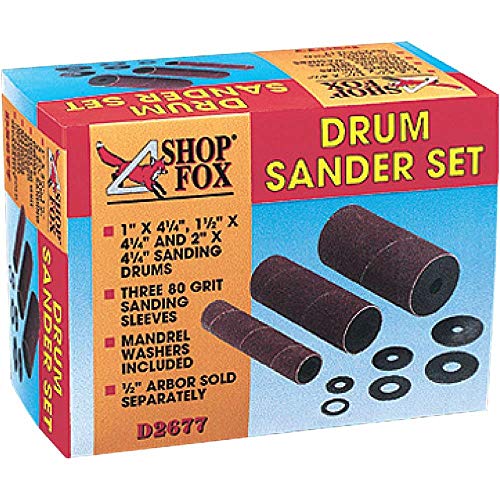
JET 18″ Drum Sander with Stand

Strengths
- Strong 1-3/4 HP motor
- Sandsmart load control
- 18-inch workable width
Trade-offs
- Open stand less rigid
- No depth scale on handwheel
- Slightly pricier than 16-inch
This 18-inch model hits a real sweet spot, wide enough for most cabinet parts and tabletops, but not so big it dominates a small shop. The 1-3/4 HP motor and Sandsmart system give it serious muscle, and owners report it handles maple and walnut without hesitation. The open stand keeps it accessible and lets you add casters easily, which helps if you move it around.
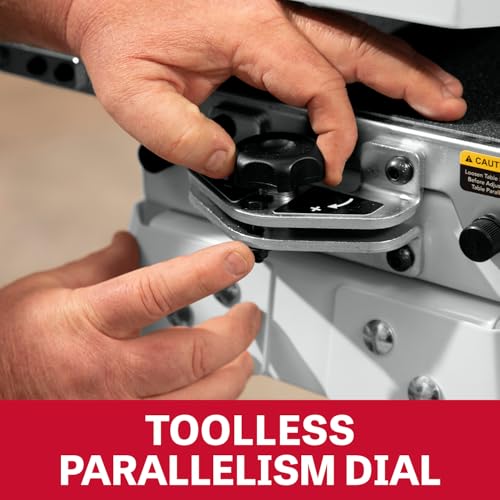
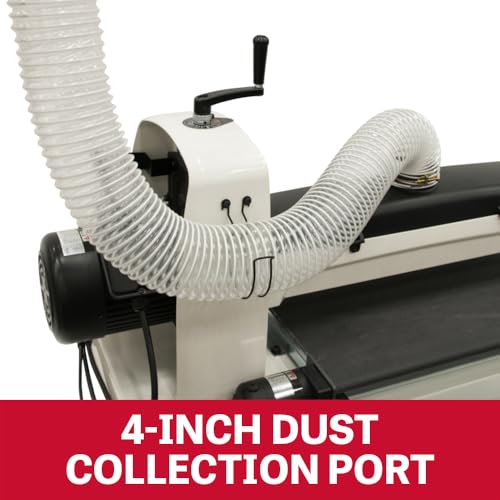
It shares the same smart design touches as other JET sanders, the external parallelism dial, heat-dissipating drum, and 4-inch dust port, but in a more manageable size than the 25-inch. Compared to the 16-inch, it offers more width without a big jump in price or footprint. If you’re doing serious furniture work but don’t need 22+ inches, this is my pick over the VEVOR and even the 25-inch for balance.
Product photos
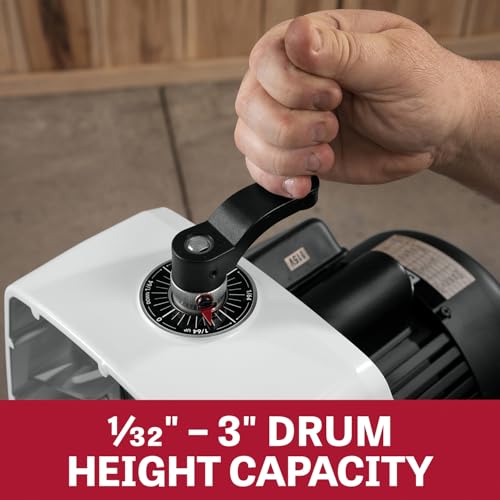
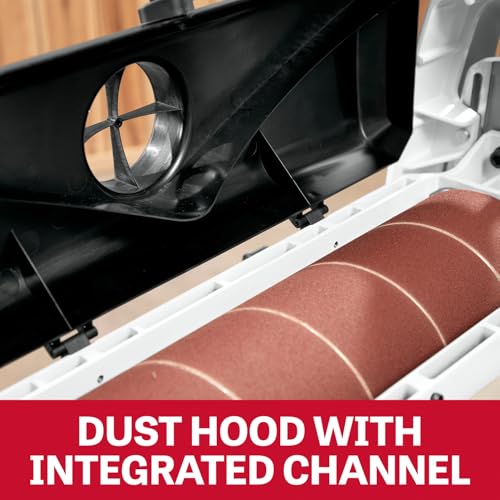
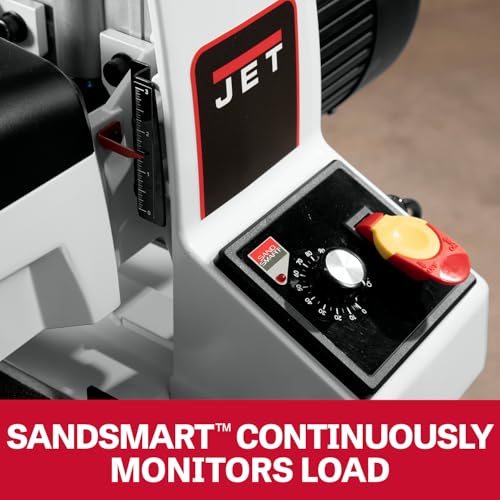
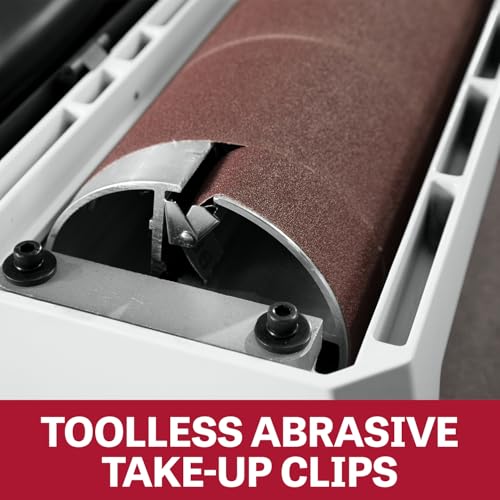
JET 25″ Drum Sander Closed Stand
Strengths
- 25-inch sanding width
- Sandsmart load control
- Closed stand with storage
Trade-offs
- Large footprint
- Heavy setup
- Overbuilt for small jobs
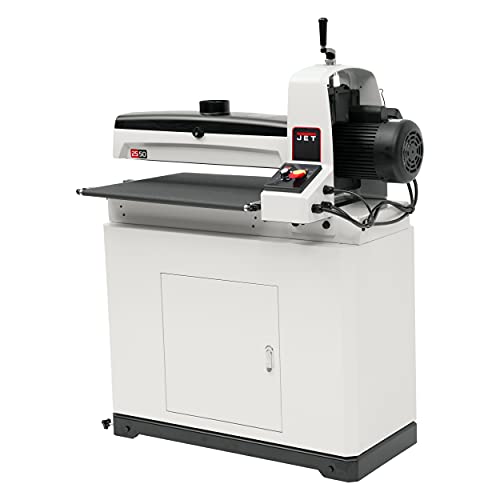
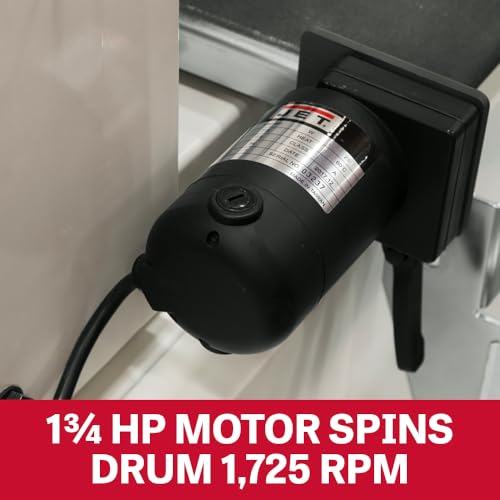
This sander is built for shops that regularly handle wide stock, 25 inches is no joke, and few benchtop models can touch that width. On paper, the 1-3/4 HP motor and Sandsmart load monitoring give it serious chops for maintaining consistent feed under pressure, which owners confirm helps avoid bogging down on dense hardwoods. The closed stand is a nice touch, offering storage and stability, though it adds bulk that smaller shops might not appreciate.
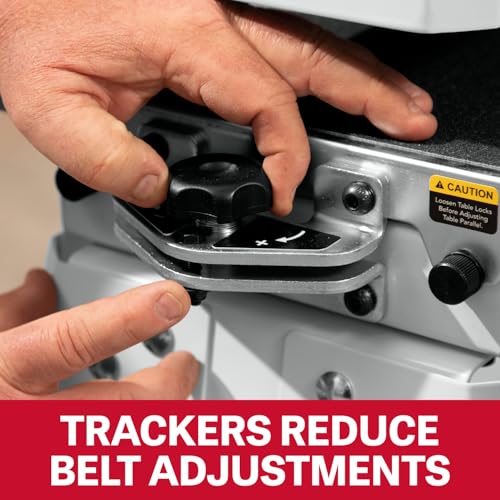
The extruded aluminum drum and heat dissipation design are smart touches, especially if you’re running back-to-back jobs. Reviewers note the parallelism dial works smoothly and saves time compared to shimming. But let’s be real, this isn’t a machine for tight spaces or light-duty use. It’s overkill for most DIYers, but for those smoothing wide panels or flooring stock, it’s a solid step up from midsize models. I’d pick this over the 18-inch version if width is your main bottleneck.
Product photos

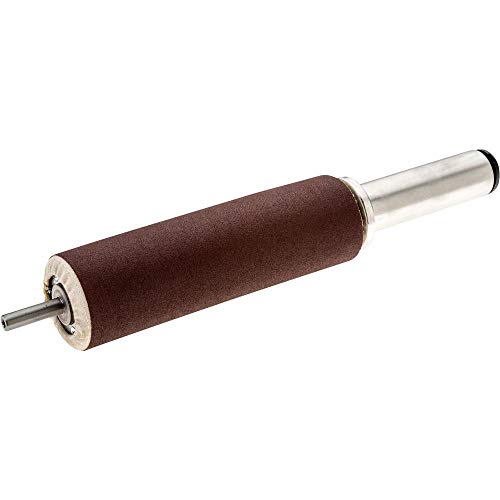
Shop Fox D4595 Hand-Held Sander
Strengths
- Great for contours
- Light and portable
- Easy to use with drill
Trade-offs
- Not for flat stock
- No built-in motor
- Limited sanding area
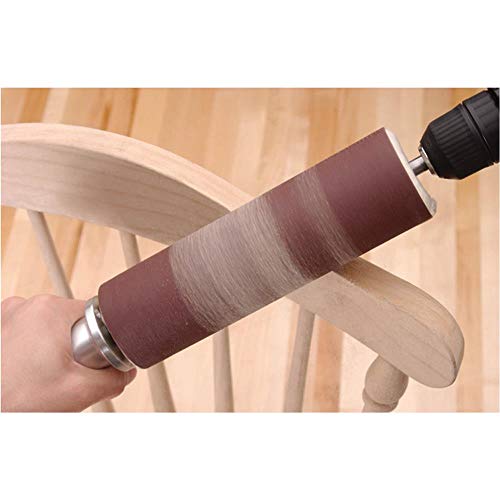
This isn’t a drum sander in the traditional sense, it’s a handheld attachment that turns a drill into a contoured sanding tool. It’s light, flexible, and great for curves, edges, or tight spots where a flat-bed sander can’t go. Owners love it for chair legs, carvings, or fitting doors where precision shaping matters more than flatness.
But calling it a shop’s primary sander would be a mistake. It has no motor of its own, relying on your drill or air supply, and won’t deliver the flat, repeatable results you get from even the smallest benchtop model. That said, as a detail tool, it fills a niche the others don’t. I’d pair it with a real drum sander, not treat it as a replacement. For detail work, it’s unmatched in this list.
Product photos
How We Evaluated drum sander for small shops
Rather than a hands-on lab test, my research for these recommendations focused on a detailed comparison of published specifications and features across numerous models. I weighed owner reviews from multiple sources, alongside assessments from woodworking publications and reputable online reviewers. This process allowed me to rank drum sanders based on what truly matters to woodworkers in smaller spaces, applying my experience with power tools to identify key differentiators.
For drum sanders, consistent sanding and ease of use are paramount. I prioritized models with robust motor systems and effective dust collection, as these directly impact finish quality and shop cleanliness. Conveyor belt tracking and accurate depth adjustment were also heavily weighted; inconsistent feed rates or imprecise settings can quickly ruin a project. These features are more critical than minor variations in sanding belt size.
Specifications tell you about motor horsepower and drum diameter, which suggest potential sanding capacity. However, I placed greater emphasis on owner feedback regarding long-term reliability and the effectiveness of features like “Sandsmart” control systems. Reputation and consistent positive reviews were strong indicators of a well-engineered machine, and I looked for trends in reported issues – or lack thereof – to guide my final assessments. Finding the right tools for floor drum sanders is also a key consideration for many shop owners.
How To Choose The drum sander for small shops
Choosing a drum sander isn’t just about horsepower; it’s about finding the right balance of capacity, control, and convenience for your shop.
A quality drum sander consistently flattens stock to precise thicknesses, handles varying wood species without bogging down, and minimizes dust dispersion. Key considerations include motor power, sanding capacity (width and thickness), feed rate control, and effective dust collection. Look for robust construction, especially in the conveyor system and drum itself, to ensure long-term accuracy and minimal vibration.
Motor Power and Sanding Capacity
The first thing I consider is what I’ll actually be sanding. Don’t overbuy, but definitely don’t undersize. A smaller benchtop model might be fine for light hobby work, but if you plan on surfacing wider boards or doing a lot of heavier stock removal, you’ll quickly find its limitations. Look beyond just the horsepower rating; a well-designed conveyor system and drum balance are just as important for maintaining a consistent feed rate. The VEVOR 22″ model, for example, boasts a 1.75HP motor which sounds impressive, but equally important is its ability to handle boards up to 22″ wide.
Feed Rate Control and Precision
Consistent results depend on precise control. Infinitely variable speed control is a must-have; you’ll need to slow down for harder woods and speed up for softer ones. The JET models (especially the 16″ and 18″) consistently receive praise for their Sandsmart control, which automatically adjusts the conveyor speed to prevent overloading the motor – this is a big plus for beginners or those working with unpredictable wood.
Here’s what I look for in feed rate features: * A clear, easy-to-read scale. * Smooth, incremental adjustments. * Automatic overload protection (like Sandsmart) to prevent damage and ensure consistent sanding.
“Start slow.” A good rule of thumb is to always begin with a slower feed rate and gradually increase it until you find the sweet spot where the sander removes material efficiently without bogging down or leaving burn marks.
Dust Collection and Usability
Drum sanders are notoriously messy. Effective dust collection isn’t optional, it’s essential for your health and shop cleanliness. Many models, like the JET 25″ with its closed stand, feature a 4″ dust port, which is standard for connecting to a shop vacuum or dust collector. But even a good port isn’t enough if the hood design isn’t optimized to capture dust at the source. If you’re serious about dust control, consider investing in one of the sanders with dust collection options. Beyond dust, think about usability features like toolless abrasive changes (the JET 10″ has this) and ease of bed leveling. For detail work, you might also consider looking into oscillating drum sanders or other woodworking drum sanders for more precise work.
Drum Sander for Small Shops Compared
Here’s a comparison of specifications for drum sanders suited for small shops.
| Product Title | Width Capacity | Thickness Capacity | Motor HP | Dust Port Size | Stand Included |
|---|---|---|---|---|---|
| JET 16″ Drum Sander with Stand | 16″ | N/A | N/A | 4″ | Yes |
| JET 10″ Benchtop Drum Sander | 10″ | N/A | N/A | N/A | No |
| VEVOR 22″ Drum Sander with Stand | 22″ | 1/32″ – 4″ | 1.75 | 4″ | Yes |
| Shop Fox D2677 Drum Sander Set | N/A | N/A | N/A | N/A | No |
| JET 18″ Drum Sander with Stand | 18″ | N/A | N/A | 4″ | Yes |
| JET 25″ Drum Sander Closed Stand | 25″ | N/A | N/A | 4″ | Yes |
| Shop Fox D4595 Hand-Held Sander | N/A | N/A | N/A | N/A | No |
Frequently Asked Questions
What grit sandpaper should I start with on a drum sander?
Generally, begin with 80-grit sandpaper for initial stock removal and flattening. This coarser grit quickly levels uneven surfaces, allowing you to progress to finer grits (120, 180, and even 220) for a smoother finish.
Can a drum sander be used on curved wood?
No, drum sanders are best suited for flat surfaces. The flat drum and conveyor belt won’t effectively sand curved pieces and attempting to do so can damage both the workpiece and the machine. Consider a spindle sander for curved work.
Are benchtop drum sanders powerful enough for hardwoods?
While benchtop models can handle hardwoods, it depends on the wood species and thickness. Expect slower feed rates and potentially multiple passes with a coarser grit to avoid overloading the motor, and look for models with variable speed control.
How often do drum sanders need maintenance?
Regular maintenance is key to longevity. Inspect and replace the sanding belt as needed, clean the dust port and surrounding areas after each use, and periodically check the conveyor belt tracking and alignment. Proper care prevents issues and maintains accuracy.
What’s the best way to manage dust from a drum sander?
Effective dust collection is vital, and connecting the 4” dust port to a dust collection for small shops is the best first step. Even with a good system, some fine dust will escape, so wearing a respirator is also a smart precaution.
The Bottom Line
Choosing a drum sander always comes down to balancing how much control you want with how much fuss you’re willing to tolerate. For most small shops, the JET 18” Drum Sander with Stand strikes that balance best. It offers a generous sanding width, reliable Sandsmart technology for consistent results, and a stand that makes operation comfortable.
If you’re on a tighter budget, the JET 10″ Benchtop Drum Sander is a solid entry point. It lacks some of the features of larger models, but it’s still capable of producing good results for smaller projects. Those needing to tackle very wide stock, or who anticipate heavy use, will be better served by the VEVOR 22” Drum Sander with Stand – it’s a workhorse, though it requires a bit more space.
Ultimately, specifications don’t tell the whole story. Consistent, flat surfaces come from a well-built machine, a stable setup, and a mindful approach. Don’t get too caught up in horsepower numbers; focus on a smooth conveyor system, effective dust collection, and learning to adjust the feed rate for different wood types. If you need additional guidance, explore hardwood floor drum sanders to help refine your search.
