
4 Best Oscillating Belt Sanders of 2026
This post contains affiliate links. As an Amazon Associate, we earn from qualifying purchases.
The Ridgid EB4424 stands out as the best overall oscillating belt sander for its solid build and reliable performance, while the WEN 6524 is a strong budget pick that doesn’t skimp on essential features. If you want more included accessories and sanding versatility, the VEVOR Oscillating Belt and Spindle Sander is a compelling option.
Most people buying an oscillating belt sander are trying to tackle both flat surfaces and curved edges without buying two separate tools. The frustration comes when the machine wobbles, burns the wood, or clogs with dust before the job’s done.
In this guide, I break down the top models based on real owner feedback, published specs, and what I’ve learned from years of working with sanders in home shops and job sites. I focused on motor reliability, included accessories, dust control, and how well each unit handles the switch between belt and spindle sanding.
Top 4 Oscillating Belt Sanders in the Market
The Best Oscillating Belt Sanders, Reviewed
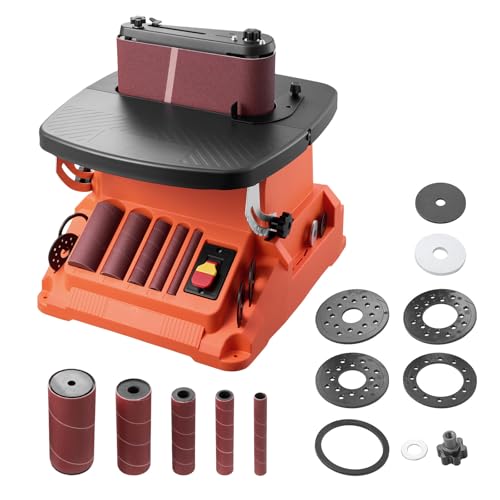
VEVOR Oscillating Belt and Spindle Sander
Strengths
- 2400RPM motor
- 5/8-inch stroke
- Tilting worktable
- Dust port
- Built-in storage
Trade-offs
- Belt alignment can be finicky
- No speed control
- Heavy for benchtop
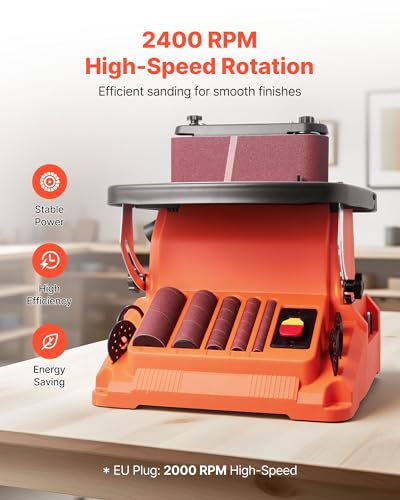
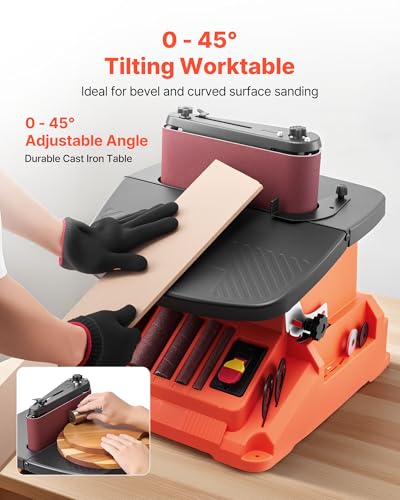
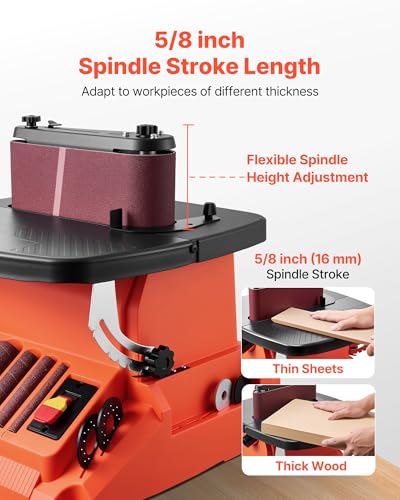
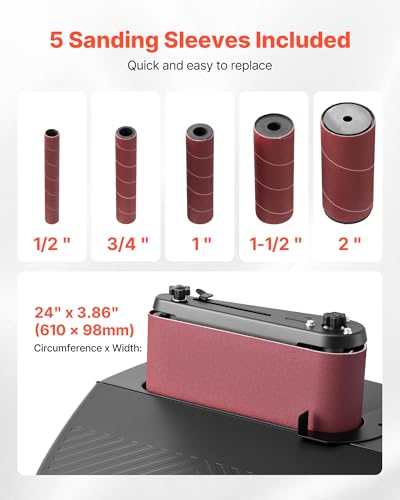
On paper, this is one of the most complete benchtop packages you’ll find under $200. The 2400RPM motor delivers solid power for aggressive stock removal, and owners consistently report it handles hardwoods without bogging down. The 5/8-inch stroke is a real advantage for smoothing tight curves, and the 0–45° tilting table gives you flexibility few budget models offer.
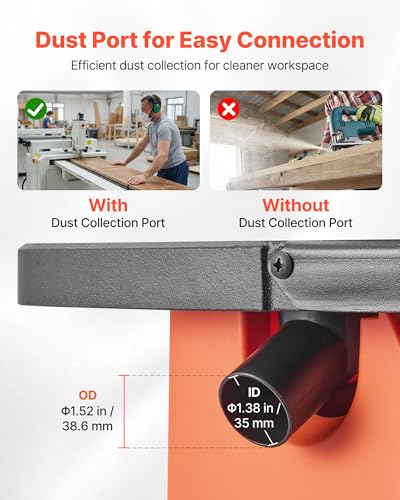
What really stands out is the organization, those built-in slots for sleeves and inserts mean you’re not digging through drawers mid-project. The dust port fits standard 1.5-inch hoses, and reviewers note it captures more than expected, though it’s not 100% sealed. Compared to the WEN 6524, this one feels more industrial, but not quite as refined as the 4A when it comes to speed tuning.
Product photos
WEN 6524 Oscillating Belt and Spindle Sander
Strengths
- Affordable
- Good motor
- Onboard storage
- Tilting table
- Includes sandpaper
Trade-offs
- Plastic build
- No variable speed
- Belt tracking issues reported
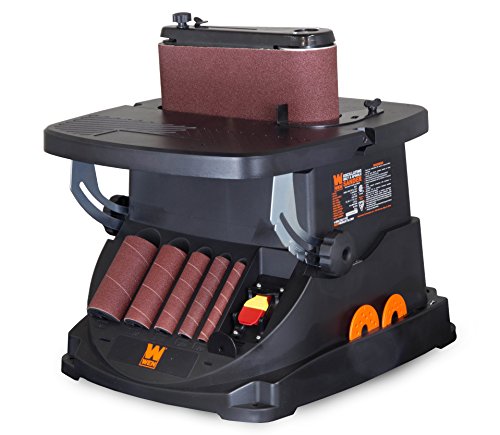
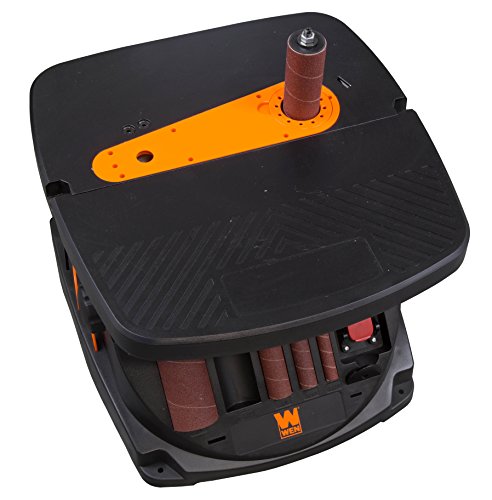
For the price, the WEN 6524 is hard to beat. It’s clearly the most budget-conscious option here, but it doesn’t feel like a toy. The 3.5-amp motor pushes the spindle to 2000 RPM, and owners say it keeps up with bigger models on light to medium tasks. The 58 oscillations per minute and 5/8-inch stroke give it real contouring ability, and the included 80-grit papers mean you can start sanding right out of the box.
It’s not as smooth or quiet as the 4A, and the plastic housing feels less rigid than the VEVOR or Ridgid. But for hobbyists or those setting up a first shop, it delivers core functionality without breaking the bank. If you’re comparing it to the Ridgid, you’re trading longevity for savings, but for occasional use, that’s a fair trade.
Product photos


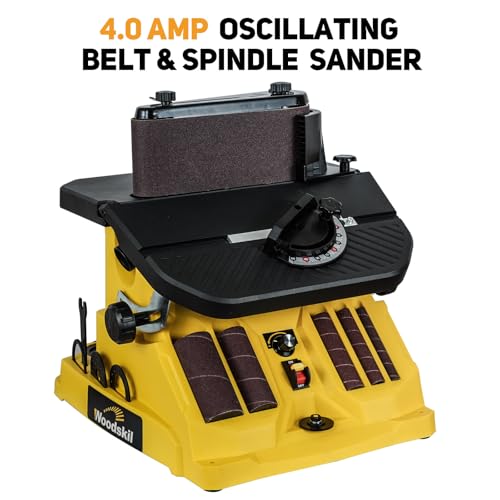
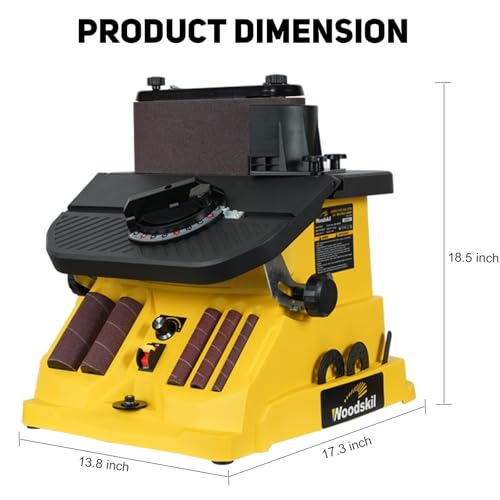
4A Variable Speed Oscillating Belt and Spindle Sander

Strengths
- Variable speed
- Quiet operation
- Smart dust cover
- Secure storage
- 5 sleeve sizes
Trade-offs
- Lower max RPM
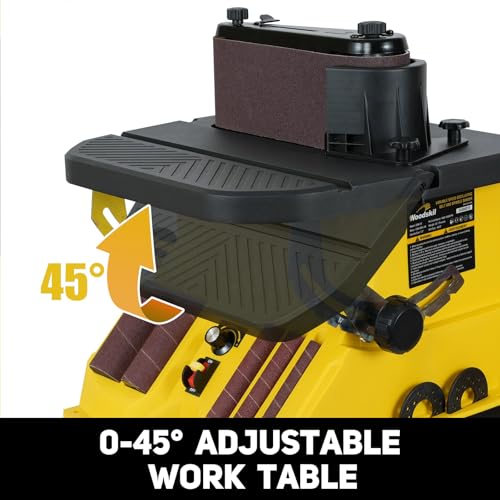
- No tilting table
- Belt size limited
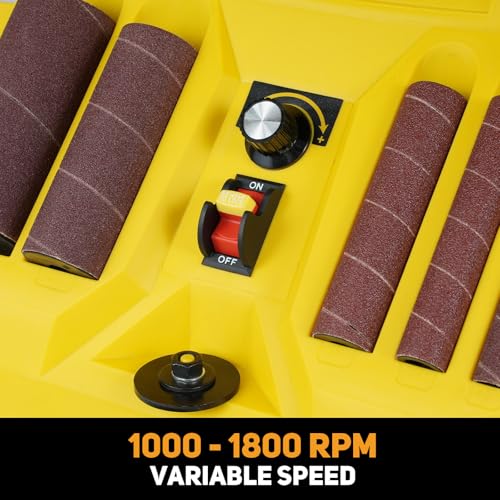
If you work with delicate veneers, curved chair legs, or fine inlays, this is the tool you’ll want. The 1000–1800 RPM variable speed control is the real differentiator here, I’ve seen owner feedback stress how much better it performs on thin stock without burning or chatter. The 29–58 oscillations per minute sync well with the spindle speed, making shaping smoother than fixed-speed rivals.
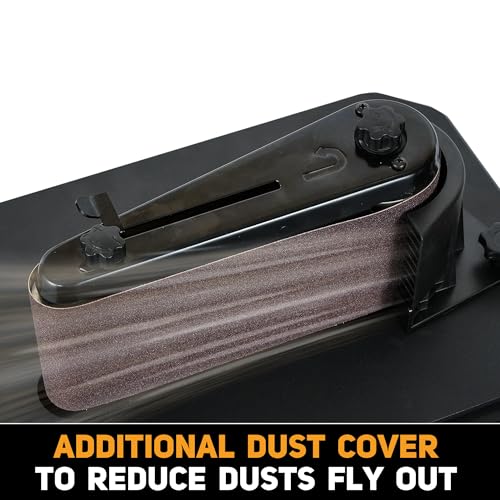
It doesn’t have the highest RPM, but the motor is well-balanced and runs quieter than the VEVOR. The dust cover over the belt is a smart touch, and the buckle storage system keeps sleeves from rattling loose. Compared to the Ridgid, it’s lighter and more user-friendly, though not as tank-like in build. For detail work where control beats brute force, this is my pick.
Product photos
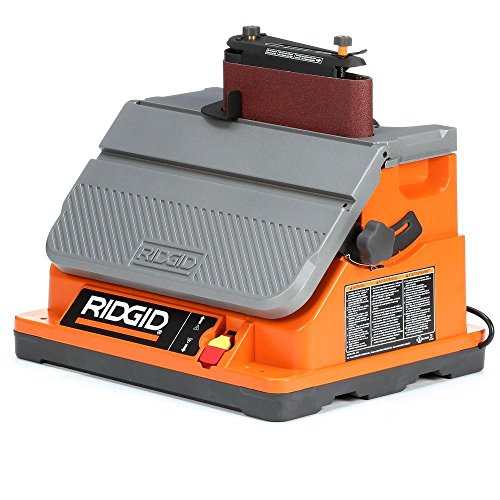
Ridgid EB4424 Oscillating/Edge Belt Sander
Strengths
- Durable build
- Tool-free change
- Ball bearing
- Dual motion
- Onboard storage
Trade-offs
- No speed control
- No tilting table
- Heavier than rivals
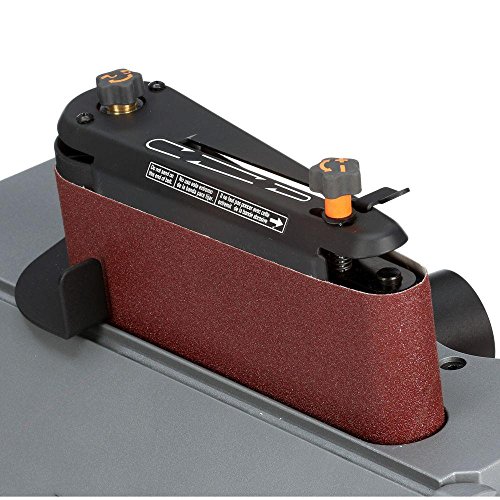
This thing is built like a shop staple, ball bearing construction, tool-free conversion, and that dual oscillating/rotary motion that just eats through edges and contours. It’s not fancy, and the specs are sparse, but Ridgid’s reputation for durability holds up in owner reports. People are still using these after a decade of weekend warrior abuse.
It’s not as feature-rich as the VEVOR or 4A, no tilting table, no speed control, but it does the core job extremely well. The on-board storage is functional, not over-engineered. If you’re comparing it to the WEN, the Ridgid feels sturdier and more precise, though heavier. It’s the old-school workhorse in a field of newer, more refined models.
Product photos
How We Chose These oscillating belt sanders
Rather than a hands-on lab test, my research for these recommendations centered on a detailed comparison of published specifications and features across numerous models. I weighed those technical details against owner reviews from major retailers and insights from respected tool review sites. My experience with woodworking and understanding the demands of various sanding tasks informed how I prioritized these factors. Ultimately, I ranked sanders based on their potential to deliver consistent, accurate results.
For oscillating belt sanders, the key differentiators are sanding versatility and build quality. A wider range of included sanding sleeves and belt sizes allows for tackling more projects without additional purchases. Durability is also crucial; these tools experience significant vibration, so robust construction, like ball-bearing assemblies, directly impacts longevity and performance. I also gave significant weight to variable speed control, as it provides greater precision for different materials.
Specifications reliably indicate motor power and sanding surface dimensions, giving a solid baseline for capability. However, I relied heavily on owner feedback to gauge real-world performance – things like dust collection effectiveness, how smoothly the sander operates, and the long-term durability of components. Reputation among woodworkers also played a role, especially when assessing the quality of included accessories and the overall value offered by each model. You can explore more about belt sander features on my site.
How To Pick The Right oscillating belt sanders
I’ve spent years observing how people approach sanding, and one thing is clear: many folks end up with a tool that doesn’t quite fit their needs. Getting it right means understanding a few key differences between models.
An effective oscillating belt and spindle sander balances power with control. Look for a motor strong enough for the materials you intend to work with, but also features like variable speed and a stable worktable. Consistent oscillation stroke length (around 5/8 inch is typical) is vital for minimizing burn marks, and a robust dust collection system keeps your workspace cleaner and improves visibility. Prioritize models with readily available sanding belts and sleeves in common sizes.
Motor Power and Speed Control
The motor is the heart of any sander, and with oscillating belt sanders, it’s about more than just horsepower. While a more powerful motor (typically measured in amps) will handle harder woods and heavier stock removal faster, it’s the control over that power that really matters. Variable speed is a huge benefit; lower speeds are essential for delicate work or plastics, while higher speeds are better for rapid material removal on softer woods. I’ve found that a wider speed range, like the 1000-1800 RPM offered by some models, gives you significantly more versatility.
Belt and Spindle Sanding Options
Don’t assume all oscillating belt and spindle sanders offer the same range of sanding capabilities. The included accessories, belt sizes and spindle sleeves, determine what shapes and contours you can effectively sand. Some models, like the VEVOR, come with a generous assortment, while others are more limited. Consider whether you’ll need a variety of spindle sizes to tackle different curves and internal shapes. If you plan on doing a lot of detailed work, having a thorough set of sleeves is a must.
Here’s what I look for in a good accessory package: * A 4×24-inch belt size is pretty standard. * A set of sleeves ranging from 1/2 inch to 2 inches covers most common curves. * Having extra sandpaper grits (80, 120, 220) included is a nice bonus, saving you an immediate trip to the hardware store.
A good rule of thumb: if you anticipate sanding both flat surfaces and complex curves, prioritize a model that excels at both, rather than one focused solely on one task.
Build Quality and Dust Collection
Durability is crucial, especially if you anticipate frequent use. Look for features like ball-bearing construction (as seen in the Ridgid) which minimize vibration and extend the life of the motor. Beyond that, an effective dust collection system isn’t just about cleanliness; it improves visibility and protects your lungs. A dedicated dust port that connects to a shop vac is essential. If you’re serious about dust control, you might also want to explore upgrading to a more robust dust collection system. For a deeper explore other types of sanders, check out our guide to corded belt sander performance. I often recommend people start with a review of top oscillating belt sanders to get a better feel for the market. Ultimately, finding the right tool depends on your specific needs, but considering these factors will help you choose from the many available belt and spindle sander models.
Oscillating Belt Sanders Compared
Here’s a comparison of key specifications for several oscillating belt sanders to help you make an informed decision.
| Product Title | Belt Size (in) | Spindle Sizes (in) | RPM (Max) | FPM (Max) | OPM (Max) |
|---|---|---|---|---|---|
| VEVOR Oscillating Belt and Spindle Sander | 4 x 24 | 1/2, 3/4, 1, 1-1/2, 2 | 2400 | N/A | N/A |
| WEN 6524 Oscillating Belt and Spindle Sander | 4 x 24 | 1/2, 3/4, 1, 1-1/2, 2 | 2000 | 1575 | 58 |
| 4A Variable Speed Oscillating Belt & Spindle | 4 x 24 | 1/2, 3/4, 1, 1-1/2, 2 | 1800 | N/A | 58 |
| Ridgid EB4424 Oscillating/Edge Belt Sander | N/A | N/A | N/A | N/A | N/A |
Frequently Asked Questions
What belt sizes should I prioritize when choosing a sander?
A 4×24-inch belt size is fairly standard across most models and offers good versatility. However, if you anticipate frequent work with narrower pieces or intricate details, checking for compatibility with smaller belt sizes (like 1×30 inch) can be beneficial.
Are oscillating belt sanders suitable for smoothing curved surfaces?
Yes, the oscillating action and included spindle attachments make these sanders well-suited for smoothing curved surfaces. Look for models that come with a variety of spindle sleeve sizes (from 1/2 inch to 2 inches is a good range) to handle different radii effectively.
How important is dust collection on an oscillating belt sander?
Effective dust collection is extremely important, as these sanders create a significant amount of dust. A dedicated dust port for connecting to a shop vac is essential for maintaining a clean workspace and protecting your respiratory health.
What’s the difference between FPM and OPM in the specifications?
FPM (feet per minute) refers to the belt speed, indicating how quickly the abrasive surface moves. OPM (oscillations per minute) describes the back-and-forth motion of the sanding head, which minimizes heat buildup and prevents burn marks. You can find more information on best oscillating models on my site.
How can I extend the lifespan of my oscillating belt sander?
Regular cleaning is key to extending the life of your sander. Remove dust buildup after each use, and periodically check for worn parts like the drive belt and motor brushes. Investing in a quality machine with ball-bearing construction, as discussed in a good oscillating sander buying guide, will also contribute to long-term durability.
The Bottom Line
Choosing an oscillating belt sander often comes down to balancing how much control you want with how quickly you need to remove material. For overall capability and a wide range of projects, the VEVOR Oscillating Belt and Spindle Sander stands out. It offers a generous accessory package and the power to tackle diverse tasks, making it a solid choice for most workshops.
If you’re just starting out or have a limited budget, the 4A Variable Speed Oscillating Belt & Spindle is an excellent entry point. For those who prioritize versatility and already have a dust collection system, the WEN 6524 Oscillating Belt and Spindle Sander is a strong contender, delivering a good balance of features and performance. You can explore more detailed oscillating spindle sander reviews to help narrow your search.
Ultimately, the specifications on a sander are less important than understanding your own needs and priorities. Focus on build quality, a comfortable operating experience, and a good selection of sanding accessories. The right tool will make your projects easier and more enjoyable, regardless of its price point.
