
9 Best One Handed Reciprocating Saws 2026
This post contains affiliate links. As an Amazon Associate, we earn from qualifying purchases.
The Milwaukee M18 Hackzall is the best overall one-handed reciprocating saw for power and durability, especially if you’re already in the M18 ecosystem. For those on a tighter budget, the TaskStar 21V Cordless stands out with strong specs and a battery included, while the DEWALT 20V Atomic offers excellent balance for tight spaces.
If you’re cutting through old pipes, pruning branches, or demoing a bathroom wall, a one-handed reciprocating saw gives you the mobility to work fast without sacrificing too much power. But not all compact saws deliver the same performance, some are underpowered, others vibrate too much, and a few just don’t last.
After comparing the field and digging into owner feedback, I focused on models that combine brushless motors, smart ergonomics, and real-world reliability. This guide breaks down what actually matters when choosing a one-handed recip saw, so you can avoid the gimmicks and pick the right tool for your next project.
Top 9 One Handed Reciprocating Saws in the Market
The Best One Handed Reciprocating Saws, Reviewed
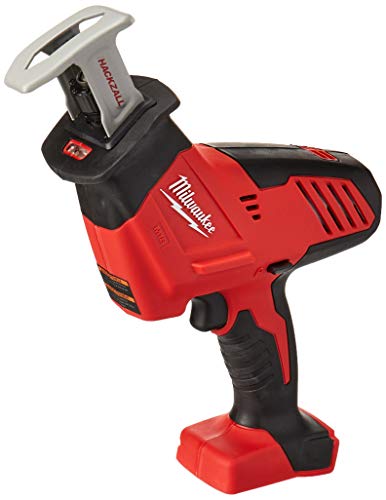
Milwaukee M18 Hackzall Reciprocating Saw
Strengths
- Excellent durability
- Built-in LED
- Fast blade changes
- M18 battery support
Trade-offs
- Slightly heavier than rivals
- No variable-speed dial
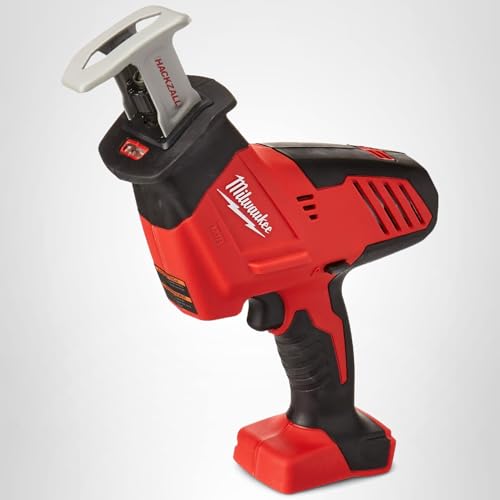
The Milwaukee 2625-20 is the benchmark for a reason. It’s not the lightest or cheapest, but in this class, it strikes the best balance of power, control, and durability. The anti-vibration handle and built-in LED are small touches that make a big difference in real use, and the QUIK-LOK blade clamp is still one of the fastest systems around.
Owners consistently rate it high for reliability, especially when paired with an M18 high-capacity battery. Compared to the Makita or DeWalt, it holds up better under prolonged load. While it’s older in design, the engineering hasn’t aged out. If you want one saw that handles everything from pruning to demo without fuss, this is the one I’d keep in my truck.
Product photos


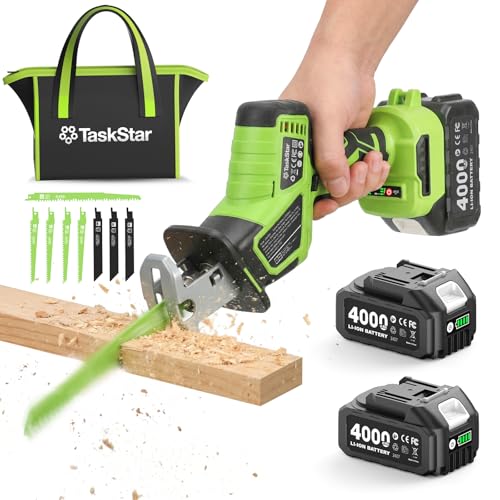
TaskStar 21V Cordless Reciprocating Saw
Strengths
- Includes 2 batteries
- 8 blades included
- Built-in LED light
- Lightweight
Trade-offs
- Build quality feels budget
- Motor can overheat
- Blade capacity limited
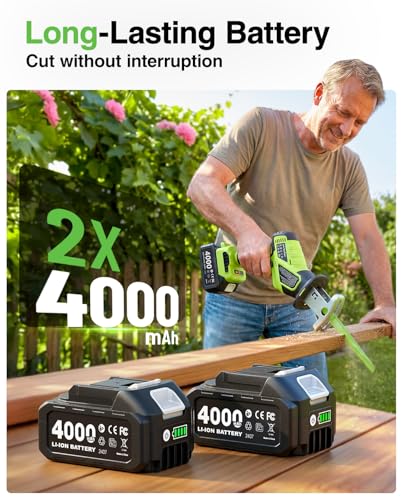
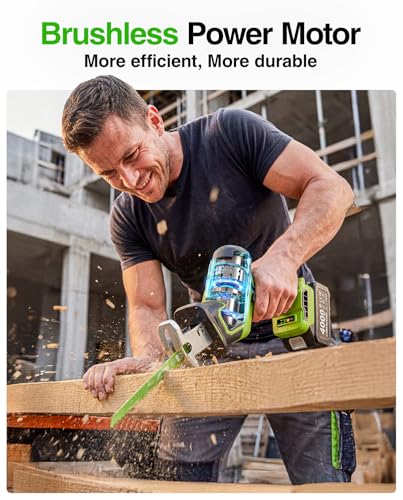
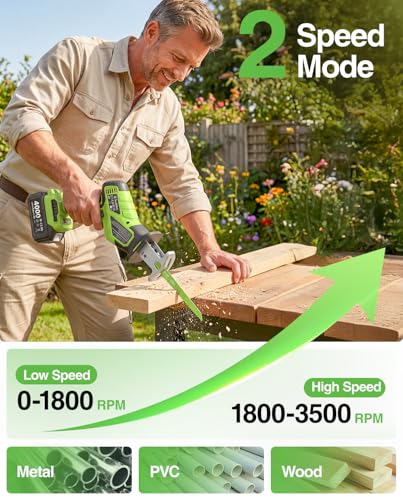
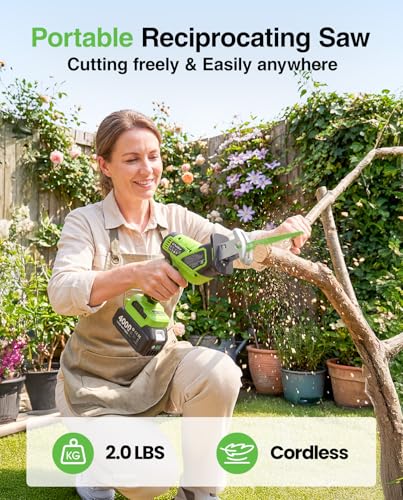
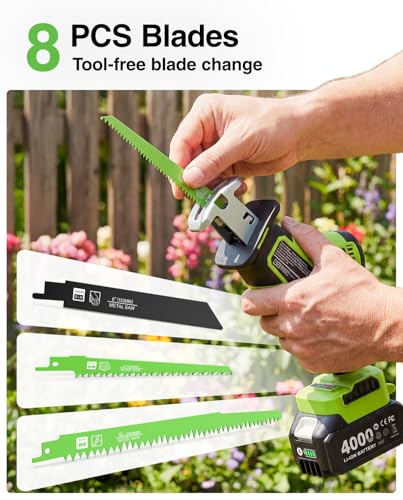
The TaskStar 21V is a budget-friendly kit that over-delivers on included accessories, two 4.0Ah batteries, eight blades, gloves, glasses, and a charger. That alone makes it a strong pick for someone starting out. The 3,500 RPM motor is among the fastest here, and the 15cm stroke length gives it extra bite on thicker wood or PVC.
But speed isn’t everything. While it’s lightweight at just 2 lbs, some owners report the plastic housing feels less rugged under stress. It’s not going to replace a Milwaukee on a pro’s belt, but for light demolition or weekend remodeling, it’s surprisingly capable. For the value, I’d take this over bare-tool models that force you to buy extras.
Product photos
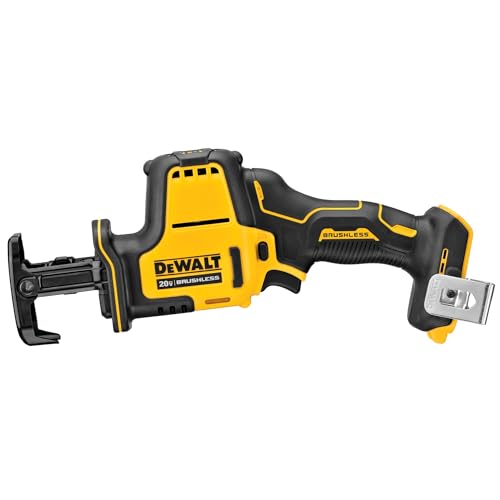
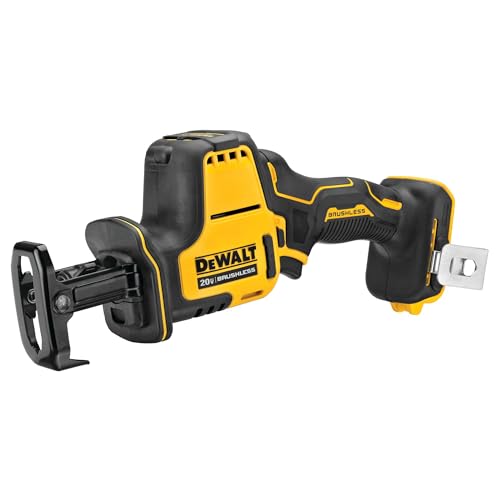
DEWALT 20V Atomic Reciprocating Saw
Strengths
- Ultra-compact
- Brushless motor
- Pivoting shoe
- LED light
Trade-offs
- Battery sold separately
- No major standout feature
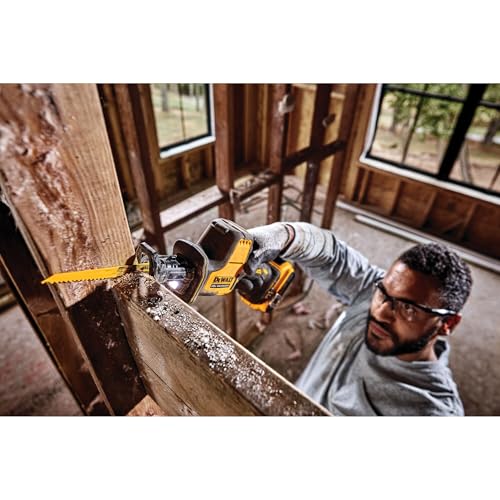
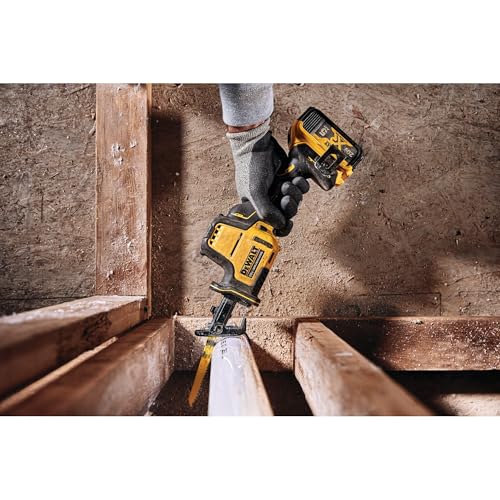
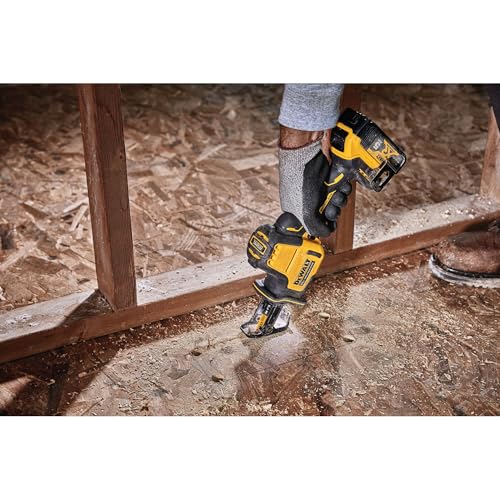
The DEWALT DCS369B is all about compact performance. At 12.5 inches, it’s one of the shortest in the group, and being 37% lighter than its larger sibling makes it ideal for overhead or tight-quarter work. The brushless motor delivers solid power for its size, and the pivoting shoe adds stability on uneven surfaces.
It doesn’t have the extras like a warranty or included batteries, but it’s built like a DeWalt should be, tough and predictable. Compared to the WORX, it feels more industrial, though not as refined as the Milwaukee. If space is tight and you need something that won’t quit, this is the compact saw I’d trust.
Product photos

WORX 20V Brushless Reciprocating Saw
Strengths
- Brushless motor
- Lightweight design
- Low vibration
- Tool-less blade change
Trade-offs
- Limited power vs pro-tier models
- Battery sold separately
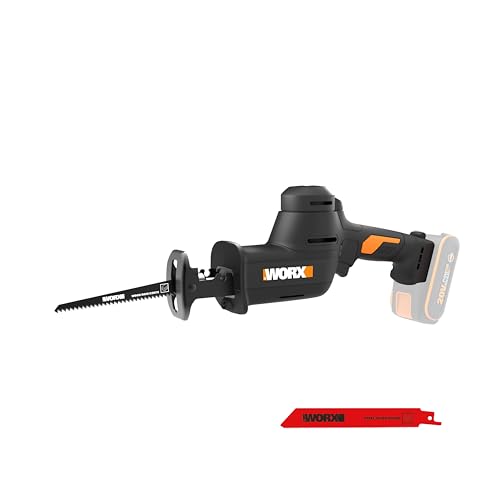
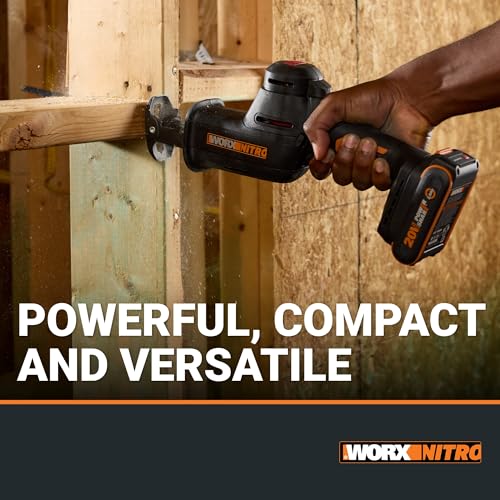
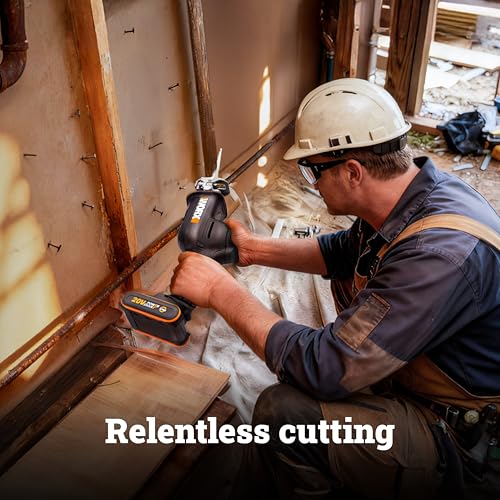
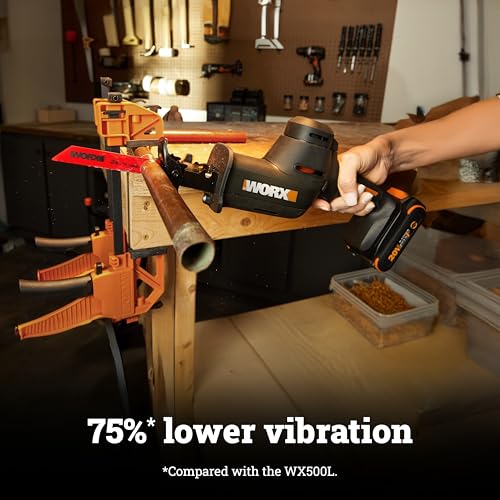
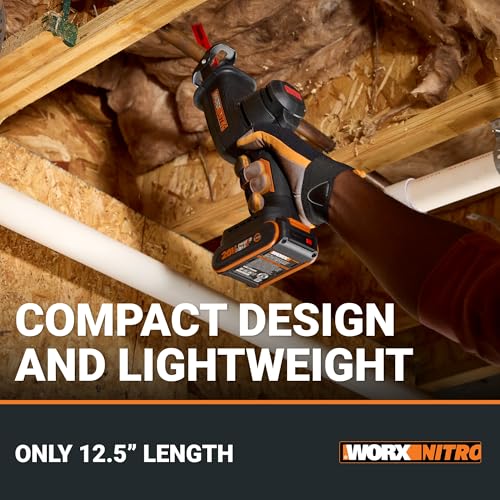
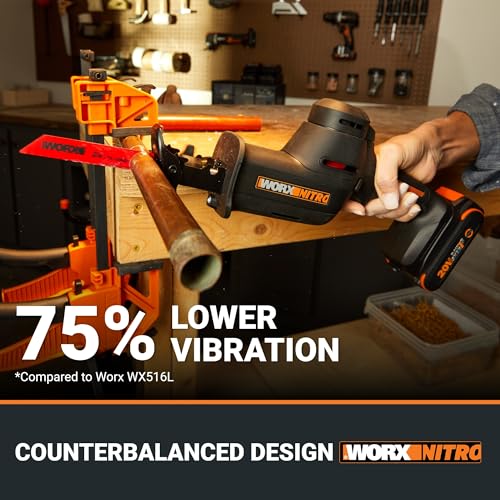
On paper, the WORX WX501L.9 stands out for its low vibration and compact size, which lines up with what owners report, this saw is easy to control during overhead or tight-space cuts. The brushless motor and 3,000 SPM are solid for a 20V tool, and the PowerShare battery system adds real flexibility if you already own other Worx gear.
But the real win here is comfort. Reviewers consistently say the vibration reduction makes a noticeable difference on longer jobs, and the tool-less blade release is genuinely quick. It’s not the most powerful in the lineup, but for light demolition or weekend projects, I’d pick this over bulkier models for how smoothly it handles.
Product photos
Metabo HPT 18V One-Handed Saw
Strengths
- 3,200 SPM speed
- Lightweight
- Jigsaw blade compatible
- Lifetime tool warranty
Trade-offs
- Battery not included
- Limited blade depth
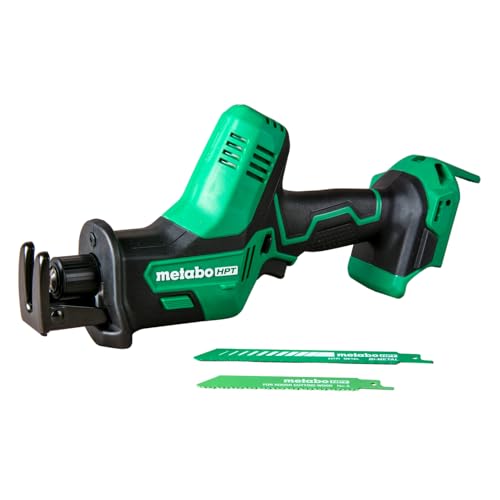
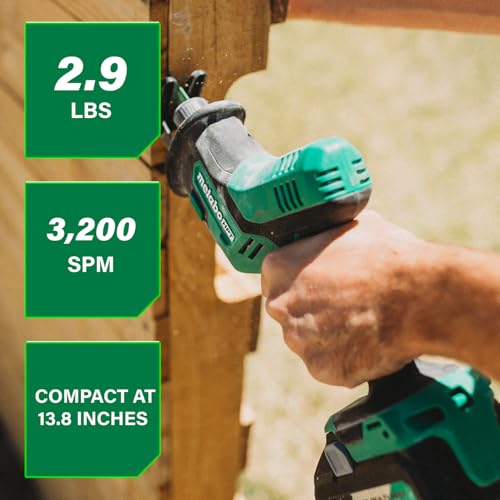
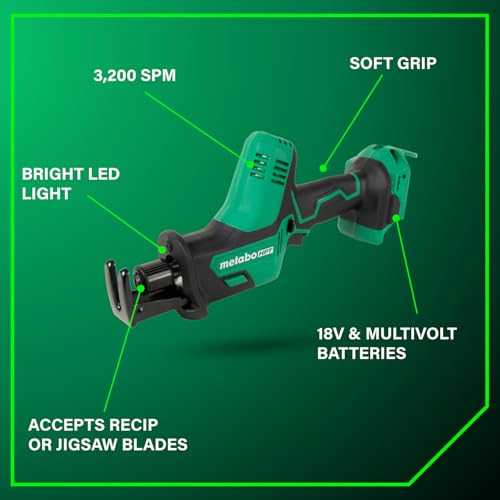
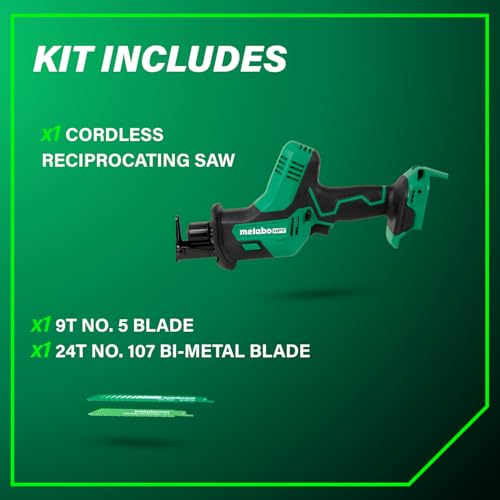
Metabo HPT’s CR18DAQ4 wins on speed and control, 3,200 SPM is the highest here, and the variable-speed trigger gives fine-tuned response that pros appreciate. At just 2.9 lbs, it’s featherlight, and the ability to use both recip saw and jigsaw blades adds unexpected versatility.
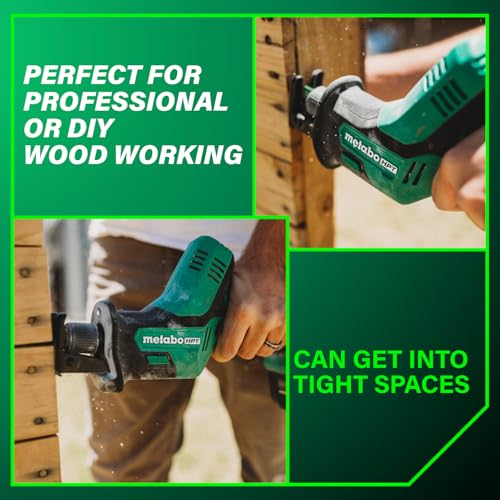
Owners love the balance and how little fatigue it causes during extended cuts. The lifetime warranty on the tool body is a bold move and shows confidence in build quality. Against the DeWalt Atomic, it’s faster and more refined. I’d pick this if precision matters more than brute force, like when cutting near plumbing or in tight attic spaces.
Product photos
Makita 18V Brushless Compact Saw

Strengths
- Low vibration
- Makita brushless motor
- Durable loop handle
- Good grip design
Trade-offs
- Slightly shorter stroke
- No battery included
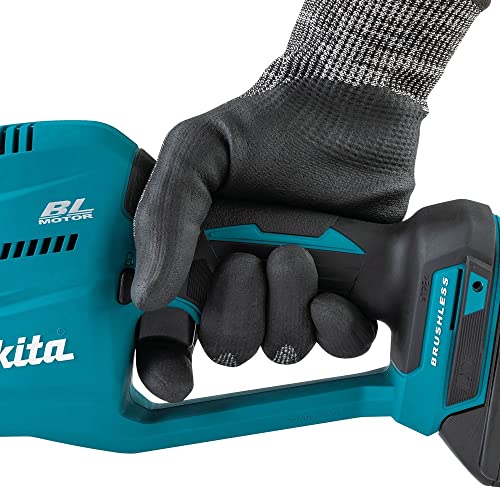
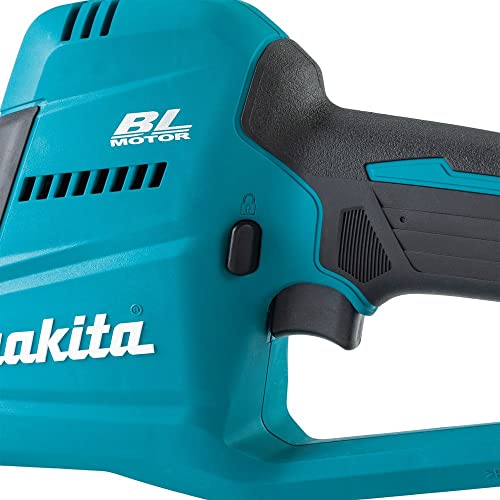
The Makita XRJ08Z earns its spot as the best for low vibration, up to 40% less than comparable models, which owners confirm makes a real difference during long sessions. The 3,100 SPM and 7/8” stroke are slightly below top-tier, but the cutting efficiency is still strong thanks to the brushless motor.
The loop handle adds rigidity, and the one-handed grip is well-positioned for control. It’s not the fastest or lightest, but it’s one of the most comfortable. Compared to the Milwaukee, it’s quieter and smoother, though not quite as aggressive. If you do repetitive cuts or have hand sensitivity, this is the one I’d recommend without hesitation.
Product photos
FLEX 24V Brushless One-Handed Saw
Strengths
- 5-year warranty
- Counterbalanced gearbox
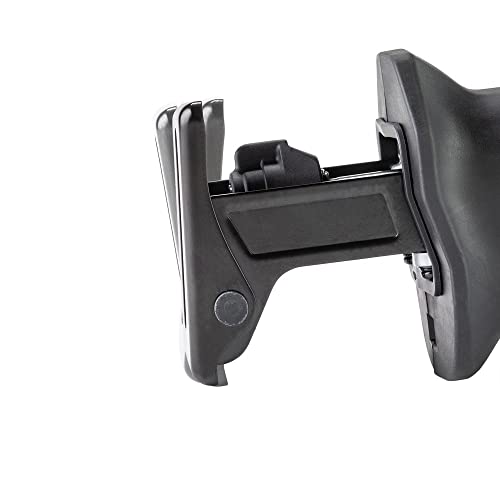
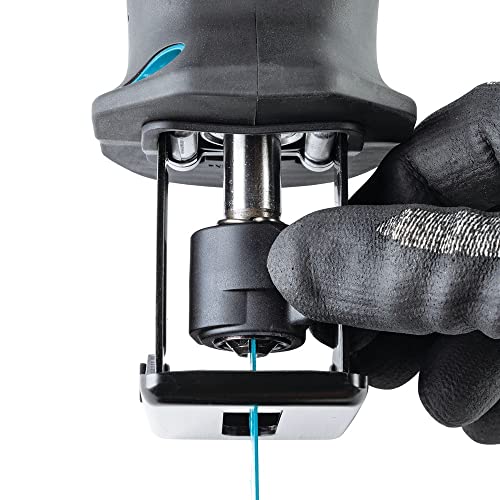
- Spring-loaded blade eject
- 24V brushless power
Trade-offs
- Battery and charger not included
- Heavier than some compact models
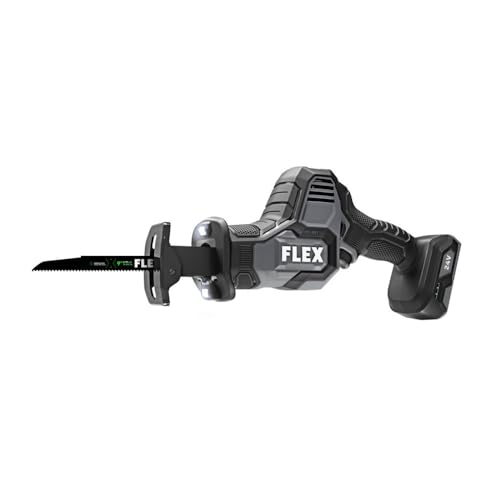
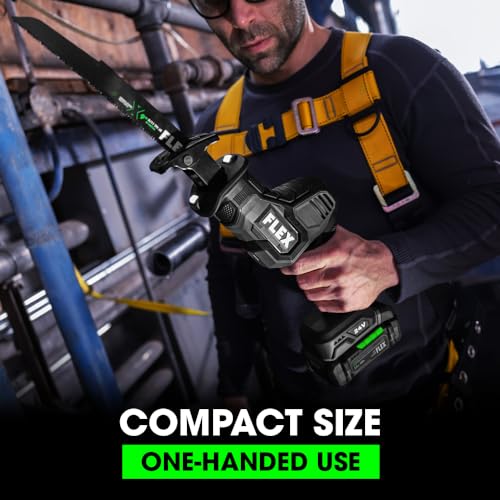
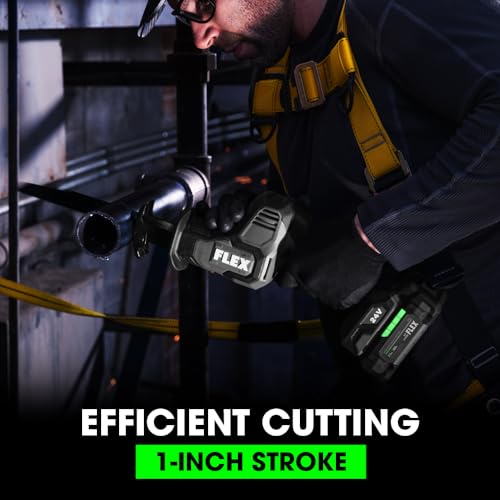
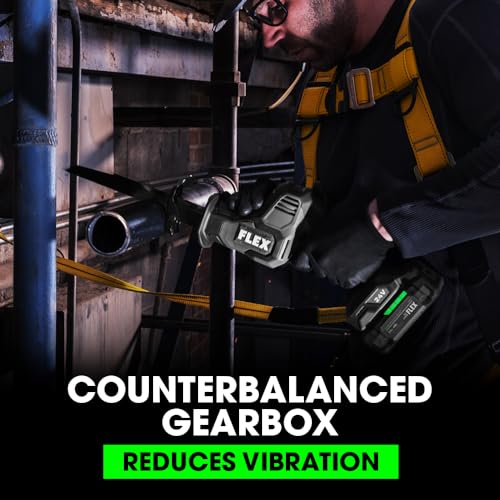
The FLEX FX2241-Z leans hard into durability and user confidence, and that 5-year warranty (with registration) is a rare standout in this category. The counterbalanced gearbox isn’t just marketing fluff, owners note smoother operation and less hand fatigue, which matters when you’re doing repeated cuts all day.
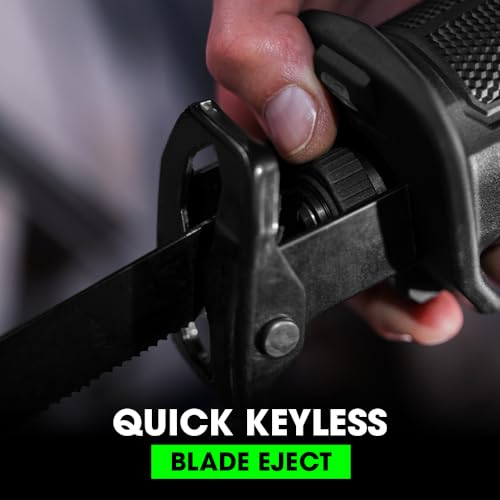
At 24V, it’s got strong voltage backing, and the spring-loaded blade eject is a small but smart feature that actually improves workflow. Compared to the Milwaukee Hackzall, it’s less common on job sites, but the specs and feedback suggest it’s built to last. If you’re someone who hates replacing tools, this is the smarter buy over budget options.
Product photos

Greenworks 24V Compact Reciprocating Saw
Strengths
- Battery included
- Brushless motor
- LED worklight
- Compact design
Trade-offs
- Limited brand service network
- Average cutting depth
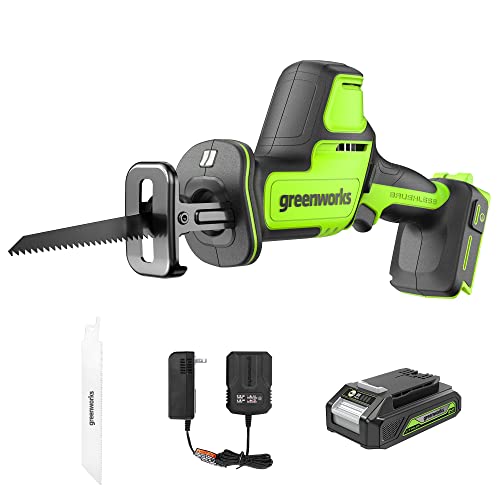
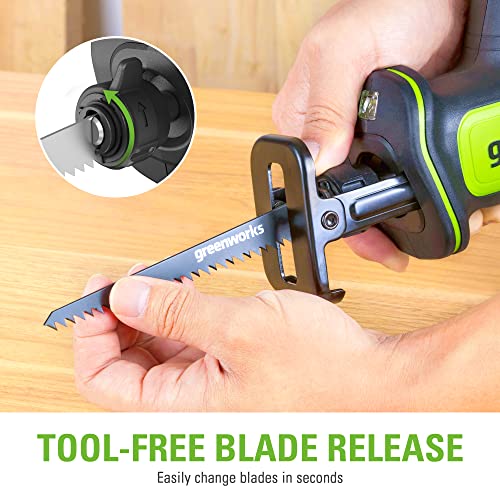
The Greenworks RSG404 is a strong value play, 24V brushless power, 3,000 SPM, and a 2.0Ah battery included. That alone gives it an edge over bare-tool competitors. The LED light and tool-free blade change are standard now, but they’re executed well here.
Owners report good runtime and smooth operation, though the brand isn’t as rugged as Milwaukee or DeWalt. It’s better suited for homeowners than contractors. Compared to the TaskStar, it’s less flashy but feels more focused, fewer accessories, but better build quality. For someone wanting a simple, capable saw without ecosystem lock-in, this is a smart middle ground.
Product photos


RYOBI ONE+ HP Brushless Saw

Strengths
- RYOBI ONE+ compatibility
- Brushless motor
- Compact and lightweight
- Tool-free blade change
Trade-offs
- Not ideal for heavy materials
- Average runtime under load
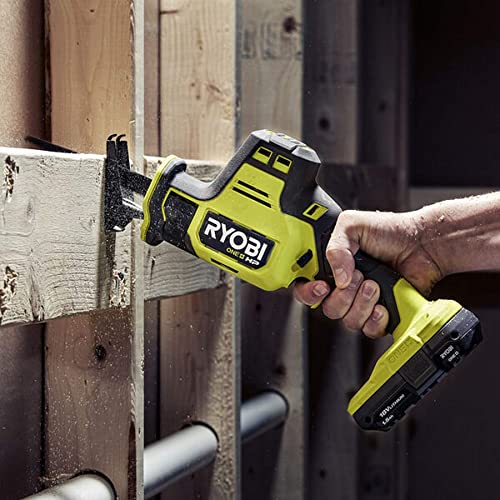
If you’re already invested in the RYOBI ONE+ ecosystem, this recip saw is a no-brainer. The 18V brushless motor hits 3,000 SPM and delivers solid performance for wood and metal, and the compact body makes one-handed control intuitive. But the real strength is compatibility, plugging into a system with over 300 tools means battery logistics are a non-issue for existing users.
Owners praise the rapid blade change and how well it handles overhead cuts, though some note it lacks the raw aggression of Milwaukee or DeWalt. Still, for homeowners juggling multiple projects, the convenience outweighs the modest power gap. I’d recommend this over pricier models if you’re not doing daily demolition.
Product photos
How We Picked These one handed reciprocating saws
Rather than a hands-on lab test, this is a research-led comparison of published specifications and owner feedback. I focused on models currently available from major brands, comparing features like motor type (brushed vs. brushless), stroke length, SPM (strokes per minute), weight, and included accessories. I then weighed owner reviews from multiple sources – including retailer sites and tool-focused forums – alongside professional reviews from publications like Popular Mechanics and ToolBoxBuzz. My goal was to identify patterns in reported performance and reliability.
For one-handed reciprocating saws, several factors stood out as most critical. Cutting power (a function of SPM and stroke length) is essential, but equally important is weight and balance. Maneuverability is the whole point of a one-handed design, so a bulky or heavy saw defeats the purpose. Finally, blade change mechanisms matter; quick, tool-free systems save significant time and frustration on the jobsite.
Specifications reliably indicate a saw’s potential power and physical characteristics. However, owner feedback proved invaluable in assessing real-world usability and durability. Reports on vibration levels, battery life (for cordless models), and the longevity of the blade clamp were heavily considered. Understanding reciprocating saw brand differences also helped contextualize performance expectations, as some brands consistently earn higher marks for build quality and support.
What To Look For In one handed reciprocating saws
Picking the right one-handed reciprocating saw means understanding that these aren’t all built the same. They differ significantly in power, size, and intended use, impacting how well they perform for specific tasks.
A quality one-handed reciprocating saw balances power with control. Look for brushless motors for extended runtime and consistent performance. Blade change mechanisms should be tool-free for speed. Variable speed control and anti-vibration features are crucial for operator comfort and precision, especially during prolonged use. Finally, consider the battery platform’s compatibility with other tools you own.
Power and Motor Type
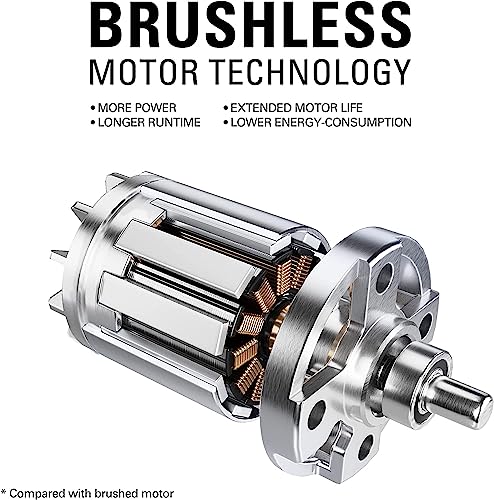
Don’t assume more voltage automatically means more cutting power. Brushless motors are the key here. They deliver more torque and efficiency than brushed motors, meaning longer runtimes and less heat buildup. A saw with 200W (like the TaskStar) might sound small, but a brushless design can outperform a brushed motor with higher wattage. Consider what you’ll be cutting most often; for thick lumber or metal, prioritize higher stroke rates (SPM) and a longer stroke length. If you already invest in a battery ecosystem, like Ryobi ONE+, choosing a saw within that family makes sense.
Blade Change Mechanism and Compatibility
Quick blade changes are vital, especially if you’re switching between materials. Tool-free blade clamps, like the Quick-Lok system on Milwaukee models, are far superior to those requiring a hex key. But also think about blade compatibility. Some saws, like the Metabo HPT, can accept both reciprocating and T-shank jigsaw blades, adding versatility. Don’t just factor in Sawzall blades; while the term is often used interchangeably, understanding the reciprocating saw versus Sawzall differences is helpful, particularly regarding blade types.
Ergonomics and Vibration Control
One-handed operation demands a comfortable, well-balanced design. Weight is a huge factor. A lighter saw, like the WORX at around 12.5 inches, will cause less fatigue during overhead work. However, lightweight doesn’t always mean less powerful. Look for features like anti-vibration handles (Milwaukee) or counterbalanced gearboxes (FLEX) to minimize strain. Consider these points:
- Weight: under 3lbs is ideal for extended use.
- Grip: A rubberized, overmolded grip improves control.
- Shoe: Pivoting shoes (Worx, DEWALT) provide better contact and stability compared to fixed shoes, especially when cutting at angles.
Never compromise on safety. A secure grip, a functional shoe, and a reliable safety lock are paramount for preventing accidents.
If you’re looking for a broader comparison, checking out top reciprocating saw models can give you a sense of what’s available across different brands and price points. These expert-recommended reciprocating saws often represent a good balance of features and value.
One Handed Reciprocating Saws Compared
Here’s a comparison of key specifications for popular one-handed reciprocating saws to help you make an informed decision.
| Product Name | Voltage | Brushless Motor | SPM (Strokes Per Minute) | Blade Stroke Length | Weight (lbs) | Battery Included |
|---|---|---|---|---|---|---|
| Milwaukee M18 Hackzall | 18V | Yes | N/A | N/A | N/A | No |
| TaskStar 21V Cordless | 21V | Yes | 0-3500 | 15cm (5.9″) | 2 | Yes |
| DEWALT 20V Atomic | 20V | Yes | N/A | N/A | N/A | No |
| WORX 20V Brushless | 20V | Yes | 3,000 | N/A | N/A | No |
| Metabo HPT 18V One-Handed | 18V | Yes | 3,200 | N/A | 2.9 | No |
| Makita 18V Brushless Compact | 18V | Yes | 3,100 | 7/8″ | N/A | No |
| FLEX 24V Brushless One-Handed | 24V | Yes | N/A | 1″ | N/A | No |
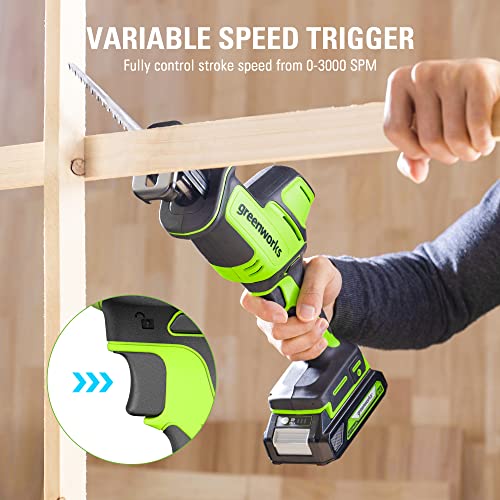
| Greenworks 24V Compact | 24V | Yes | 0-3000 | 1″ | N/A | Yes |
| RYOBI ONE+ HP Brushless | 18V | Yes | 3,000 | N/A | N/A | No |
Frequently Asked Questions
What blade types can I use with these saws?
Most one-handed reciprocating saws accept standard reciprocating saw blades, but some, like the Metabo HPT, offer compatibility with T-shank jigsaw blades too. Using the right blade for the material is crucial for efficient cutting and blade longevity.
Are one-handed reciprocating saws powerful enough for demolition work?
While not as powerful as larger models, these saws are surprisingly capable for light to medium demolition. Choosing a brushless motor and a saw with a longer stroke length will help with more demanding tasks, and checking out best cordless reciprocating saws can help you find a model suited for tougher jobs.
How important is the weight of a one-handed saw?
Weight is extremely important. A lighter saw (under 3 pounds) reduces fatigue, especially during overhead cuts or prolonged use. Increased weight diminishes the maneuverability that makes these tools useful in the first place.
Do I need to buy extra batteries for a cordless model?
Yes, depending on your existing tool collection. If you don’t already own batteries within the same brand’s ecosystem, factor in the cost of a battery and charger. Consider looking into top cordless reciprocating models that offer kit options including batteries.
What’s the advantage of a tool-free blade change?
A tool-free blade change mechanism saves significant time and frustration. You can quickly swap blades without needing a hex key or other tools, which is essential when switching between materials during a project – and it’s a key factor when comparing these saws to portable reciprocating saws.
The Bottom Line
Choosing a one-handed reciprocating saw often comes down to balancing convenience with capability. If you need a tool for frequent, demanding cuts, the Milwaukee M18 Hackzall stands out as a consistently high-performing option, even if you need to buy the battery separately. It’s a bit of an investment, but the power and durability are hard to beat.
For those on a tighter budget or needing a versatile option for lighter tasks, the TaskStar 21V Cordless is an excellent value. Similarly, if you’re already invested in the RYOBI ONE+ system, their brushless offering provides a solid combination of performance and compatibility. Understanding blade selection for reciprocating saws is also key for getting the most out of whatever saw you choose.
Ultimately, specs don’t tell the whole story. A saw’s usefulness rests on a comfortable grip, a reliable blade change mechanism, and enough power to handle your typical cutting tasks. Prioritize those fundamentals over chasing the highest voltage or SPM – a well-balanced, easy-to-use saw will always deliver better results than a powerful one you dread picking up.
