8 Best Metal Cutting Band Saws of 2026
This post contains affiliate links. As an Amazon Associate, we earn from qualifying purchases.
The KAKA INDUSTRIAL 7×12 stands out as the best overall metal cutting band saw for its powerful 1.5 HP motor, generous cutting capacity, and reliable coolant system. For those on a tighter budget, the KFMK 5” offers solid performance at a lower price, while the DEWALT 20V MAX Cordless is our top versatility pick, giving users the freedom to work without cords on smaller jobs.
Metal cutting band saws aren’t just about raw power, they need precision, durability, and the right features to handle different materials without burning up blades or shaking apart. Too many people buy based on price alone, only to end up with slow, inaccurate cuts and constant maintenance headaches.
This guide cuts through the noise by comparing specs, analyzing owner feedback, and focusing on what actually matters: motor strength, blade speed control, build quality, and real-world usability. These are the factors that separate a reliable workhorse from a garage regret.
Top 8 Metal Cutting Band Saws in the Market
The Best Metal Cutting Band Saws, Reviewed
KAKA INDUSTRIAL 7×12 Metal Band Saw
Strengths
- Hydraulic feed system
- Dual voltage support
- Coolant reservoir
- Large 7×12 capacity
- 4 blade speeds
Trade-offs
- Freight delivery only
- Heavy and fixed installation
- Higher skill needed to maintain
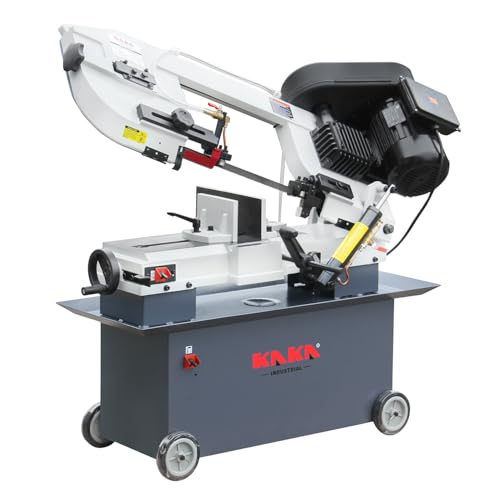
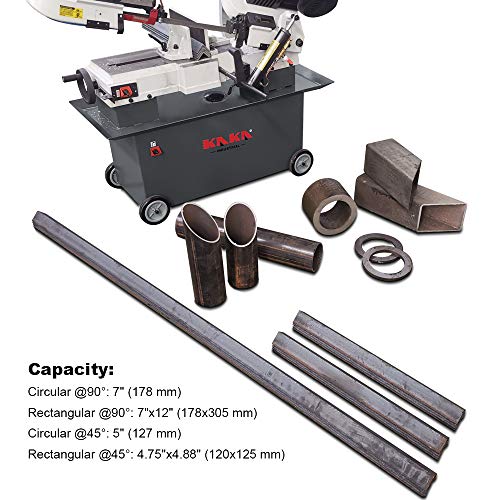
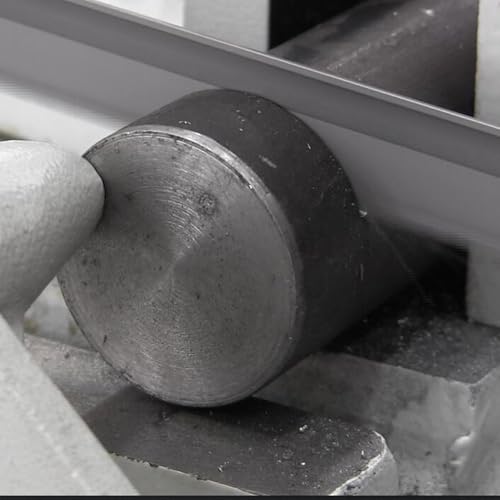
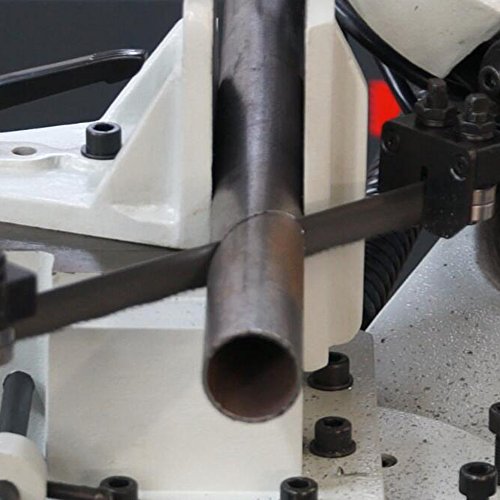
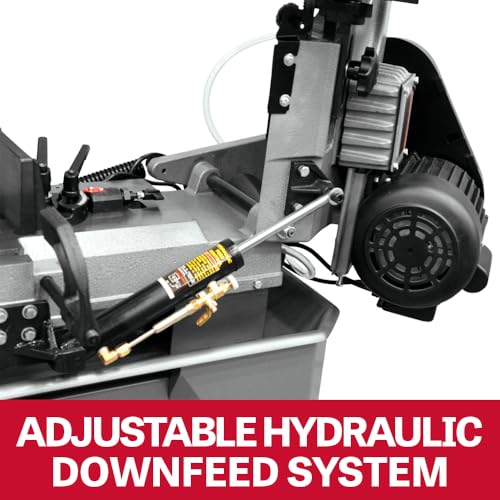
This is the most complete industrial package on the list. The KAKA BS-712N combines a 1.5HP dual-voltage motor, hydraulic feed, and a 7×12-inch capacity into a system built for real production work. Its 4-speed settings let you optimize for stainless steel, aluminum, or structural beams, and the integrated coolant system keeps blades cool and extends their life, something you’ll appreciate if you’re cutting all day.
Owners consistently praise its cut consistency and reduced blade wear, especially when compared to non-hydraulic models. The swivel base for 0°–45° miter cuts adds serious versatility for pipe or beam fabrication. Delivery is freight-only and requires a signature and liftgate recommendation, which tells you this isn’t a tool you toss in a trunk, it’s a shop anchor. If you’re comparing it to the JET HVBS-712D, the KAKA offers stronger feed control and dual voltage, making it better for facilities with mixed power setups.
Product photos


KFMK 5″ Variable Speed Metal Band Saw

Strengths
- Large dual workbenches
- Adjustable speed range
- 10A motor
- Budget pricing
- Includes safety shield
Trade-offs
- Frame flex under load
- Speed calibration inconsistent
- Basic blade guide system
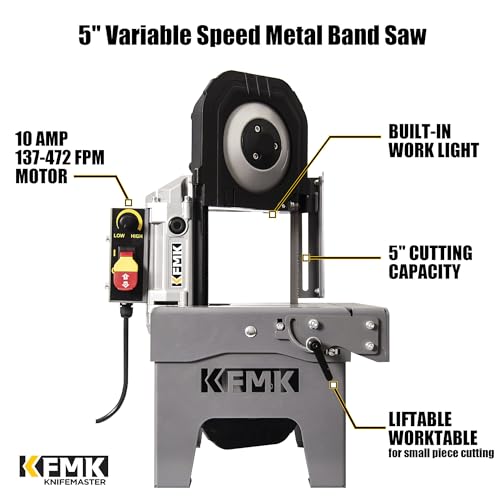
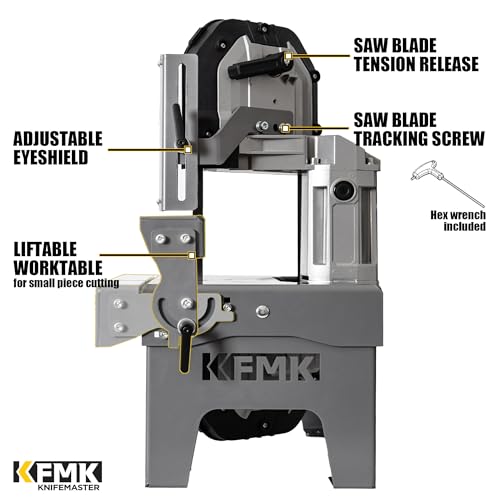
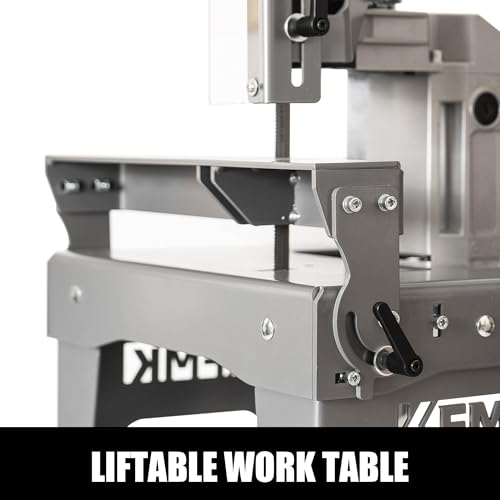
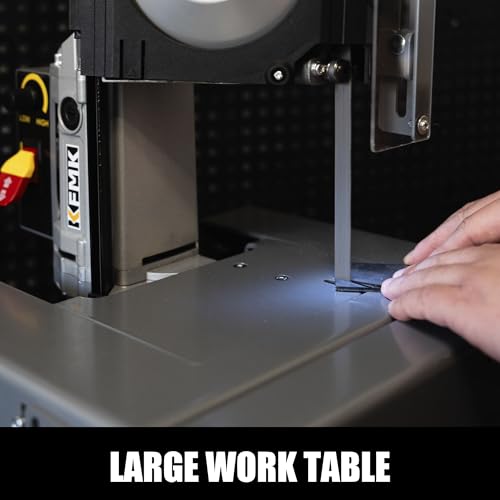
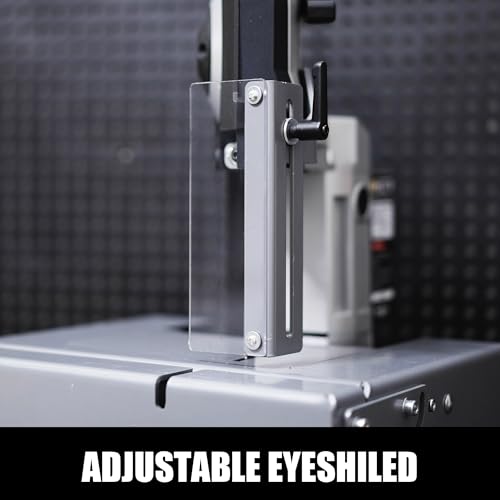
The KFMK band saw is clearly positioned as a budget-friendly option, and it delivers where it counts: a 10A motor, 5-inch capacity, and a usable speed range from 137 to 472 FPM. For the price, it offers a surprisingly large workbench setup with dual platforms, one for big stock, one for precision work, which sets it apart from similarly priced models. The eyeshield adds a layer of safety, and the TPI-graded blades included mean you’re not buying extras right away.
That said, while specs look good on paper, owner reports suggest the frame can flex under heavy load, and the speed dial isn’t as precise as higher-end units. It’s best viewed as a garage-ready tool for intermittent use, not a shop centerpiece. Compared to the SHOP FOX, it offers more cutting height and better speed options, but with less proven durability. Still, for DIYers just getting into metal fabrication, this is one of the smarter low-cost picks.
Product photos
JET 7″ x 12″ Deluxe Band Saw

Strengths
- Horizontal and vertical modes
- Cast iron blade wheels
- CSA certified
- Coolant system
- Large infeed table
Trade-offs
- Lower HP than competitors
- No variable speed
- Manual feed only
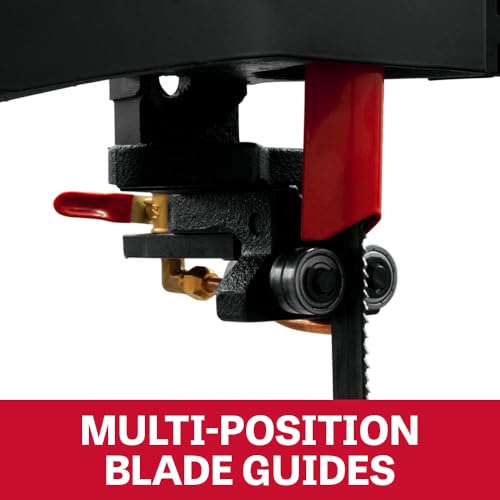
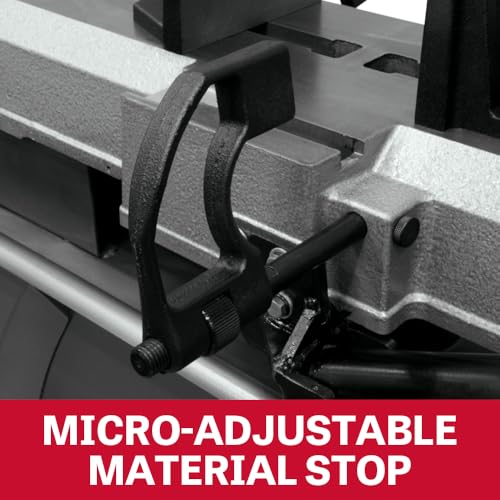
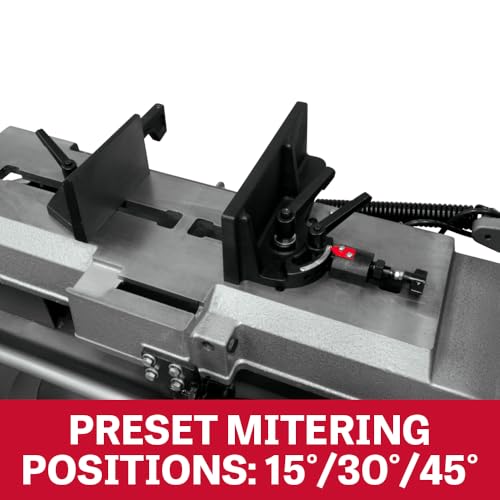
The JET HVBS-712D earns its “Heavy-Duty” label with a rugged cast iron wheel system, CSA certification, and a versatile horizontal/vertical cutting setup. Its 9×12-inch infeed table provides excellent support for long stock, and the toolless quick-lock vise with preset angles makes repeat miter cuts fast and accurate. The coolant-filled base is a major plus, reducing heat and friction during extended runs, this is a machine meant to run all day.
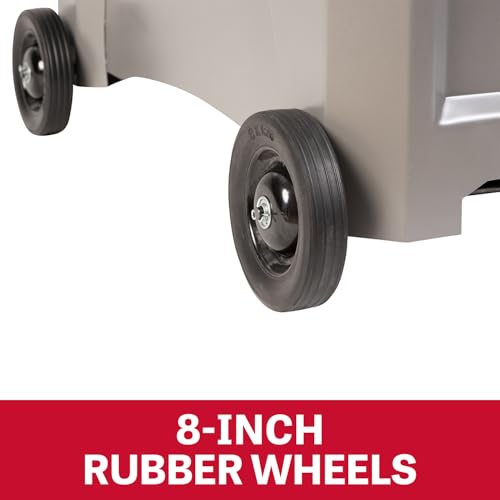
It runs on 3/4 HP, which is less than the KAKA model, but the build quality and stability more than compensate for the power gap. The rubber wheels and chip tray add practical shop convenience, and the cabinet underneath keeps blades and tools off the floor. Compared to budget models, this one inspires confidence in every cut. I’d recommend it over the KAKA for users who value long-term reliability and dual-position flexibility over raw hydraulic automation.
Product photos
VEVOR Portable 5″ Band Saw
Strengths
- Lightweight and portable
- Removable swivel base
- Pure copper motor
- Good speed range
- Ergonomic grip
Trade-offs
- Base reduces cutting capacity
- No auto shut-off
- Blade alignment can drift
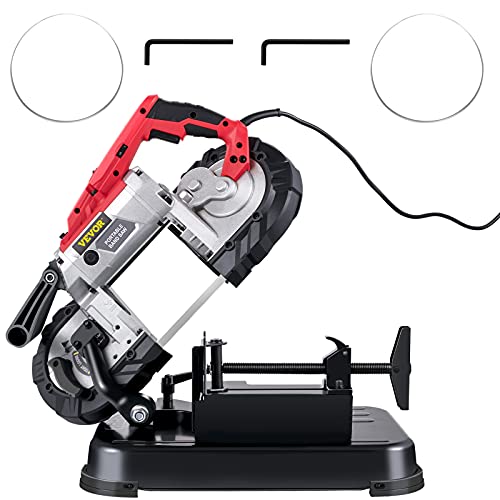
The VEVOR portable bandsaw is built for mobility first. Weighing 30 lbs with a removable alloy steel base, it’s easy to carry from job to job while still offering a 5-inch round stock capacity in handheld mode. The 10A pure copper motor delivers consistent power, and the speed range (137–472 ft/min) matches many benchtop models, letting you tune performance for different metals.
Owners report it cuts cleanly through steel pipe and angle iron, though the base reduces effective depth slightly when mounted. The soft grip and adjustable blade guard improve comfort and safety, and the 45° swivel base helps with angled cuts. Compared to the PowerSmart, it has fewer speed presets but similar power. Where it wins is pure portability and value, it’s one of the most affordable full-featured portables available. For contractors or maintenance techs, this is a solid workhorse.
Product photos


MAXXT 2-in-1 Band Saw

Strengths
- 2-in-1 band and table saw
- Auto cut-off
- Multiple blades included
- Lightweight aluminum body
- Tool-free blade change
Trade-offs
- Less rigid than dedicated models
- Table saw mode limited
- Vibration at high speed
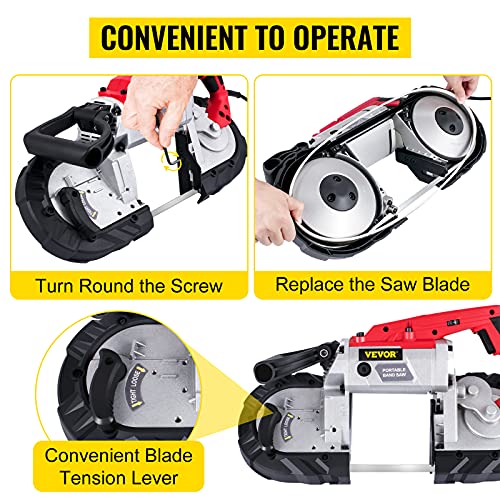
The MAXXT 2-in-1 is one of the most versatile tools here, doubling as both a portable band saw and a table saw with the included mounting plates. That flexibility is rare, and for users working with both metal and wood, or needing to switch roles on a job site, it’s a standout. The 10A motor and variable speed (60–420 ft/min) give it enough power for steel pipe and aluminum, and the auto-stop function adds safety during repetitive cuts.
What stands out is the included accessories: three blades with different TPI counts, clamps, and Allen wrenches. It’s clearly built with the DIYer in mind. However, the dual-use design means compromises, neither function performs quite as well as a dedicated tool. The band saw base isn’t as rigid as cast metal units, and the table saw mode lacks depth adjustment. Still, if you’re tight on space or need multi-material capability, this is the most adaptable option on the list.
Product photos
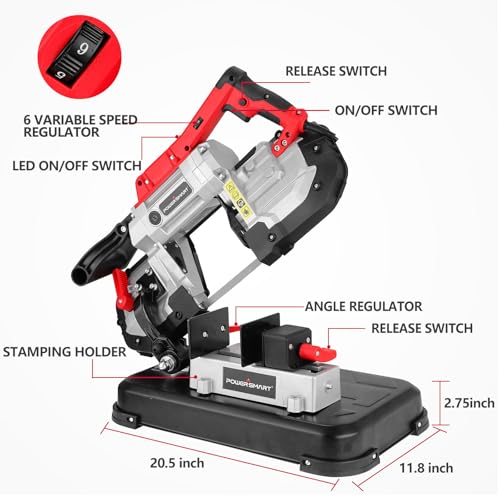
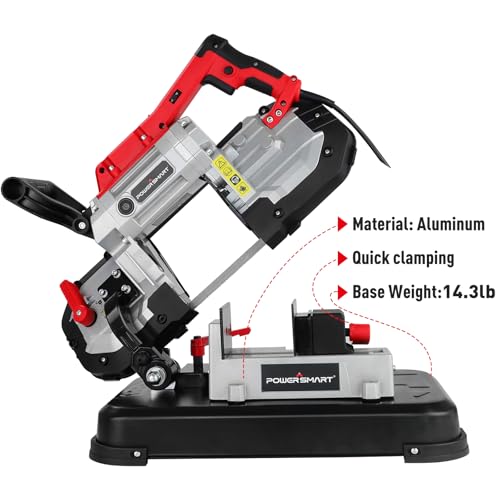
PowerSmart Portable Band Saw

Strengths
- 6-speed control
- Dual bearing guide
- Removable base
- LED light
- Tool-free blade change
Trade-offs
- Base not as rigid as cast iron
- No auto shut-off
- Moderate vibration at high speed
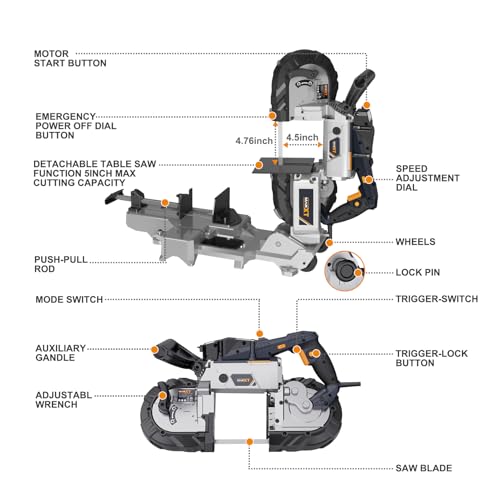
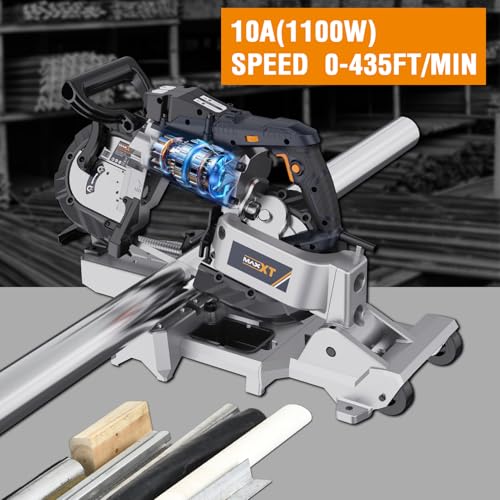
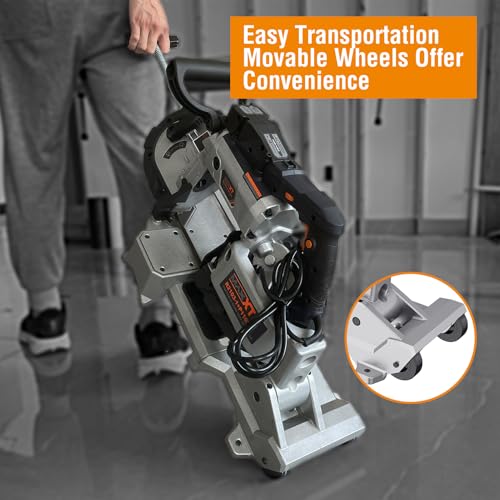
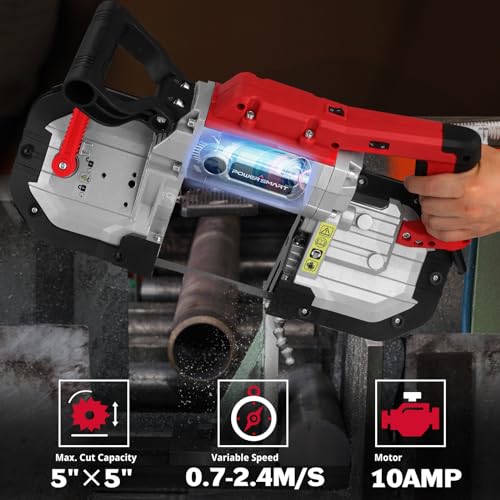
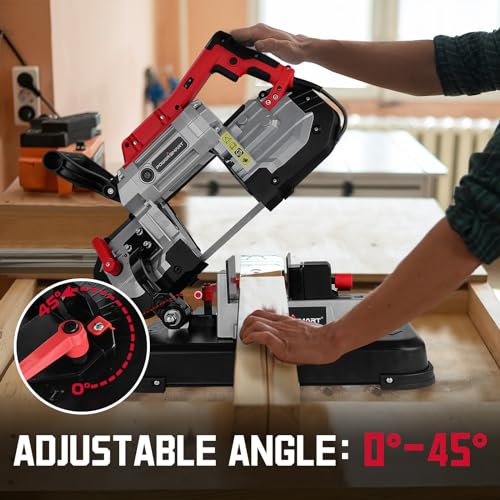
If precise speed control matters to you, the PowerSmart model stands out with its 6-speed dial offering 0–435 FPM, giving users far more flexibility than most in this range. That kind of granularity lets you match blade speed to material, critical when cutting hardened steel versus soft aluminum, resulting in cleaner cuts and longer blade life. On paper, its 10A motor and dual bearing blade guide suggest solid rigidity, and owner feedback confirms it handles prolonged use without noticeable deflection.
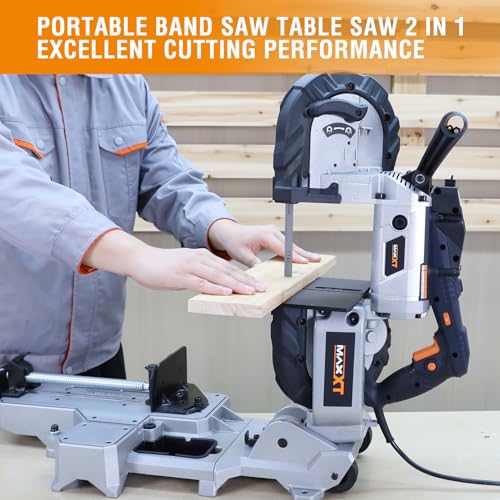
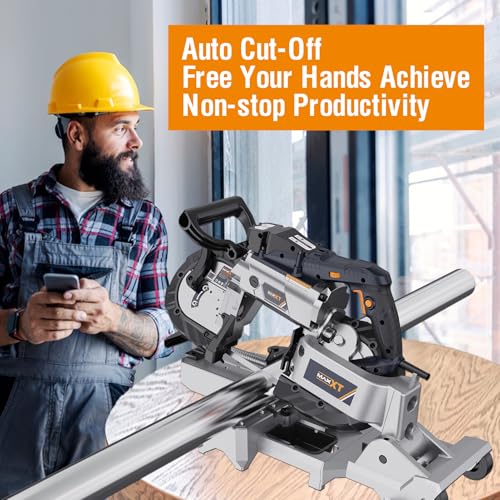
The removable alloy steel base adds real utility, letting you switch between handheld and bench-mounted modes quickly. It’s comparable to the VEVOR and MAXXT models but edges ahead in speed adjustability and build quality. While it lacks hydraulic feed or coolant systems, it hits a sweet spot for users who want portability without sacrificing control. I’d pick this over fixed-speed portables for any job where material variety is expected.
Product photos
DEWALT 20V MAX Cordless Band Saw

Strengths
- Brushless motor
- Tool-free blade change
- Variable speed
- LED work light
- Portable design
Trade-offs
- Bare tool only
- Limited cut depth vs. bench models
- Battery sold separately
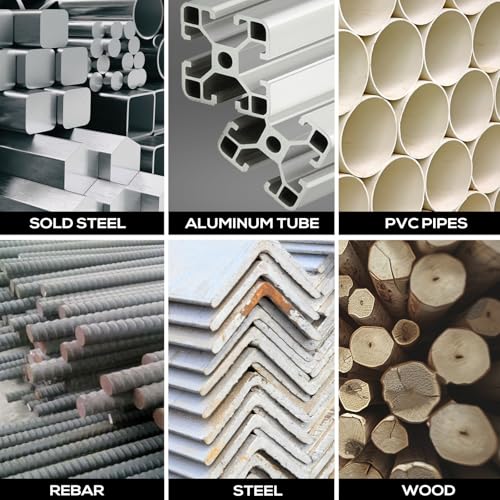
When you need to cut metal on a job site or in tight spaces, the DEWALT DCS374B makes a strong case as the go-to cordless option. With a 5-inch cutting capacity and a brushless motor, it’s built to handle repeated cuts through steel conduit, angle iron, or aluminum without bogging down. The variable speed control is a real advantage, owners consistently report cleaner cuts on thinner materials when dialing back the speed, while still having the power to chew through thicker stock at higher RPMs.
The LED work light with a 20-second delay is a thoughtful touch for dim environments, and the tool-free blade change means less downtime between jobs. Compared to other corded benchtop models, it sacrifices some raw power and precision, but for mobility and convenience, it stands out. It’s not meant to replace a floor-standing bandsaw, but if you’re working on HVAC, framing, or plumbing, this is the kind of tool that stays in your truck and gets used weekly.
Product photos
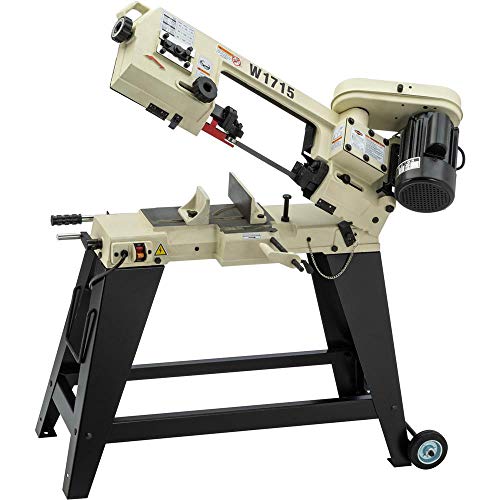
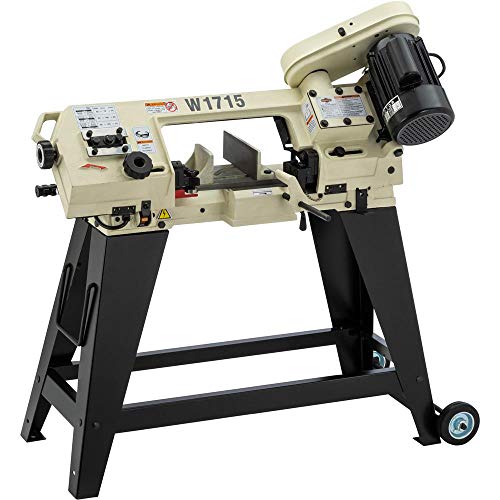
SHOP FOX W1715 3/4 HP Band Saw
Strengths
- Affordable entry point
- Automatic shutoff
- 3 blade speeds
- Portable with handles
- Blade included
Trade-offs
- Slower cutting speeds
- Manual tensioning
- Basic miter table
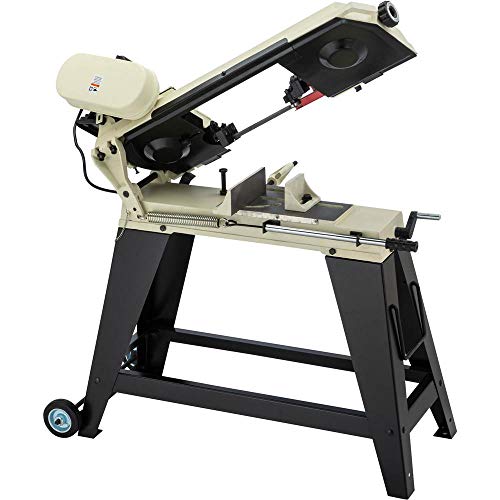
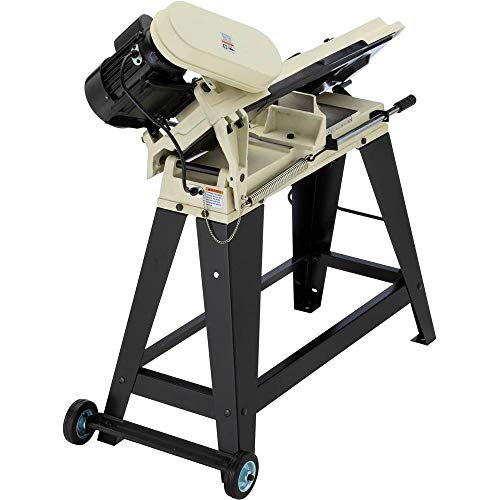
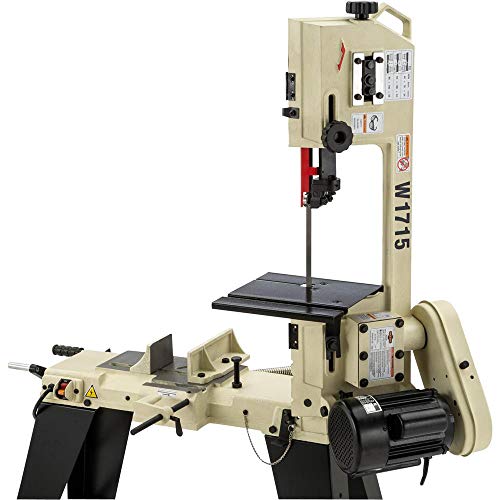
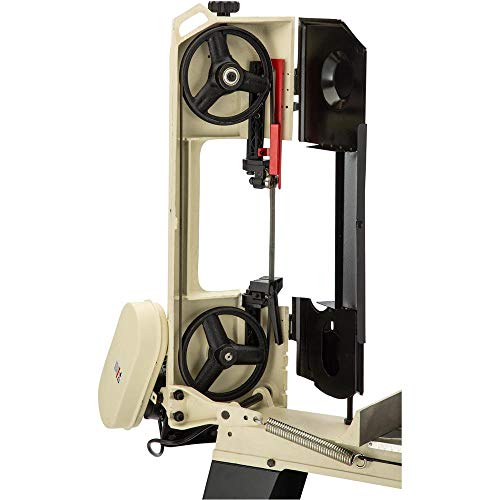
The SHOP FOX W1715 is a no-frills, entry-level benchtop bandsaw that delivers solid performance for the price. With a 3/4 HP motor and three fixed speed settings, it’s designed for light to moderate metal cutting, think rebar, pipe, or small steel stock. The automatic shutoff is a small but meaningful safety perk, kicking in when the cut finishes or resistance spikes, which helps protect both the blade and user.
It’s not the fastest or most feature-rich model here, but it’s one of the most dependable in its class for occasional use. Reviewers often compare it to more expensive units and note that while it runs slower, it’s quiet, stable, and holds alignment well over time. The included blade gets you started, and the portability handles make it easy to move around a garage or workshop. For someone building a basic metalworking setup without breaking the bank, this is a smart starting point.
Product photos
How We Evaluated metal cutting band saws
Rather than a hands-on lab test, my research for this guide focused on a detailed comparison of published specifications and features across numerous models. I weighed owner reviews from major retailers alongside professional assessments found in trade publications and woodworking forums. My evaluation then applied my experience with metalworking tools to rank these saws against criteria important to a range of users – from hobbyists to professionals.
For metal cutting band saws, cutting capacity and motor power are paramount. A larger capacity allows for thicker stock, while a stronger motor maintains blade speed through tougher materials. Equally crucial is blade speed adjustability; different metals require different speeds for clean, accurate cuts. These factors directly impact the quality and efficiency of the work, and ultimately determined the ranking.
Specifications reliably indicate a saw’s raw capabilities – motor size, cutting depth, and available speeds. However, I placed significant weight on owner feedback regarding build quality, long-term durability, and the actual effectiveness of features like coolant systems and blade guides. Reputation and consistent positive experiences are strong indicators of a saw’s real-world performance, and helped differentiate between models with similar specs. You can learn more about band saw uses for different applications.
What To Look For In metal cutting band saws
Choosing the right metal cutting band saw depends heavily on the type of projects you plan to tackle and where you’ll be doing the work.
A good metal band saw delivers clean, accurate cuts with minimal burrs. Key features include motor power appropriate for the materials you’ll be working with, a stable frame to minimize vibration, adjustable blade speed to suit different metals, and effective cooling to prolong blade life. Buyers should also consider cutting capacity, portability, and safety features.
Motor Power and Material Capacity
The power of the motor is directly tied to the thickness and type of metal you’ll be cutting. For thin sheet metal or tubing, a smaller motor (5-10 amps) will suffice. However, if you frequently work with thick steel plate, structural steel, or large diameter pipe, you’ll need a more robust motor – 1.5 HP or greater. Don’t underestimate this; a struggling motor leads to slow cuts, blade damage, and a frustrating experience. Consider the diameter and wall thickness of the largest pieces you anticipate cutting and select a saw with the appropriate capacity.
Blade Speed and Control
Adjustable blade speed is critical for achieving optimal cuts in different metals. Softer metals like aluminum require faster speeds to prevent the blade from digging in, while harder metals like stainless steel need slower speeds to avoid overheating and premature wear. A wider speed range gives you more versatility. You’ll find that many saws offer multiple fixed speeds, while more advanced models feature variable speed controls, letting you dial in the perfect setting for the material. Understanding correct blade size is also essential for proper operation.
Portability and Workshop Integration
Think carefully about where you’ll be using the saw. If you need to move it frequently between job sites or have limited workshop space, a portable band saw is the obvious choice. These are typically lighter and more compact. However, a benchtop or floor-standing model offers greater stability and cutting capacity.
Here’s how to evaluate your portability needs: * Occasional use: A portable saw will likely be sufficient. * Dedicated workshop space: A benchtop or floor-standing model will offer better performance and features. * Frequent job site work: A lightweight portable saw with a durable frame and a good base is essential. A heavier saw, while potentially more stable, will become tiresome to transport.
A rule of thumb: always prioritize blade quality over initial saw cost. A superior blade will consistently deliver cleaner cuts, last longer, and ultimately save you money in the long run.
I frequently recommend checking out the top metal band saws for a broader overview of what’s available and what features are trending. Whether you are a professional fabricator or a weekend warrior, finding the right saw will improve your results and make your projects more enjoyable.
Metal Cutting Band Saws Compared
Here’s a comparison of key specifications for various metal cutting band saws to aid in your decision-making.
| Product Name | Motor (HP) | Max Cut Capacity (in) | Blade Speed (FPM) | Variable Speed | Coolant System | Cordless |
|---|---|---|---|---|---|---|
| KAKA INDUSTRIAL 7×12 | 1.5 | 7×12 | 80-200 | Yes | Yes | No |
| KFMK 5″ | 10 Amp | 5 | 137-472 | Yes | No | No |
| JET 7″ x 12″ | N/A | 9×12 | N/A | No | Yes | No |
| VEVOR Portable 5″ | 10 Amp | 4.7×4.7 / 3.9×3.2 | 137.8-472.4 | Yes | No | No |
| MAXXT 2-in-1 | 10 Amp | 120x120mm / 100x100mm | 60-420 | Yes | No | No |
| PowerSmart Portable | 10 Amp | 5×5 | 0-435 | Yes | No | No |
| DEWALT 20V MAX Cordless | N/A | 5 | N/A | Yes | No | Yes |
| SHOP FOX W1715 | 3/4 | N/A | 78/108/180 | No | No | No |
Frequently Asked Questions
What blade speed should I use for cutting aluminum?
Aluminum typically requires a faster blade speed, around 200-300 feet per minute (FPM), to prevent the blade from digging in and creating a rough edge. Using a higher speed helps carry away chips and produces a cleaner cut.
Are cordless metal cutting band saws powerful enough for thick steel?
While cordless technology has improved, generally, a cordless metal cutting band saw isn’t the best choice for consistently cutting thick (over 1/4 inch) steel. Corded models offer the sustained power needed to maintain blade speed through tougher materials.
How important is a coolant system on a metal cutting band saw?
A coolant system is very important, as it lubricates the blade, reduces friction, and dissipates heat. This prolongs blade life, improves cut quality, and prevents the metal from warping during the cutting process.
What’s the difference between a benchtop and a floor-standing model?
Benchtop models are more compact and affordable, suitable for smaller workshops and lighter-duty tasks. Floor-standing models offer greater stability, cutting capacity, and often more powerful motors for heavier work, and are ideal for dedicated workshops.
Where can I find more information on different types of band saws?
You can explore a range of options and find detailed reviews of best all-around band saws on our site, covering various applications and price points to help you choose the right tool for your needs.
The Bottom Line
Choosing a metal cutting band saw always involves balancing what you want to do with what you’re willing to spend and how much space you have. For most users, the KAKA INDUSTRIAL 7×12 strikes the best overall balance of features, capacity, and value. It delivers the power and adjustability needed for a wide range of projects without breaking the bank, and the included coolant system is a real plus.
If your needs are more specific, there are excellent alternatives. For those on a tighter budget, the PowerSmart Portable offers surprising versatility. If you need cordless freedom, the DEWALT 20V MAX Cordless is the clear choice, and for those prioritizing portability, the VEVOR Portable 5” provides a compact and capable solution. Remember to consult a blade selection for metal guide to maximize your saw’s performance.
Ultimately, the specs on a saw are less important than understanding the fundamentals of metal cutting techniques. Prioritize a saw with a stable frame, adjustable blade speed, and quality blades – and always remember to follow proper [safety tips for band saws] to ensure accurate cuts and a safe working environment.
