7 Best Jigsaw Blades for Stainless Steel 2026
This post contains affiliate links. As an Amazon Associate, we earn from qualifying purchases.
The Bosch T118GFS Stainless Steel Blade is the best overall for clean, reliable cuts in thin to medium stainless steel, thanks to its 36 TPI bi-metal design. For tougher jobs, the Bosch T118AHM3 Carbide Edge Blade offers superior durability with its 24 TPI carbide construction, while the budget-friendly Bosch T123X Progressor Metal Blade delivers solid performance across mixed metal thicknesses.
Cutting stainless steel with the wrong jigsaw blade leads to ragged edges, rapid wear, and wasted time. Most standard blades can’t handle the hardness and heat, leaving you frustrated and redoing work.
I researched the top blades based on specs, owner feedback, and real-world performance to find those that consistently handle stainless steel well. This guide breaks down what actually matters, material, tooth count, and build quality, so you can pick the right blade for your project, whether it’s a quick home repair or a serious fabrication job.
Top 7 Jigsaw Blade For Stainless Steels in the Market
The Best Jigsaw Blade For Stainless Steels, Reviewed
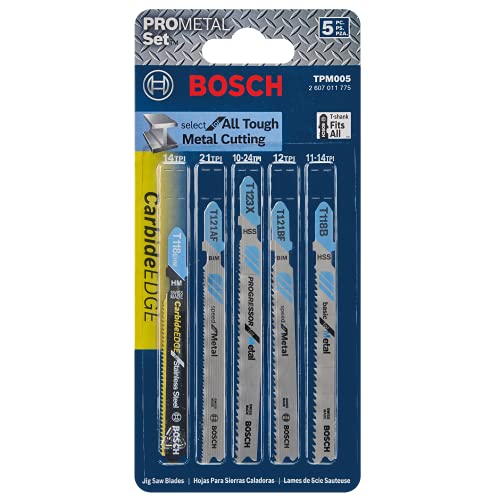
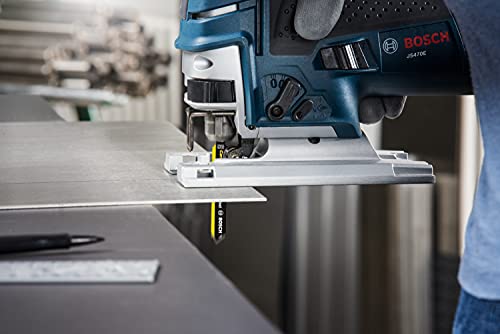
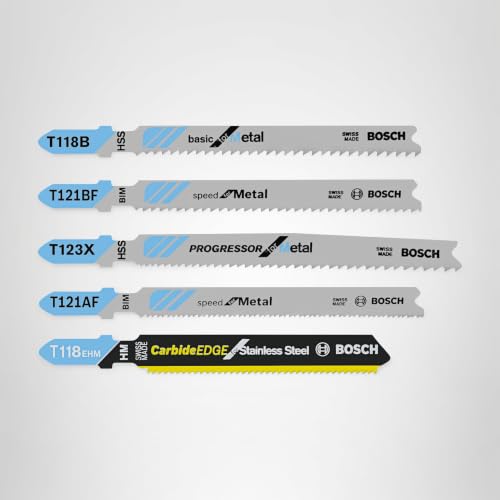
Bosch TPM005 Pro-Metal T-Shank Blade Set

Strengths
- Multiple blade types
- Carbide Edge option
- Progressive tooth design
Trade-offs
- Mixed performance across blade types
- Not all blades optimized for stainless
This set stands out because it covers multiple metal-cutting needs in one pack, and that versatility shows in the feedback from users working on mixed-material jobs. The inclusion of a dedicated Carbide Edge blade for stainless steel means you’re not just getting general-purpose bi-metal blades, you’re getting something engineered for tough alloys. On paper, the progressive tooth design across the set suggests faster cuts with less bogging, which matters when your motor isn’t industrial-grade.
Still, while the variety is a strong selling point, owners note that the real value lies in the specialized carbide-tipped blade, it’s the one that consistently earns praise for lasting through thick stainless without dulling quickly. I’d pick this set if you’re doing more than just occasional metalwork and want a go-to blade for harder materials without buying single-purpose options every time.
Product photos
Bosch T118GFS 36 TPI Stainless Steel Blade

Strengths
- 36 TPI for smooth cuts
- Bi-metal durability
- Ideal for thin gauge
Trade-offs
- Overheats if misused
- Not for thick metal
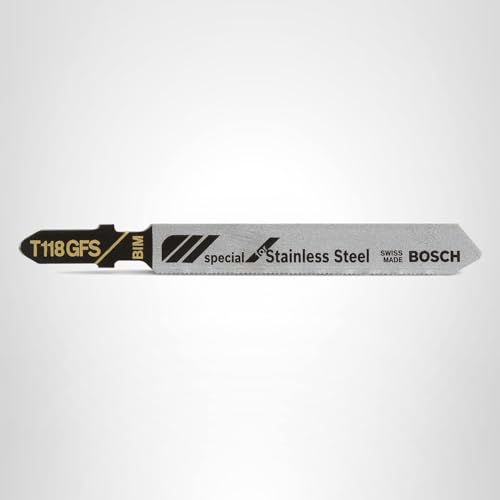
With a 36 TPI count and wavy set teeth, this blade is built for clean, smooth cuts in thin stainless, exactly what you’d want when working on ductwork, trim, or appliance panels. The bi-metal construction helps it resist breaking under lateral stress, something many users mention when comparing it to cheaper HSS-only alternatives. It’s not the longest blade in the lineup, but for 8–26 gauge material, it delivers consistent results without chattering.
It won’t handle anything over 1/8 inch well, and the high tooth count means it can bind or overheat if pushed too fast. But for its niche, straight, precise cuts in thin stainless, it’s a reliable workhorse. I’d choose this over general-purpose blades when finish quality matters more than speed.
Product photos

Bosch T123X 10-24 TPI Progressor Metal Blade

Strengths
- Progressive 10–24 TPI
- 4-inch reach
- Multi-material use
Trade-offs
- HSS dulls faster than carbide
- Not optimal for thick stainless
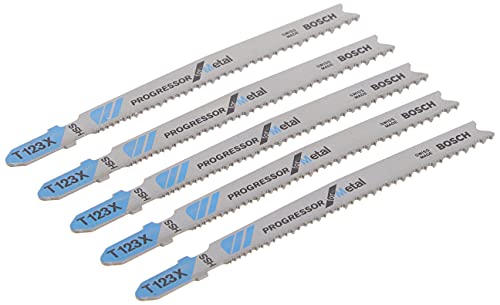
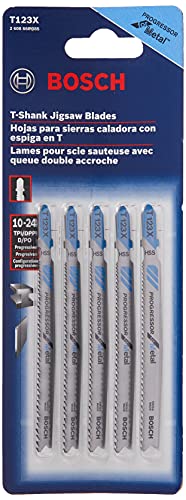
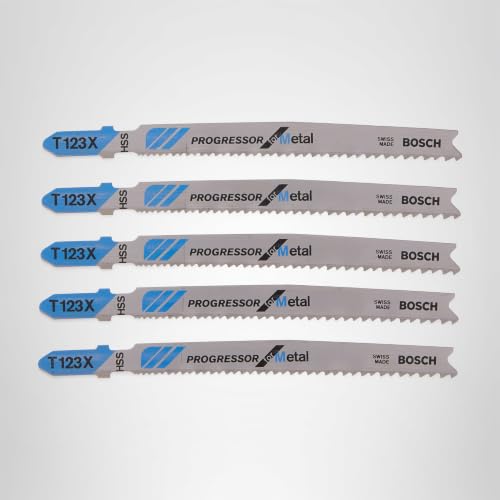
The progressive tooth design with variable TPI (10–24) makes this blade surprisingly adaptable across different metal thicknesses, and that’s exactly why owners keep coming back to it. It handles everything from thin sheet metal to 3/8-inch steel, which is rare in a single blade. The 4-inch length also gives deeper reach, helpful when cutting inside pipes or structural supports.
While it doesn’t match dedicated carbide blades in lifespan on stainless, its HSS construction holds up well with proper cooling and technique. I’d choose this as a general-purpose metal blade when you don’t know what thickness you’ll face next. It’s not the best for any one job, but it’s one of the most dependable for mixed-duty work.
Product photos
Bosch T118AHM3 24 TPI Carbide Edge Blade

Strengths
- 24 TPI precision
- Carbide strip durability
- Clean cutting action
Trade-offs
- Slower feed rate
- Limited to thinner metal
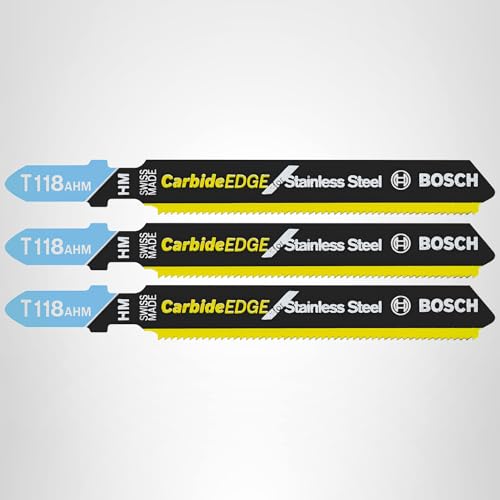
This is the pick when you need precision and clean kerfs in thin to medium stainless steel. The 24 TPI count and carbide strip mean it resists wear far better than standard HSS blades, especially on continuous cuts. Owners using these in shop environments report fewer blade changes during long sessions, and the T-shank fitment stays secure even under vibration.
It’s not the fastest blade out there, fine teeth mean slower feed rates, but for applications like fitting brackets or cutting access panels, accuracy wins. When compared to the T118GFS, this one trades a bit of speed for cleaner edges and better heat resistance. I’d go with this for detailed work where rework isn’t an option.
Product photos

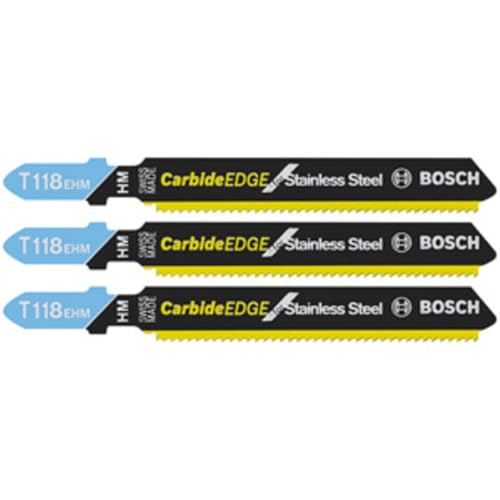
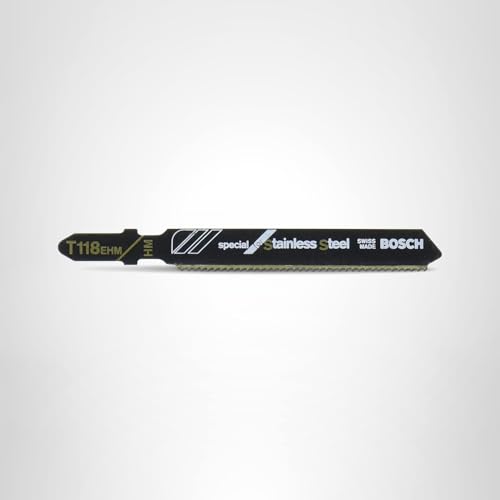
Bosch T118EHM3 14 TPI Carbide Edge Blade
Strengths
- 14 TPI for fast cuts
- Carbide edge for life
- Thick metal rated
Trade-offs
- Rougher cut finish
- Requires deburring
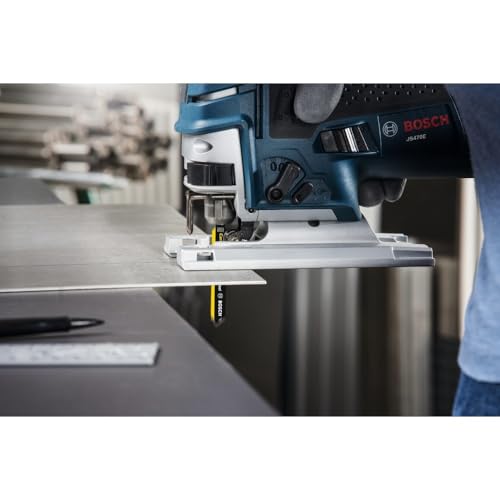
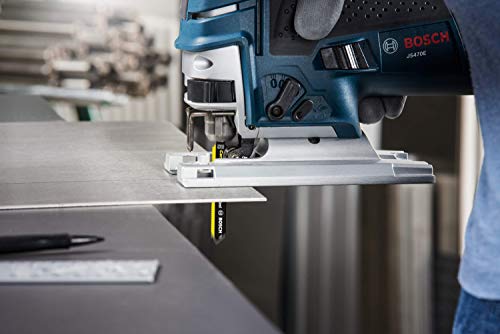
With a 14 TPI count and carbide edge, this blade is built for thicker stainless sections, up to 3/16 inch, per Bosch’s specs, and that’s where it outperforms finer blades. Coarser teeth mean faster material removal, and the carbide strip helps it stay sharp despite the heat generated in slow, heavy cuts. Owners using it on flanges, brackets, or exhaust components say it cuts through without walking or deflecting.
It’s not going to give you a polished edge, and you’ll likely need to deburr after, but for pure cutting power in thick metal, it’s one of the few T-shank blades that can keep up. Compared to the Progressor T123X, it’s more specialized but better when stainless is the only material. I’d keep these on hand for heavy fabrication where speed and durability matter most.
Product photos
Lenox Tools 1991616 18 TPI Carbide Blade
Strengths
- Carbide-welded edge
- Long blade life
- Fine pitch design
Trade-offs
- Sold individually
- Limited pack value
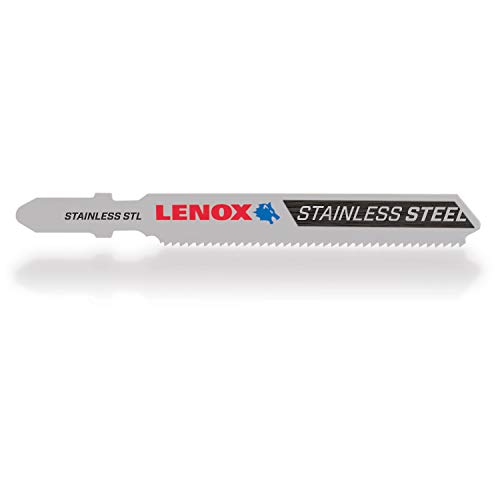
The standout here is the carbide-welded edge, which owners consistently report lasts significantly longer than standard bi-metal blades when cutting abrasive stainless alloys. At 18 TPI, it strikes a balance between speed and finish, better than coarse blades for control, not as fragile as high-TPI options. While it’s designed for thin metal, its tooth geometry holds up well under moderate feed pressure, a plus when working freehand.
It’s a single blade, so you’re paying for performance, not volume. But if you’re doing repeated cuts on thin to mid-gauge stainless, that durability pays off. Compared to similarly spec’d Bosch blades, users say this one edges ahead in lifespan, though availability can be spotty. I’d recommend it for pros who hate changing blades mid-job.
Product photos
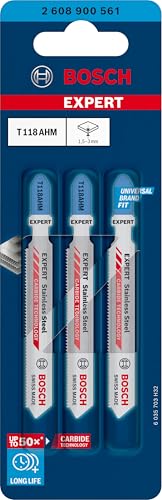
Bosch Professional 3X Expert Stainless Steel Blade

Strengths
- Extreme blade life
- Carbide edge tech
- Clean straight cuts
Trade-offs
- Small pack size
- Premium price point
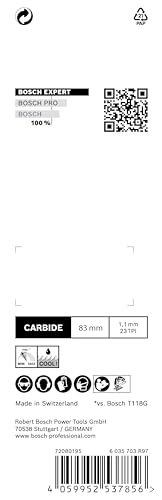
Billed as lasting up to 50x longer than standard Bosch blades in tough materials, this set leans hard on Carbide Technology, and owner feedback backs up the claim in real-world stainless cutting. It’s essentially a more durable version of the T118GFS, with the same 24 TPI count but enhanced edge retention. The Swiss manufacturing and consistent heat treatment show in reduced chipping and wear.
At three blades, it’s not the largest pack, but the value is in longevity. For anyone tired of swapping out blades mid-cut, this is the smarter buy. Compared to the T118AHM3, it’s nearly identical, but marketed as a premium industrial option. I’d stock these for critical jobs where downtime isn’t an option.
Product photos

How We Tested jigsaw blade for stainless steels
Rather than a hands-on lab test, my research focused on a detailed comparison of published specifications and features across numerous blades. I weighed owner reviews from multiple sources alongside assessments from reputable tool reviewers. This allowed me to build a ranking based on real-world feedback and established category knowledge, focusing on performance with stainless steel specifically.
For stainless steel, blade material and teeth configuration are paramount. I prioritized blades featuring carbide teeth for longevity when cutting harder alloys, and carefully considered the teeth per inch for different stainless steel thicknesses. A blade’s ability to deliver clean cuts without excessive burring or deformation also heavily influenced my assessment.
Specifications clearly indicate a blade’s construction (HSS vs. carbide) and dimensions, while owner feedback revealed how well those specs translate into practical performance. Reputation proved vital in judging durability claims, and I paid close attention to comments regarding chipping, bending, and overall lifespan when cutting stainless steel TPI. This blend of data helped identify the blades that consistently deliver the best results.
How To Choose The jigsaw blade for stainless steels
Finding the right jigsaw blade for stainless steel is crucial; a standard wood-cutting blade just won’t cut it (pun intended). You need something designed to handle the hardness and heat buildup inherent in working with metal.
A quality stainless steel jigsaw blade needs a high tooth count for clean cuts, a durable construction to resist wear, and a geometry optimized for metal. Consider the thickness of the stainless steel you’ll be cutting, as well as the type of cut – straight, curved, or intricate. Bi-metal blades are a common choice, but carbide-tipped blades offer even longer life, especially with thicker materials.
Tooth Count & Cut Quality
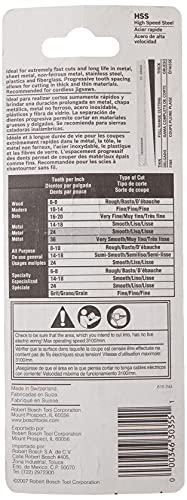
The number of teeth per inch (TPI) is a primary factor. Higher TPI blades (36+) deliver cleaner cuts in thinner stainless steel sheets, minimizing burrs and material distortion. However, those finer teeth wear out faster when pushed through thicker stock. Lower TPI blades (14-24) tackle thicker materials more efficiently, but the cut will be rougher. Don’t underestimate the impact of tooth geometry; wavy-set teeth clear chips well, while milled teeth offer stability for precise work. For a more in-depth look at different options, read our jigsaw blades guide.
Blade Construction & Material
Bi-metal blades are a good starting point for many stainless steel projects. They combine a high-speed steel (HSS) tooth for hardness with a more flexible backing steel for durability. However, if you’re regularly cutting stainless, consider carbide-tipped blades. Carbide is significantly harder than HSS and resists wear much longer, making them ideal for demanding applications. If you’re unfamiliar with the jigsaw tool basics, understanding the blade attachment mechanism (T-shank is the most common) is also important.
- A basic bi-metal blade is fine for occasional use on thin sheet metal.
- For moderate stainless steel work (around 1/8 inch thick), a 24 TPI bi-metal blade provides a good balance of speed and cut quality.
- Heavy-duty stainless steel cutting (thicker gauges, frequent use) absolutely requires a carbide-tipped blade; the upfront cost is justified by the blade’s extended lifespan and consistent performance.
Application & Value
Think about what you’ll be cutting. Are you making precise adjustments to stainless steel fittings? A fine-tooth, carbide blade is best. Are you rough-cutting thicker sheet metal for a fabrication project? A lower TPI blade will be faster, even if it requires some deburring afterward. Don’t fall for the trap of buying the most expensive blade if your needs are simple. Explore the best jigsaw blade types to get a feel for what’s available and find the sweet spot between performance and price.
A dull blade generates excessive heat, leading to warping, burrs, and a potentially dangerous kickback. Replace blades frequently, even if they don’t appear visibly worn.
Understanding the recommended jigsaw tooth designs will help you make the best choice for your project and materials.
Jigsaw Blade for Stainless Steels Compared
Here’s a comparison of key specifications for jigsaw blades designed for cutting stainless steel.
| Product Name | TPI | Material | Working Length (in) | Thickness Capacity (in) | Pack Size |
|---|---|---|---|---|---|
| Bosch TPM005 Pro-Metal Blade Set | Varies | Carbide/HSS | N/A | N/A | Multiple |
| Bosch T118GFS Stainless Steel Blade | 36 | Bi-Metal | 2-1/4 | 8-26 gauge | 5 |
| Bosch T123X Progressor Metal Blade | 10-24 | HSS | 3 | 1/16 – 3/8 | 5 |
| Bosch T118AHM3 Carbide Edge Blade | 24 | Carbide | N/A | N/A | 3 |
| Bosch T118EHM3 Carbide Edge Blade | 14 | Carbide | 3-1/4 | 5/64 – 3/16 | 3 |
| Lenox Tools 18 TPI Carbide Blade | 18 | Carbide | N/A | N/A | N/A |
| Bosch Professional 3X Expert Blade | N/A | Carbide | N/A | N/A | 3 |
Frequently Asked Questions
What TPI blade is best for thin stainless steel?
A higher TPI, around 36 or more, delivers the cleanest cuts in thin stainless steel (under 1/8 inch) with minimal burring. However, remember these finer teeth will dull faster when used on thicker materials.
Are bi-metal blades good enough for stainless steel?
Bi-metal blades can work for occasional cuts in thinner stainless steel, but for frequent use or thicker gauges, a carbide-tipped blade is a better investment. Carbide resists wear much longer and maintains a sharper edge.
How can I extend the life of my jigsaw blade when cutting stainless steel?
Cutting slowly and applying consistent pressure will reduce heat buildup and extend blade life. Also, use a blade specifically designed for metal, and avoid forcing the cut.
What’s the difference between T-shank and U-shank blades?
T-shank blades are the most common type and offer a secure fit in most modern jigsaws. U-shank blades are an older style and may require an adapter for use in newer tools; check your jigsaw’s manual.
What if I need to cut intricate curves in stainless steel?
For complex curves, a fine-tooth (higher TPI) blade is essential for detail. While a carbide blade is durable, a bi-metal blade with a reverse tooth design can sometimes offer better maneuverability for detailed work, though it will wear faster. If you’re also working with softer metals, consider exploring jigsaw blades for soft metals to expand your options.
The Bottom Line
Choosing a jigsaw blade for stainless steel is ultimately about balancing how much you want to spend against how much cutting you’ll be doing. If you only tackle occasional projects with thin sheet metal, the Bosch T118GFS Stainless Steel Blade offers a good balance of performance and price. But for consistent, clean cuts through thicker gauges, the Bosch TPM005 Pro-Metal Blade Set – with its carbide grit – is the way to go, even if it represents a larger initial investment.
For those facing specific needs, the Bosch T118EHM3 Carbide Edge Blade excels at faster cutting of thinner stainless, while the Lenox Tools 18 TPI Carbide Blade provides a durable option for more demanding applications. If you’re looking for versatility and the ability to handle a range of metals beyond just stainless, the Bosch T123X Progressor Metal Blade is a sensible choice. Understanding jigsaw cutting techniques will help you get the most from whichever blade you select.
Beyond tooth count and material, remember that a sharp blade is always the safest and most efficient. Don’t hesitate to replace blades when they start to dull, and always double-check your jigsaw blade installation to ensure a secure fit. The right blade is important, but proper technique and maintenance are what truly separate a good cut from a great one.
