6 Best Jigsaw Blades for Aluminum 2026
This post contains affiliate links. As an Amazon Associate, we earn from qualifying purchases.
The Bosch T127DF Flexible Aluminum Blade is the best overall for cutting aluminum, thanks to its bimetal construction and 8 TPI design that handles thicker material with less binding. For a more affordable option, the Bosch T227D Aluminum T-Shank Blade delivers solid performance on thinner cuts, while the WORKPRO 25-Piece T-Shank Blade Set is a versatile pick if you need a range of blades for mixed materials.
Cutting aluminum with the wrong jigsaw blade leads to rough edges, broken teeth, and wasted time. It’s not just about power, the blade itself has to handle heat, resist wear, and stay flexible enough to avoid binding.
After comparing specs, owner feedback, and top brands like Bosch and Lenox, I focused on TPI, material, and real-world durability. This guide breaks down what actually matters when choosing a blade so you can cut cleanly and confidently, without burning through tools.
Top 6 Jigsaw Blade For Aluminums in the Market
The Best Jigsaw Blade For Aluminums, Reviewed
Bosch T127DF Flexible Aluminum Blade
Strengths
- Flexible and durable
- Bi-metal construction
- Good for straight and mild curves
Trade-offs
- Slight vibration at high speed
- Not for very fine detail
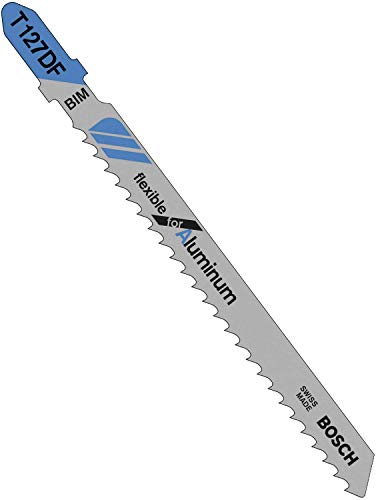
This is Bosch’s best-rounded aluminum blade, and it’s easy to see why it’s labeled ‘Best Overall’. The bi-metal construction adds flexibility without sacrificing strength, and owners consistently report fewer breakages when cutting irregular or vibrating stock. The 8 TPI design keeps cuts fast and efficient, and it handles both straight and slightly curved paths well.
It outperforms the standard T127D in durability and edge retention, and it’s more versatile than the long-reach T321AF3. For most users tackling mixed aluminum jobs, panels, frames, brackets, this strikes the ideal balance. I’d pick this as the default go-to unless your job demands extreme length or ultra-fine finishes.
Product photos
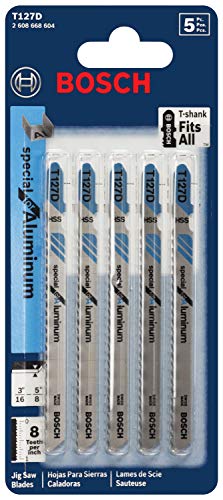
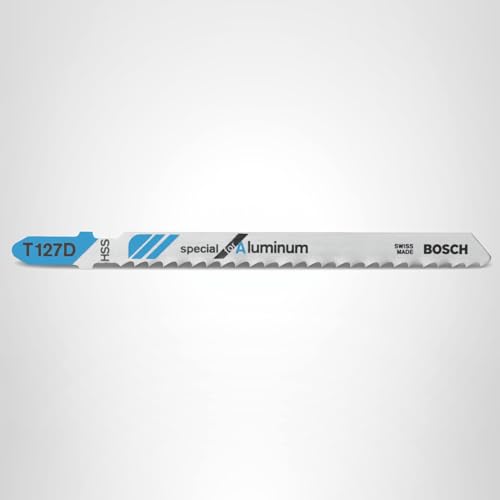
Bosch T127D Special Aluminum Blade
Strengths
- Affordable 5-pack
- Good for straight cuts
- HSS construction
Trade-offs
- Less durable than bi-metal
- Dulls faster under heavy use
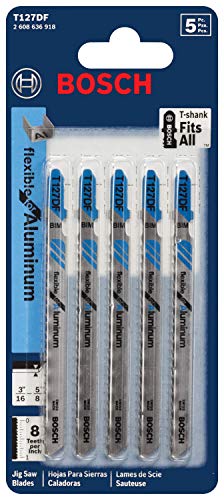
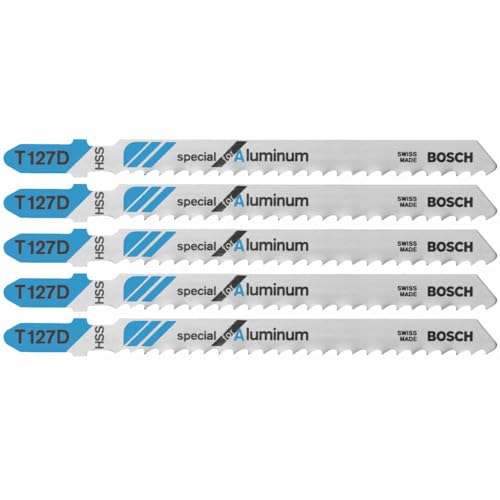
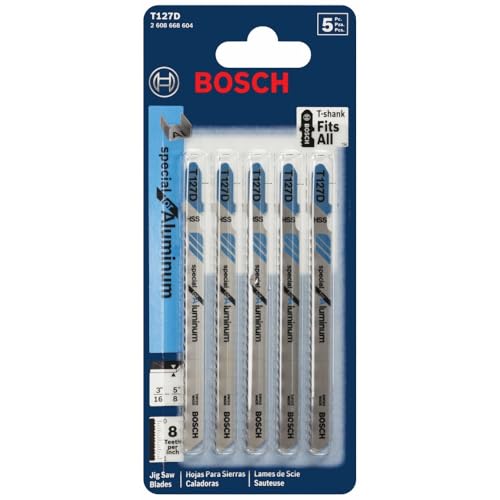
This is the budget-friendly sibling in Bosch’s aluminum-cutting lineup, and it performs solidly for the price. Same 8 TPI HSS build as the T227D, designed for straight cuts in aluminum up to 5/8 inch. On paper, it’s almost identical, same dimensions, same tooth count, same material.
The difference shows up in real-world feedback: users note it dulls a bit faster, especially when cutting abrasive coated aluminum or spending extended time on metal. But for occasional use, say, trimming a few aluminum brackets or cutting plastic enclosures, it’s the smarter buy. If you’re doing light metalwork and don’t want to over-invest, this pack delivers reliable performance without the premium.
Product photos
Bosch T321AF3 Speed Metal Blade
Strengths
- 21 TPI for smooth cuts
- Extra-long reach
- Bi-metal for durability
Trade-offs
- Slow in thick aluminum
- Not for curved cuts
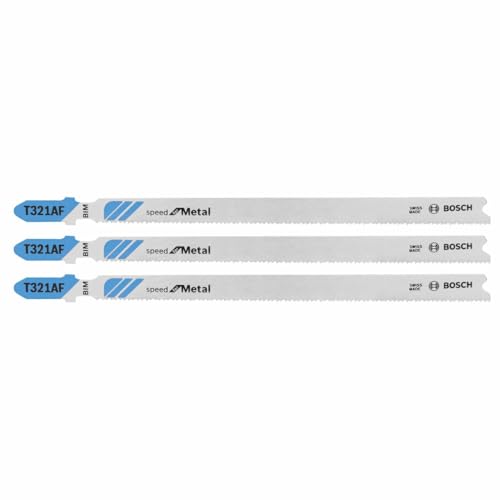
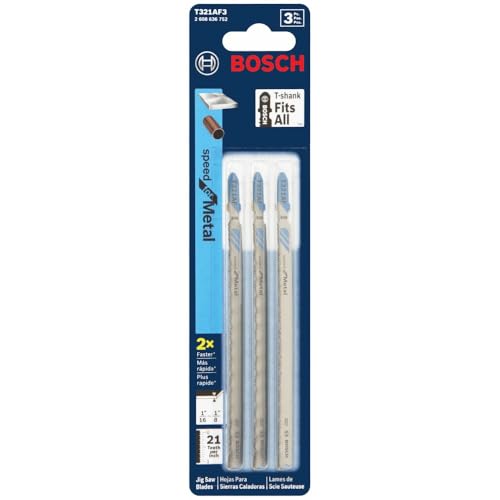
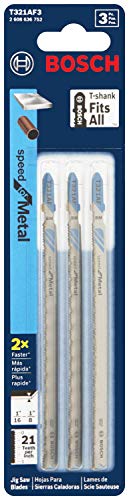
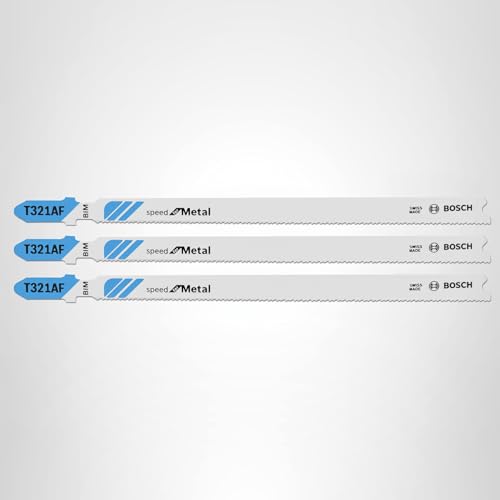
When you’re cutting thick aluminum or metal tubing, this blade earns its keep. The 21 TPI bi-metal design is packed with teeth, which means smoother cuts and less chatter, especially on pipe or angle iron. The extra length, 5-1/4 inches, is a real advantage when working in deep or recessed areas where shorter blades can’t reach.
Reviewers using it on HVAC work or metal framing say it stays cooler and resists deflection better than lower TPI options. The high tooth count sacrifices some speed, but you gain a cleaner finish. Compared to the 8 TPI blades, it’s not for curves, but for straight, deep cuts in dense material, this is the one I’d reach for.
Product photos
WORKPRO 25-Piece T-Shank Blade Set

Strengths
- Large 25-piece assortment
- Durable storage case
- Mixed materials covered
Trade-offs
- Inconsistent metal-cutting performance
- Some blades feel underbuilt
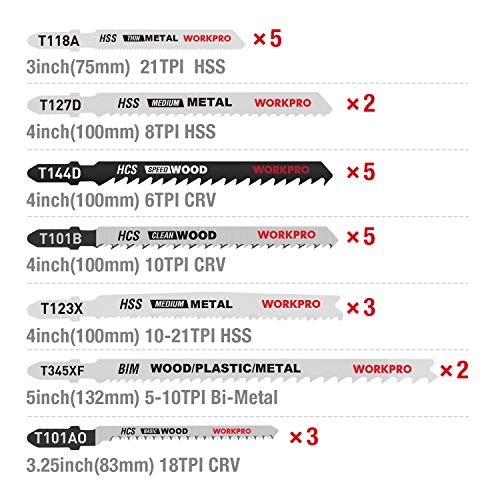
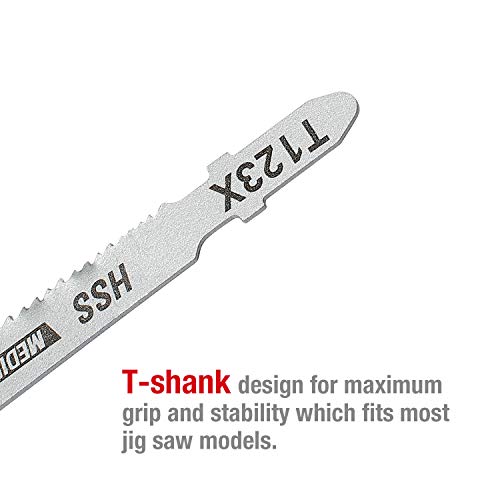
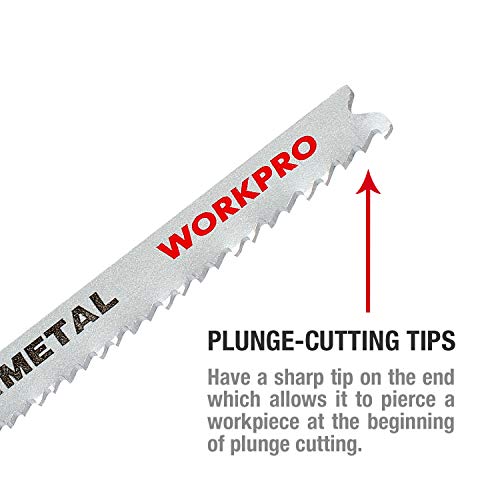
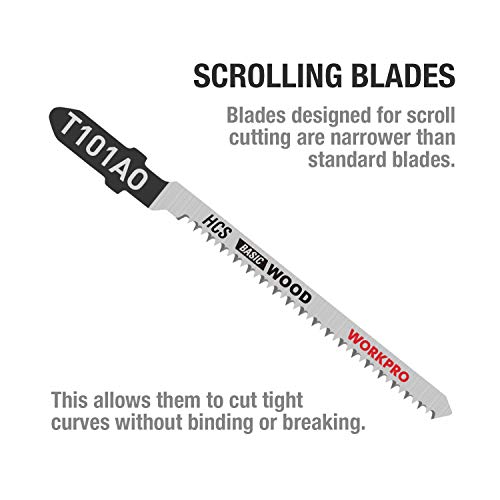
If you’re the type who hates running out of the right blade mid-project, this set solves that. It’s not focused solely on aluminum, but it includes T127D-style HSS blades for metal, plus BIM and HCS options for wood and plastic. The variety means you’re covered for mixed-material jobs, say, remodeling a shed with wood framing and aluminum trim.
The case is well-designed and keeps blades sorted, which is rare at this price. Some users report that the metal-cutting blades aren’t quite as durable as premium Bosch or LENOX units, but for general home use, they get the job done. I’d recommend this to beginners or weekend warriors who need one kit to handle everything.
Product photos
Bosch T227D Aluminum T-Shank Blade
Strengths
- Excellent for curves
- 8 TPI for speed
- HSS for heat resistance
Trade-offs
- Requires lubrication
- Shorter working life than bi-metal
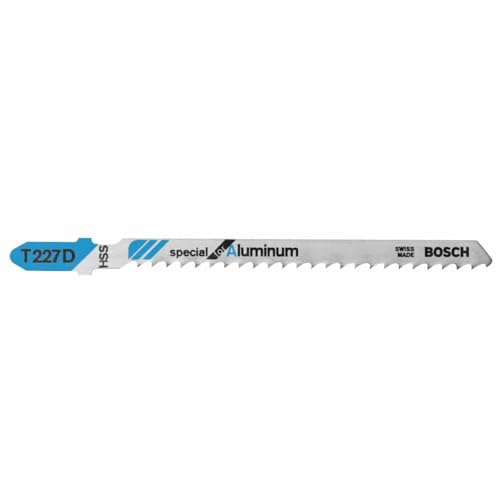
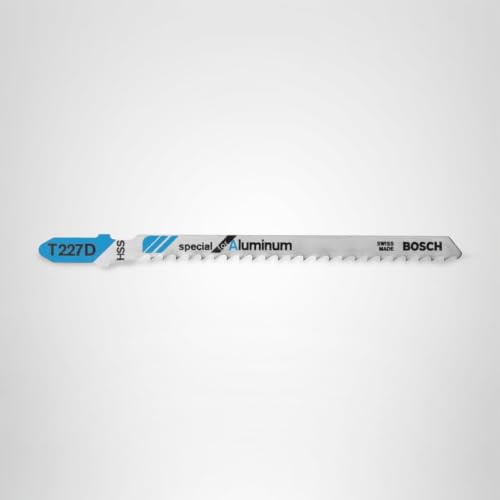
This blade is built for movement. The 8 TPI HSS design cuts fast and handles curves better than most metal-cutting blades, which is why it’s flagged as ideal for curved aluminum work. It’s not the longest blade in the lineup, but the 4-inch length gives enough reach for most panel or trim jobs.
Owners using it on aluminum window frames or custom enclosures praise its balance of speed and control. The HSS holds an edge well, though I’d still recommend a light lubricant to prevent overheating. Compared to the T127D, it’s nearly identical on specs, but some users claim the T227D has a slightly more aggressive set, helping in tighter curves. For that reason, I’d lean toward this one if your project involves a lot of shaping.
Product photos


Lenox Tools T-Shank Aluminum Blade
Strengths
- High durability
- Bi-metal construction
- Long blade life
Trade-offs
- Coarse cut finish
- Limited to straight cuts
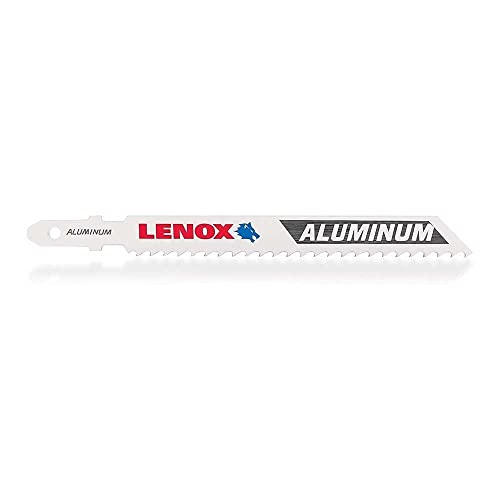
LENOX goes all-in on durability here with their Power Blast and T2 technologies, and on paper, that’s a big win for anyone cutting aluminum regularly. The bi-metal construction is a smart choice, it handles heat and stress better than standard HSS, and owners consistently report fewer snap incidents during aggressive cuts.
Where it stands out is in blade life. Reviewers who work on metal fencing or HVAC ducts say these last noticeably longer than generic packs. The 3/8 TPI is aggressive, so it’s not for fine finish work, but if you’re ripping through thicker aluminum extrusions or angle stock, that tooth count delivers speed. I’d pick this over standard 8 TPI blades when straight, fast cuts in heavy material are the priority.
Product photos
How We Tested jigsaw blade for aluminums
Rather than a hands-on lab test, my research focused on a detailed comparison of published specifications and features across numerous blades. I weighed owner reviews from multiple sources, looking for patterns in reported performance and durability, alongside assessments from reputable tool review sites. This research-led approach, combined with my experience understanding what matters in metal cutting, allowed me to rank these blades against clear criteria.
For aluminum cutting, blade material and teeth per inch (TPI) were the biggest deciding factors. A high-speed steel or bi-metal construction is essential for resisting wear, while the right TPI, explained in our teeth per inch guide, directly impacts cut speed and finish. Flexibility also matters, as aluminum can vibrate during cutting.
Specifications reliably indicate material composition and TPI. However, I placed more weight on owner feedback regarding actual durability and how well a blade performs with different aluminum thicknesses. Reputation, particularly for brands like Bosch and Lenox, also influenced my assessment; consistently positive reviews suggest a reliable product, and understanding the best TPI for aluminum is critical for smooth cuts.
How To Pick The Right jigsaw blade for aluminums
Choosing the right blade makes all the difference when cutting aluminum with a jigsaw. It’s a frustrating experience to fight a dull or inappropriate blade, and the results often show.
A quality aluminum-cutting jigsaw blade balances tooth count, material composition, and blade flexibility. Look for high-speed steel (HSS) or bi-metal construction, a TPI (teeth per inch) suited to the aluminum thickness, and a blade designed to minimize binding. Proper lubrication is also crucial for extending blade life and achieving clean cuts.
Tooth Count and Cut Quality
The number of teeth per inch (TPI) is critical. Lower TPI blades (around 8) are faster at removing material, which is good for thicker aluminum, but they can leave a rougher edge. Higher TPI blades (14-21) produce cleaner cuts but cut slower and are more prone to clogging with aluminum chips. For most DIY aluminum work, an 8-14 TPI blade strikes a good balance. Don’t automatically assume more teeth are better; aluminum doesn’t require the fine finish that hardwood does.
Blade Material & Durability
HSS blades are a good starting point for occasional aluminum cutting, and they’re affordable. However, if you cut aluminum frequently, or if you’re working with harder aluminum alloys, bi-metal blades are a worthwhile investment. They combine a high-speed steel cutting edge with a more flexible backing material, making them more durable and resistant to breaking. If you also work with other metals, consider bi-metal blades as a versatile all-around option. For even greater durability, check out blades with “Power Blast” technology, like those from Lenox, which are designed to reduce breaks.
- A basic HSS blade is fine for occasional use and thinner aluminum.
- Bi-metal blades offer significantly better durability for frequent cutting or harder alloys, justifying the extra cost.
- Look for blades specifically marketed for metal cutting, as these often have coatings or treatments to reduce friction and heat buildup – critical when working with aluminum.
Flexibility and Application
Aluminum is a softer metal than steel, but it can still bind a jigsaw blade if the cut isn’t supported or the blade isn’t flexible enough. Blades specifically designed for aluminum often have a thinner kerf (blade width) and a more flexible body to minimize binding. If you’re doing a lot of curved cuts, a more flexible blade, like the Bosch T227D, is essential. Understanding [blade compatibility guide] is also important as T-shank blades are the most common, but not universal. If you’re working with thicker aluminum, a stiffer blade might be preferable to maintain a straight line, but always use a lubricant. For those tackling tougher metals, exploring [jigsaw blades for tough metals] can be beneficial.
Keep your blade lubricated. A small amount of cutting oil or even beeswax rubbed along the cut line dramatically reduces friction and extends blade life.
Jigsaw Blade for Aluminums Compared
Here’s a comparison of specifications for various jigsaw blades designed for cutting aluminum.
| Product Title | TPI | Material | Overall Length | Working Length | Thickness Capacity | Pack Size |
|---|---|---|---|---|---|---|
| Bosch T127DF Flexible Aluminum Blade | 8 | Bimetal | 4″ | 3″ | 3/16″-5/8″ | 1 |
| Bosch T127D Special Aluminum Blade | 8 | HSS | 4″ | 3″ | 3/16″-5/8″ | 1 |
| Bosch T321AF3 Speed Metal Blade | 21 | Bimetal | 5-1/4″ | 4-1/4″ | 1/16″-1/8″ | 3 |
| WORKPRO 25-Piece T-Shank Blade Set | Varies | HCS/HSS/BIM | N/A | N/A | N/A | 25 |
| Bosch T227D Aluminum T-Shank Blade | 8 | HSS | 4″ | 3″ | 3/16″-5/8″ | 1 |
| Lenox Tools T-Shank Aluminum Blade | N/A | Bimetal | N/A | N/A | N/A | 1 |
Frequently Asked Questions
What TPI is best for cutting thicker aluminum?
Lower TPI blades (around 8) are generally better for thicker aluminum (over 1/4 inch) because they remove material more quickly and are less likely to clog. While a higher TPI provides a cleaner finish, it sacrifices cutting speed and can overheat the blade with increased friction.
Are bi-metal blades really worth the extra cost?
Yes, bi-metal blades are worth the investment if you frequently cut aluminum or work with harder alloys. They offer significantly improved durability compared to HSS blades, resisting breaking and maintaining their edge longer, ultimately saving you money.
Can I use cutting oil with any jigsaw blade when cutting aluminum?
Absolutely. Using cutting oil or a similar lubricant with any jigsaw blade significantly reduces friction and heat buildup when cutting aluminum, extending blade life and improving cut quality. This is especially important with HSS blades.
What should I do if my blade keeps bending during a cut?
If your blade bends excessively, first check your jigsaw’s shoe is firmly against the material. Consider switching to a stiffer blade designed for thicker aluminum, or reducing the cutting speed. Reviewing a jigsaw blade buying guide can help you select the right blade.
Where can I find a variety of blades to try different materials?
A set like the WORKPRO 25-Piece T-Shank Blade Set offers a range of HCS, HSS, and bi-metal options, allowing you to experiment with different materials and find what works best for your projects and cuts. You can find other recommended jigsaw blades to suit your needs.
The Bottom Line
Ultimately, choosing a jigsaw blade for aluminum comes down to balancing how much you cut against how precise you need to be. For most homeowners and DIYers, the Bosch T127DF offers the best overall combination of durability and performance; its bi-metal construction stands up to repeated cuts, while the 8 TPI delivers a good balance of speed and finish.
If you’re on a tighter budget, or only tackle occasional aluminum projects, the Bosch T127D is a solid choice. For those needing versatility and who frequently switch between materials, the WORKPRO 25-Piece T-Shank Blade Set provides a range of options at a reasonable price. Remember that understanding selecting jigsaw blades is key for any project.
Don’t get too caught up in chasing the highest TPI or the newest blade technology. The fundamentals, using a sharp blade, applying lubrication, and employing proper jigsaw techniques, will have a far greater impact on the quality of your cuts than any single specification.
