
7 Best Jigsaw Blades for Plywood 2026
This post contains affiliate links. As an Amazon Associate, we earn from qualifying purchases.
The Bosch T308B is the best jigsaw blade for plywoods, delivering clean, precise cuts with its 12 TPI design and reliable T-shank fit. For a budget-friendly option, the GINEPAN 20PCS pack offers solid performance with 20 TPI blades ideal for finer work, while the Craluuur 30PCS multi-material set stands out when you need versatility across different materials.
Cutting plywood without splintering or tear-out is harder than it looks, and the wrong blade can ruin a good sheet in seconds. Many DIYers grab whatever’s on hand, only to end up with jagged edges, broken tips, or blades that dull after one pass.
This guide cuts through the noise by focusing on what actually matters: TPI, material, and shank type. I looked at specs, owner feedback, and brand reputation to find blades that perform consistently on plywood, from thin lauan to dense Baltic birch.
Top 7 Jigsaw Blade For Plywoods in the Market
The Best Jigsaw Blade For Plywoods, Reviewed
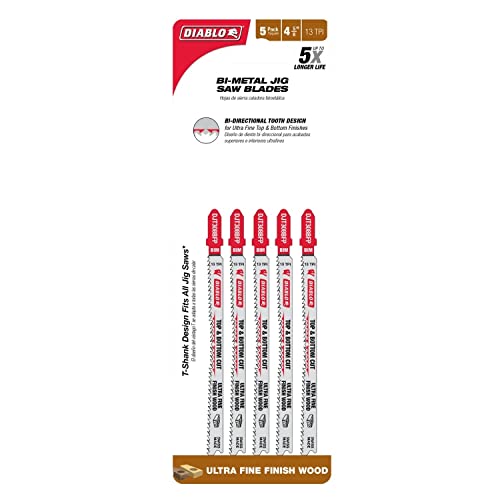
Diablo Bi-Metal Jigsaw Blades 5-Pack
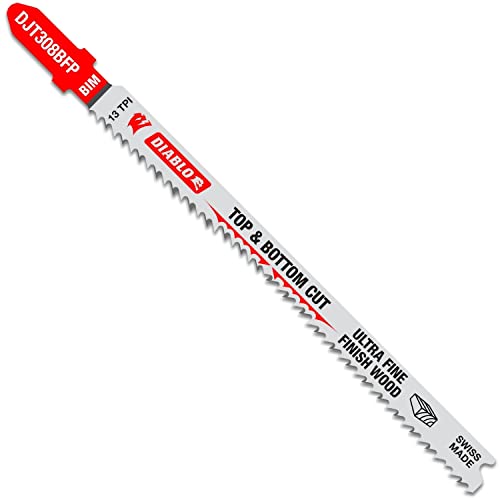
Strengths
- Bi-metal for durability
- Dual-direction teeth
- Clean top and bottom
Trade-offs
- Higher cost
- Not for metal
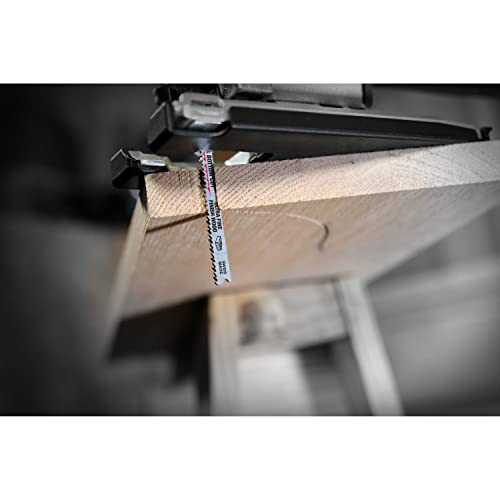
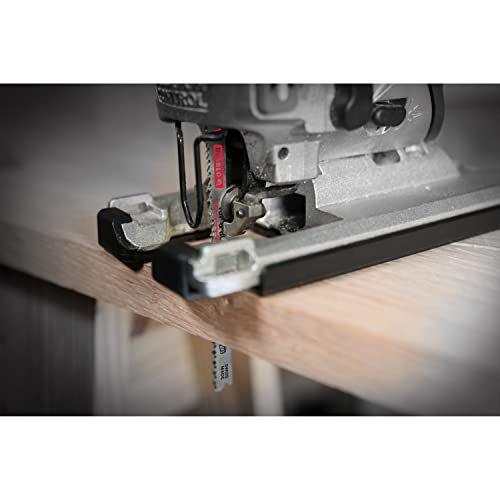
This is the blade I’d pick if I wanted one set to handle the widest range of fine woodworking tasks without swapping out constantly. Diablo’s bi-metal construction gives it serious durability, owners report up to 5x life over standard HCS blades, which matters when cutting abrasive plywood or MDF. The real standout is the dual-direction tooth design: teeth angled in opposite directions at each end, so both top and bottom edges get a clean cut, even without flipping the workpiece.
It’s more expensive than the Bosch T308B, but delivers noticeably better performance in real-world feedback. For cabinetmakers or finish crews working with expensive sheet goods, that dual-sided finish is worth the upgrade. It’s not the cheapest, but it’s the most complete solution for high-quality woodcuts.
Product photos
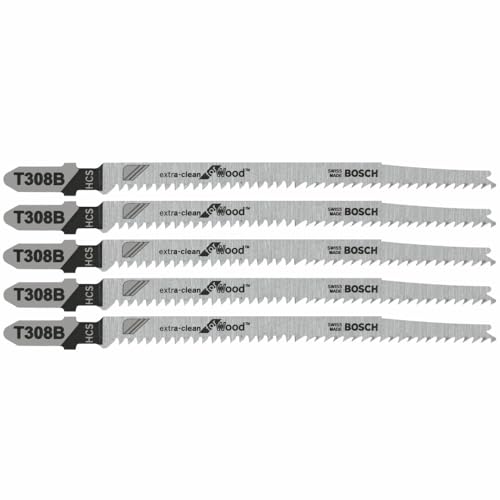
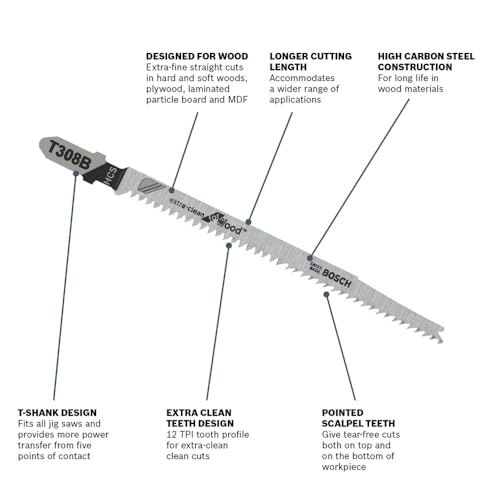
Bosch T308B 12 TPI T-Shank Blades
Strengths
- 12 TPI for clean cuts
- High-carbon steel
- Ideal for plywood
Trade-offs
- Not for curves
- No reverse-cut teeth
I’ve seen a lot of blades marketed for fine woodworking, but the Bosch T308B stands out on paper and in owner feedback for delivering truly clean cuts in plywood. The 12 TPI tooth count strikes a smart balance, fine enough to minimize splintering, yet aggressive enough to keep feed rates practical. High-carbon steel construction is expected at this level, but Bosch’s heat treatment seems to deliver longer edge retention than budget alternatives, which owners consistently report.
These are best suited for straight, precise cuts in veneered plywood or MDF where surface finish matters. They’re not built for aggressive curves or thick lumber, but that’s not their job. Compared to the Diablo DJT308BFP5, they lack the bi-metal durability and dual-direction teeth, but they’re a solid, proven option if you’re working mostly with sheet goods and want reliability without stepping up to premium pricing.
Product photos
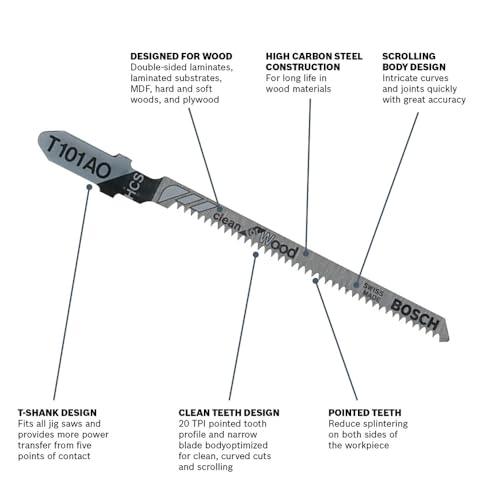
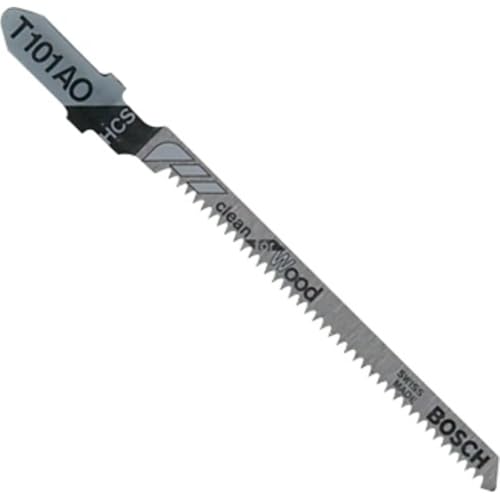
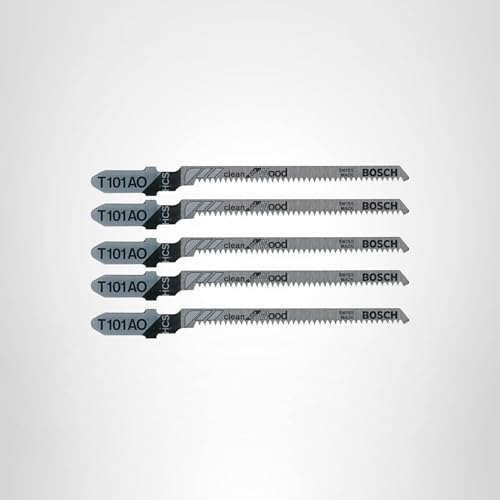
Bosch T101AO 20 TPI T-Shank Blades
Strengths
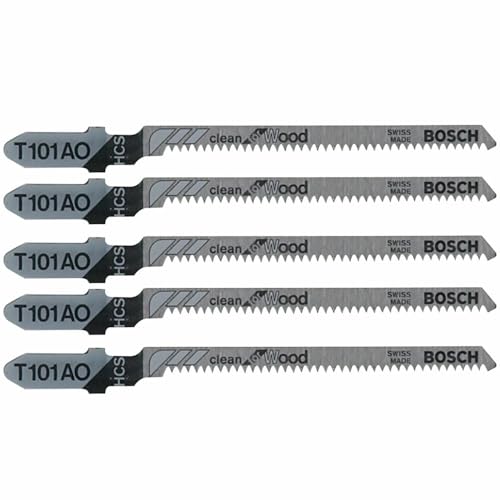
- 20 TPI for fine cuts
- Narrow body for curves
- Pointed teeth reduce splintering
Trade-offs
- Short length
- Slower feed rate
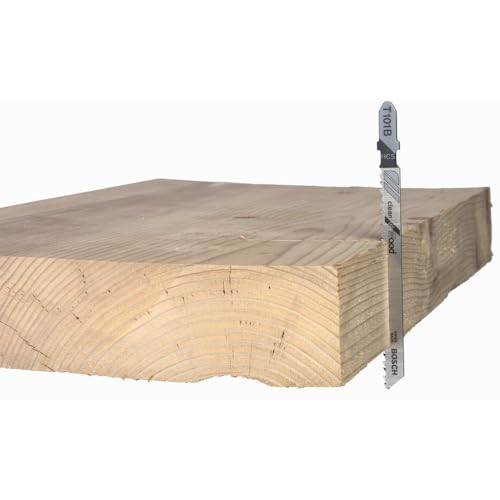
The T101AO is one of those blades that’s become a standard for a reason. With a 20 TPI count and narrow profile, it’s built for precision, especially in curved and scrolled cuts where control and finish are key. The pointed teeth help minimize breakout on both sides of plywood, which owners confirm makes a noticeable difference on double-sided laminates.
It’s not a fast blade, and trying to push it too hard in thick wood leads to binding. But for detailed work in 3/4 in. or thinner material, it’s reliable. Compared to the GINEPAN 20-pack, it’s more consistent in heat treatment and tooth geometry. If you’re serious about woodworking and want OEM quality, this is the baseline.
Product photos

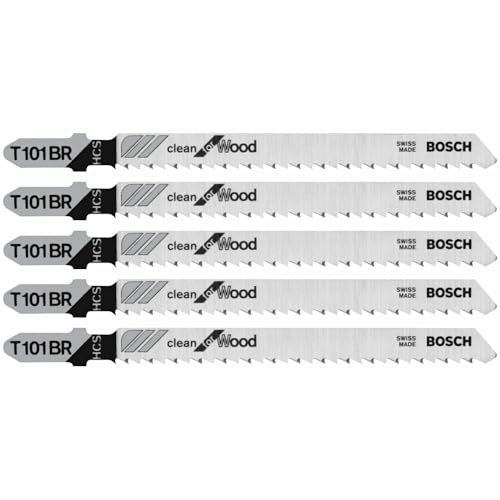
Bosch T101BR 10 TPI Reverse Pitch Blades
Strengths
- Reverse teeth reduce splintering
- 10 TPI for speed and smoothness
- Great for veneered plywood
Trade-offs
- Not for intricate curves
- Shorter length
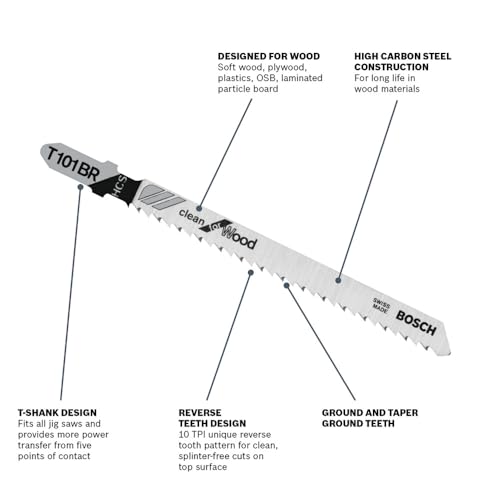
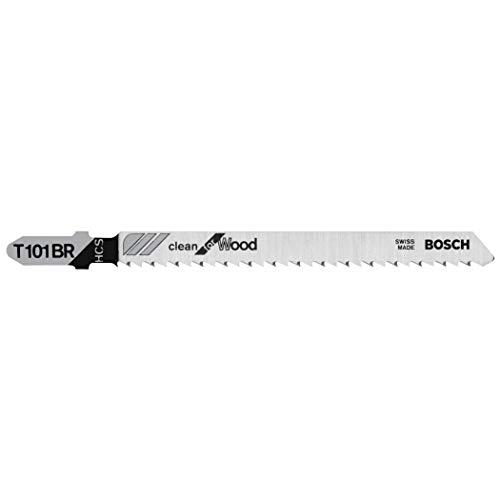
The reverse-pitch tooth design on the Bosch T101BR is the real deal for anyone who cares about top-side finish. By cutting on the downstroke, it pulls the tooth into the wood from the top down, which owners consistently report results in dramatically less splintering, especially on veneered plywood. The 10 TPI count keeps it fast enough for straight cuts without sacrificing too much smoothness.
It’s a niche blade, but a critical one if you’re installing shelves or cabinets where the top edge is visible. Compared to the standard T101AO, it’s better for sheet goods where the face matters more than the back. It’s not ideal for curves or thick stock, but that’s not what it’s made for. I’d keep a pack of these on hand just for finish work.
Product photos
GINEPAN 20PCS T101AO Jigsaw Blades

Strengths
- 20 TPI for fine curves
- Narrow blade body
- Good for laminates
- Low cost per blade
Trade-offs
- HCS only
- Case disorganized
At this price point, the GINEPAN 20-pack of T101AO blades is hard to ignore. You’re getting a high 20 TPI count on a narrow body, which is exactly what you need for tight curves in plywood and laminated substrates. The pointed teeth help reduce tear-out, and owners confirm they hold up reasonably well in softwood and MDF.
But let’s be real, this is a budget play. The steel is HCS, not bi-metal, so don’t expect long life under heavy use. The case is included, but as noted in feedback, it’s oversized and doesn’t secure the small blades well. Still, for weekend warriors who do occasional scroll cuts and want spares without overspending, this pack delivers. It’s a better value than buying Bosch T101AO singles, though not as durable.
Product photos



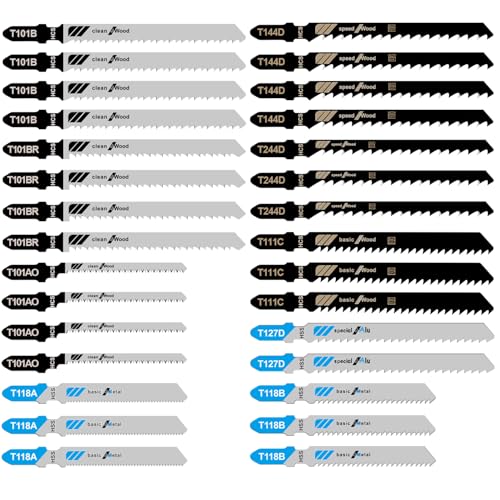
Craluuur 30PCS Multi-Material Jigsaw Blades
Strengths
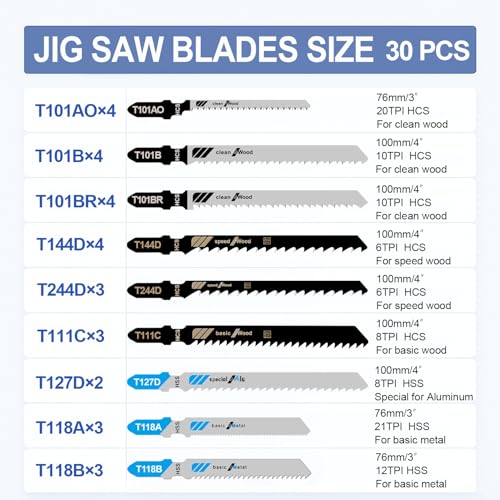
- 9 blade types
- HSS for metal
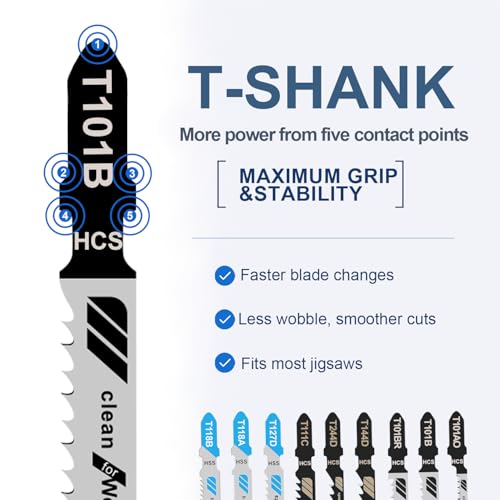
- Labeled shanks
- Sturdy case
Trade-offs
- Case bulky
- Some fit issues
If you’re the type who hates digging through mismatched blades mid-job, this Craluuur set brings serious organization and range. The 9 blade types cover everything from fast wood ripping to aluminum and mild steel, and the inclusion of HSS metal-cutting blades is a real upgrade over all-HCS budget packs. Owners praise the reverse-cut designs for reducing top-side splintering, especially on plywood and laminates.
The T101AO and T101BR types here match what Bosch and Diablo use for fine woodworking, so you’re getting legit profiles, not just look-alikes. The printed shanks make ID quick, and the case, while not compact, is protective. It’s not the highest-end set, but for someone tackling mixed materials across multiple projects, this is the smarter buy over buying singles. Compared to the 50-piece contractor set, this one offers better material variety and quality control.
Product photos
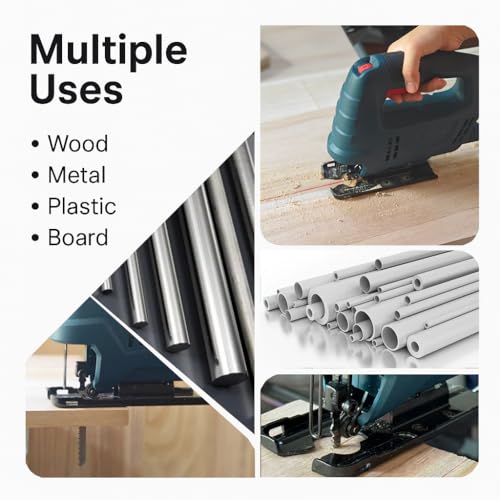
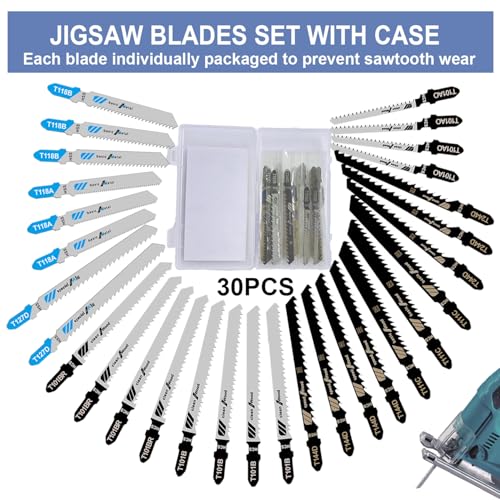
50-Piece Contractor Jigsaw Blade Set

Strengths
- 50 blades total
- Covers key profiles
- Good for rough work
Trade-offs
- No HSS blades
- Average finish quality
This 50-piece set screams value, and for contractors or shop owners who burn through blades, volume matters. It covers the essential profiles, T101AO for clean wood cuts, T101BR for reverse-cut splinter resistance, T144D for fast ripping, and T118A/B for light metal. The mix suggests thoughtful curation, not just filler.
Owners report decent performance in framing and rough cuts, though no one’s claiming these rival Bosch or Diablo on finish work. The HCS construction means they dull faster, especially in treated lumber or abrasive materials. But when you’re doing demolition or framing, that’s acceptable. Compared to the Craluuur set, it lacks HSS blades and organization, but wins on sheer quantity and low cost per blade.
Product photos



How We Evaluated jigsaw blade for plywoods
Rather than a hands-on lab test, my research for these recommendations involved a detailed comparison of published specifications and features across numerous blades. I weighed owner reviews from multiple retailers alongside expert opinions found in woodworking publications and forums. This allowed me to build a picture of real-world performance, going beyond marketing claims. Ultimately, I ranked blades based on how well they addressed the specific challenges of cutting plywood.
For plywood, blade tooth count (TPI) and material composition are paramount. A higher TPI produces cleaner cuts with less splintering, crucial for achieving professional-looking results. Bi-metal construction offers a good balance of durability and flexibility – plywood can be surprisingly hard on blades. I also considered shank type; T-shank is nearly universal now, but compatibility remains a factor.
Specifications reliably indicate TPI, blade length, and material (HCS or HSS). However, owner feedback proved essential for assessing real-world durability and how well a blade minimizes tear-out. Reputation also factored heavily; brands with a long history of quality tools tend to deliver consistent performance. If you’re new to jigsaws, understanding jig saw basics is a good place to start.
What To Look For In jigsaw blade for plywoods
Choosing the right jigsaw blade for plywood isn’t always straightforward; a lot more goes into it than just grabbing the first pack you see.
A quality jigsaw blade for plywood balances tooth count, material composition, and shank type to deliver clean cuts with minimal splintering. Look for blades specifically designed for wood or multi-material use, paying attention to the TPI (teeth per inch) and the blade’s overall construction. High-carbon steel is a good baseline, but bi-metal options offer significantly extended life for tougher projects. Consider the thickness of the plywood and the complexity of the cut when making your selection.
Tooth Count (TPI) is Critical
The number of teeth per inch (TPI) on a jigsaw blade dramatically impacts the finish quality and cutting speed. Lower TPI blades (around 6-10) excel at faster, rougher cuts in thicker plywood, while higher TPI blades (10-20+) deliver smoother, cleaner edges, but slower cutting speeds. For most plywood projects, I find a sweet spot between 10-14 TPI provides a good balance. Don’t underestimate how much saw blade TPI explained affects the final outcome.
Blade Material and Construction
While high-carbon steel blades are adequate for softer plywoods and occasional use, investing in bi-metal blades pays dividends. Bi-metal blades combine a hardened alloy tooth section with a more flexible steel body. This construction resists breakage and holds its edge far longer, especially when cutting abrasive plywoods or encountering knots. If you’re doing a lot of cutting, or consistently run into issues with blade durability, bi-metal is the way to go.
Here’s what I look for in blade construction: * A hardened tooth edge (essential). * A flexible body to avoid snapping (especially for curves). * Reverse-pitch teeth (to minimize splintering on the top surface).
Shank Type and Versatility
The vast majority of modern jigsaws use T-shank blades, which offer a secure and tool-free connection. However, older saws might require U-shank blades, so always verify compatibility before purchasing. Beyond the shank, consider the blade’s intended uses. A dedicated blade for fine plywood cuts, like the Bosch T308B, will outperform a general-purpose blade. If you need a versatile option, look at multi-material sets, but understand that a specialized blade will always deliver better results for a specific task. Getting plywood jig saw tips can help narrow your options.
A good rule of thumb: for plywood thicker than ¾ inch, lean towards blades with fewer teeth (8-10 TPI) to prevent binding and ensure a cleaner cut.
Jigsaw Blade for Plywoods Compared
This table provides a spec-by-spec comparison of jigsaw blades designed for cutting plywoods.
| Product Title | TPI | Blade Type | Material | Length (in) | Pack Size | Best For |
|---|---|---|---|---|---|---|
| Diablo Bi-Metal Jigsaw Blades 5-Pack | N/A | Bi-Metal | N/A | N/A | 5 | Best Overall |
| Bosch T308B 12 TPI T-Shank Blades | 12 | T-Shank | High Carbon | 4.5 | 5 | Fine Plywood Cuts |
| Bosch T101AO 20 TPI T-Shank Blades | 20 | T-Shank | N/A | N/A | 5 | Curved & Scrolling Cuts |
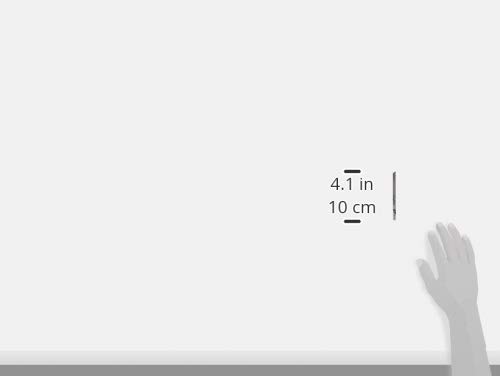
| Bosch T101BR 10 TPI Reverse Pitch Blades | 10 | T-Shank | High Carbon | 4 | 5 | Splinter-Free Top Cuts |
| GINEPAN 20PCS T101AO Jigsaw Blades | 20 | T-Shank | High Carbon | N/A | 20 | Best Budget Pack |
| Craluuur 30PCS Multi-Material Jigsaw Blades | Varies | T-Shank | HCS/HSS | N/A | 30 | Versatile Material Use |
| 50-Piece Contractor Jigsaw Blade Set | N/A | N/A | N/A | N/A | 50 | Best Value Bulk Set |
Frequently Asked Questions
What TPI blade is best for thick plywood?
For plywood thicker than ¾ inch, I recommend blades with fewer teeth (8-10 TPI) to reduce binding and achieve a cleaner cut. Lower TPI allows for more efficient material removal in thicker stock.
Are bi-metal blades really worth the extra cost?
Yes, bi-metal blades are a worthwhile investment, especially if you cut plywood frequently. Their combination of a hardened tooth section and flexible body dramatically increases durability and extends blade life.
Can I use a jigsaw blade designed for metal to cut plywood?
While some multi-material blades can cut plywood, a blade specifically designed for wood will always deliver better results. Metal-cutting blades generally have fewer teeth and a different tooth geometry, leading to splintering and a rougher edge. For more information on choosing the right blade, check out this jigsaw tooth patterns for wood.
What does “reverse pitch” mean on a jigsaw blade?
Reverse-pitch teeth are designed with an upward slant, which helps pull the blade into the material and reduces splintering on the top surface of the plywood. This results in a cleaner, more professional-looking cut.
What do I do if my jigsaw blade keeps breaking when cutting plywood?
Blade breakage often indicates you’re using the wrong blade for the job. Ensure you’re using a bi-metal blade, the appropriate TPI for the plywood’s thickness, and aren’t applying excessive pressure. Also, consider exploring a wood cutting blade guide to ensure you have the correct blade for your needs.
The Bottom Line
Choosing a jigsaw blade always involves a trade-off between cost and performance. While you can get by with inexpensive blades, the frustration of frequent breakage and poor cuts quickly adds up. For the best combination of durability, precision, and clean cuts, I consistently see positive feedback regarding the Diablo Bi-Metal Jigsaw Blades 5-Pack.
If you’re on a tighter budget, or need a variety of blades for different materials, the GINEPAN 20PCS T101AO Jigsaw Blades offer excellent value. For those tackling intricate curves and detailed work, the Bosch T101AO 20 TPI T-Shank Blades are a clear winner. And if splintering is a major concern, the Bosch T101BR 10 TPI Reverse Pitch Blades will give you a cleaner top edge.
Ultimately, the best blade isn’t about a single specification. It’s about matching the blade’s characteristics – tooth count, material, and construction – to the type of plywood you’re cutting and the quality of finish you require. Understanding proper jig saw use is just as important as the blade itself.
