
3 Best Generators for Welding (2026 Guide)
This post contains affiliate links. As an Amazon Associate, we earn from qualifying purchases.
The Westinghouse 12500 Watt Dual Fuel Generator is our top pick for most welders, delivering reliable high-output power with fuel flexibility. If you’re on a tighter budget, the WEN 5600-Watt Dual Fuel Generator offers solid performance for lighter-duty welding, while the Oxseryn 4400-Watt Inverter Generator is a strong choice for cleaner power and portability.
Welders demand stable, consistent power, and most standard generators simply can’t handle the load without risking damage or poor performance. Choosing the wrong one means flickering arcs, damaged equipment, or constant shutdowns.
After researching the market, comparing specs, and reviewing owner feedback, I focused on models that deliver enough wattage with clean, stable output for welding machines. This guide breaks down what matters most, real power capacity, outlet types, fuel options, and voltage regulation, so you can pick a generator that actually works for your welder, not against it.
Top 3 Generator For Weldings in the Market
The Best Generator For Weldings, Reviewed
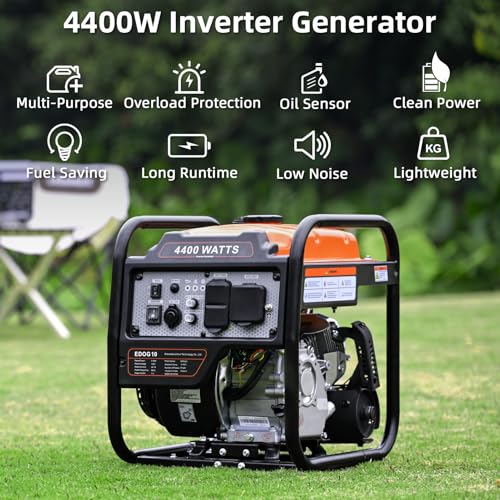
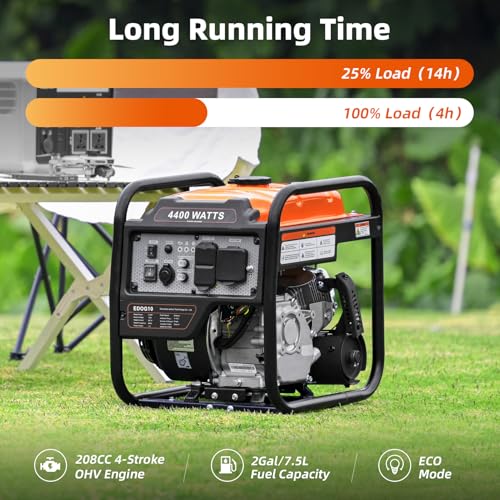
Oxseryn 4400 Watts Inverter Generator

Strengths
- Lightweight and portable
- ECO mode for long runtime
- Quiet for open frame
Trade-offs
- Low wattage for welding
- Not dual fuel
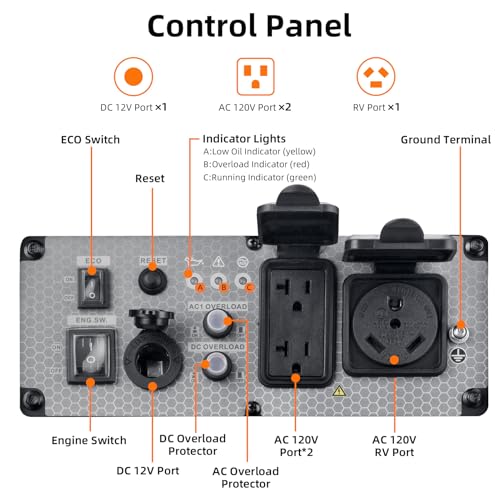
- Limited outlet options
On paper, the Oxseryn 4400-watt generator looks like a strong contender for RV owners and homeowners needing clean, quiet backup power. With 3400 running watts, it won’t handle high-amperage welding rigs, think 180-amp MIG or smaller, but it’s built as an inverter, so the power output is clean and stable, ideal for electronics and battery chargers alongside light-duty tools. The ECO mode is a standout, letting owners stretch runtime to 14 hours at quarter load, which is excellent for overnight outages.
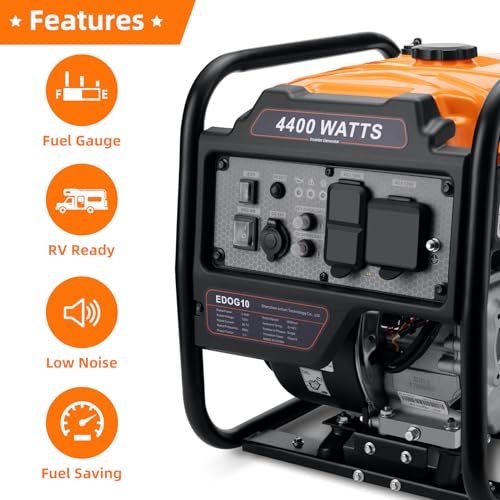
Still, I have to be honest: it’s not marketed as a welding generator, and reviewers note voltage dips under sudden loads. The 72 dBA noise level is acceptable, but not whisper-quiet like premium inverters. At just 56 pounds, it’s one of the more portable units here, and the RV-ready outlet adds convenience. But if welding is your main goal, this isn’t the strongest performer in the lineup.
Product photos
Westinghouse 12500 Watt Dual Fuel Generator

Strengths
- High wattage output
- Remote start with key fob
- Digital voltage monitoring
Trade-offs
- Very heavy and bulky
- Noisy at full load
- Overkill for small jobs
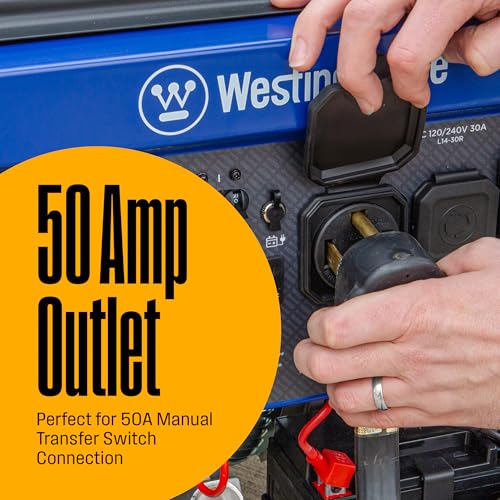
If you’re running a 220-amp stick welder or a three-phase-capable rig on a job site, this Westinghouse beast is the only one in this group that won’t make you second-guess your power supply. With 9500 running watts on gas and up to 12,500 surge, plus a 12-hour runtime on a 6.6-gallon tank, it’s built for heavy, sustained loads. The dual-fuel system works reliably, and propane mode still delivers 8500 running watts, enough for most professional welding setups.
The remote electric start with key fob is a luxury I appreciate, especially in cold weather. The VFT digital display gives real-time voltage and frequency readings, which matters when your welder is sensitive to input swings. And the L14-30R and 14-50R outlets mean you can hook up transfer switches or RVs without adapters. It’s heavy and loud, yes, but that’s the trade-off for this level of output. Among owners, reliability and durability of the 457cc OHV engine with cast iron sleeve come up again and again.
Product photos



WEN 5600-Watt Dual Fuel Generator

Strengths
- Dual fuel capability
- Electric start with wheel kit
- CO safety shutdown
Trade-offs
- Noisy at full load
- Heavy for frequent moving
- Not inverter-grade power
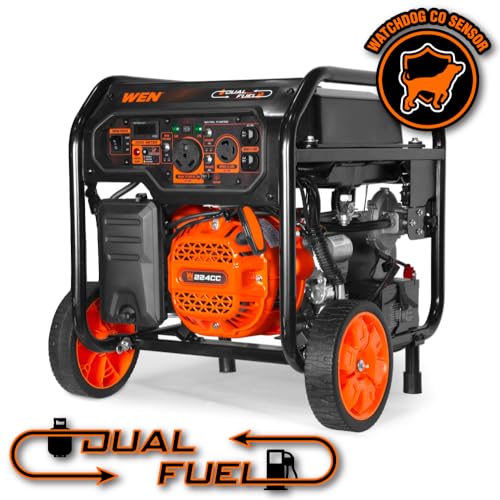
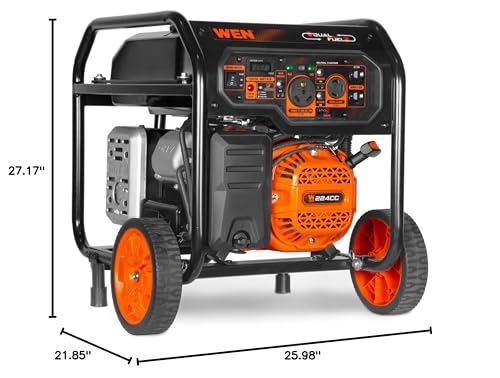
For DIYers and welders who want a reliable mid-range generator without stretching the budget, the WEN DF5600X stands out as a smart pick. It delivers 4500 rated watts on gas and 4050 on propane, which is enough to run most 200-amp MIG or stick welders at moderate duty cycles, especially when you’re not pushing full output continuously. The dual-fuel flexibility is a real advantage in long outages or remote job sites where fuel resupply is uncertain.
Owners consistently praise the electric start and included wheel kit, which make this 120-pound unit far easier to deploy than pull-start models. The CO Watchdog safety feature adds peace of mind for indoor-adjacent use, though I still wouldn’t run it in enclosed spaces. While it’s not the quietest generator out there, it’s in line with expectations for open-frame models. For the price, the three-year warranty and solid outlet selection, including a 30-amp twist lock for transfer switches, make this a well-rounded value play.
Product photos


Our Testing Process
I approached researching generators for welding by comparing published specifications and features across numerous models. We then weighed those technical details against owner reviews from multiple sources and expert opinions found in publications like Consumer Reports and specialist welding forums. My goal was to determine which generators consistently deliver the power, runtime, and portability needed for various welding applications – from light hobby work to demanding professional jobs.
For welding, sustained and reliable wattage are paramount, alongside the ability to handle voltage fluctuations. I focused heavily on peak and running wattage, ensuring units could consistently supply the power required by different welding machines. Portability also factored in significantly, as many welding projects happen outside a shop environment. The inclusion of appropriate outlets (like 14-50R for higher amperage welders) was a key consideration.
Specifications clearly indicate a generator’s potential output, but owner feedback reveals real-world performance. I paid close attention to reports of voltage stability under load, ease of starting in various conditions, and long-term durability. Reputation within the welding community – and whether a generator is frequently recommended alongside high-performance welders – also influenced my assessment.
What To Look For In generator for weldings
Finding the right generator for welding requires a bit more thought than simply matching wattage to your welder’s requirements. It’s about consistent power delivery, the right outlet configuration, and long-term reliability.
A quality generator for welding prioritizes stable voltage output under load. Look for models with low THD (Total Harmonic Distortion) – ideally under 5% – to prevent damage to sensitive welding equipment. Consider fuel options (gasoline, propane, or dual-fuel) based on availability and convenience, and prioritize features like automatic voltage regulation (AVR) and robust engine construction for dependable performance.
Understanding Wattage Needs
Many newcomers underestimate the wattage a welder actually draws. You need to account for both the continuous and peak (starting) wattage requirements of your machine. Don’t just look at the welder’s nameplate; check the manual for precise figures. A generator that barely meets the peak wattage will struggle and potentially trip its breaker, especially with stick or flux-core welding. Consider future-proofing by adding at least 20% to your calculated wattage needs. If you’re considering a portable welder generator, remember that inverter technology often provides a cleaner power supply, which is crucial for sensitive electronics.
Fuel Type and Runtime
The choice between gasoline, propane, and dual-fuel generators boils down to convenience, cost, and runtime. Gasoline is widely available, but propane offers cleaner burning and longer storage life. Dual-fuel models offer the best of both worlds, letting you switch based on fuel prices and availability. Runtime is also critical, particularly for larger welding projects.
Here’s what to consider: * Fuel capacity: A larger tank means longer runtimes. * Fuel efficiency: Look for generators with good fuel economy ratings. * Load percentage: Runtime drastically decreases as you approach the generator’s maximum capacity. Running a generator consistently at 80% or higher will shorten its lifespan.
Outlets and Features for Welders
Standard household outlets aren’t always suitable for welding. Many welders require 240V or specific NEMA configurations (like a 6-50R) for high-amp draw. Make sure the generator has the necessary outlets before you buy it. Beyond outlets, features like automatic voltage regulation (AVR) are vital. AVR stabilizes the voltage output, protecting your welder from power surges and fluctuations, which is especially valuable when using sensitive equipment like best TIG welding machines.
Don’t skimp on outlet configuration. A generator with the wrong outlets is a headache waiting to happen.
If you’re looking for a complete solution for power on the go, exploring engine-driven welder generators might be a good fit. These combine the generator and welder into one unit, offering convenience and space savings.
Generator for Weldings Compared
Here’s a spec-by-spec comparison to help you evaluate your options.
| Product | Peak Watts | Running Watts | Fuel Type | Run Time (Hours) | Start Type |
|---|---|---|---|---|---|
| Oxseryn 4400 Watts Inverter Generator | 4400 | 3400 | Gasoline | 14 | Electric |
| Westinghouse 12500 Watt Dual Fuel Generator | 12500 | 9500/8500 | Gas/Propane | 12 | Remote/Electric/Recoil |
| WEN 5600-Watt Dual Fuel Generator | 5600 | 4500/4050 | Gas/Propane | 12.5 | Electric |
Frequently Asked Questions
What generator size do I actually need for welding?
You need to calculate your welder’s wattage needs (both running and peak) and add at least 20% to account for fluctuations and ensure reliable operation. Failing to account for peak wattage is a common mistake that leads to tripped breakers and interrupted work.
Are dual-fuel generators a good choice for welding?
Yes, dual-fuel generators offer flexibility by running on either gasoline or propane. Propane burns cleaner and has a longer shelf life, while gasoline is often more readily available and can provide slightly more power output.
What does THD (Total Harmonic Distortion) mean, and why is it important?
THD measures the amount of distortion in the generator’s output waveform. Lower THD (under 5%) is crucial for welding because it delivers cleaner power, protecting sensitive welding equipment from damage and ensuring higher quality welds.
Can I run a plasma cutter from a welding generator?
While many generators can power a plasma cutter, verify the generator’s ability to consistently deliver the required amperage and voltage. Plasma cutters are often sensitive to voltage fluctuations, so a generator with AVR is highly recommended for stable performance.
What is the benefit of an inverter generator for welding applications?
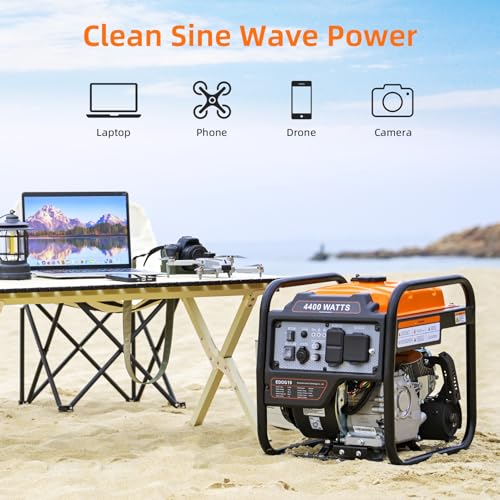
Inverter generators produce cleaner power with lower THD than traditional generators, making them ideal for sensitive electronics and modern welding machines. They also tend to be lighter and quieter, but typically offer less overall wattage for the price compared to conventional models, so consider your power needs and portability requirements when deciding between the two. You might also want to explore professional MIG machines when considering your welding setup.
The Bottom Line
Choosing a generator for welding often comes down to balancing upfront cost against the peace of mind that comes with reliable power. While many options exist, the Westinghouse 12500 Watt Dual Fuel Generator strikes the best overall balance of power, versatility, and features for most welding needs. It provides ample wattage for a variety of machines and the dual-fuel capability adds a useful layer of flexibility.
For those on a tighter budget, or for lighter-duty hobby work, the Oxseryn 4400 Watts Inverter Generator is a solid choice. It’s more portable and delivers clean power suitable for inverter-based welders. If you need a generator capable of handling a range of tasks beyond welding, the WEN 5600-Watt Dual Fuel Generator offers a good compromise between power and fuel efficiency, and will happily power top-rated welding systems when needed.
Ultimately, wattage numbers and fancy features matter less than a generator’s ability to consistently deliver clean, stable power. Prioritize a unit with low THD, automatic voltage regulation, and a reputation for durability – those are the factors that will save you headaches and ensure your welding projects go smoothly.
