8 Best Diamond Saw Blades of 2026
This post contains affiliate links. As an Amazon Associate, we earn from qualifying purchases.
The ORIXTREME 14″ Concrete Diamond Blade is our top pick for heavy-duty cutting, delivering long life and consistent performance on masonry and concrete. For budget-conscious DIYers, the LOZLIN 4.5″ Diamond Blade 3-Pack offers solid value and reliable results on smaller jobs. And if you’re working with tile or need precision, the GoYonder 7″ Super Thin Diamond Blade stands out for clean, fast cuts with minimal waste.
Most people don’t realize how quickly the wrong diamond blade can wear down, overheat, or ruin a cut, especially when tackling tough materials like concrete or tile. It’s not just about hardness, it’s about matching the blade’s design to your saw and your material.
In this guide, we break down the top performers based on specs, owner feedback, and real-world use. We looked at segment height, bond quality, and intended application to find blades that last longer and cut smarter, not harder.
Top 8 Diamond Saw Blades in the Market
The Best Diamond Saw Blades, Reviewed
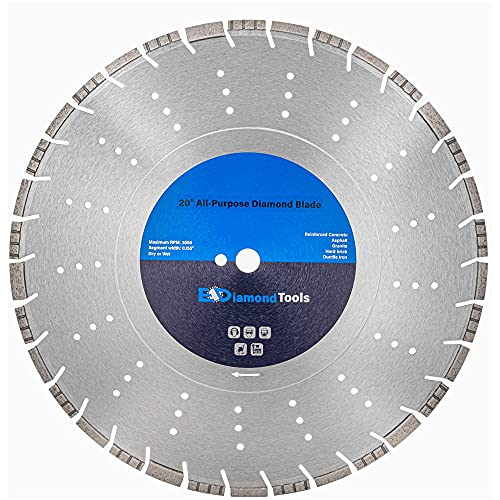
20″ All Purpose Diamond Saw Blade
Strengths
- Deep cutting depth
- Handles reinforced concrete
- Works on asphalt
Trade-offs
- Heavy and bulky
- Overkill for small jobs
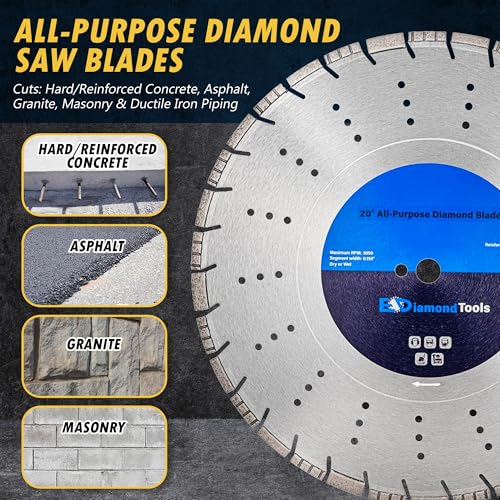
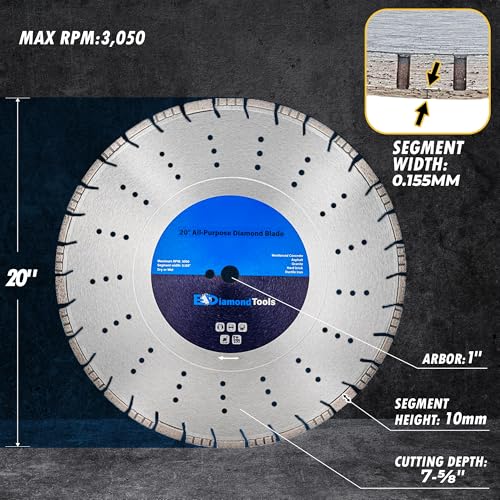
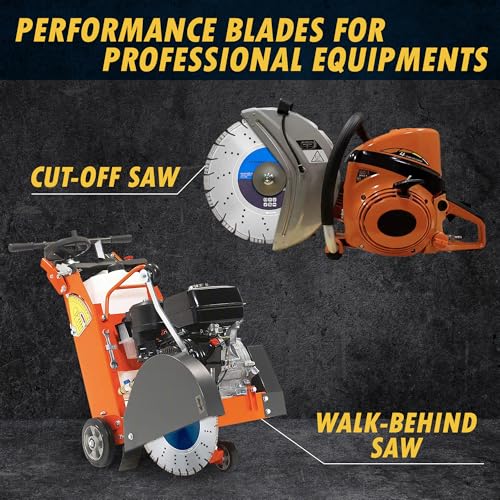
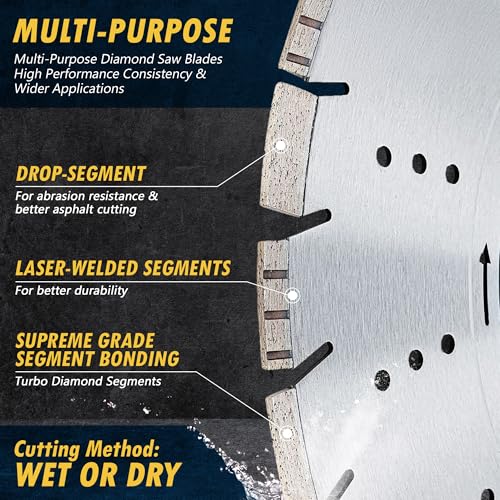
This is the blade you reach for when the job involves serious material, reinforced concrete, thick asphalt, or ductile iron pipe. With a 7-5/8″ cutting depth and a 1″ arbor, it’s built for walk-behind saws or high-horsepower handhelds, not angle grinders. The segment height and width suggest durability over finesse, and real-world feedback confirms it holds up well under sustained heavy use.
It’s not subtle, this blade chews through material, not delicately slices it. But that’s the point. For demolition crews or utility contractors, its multipurpose design means fewer blade changes on mixed-material jobs. The wet/dry capability adds flexibility, though I’d never run this dry for long. Compared to smaller blades, this one wins on reach and robustness, not precision.
Product photos

LOZLIN 4.5″ Diamond Blade 3-Pack
Strengths
- Multi-material use
- Cooling holes
- Good for beginners
Trade-offs
- Average performance across materials
- Not for heavy-duty tasks
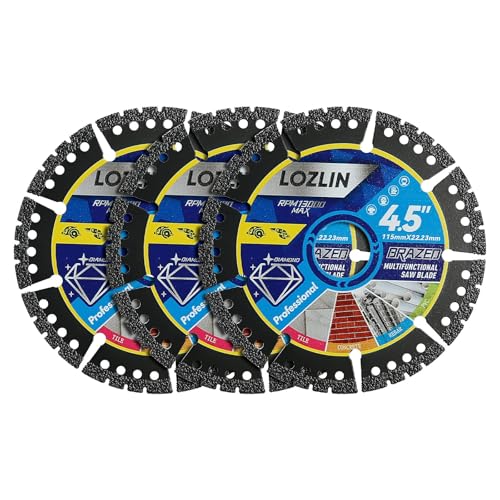
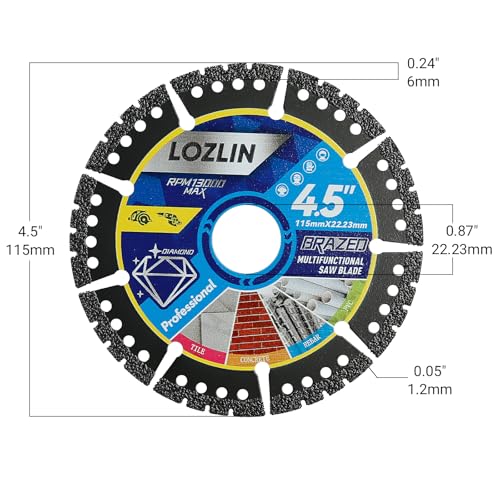
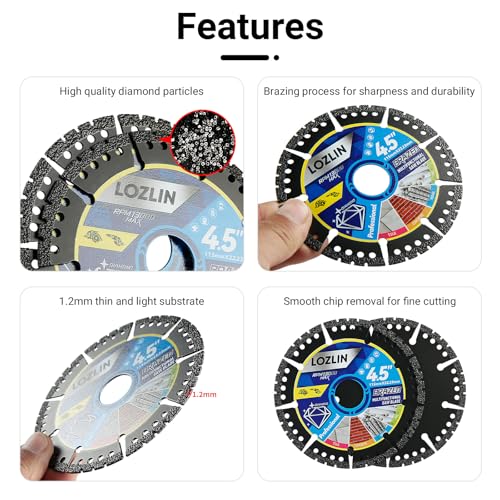
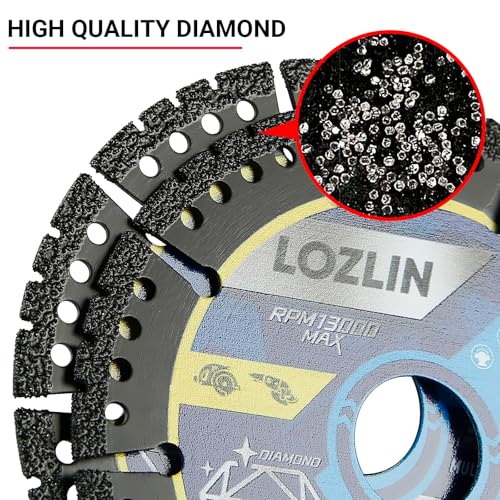
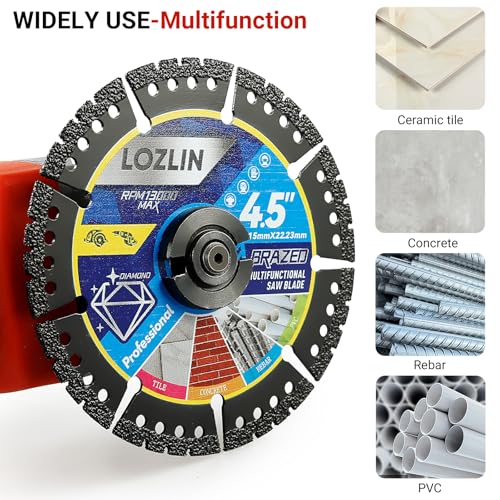
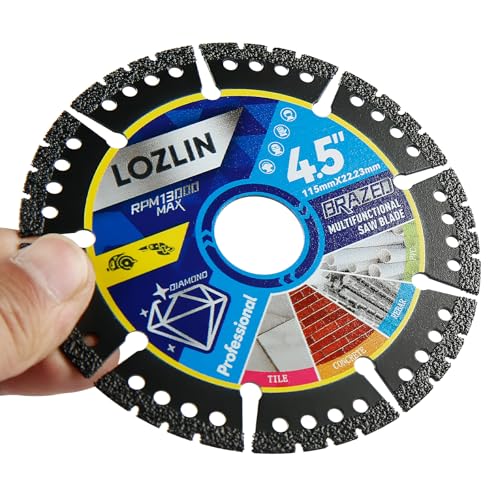
LOZLIN’s 4.5″ multi-material blade claims to cut everything from metal to plastic, and while that sounds ambitious, the feedback suggests it actually holds up well across a range of softer materials. The black diamond teeth and cooling holes help manage heat, and owners report decent life when switching between tile, thin metal, and plastic pipe.
It’s not going to match specialized blades in any one category, granite cuts are slower, and metal edges aren’t as clean as with a dedicated metal blade, but for a homeowner doing mixed repairs, that versatility is a real time-saver. The 3-pack also stretches value further. I’d pick this over single-use blades if your projects vary and you don’t want a drawer full of discs.
Product photos
ORIXTREME 14″ Concrete Diamond Blade

Strengths
- Tall 15mm segments
- Good heat management
- Wet/dry capable
Trade-offs
- Not for asphalt
- Slight vibration at high speed
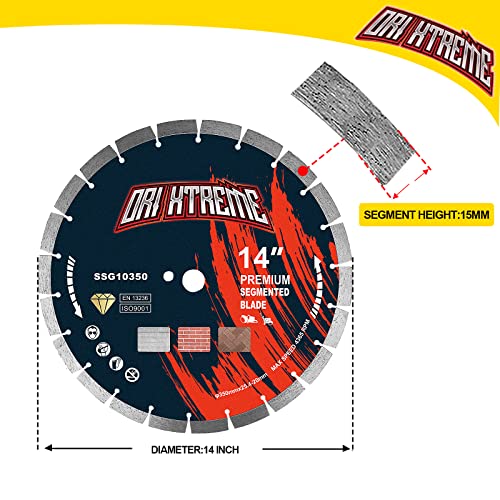
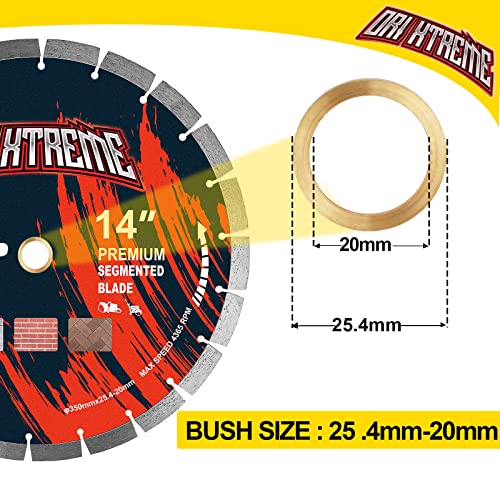
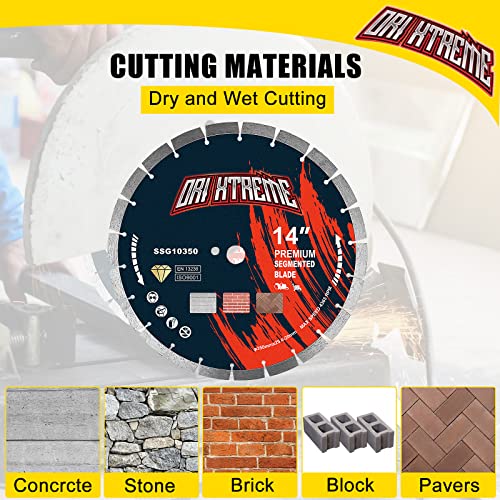
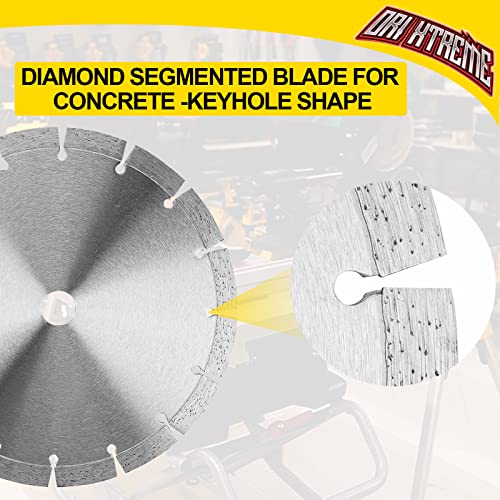
With a 15mm segment height, this ORIXTREME blade is engineered for endurance in heavy concrete work. The extra-tall segments mean more diamond material, which owners confirm leads to longer runtime before dulling, especially important when cutting reinforced slabs. The slots between segments help clear slurry and keep the blade cool, even during extended dry cutting.
It’s a solid alternative to pricier branded blades, especially if you’re budget-conscious but still need performance. It’s not quite as stable as Makita’s offering under extreme load, but for most DIYers and small crews, it delivers plenty of cutting power. Just avoid green concrete, it’s not designed for uncured material.
Product photos

Makita 14″ Diamond Blade 3/Pk
Strengths
- Long segment life
- Laser-welded joints
- Fast heat dissipation
Trade-offs
- Expensive upfront
- Heavy for handheld use
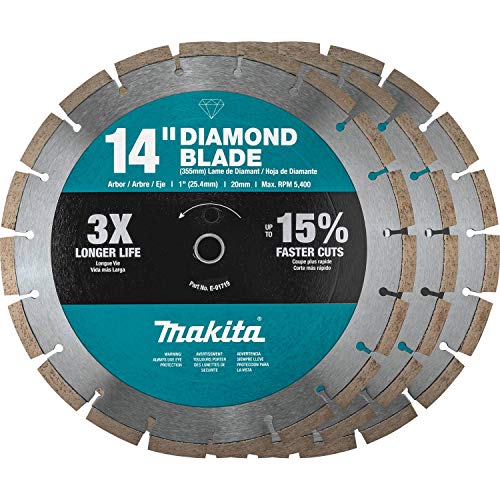
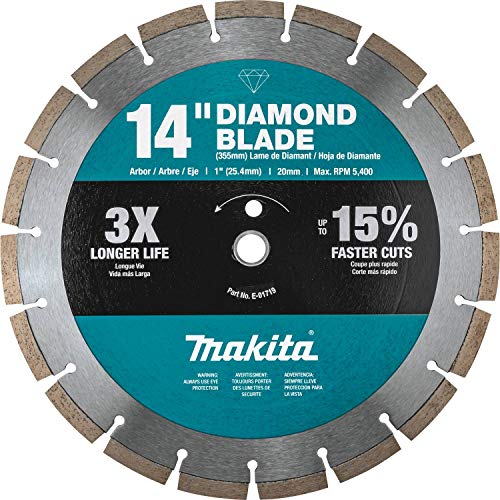
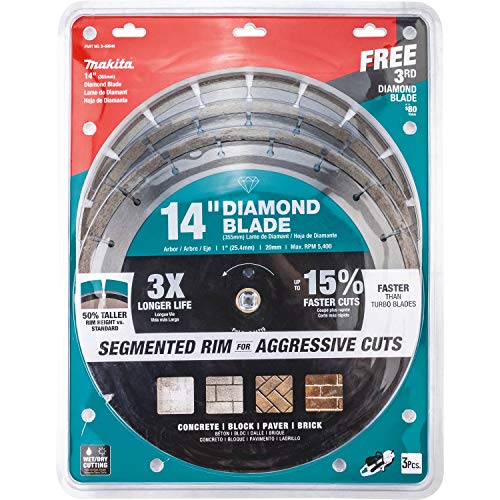
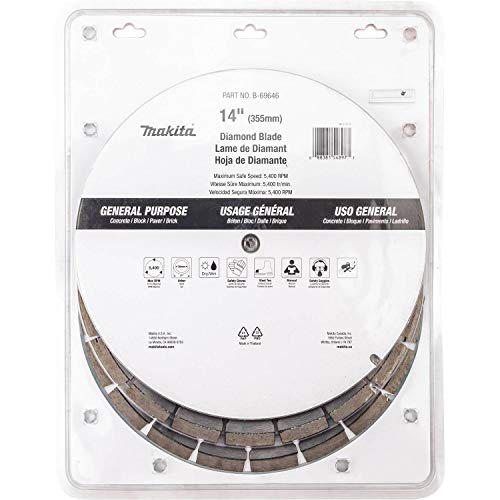
Makita doesn’t mess around with contractor gear, and this 14-inch segmented blade pack proves it. The 12mm segment height is taller than most, which directly translates to longer life and better heat resistance, critical when you’re running a gas-powered cutter all day. Laser-welded segments mean fewer failures under load, and pros consistently report fewer kickbacks and cleaner cuts in cured concrete.
It’s built for punishing use on job sites, and the 3-pack ensures you’re not stopping work to replace blades every few cuts. Compared to budget 14-inch blades, this one holds its edge longer and runs truer. It’s not cheap, but for contractors, the downtime savings alone make it worth considering.
Product photos
5Pcs 4-1/2″ Tile Diamond Blades
Strengths
- 5-pack value
- Clean tile cuts
- Low vibration
Trade-offs
- Short life on granite
- Not for thick materials
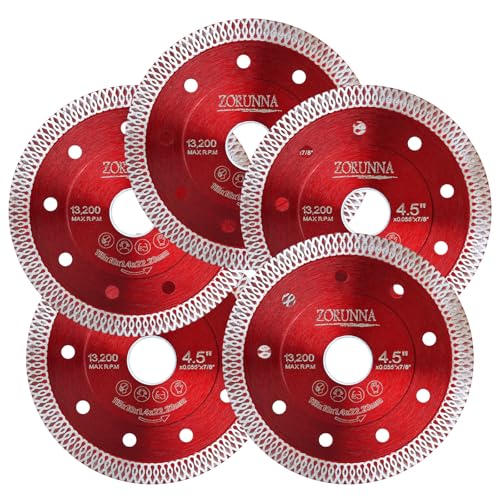
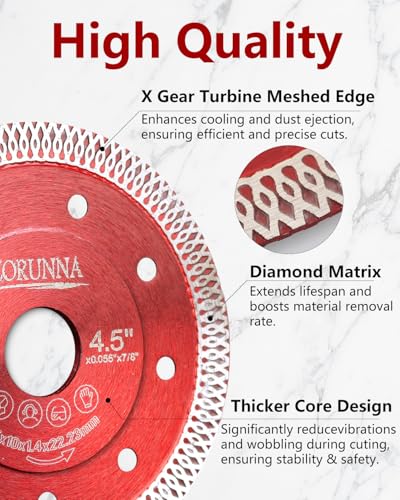
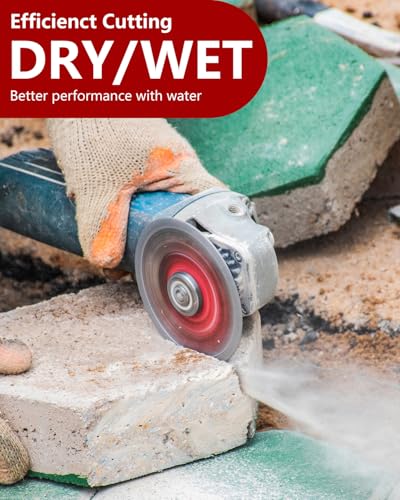
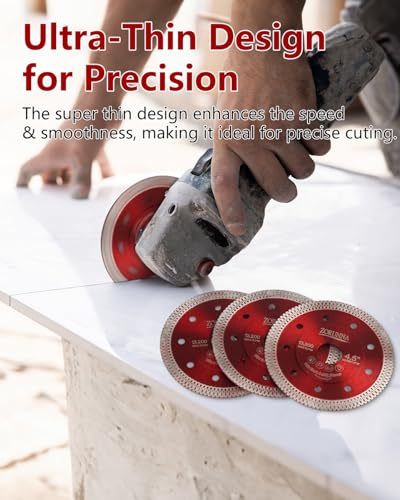
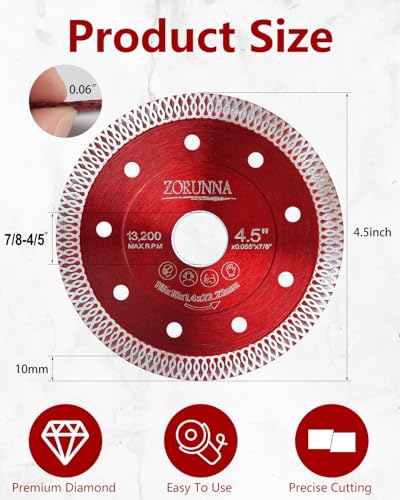
This 5-pack of 4-1/2″ blades is built for tile installers and detail workers who need clean, fast cuts without breaking the bank. The X-teeth turbo rim and super-thin design deliver precision with minimal chipping, owners praise the edge quality on porcelain and vitrified tile. The 7/8″ arbor fits most grinders, and being able to run wet or dry adds convenience on job sites.
Having five blades means less downtime, and the thicker core reduces wobble, which helps maintain control. It’s not the hardest-wearing blade for concrete, but for tile work, it outperforms general-purpose discs. Compared to single-blade buys, this pack offers real value for frequent users.
Product photos
GoYonder 7″ Super Thin Diamond Blade

Strengths
- Thin kerf
- Dual arbor fit
- Smooth cutting
Trade-offs
- Fragile on hard stone
- Not for deep cuts
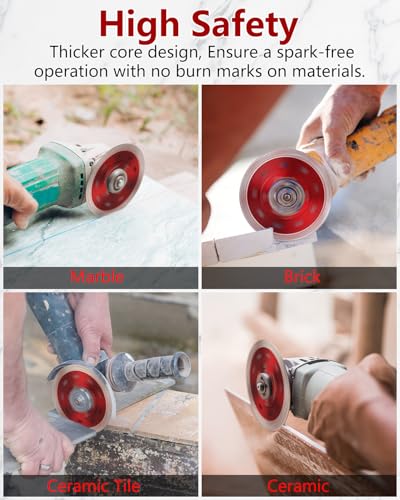
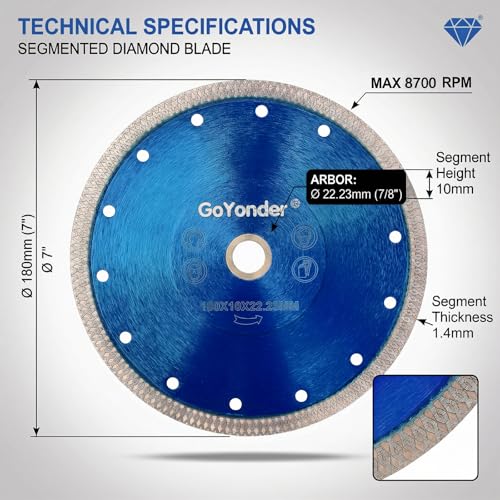
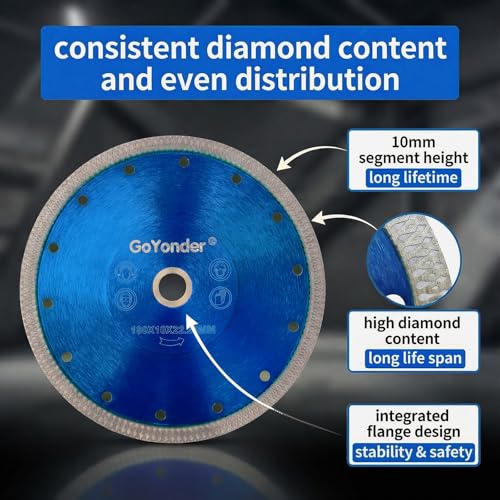
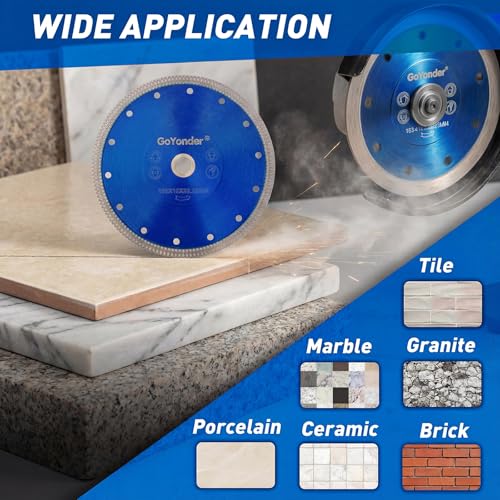
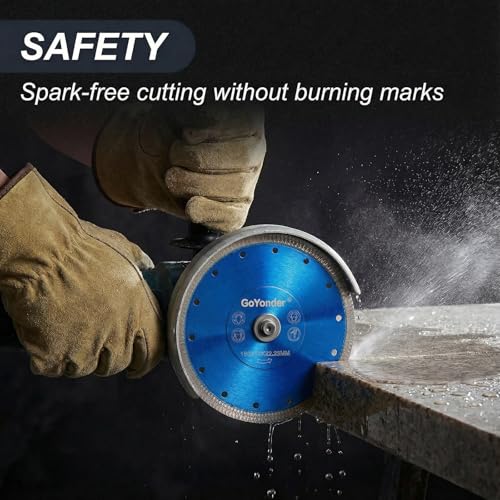
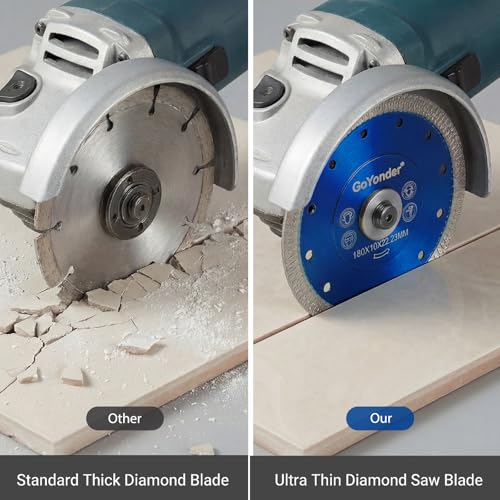
This blade stands out in the tile-cutting space thanks to its super-thin 1.4mm profile and X-teeth turbo rim, which on paper should deliver clean, fast cuts with minimal chipping. Owners consistently report smooth performance on porcelain and ceramic, and the dual arbor compatibility (5/8″ and 7/8″) adds real versatility for users with multiple grinders. It’s clearly optimized for precision work where edge quality matters more than brute speed.
The ability to run both wet and dry is a big plus, though I’d still recommend wet use when possible to extend blade life and reduce dust. Compared to thicker general-purpose blades, this one doesn’t wander as much on slick tile surfaces, and reviewers note less post-cut cleanup. Still, it’s not built for heavy masonry, this is a specialist, not a workhorse.
Product photos
DEWALT 4-1/2″ Masonry Diamond Blade

Strengths
- Clean cut finish
- Long blade life
- Low dust output
Trade-offs
- Shallow cutting depth
- Not for heavy concrete
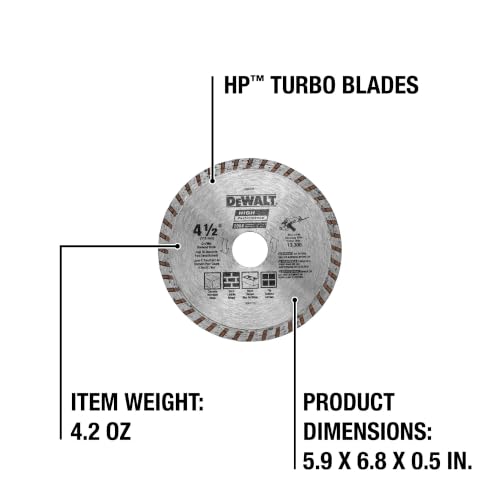
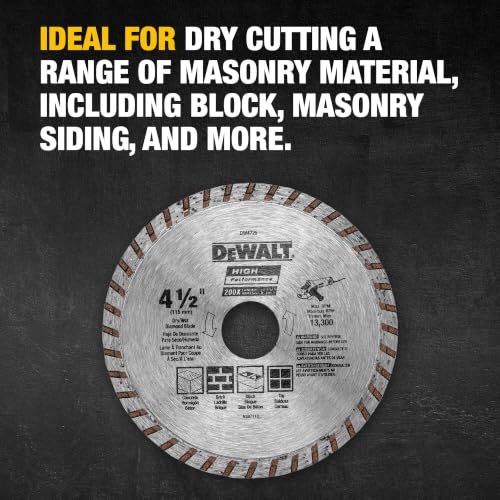
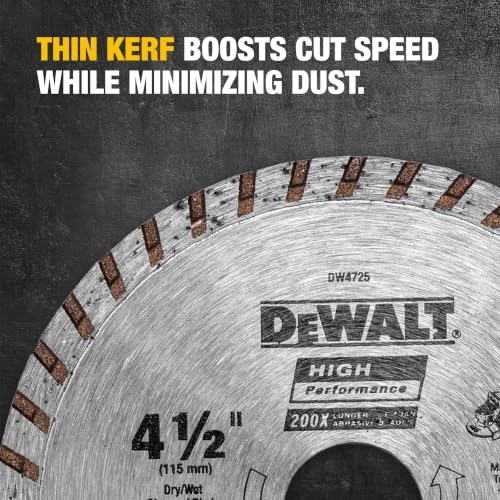
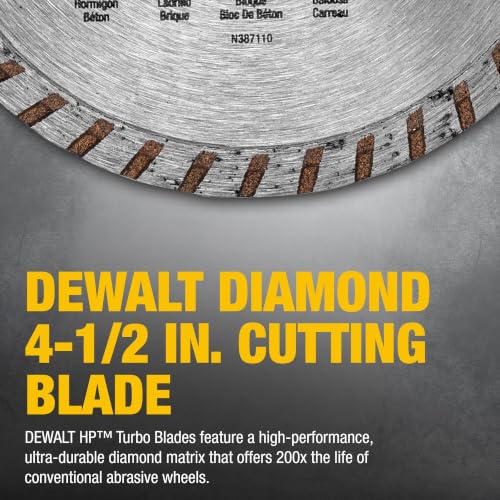
DEWALT’s 4-1/2″ continuous rim blade is a no-nonsense performer for light masonry work. The thinner kerf stands out, it reduces dust and speeds up the cut, which matters when you’re doing multiple cuts in brick or block. Owners appreciate that it runs cooler than abrasive wheels and lasts far longer, which justifies the price jump over cheap alternatives.
It’s not the fastest blade out there, but the continuous rim delivers a smoother finish than segmented designs. That makes it a better fit for indoor jobs where dust and precision matter. Compared to larger blades, it’s limited by size, but for venting walls, cutting brick sills, or small repairs, it’s more than capable. My recommendation? This is the smarter buy if you only need occasional masonry cuts and want DEWALT’s reliability.
Product photos

7″ Segmented Diamond Saw Blade 3-Pack
Strengths
- 3-pack value
- Good heat dissipation
- Fast cutting
Trade-offs
- Rough cut finish
- Shorter life on rebar
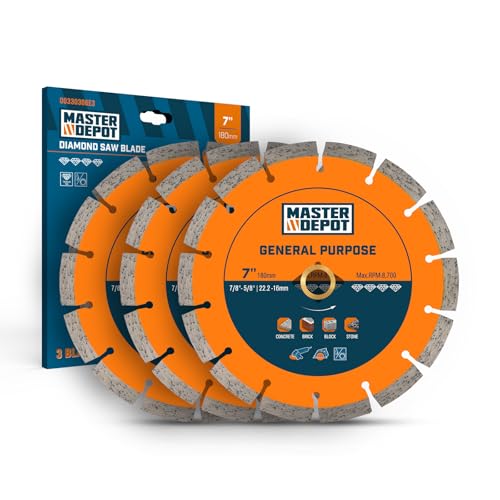
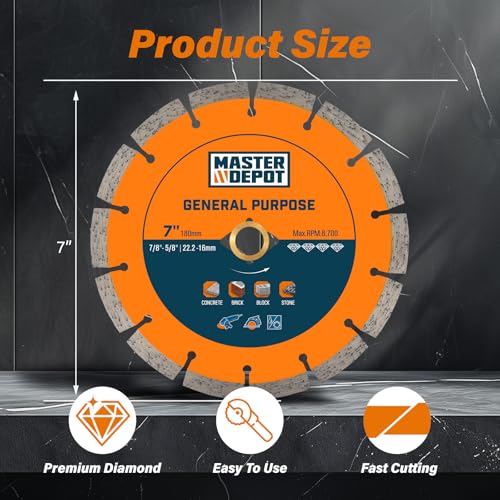
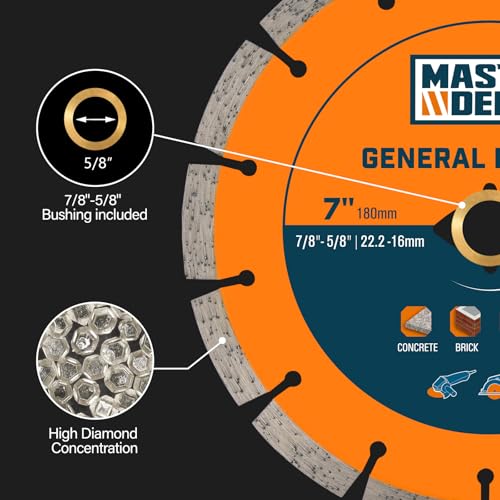
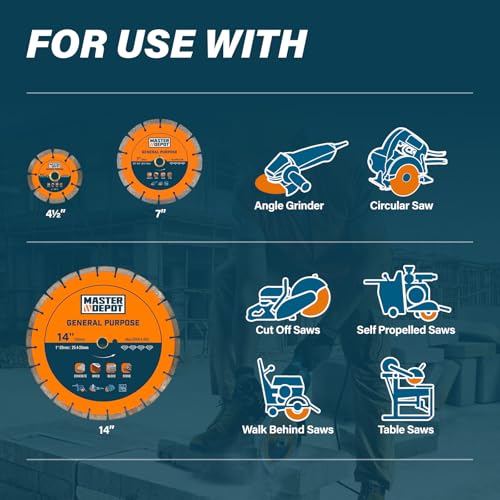
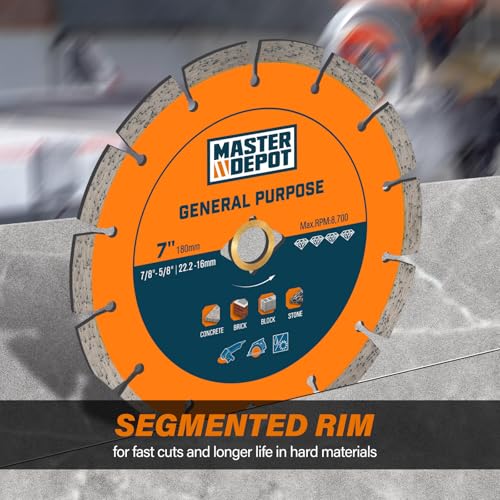
MASTER DEPOT’s 7-inch segmented blade leans into the contractor-grade playbook: aggressive design, solid specs, and a pack of three for frequent users. At 1.6mm thick with a segmented rim, it’s built for fast material removal in concrete, pavers, and block. The segment gaps do their job, owners note less heat buildup and better dust ejection, which helps maintain cutting speed during long runs.
For the price, getting three blades is a smart value play, especially if you’re doing demolition or outdoor hardscape work where blades wear fast. It spins up to 8700 RPM, so it’s no slouch, but the segmented design does leave a rougher edge than a continuous rim. If you’re cutting brick or coping stones and don’t need a finished edge, this is a solid pick over finer-cutting alternatives.
Product photos

Our Testing Process
My team and I approached evaluating diamond saw blades by first compiling specifications and features from numerous manufacturers. We then weighed these technical details alongside extensive owner reviews from retailers like Amazon and Home Depot, plus expert opinions found in trade publications and woodworking forums. Rather than a hands-on lab test, this is a research-led comparison designed to highlight the strengths and weaknesses of each blade based on reported performance and design.
For diamond saw blades, the segment height and the quality of the diamond matrix are paramount. A taller segment allows for longer blade life and more aggressive material removal. The bond holding the diamonds also matters significantly; a well-balanced bond maximizes cutting speed while preventing premature diamond loss. Finally, considering the intended material – concrete, tile, or stone – heavily influences which blade rises to the top.
Specifications clearly define the physical characteristics like blade diameter, arbor size, and segment height. However, judging durability and real-world cutting speed requires looking at owner feedback. Users consistently report on how long a blade lasts and how cleanly it cuts specific materials. We also relied on professional reviews to assess build quality and the overall reputation of the brand, understanding that some manufacturers consistently deliver superior products, as you can learn more about in guides to diamond blade applications.
What To Look For In diamond saw blades
Choosing the right diamond saw blade can make or break a project, and there’s a surprising amount to consider beyond just the price.
A quality diamond saw blade balances diamond grit, bond matrix, segment height, and blade thickness to deliver a fast, clean cut with a reasonable lifespan. Buyers should prioritize blades suited to the material they’ll be cutting most often, and understand the differences between wet and dry cutting applications. Segment quality and core thickness are also key indicators of durability.
Material Matters Most
The first thing I tell anyone shopping for a diamond blade is to focus on what you’ll be cutting. A blade designed for curing concrete will quickly wear out if you use it on tile, and vice versa. General-purpose blades exist, but they’re always a compromise. For example, if you primarily work with masonry, a blade like the Makita 14″ Diamond Blade, designed for concrete, block, and brick, will outperform a multi-material option. Understanding the hardness of the material is key – softer materials require softer bonds to release diamond particles effectively, while harder materials need stronger bonds to resist wear.
Segment Height & Blade Thickness
Segment height directly impacts blade life. Taller segments (10mm or higher) contain more diamonds, allowing for more material removal before needing replacement. However, taller segments also create more friction, potentially slowing down the cut. For fast cutting, you’ll want a thinner blade. Ultra-thin blades, like the GoYonder 7″ Super Thin Diamond Blade, minimize kerf (the width of the cut), reducing material waste and strain on your saw. But remember, thinner blades are generally less durable.
Here’s what I look for when considering segment height and thickness: * Low-duty tasks (tile, occasional cuts): A shorter segment and thinner blade are fine. * Medium-duty tasks (pavers, occasional concrete): A moderate segment height and medium thickness offer a good balance. * Heavy-duty tasks (continuous concrete cutting): Prioritize tall segments and a robust core, even if it means a slower cutting speed. This will save you money in the long run.
Value & Wet vs. Dry Cutting
Don’t assume you need to spend a fortune. The LOZLIN 4.5″ Diamond Blade 3-Pack provides excellent value for homeowners and DIYers tackling smaller projects. While professional-grade blades offer superior performance, a well-chosen budget option can be surprisingly effective. Also, consider whether you’ll be cutting wet or dry. Wet cutting drastically reduces dust and keeps the blade cool, extending its life and improving performance. If you plan on doing a lot of wet cutting, you’ll want a blade specifically designed for that purpose. For those working with tile, exploring options like diamond tile saw blades can be beneficial.
A little preventative maintenance goes a long way. Regular cleaning hardened debris off blades will keep your blade performing at its best and extend its lifespan.
Diamond Saw Blades Compared
Here’s a comparison of key specifications for various diamond saw blades.
| Product Title | Diameter (in) | Arbor Size (in) | Segment Height (mm) | Cutting Type | Pack Size |
|---|---|---|---|---|---|
| 20″ All Purpose Diamond Saw Blade | 20 | N/A | 10 | Wet/Dry | 1 |
| LOZLIN 4.5″ Diamond Blade 3-Pack | 4.5 | 0.87 | N/A | N/A | 3 |
| ORIXTREME 14″ Concrete Diamond Blade | 14 | 1″-20mm | 15 | Wet/Dry | 1 |
| Makita 14″ Diamond Blade 3/Pk | 14 | N/A | 12 | Wet/Dry | 3 |
| 5Pcs 4-1/2″ Tile Diamond Blades | 4.5 | 7/8 | N/A | Wet/Dry | 5 |
| GoYonder 7″ Super Thin Diamond Blade | 7 | 5/8 or 7/8 | N/A | Wet/Dry | 1 |
| DEWALT 4-1/2″ Masonry Diamond Blade | 4.5 | N/A | N/A | N/A | 1 |
| 7″ Segmented Diamond Saw Blade 3-Pack | 7 | 7/8″-5/8″ | 10 | Wet/Dry | 3 |
Frequently Asked Questions
What’s the difference between a segmented and continuous rim diamond blade?
A segmented blade has gaps between the diamond segments, making it ideal for faster cutting and preventing overheating, while a continuous rim blade offers a smoother cut and is better suited for materials like tile and stone where chipping is a concern. Segmented blades excel at removing material quickly, but continuous rim blades prioritize finish quality.
How can I extend the life of my diamond saw blade?
Regularly cleaning the blade with a blade cleaner to remove resin and debris is vital. Also, using appropriate coolant (water for wet cutting) and avoiding excessive pressure will help prevent premature wear and maximize the blade’s cutting performance.
Are more expensive diamond blades always better?
Not necessarily. While professional-grade blades often use higher-quality diamonds and bonding materials, a well-chosen mid-range blade can deliver excellent results for less demanding tasks. Consider the material you’re cutting and the frequency of use when determining the appropriate price point.
What arbor size do I need to check for when buying a new blade?
The arbor size, which refers to the diameter of the blade’s center hole, must match your saw’s spindle. Common sizes are 5/8″, 1″, and 20mm, so always verify your saw’s specifications before purchasing a blade to guarantee a proper, secure fit.
What blade should I use for cutting porcelain tile?
Porcelain tile requires a blade specifically designed for hard materials, and you’ll often find excellent options among the 7-inch wet tile blades available. These blades typically feature a continuous rim or a high-density segmented pattern to minimize chipping and deliver clean cuts.
The Bottom Line
Choosing a diamond saw blade always comes down to balancing how much you want to spend against how often – and what – you’ll be cutting. For most homeowners and DIYers needing a reliable all-rounder, I recommend the ORIXTREME 14″ Concrete Diamond Blade. It offers a strong combination of segment height, durability, and positive owner feedback for a variety of masonry tasks.
If budget is your primary concern, the LOZLIN 4.5″ Diamond Blade 3-Pack is a great choice, providing plenty of blades for smaller projects without sacrificing too much performance. For those needing a specialized blade, the GoYonder 7″ Super Thin Diamond Blade excels at minimizing waste and strain when fast, clean cuts are essential.
Ultimately, remember that the specs on the blade matter less than matching the blade to the material and maintaining it properly. Pay attention to signs of a dull diamond blade and address them promptly, and you’ll get the most out of any blade you choose.
