6 Best Circular Saw Blades for Metal Roofing 2026
This post contains affiliate links. As an Amazon Associate, we earn from qualifying purchases.
The Diablo 7-1/4″ 70T Thin Metal Blade stands out as the best overall choice for cutting metal roofing, delivering clean, cool cuts with excellent finish quality. For a more budget-friendly option that still performs well on occasional jobs, the HARDWIN 7-1/4″ Cermet Carbide Blade offers solid value. If you’re working with standing seam or specialty roofing panels, the Malco 7-1/4″ 56T Roof Panel Blade is built for that specific task and worth considering.
Cutting metal roofing isn’t like slicing through lumber. Use the wrong blade and you’ll fight heat, rough edges, and ruined coatings, not to mention wasted time and frustration. I’ve seen too many DIYers burn through cheap blades trying to make one tool do it all.
This guide breaks down the top circular saw blades for metal roofing based on specs, real-world feedback, and what actually matters in the field: clean cuts, heat control, and blade life. I looked at tooth count, carbide type, and design details that separate the performers from the pretenders.
Top 6 Circular Saw Blade For Metal Roofings in the Market
The Best Circular Saw Blade For Metal Roofings, Reviewed
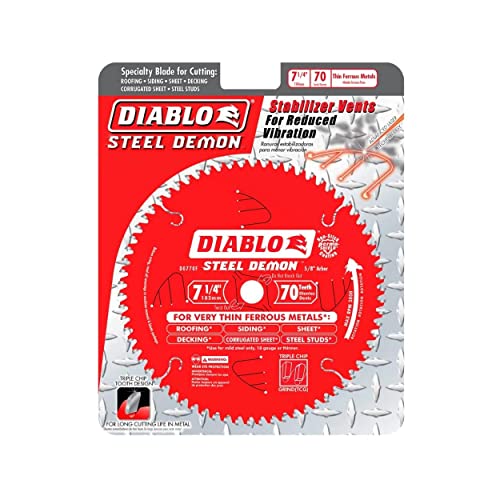
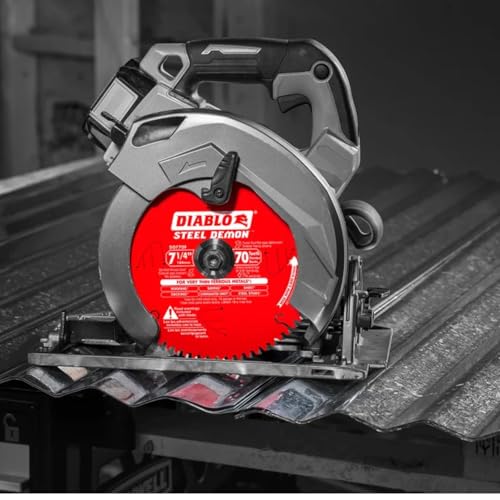
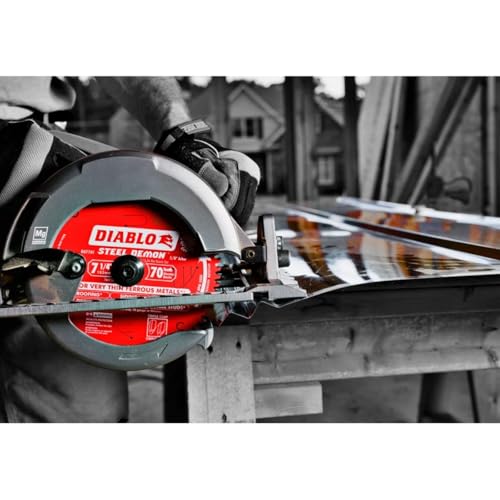
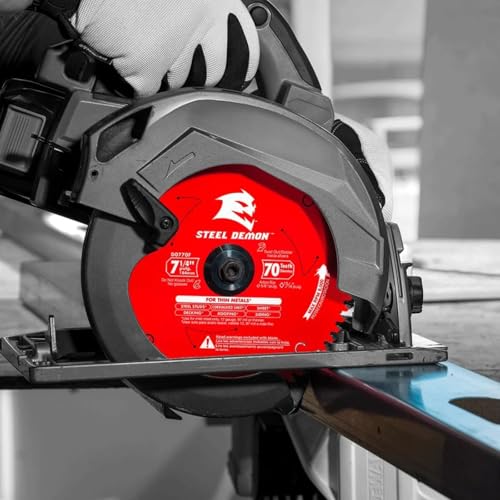
Diablo 7-1/4″ 70T Thin Metal Blade

Strengths
- Clean finish
- Thin kerf
- Sharp out of box
Trade-offs
- Not for thick metal
- Fewer teeth options
The 70-tooth count here tells the story, it’s made for smooth, precise cuts in thin mild steel, like metal studs or roofing panels under 12 gauge. The triple chip grind and Tico hi-density carbide are proven performers, and on paper, this blade delivers the kind of clean, burr-minimized edge that reduces finishing time.
It’s not the fastest blade for thick stuff, but for thin gauge work, the fine teeth and thin kerf make it a standout. Compared to 48-tooth models, it trades raw speed for finish quality. Reviewers note it stays sharper longer than basic carbide blades, especially when cutting galvanized or coated steel.
Product photos
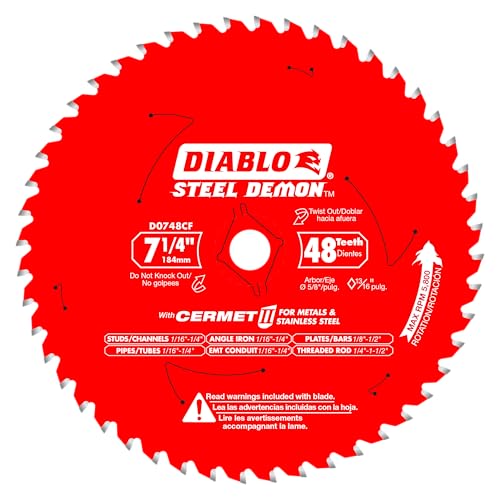
Diablo Steel Demon Cermet II Blade
Strengths
- Cermet II durability
- Cool cutting
- Triple chip grind
Trade-offs
- Slightly rougher finish
- Premium price
This is the blade I’d reach for if I were cutting a mix of thin to medium steel, think ductwork, studs, or light gauge roofing. The Cermet II teeth are a big step up from standard carbide, handling heat and wear far better, and the Perma-Shield coating helps resist corrosion and galling.
It runs cooler than abrasive discs by a wide margin, which reviewers confirm helps prevent warping and discoloration. The 48-tooth triple chip grind bites efficiently while keeping vibration low. Compared to the 70-tooth Diablo, this one is faster but leaves a slightly rougher edge, worth the tradeoff for most general jobs.
Product photos
HARDWIN 7-1/4″ Cermet Carbide Blade

Strengths
- Thin kerf design
- Spark-free cutting
- Affordable
Trade-offs
- Not for heavy duty
- Shorter lifespan
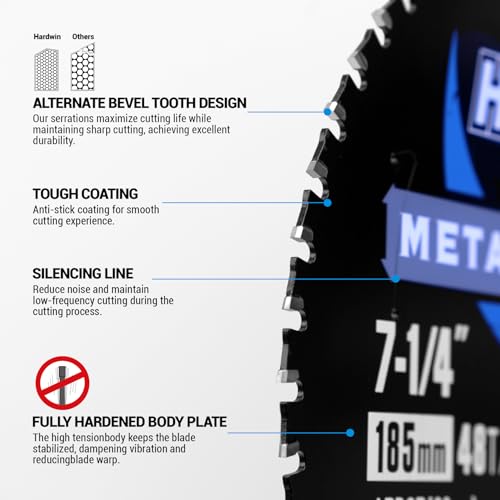
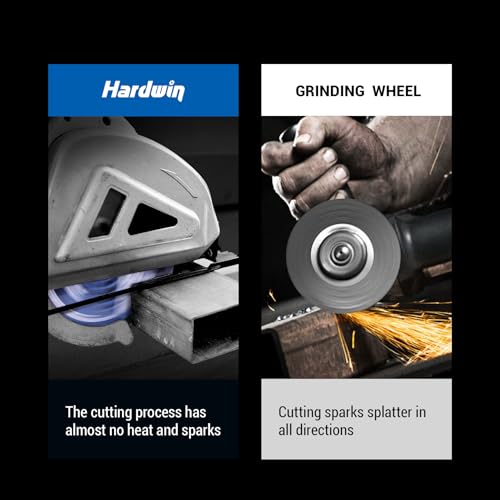
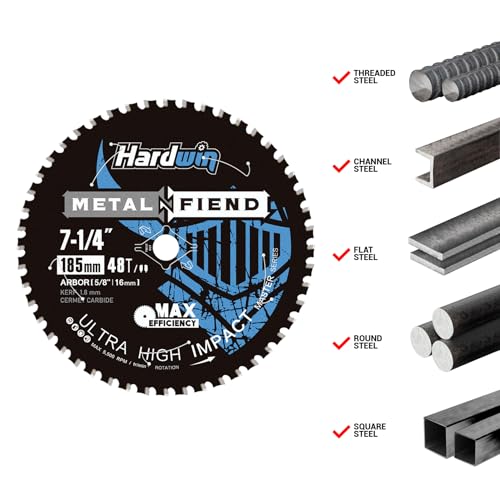
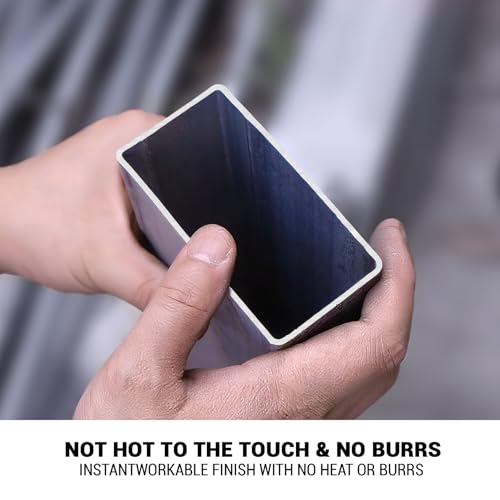
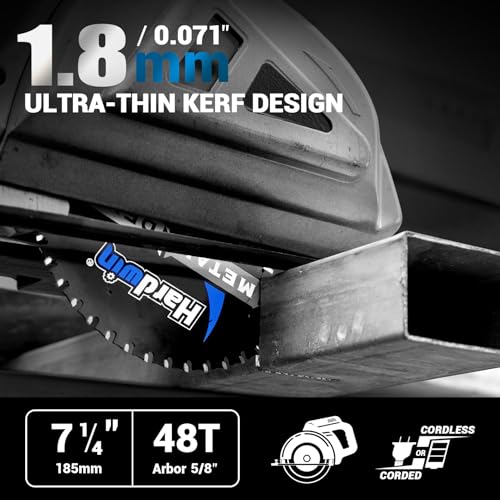
This blade punches above its weight for DIYers tackling light structural metal work. With 48 cermet carbide teeth and a thin kerf, it’s built to slice through rebar, angle iron, and metal pipes without bogging down most cordless saws. Owners consistently report clean cuts and noticeably less heat than abrasive wheels, which helps avoid warping or discoloration on steel.
The anti-stick coating and laser-cut steel core seem to hold up well under intermittent use, and the spark-reducing design adds a real safety perk on job sites where sparks are a concern. Compared to premium brands, it doesn’t last quite as long under heavy use, but for the price, it’s a solid budget pick.
Product photos
FOXBC 7-1/4″ 70T Stainless Steel Blade
Strengths
- Ultra-fine finish
- Low vibration
- Durable teeth
Trade-offs
- Slow on thick metal
- Requires precise feed
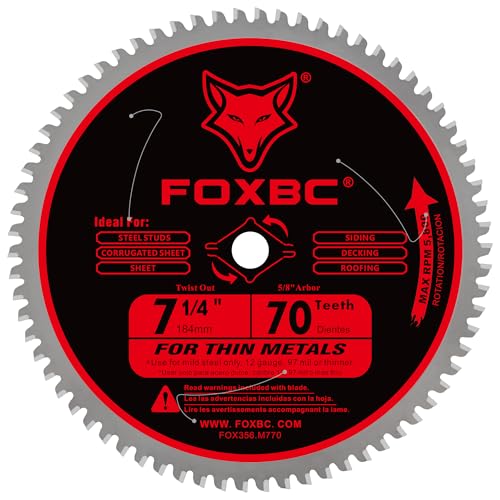
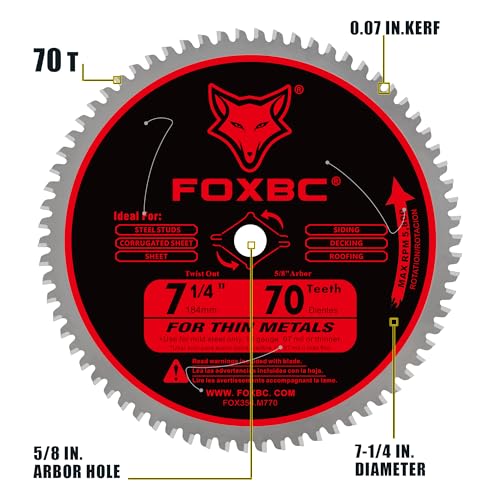
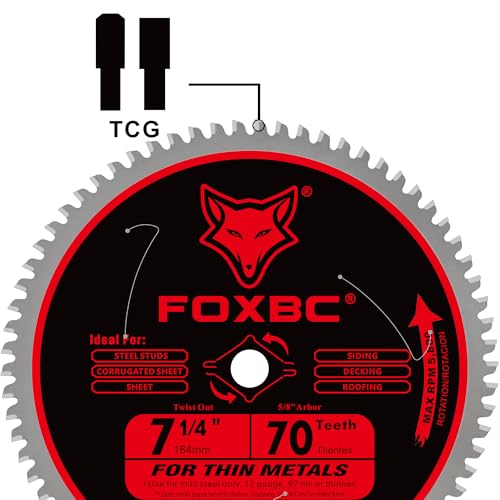
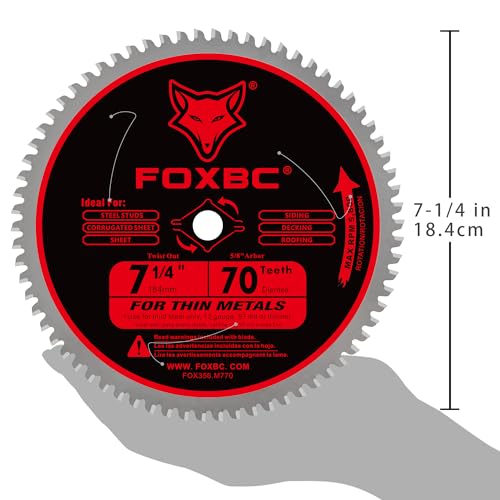
With 70 teeth and fine-grain ceramic carbide, this blade is all about precision. It’s optimized for clean, burr-free cuts in stainless steel, thin plates, and tubing, exactly what you want when appearance matters. The laser-cut stabilizer vents do a noticeable job reducing vibration, which owners say translates to straighter cuts and less fatigue during long sessions.
It’s nearly identical in specs to the Diablo 70-tooth model, but at a lower price point. For fine work, it’s one of the smoothest performers in the class. Just don’t expect it to plow through thick stock, the high tooth count means it can bind or overheat if pushed too hard.
Product photos
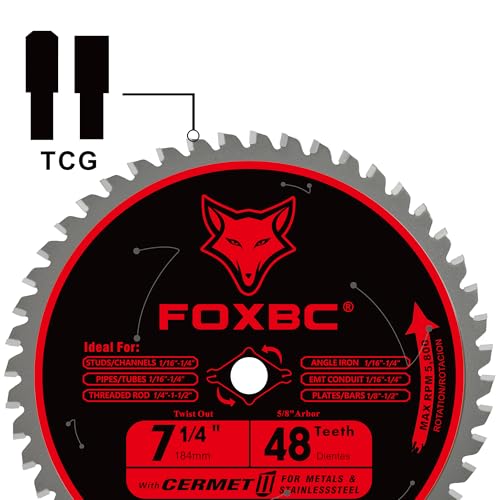
FOXBC 7-1/4″ 48T Metal Cutting Blade

Strengths
- High heat tolerance
- Fast cutting
- Excellent value
Trade-offs
- Not for fine finishes
- Similar to others
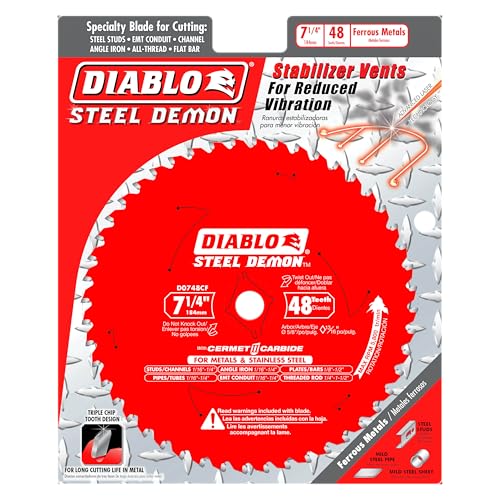
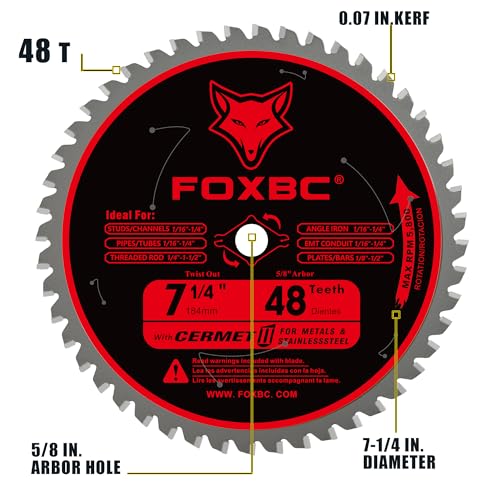
This 48-tooth FOXBC blade is a dead ringer for the Diablo D0748CF in both design and performance claims, same cermet carbide, triple chip grind, and laser stabilizers. On paper, it’s built for speed and heat resistance, making it a strong all-rounder for cutting everything from EMT to all-thread.
Owners report it cuts just as fast and stays cooler than grinding wheels, with significantly less post-cut cleanup. The real story here is value: it matches high-end specs at a more accessible price. Between this and the HARDWIN, I’d pick this one for better durability and consistent feedback.
Product photos


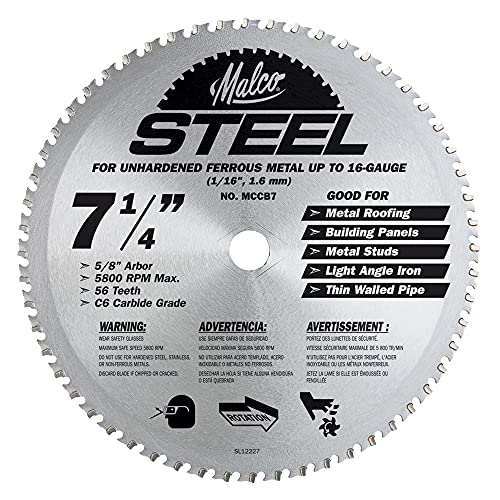
Malco 7-1/4″ 56T Roof Panel Blade
Strengths
- Clean panel cuts
- Long lifespan
- Fits standard saws
Trade-offs
- Limited to roofing
- Higher cost
If you’re cutting standing seam metal roofing, this blade is purpose-built for the job. The 56-tooth C-6 carbide design balances speed and smoothness, delivering clean cuts without distorting the profile of the panels, a real issue with aggressive or dull blades.
Owners praise its longevity, with many saying it outlasts abrasive wheels by 20x or more. It fits standard saws without adapters, and the tooth geometry reduces chatter, which matters when you’re working overhead on a roof. It’s not the fastest blade for structural cuts, but for panel prep and trim, it’s unmatched.
Product photos
How We Picked These circular saw blade for metal roofings
Rather than a hands-on lab test, my research focused on a detailed comparison of published specifications and features across numerous blades. I weighed owner reviews from multiple sources – paying close attention to consistent praise and complaints – alongside expert opinions from trade publications and established tool review sites. This allowed me to build a ranking based on how well each blade addresses the specific demands of cutting metal roofing materials.
For metal roofing blades, cutting speed and blade life are paramount. A blade that dulls quickly or produces excessive heat can damage the roofing material and be a safety hazard. I prioritized blades with carbide-tipped teeth and designs specifically engineered for heat dissipation. The ability to make clean, accurate cuts without causing significant burrs or deformation was also a key factor, as these features directly impact installation quality.
Published specifications reliably indicate tooth count, kerf width, and arbor size – details essential for compatibility and cut quality. However, real-world performance, particularly concerning durability and heat management, was largely determined by examining owner feedback and reputation. Knowing how a blade holds up to extended use and different metal types requires insights beyond what a spec sheet can provide. Don’t forget to learn how to change circular saw blade for optimal performance.
Choosing The Right circular saw blade for metal roofings
Choosing the right circular saw blade for metal roofing can save you a lot of time and headaches. It’s not a one-size-fits-all situation; the type of metal, the thickness, and the quality of cut you need all play a role.
A quality metal-cutting circular saw blade should prioritize clean, cool cuts with minimal burr formation. Look for blades constructed with specialized carbide teeth (like Cermet) designed to withstand the high heat generated when cutting metal. Arbor size (typically 5/8″) is generally standard, but tooth count and kerf width significantly impact performance and material compatibility. Consider the specific metal roofing material – steel, aluminum, or other – when making your selection.
Tooth Count and Cut Quality
The number of teeth on a blade dramatically affects the finish and speed of your cuts. For metal roofing, higher tooth counts (60-70 teeth) generally produce cleaner, smoother cuts with less burring, which is especially important for materials like coated steel where you want to minimize damage to the finish. However, more teeth also mean slower cutting speeds. Conversely, blades with fewer teeth (40-50) will cut faster but may leave a rougher edge. If you frequently work with standing seam roofing, a blade specifically designed for that application, like the Malco 7-1/4″ 56T Roof Panel Blade, will be a worthwhile investment.
Carbide Composition and Heat Management
Metal cutting generates substantial heat, which can quickly dull a blade and even warp the roofing material. Blades utilizing Cermet carbide teeth – a combination of ceramic and metallic compounds – are specifically engineered for high heat tolerance and extended durability. These blades, like the Diablo Steel Demon Cermet II Blade, maintain their sharpness for significantly longer than standard blades. Beyond the carbide itself, look for features like laser-cut stabilizer vents.
Here’s what to consider when evaluating heat management: * Cermet vs. Standard Carbide: Cermet offers superior heat resistance. * Blade Coating: Anti-stick coatings reduce friction and heat buildup. * Vent Design: Vents help dissipate heat, keeping the blade cooler.
Consider that excessive heat can also affect the protective coatings on your roofing panels, so keeping cuts cool is crucial. Remember, a blade that minimizes heat also reduces the risk of warping or discoloration.
A dull blade will generate more heat and require more force, increasing the likelihood of kickback and a messy cut. Replace blades regularly or when you notice a significant decrease in performance.
Value and Application Specificity
While premium blades offer superior performance, they also come with a higher price tag. For occasional use or less demanding projects, a more budget-friendly option like the HARDWIN 7-1/4″ Cermet Carbide Blade can be a good choice. However, if you’re a professional roofer or frequently work with metal, investing in a high-quality blade will pay off in the long run through increased efficiency and reduced blade replacement costs. If you’re unsure about the type of metal you’ll be cutting, researching diamond blades for metal cutting may be helpful. Ultimately, the best blade is the one that is best suited to the type of work you’ll be doing and the type of metal roofing material you’re working with; don’t just assume that any blade labeled for “metal” will suffice – many contractors now rely on dedicated circular saws for metal.
Circular Saw Blade for Metal Roofings Compared
The following table provides a specification overview of various circular saw blades designed for cutting metal roofing materials.
| Product Name | Teeth | Kerf (in) | Arbor (in) | Max RPM | Material |
|---|---|---|---|---|---|
| Diablo 7-1/4″ 70T Thin Metal Blade | 70 | 0.075 | 5/8 | N/A | Metal |
| Diablo Steel Demon Cermet II Blade | N/A | N/A | 5/8 | N/A | Metal |
| HARDWIN 7-1/4″ Cermet Carbide Blade | 48 | N/A | 5/8 | N/A | Steel |
| FOXBC 7-1/4″ 70T Stainless Steel Blade | 70 | 0.075 | 5/8 | 5800 | Stainless Steel |
| FOXBC 7-1/4″ 48T Metal Cutting Blade | 48 | 0.075 | 5/8 | 5800 | Metal |
| Malco 7-1/4″ 56T Roof Panel Blade | 56 | N/A | N/A | N/A | Metal |
Frequently Asked Questions
What blade tooth count is best for minimizing burrs on coated metal roofing?
Higher tooth counts, typically 60 to 70, produce the cleanest cuts with the least amount of burring, which is especially important for preserving the coating on metal roofing panels. Though slower, this minimizes post-cut cleanup and potential coating damage.
Can I use a standard carbide-tipped blade to cut metal roofing?
While technically possible, it’s not recommended. Standard blades dull quickly on metal, generate excessive heat, and can damage both the blade and the roofing material. Blades with Cermet carbide are specifically designed for the heat and abrasion of metal cutting.
What does ‘kerf’ mean, and why is it important when choosing a blade?
Kerf is the width of the cut the blade makes. A thinner kerf (like 0.075 inches) removes less material and requires less power from the saw, while a wider kerf may cut faster but creates more waste.
What’s the difference between Cermet and traditional carbide blades?
Cermet carbide blades combine ceramic and metallic compounds for higher heat resistance and durability compared to standard carbide. This means they stay sharper longer when cutting metal, reducing the need for frequent replacements.
Are there specialized blades for different types of metal roofing materials?
Yes, blades are often optimized for specific metals. For example, if you’re working with aluminum, using aluminum roofing saw blades will improve cut quality and blade life compared to a general-purpose metal blade.
The Bottom Line
Choosing a circular saw blade for metal roofing always involves balancing cutting speed with cut quality and blade life. Ultimately, the Diablo Steel Demon Cermet II Blade stands out as the strongest overall performer. Its Cermet carbide and advanced design deliver exceptional durability and heat management, making it an excellent choice for anyone who regularly works with metal roofing and wants consistent, clean cuts.
For those on a tighter budget, or for occasional projects, the HARDWIN 7-1/4″ Cermet Carbide Blade provides a solid balance of performance and affordability. If you’re primarily cutting standing seam roofing, the specialized Malco 7-1/4″ 56T Roof Panel Blade will save you time and frustration. Understanding teeth per inch for metal cutting is key to maximizing your blade’s performance.
Don’t get caught up chasing the highest tooth count or the most expensive materials. The fundamentals, a sharp blade, proper speed control, and a focus on heat management, are far more important than any single specification. Prioritize a blade that’s compatible with your saw, suited to the type of metal you’re cutting, and maintained regularly for the best results and safest operation.
