8 Best Backpacking Saws of 2026
This post contains affiliate links. As an Amazon Associate, we earn from qualifying purchases.
The AGAWA BOREAL21 is the best overall backpacking saw for serious trail work, thanks to its long 21-inch replaceable blade and solid build. For budget-conscious hikers, the REXBETI 14-Inch offers strong performance with a durable SK-5 steel blade at a lower price. If you need versatility in tight spaces, the MOSSY OAK 3-in-1 Multi-Blade Saw stands out with three interchangeable blades for different cutting jobs.
Most backpackers don’t realize how quickly a poor-quality saw can turn a simple camp task into a frustrating struggle. A flimsy blade, unsafe lock, or overly heavy design can ruin efficiency and confidence out on the trail.
In this guide, I break down the top backpacking saws based on real-world specs, long-term owner feedback, and key factors like blade length, tooth count, weight, and durability. These picks reflect what actually works in the field, not just what looks good on paper.
Top 8 Backpacking Saws in the Market
The Best Backpacking Saws, Reviewed
AGAWA BOREAL21 21-Inch Folding Saw
Strengths
- 21-inch blade with auto-tension
- Durable anodized aluminum frame
- Tool-free blade replacement
Trade-offs
- Higher price point
- Heavier than compact models
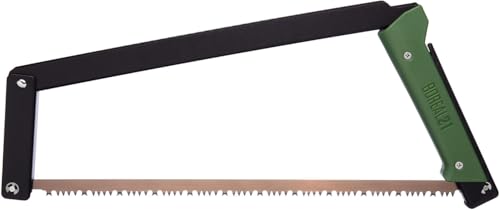
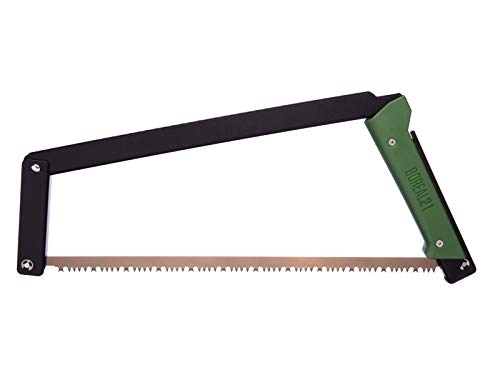
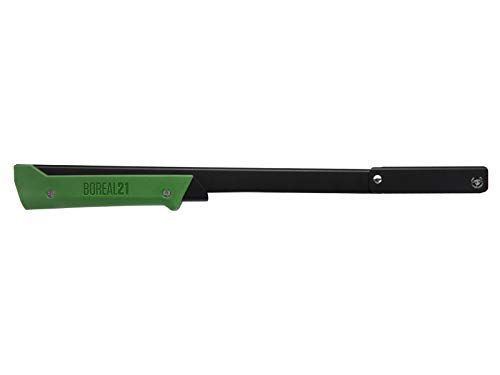
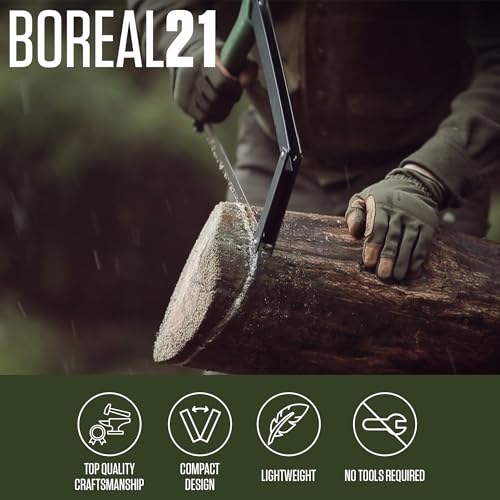
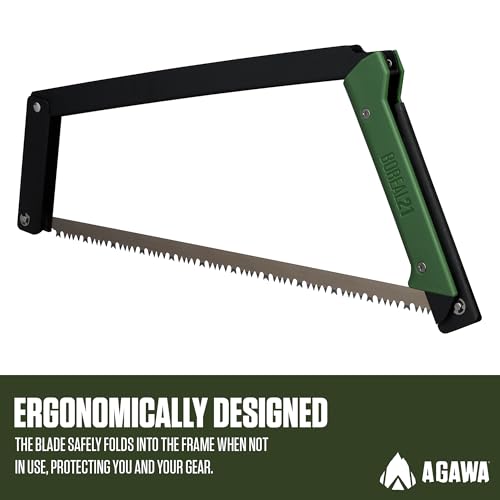
The AGAWA BOREAL21 feels like what happens when someone designs a folding saw from the ground up for serious outdoor use. With a 21-inch blade that unfolds in seconds, it offers near-buck-saw efficiency while still folding down to a packable size. The automatic tensioning system is a standout, no tools, no fiddling, just snap it open and go. Owners consistently praise how smoothly it deploys and how stable the blade stays during aggressive cuts.
Built with anodized aluminum, stainless hardware, and fibreglass-reinforced nylon, this saw is overbuilt in the best way. It’s 18 oz, which isn’t light, but the balance makes it feel effortless in use. Compared to the REXBETI, it’s more refined, quieter, smoother, and easier on the wrists. And unlike most folding saws, you can swap blades without touching the teeth. For all-around performance, durability, and smart engineering, this is the one I’d call the best overall.
Product photos

Bahco BAH396LAP 7-1/2″ Laplander Saw
Strengths
- Rust-protected blade
- XT tooth design for clean cuts
- Compact and secure lock
Trade-offs
- Shorter blade limits max branch size
- Higher price for smaller size
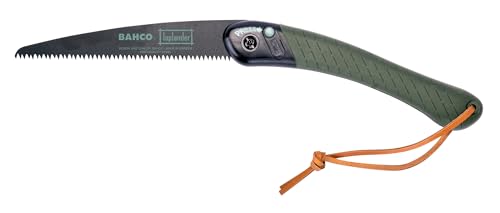
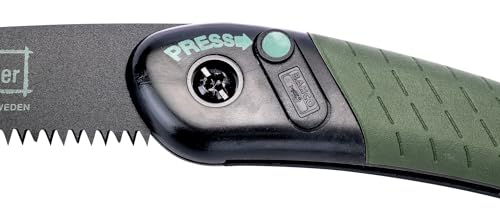
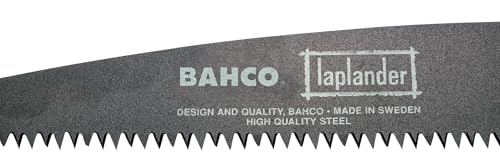
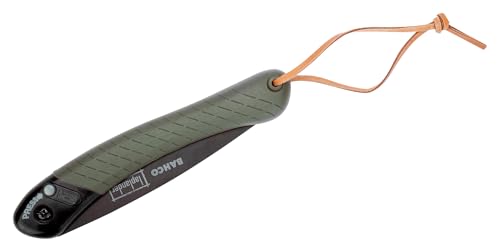
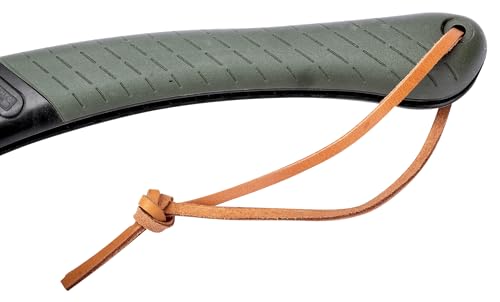
If you’re after a folding saw that feels like it was built for the backcountry, the Bahco Laplander is tough to beat. At 7-1/2 inches, it’s compact but punches above its size thanks to the XT tooth pattern with 7 TPI, which owners say slices cleanly through dry and green wood alike. The rust-protected blade is a smart touch, real-world feedback shows it holds up well in damp forest environments where other blades would pit or corrode.
What really seals the deal is the two-component handle. It’s not just about grip, it’s about control under pressure. Whether you’re one-handed clearing brush or sawing near your body in tight quarters, the secure lock and solid feel make it a favorite among bushcrafters. Compared to the Corona, it’s lighter and more packable, but doesn’t cut quite as fast on thicker limbs. Still, for hunters or survivalists who need reliability and precision, this is a go-to.
Product photos

MOSSY OAK 3-in-1 Multi-Blade Saw

Strengths
- Three specialized blades
- Quick-change knob system
- Includes carry pouch
Trade-offs
- Shorter blade length
- Blade change requires attention
Most folding saws are built for wood, the MOSSY OAK 3-in-1 is built for everything else too. With three interchangeable blades, wood, plastic, and metal, it’s the only one on this list that can cut copper pipe or PVC in a pinch. The 7.5-inch blades are short, but the 18 TPI metal blade and 11 TPI hardwood blade give real utility in emergency or shelter-building scenarios.
Owners love the quick-change knob system, though some note you must tighten it properly or risk slippage. The rubberized TPR grip is comfortable, and the included nylon pouch adds real convenience for carrying spares. Compared to dedicated saws like the Bahco, it’s not as efficient in wood-only tasks, but when you’re out in the wild and might need to improvise, that versatility is worth its weight. This is the multitool of folding saws, not the fastest, but the most adaptable.
Product photos


REXBETI 14-Inch Extra Long Blade Saw
Strengths
- Longest effective cutting length
- Aggressive 5.5 TPI teeth
- Firm rubber-coated grip
Trade-offs
- Heavier than most competitors
- Bulkier folded profile
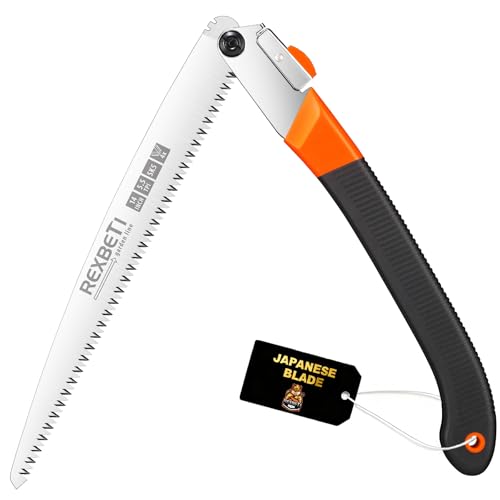
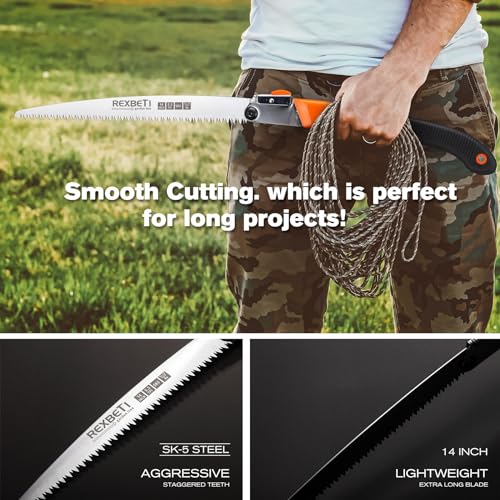
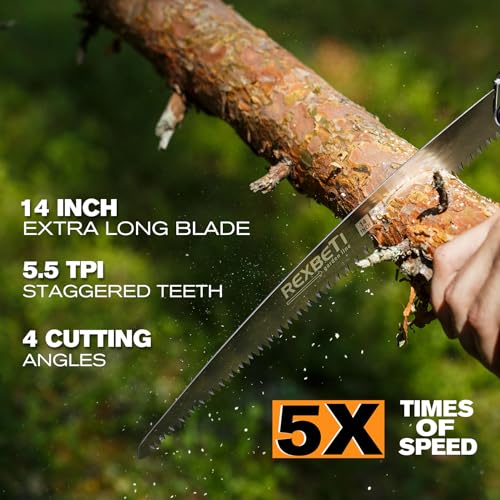
The REXBETI 14-inch folding saw is built for one job: cutting big wood on the go. With a blade that extends to nearly 28 inches when unfolded, it’s one of the longest in this category, and owners confirm it powers through 7–10 inch branches with far less effort than shorter models. The 5.5 TPI staggered teeth are aggressive and stay sharp, thanks to the SK-5 steel, which has a reputation in the tool world for holding an edge under heavy use.
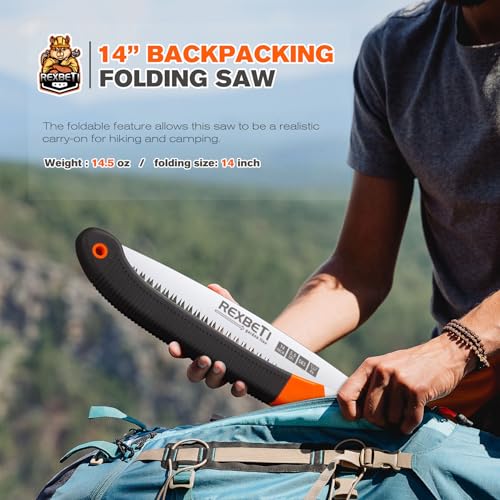
It’s not the lightest, 14.5 oz is noticeable if you’re counting grams, but the trade-off is real cutting power. The 8-inch rubber-coated handle gives excellent use, and feedback consistently praises its grip in wet or muddy conditions. Compared to the AGAWA BOREAL, it lacks modular blades or a refined folding mechanism, but for pure brute-force performance on large downed trees or storm debris, this is the tool I’d reach for if weight isn’t the top concern.
Product photos


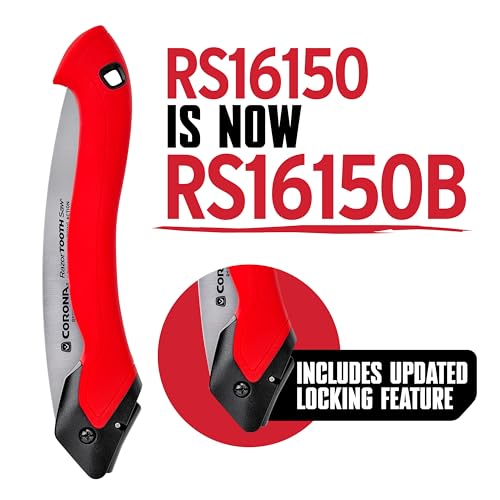
Corona RazorTOOTH 10″ Folding Pruning Saw
Strengths
- Curved blade design
- Ergonomic non-slip handle
- Durable high-carbon steel
Trade-offs
- Slightly heavier than ultralight models
- Blade length not ideal for tight spaces
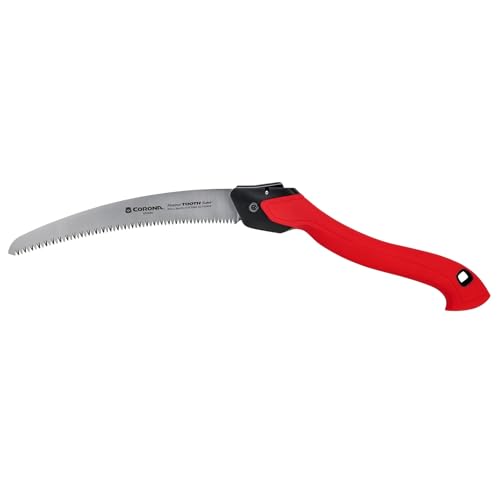
I’ve seen a lot of folding saws come through the workshop, and the Corona RazorTOOTH stands out for one thing above all: that aggressive curved blade. On paper and in owner feedback, it delivers exactly what it promises, faster cuts with less effort, especially in green wood or dry hardwood. The 10-inch blade with high-carbon steel and 10” of cutting arc gives it serious bite, and the curve keeps more teeth engaged per stroke, which seasoned users consistently report makes pruning and trail work noticeably easier.
The handle is where it really wins me over. It’s not just non-slip, it’s contoured in a way that fits naturally in the hand, even with gloves or in wet conditions. That’s a real advantage over basic plastic grips that feel slippery under load. Compared to more minimalist options, this one leans into comfort without adding bulk. It’s not the lightest, but for anyone doing extended cutting sessions, that ergonomic design pays off.
Product photos


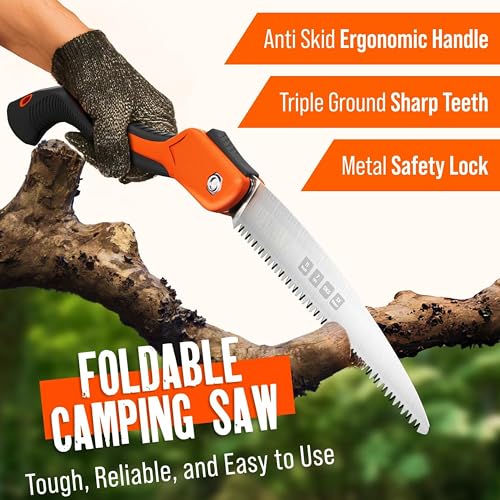
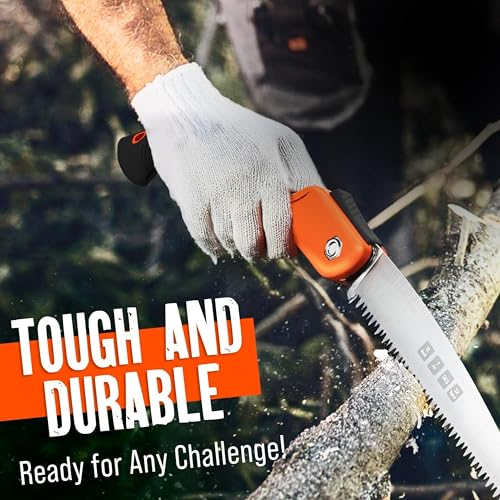
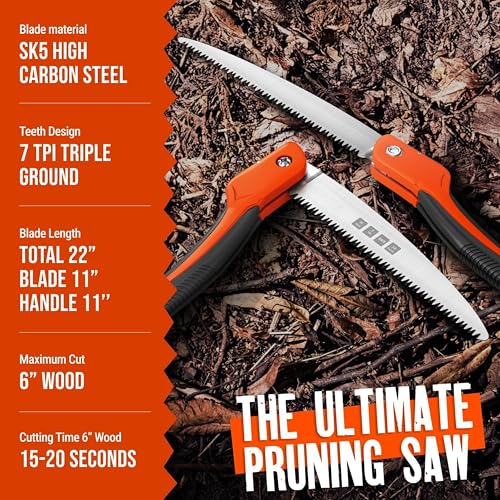
Folding Camping Saw 11-Inch SK5 Blade

Strengths
- Aggressive 7 TPI SK5 blade
- Solid build for the price
- Lightweight and compact
Trade-offs
- Basic locking mechanism
- Handle less refined than premium models
This 11-inch folding saw hits a sweet spot between cost and capability. The SK5 steel blade with 7 TPI triple-cut teeth is aggressive and durable, and real-world feedback shows it holds up well against both green and dry wood. It’s not flashy, no tool-free blade swaps or aerospace materials, but it does the core job of cutting branches efficiently, and it does it cheap.
Compared to the Corona or Bahco, it lacks some refinement in the handle and lock mechanism, but for the price, it’s one of the most capable budget options. The ergonomic grip is decent, not great, but sufficient for moderate use. If you’re outfitting a family camping kit or want a spare saw without breaking the bank, this is the smarter buy over pricier models that offer features you might not need.
Product photos
HME Mini 5″ Pocket Folding Saw

Strengths
- Ultra-compact size
- Lightweight and portable
- Sharp carbon steel blade
Trade-offs
- Limited to small branches
- Basic handle design
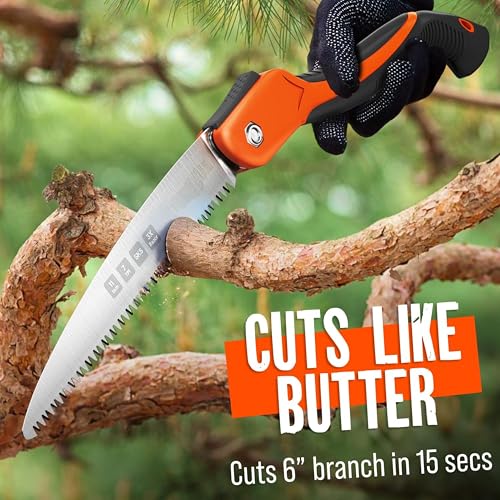
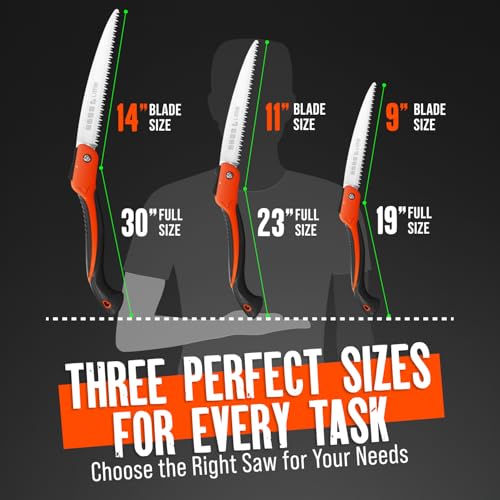
Sometimes you just need a saw that disappears in your pack, or your pocket, until it’s needed. The HME Mini is about as basic as it gets, but that’s the point. At 5 inches and featherlight, it’s designed as an emergency backup, and owner reports confirm it works reliably when you’re stuck with small limbs or need to clear a minor trail block.
It won’t handle thick branches, but for quick cuts on saplings or firewood prep, it gets the job done. The carbon steel blade is sharp out of the box, and the folding lock is simple but secure. Compared to multi-blade models like the MOSSY OAK, it’s far less versatile, but also far more compact. I’d throw this in a survival kit or EDC pouch without hesitation, not because it’s fancy, but because it’s dependable when space is tight.
Product photos


Warder 12″ Custom Blade Folding Saw
Strengths
- Uses standard reciprocating blades
- Extremely lightweight
- Durable glass-filled nylon
Trade-offs
- Performance varies by blade
- Less refined ergonomics
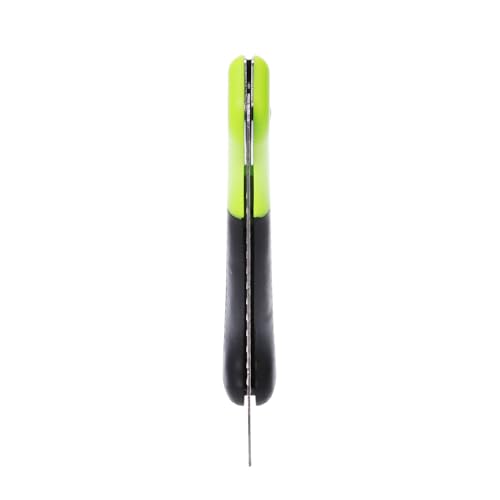
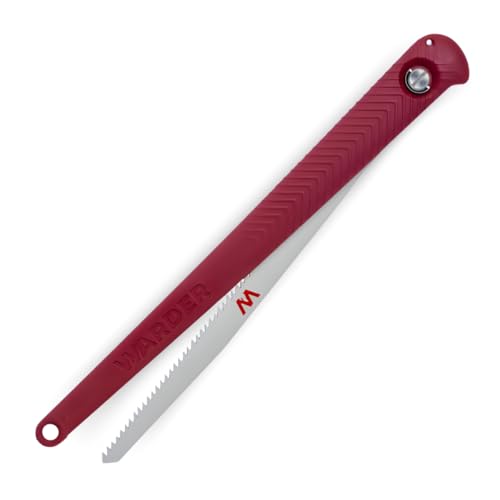
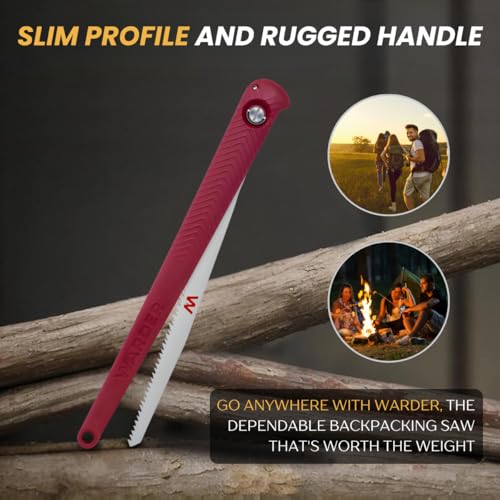
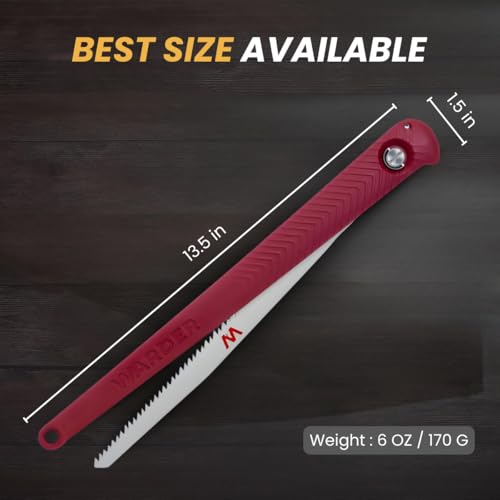
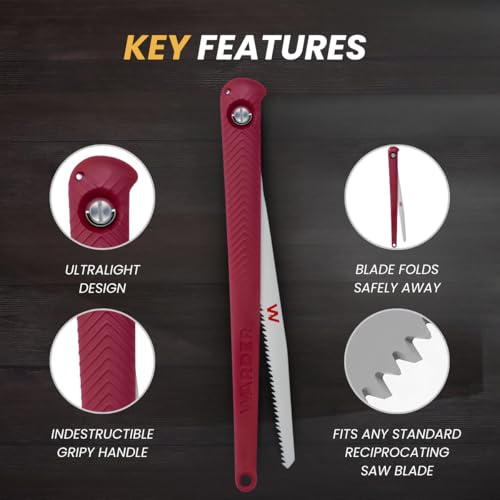
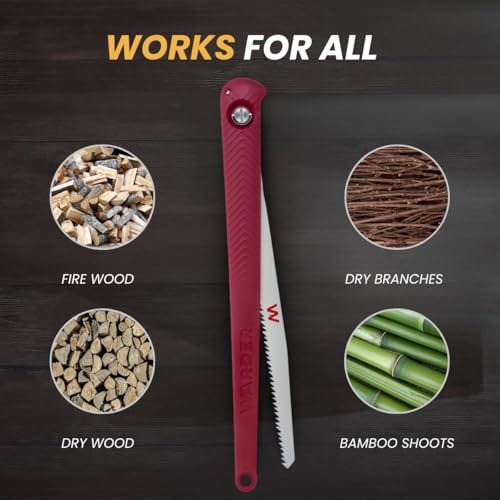
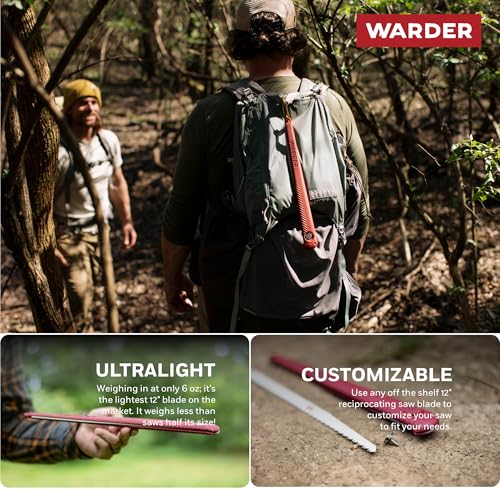
The Warder Folding Saw is a clever twist on the category, instead of a fixed blade, it uses standard 12-inch reciprocating saw blades, which means you can swap in whatever type you need: demolition, bi-metal, wood, even bone-cutting. That kind of aftermarket flexibility is rare, and for tinkerers or those already carrying spare blades, it’s a huge advantage.
At just 6 ounces, it’s one of the lightest options here, and the glass-filled nylon handle is rugged enough to survive hard use. Owners appreciate how easy it is to replace a dull blade on the trail, just pop in a fresh one from your kit. But because it relies on off-the-shelf blades, the performance depends heavily on what you install. It’s not as optimized out of the box as the Bahco or AGAWA, but for adaptability and weight savings, it’s unmatched.
Product photos
How We Evaluated backpacking saws
Rather than a hands-on lab test, my research for these recommendations centered on a detailed comparison of published specifications and features across numerous models. I weighed owner reviews from major retailers alongside expert opinions found in outdoor and tool-focused publications. As someone who’s spent years advising on power tool selection and workshop setup, I applied my understanding of materials, blade geometry, and practical use cases to rank these saws against a set of key performance indicators.
For backpacking saws, blade length, weight, and durability were the most significant factors. A longer blade offers more cutting power for larger branches, but adds weight – a critical consideration for backpackers. Durability, specifically the quality of the steel and the construction of the folding mechanism, dictates how reliably the saw will perform over time and withstand the rigors of outdoor use. Balancing these factors was essential.
Specifications reliably indicate blade material (SK5 steel is generally preferred) and length, as well as overall weight. However, I placed greater emphasis on owner feedback regarding long-term durability, how well the saw holds an edge, and the smoothness of operation. Positive reviews frequently highlighted ease of use and the security of the folding mechanism, while negative reviews often pointed to flimsy construction or blades that dulled quickly. Understanding blade changeability is also vital, and I consulted guides on reciprocating saw techniques to assess the potential for using alternative blades where applicable.
Choosing The Right backpacking saws
Choosing the right backpacking saw can significantly improve your experience in the outdoors, making tasks like campsite preparation and trail clearing much easier.
A quality backpacking saw balances weight, blade length, and cutting power. Key considerations include blade material (SK-5 steel is common), tooth count (TPI) for the type of wood you’ll encounter, and the folding mechanism’s safety and durability. Look for saws with comfortable, secure grips and reliable locking systems.
Blade Length and Material
The blade length dictates what you can realistically cut. Shorter blades (under 7 inches), like those found on the HME Mini 5″ Pocket Folding Saw, excel as emergency tools for small branches. However, if you anticipate needing to fell larger limbs – say, up to 6 or 8 inches in diameter – you’ll want to step up to a 10-inch or even a 14-inch blade, such as on the REXBETI 14-Inch Extra Long Blade Saw. Blade material is equally crucial; SK-5 high-carbon steel is a workhorse found in many saws, offering a good balance of hardness and flexibility. Avoid blades that feel flimsy or show signs of rust – a rust-protected blade, like the one on the Bahco BAH396LAP, will last much longer.
Tooth Count (TPI) and Cutting Action
Tooth count directly affects how aggressively a saw cuts. Higher TPI (teeth per inch) – 18 TPI, for example, as seen on the MOSSY OAK 3-in-1 Multi-Blade Saw – creates a finer cut, better suited for harder woods and plastics. Lower TPI (5-7 TPI) is more efficient for quickly bucking through softer woods. Consider the primary types of wood you’ll encounter.
Here’s a quick guide: * Emergency/small tasks: 7-10 TPI * General backpacking/camping: 7-12 TPI * Hardwood and larger limbs: 10-18 TPI. Higher TPI requires more effort but yields cleaner cuts, reducing splintering and making the saw more versatile overall.
A properly sharpened saw cuts efficiently and safely. Regularly inspect the blade for damage and consider carrying a small sharpening file on longer trips.
Ergonomics and Portability
Weight and packability are paramount when choosing a backpacking saw. You’re carrying everything on your back, so every ounce counts. The AGAWA BOREAL21 21-Inch Folding Saw, at 18oz, strikes a good balance between blade length and weight. Beyond weight, the handle’s design is critical. Look for handles with a comfortable, non-slip grip, even when wet. The Corona RazorTOOTH 10″ Folding Pruning Saw is often praised for its ergonomic handle. If you’re heading out on extended trips, or doing a lot of trail maintenance, you might find that understanding safe pole saw techniques will help you clear brush from a safe distance. And remember, if you’re looking at several options, comparing portable camp saws is a great place to start.
Backpacking Saws Compared
This table provides a detailed specification comparison of various backpacking saws available on the market.
| Product Title | Blade Length | Weight (oz) | TPI (Teeth Per Inch) | Material (Blade) | Handle Material | Special Features |
|---|---|---|---|---|---|---|
| AGAWA BOREAL21 | 21″ | 18 | N/A | Stainless Steel | Nylon | Replaceable Blades |
| Bahco BAH396LAP | 7.5″ | N/A | 7 | N/A | Plastic | Safety Lock |
| MOSSY OAK 3-in-1 | 7.5″ | N/A | 5, 11, 18 | 65Mn, 58CrV | TPR Rubber | 3 Interchangeable Blades |
| REXBETI 14-Inch | 14″ | 14.5 | 5.5 | SK-5 Steel | Rubber | Extra Long Blade |
| Corona RazorTOOTH | 10″ | N/A | N/A | Steel | N/A | Curved Blade |
| Folding Camping Saw 11-Inch | 11″ | N/A | 7 | SK5 Steel | N/A | Triple-Cut Blade |
| HME Mini 5″ | 5″ | N/A | N/A | N/A | N/A | Pocket-Sized |
| Warder 12″ | 12″ | 6 | N/A | N/A | Glass-Filled Nylon | Customizable Blades |
Frequently Asked Questions
What blade material offers the best combination of durability and performance?
SK-5 high-carbon steel is generally the best choice. It provides a good balance of hardness for holding an edge and flexibility to resist cracking, making it a common material in quality backpacking saws.
Can I sharpen a backpacking saw blade myself, or is it better to replace it?
You can sharpen most backpacking saw blades with a small sharpening file, but the ease depends on the steel’s hardness. Regularly sharpening extends the blade’s life, however, some saws like the AGAWA BOREAL21 offer replaceable blades which can be more convenient.
How important is the locking mechanism on a folding saw?
A secure locking mechanism is very important for safety. It prevents accidental folding during use, which could cause injury or damage the saw. Look for saws with robust locking systems that provide a positive, audible click when engaged.
What’s the difference between a saw with high TPI versus low TPI?
A higher TPI (teeth per inch) makes a finer cut, ideal for hardwoods and smoother finishes, while a lower TPI cuts faster through softer woods. If you anticipate encountering varied wood types, consider a saw like the MOSSY OAK 3-in-1 with multiple blade options for different cutting needs.
Are there backpacking saws designed specifically for emergency situations?
Yes, smaller, more compact saws like the HME Mini 5″ Pocket Folding Saw are designed for emergency use and can be easily carried in a pack. For those preparing for more serious backcountry adventures, investigating ultralight survival saws is a good idea.
The Bottom Line
Choosing a backpacking saw often comes down to balancing how much you’re willing to carry against how much cutting power you anticipate needing. If you want a saw that can handle most tasks without breaking your back, the AGAWA BOREAL21 strikes an excellent balance, offering a substantial blade length without excessive weight. It’s a solid all-around choice for anyone regularly venturing into the backcountry.
For those prioritizing a tight budget or needing a simple emergency tool, the HME Mini 5″ Pocket Folding Saw is a fantastic option. Similarly, if versatility is key – perhaps you’ll be encountering a variety of wood types or needing to perform different kinds of cuts – the MOSSY OAK 3-in-1 Multi-Blade Saw offers a range of blade options in a compact package. Understanding jig saw blade selection can help you think through blade choices for different materials, even when selecting a hand saw.
Ultimately, the best backpacking saw isn’t about the highest specs or the most features. It’s about finding a reliable tool that suits your typical trips and skill level. Prioritize a sharp, durable blade, a comfortable grip, and a secure locking mechanism – those fundamentals will serve you far better than any fancy bells and whistles.
