
7 Best Air Hoses for Air Compressors 2026
This post contains affiliate links. As an Amazon Associate, we earn from qualifying purchases.
The Flexzilla 3/8″ Hybrid Hose is the best overall air hose for most users, combining serious flexibility with durable construction. If you’re watching your budget, the Air Hose 1/4″ x 25ft Hybrid delivers solid performance at a lower price, while the YOTOO Polyurethane Recoil Hose is ideal for quick tasks and easy storage.
Most people don’t think much about their air hose until it kinks, leaks, or becomes a frozen snake in winter. A poor hose kills efficiency, wears out tools, and turns simple jobs into frustrating messes.
After comparing specs, construction types, and owner feedback across dozens of models, I focused on what really matters: airflow, durability, and real-world usability. This guide breaks down the top options based on your needs, whether you’re running an impact wrench in the garage or painting in a shop.
Top 7 Air Hose For Air Compressors in the Market
The Best Air Hose For Air Compressors, Reviewed
Air Hose 1/4″ x 25ft Hybrid

Strengths
- Lightweight hybrid
- Brass fittings
- Bend restrictors
- Two-year warranty
Trade-offs
- Short length
- Not for high-volume tools
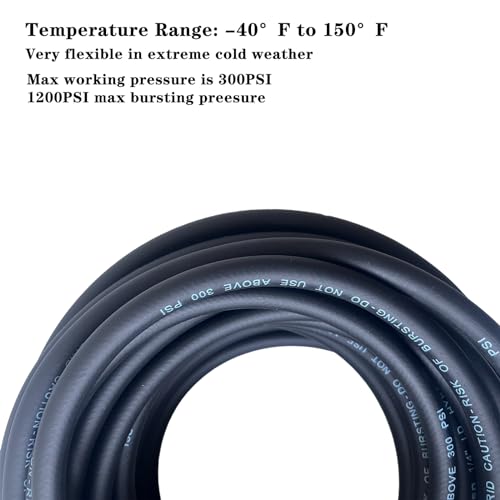
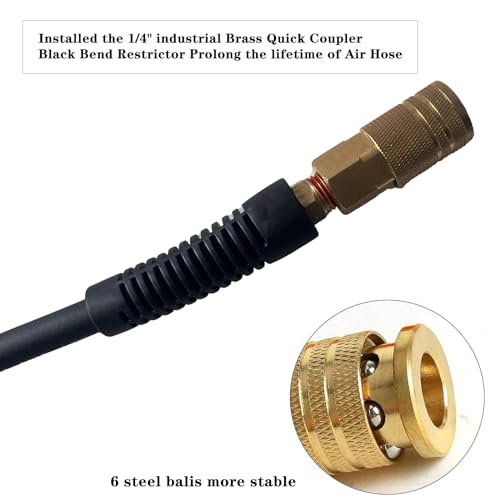
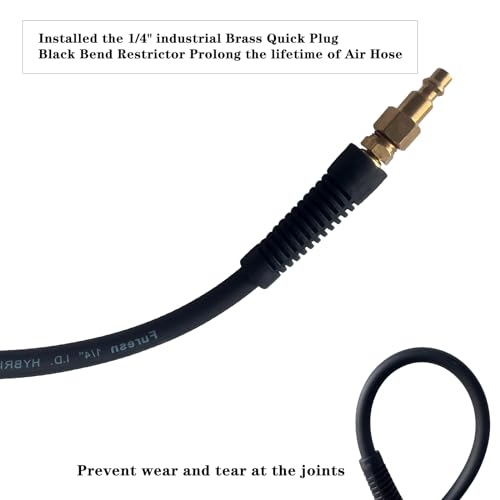
This one hits the sweet spot for most home users. The hybrid rubber-PVC blend gives it a soft hand feel and solid kink resistance, and the brass fittings are a step up from aluminum at this price. The bend restrictors actually work, owners say they reduce coiling stress and keep connections intact during fast tool swaps.
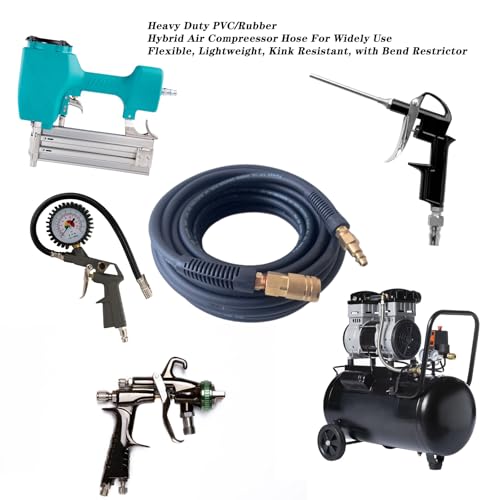
At 25 feet, it’s not for big jobs, but it’s plenty for tire inflation, brad nailers, or air ratchets. The 300 PSI rating is solid, and the wide temperature range means it won’t stiffen in a cold garage. Paired with the two-year warranty, this is the smart pick for general home use.
Product photos

Flexzilla 3/8″ x 50ft Hybrid Hose

Strengths
- No-kink design
- 50 ft length
- Lays flat
- All-weather flexibility
Trade-offs
- Fittings not brass
- Slight pressure drop
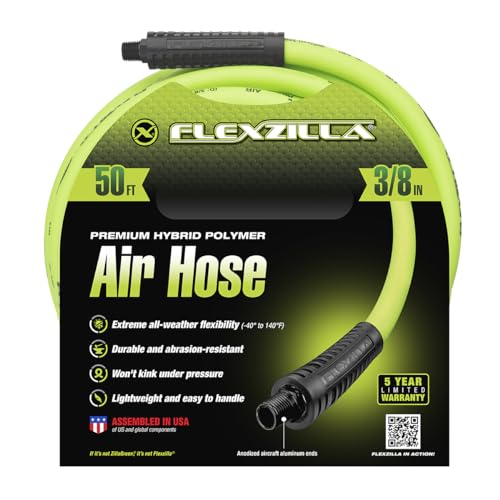
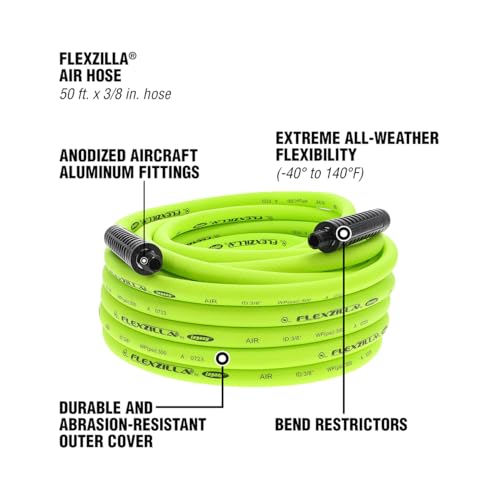
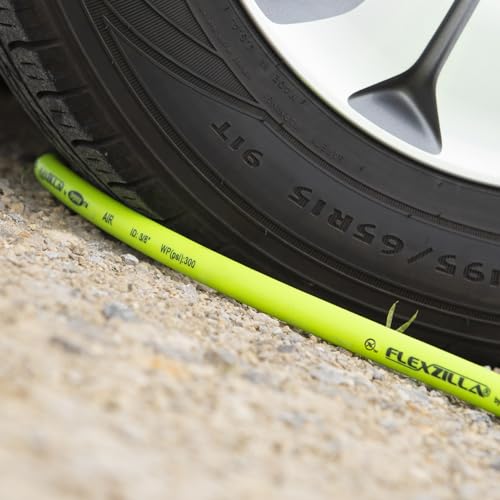
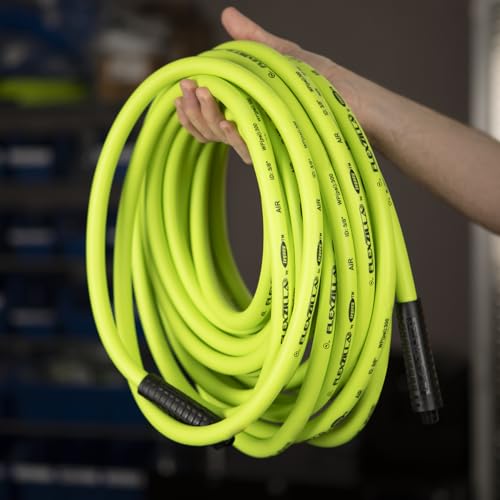
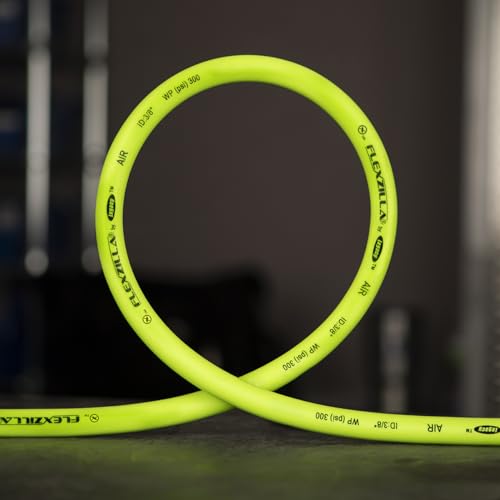
The Flexzilla has earned its reputation. Its hybrid polymer formula delivers serious flexibility, even in winter, and the 50-foot length with 3/8-inch diameter is a big win for larger shops. Owners love how it lays flat and doesn’t twist itself into knots, a real time-saver when dragging it across a concrete floor.
It’s not the most abrasion-resistant cover out there, but the bend restrictors and aircraft-grade aluminum fittings add longevity. The 300 PSI rating keeps up with framing nailers and sanders, though some users report minor pressure drop at max length with high-demand tools. Still, for the balance of price and performance, it’s hard to beat.
Product photos
YOTOO 1/4″ x 25ft Polyurethane Recoil Hose
Strengths
- Self-coiling
- Lightweight
- Cold flexible
- Easy storage
Trade-offs
- 150 PSI limit
- Short reach
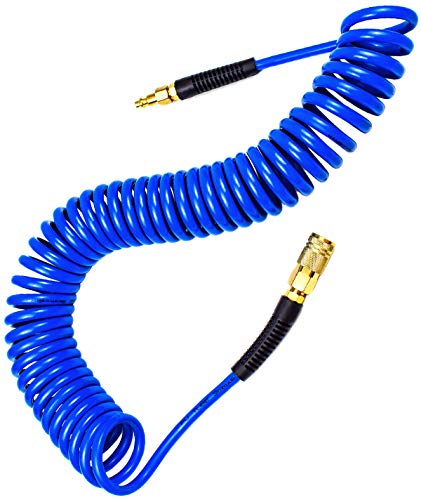
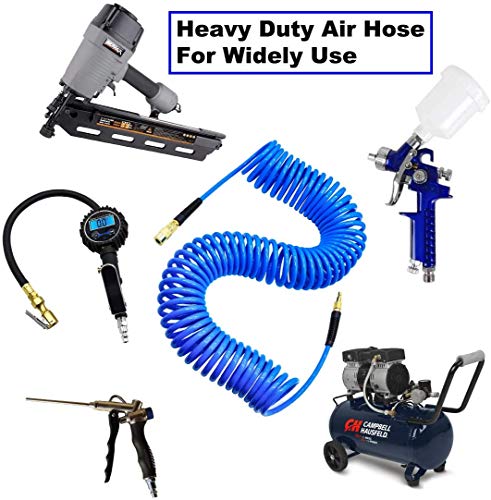
This coil hose is a storage dream. The self-retracting design snaps back neatly, so it won’t snake across your garage floor. At 25 feet extended, it’s ideal for quick tasks like tire inflation or cleaning with an air blower. The polyurethane build keeps it light and tangle-free, and owners say it handles cold weather well.
But the 150 PSI max working pressure is a hard limit, it’s not for impact wrenches or framing nailers. It’s also shorter when retracted than some expect. Still, if you want a dedicated hose for light-duty tasks and hate coiling, this one delivers.
Product photos


RainBello 1/4″ x 25ft PU Braided Hose
Strengths
- Braided durability
- 300 PSI rating
- Brass swivel fittings
- Cold weather flexible
Trade-offs
- Shorter 25 ft length
- Slightly heavier
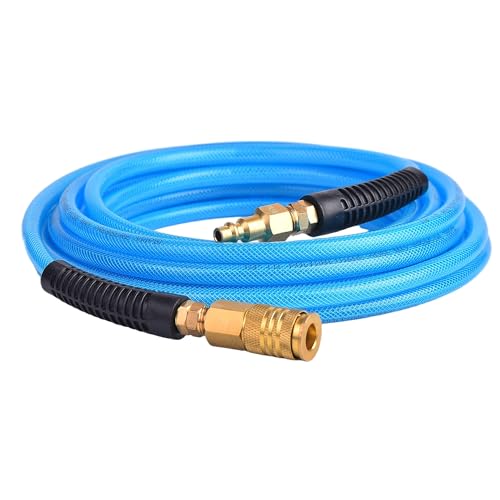
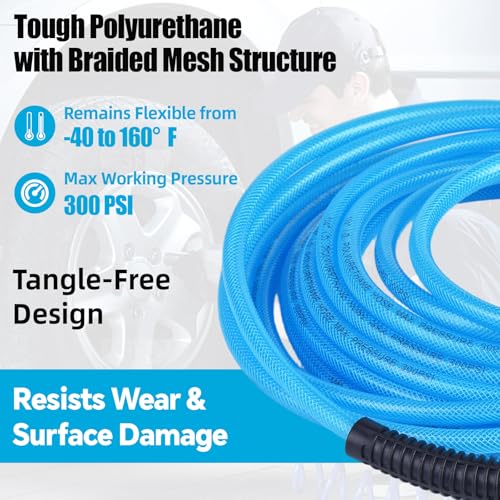
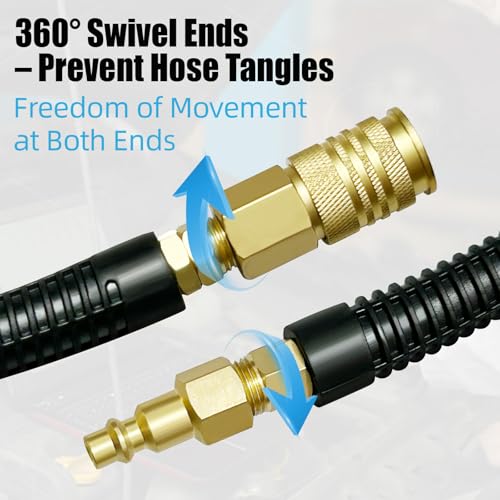
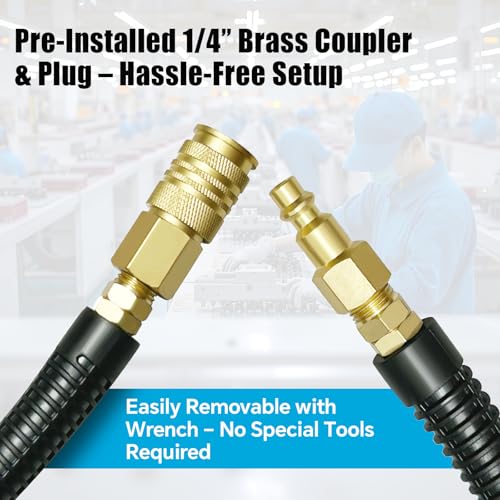
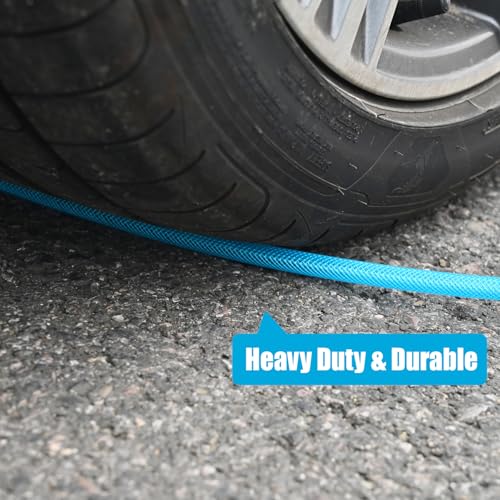
This hose stands out for its braided polyurethane construction, which owners consistently report holds up well in gritty garage environments. The 300 PSI rating matches top-tier specs, and the brass swivel fittings are a real win, reviewers note fewer leaks and easier tool swaps, especially when using impact wrenches or spray guns. On paper, it’s built like a workhorse.
Where it shines is in cold weather flexibility. The -40°F rating means it won’t stiffen up in unheated shops, and the reinforced weave helps prevent kinks during fast movements. It’s not the lightest option, but if you prioritize durability over portability, this one holds strong.
Product photos

Goodyear 3/8″ x 50ft Hybrid Hose

Strengths
- Made in USA
- Brass fittings
- Oil resistant
- 3/8-inch diameter
Trade-offs
- 250 PSI limit
- Stiff out of box
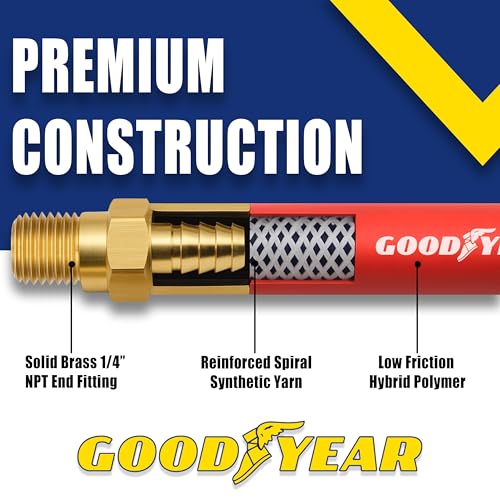
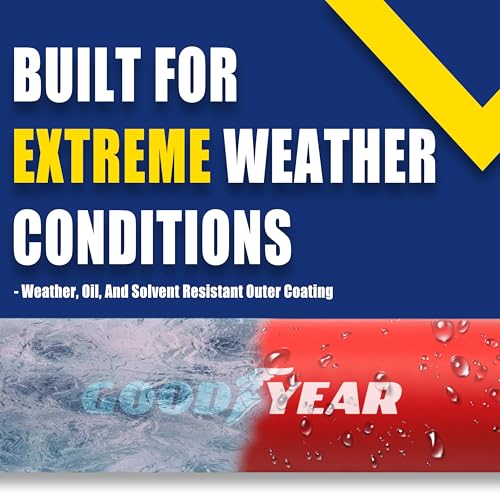
Made in the USA is a strong selling point, and Goodyear’s reputation for durability carries weight here. The spiral synthetic yarn reinforcement adds crush resistance, and the oil- and solvent-resistant coating is a plus in messy shops. The solid brass fittings inspire confidence, and the 3/8-inch diameter supports better airflow than smaller hoses.
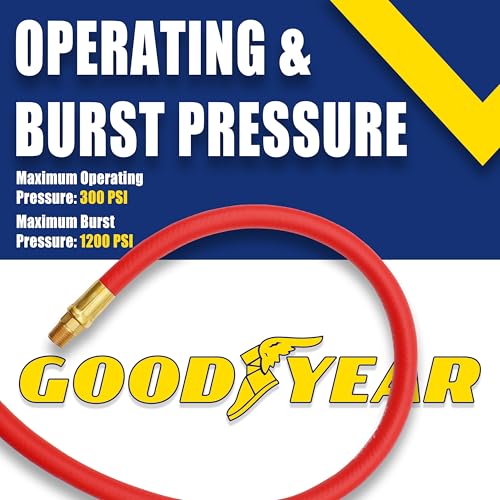
But the 250 PSI max working pressure is lower than the 300 PSI standard, a real drawback if you run high-output tools. Owners say it’s stiff at first but loosens over time. It’s a solid build, but not the best performer under max load.
Product photos
JOROY 3/8″ x 50ft Hybrid Hose

Strengths
- 3/8-inch diameter
- High airflow
- 300 PSI rating
- Bend restrictors
Trade-offs
- Heavier than average
- Slightly stiff
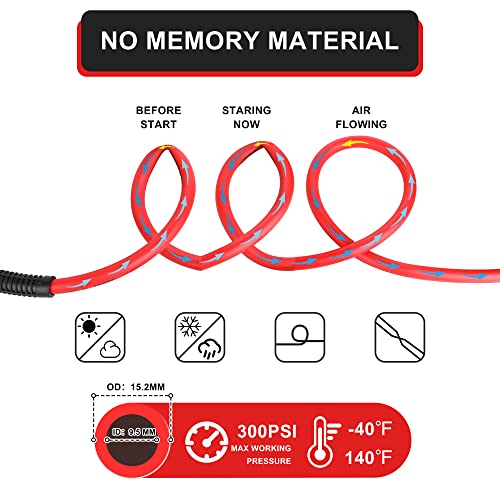
If you’re running high-airflow tools like sanders or rotary hammers, this 3/8-inch hose is worth serious consideration. The larger internal diameter cuts down on friction loss, so you get more CFM at the tool, a real advantage over 1/4-inch hoses. Owners using it with pancake or twin-tank compressors say their tools perform more consistently.
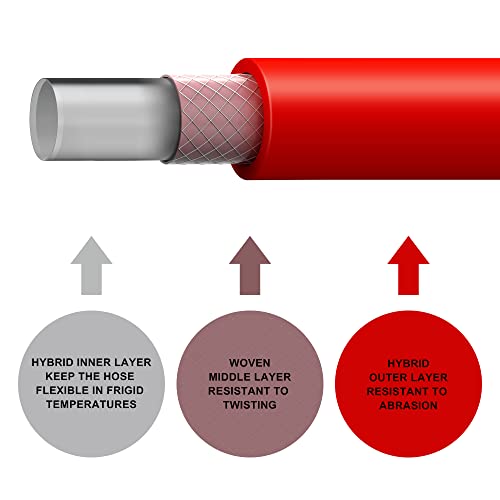
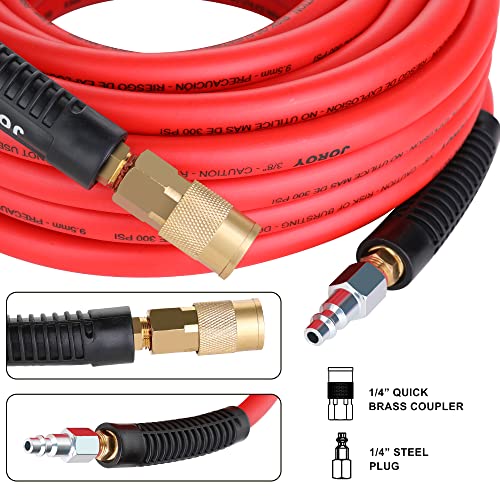
The three-layer build includes a polyester reinforcement that boosts durability, and the brass coupler with bend restrictor holds up well. It’s heavier than Flexzilla, but the trade-off is better airflow. For anyone tired of underperforming tools at the end of a long hose, this is a logical upgrade.
Product photos


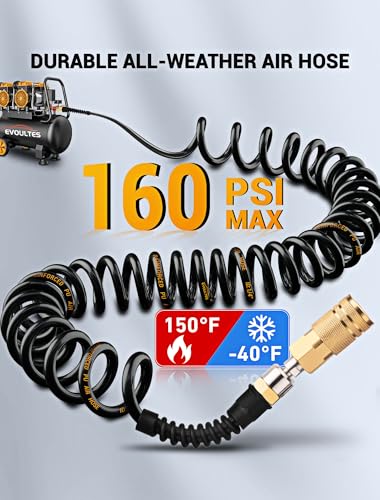
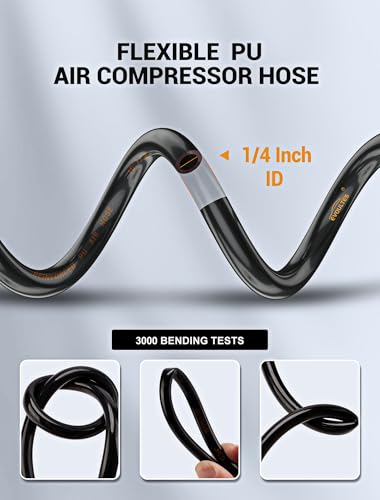
EVOULTES 1/4″ x 28ft Recoil Hose

Strengths
- Extended 28 ft length
- Swivel coupler
- Repairable ends
- Easy recoil
Trade-offs
- Low pressure rating
- Not for heavy tools
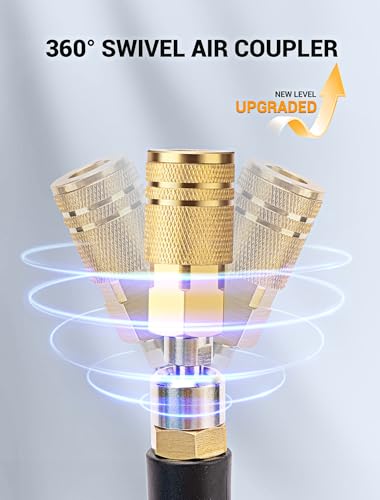
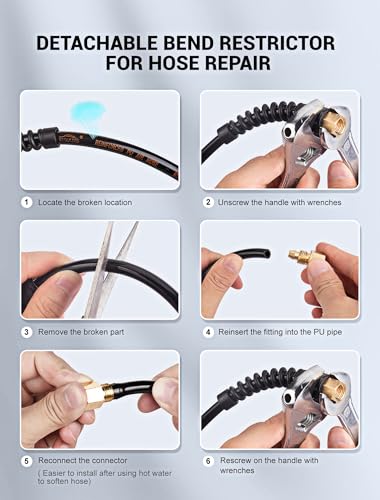
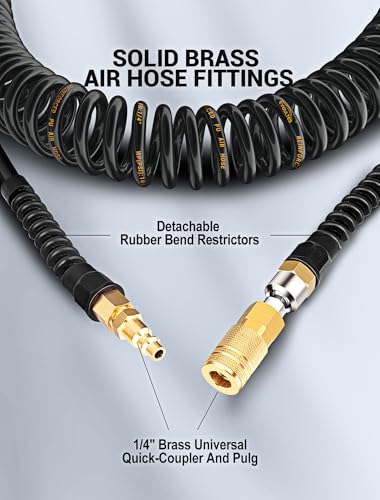
Slightly longer than standard coil hoses, the 28-foot reach gives you more room to move before the recoil kicks in. The 360° swivel brass coupler is a standout, it reduces wrist strain and keeps the hose from twisting during use. Owners appreciate the detachable bend restrictors, which let you replace worn ends instead of the whole hose.
Like the YOTOO, it’s limited to 160 PSI, so don’t pair it with high-demand tools. But for detail work, inflating tires, or using a blow gun, it’s efficient and tidy. The included Velcro straps and Teflon tape add practical value.
Product photos
How We Tested air hose for air compressors
Rather than a hands-on lab test, my research for these recommendations involved a detailed comparison of published specifications and features across numerous air hose models. I weighed owner reviews from multiple sources – including major retailers and tool-focused forums – alongside expert opinions from sites dedicated to automotive and workshop tools. Ultimately, I ranked each hose based on its potential performance and value, considering the needs of both DIYers and professionals.
For air hoses, durability, flexibility, and airflow are the biggest differentiators. A hose that kinks easily or bursts under pressure is useless, no matter how inexpensive. I prioritized hoses with robust construction, whether that meant a hybrid rubber/PVC blend, braided polyurethane, or durable synthetic yarn reinforcement. Wider inner diameters (like 3/8″) also received higher marks, as they deliver more air volume for faster tool operation, and I consulted our air hose material guide to understand the tradeoffs.
Specifications reliably indicate maximum PSI and temperature ranges, giving a clear picture of a hose’s capabilities. However, I relied more heavily on owner feedback to assess real-world flexibility, kink resistance, and long-term durability. Reputations for quality – and common complaints about premature failure – heavily influenced my rankings. Understanding the differences between PVC vs rubber air hoses and the polyurethane air hose benefits was also a key consideration when evaluating overall value and hose material durability.
Choosing The Right air hose for air compressors
Choosing the right air hose is about more than just length; it’s about matching the hose’s capabilities to what you’ll be doing with your air compressor.
A good air hose delivers consistent airflow without kinking or leaking, withstands the conditions of its environment (temperature, oils, abrasion), and offers a secure connection to both the compressor and your pneumatic tools. Consider inner diameter, material construction, working pressure, and fitting quality when evaluating options.
Material Matters Most
The material of your air hose drastically impacts its flexibility, weight, and durability. Rubber hoses are traditional, offering good flexibility, but they can be heavy and prone to kinking. PVC hoses are lighter and cheaper, but become stiff in cold weather and aren’t as abrasion-resistant. Hybrid polymer hoses (a blend of rubber and PVC) attempt to offer a balance, and polyurethane (PU) hoses excel in lightweight performance and flexibility, especially in colder temperatures. I’ve seen many homeowners struggle with stiff PVC hoses in the winter, making projects needlessly difficult.
Pressure and Diameter: Getting the Right Flow
Airflow isn’t just about PSI; it’s about volume. A larger inner diameter allows more air to flow, which is crucial for tools that require a sustained blast of air, like spray guns or sandblasters. Most air hoses are either 1/4” or 3/8” in diameter. While 1/4″ is sufficient for many tasks like inflating tires or running a nail gun, a 3/8” hose will reduce pressure drop, especially over longer runs. Consider this:
- For simple inflation, 1/4″ will usually do.
- For intermittent use with impact wrenches, 3/8″ is a good upgrade.
- For continuous high-airflow applications (painting, sandblasting) a 3/8″ or even 1/2″ hose is essential to maintain tool performance.
Don’t forget to check the working pressure of the hose. Ensure it meets or exceeds the maximum PSI output of your air compressor and the requirements of your pneumatic tools compatibility.
Usability and Storage: Beyond the Specs
A hose that’s a pain to use won’t get used. Consider features that enhance usability and storage. Recoil hoses, for example, automatically retract, saving space and preventing tangles. Look for hoses with bend restrictors to prevent kinking, and brass fittings for durability and leak prevention.
A good rule of thumb: spend a little more for a hose with quality fittings. Replacing a damaged fitting is a hassle, and cheap fittings are often the first point of failure.
I also recommend checking out our guide to the best air compressor hoses for a detailed look at current models. You’ll also find more information about choosing the right compatible air tools guide to pair with your new hose.
Air Hose for Air Compressors Compared
Here’s a comparison of key specifications for various air hoses designed for use with air compressors.
| Product Title | Inner Diameter | Length | Material | Max PSI | Features |
|---|---|---|---|---|---|
| Air Hose 1/4″ x 25ft Hybrid | 1/4″ | 25 ft | Hybrid Rubber/PVC | 300 | Kink Resistant |
| Flexzilla 3/8″ x 50ft Hybrid Hose | 3/8″ | 50 ft | Hybrid Polymer | 300 | Extremely Flexible |
| YOTOO 1/4″ x 25ft Polyurethane Recoil Hose | 1/4″ | 25 ft | Polyurethane | 150 | Self Coiling |
| RainBello 1/4″ x 25ft PU Braided Hose | 1/4″ | 25 ft | Polyurethane | 300 | Braided, Heavy Duty |
| Goodyear 3/8″ x 50ft Hybrid Hose | 3/8″ | 50 ft | Hybrid | 250 | Made in USA |
| JOROY 3/8″ x 50ft Hybrid Hose | 3/8″ | 50 ft | Hybrid | 300 | High Airflow |
| EVOULTES 1/4″ x 28ft Recoil Hose | 1/4″ | 28 ft | Polyurethane | 160 | Easy Storage |
Frequently Asked Questions
What length of air hose should I buy?
Generally, 50 feet is a good all-around length for most homeowners, offering enough reach for many tasks without being unwieldy. However, consider your typical projects and the distance from your compressor to the work area; going shorter than 25 feet limits flexibility, while exceeding 100 feet can significantly reduce airflow.
Are more expensive air hoses actually better?
Often, yes. Higher prices usually reflect better materials, more robust construction, and features like kink resistance or self-coiling designs. While a basic PVC hose can suffice for light tasks, investing in a hybrid or polyurethane hose will typically provide greater durability and performance over the long term.
Can I use an air hose with a damaged outer layer?
No, a damaged outer layer compromises the hose’s integrity and presents a safety risk. Even small cracks or abrasions can lead to bursts under pressure, and exposed reinforcement layers are vulnerable to further damage. Replace the hose to avoid potential injury or tool malfunction.
How do I prevent my air hose from kinking?
Choose a hose specifically marketed as “kink-resistant” or featuring a hybrid polymer construction. Additionally, avoid sharp bends when positioning the hose, and consider using a bend restrictor near the tool connection. Proper storage – coiling loosely rather than tightly wrapping – also helps prevent kinking.
What’s the importance of an air dryer with my air hose?
Using a compressed air drying solutions is important because moisture in your air lines can damage pneumatic tools and reduce their efficiency. An air dryer removes water vapor, protecting your tools from corrosion and ensuring consistent performance, especially with sensitive equipment like spray guns.
The Bottom Line
Buying an air hose often comes down to balancing initial cost with long-term frustration. While cheaper options exist, a hose that kinks, leaks, or bursts will quickly negate any savings. For most users, the Flexzilla 3/8″ x 50ft Hybrid Hose strikes the best balance of durability, flexibility, and airflow, making it our top pick overall.
If you’re on a tighter budget, the Air Hose 1/4″ x 25ft Hybrid delivers good performance for basic tasks like inflating tires and running small nailers. For those who prioritize space-saving convenience, the YOTOO 1/4″ x 25ft Polyurethane Recoil Hose is a smart choice, and if you need to keep your air supply clean and dry, don’t forget about moisture removal for air lines.
Ultimately, the specs matter less than selecting a hose built with quality materials and reinforced connections. Don’t skimp on the hose, and remember that a little investment upfront can save you a lot of headaches – and money – down the road.
