8 Best Air Compressor Hose Materials 2026
This post contains affiliate links. As an Amazon Associate, we earn from qualifying purchases.
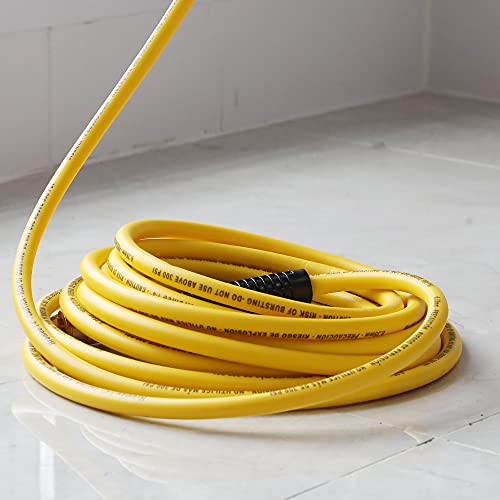
The Flexzilla hybrid polymer hoses stand out as the best overall choice for most users, combining serious flexibility with rugged durability. For those on a tighter budget, the Hromee 25-foot hybrid hose delivers solid performance without the premium price, while the WYNNsky coiled polyurethane hose is a smart pick for compact spaces or frequent transport.
Most people don’t think much about their air hose until it kinks under a workbench, cracks in the cold, or leaks down pressure when they’re mid-task. A bad hose slows you down, wears out fast, and can even create unsafe conditions on the job.
This guide cuts through the marketing to focus on what really matters: real-world performance based on material, pressure rating, and user feedback. I looked at how these hoses hold up over time, how they handle temperature swings, and whether they deliver air efficiently to your tools. These are the ones that consistently come out on top.
Top 8 Air Compressor Hose Materials in the Market
The Best Air Compressor Hose Materials, Reviewed
Flexzilla 1/4 in. x 25 ft. Hybrid Hose

Strengths
- No kink, no memory
- All-weather flexibility
- Durable aircraft aluminum fittings
Trade-offs
- Higher price point
- Green color shows dirt
- Not for ultra-long runs
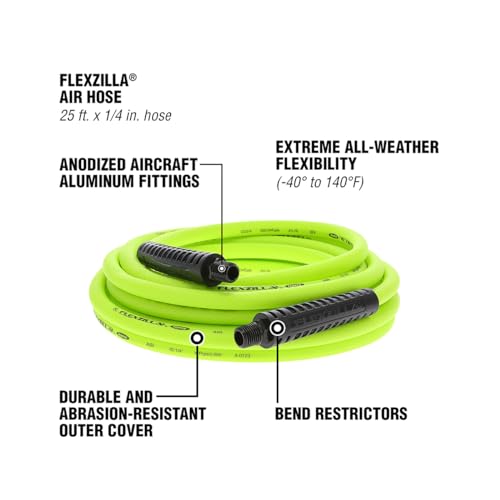
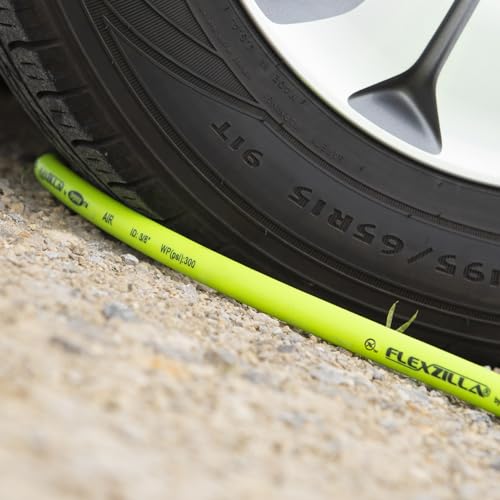
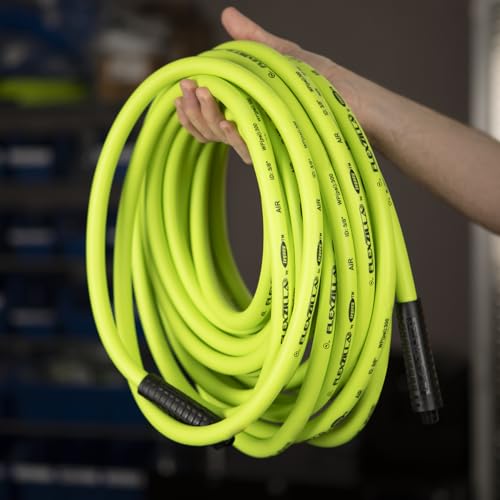
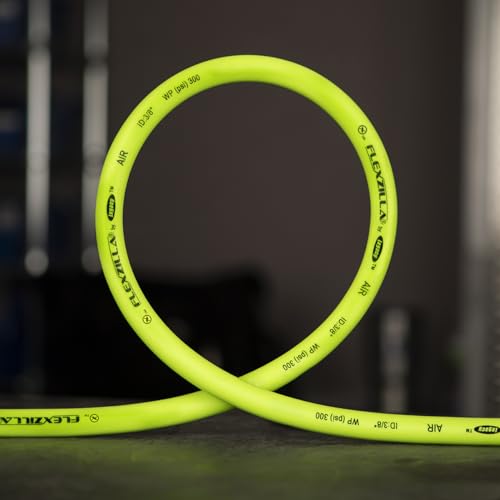
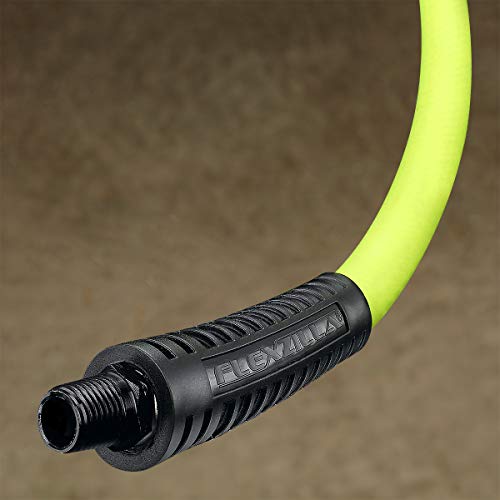
Flexzilla set the bar for hybrid polymer hoses, and this 25-foot version remains my go-to recommendation for most homeowners. The zero memory design means it uncoils flat and stays that way, no springing back or tangling. It’s remarkably flexible even in freezing temps, and the crush-resistant aluminum fittings with bend restrictors add serious durability. Owners consistently say it outlasts rubber and PVC hoses by years in garage use.
The 300 PSI rating is fully usable, not just theoretical, and it pairs perfectly with 6-8 CFM tools like framing nailers or impact wrenches. While not the cheapest, its balance of weight, flexibility, and ruggedness makes it the smartest all-around buy. I’d pick this over the 50-footer unless you routinely work at distance, extra length adds weight and storage hassle most don’t need.
Product photos
Flexzilla 3/8 in. x 50 ft. Hybrid Hose

Strengths
- High airflow capacity
- 50-foot reach
- Superior kink resistance
Trade-offs
- Heavier and bulkier
- Higher cost
- Overkill for small tools
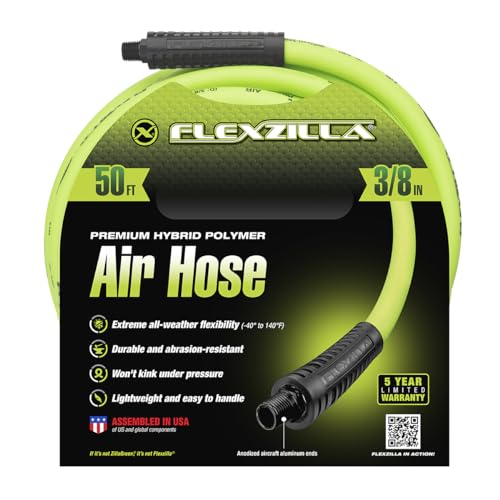
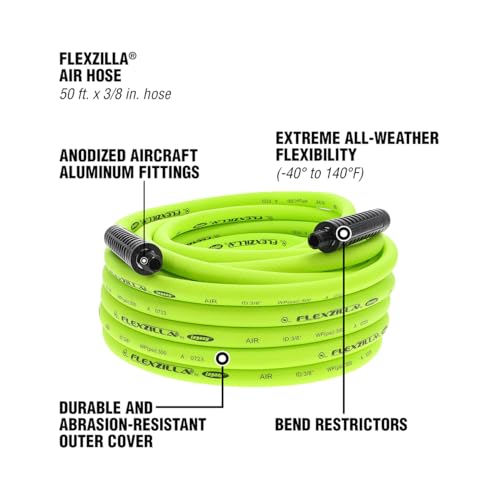
If you need serious airflow over distance, this 50-foot 3/8-inch Flexzilla is the one. The larger ID reduces pressure drop, which matters when running sandblasters or large impact wrenches at full throttle. The hybrid polymer stays flexible in cold weather, and the aircraft aluminum fittings with bend restrictors handle stress better than brass alone.
Owners using this on job sites praise its durability and consistent performance. It’s heavier than 1/4-inch hoses, but that’s the trade-off for volume and reach. Compared to the 25-foot version, this is overkill for most garages, but for contractors or auto shops with big tools and long runs, it’s the smarter buy. The 300 PSI rating is fully usable, and kink resistance is excellent even under load.
Product photos
RainBello 25FT Polyurethane Braided Hose
Strengths
- Braided abrasion resistance
- Swivel brass fittings
- Excellent cold flexibility
Trade-offs
- Can trap debris in braid
- Slightly stiffer initial lay
- No bend restrictors
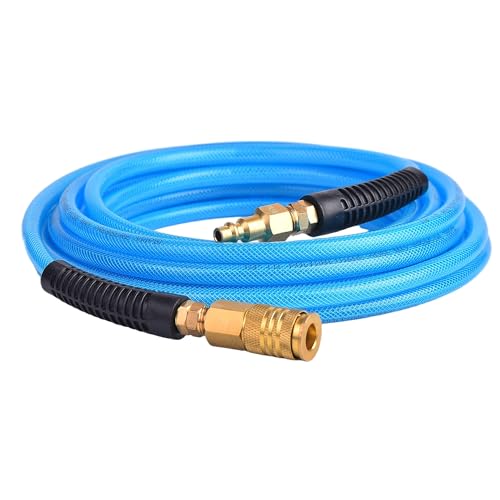
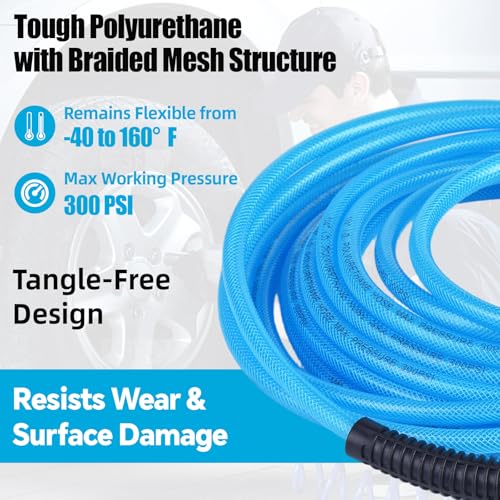
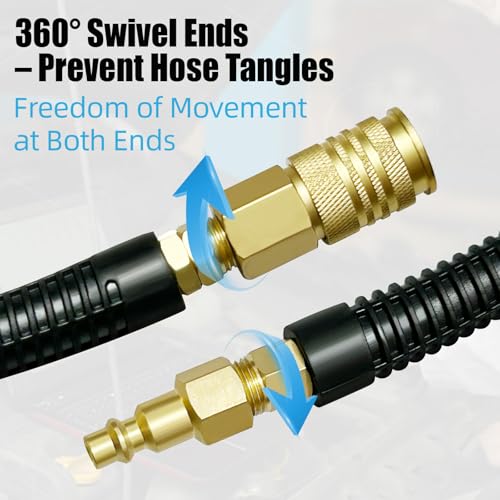
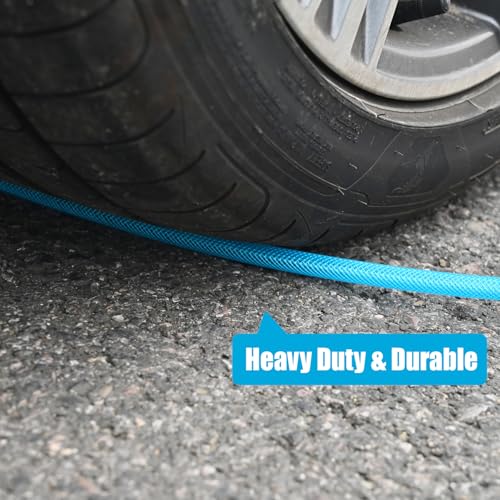
This hose leans hard into durability with its braided polyurethane construction, and owners confirm it shrugs off garage floor scrapes and tool cart traffic better than most. The 300 PSI rating matches top-tier models, and the swivel brass fittings are a win, fewer twisted hoses mid-job. What really stands out is the temperature range: -40°F to 160°F means it won’t stiffen in winter, a real pain point with cheaper PVC hoses.
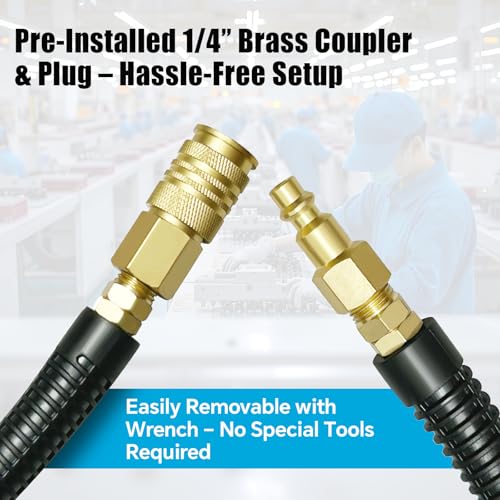
I’d rank its flexibility just below Flexzilla, but above standard hybrid hoses in cold weather. The quick-connect system works reliably, and the lack of kinking under pressure is frequently praised. That said, some users report the braid can trap grime over time, making cleaning a bit tedious. Still, for anyone working in gritty or extreme environments, this one’s built to last.
Product photos

YOTOO 3/8″ x 50-Foot Hybrid Hose

Strengths
- High pressure rating
- 50-foot reach
- Bend restrictors included
Trade-offs
- Slight coil memory
- Heavier than 1/4” hoses
- Fittings not swivel
At 50 feet with a 3/8-inch inner diameter, this hose is built for reach and volume, which matters when you’re running tools far from the compressor. The hybrid rubber-PVC blend delivers solid flexibility and weather resistance, though it’s not quite as soft as Flexzilla’s hybrid polymer. The 300 PSI rating is legit, and owners report stable airflow even with sanders or larger impact guns, something smaller 1/4-inch hoses struggle with.
Bend restrictors at both ends are a small but meaningful touch. They reduce kink points right where stress concentrates, and long-term users say this helps prevent fitting blowouts. The brass fittings are standard NPT, so compatibility isn’t an issue. But some reviewers mention the hose retains a slight coil memory, meaning it doesn’t lie perfectly flat right out of the box. It loosens up over time, but it’s worth noting if you value immediate draping.
Product photos

Hromee 1/4″ x 25 Feet Hybrid Hose

Strengths
- Affordable price
- 300 PSI rated
- Ready-to-use fittings
Trade-offs
- Non-swivel coupler
- Less abrasion resistant
- Shorter lifespan than premium hoses
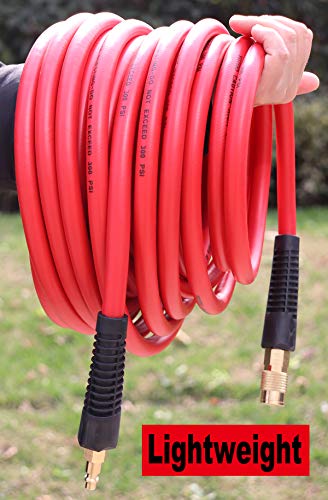
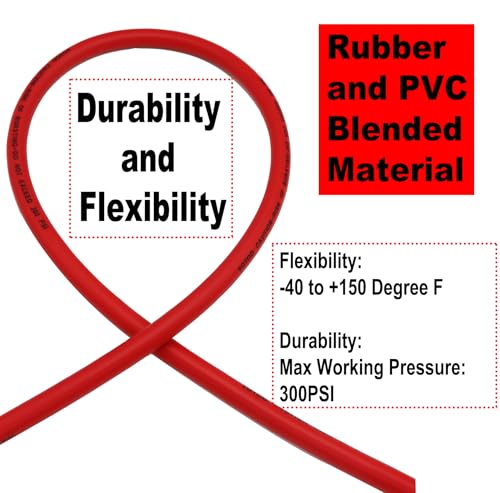
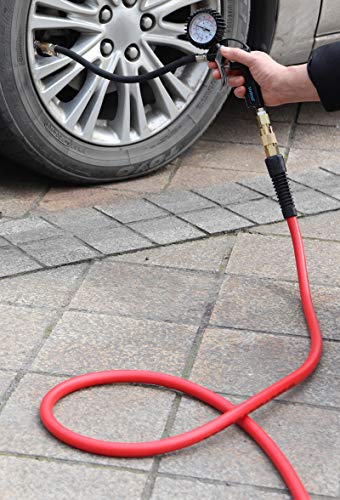
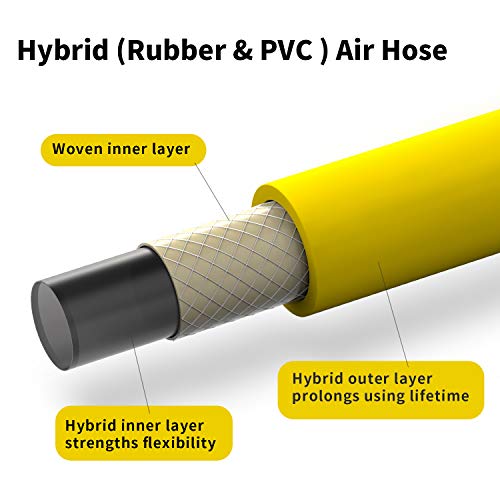
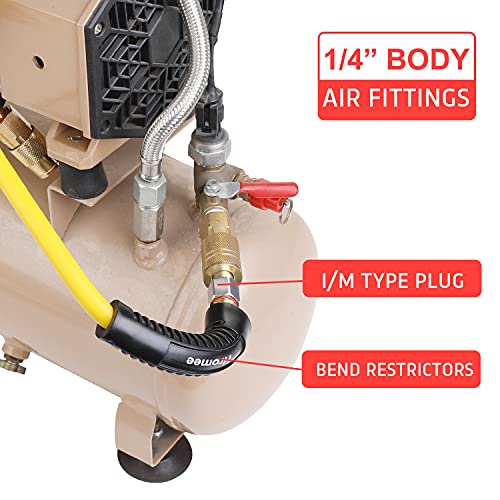
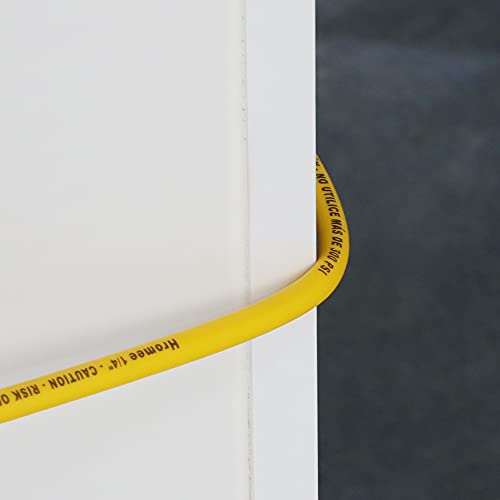
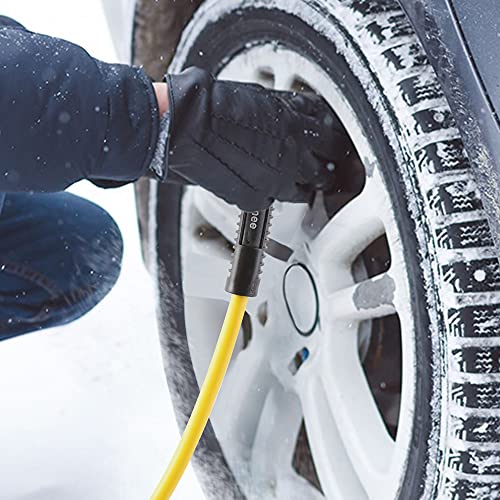
This is one of the better budget hybrid hoses I’ve seen, solid 300 PSI rating, ready-to-use coupler and plug, and a full -40°F to 150°F range. It mimics Flexzilla’s flexibility without the premium price, and owners say it performs reliably for home projects. The hybrid material resists kinking under pressure, and the anodized steel plug holds up better than typical chrome-plated ones.
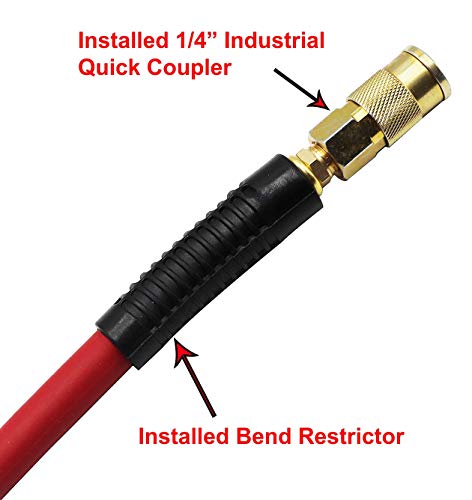
But cost-cutting shows in the fittings: the brass MNPT ends are good, but the coupler isn’t swivel, which can lead to twisting over time. Also, while the bend restrictors help, the outer cover isn’t as abrasion-resistant as Flexzilla’s. Still, for someone starting out or needing a spare, this delivers strong value. I’d call it the smarter buy over no-name hoses on the same price tier.
Product photos
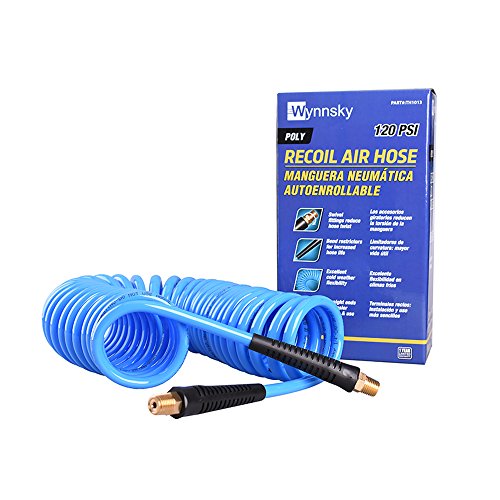
WYNNsky 25 Feet Polyurethane Coiled Hose

Strengths
- Self-retracting design
- Swivel brass fittings
- Cold-weather flexibility
Trade-offs
- Low working pressure
- Not for heavy tools
- Coil can wear over time
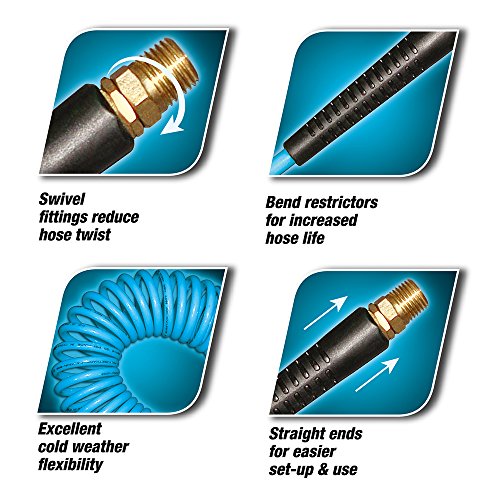
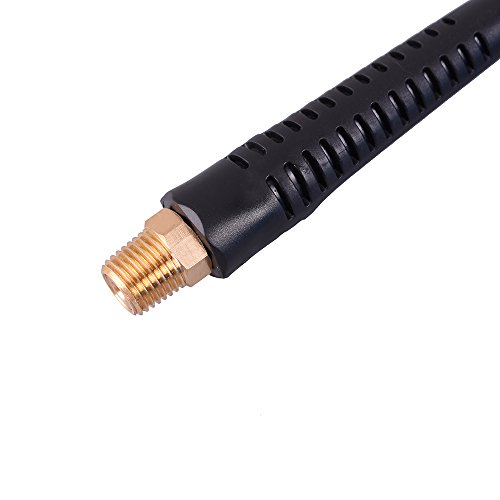
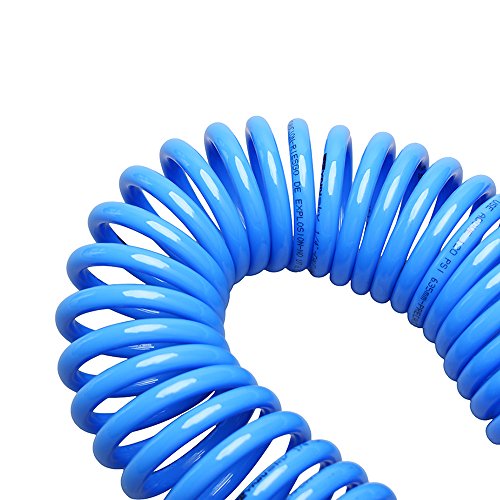
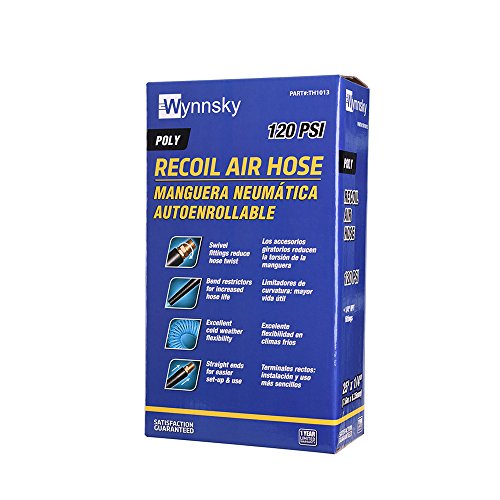
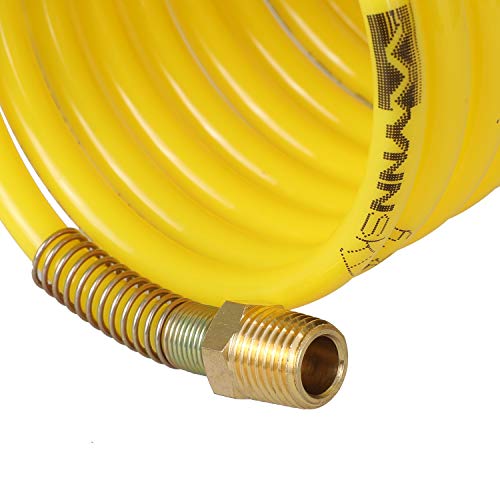
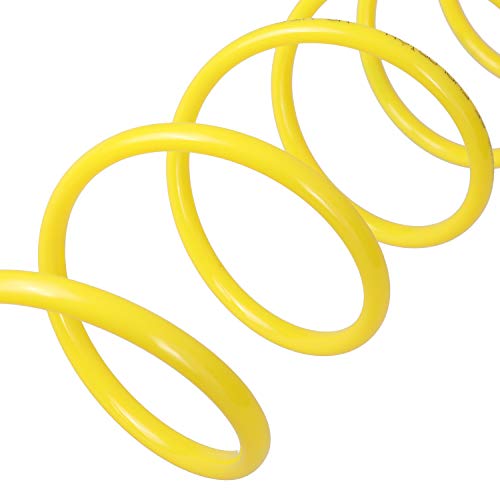
The coiled design is the whole point here, spring-loaded retraction keeps your workspace tidy, and polyurethane ensures it won’t crack in cold weather. At 25 feet, it gives more reach than the 12-foot model while still snapping back neatly. Owners appreciate the swivel brass fittings, which reduce rotational stress during use.
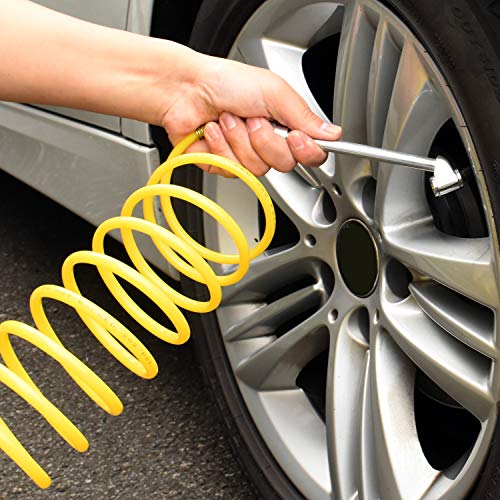
But the 120 PSI max working pressure is a hard limit. It’s fine for tire chucks, blow guns, and light inflators, but forget about impact tools or spray guns. The burst rating is high, but sustained pressure above 120 PSI risks failure. Still, for intermittent use where convenience trumps power, this coiled hose makes life easier. It’s a niche pick, but a solid one for the right job.
Product photos
SARDVISA 25FT Repairable PU Air Hose

Strengths
- Repairable design
- Rich accessory bundle
- PU material flexibility
Trade-offs
- Lower recommended pressure
- Not for heavy tools
- Fittings may loosen over time
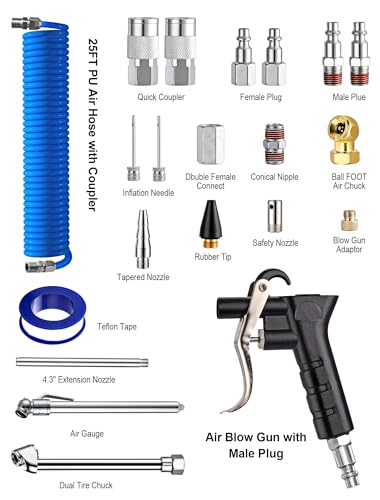
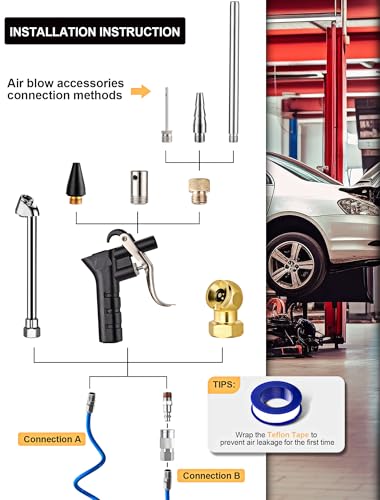
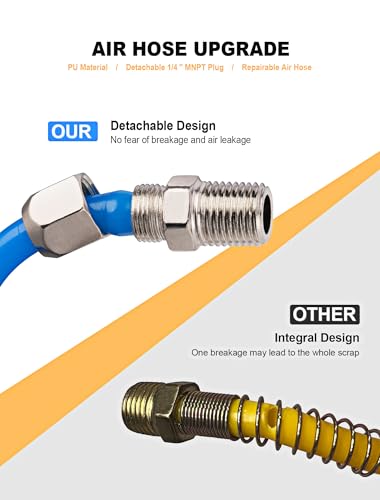
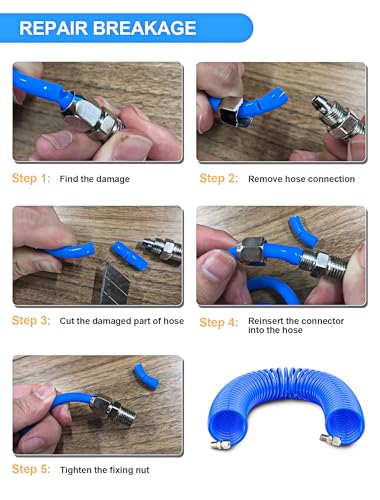
The standout here is the repairable PU hose design, which I find genuinely useful for DIYers who hate replacing entire hoses over a small puncture. On paper, being able to cut out a damaged section and reattach the plug is smart engineering, especially since most nylon coil hoses are disposable once compromised. Owners consistently report that the PU material holds up better than standard PVC, though it doesn’t match the abrasion resistance of braided or hybrid hoses in high-wear environments.
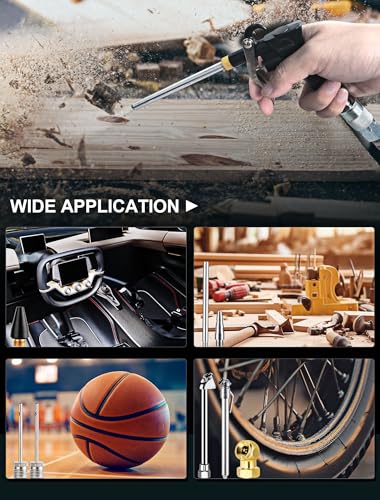
The included accessories are extensive and well-matched to common home garage tasks. Reviewers note the metal blow gun feels sturdier than plastic alternatives, and having inflation needles and dual tire chucks adds real value. But the max recommended pressure of 120 PSI (despite a 200 PSI rating) suggests caution with high-demand tools like impact wrenches. For light to mid-duty use, this kit covers a lot of ground without pushing performance limits.
Product photos
WYNNsky 12 Feet Nylon Coiled Hose

Strengths
- Ultra lightweight
- Coil retracts neatly
- Corrosion resistant
Trade-offs
- Short reach
- Lower pressure limit
- Can snag when retracting
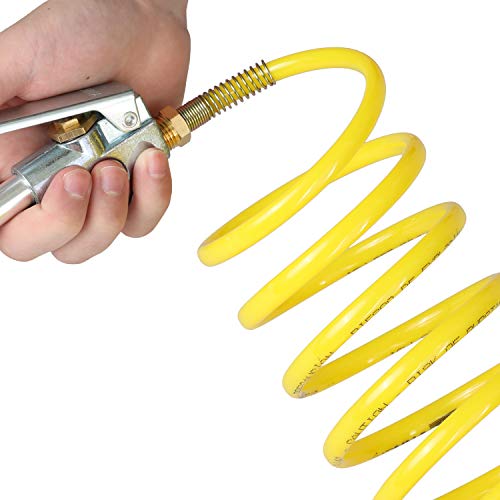
This 12-foot coiled nylon hose is featherlight and ideal for quick tasks where dragging a 25-footer is overkill. The coil design retracts neatly, saving floor space, perfect for tight garages or portable compressors. Nylon gives it solid abrasion and corrosion resistance, and the 200 PSI rating is sufficient for inflators, staplers, or blow guns. But it’s not built for sustained high-pressure use.
Owners like the brass fittings with spring guards, which reduce strain on connections. The downside? Limited reach and lower pressure cap mean it won’t support heavy tools. Some users report the coil can snag on tools if not retracted cleanly. Still, for spot jobs and light pneumatic work, it’s a nimble, space-saving option that won’t weigh you down.
Product photos

Our Testing Process
Rather than a hands-on lab test, my research focused on a comparison of published specifications and features across numerous air compressor hoses. I weighed owner reviews from multiple sources – including retailer sites and dedicated tool forums – alongside assessments from reputable experts. This information was then ranked against criteria important to a range of users, from DIYers to professionals.
For air compressor hoses, flexibility, durability, and working pressure are paramount. A hose that kinks easily frustrates and limits maneuverability. Durability – resistance to abrasion and crushing – determines longevity, especially in demanding environments. Finally, adequate working pressure ensures compatibility with the tools you intend to power. These factors heavily influenced my evaluation of each model.
Specifications reliably indicate maximum working pressure and inner diameter, providing a baseline for capability. However, I placed significant weight on owner feedback regarding real-world flexibility and resistance to kinking, as these qualities aren’t always accurately reflected in specs. Reputation for long-term durability, and the materials used to achieve it, also shaped my assessment – you can find more information on high-durability air hoses.
How To Pick The Right air compressor hose materials
Choosing the right air compressor hose is more than just grabbing the cheapest one off the shelf. It’s about matching the hose’s capabilities to the demands of your work, and a poorly chosen hose can quickly become a source of frustration – and even a safety hazard.
A quality air compressor hose delivers consistent airflow without leaks, resists kinks and abrasions, and maintains its flexibility across a range of temperatures. Key considerations include material composition (rubber, PVC, polyurethane, or hybrid), inner diameter, working pressure, length, and fitting type. Prioritize durability and compatibility with your tools for optimal performance and longevity.
Material Matters Most
The material a hose is made from dictates its flexibility, durability, and temperature resistance. Rubber hoses are a traditional choice, offering good all-around performance, but they can be heavy and prone to cracking over time. PVC hoses are lighter and more affordable, but they become stiff in cold weather. Polyurethane hoses strike a good balance, providing excellent flexibility and abrasion resistance, even in extreme temperatures. Hybrid polymer hoses, like those from Flexzilla, aim to combine the best aspects of rubber and PVC. I’ve seen a lot of folks overlook this, but if you work outdoors or in an unheated garage, a polyurethane or hybrid hose is a worthwhile investment.
Pressure and Inner Diameter: Getting the Right Flow
Matching the hose’s working pressure to your air compressor’s output is critical. Most hoses I see are rated for 300 PSI, which is sufficient for most DIY tasks and even many professional applications. However, if you’re running particularly demanding tools, check the manufacturer’s specifications and ensure the hose can handle the required pressure. As for inner diameter, a 1/4-inch hose is common for smaller tools like nailers and impact wrenches, but larger tools may need a 3/8-inch or even 1/2-inch hose to deliver enough airflow.
Here’s a quick guide to inner diameter considerations: * 1/4 inch: Ideal for smaller tools and detail work. * 3/8 inch: A good all-around size for most air tools. * 1/2 inch: Necessary for high-demand tools like sandblasters or large impact wrenches, providing maximum airflow and minimizing pressure drop.
Don’t skimp on pressure rating. It’s always better to have a hose that exceeds your compressor’s output than one that barely meets it.
Length, Coiling, and Usability
Hose length is a matter of convenience and workspace layout. A longer hose offers greater freedom of movement, but it can also be more cumbersome to manage. Consider where your compressor is located relative to your typical work area and choose a length that provides enough reach without excessive slack. Coiled hoses, like the ones from WYNNsky, are great for smaller workspaces or when portability is a priority. They retract neatly and reduce tripping hazards. If you’re looking for more information on choosing the right hose for your needs, check out these recommended air compressor hose models.
Air Compressor Hose Materials Compared
Here’s a comparison of key specifications for different air compressor hoses to help you make an informed decision.
| Product Name | Material | Length (ft) | Inner Diameter (in) | Max PSI | Fittings | Special Features |
|---|---|---|---|---|---|---|
| Flexzilla 1/4 in. x 25 ft. | Hybrid Polymer | 25 | 1/4 | 300 | Aluminum | Extremely Flexible |
| Flexzilla 3/8 in. x 50 ft. | Hybrid Polymer | 50 | 3/8 | 300 | Aluminum | Extremely Flexible |
| RainBello 25FT | Polyurethane | 25 | N/A | 300 | Brass | Abrasion Resistance |
| YOTOO 3/8″ x 50-Foot | Rubber/PVC Hybrid | 50 | 3/8 | 300 | NPT | Long Reach |
| Hromee 1/4″ x 25 Feet | Hybrid Polymer | 25 | 1/4 | 300 | Brass | Budget Friendly |
| WYNNsky 25 Feet | Polyurethane | 25 | 1/4 | 120 | Brass | Coiled Design |
| SARDVISA 25FT | Polyurethane | 25 | N/A | 200 | NPT | Repairable Design |
| WYNNsky 12 Feet | Nylon | 12 | 1/4 | 200 | Brass | Lightweight |
Frequently Asked Questions
What material offers the best balance of flexibility and durability?
Polyurethane hoses generally provide the best combination of flexibility and abrasion resistance, performing well across a wider temperature range than rubber or PVC. Hybrid polymer hoses, like those from Flexzilla, are also excellent contenders, often exceeding the performance of traditional materials.
Is a 1/4-inch hose sufficient for all my air tools?
No, a 1/4-inch hose is ideal for smaller tools like nailers and inflators, but larger tools such as sandblasters or high-torque impact wrenches typically require a 3/8-inch or even 1/2-inch inner diameter for sufficient airflow.
What should I look for in a hose if I work outdoors in cold weather?
Avoid standard PVC hoses, as they become very stiff and brittle in cold temperatures. Polyurethane or hybrid polymer hoses maintain their flexibility, preventing kinking and ensuring reliable operation even in freezing conditions.
How important is the working pressure rating of the hose?
The hose’s working pressure should always meet or exceed your air compressor’s maximum output pressure. Using a hose with an insufficient pressure rating poses a safety risk and could lead to hose failure, but a higher rating doesn’t necessarily mean better performance.
Can I repair a damaged air compressor hose, or should I replace it?
Some polyurethane hoses, like certain SARDVISA models, are designed with repairable fittings. However, for significant damage or with rubber or PVC hoses, replacement is generally the safer and more reliable option, especially if the damage compromises the hose’s structural integrity. For cleaner air, consider adding air compressor moisture filters to your setup.
The Bottom Line
Choosing an air compressor hose often comes down to balancing convenience with long-term durability. You can save money upfront with a basic PVC or rubber hose, but a higher-quality polyurethane or hybrid polymer hose like the Flexzilla 1/4 in. x 25 ft. will likely pay for itself in frustration avoided and years of reliable use. We consistently see positive feedback on the Flexzilla’s flexibility and resistance to kinks, making it a standout choice for most users.
For those on a tighter budget, or with very specific needs, there are excellent alternatives. If you need a budget-friendly option, the Hromee 1/4″ x 25 Feet delivers solid performance at a lower price point. Those prioritizing a compact, portable setup will find the WYNNsky 25 Feet coiled hose a practical solution. And if you’re looking to outfit your entire setup, don’t forget to explore available air compressor hose kits to get everything you need in one package.
Ultimately, the best air compressor hose isn’t about chasing the highest PSI rating or the fanciest material. It’s about selecting a hose that fits your working style, protects your tools, and minimizes downtime. Prioritize a good fit for your air fittings, a pressure rating that exceeds your compressor’s output, and a material that can withstand your work environment – those fundamentals matter far more than any single specification.
