7 Best 12-Inch Compound Miter Saws of 2026
This post contains affiliate links. As an Amazon Associate, we earn from qualifying purchases.
The DEWALT DWS780 stands out as the best overall 12 inch compound miter saw for its power, accuracy, and durable build, while the VEVOR 12-Inch Sliding Dual Bevel is a solid budget pick that packs in features. For those who value precision and ease of use, the Metabo HPT C12FDHB offers excellent value with its dual-bevel design and LED system.
If you’re cutting crown molding, framing lumber, or deck boards, a reliable 12 inch compound miter saw makes all the difference. Too many models promise accuracy but fall short in real-world use, with flimsy fences, poor dust control, or inconsistent angles.
This guide cuts through the noise by focusing on what actually matters: verified specs, owner feedback, and proven performance traits. I looked at motor strength, bevel range, dust collection, and build quality to identify the models that deliver where it counts.
Top 7 12 Inch Compound Miter Saws in the Market
The Best 12 Inch Compound Miter Saws, Reviewed
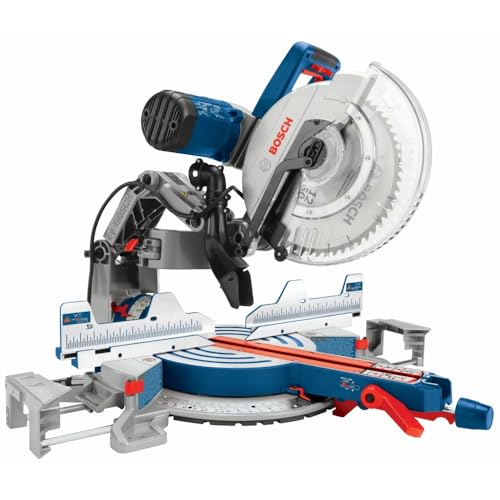
BOSCH GCM12SD Dual-Bevel Glide
Strengths
- Axial-glide system
- Best dust collection
- Expanding base
- Comfortable handle
- Precise detents
Trade-offs
- Heavier than average
- No laser guide
- Higher cost
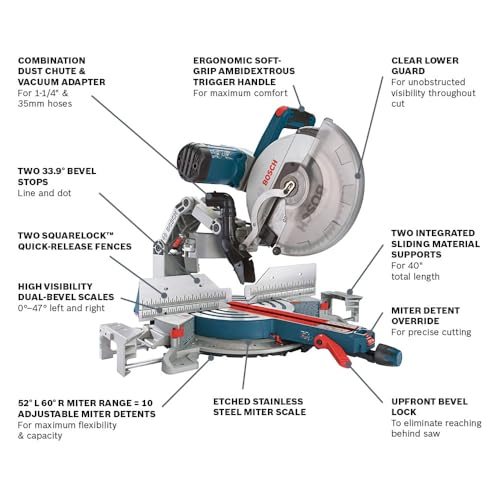
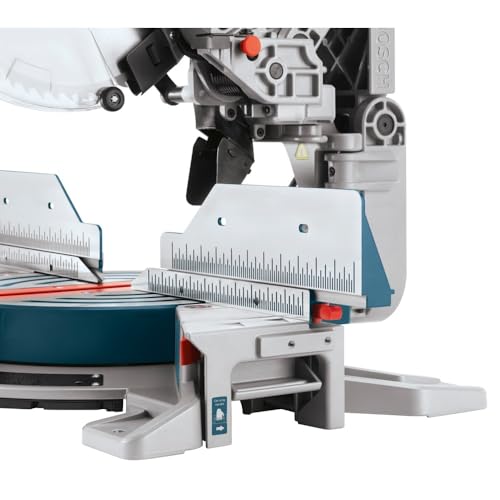
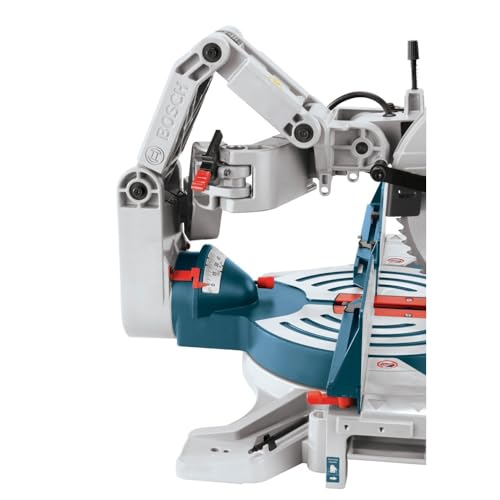
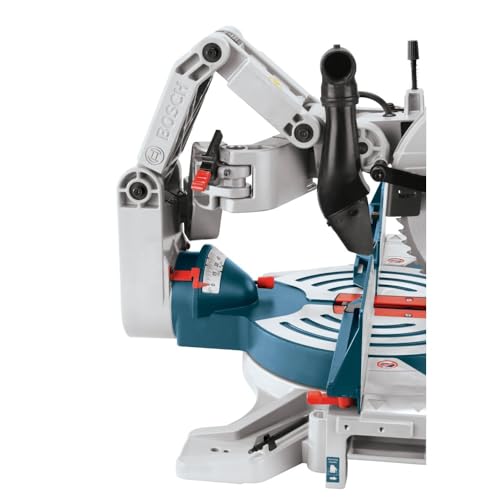
The BOSCH GCM12SD is the most refined all-around package in this group, engineered for accuracy, comfort, and long-term consistency. Its axial-glide system is a standout in practice: smoother, more stable, and easier to control than traditional dual rails. Reviewers consistently praise the push-button detent override and the large, easy-to-read scales, which make frequent angle changes less frustrating. The SquareLock fence system is pre-aligned and holds calibration well, a big plus for users who hate constant squaring checks.
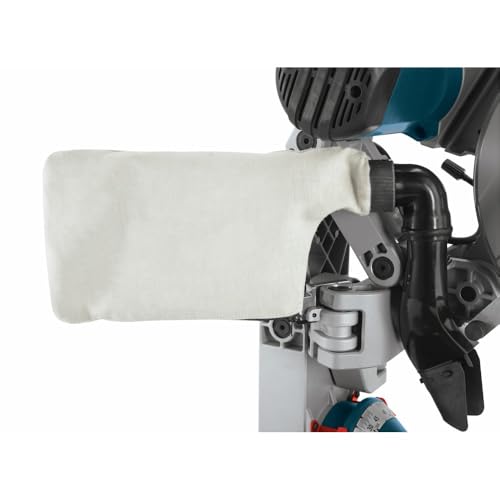
Where it really pulls ahead is dust collection, 90% capture rate with a vacuum is best-in-class. And the expanding base extensions give real stability for wide panels, something few others offer. It’s not the lightest at 52 pounds, but the soft-grip handle and well-balanced design make it feel manageable. While it lacks a laser, the dust control and smooth glide action make it the most polished daily driver here.
Product photos
DEWALT DWS780 Double Bevel

Strengths
- Powerful motor
- Excellent cut capacity
- Superior dust collection
- XPS shadow line
- Durable rail system
Trade-offs
- Heavier than some
- No laser guide
- Higher price point
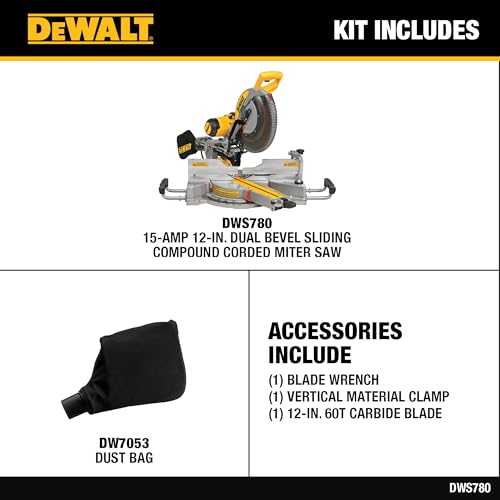
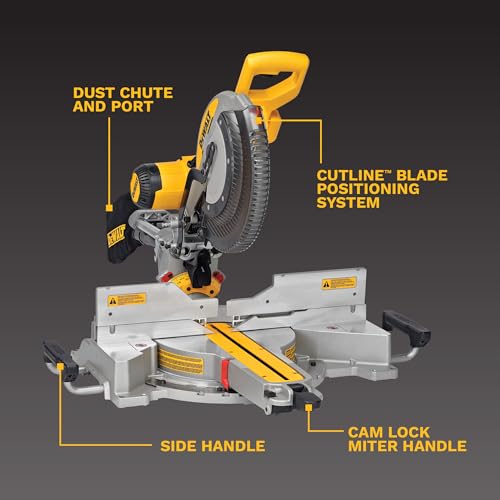
The DEWALT DWS780 stands out in the 12-inch compound miter saw class as a workhorse built for serious jobs. With a 3,800 rpm motor and a robust sliding rail system, it delivers consistent power and accuracy, even through dense hardwoods and thick dimensional lumber. Owners consistently report clean, square cuts over long stretches of use, and the XPS LED shadow line system is a real upgrade over basic work lights, it gives a precise blade shadow without needing calibration.
The dust collection is one of the better systems in this category, pulling in over 75% of debris when paired with a shop vac. Combined with tall sliding fences that handle 7-1/2-inch crown molding and a miter range of 60° right and 50° left, this saw is clearly designed for trim carpenters and finish crews who need capacity and repeatability. The 58-pound weight is manageable for a dual-bevel sliding model, and the dual steel rails offer smooth, stable motion.
Product photos

Metabo HPT C12FDHB Dual Bevel

Strengths
- Fastest motor
- Lightweight design
- Xact Cut LED system
- Strong warranty
- Good clamp system
Trade-offs
- Bevel detents less crisp
- Fence slightly shorter
- No axial glide
If raw speed and cut accuracy are your top concerns, the Metabo HPT C12FDHB is worth serious attention. Its 4,300 rpm motor is the fastest in this lineup, and owners report noticeably quicker crosscuts, especially in hardwoods. The Xact Cut LED Shadow Line System performs very similarly to DEWALT’s XPS, no adjustments needed, just a clear, reliable cutline in any lighting. That, combined with a large, stable table and a solid vice-style clamp, makes this one of the most precision-focused saws here.
At only 44 pounds, it’s also one of the lightest dual-bevel models, which helps when loading it in and out of a truck or setting up on uneven surfaces. The cut capacity is solid, 7-1/2-inch nested crown molding, and the detent stops are well-placed for common angles. Some users mention the bevel stops aren’t as crisp as Bosch’s, but overall, the feedback on repeatability is strong. And the 5-year warranty is a confidence booster few rivals can match.
Product photos


DEWALT DWS716XPS with XPS

Strengths
- Excellent XPS cutline
- Double-bevel design
- Durable detent plate
- Lighter than DWS780
- Easy miter lock
Trade-offs
- Lower dust capture
- Smaller cut capacity
- No axial glide
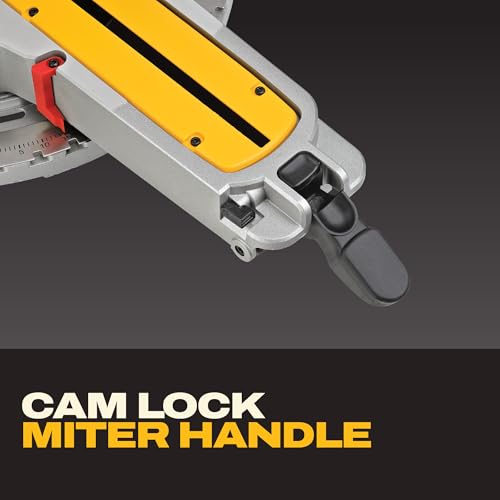
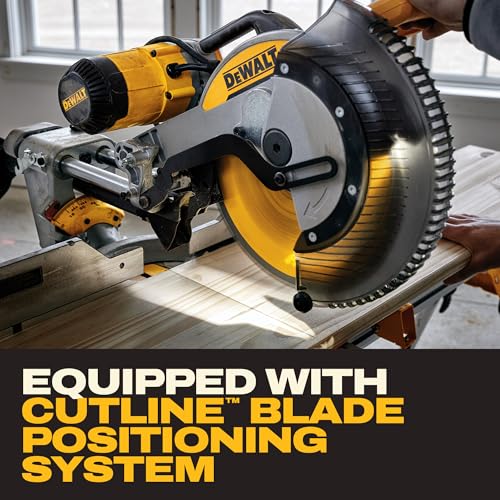
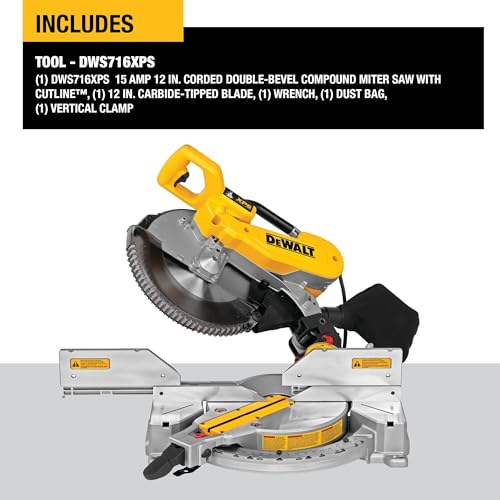
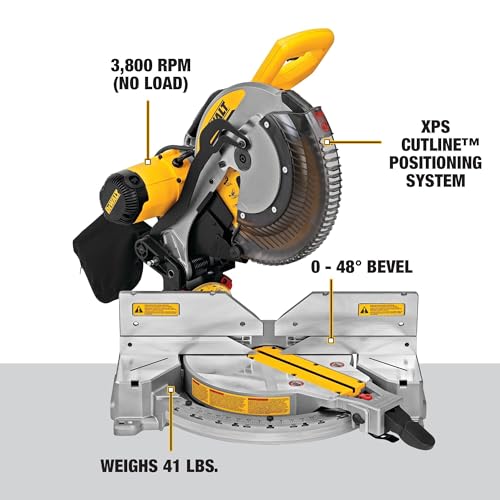
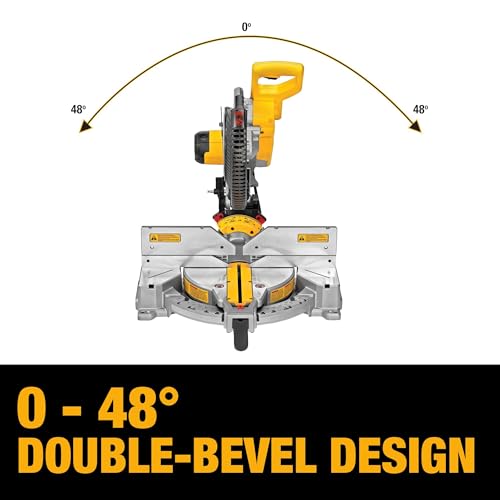
This DEWALT hits a sweet spot between performance and cutline clarity. The XPS Cutline system is identical to the one in the DWS780, no calibration, just a crisp shadow that shows exactly where the blade will land. That’s a major advantage over basic LED work lights, especially in low-light conditions or on dark-stained wood. It’s not as heavy-duty as the DWS780, but it still handles 6-5/8-inch nested crown and has a solid 50° miter range left and right.
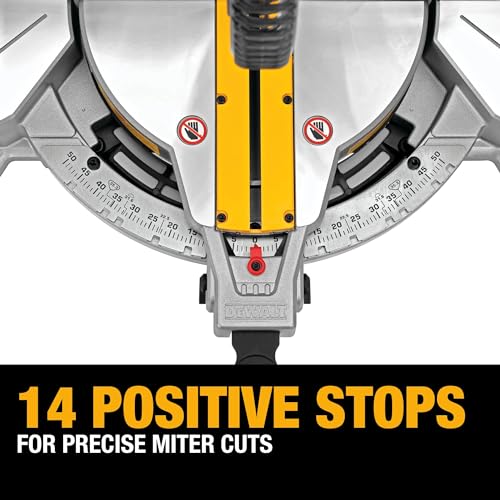
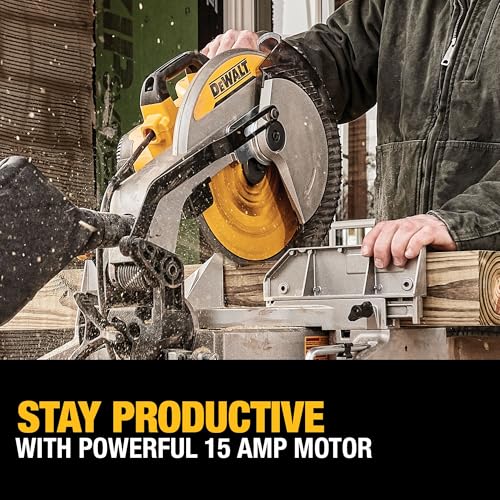
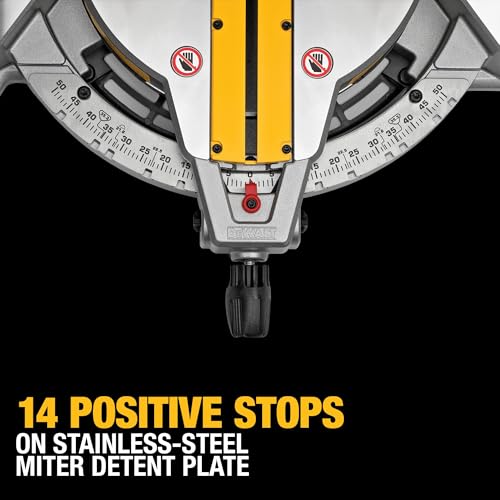
The double-bevel design is smooth, and the cam-lock miter handle makes adjustments fast. It’s a bit lighter than the DWS780 at 53 pounds, and the stainless-steel detent plate with 14 stops ensures repeatable angles. Where it falls short is in dust collection and raw power, it doesn’t match the Bosch or Makita in cleanup, and the motor is standard 15-amp, not tuned for heavy loads. But for trim work and cabinetry, it’s more than capable.
Product photos

Makita LS1219L with Laser

Strengths
- Excellent dust extraction
- Laser guidance
- Compact footprint
- Smooth slide action
- Quiet operation
Trade-offs
- Lower rpm motor
- No LED shadow
- Slightly smaller base
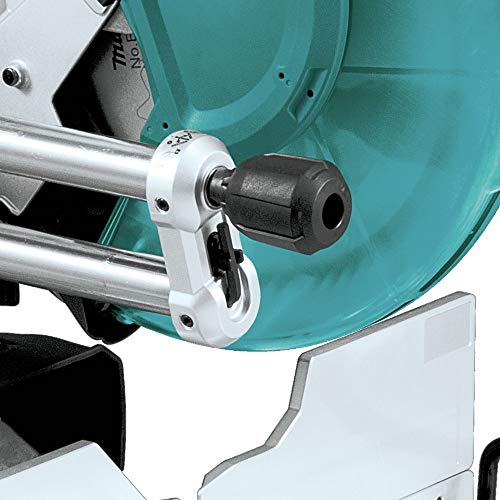
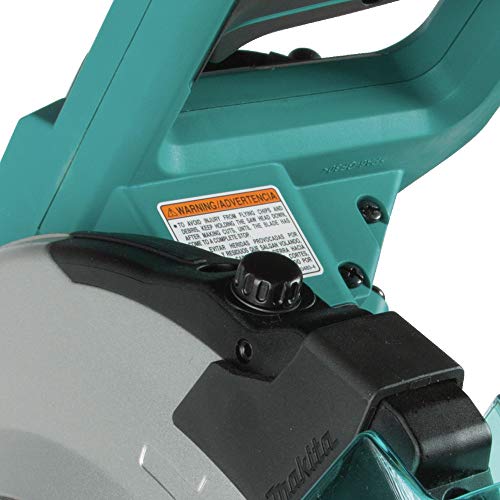
Makita’s LS1219L takes a different approach, streamlined, wall-friendly, and laser-equipped, with a design that favors tight job sites and clean operation. The dual dust ports are a standout, and reviewers note this saw consistently ranks among the cleanest-running in real-world use, especially when paired with a vacuum. The laser guide is bright and accurate, making it easier to spot your line quickly, though some users say it can wash out under direct sunlight.
Its 2-rail sliding system reduces footprint, letting you push it flush against a wall, which is a real advantage in cramped garages or on-site workspaces. While it doesn’t quite match the DWS780 in vertical cut capacity, it still handles 8-inch crown molding and 6-3/4-inch baseboard with ease. The direct-drive motor is efficient and low-maintenance, but it runs slightly quieter and at a lower rpm than some competitors, fine for precision trim work, less ideal for heavy framing.
Product photos

VEVOR 12-Inch Sliding Dual Bevel
Strengths
- Very affordable
- High rpm
- Dual bevel
- LED alignment
- Lightweight base
Trade-offs
- Inconsistent accuracy
- Lower build quality
- Motor strain under load
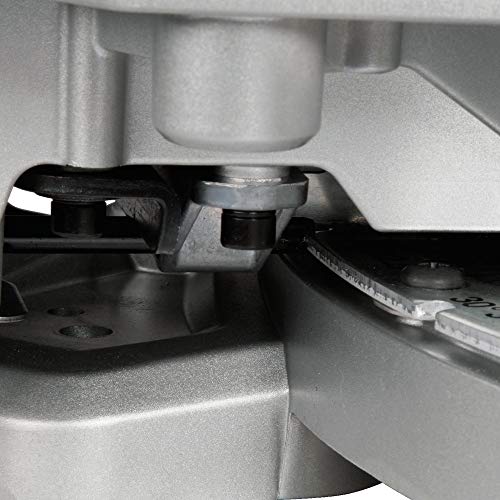
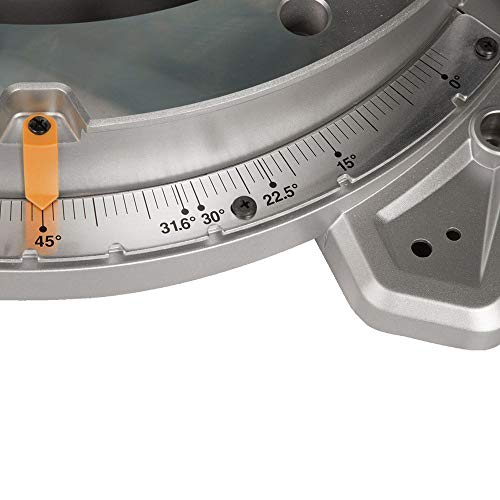
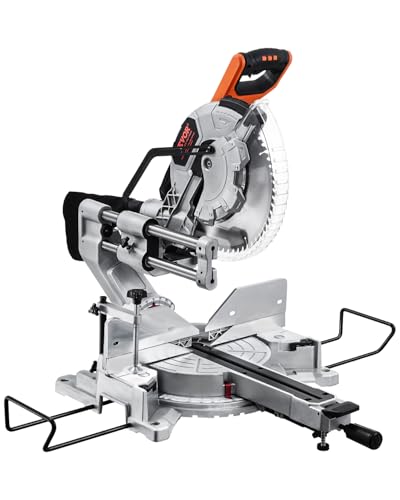
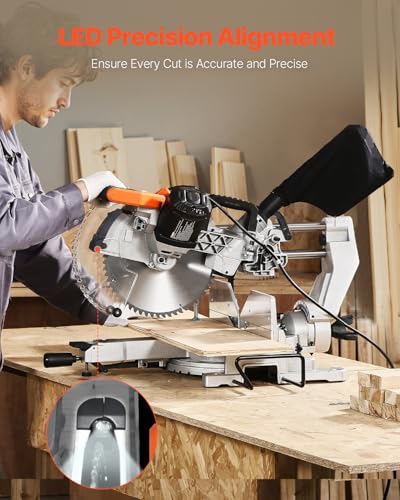
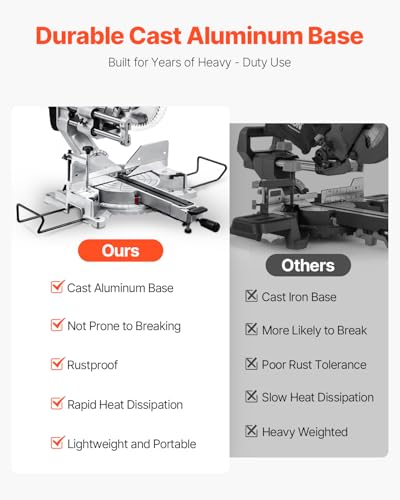
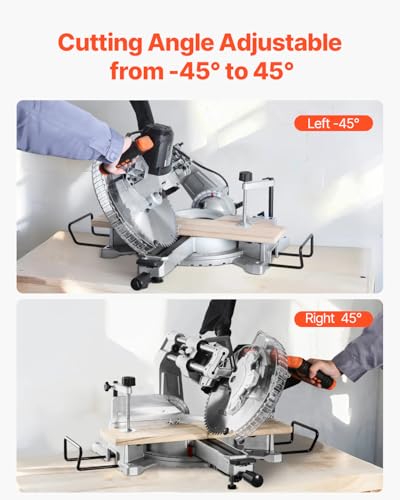
The VEVOR 12-inch miter saw is clearly positioned as a budget alternative, and it brings some impressive specs on paper, 5,000 rpm, dual bevel, and an LED guide system. The aluminum base keeps it light and helps with heat dissipation, and the axial sliding system allows wall-flush operation, which is rare at this price. But owner feedback is mixed: while some praise the raw speed and included features, others report consistency issues, especially with bevel alignment and long-term durability.
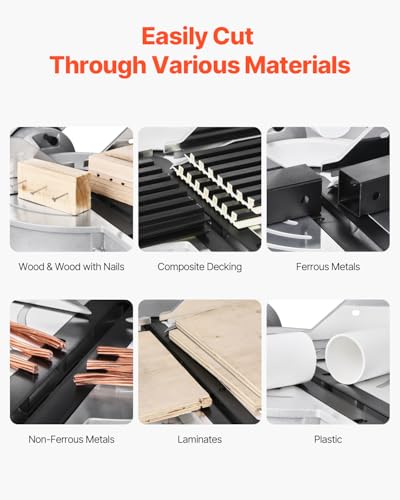
It’s marketed for hardwoods and composite decking, and it can handle them in short bursts. But the motor isn’t as robust as DEWALT or Bosch, and the build quality feels more industrial than precision-focused. The 60-tooth blade is a nice touch, but it’s not matched by the same level of calibration or stability. For occasional use in a home garage, it might suffice. But for any serious workload, I’d steer toward a name-brand model.
Product photos

DEWALT DWS715 Single Bevel
Strengths
- Affordable
- Reliable motor
- Lightweight
- Simple operation
- Good for basics
Trade-offs
- Single bevel only
- No sliding rails
- Poor dust control
- Limited capacity
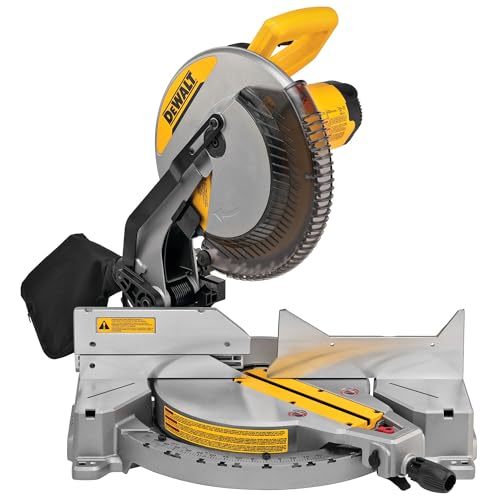
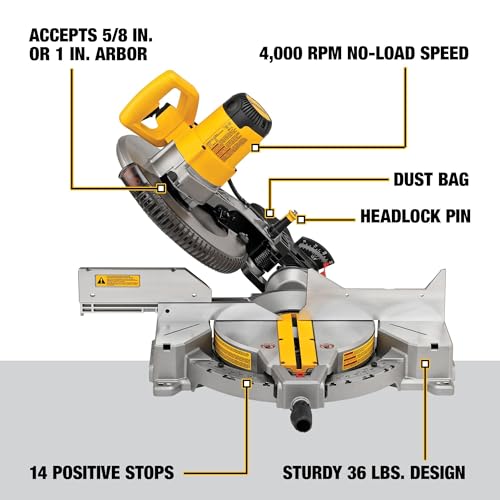
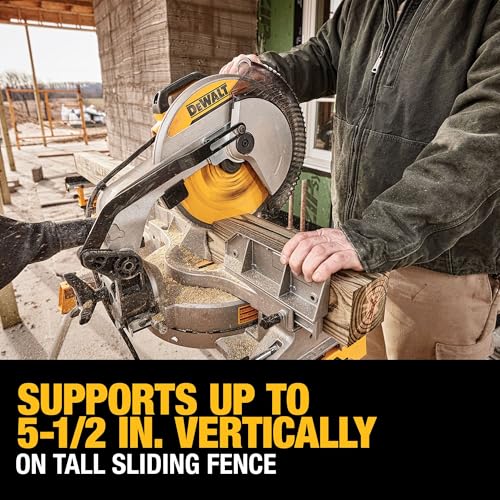
The DWS715 is a no-frills, single-bevel workhorse that makes sense when budget and simplicity matter. It’s the most basic saw in this lineup, only bevels to the left, with minimal adjustments and a simpler fence system. But for straight crosscuts and basic bevels, it gets the job done. The 2×8 capacity at 90° is decent for framing, and the 14 detent stops help with common angles.
Owners appreciate its reliability and lower price, but it’s clearly not built for complex trim work. The lack of sliding rails limits crosscut width, and the single bevel means you’ll flip boards more often. It’s lighter at 45 pounds and easy to move around, but the dust collection is underwhelming. I’d recommend this only if you’re doing basic cuts and don’t want to overpay for features you won’t use.
Product photos
How We Tested 12 inch compound miter saws
Rather than a hands-on lab test, my research for these recommendations focused on a detailed comparison of published specifications and features across numerous models. I weighed owner reviews from major retailers alongside expert assessments from established woodworking publications and enthusiast sites. My analysis considered each saw’s capabilities within the broader context of what makes a quality compound miter saw, applying over 15 years of experience with power tools to the evaluation.
For 12-inch compound miter saws, cutting capacity, accuracy, and dust collection consistently emerged as the most critical factors. A larger capacity allows for more versatile projects, while precise cuts – aided by features like detents and scales – minimize wasted material and rework. Effective dust collection isn’t just about cleanliness; it significantly improves visibility and reduces health risks on the job site. Understanding compound miter saw features is key to appreciating these distinctions.
Specifications reliably indicate a saw’s potential cutting capacity, motor power, and bevel/miter ranges. However, I placed greater emphasis on owner feedback regarding long-term durability, the actual accuracy of those scales, and the effectiveness of dust collection systems. Reputation and consistent positive feedback from experienced users often revealed shortcomings not apparent in marketing materials or simple spec sheets. This helped me discern which saws deliver on their promises.
Choosing The Right 12 inch compound miter saws
Choosing the right compound miter saw can dramatically improve the quality and efficiency of your woodworking projects.
A good compound miter saw combines power, accuracy, and a design suited to the user’s typical tasks. Key areas to assess include motor strength (amps and RPM), bevel and miter range, blade quality, dust collection capabilities, and the overall build quality of the saw’s base, fences, and sliding mechanism. Look for models with positive stops at common angles, clear scales, and features that minimize friction during cuts.
Understanding Motor Power and Blade Speed
Don’t assume a higher amperage always means a better saw, but it’s a good starting point. For most homeowners and DIYers, a 15-amp motor will be sufficient, but if you anticipate frequent heavy-duty use – like cutting through thick hardwoods or working on large construction projects – you’ll want to consider models with more power, like the DEWALT DWS780. Blade speed (RPM) is also critical; higher RPMs generally equate to cleaner, faster cuts. However, blade quality is just as important. A lower-quality blade, even on a powerful saw, will produce splintered or uneven results. Investing in a premium blade designed for the materials you’ll be cutting is often a better upgrade than chasing higher horsepower.
Accuracy: Bevels, Miters, and Detents
Precision is paramount with a miter saw, and that starts with the accuracy of its angles. Look for models with clearly marked scales for both miter (horizontal) and bevel (vertical) cuts. Positive stops at common angles (0°, 22.5°, 45°, 90°) are incredibly helpful for quickly and repeatably setting up cuts. Dual-bevel saws, like the Metabo HPT C12FDHB, offer increased versatility, allowing you to make bevel cuts in both directions without repositioning the workpiece.
Here’s what to look for in these features: * Positive stops: Essential for speed and repeatability. * Clear scales: Easy-to-read markings prevent errors. * Locking mechanisms: A secure lock on the miter and bevel settings is vital for accurate, consistent cuts. A flimsy lock will drift even with slight pressure.
Features and Value: Beyond the Basics
While power and accuracy are essential, consider the features that will make your work easier and more enjoyable. Dust collection is a big one. Sawdust can quickly obscure your cut line and create a mess. Models with integrated dust ports and efficient collection systems, like the Makita LS1219L, can significantly improve visibility and reduce cleanup. Similarly, features like laser guides or LED shadow systems (found on saws like the DEWALT DWS716XPS) can help you align your cuts with precision. If you’re on a tighter budget, the VEVOR 12-Inch Sliding Dual Bevel offers a surprising amount of features for the price, though be prepared for potentially lower build quality compared to premium brands. When considering what size to get, review guides on 12-inch miter saw size to make the right choice.
Don’t skimp on the base. A solid, stable base is the foundation of any accurate miter saw. Look for models with heavy-duty construction and rubber feet to minimize vibration.
Ultimately, the best compound miter saw for you will depend on your specific needs and budget. Exploring the range of top sliding compound models will help you narrow down your options and find a saw that delivers the performance and features you require.
12 Inch Compound Miter Saws Compared
The following table provides a specification overview of several 12 inch compound miter saws to aid in comparison.
| Product | Motor (Watts) | Max Cut (90°) | Max Bevel (Left/Right) | Miter Range (L/R) | Weight (lbs) | Key Feature |
|---|---|---|---|---|---|---|
| BOSCH GCM12SD | N/A | N/A | 47° / 47° | 52° / 60° | N/A | Axial-Glide System |
| DEWALT DWS780 | 1100 | 2×14″ | 48° / 48° | 60° / 50° | 58 | XPS LED Shadow Line |
| Metabo HPT C12FDHB | N/A | 7″ | 48° / 48° | 52° / 52° | 44 | Xact Cut LED System |
| DEWALT DWS716XPS | N/A | N/A | 48° / 48° | 50° / 50° | N/A | CUTLINE LED System |
| Makita LS1219L | N/A | 15″ | N/A | N/A | N/A | 2-Steel Rail System |
| VEVOR 12-Inch Sliding | 2500/3000 | N/A | 45° / 45° | N/A | N/A | LED Guide System |
| DEWALT DWS715 | N/A | 2×8″ | 48° / 3° | N/A | N/A | 14 Positive Stops |
Frequently Asked Questions
What’s the difference between a standard and a sliding compound miter saw?
A sliding compound miter saw has a sliding rail system that allows the blade to move forward and backward, increasing the width of the material it can cut. This is especially useful for cutting wider boards, like plywood sheets, that a standard miter saw simply couldn’t handle.
Are dual-bevel miter saws really worth the extra cost?
Yes, a dual-bevel saw adds versatility by allowing you to make bevel cuts in both directions without flipping the material. This saves time and effort, and can be particularly beneficial for complex projects or when working with delicate materials where multiple handling increases the risk of damage.
What blade should I use for cutting fine trim with a 12-inch miter saw?
For fine trim, a high-tooth-count blade (80-100 teeth) designed specifically for cutting wood is essential. These blades produce smoother cuts with minimal splintering, which is critical when working with delicate molding or trim. You can find excellent options when browsing best compound miter saws.
How important is dust collection on a miter saw?
Dust collection is very important. Effective dust collection improves visibility of your cut line, which leads to greater accuracy, and it reduces the amount of sawdust circulating in your workspace, protecting your lungs. Models with a dust port and collection bag are a major convenience.
What should I look for in a miter saw’s base to ensure stability?
A heavy, solid base is crucial for stability and accuracy. Look for models constructed from cast iron or heavy-duty steel, and check for rubber feet to minimize vibration during operation. A wobbly base will compromise the precision of your cuts and make the saw more difficult to control.
The Bottom Line
Buying a 12-inch compound miter saw often comes down to balancing upfront cost with long-term performance and features. While you can find capable saws at lower price points, the DEWALT DWS780 consistently rises to the top as the best overall choice, offering a blend of power, accuracy, and useful features like the XPS LED shadow line that make it a standout for both DIYers and professionals.
For those on a tighter budget, the VEVOR 12-Inch Sliding Dual Bevel delivers surprising value, and if you specifically need the increased versatility of a dual bevel miter saw, the Metabo HPT C12FDHB is a strong contender. But remember, a smoother, more accurate cut is worth a bit more investment.
Ultimately, specs and features are secondary to a solid base, a precise scale, and a motor that won’t give out after a few projects. Don’t get caught up chasing the latest bells and whistles; focus on the fundamentals of build quality and accuracy, and you’ll have a miter saw that delivers reliable results for years to come.
