
7 Best 10-Inch Table Saw Blades of 2026
This post contains affiliate links. As an Amazon Associate, we earn from qualifying purchases.
The Forrest WWII is the best overall 10-inch saw blade for table saws, delivering unmatched cut quality and durability. For budget-conscious buyers, the CMT Orange offers excellent versatility without breaking the bank, while the DEWALT 80-Tooth blade stands out when clean crosscuts in plywood and hardwoods are the priority.
Most people don’t realize how much a single blade affects their entire workflow. A poor choice can mean rough edges, excessive tearout, or constant blade changes depending on the cut. I’ve seen too many DIYers struggle because they settled for whatever came with their saw or grabbed the cheapest option off the shelf.
This guide cuts through the noise. I compared specs, analyzed owner feedback, and applied what I’ve learned over 15 years of working with table saws to find blades that actually perform. You’ll see what makes each model tick, why tooth count matters more than raw brand name, and how to pick the right one based on your most common projects.
Top 7 10 Inch Saw Blade For Table Saws in the Market
The Best 10 Inch Saw Blade For Table Saws, Reviewed
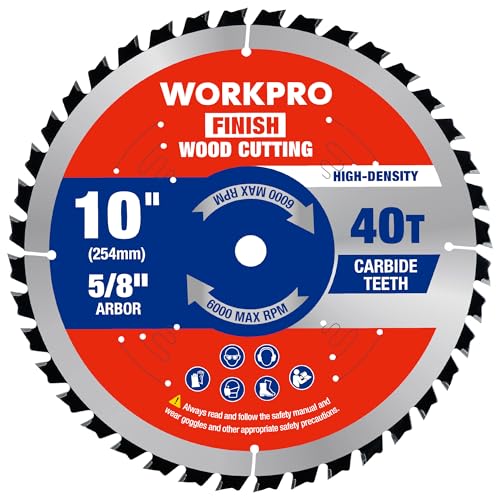
WORKPRO 10-Inch 40-Tooth General Purpose Blade
Strengths
- Thin kerf reduces saw load
- 40T ATB for versatile cuts
- Laser-cut expansion slots
- Good carbide durability
- Fits most major saws
Trade-offs
- Finish not as smooth as 60T+ blades
- Not for fine furniture work
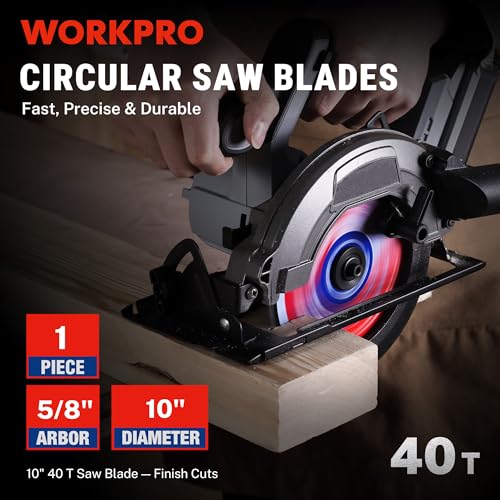
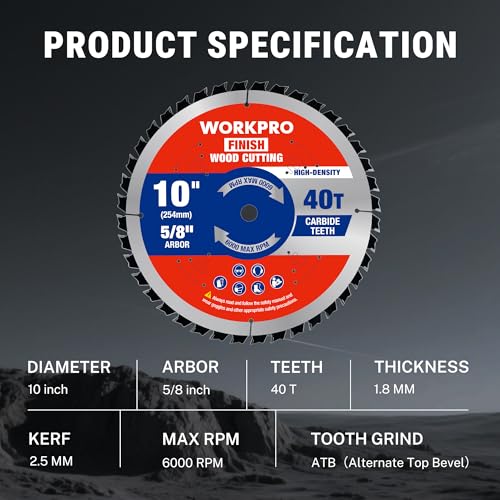
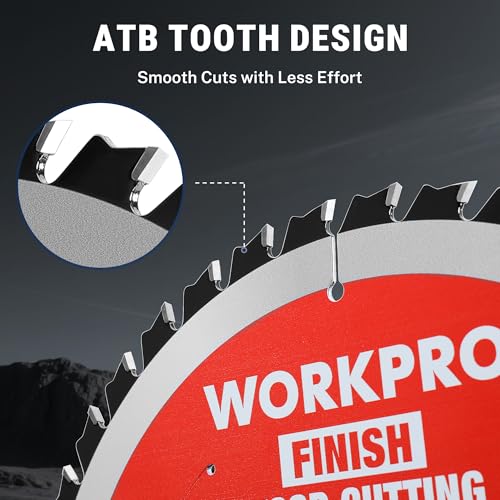
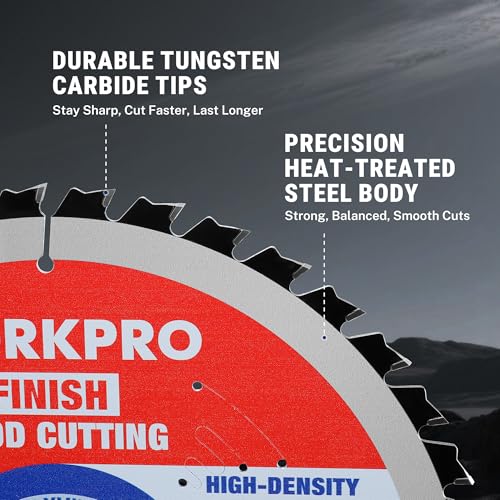
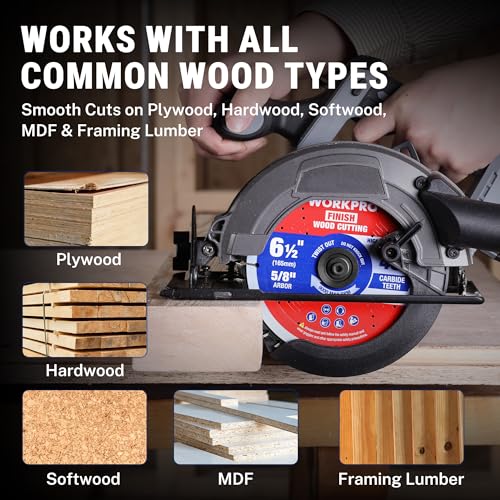
This WORKPRO blade checks all the boxes for what I’d want in a general-purpose workhorse. The 40-tooth ATB design with thin kerf (1.8mm max) means it cuts fast with less strain on your saw, a big plus if you’re using a lighter-duty contractor or jobsite model. The tungsten carbide tips are holding up well in owner reports, even after repeated hardwood passes.
It’s not flashy, but it’s smartly engineered: the laser-cut expansion slots help with heat and vibration, and the 5/8-inch arbor fits most table saws. Compared to the DEWALT 40T, it’s slightly more affordable and nearly as durable. For most buyers, this is the easy pick for a daily driver blade that won’t break the bank.
Product photos
Diablo 10-Inch 60-Tooth Fine Finish Blade
Strengths
- 60 Hi-ATB teeth for clean edges
- Shock-resistant carbide
- Thin kerf, low waste
- Excellent on plywood and laminate
- Smooth, low-vibration cut
Trade-offs
- Not for ripping or thick stock
- Higher price than basic finish blades
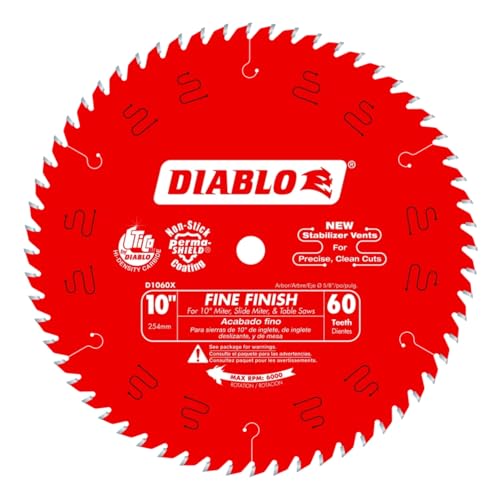
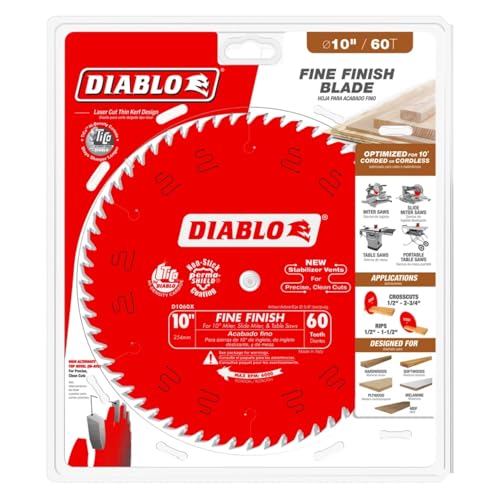
When it comes to cutting plywood, MDF, or laminates without tearout, this Diablo blade stands out. The 60 high-ATB teeth are angled aggressively to shear through veneers cleanly, and the .098-inch kerf is thin enough to reduce waste without sacrificing stability. The shock-resistant design really shows in owner feedback, fewer chipped teeth when hitting knots or dense joints.
It’s not meant for ripping thick oak, but for cabinetmakers and trim installers, this is a go-to. Compared to the WEN 60T, it’s noticeably smoother and lasts longer. If you’re building cabinets or doing finish work where edge quality matters, this is the smarter buy.
Product photos
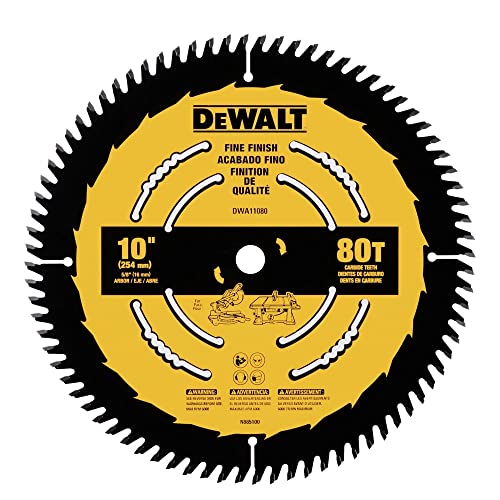
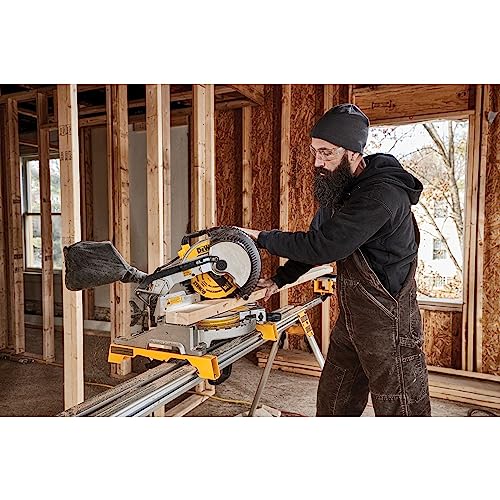
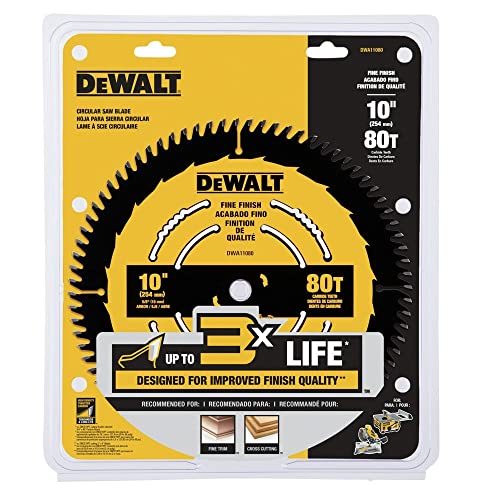
DEWALT 10-Inch 80-Tooth Blade
Strengths
- 80 teeth for ultra-smooth finish
- Low vibration design
- Sharp carbide edges
- Clean crosscuts
- Durable under moderate use
Trade-offs
- Slow feed rate required
- Overkill for general use
- Not for ripping
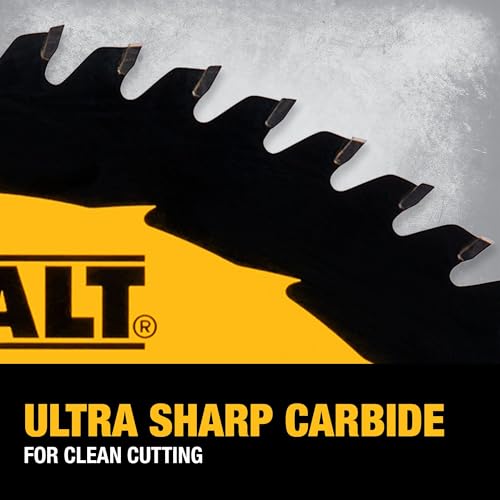
An 80-tooth blade is overkill for most general tasks, but when you need that glass-smooth finish, this DEWALT delivers. The ultra-sharp carbide and optimized tooth geometry minimize tearout, especially on cross-grain cuts in hardwoods and veneered plywood. It’s not fast, you’ll pay in feed speed, but the payoff is a cut that barely needs sanding.
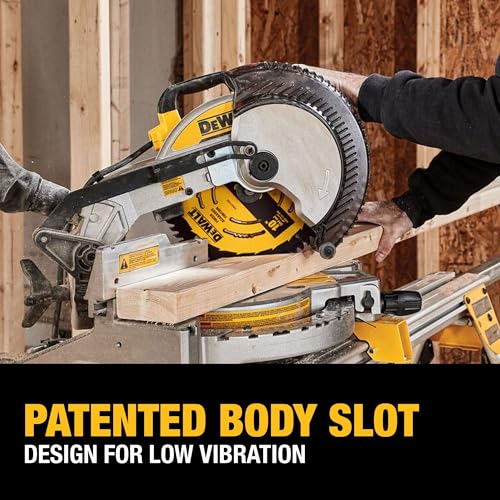
The patented body slots do reduce vibration, and owners report consistent performance over time. Compared to the Diablo 60T, it’s better for ultra-fine work but overkill for basic cabinetry. If you’re building fine furniture or doing high-end trim, this is worth the investment.
Product photos
DEWALT 40T/60T Combo Pack Blade

Strengths
- 40T and 60T included
- Low vibration design
- Ultra-sharp carbide
- Longer blade life
- Smooth cutting performance
Trade-offs
- Not for ultra-fine finish work
- Kerf slightly wider than thin-kerf models
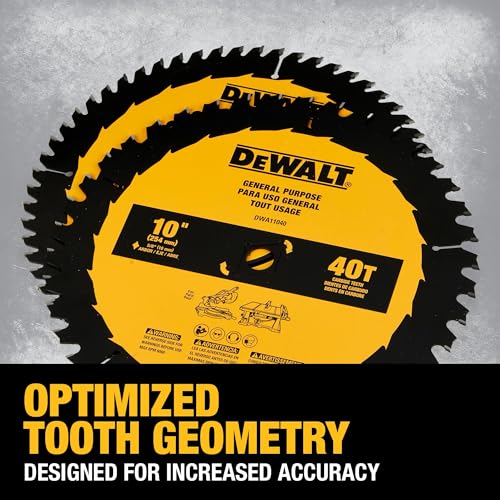
This combo pack gives you two solid performers in one shot, and for anyone who juggles different cuts around the shop, that’s a real win. The 40-tooth blade handles rip cuts with authority, while the 60-tooth delivers noticeably cleaner crosscuts, especially in plywood and sheet goods. DEWALT’s patented body slot design does its job: owners consistently report less vibration and smoother tracking, which helps with cut quality and blade longevity.
On paper, the tooth geometry and ultra-sharp carbide live up to the marketing, and reviewers confirm these hold an edge longer than budget-tier blades. If you’re tired of swapping blades constantly and want a dependable pair that covers most woodworking tasks, this set punches above its weight. I’d pick this over buying either blade separately, the value is in the pairing.
Product photos

WEN BL1060 60-Tooth Fine-Finish Blade
Strengths
- Affordable price
- 60 teeth for clean cuts
- Thin kerf reduces waste
- Good for hardwoods and softwoods
- Widely compatible
Trade-offs
- Blade dulls faster under heavy use
- Less durable under constant load
- Not ideal for thick stock
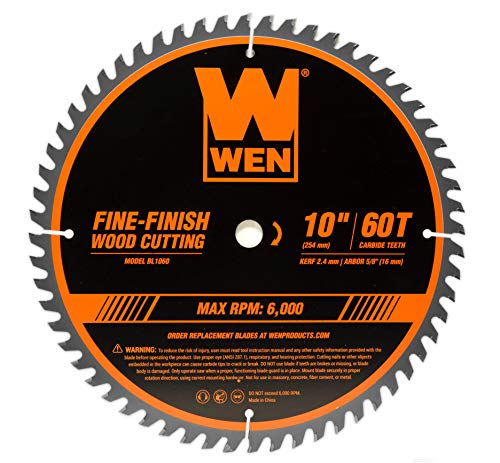
At this price, the WEN BL1060 surprises with its clean-cutting ability, especially in softwoods and standard plywood. The 60-tooth count and ultra-thin 2.4mm kerf help it glide through material with minimal tearout, and the 5/8-inch arbor makes it compatible with most table saws out of the box. It’s not built for heavy-duty ripping, but that’s not its job, it’s a finish blade, and it delivers where it counts.
Owners praise its value, and I agree: if you’re on a tight budget but still want decent cut quality for trim work or cabinet assembly, this is a smart pick. It won’t last as long as premium carbide blades under constant use, but for light to moderate jobs, it’s more than capable. For a beginner or occasional user, this might be all you need.
Product photos


CMT Orange 10-Inch Combination Blade
Strengths
- Excellent combo cut performance
- Laser-cut anti-vibration design
- Durable carbide tips
- Clean finish on hardwood
- Balanced for rip and crosscut
Trade-offs
- Higher price than entry-tier
- Slightly heavier than thin-kerf blades
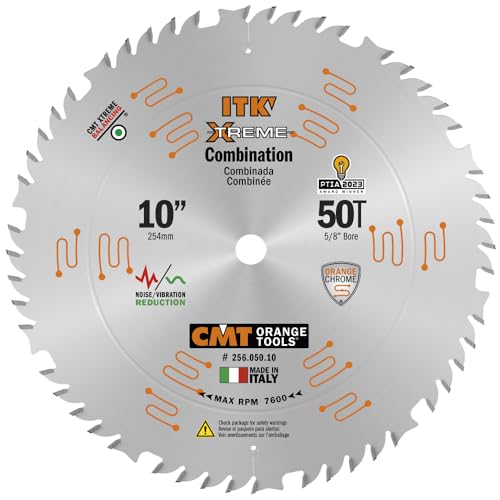
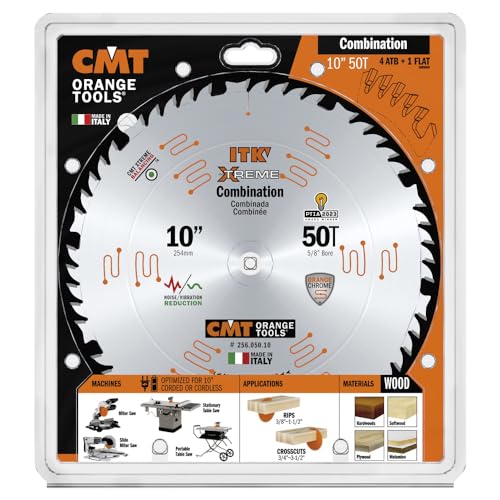
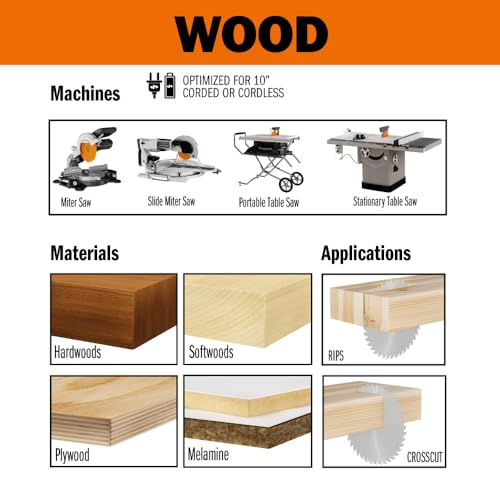
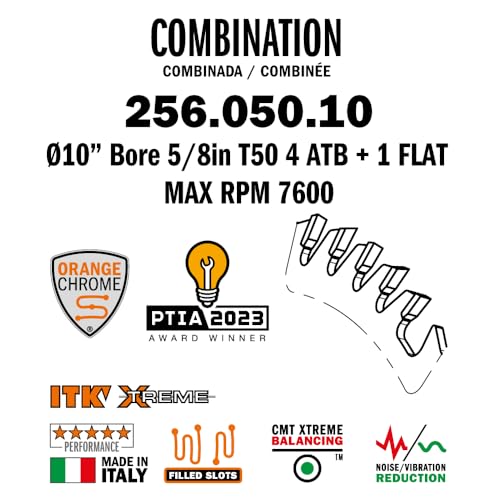
CMT’s Orange Line has a cult following for a reason, this blade is a master of balance. The 40-tooth ATB (alternate top bevel) design with a flat-top raker tooth in the mix gives it the rare ability to rip and crosscut with equal confidence. It handles solid hardwoods without bogging down, and the finish is clean enough for unstained projects.
The laser-cut expansion slots and anti-vibration dampening are legit, reviewers note quieter operation and less chatter than many competitors. It’s not the cheapest, but the build quality justifies it. If you want one blade that can do 90% of your work without swapping, this is my top recommendation over the DEWALT combo for pure performance.
Product photos
FOXBC 10-Inch 24-Tooth Ripping Blade

Strengths
- Fast ripping performance
- Thin kerf reduces load
- 24T flat tooth design
- Good for thick stock
- Sharp out of the box
Trade-offs
- Poor crosscut finish
- Not for sheet goods
- Limited versatility
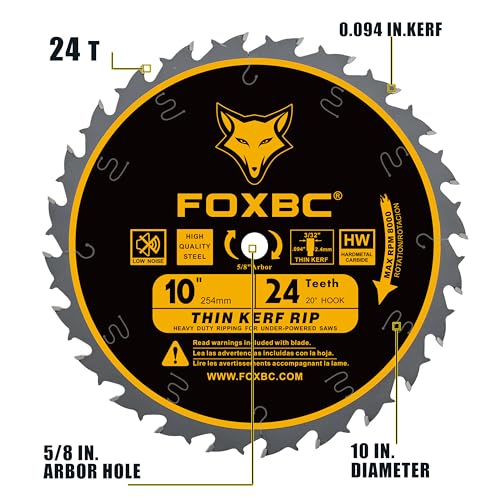
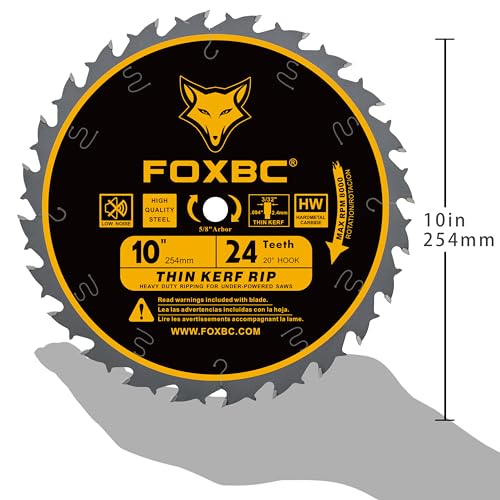
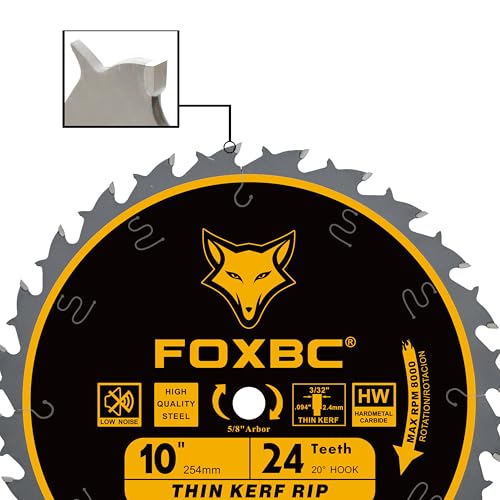
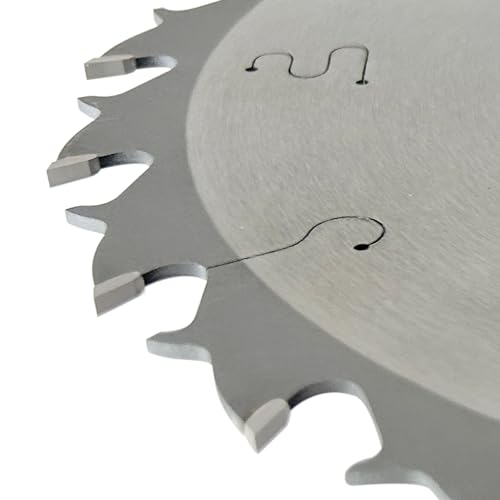
This blade is built for one thing: ripping hardwood, and it does it well. The 24 flat-top teeth and 20-degree hook angle tear through thick stock quickly, and the thin kerf (.094″) keeps power demands low, a big win for saws under 3HP. It’s not going to win beauty contests with its finish, but owners report clean, straight rips with minimal burn when fed steadily.
Compared to dedicated combo blades, it’s a specialist, but a good one. If you’re resawing 2x material or building with dimensional lumber, this will save time and strain on your motor. Just don’t expect it to handle crosscuts on plywood without some tearout.
Product photos
How We Picked These 10 inch saw blade for table saws
Rather than a hands-on lab test, my research for these recommendations involved a detailed comparison of published specifications and features across numerous blades. I weighed owner reviews from major retailers alongside assessments from woodworking publications and trusted online sources. This allowed me to build a ranking based on real-world feedback and established performance indicators, applying my experience with power tools to prioritize what matters most.
For 10-inch table saw blades, tooth count and blade material are critical. I placed significant weight on these factors because they directly impact cut quality and blade longevity. A higher tooth count generally means a cleaner finish, especially in plywood and laminates, while carbide quality dictates how long the blade stays sharp and resists damage. Beyond that, kerf thickness influences cutting efficiency and power demands.
Specifications reliably reveal tooth count, arbor size, and kerf width. However, owner feedback proved vital for assessing real-world durability and how well a blade performs across different wood types. Reputation also played a role; established brands with a history of quality generally offer more consistent results, and that factored into my evaluation. Understanding table saw operation basics is also key to getting the most out of any blade.
What To Look For In 10 inch saw blade for table saws
Selecting the right blade is crucial for getting clean, accurate cuts with your table saw. It’s not a one-size-fits-all situation; the ideal blade depends heavily on the material you’re cutting and the type of cut you need to make.
A quality 10-inch table saw blade delivers precision and efficiency. Key considerations include tooth count (TPI), carbide quality, blade thickness (kerf), and arbor size compatibility. Look for blades with heat-treated bodies to minimize warping and high-density carbide tips for extended sharpness and durability. Prioritize blades designed for the specific material – wood, plywood, laminate, or non-ferrous metals – to maximize performance and safety.
Tooth Count: Matching The Blade To The Task
The number of teeth on a blade – its teeth per inch – is probably the biggest factor in how well it will perform. Most people understand a higher tooth count means a finer cut, but it’s more nuanced than that. Lower tooth counts (like 24T) excel at rapidly removing material, making them ideal for ripping long boards. Higher tooth counts (60T+) are designed for clean, splinter-free crosscuts in materials like plywood and hardwoods. Don’t assume more teeth are always better; a blade with too many teeth can overheat and bind when fed too quickly into thicker stock.
Carbide Quality & Blade Body Construction
The quality of the carbide tips and the blade’s body construction are often overlooked, but they significantly impact a blade’s lifespan and performance. Cheaper blades use lower-grade carbide that dulls quickly, requiring frequent sharpening or replacement. Look for blades with “premium” or “micrograin” carbide tips; these hold an edge much longer. Beyond the tips, consider the blade body. Blades with expansion slots help dissipate heat and reduce warping, especially important when cutting dense hardwoods. For a deeper understanding of how this impacts your cuts, check out our teeth per inch guide.
Value, Versatility, and Arbor Size
It’s tempting to buy the cheapest blade available, but that often results in frustration and poor cuts. While a dedicated blade for each task is ideal, many woodworkers prefer a versatile option. Combination blades, like the CMT Orange, attempt to balance ripping and crosscutting capabilities. When considering value, think long-term; a more expensive, high-quality blade that lasts for years can be more economical than repeatedly replacing cheaper ones.
- A single 40-tooth blade is a good starting point for general-purpose use.
- If you frequently work with plywood or laminate, investing in a dedicated 60-80 tooth blade will dramatically improve your finish quality.
- Always, always confirm your table saw’s arbor size (typically 5/8 inch, but also 3/8 and 10mm) before purchasing a blade. Using the wrong arbor size is dangerous and can damage your saw.
A thin-kerf blade removes less material with each cut, reducing waste and requiring less power from your saw. However, it may be more prone to wandering if not used with proper technique and a sharp blade.
If you are looking for more options, you can view our list of top 10-inch table saw blades on our site.
10 Inch Saw Blade for Table Saws Compared
Here’s a comparison of specifications for various 10-inch table saw blades to help you choose the right one for your needs.
| Product Name | Tooth Count | Kerf (in) | Arbor Size (in) | Blade Type | Material |
|---|---|---|---|---|---|
| WORKPRO 10-Inch 40-Tooth | 40 | 1.2-1.8 | 3/8, 10mm, 5/8 | General Purpose | Wood |
| Diablo 10-Inch 60-Tooth | 60 | N/A | N/A | Fine Finish | N/A |
| DEWALT 10-Inch 80-Tooth | 80 | N/A | N/A | General Purpose | N/A |
| DEWALT 40T/60T Combo Pack | 40/60 | N/A | N/A | Combo | N/A |
| WEN BL1060 60-Tooth | 60 | 1/10 | 5/8 | Fine Finish | Hard/Softwood |
| CMT Orange 10-Inch | N/A | N/A | N/A | Combination | Soft/Hardwood |
| FOXBC 10-Inch 24-Tooth | 24 | 0.094 | 5/8 | Ripping | Wood |
Frequently Asked Questions
What tooth count is best for cutting plywood?
A higher tooth count, typically 60 or more, is best for plywood. This delivers cleaner cuts with minimal tear-out, resulting in a professional-looking edge that requires less sanding.
How often should I replace my table saw blade?
Replacement frequency depends on usage and material cut, but a good rule of thumb is when sharpening no longer restores the blade’s original cutting performance. For frequent use, expect to replace blades every 1-2 years, while occasional users may get 3-5 years.
What does “kerf” mean, and why is it important?
Kerf refers to the width of the cut made by the blade. A thinner kerf removes less material, reducing waste and strain on the saw’s motor, but it can require more careful feeding to prevent wandering.
Can I use a blade with the wrong arbor size?
No, you should never use a blade with an arbor size that doesn’t match your table saw. Using an incorrect size can damage the saw, the blade, and potentially cause a dangerous kickback situation.
Where can I find blades specifically for ripping hardwoods?
You can find hardwood ripping table saw blades designed to efficiently and cleanly cut through tough wood species. These typically have a lower tooth count and a more aggressive blade geometry.
The Bottom Line
Choosing a table saw blade always involves trade-offs between outright cutting speed and the finesse of the finish. For the best overall balance of performance and value, I recommend the CMT Orange 10-Inch blade. It’s a combination blade that handles a wide range of cuts well, and the quality construction means it will hold its edge longer than many cheaper options.
If you’re on a tighter budget, the WORKPRO 10-Inch 40-Tooth blade is an excellent starting point. For those who frequently work with plywood or fine hardwoods, the Diablo 10-Inch 60-Tooth blade will deliver the cleanest, most splinter-free results. And if you need dedicated ripping power, the FOXBC 10-Inch 24-Tooth is a solid choice.
Ultimately, the specifications matter, but they aren’t everything. Focus on matching the blade’s tooth count and kerf width importance to the materials you’re cutting most often, and prioritize quality carbide for a blade that stays sharper, safer, and more reliable over the long haul.
