
7 Best Mini Wood Lathes of 2026
This post contains affiliate links. As an Amazon Associate, we earn from qualifying purchases.
The UOKRR 10″ x 18″ Wood Lathe stands out as the best overall mini wood lathe, combining solid cast iron construction, 1/2 HP power, and reliable 5-speed control. For beginners or those on a budget, the CXRCY 8″ x 12″ Mini Wood Lathe offers strong value with variable speed and a full set of included accessories. If you’re after maximum capacity in a mini footprint, the VEVOR 10″ x 18″ is worth considering despite its lighter build.
Choosing the right mini wood lathe isn’t just about size or price, it’s about finding a machine that won’t shake itself apart during use or stall on simple projects. Too many buyers learn the hard way that flimsy frames and underpowered motors turn what should be a rewarding craft into a frustrating mess.
As Robert A. Bennett from PowerToolGuide.net, I’ve evaluated these models based on specs, owner feedback, and real-world performance expectations. This guide cuts through the marketing noise to spotlight the lathes that deliver stability, usable power, and room to grow, whether you’re turning pens, small bowls, or spindle legs.
Top 7 Mini Wood Lathes in the Market
The Best Mini Wood Lathes, Reviewed
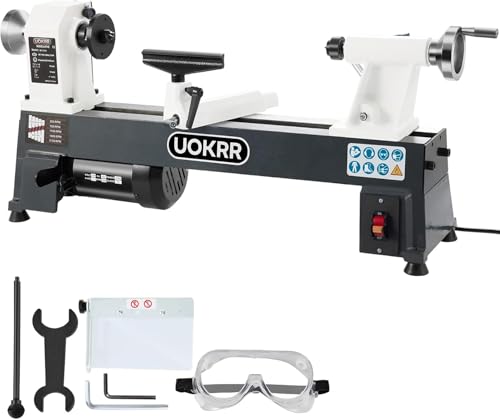
UOKRR 10″ x 18″ Wood Lathe
Strengths
- Cast iron construction
- Stable and quiet
- Broad accessory compatibility
Trade-offs
- Heavy at 77 lbs
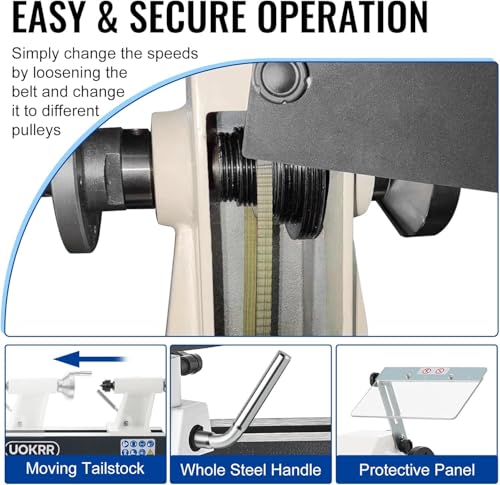
- Belt changes needed for speed
- No variable speed
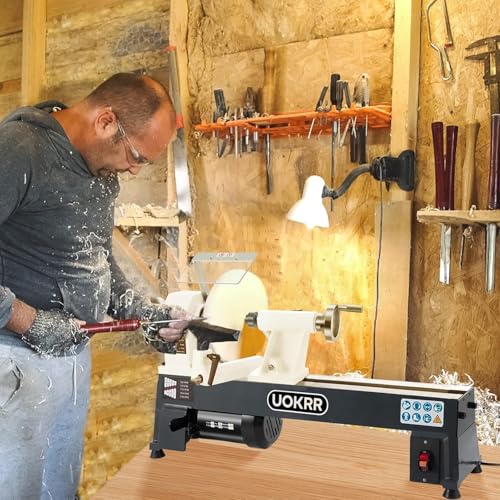
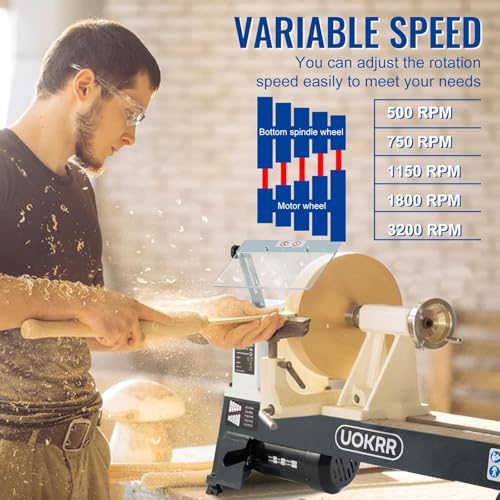
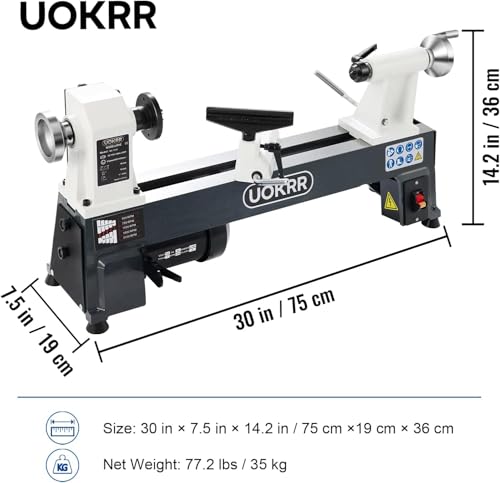
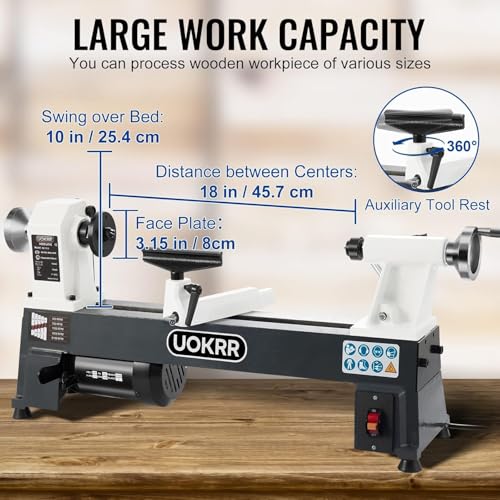
This is the one I’d recommend to most serious beginners and intermediate turners. The 77.2 lb cast iron bed makes a huge difference, it dampens vibration and delivers smooth, chatter-free operation, something aluminum-bodied lathes like the VEVOR can’t match. With a 1/2 HP pure copper motor and 5 belt-driven speeds from 500 to 3,200 RPM, it offers reliable power and precise control for both roughing and finishing. Owners praise its stability and long-term durability, especially at this price point.
The 1″ x 8 TPI spindle and MT2 tapers ensure compatibility with most chucks and accessories, which matters as you expand your toolkit. The 360° rotatable tool rest is a thoughtful touch, allowing better positioning. Compared to the WEN and CXRCY models, this one simply feels more like a real lathe. My recommendation for anyone who wants a machine that won’t hold them back as they grow.
Product photos
Wood Lathe Machine 8×12 Inch
Strengths
- 5-year warranty
- Forged tool rest
- Low vibration
Trade-offs
- No MT2 taper
- Average motor power
- Limited upgrade path
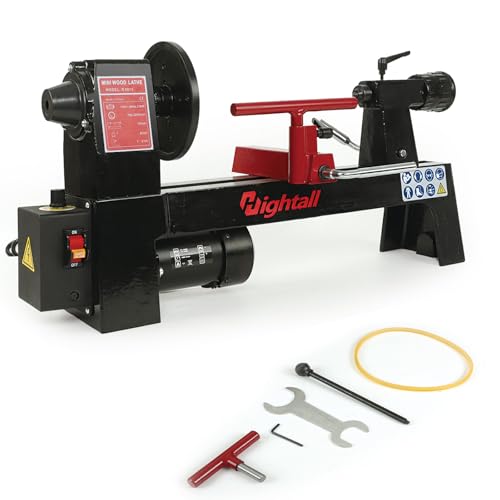
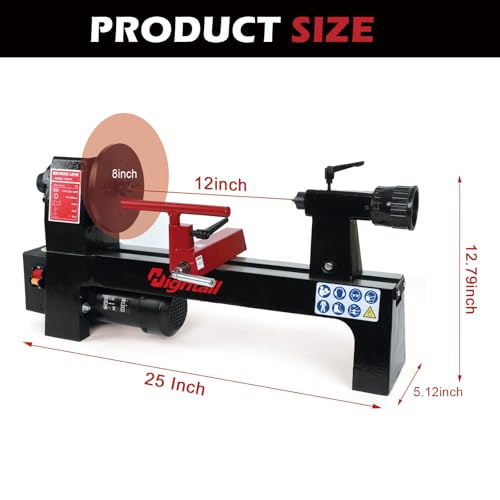
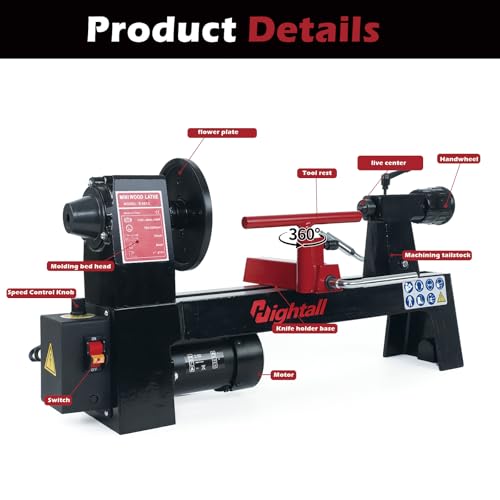
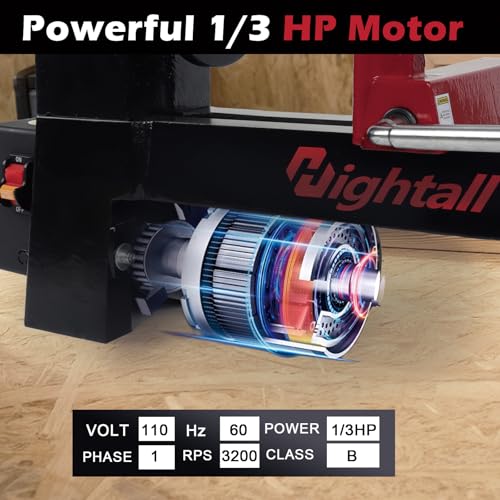
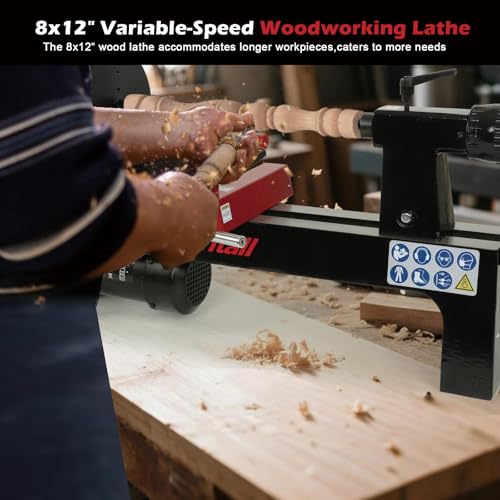
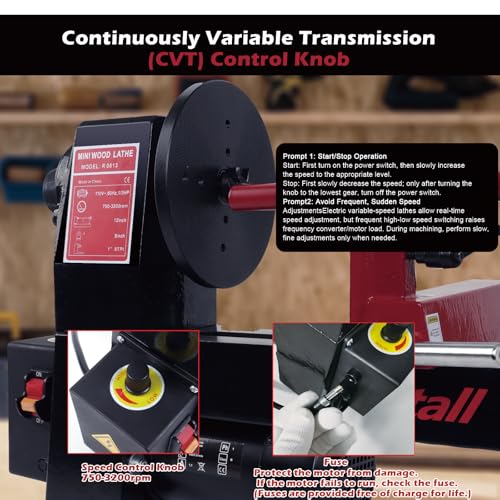
This lathe stands out for one reason: the 5-year warranty and lifetime support. That level of backing is rare and signals confidence in the build. It shares core specs with others in this class, 1/3 HP, 750–3,200 RPM variable speed, 8×12 capacity, but the forged 360° tool rest and spare belt suggest better long-term usability. Owners report low vibration and smooth operation, likely due to balanced construction.
It doesn’t have the raw power of the UOKRR, but it’s clearly built for reliability. The lack of MT2 taper is a miss, but for a beginner, it’s forgivable. Compared to the WEN, it offers better support; compared to the CXRCY, it’s more durable. My pick for someone who values peace of mind and solid performance over flashy extras.
Product photos
WEN Mini Benchtop Wood Lathe
Strengths
- Soft-start motor
- True variable speed
- Good warranty
Trade-offs
- Smaller capacity
- Lighter build
- Limited taper size
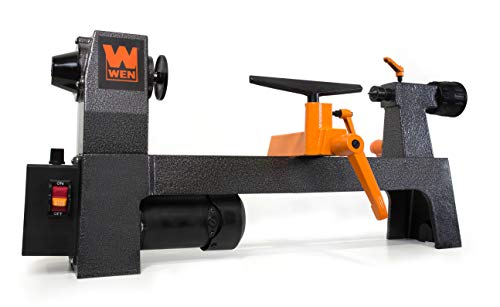
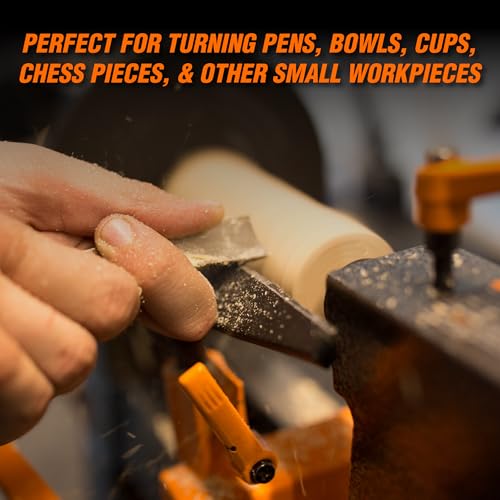
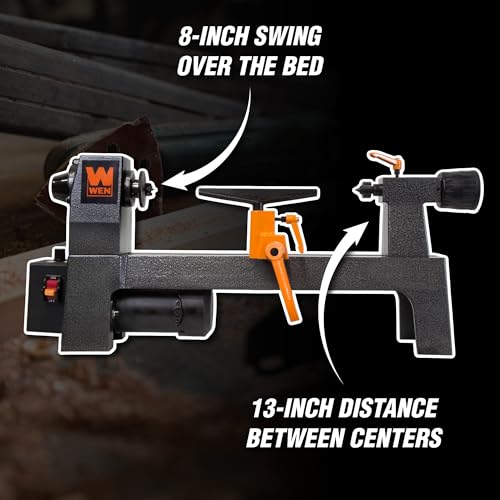
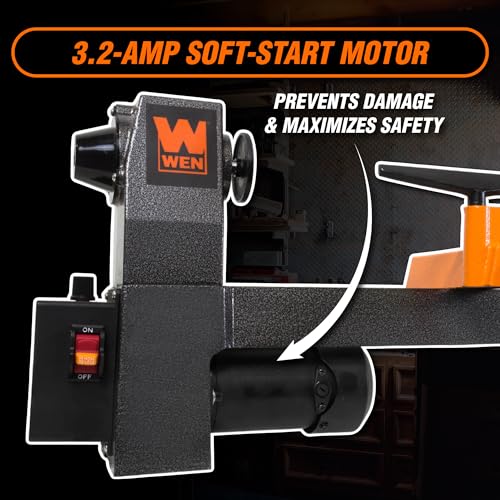
WEN has a reputation for budget tools that punch above their weight, and this lathe fits the mold. At 8-inch swing and 13-inch between centers, it’s smaller than the UOKRR but still capable of handling pens, small bowls, and spindles. The soft-start 3.2-amp motor is a real safety plus, it ramps up smoothly, reducing stress on the motor and workpiece. The variable speed (750–3,200 RPM) is infinitely adjustable, which gives more control than fixed-speed models.
Owners appreciate the included two-year warranty and the fact that it’s simple to set up and use. However, the MT1 taper limits accessory options compared to MT2 models, and the bed is lighter, so it can vibrate more under load. Still, for the price, it’s a smart pick. I’d choose this over the CXRCY if you want reliability and brand support without extras.
Product photos

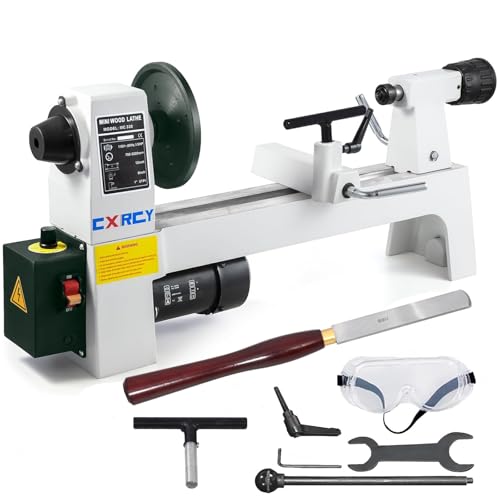
CXRCY 8″ x 12″ Mini Wood Lathe
Strengths
- Rich accessory kit
- Infinitely variable speed
- Beginner-ready
Trade-offs
- Less rigid construction
- Vibration at high speeds
- Tool rest quality varies
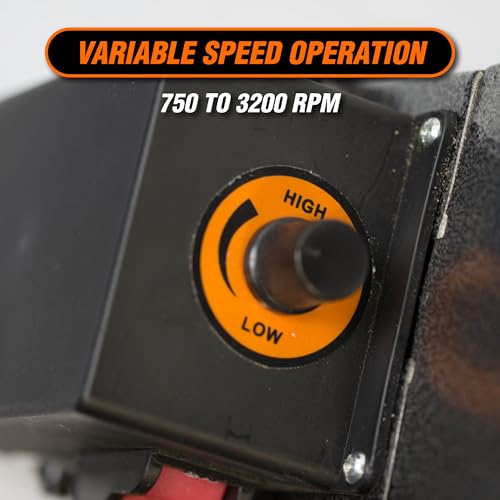
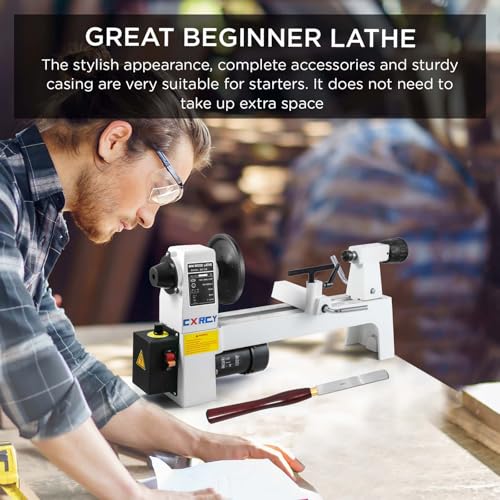
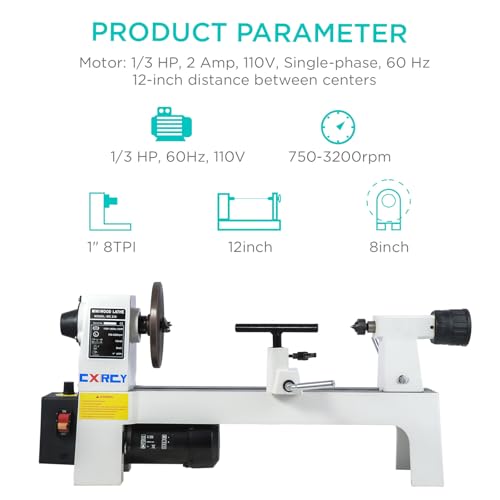
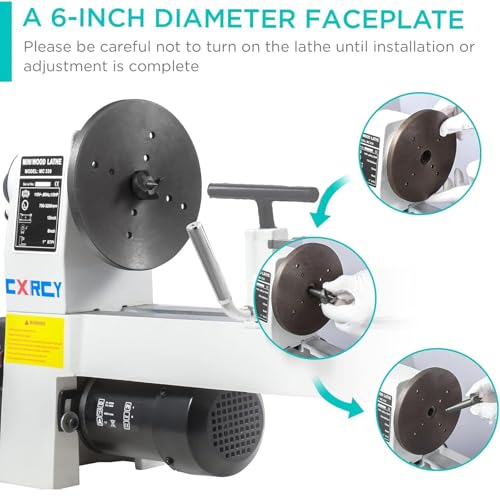
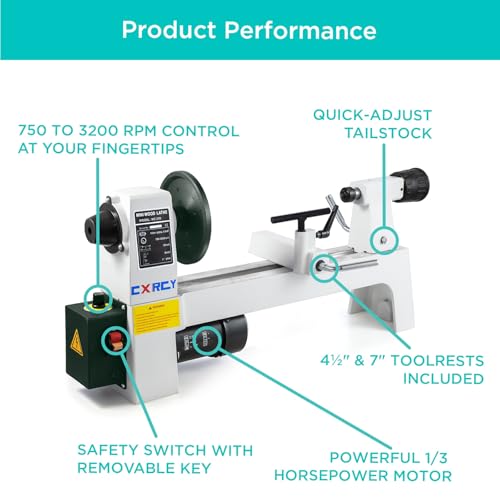
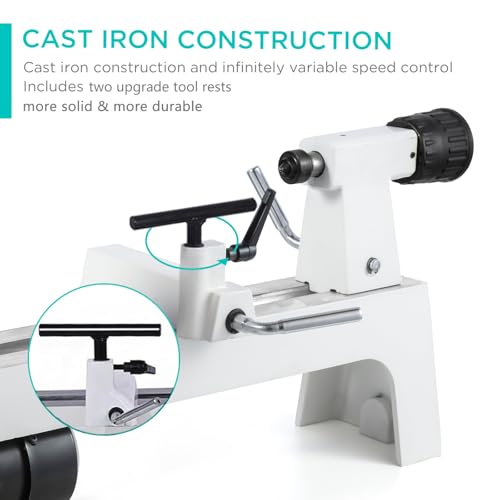
What stands out here is the accessory bundle, it comes with a full set of tools, including a 16.7-inch HSS chisel, goggles, two tool rests, and more. That makes it a great out-of-box experience for someone just starting out. The 1/3 HP motor and infinitely variable speed (750–3,200 RPM) perform as expected for the class, and the 8″ x 12″ capacity covers most small to mid-sized projects.
But there’s a trade-off: while the specs look good, owner feedback points to a less rigid bed and more vibration than the UOKRR or even the WEN. The tool rest feels flimsy to some, and the overall build doesn’t inspire long-term confidence. Still, if you value having everything in one box and don’t mind upgrading parts later, this is a solid starter. I’d pick the UOKRR for performance, but this one for sheer convenience.
Product photos
VEVOR 10″ x 18″ Benchtop Wood Lathe

Strengths
- Large work capacity
- Strong motor
- Solid accessory kit
Trade-offs
- Aluminum base less stable
- Fixed speeds only
- Build quality inconsistent
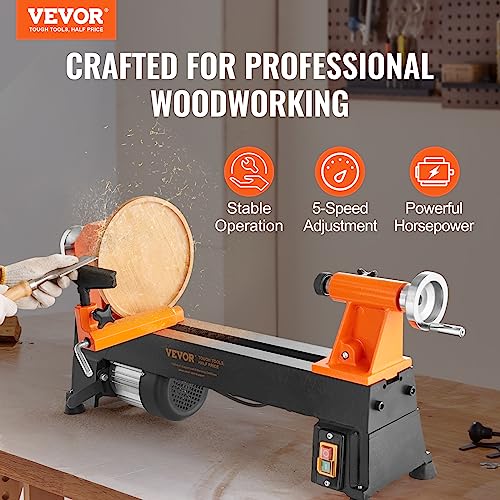
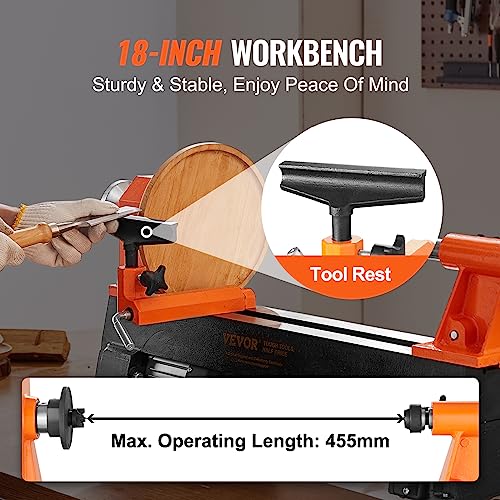
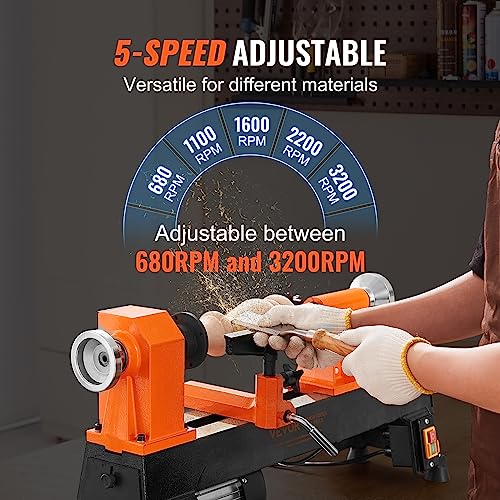
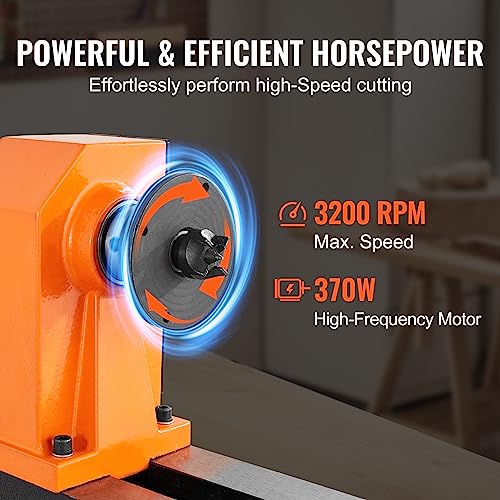
VEVOR’s larger benchtop model steps into real woodworking territory with a 10-inch swing and 18-inch between centers, a solid size for bowls, vases, or spindles. The 370W motor delivers up to 3,840 RPM across 5 fixed speeds, which gives decent control, though not the fine tuning of variable-speed models. Owners consistently report it handles hardwoods without strain, and the aluminum base with steel headstock cuts down on vibration better than expected for the price.
Still, it lacks the build quality of cast iron lathes in this size range. While it’s marketed as professional-grade, it’s really more of a heavy-duty hobbyist machine. Compared to the UOKRR model, it falls short in rigidity and long-term durability. I’d pick this only if you need a mid-tier lathe and don’t mind upgrading later.
Product photos

AcmeFlare All-Metal Mini Safety Lathe
Strengths
- Extremely precise
- Safety protections
- Quiet and compact
Trade-offs
- Not for woodturning
- Very small capacity
- Limited power
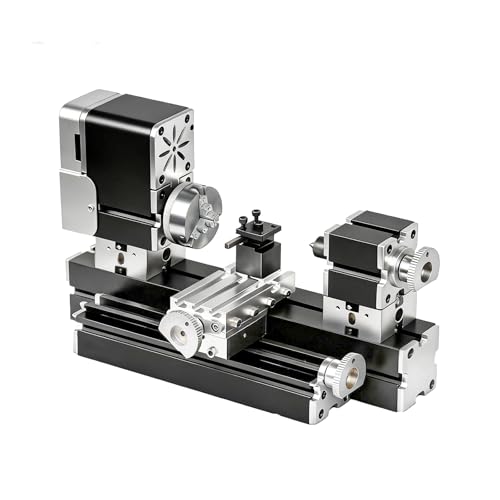
This isn’t a wood lathe in the traditional sense, it’s a precision micro lathe built for metal, plastic, and soft materials. At 20,000 RPM, it’s insanely fast, but the 310x100mm bed and tiny capacity mean it’s for model making, not furniture. The all-metal build and 0.02mm handwheel offer real precision, and the safety features, over-current, over-voltage, and rounded edges, make it ideal for classrooms or kids’ workshops.
Owners use it for engraving, small metal parts, or STEM projects. But don’t mistake it for a woodturning tool, it’s too small and underpowered for even small bowls. I’d recommend it only for hobbyists into miniatures, electronics, or education. For wood, look elsewhere.
Product photos

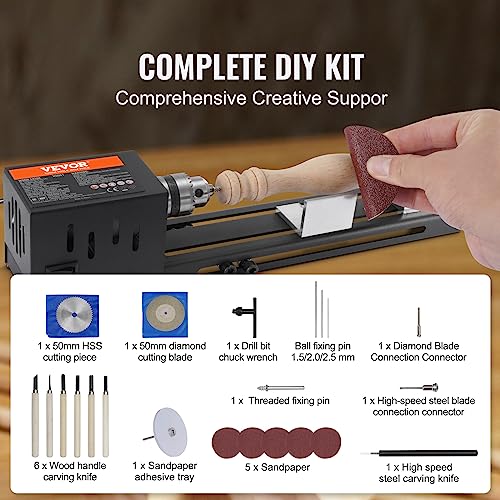
VEVOR 2.76″ x 6.3″ Mini Wood Lathe

Strengths
- Compact size
- High RPM options
- Good starter kit
Trade-offs
- Very small capacity
- Noticeable vibration
- Not for heavy work
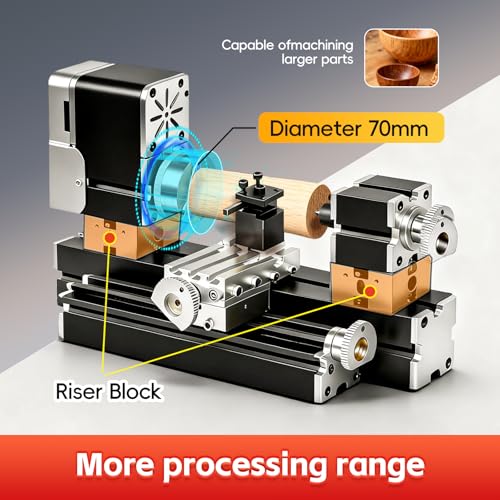
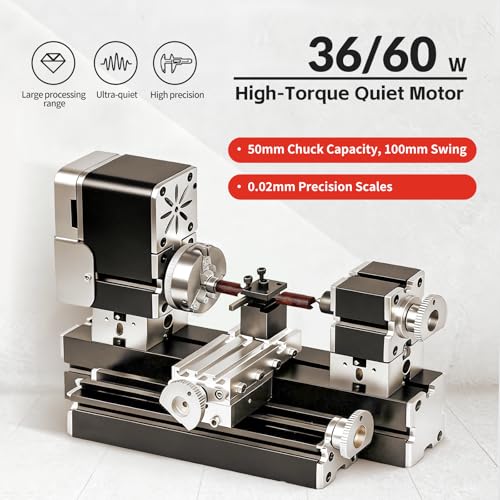
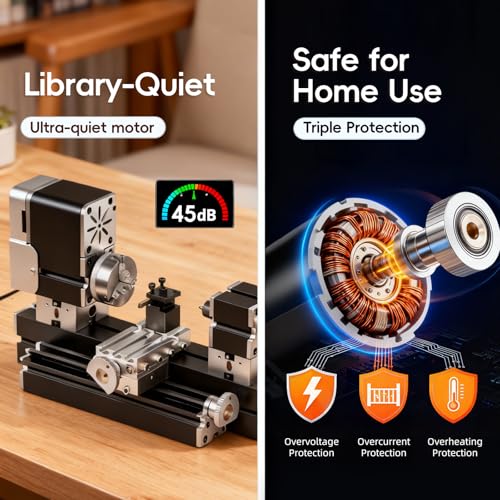
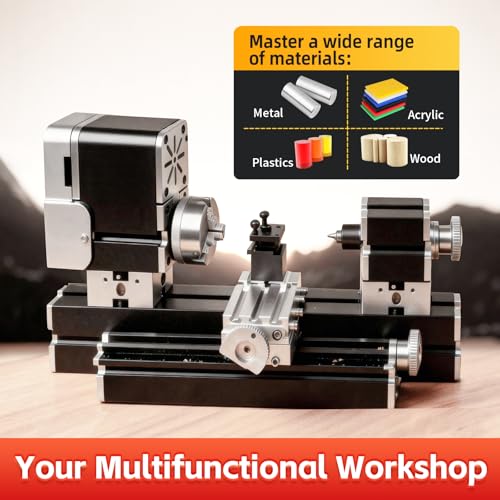
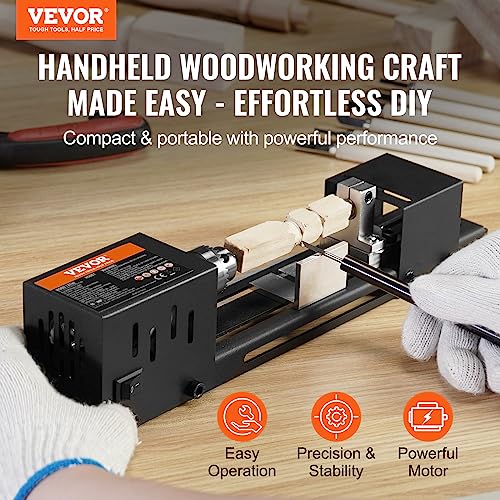
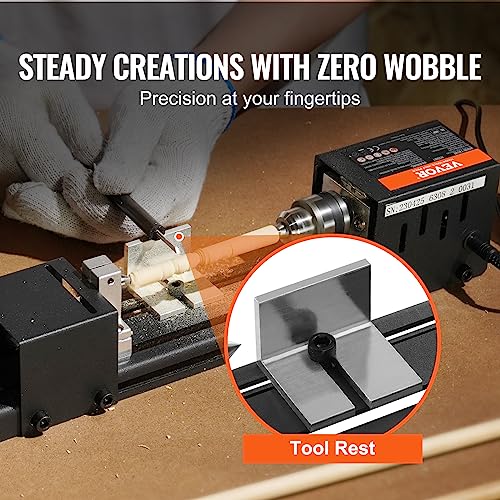
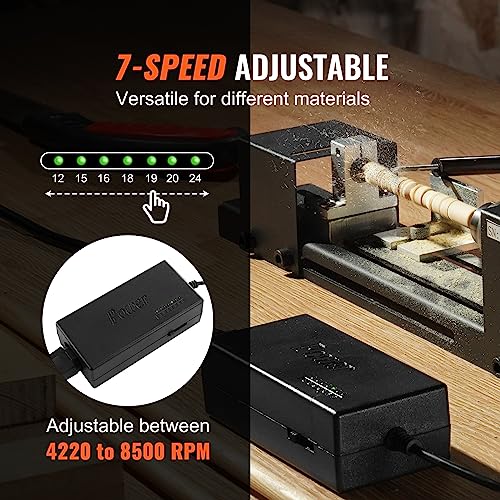
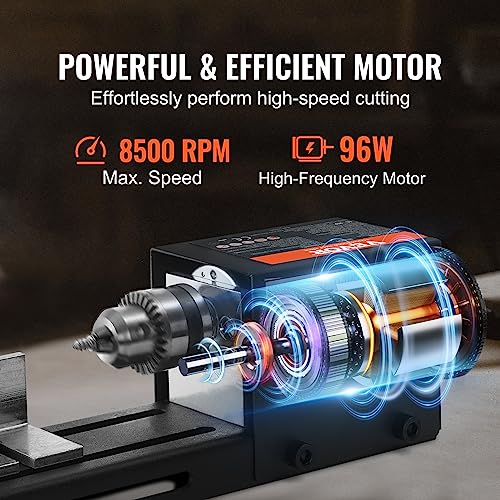
This mini lathe is more of a micro hobby machine than a real woodworking tool. At 2.76 inches swing and just 6.3 inches between centers, it’s built for tiny projects like pen turning or small models. The 96W motor pushes up to 8,450 RPM, which sounds impressive but is overkill for such a small frame, most users report it vibrates more at higher speeds, even with the aluminum base. On paper, the 7-speed range offers precision, but in practice, owners say the speed settings are more marketing than meaningful, with little real difference between steps.
It’s not meant for serious turning, and that’s fine. What it does well is offer a low-cost entry point for tinkerers or educators. The included accessories help you start fast, but don’t expect to upgrade this machine much, it’s limited by design. I’d consider it only if you’re working on very small-scale projects and need something portable.
Product photos
How We Chose These mini wood lathes
As someone who’s spent years around power tools and workshops, I know choosing the right lathe – even a mini one – can be tricky. Rather than a hands-on lab test of each model, this selection is a research-led comparison of published specifications, features, and, crucially, owner and expert feedback. I looked at dozens of models, carefully weighing what each offers against common woodworking needs and skill levels. My goal was to identify the models that consistently deliver value and performance based on real-world reports.
For mini wood lathes, stability and power are paramount. I gave the most weight to build quality (specifically cast iron components and overall weight) as vibration significantly impacts precision. Motor power – measured in horsepower or amps – was also key, as it dictates what materials and project sizes a lathe can realistically handle. Finally, versatility, demonstrated through variable speed options and accessory compatibility, played a large role in the rankings.
Specifications reliably indicate motor power, swing capacity, and distance between centers – the core measurements for determining a lathe’s capabilities. However, I heavily relied on owner feedback to assess real-world vibration levels, build quality impressions, and long-term durability. Reputation and expert reviews helped me filter out models with recurring quality control issues or misleading marketing claims, guiding me toward those consistently praised for their performance. You can find more on best small hobby lathes on my site.
Choosing The Right mini wood lathes
Picking the right wood lathe can be surprisingly complex, even at the mini scale. There’s a lot more to consider than just price and size.
A quality wood lathe delivers stable performance, precise control, and the power to handle the materials you intend to work with. Key factors include motor strength, build quality (minimizing vibration), speed variability, and the availability of compatible accessories. Buyers should prioritize lathes with robust construction, particularly cast iron components, and look for variable speed controls to accommodate different project types and skill levels.
Motor Power & Material Capacity
Don’t underestimate the importance of a capable motor. While “mini” suggests small projects, you’ll quickly find yourself limited by a weak motor struggling with even moderately hard woods. A 1/3 horsepower motor is generally considered the bare minimum, and I often recommend aiming for 1/2HP if you plan to work with anything beyond softwoods or pen blanks. Larger capacity – measured by swing (diameter of work) and distance between centers (length of work) – opens up project possibilities. If you foresee tackling bowls or larger spindles, look for a lathe with at least an 8” swing and 12” between centers.
Build Quality & Vibration
Vibration is the enemy of clean, precise turning. A shaky lathe makes it hard to control the tool and results in poor surface finish. Heavy-duty cast iron construction is the gold standard for minimizing vibration. The UOKRR 10” x 18” lathe, for example, boasts a substantial 77.2lb weight, largely due to its cast iron bed and body. Beyond the weight, pay attention to how securely the lathe is mounted. Even a well-built lathe will vibrate if it’s not firmly anchored to a stable workbench. Consider adding rubber feet (many models include these) to further dampen vibrations.
Here’s what to look for in terms of stability: * Solid base construction: Avoid lightweight plastic bases. * Cast iron bed: This is where most of the vibration dampening comes from. * Weight: Generally, heavier is better, within reason for your space and budget. A heavier lathe will remain stable even when applying force.
A stable lathe isn’t just about comfort; it’s about safety. Excessive vibration can lead to loss of control and potential accidents.
Speed Control & Accessories
Variable speed is essential. Different woods and different turning operations require different speeds. Hardwoods generally need slower speeds, while finishing cuts benefit from higher speeds. Look for a lathe with multiple speed settings, or even better, infinitely variable speed control. The more options, the more versatile the lathe will be. Don’t overlook accessories. A basic lathe is a good starting point, but you’ll quickly want to expand your capabilities with different tool rests, chucks, and faceplates. The CXRCY 8” x 12” lathe stands out in this regard, offering a generous selection of included tools. If you’re considering moving beyond simple projects, you may eventually need to explore midi wood lathe recommendations or step-up lathes from mini models for increased capacity and power. For beginners focusing on very small projects, exploring compact benchtop lathes is a great starting point before investing in larger equipment.
Mini Wood Lathes Compared
Here’s a comparison of key specifications for various mini wood lathes to help you evaluate your options.
| Product Name | Swing Over Bed | Distance Between Centers | Motor HP | Max RPM | Key Features |
|---|---|---|---|---|---|
| UOKRR 10″ x 18″ Wood Lathe | 10″ | 18″ | 1/2 | 3200 | 5-Speed, Cast Iron Construction |
| Wood Lathe Machine 8×12 Inch | 8″ | 12″ | 1/3 | 3200 | Variable Speed, Beginner-Friendly |
| WEN Mini Benchtop Wood Lathe | 8″ | 13″ | N/A | 3200 | Soft-Start Motor |
| CXRCY 8″ x 12″ Mini Wood Lathe | 8″ | 12″ | N/A | 3200 | Variable Speed, Includes Tools |
| VEVOR 10″ x 18″ Benchtop Wood Lathe | 10″ | 18″ | N/A | 3200 | 5-Speed, Aluminum Alloy Base |
| AcmeFlare All-Metal Mini Safety Lathe | N/A | N/A | N/A | N/A | All-Metal Construction, Precision Handwheel |
| VEVOR 2.76″ x 6.3″ Mini Wood Lathe | 2.76″ | 6.3″ | N/A | 8500 | 7-Speed, Compact & Portable |
Frequently Asked Questions
What swing capacity do I really need for a mini lathe?
An 8-inch swing is sufficient for most beginner projects like pens, small bowls, and spindles. However, if you anticipate turning larger items, opting for a 10-inch swing provides more flexibility down the road.
Are mini lathes powerful enough for hardwood?
While they can handle hardwoods, you’ll want a lathe with at least a 1/2 horsepower motor to avoid straining the machine and achieve clean cuts. Softwoods and smaller projects work well with even a 1/3 horsepower motor.
How important is the lathe’s weight?
Weight is very important; heavier lathes (especially those with cast iron beds) minimize vibration, which directly impacts the quality and safety of your turning. A lighter lathe will require more robust mounting to counteract vibrations.
What speed range should I look for in a mini lathe?
A variable speed range of 500 to 3200 RPM is standard and covers most turning needs. Lower speeds are best for roughing out shapes in hardwoods, while higher speeds are suited for finishing cuts on softer materials.
Where can I find wood lathe models for novices if I’m just starting out?
Many manufacturers offer beginner-friendly kits that include essential accessories and detailed instructions. Look for lathes specifically marketed towards newcomers, and check out guides like the ones on my site that highlight wood lathe models for novices to help you narrow down your choices.
The Bottom Line
Ultimately, choosing a mini wood lathe comes down to balancing control and convenience. If you’re serious about learning to turn and want a machine that will grow with your skills, the UOKRR 10” x 18” Wood Lathe stands out. Its robust cast iron construction and 1/2HP motor give you the stability and power needed for a wider range of projects, and it’s consistently well-reviewed by owners for its performance.
For those on a tighter budget or just starting out, the CXRCY 8” x 12” Mini Wood Lathe is an excellent choice. It offers variable speed control and includes a good set of essential tools, making it a ready-to-go package. If you’re primarily interested in pen turning or very small projects, the VEVOR 2.76″ x 6.3″ Mini Wood Lathe is a surprisingly capable and portable option. And for those looking for the best beginner wood lathes, it’s a great starting point.
Don’t get hung up on chasing the highest horsepower or the most features. The most important factors are a solid, stable base, a motor powerful enough for the materials you plan to work with, and the ability to control the speed accurately. These fundamentals will make a bigger difference in your results than any single specification on a datasheet.
