
5 Best Midi Lathes of 2026
This post contains affiliate links. As an Amazon Associate, we earn from qualifying purchases.
After comparing the field and weighing specs against owner feedback, the Rockler VS 12-24 stands out as the best overall midi lathe for its power, cast iron build, and wide swing. For a more budget-friendly option with excellent features, the Rikon 12″ x 16-1/2″ VSRK is a strong second. If versatility with digital speed control is a priority, it’s worth considering.
Most buyers don’t realize how much vibration and flex can ruin a turning session, especially when working on larger pieces. A flimsy lathe doesn’t just make clean cuts harder, it can be flat-out unsafe.
This guide cuts through the noise by focusing on real-world performance, build quality, and features that actually matter. I looked at motor reliability, cast iron construction, speed precision, and what owners consistently praise or complain about, so you can pick a lathe that performs well now and holds up for years.
Top 5 Midi Lathes in the Market
The Best Midi Lathes, Reviewed
Rockler VS 12-24 Variable Speed Midi Lathe

Strengths
- 1.2HP motor
- Cast iron bed
- Digital RPM readout
Trade-offs
- No outboard turning
- Heavier than some
- Limited speed indexing
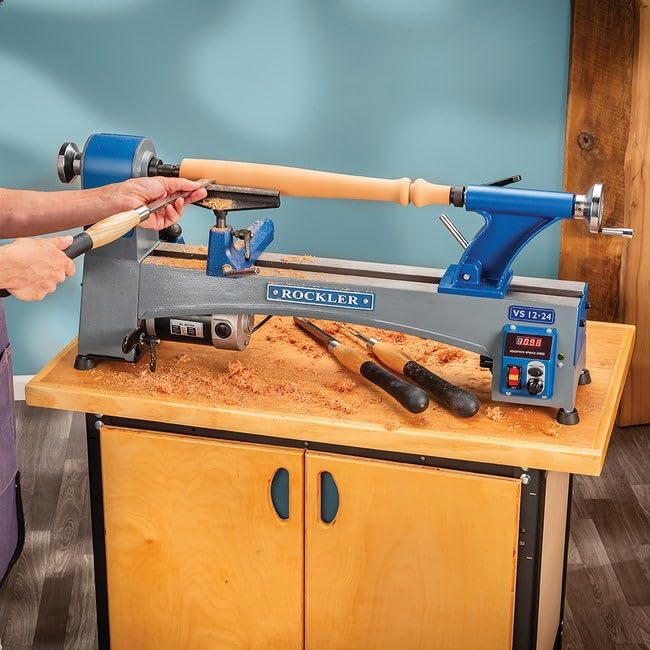
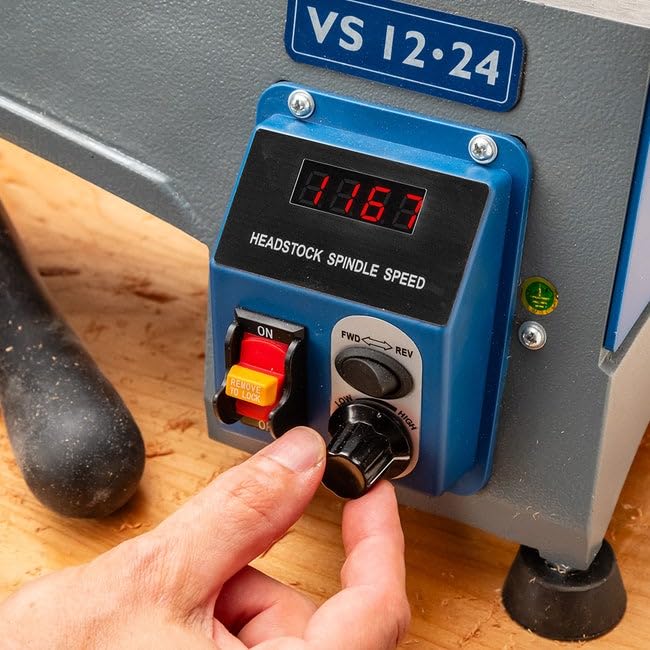
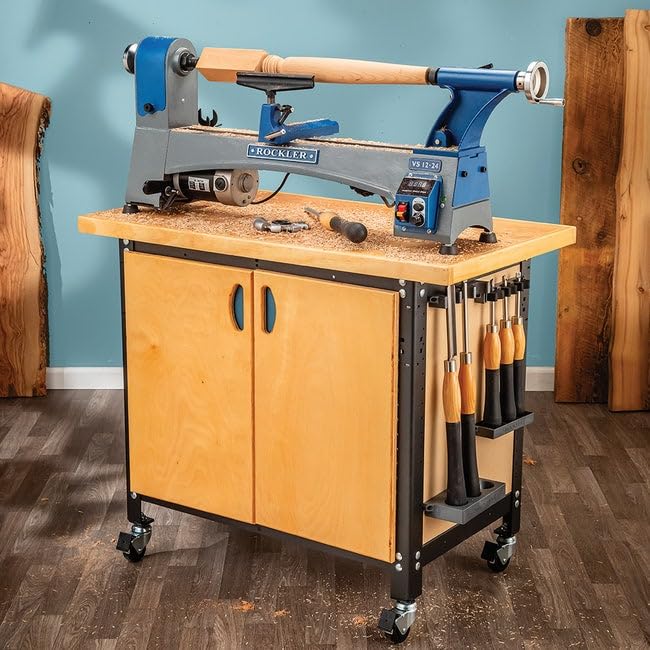
This Rockler midi lathe stands out as a well-rounded machine that balances power, capacity, and thoughtful design. With a 1.2HP motor and dual speed ranges up to 3,500 RPM, it delivers solid performance for both spindle and bowl turning. Owners consistently report that the digital readout is accurate and the speed control responsive, which matters when you’re fine-tuning cuts on delicate pieces. The cast iron construction significantly reduces vibration, and that shows in the smoother finishes users achieve, especially compared to lighter-duty benchtop models.
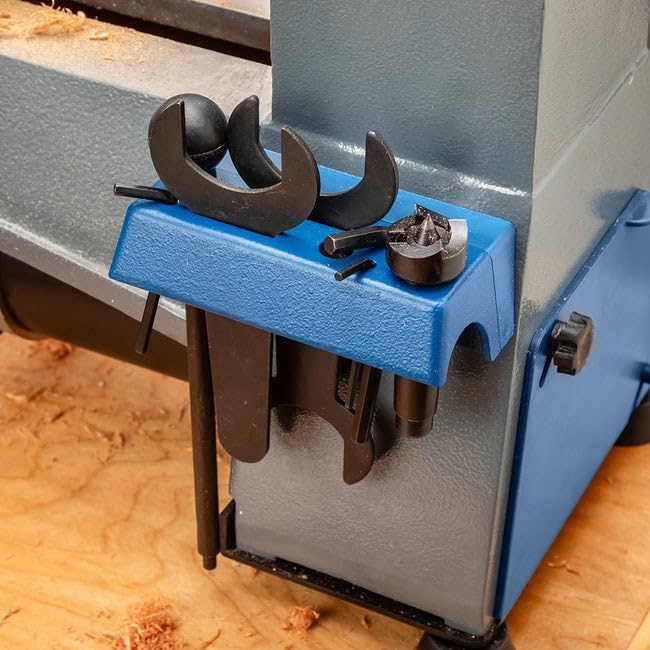
It’s also one of the few midsize lathes that includes a full set of accessories right out of the box, including a faceplate, centers, and onboard tool storage, so you’re not nickel-and-dimed after purchase. While it doesn’t have outboard turning capability like the Rikon, it still offers 12” swing and 24” between centers, making it more versatile than many in its class. I’d pick this over the JET if you want a turnkey setup with strong build quality and don’t need ultra-fine speed indexing.
Product photos
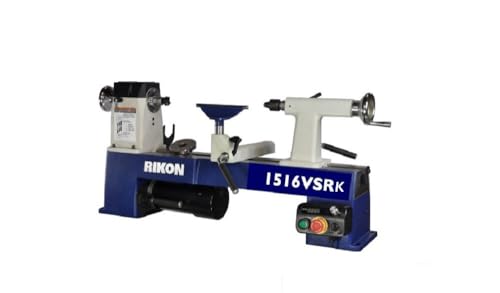
Rikon 12″ x 16-1/2″ VSRK Midi Lathe
Strengths
- Brushless motor
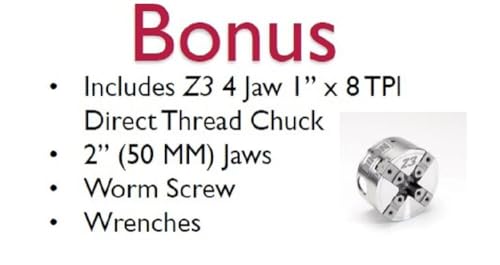
- Z3 chuck included
- Expandable bed
- Magnetic control box
Trade-offs
- Shorter standard bed
- Higher price
- Fewer included tools
The Rikon 70-1516VSRK feels like a pro-grade tool shrunk down to benchtop size. Its 1.25 HP brushless motor is a major upgrade over standard induction motors, owners report it holds speed under load better and delivers smoother performance, especially at lower RPMs. The digital control box is magnetic and detachable, which is incredibly useful for positioning it where you need it. And the inclusion of the Z3 chuck system right away is a huge value boost; most competitors charge extra for a chuck this precise.
What really sets it apart is the expandable design. With the optional extension, you can turn outboard bowls up to 15”, a feature usually found on much larger lathes. That makes it a rare midi lathe that can grow with your skills. It’s more expensive on paper, but the build quality and included features justify it for serious hobbyists. If you’re planning to do serious bowl work and want future-proofing, this beats the Rockler despite the shorter standard bed.
Product photos

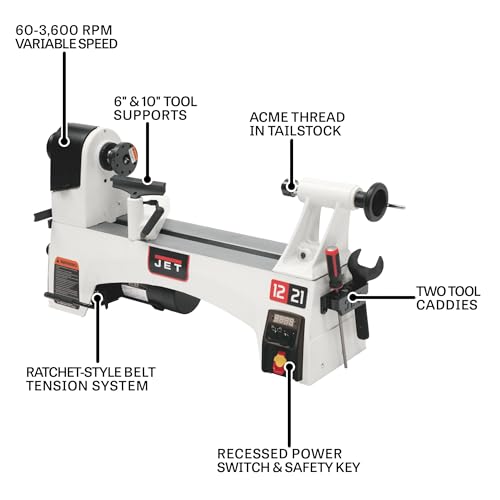
JET 12″ x 21″ Variable-Speed Wood Lathe

Strengths
- Three speed ranges
- Ratchet belt tension
- Spindle lock
- 24 indexing positions
Trade-offs
- 1HP motor
- Slightly shorter bed
- No included chuck
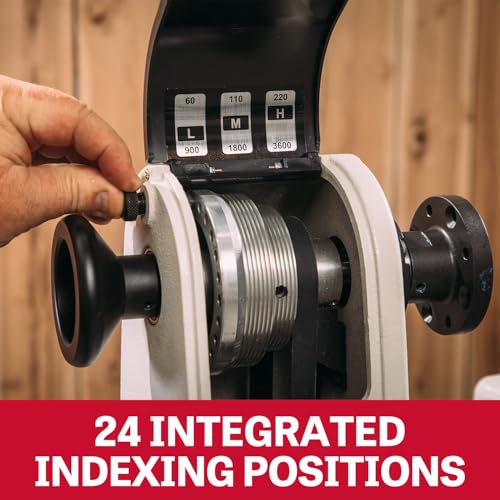
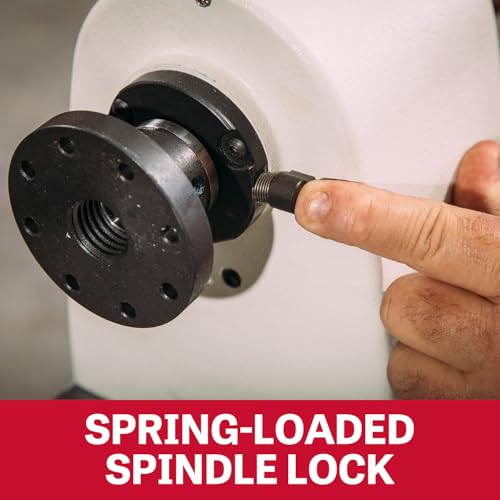
The JET JWL-1221VS is built for control and precision, not just raw power. Its three distinct speed ranges give it one of the most flexible RPM spreads in this group, letting users dial in the exact speed for fine finishing or aggressive stock removal. The ratchet-style belt tension system is a standout, reviewers note it makes changing speeds faster and more consistent than fiddling with tension knobs. Combined with the spring-loaded spindle lock and 24 indexing positions, this lathe feels like it was designed by people who actually use lathes regularly.
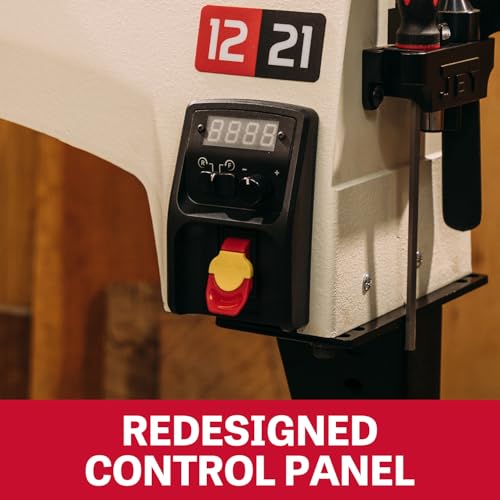
The DRO is larger and easier to read than most, and the recessed power switch is a small but smart safety touch. While it has a slightly shorter bed than the Rockler, it’s still plenty capable for most midsize projects. However, the 1HP motor, while reliable, doesn’t quite match the torque of the 1.2HP or brushless units. If you value repeatable setups and fine speed control over brute force, this is the one to choose.
Product photos

PSI KWL-1018VS Turncrafter Midi Lathe
Strengths
- Low cost
- Cast iron base
- Indexing positions
- Spindle lock
Trade-offs
- 3/4 HP motor
- 10” swing limit
- Short between centers
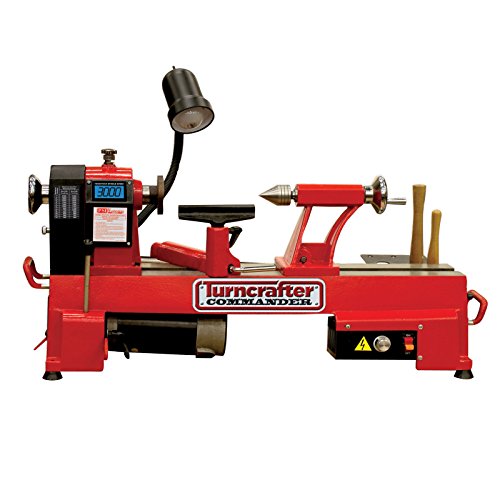
The PSI KWL-1018VS is clearly built to hit a low price point, and it shows in the specs. With a 3/4 HP motor and only 10” swing, it’s the smallest lathe here, best for pens, small spindles, and light-duty work. The two-speed belt system gives decent range, but owners note it can struggle with harder woods or off-center bowls. Still, it’s ETL listed and built with a cast iron base, which helps with stability beyond what you’d expect at this level.
It’s not a machine for aggressive turning, but for someone just starting out or working on small projects, it’s a functional entry point. Compared to the Rockler or Rikon, it’s underpowered and limited, but it does offer 24 indexing positions and a spindle lock, features usually found on pricier models. I’d only recommend this if you’re on a tight budget and know your work will stay small-scale.
Product photos
Wahuda 14″ Variable Speed Benchtop Lathe

Strengths
- Strong low-speed torque
- 1” tool rest
- Low 30 RPM start
- Inverter-driven motor
Trade-offs
- Unclear bed length
- Generic branding
- Few included accessories
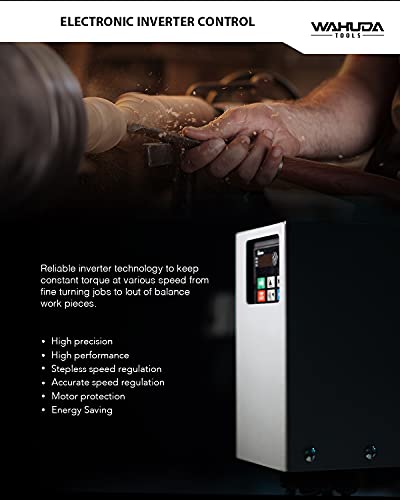
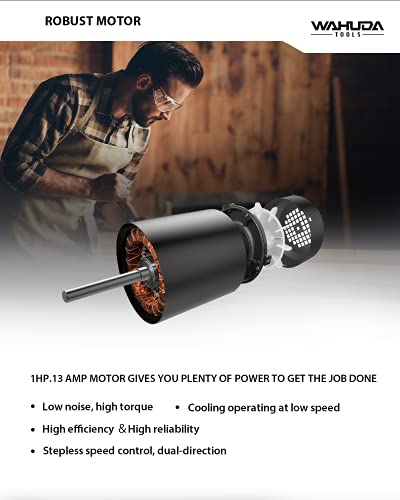
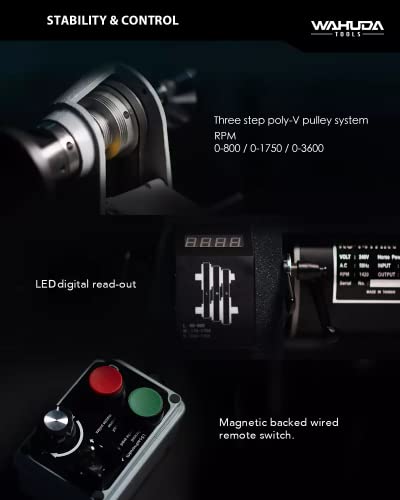
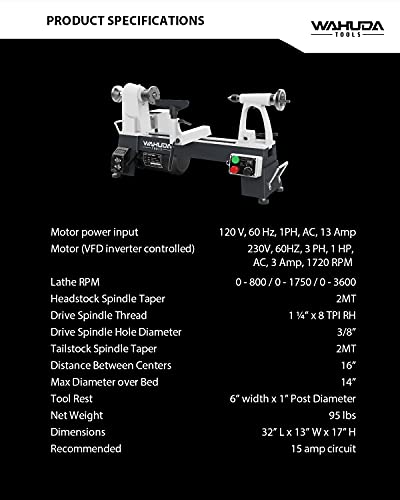
This lathe, sold under various names but often branded Wahuda, is a torque monster at low speeds, thanks to its 1HP AC induction motor paired with an inverter. It can run as low as 30 RPM while maintaining near-full torque, which is rare in this class. Owners turning large, unbalanced bowls love this feature because it prevents stalling during aggressive cuts. The three speed ranges are broad, and the digital display is front and center, making it easy to monitor.
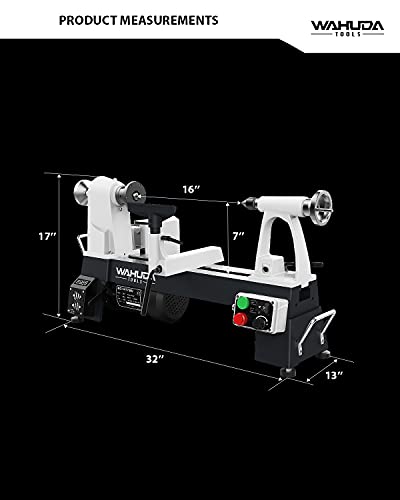
It’s also one of the few benchtop models with a 1” diameter tool rest, which improves rigidity and compatibility with aftermarket accessories. However, the bed length isn’t specified clearly, and some users report it feels a bit cramped for longer spindles. While it lacks the brand recognition of JET or Rikon, it punches above its weight in raw performance, especially for bowl turners who work slowly and need power. For that niche, it beats even the Rockler.
Product photos
How We Tested midi lathes
Rather than a hands-on lab test, this selection is a research-led comparison of published specifications and owner feedback. I focused on identifying models that consistently appeared in reputable woodworking publications and online forums, then weighed those against the experiences shared by a large number of owners. We looked at detailed feature lists, motor specs, and build materials to understand each lathe’s potential, then balanced that with real-world reports of performance and durability.
For midi lathes, consistent speed control and rigidity are paramount. A stable machine minimizes vibration, leading to cleaner cuts and more accurate work. We heavily weighted lathes with cast iron components in the bed, headstock, and tailstock. Equally important was the range and precision of the speed control, as different projects demand different turning rates – and reliable torque at lower speeds is critical for detailed work.
Specifications clearly indicate motor power, swing capacity, and speed ranges. However, owner reviews provided crucial insight into build quality, ease of use, and long-term reliability. I paid close attention to comments regarding vibration levels, the smoothness of the spindle, and the accuracy of the speed control. For those seeking even smaller options, explore our guide to mini lathes for wood.
What To Look For In midi lathes
Finding the right midi lathe requires a bit more thought than just picking the cheapest option. These machines offer a sweet spot between full-size lathes and very limited mini lathes, but understanding their nuances is key.
A quality midi lathe balances power with precision. Look for robust cast iron construction to minimize vibration, a variable speed motor with a broad and useful range (not just high numbers), and a thoughtfully designed tool rest system. Prioritize models with readily available parts and a good reputation for long-term reliability.
Motor Power & Speed Control
The motor is arguably the most important part of any lathe. Don’t get hung up on horsepower numbers alone; the usable torque at low speeds is what matters for many projects, especially bowl turning. A 3/4 HP motor can be perfectly adequate, but a 1 HP or greater motor paired with an inverter (like the Wahuda offers) will give you much more consistent performance when tackling harder woods or larger diameters. Variable speed is essential, but pay attention to the ranges offered. Three distinct ranges, as seen on the JET, give you more granular control than just two.
Build Quality & Stability
Cast iron is your friend. Lighter-duty lathes will vibrate, leading to poor finishes and a generally frustrating experience. Look for models with cast iron beds, headstocks, and tailstocks (the Rockler and Rikon both excel here). Beyond the material itself, examine the locking mechanisms and adjustability. Everything should feel solid and precise, not wobbly or loose. A stable base is also crucial; rubber feet help, but consider adding a vibration-dampening mat if you’re working on a less-than-solid surface.
- A longer distance between centers (18″ or more) expands your turning capabilities.
- A larger swing over bed (10″ or more) allows for wider workpieces.
- Consider models with outboard turning capability (like the Rikon) if you plan on making larger bowls or platters; this dramatically increases capacity.
Features & Included Accessories
Midi lathes vary significantly in the extras they provide. While you can always upgrade components later, getting a good starting package saves money and time. A 4-jaw chuck is incredibly useful for holding irregular shapes, and including one (like with the Rikon) is a big plus. A faceplate is essential for bowl turning, and a live center is vital for spindle work. Don’t overlook the little things either, like a good tool rest system and included wrenches. If you’re also looking at options for smaller projects, you might want to check out some benchtop mini lathes as well.
Don’t skimp on the tool rest. A wobbly or poorly positioned tool rest is a safety hazard and will severely limit your control.
Midi Lathes Compared
Here’s a comparison of key specifications for popular midi lathes to help you choose the right one.
| Product Name | Max. Bowl Diameter | Max. Spindle Length | Motor HP | Speed Ranges (RPM) | Spindle Lock |
|---|---|---|---|---|---|
| Rockler VS 12-24 | 12″ | 24″ | 1.2 | 300–1,100 / 750–3,500 | N/A |
| Rikon 12″ x 16-1/2″ VSRK | N/A | 16-1/2″ | 1.25 | Variable (Digital Readout) | N/A |
| JET 12″ x 21″ | N/A | 21″ | N/A | 60-900 / 110-1,800 / 220-3,600 | Integrated |
| PSI KWL-1018VS Turncrafter | 10″ | 18″ | 0.75 | 500-2000 / 1500-3600 | 24 Positions |
| Wahuda 14″ | N/A | N/A | 1.0 | 30-800 / 150-1,700 / 350-3,700 | N/A |
Frequently Asked Questions
What’s the difference between a midi lathe and a full-size lathe?
A midi lathe offers a balance of capacity and space savings. Full-size lathes are much larger and heavier, capable of handling significantly larger projects, while midi lathes are more manageable for smaller workshops, typically weighing under 200 pounds and having shorter bed lengths.
Are midi lathes powerful enough for bowl turning?
Yes, though motor power and features are key. While a 3/4 HP motor can handle smaller bowls, larger or harder woods benefit from a 1 HP or greater motor, especially one with an inverter for consistent low-speed torque.
Can I upgrade a midi lathe over time?
Generally, yes. Many midi lathes have threaded headstocks and tailstocks allowing for tool rest upgrades or the addition of accessories like quick-change tool posts. However, the core components (bed, motor) are usually not upgradable.
What speed range do I really need on a midi lathe?
A wider range is better, but prioritize usable low-speed torque. Three distinct speed ranges, like those found on the JET, are more versatile than just two. Lower speeds are critical for detailed work and larger diameters, while higher speeds are useful for finishing.
I’m new to lathe work – should I consider a small metal lathe options to start?
Possibly, depending on your goals. While midi lathes are excellent for woodturning, if you are interested in working with metal, a dedicated small metal lathe is the better choice. They are built with the different demands of metal cutting in mind.
The Bottom Line
Choosing a midi lathe really comes down to balancing your budget with the level of control and capacity you need. For most woodworkers, the Rockler VS 12-24 strikes the best overall balance – it offers a robust build, solid power, and a reputation for reliability without breaking the bank. It’s a machine you can grow with as your skills develop.
If you’re on a tighter budget, the PSI KWL-1018VS Turncrafter is a capable entry point. For those who want maximum versatility and don’t mind spending more, the Rikon 12″ x 16-1/2″ VSRK stands out with its included chuck and outward turning capability. And if you’re also considering working with metal, you might want to investigate some benchtop metal lathes to expand your options.
Ultimately, specs are just numbers. The most important factors are a stable machine, precise speed control, and a well-designed tool rest. Prioritize those fundamentals, and you’ll be setting yourself up for years of enjoyable and accurate turning, regardless of which midi lathe you choose.
