7 Best 30 Gallon Air Compressors of 2026
This post contains affiliate links. As an Amazon Associate, we earn from qualifying purchases.
The Albott 13HP Gas and VEVOR 15HP Gas stand out as the top performers for heavy-duty, portable power, delivering serious CFM for demanding tools. For DIYers who want a reliable electric option, the DEWALT 30 Gallon Electric is our go-to pick, balancing solid airflow, brand trust, and ease of use.
If you’re tired of compressors that can’t keep up with your tools or break down after a season, you’re not alone. Many 30-gallon units promise power but fall short when it counts, especially on job sites or during long projects. After comparing specs and owner feedback across the market, I focused on models that deliver consistent airflow, durable builds, and real-world reliability. This guide cuts through the noise to highlight the best 30-gallon air compressors based on performance, value, and what actual users report.
Top 7 30 Gallon Air Compressors in the Market
The Best 30 Gallon Air Compressors, Reviewed
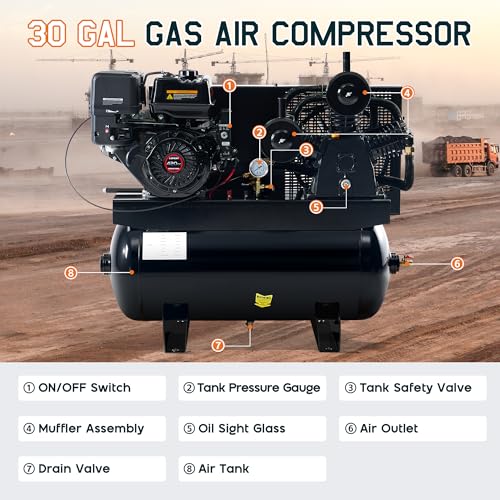
Albott 13HP Gas 30 Gallon Compressor

Strengths
- 13 HP engine
- 180 PSI max
- ASME tank
Trade-offs
- Heavy build
- Noisy operation
- Higher maintenance
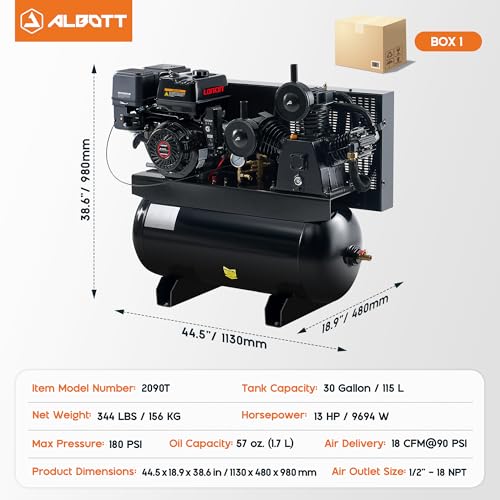
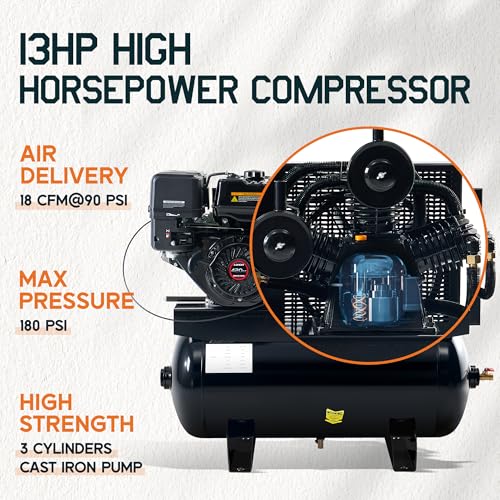
This Albott gas-powered unit stands out in the 30-gallon class for users who need true off-grid capability. The 13 HP engine and 3-cylinder cast iron pump suggest serious durability, and owners consistently report it keeps up with framing nailers and spray guns even on remote job sites. On paper, the 180 PSI max pressure and 18 CFM @ 90 PSI put it ahead of many electric models, though real-world airflow depends heavily on engine tuning and altitude.
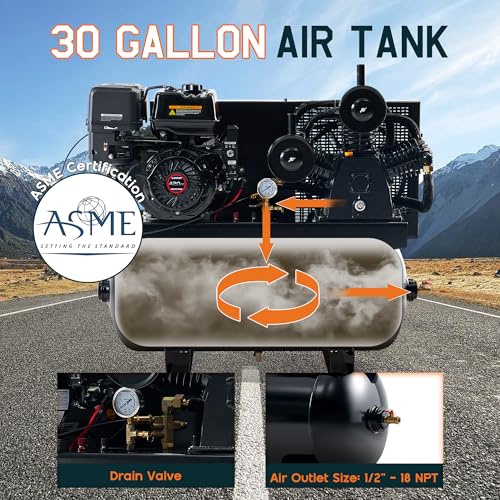
It’s not light or quiet, but that’s the trade-off for gas independence. The ASME-certified tank and automatic safety valve add legitimacy to its worksite-ready claims. Compared to the VEVOR, it doesn’t match the raw CFM, but it runs at higher pressure, which matters for certain tools. For contractors without reliable power, this is a solid, no-nonsense pick.
Product photos

DEWALT 30 Gallon Electric Compressor
Strengths
- Quiet operation
- High-flow regulator
- 175 PSI max
Trade-offs
- Heavier than oil-free
- Oil maintenance
- Pricier than entry models
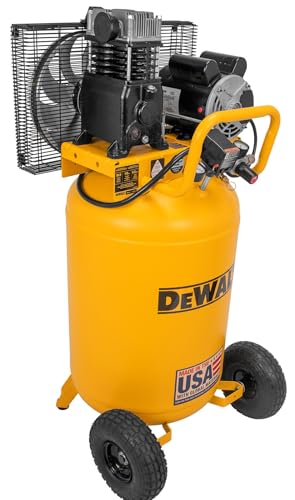
This DeWalt model leans hard into efficiency and user comfort. The 23% quieter operation is a real win in tight shops or shared spaces, and the 2.5X longer run time claim, compared to a Porter-Cable benchmark, suggests smart tank and regulator design. At 6.2 SCFM @ 90 PSI and 175 PSI max, it matches the performance of its siblings but with better sound management.
The high-flow regulator is a standout, delivering 65% more usable pressure to tools, which reduces lag and improves tool response. It’s oil-lubed, so it’ll last longer under stress than oil-free models. Between this and the DXCMLA1983012, I’d pick this one for a busy garage where noise and runtime matter. It’s not the cheapest, but it’s built to perform day after day.
Product photos
Dewalt 2 HP Vertical Air Compressor

Strengths
- Vertical space-saving
- Belt drive system
- 175 PSI max
Trade-offs
- Modest CFM output
- Oil maintenance needed
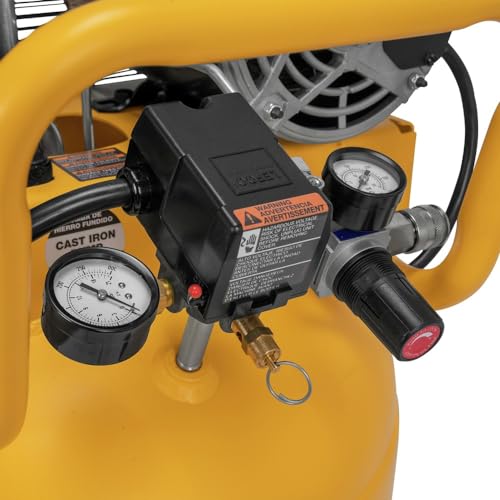
- Basic regulator
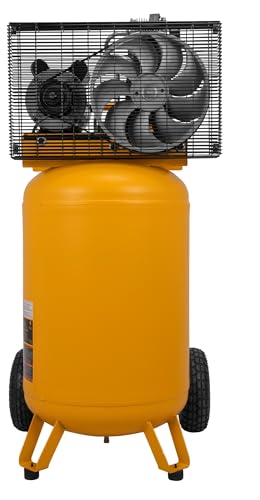
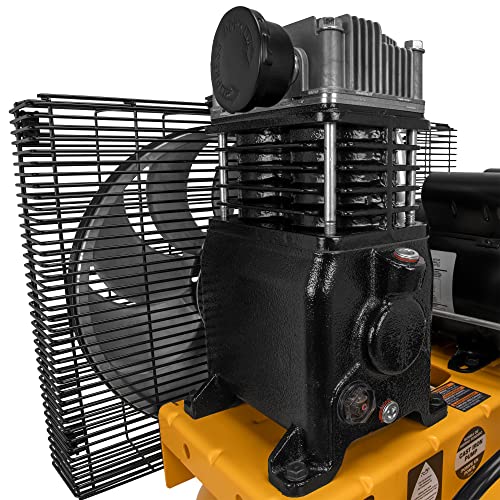
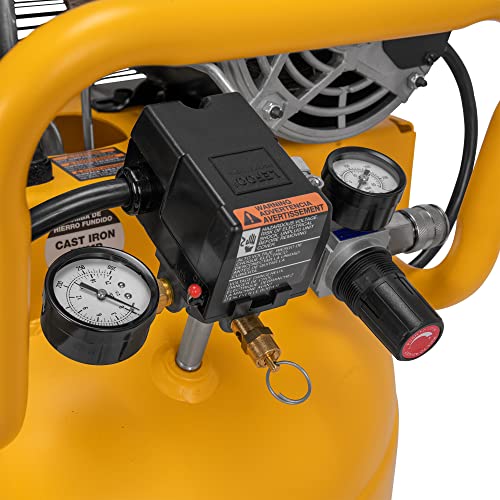
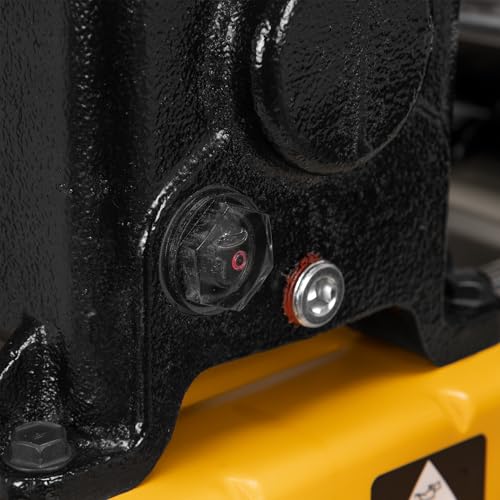
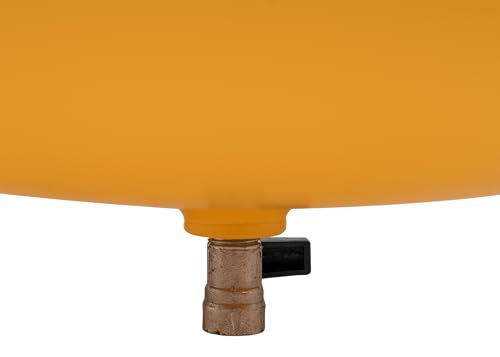
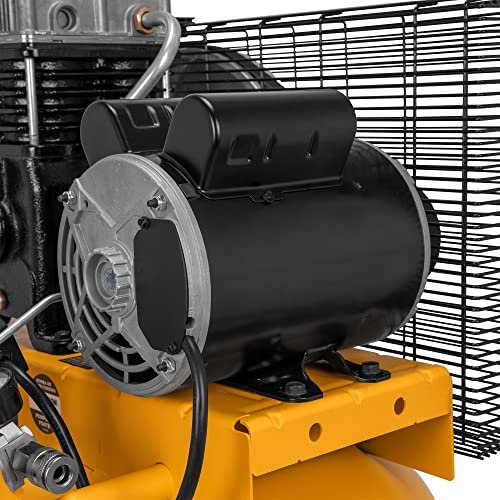
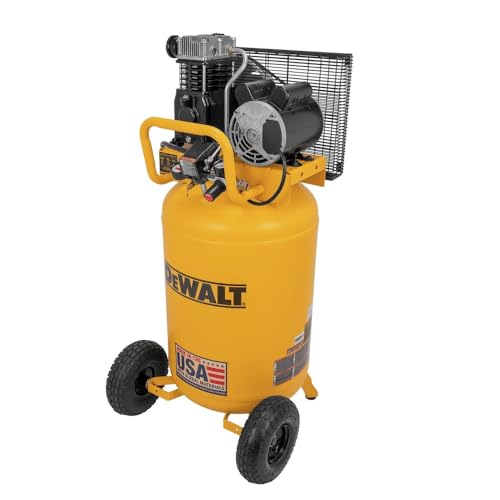
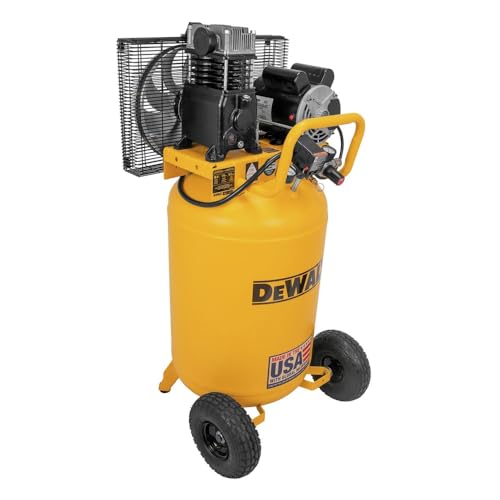
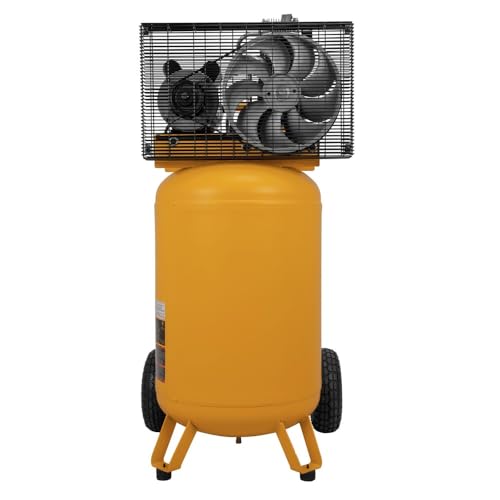
This DeWalt strikes a smart balance between performance and space efficiency. The 2 HP motor and 6.2 SCFM @ 90 PSI won’t crush the competition on paper, but it’s enough for most home and light pro tasks, nailers, inflators, ratchets, and small sprayers run fine. The vertical design saves floor space, and the belt drive helps reduce vibration and noise compared to direct-drive units.
It’s oil-lubed, which means a little more maintenance than oil-free models, but you gain longevity and smoother operation. Owners appreciate its reliability and compact footprint. Against the Klutch budget model, it’s pricier but better built. If you want a no-fuss, mid-tier electric compressor for general garage use, this one earns its spot.
Product photos
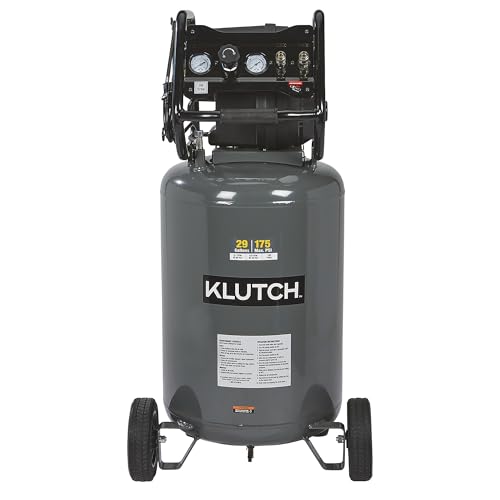
Klutch 29-Gallon Oil-Free Compressor
Strengths
- Oil-free pump
- Affordable price
- Flat-free tires
Trade-offs
- Lower CFM output
- Less durable pump
- 29-gallon tank (slightly smaller)
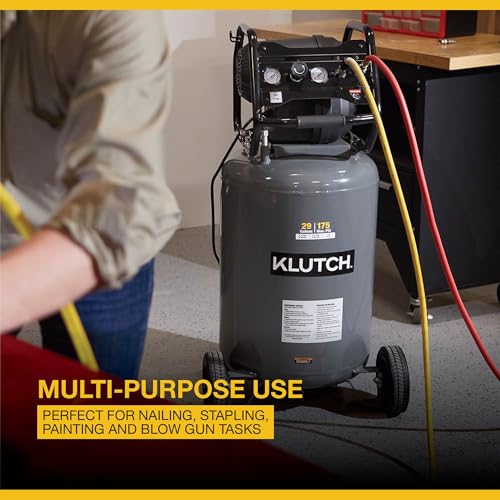
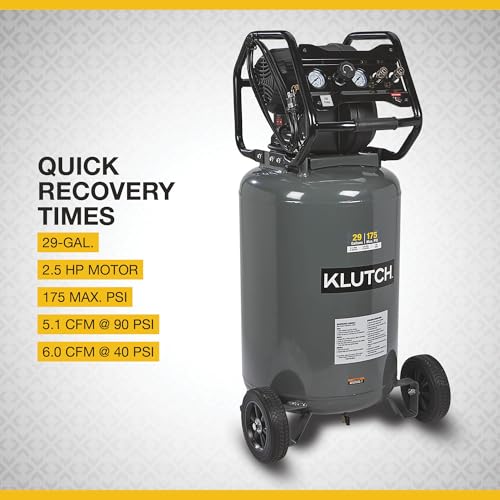
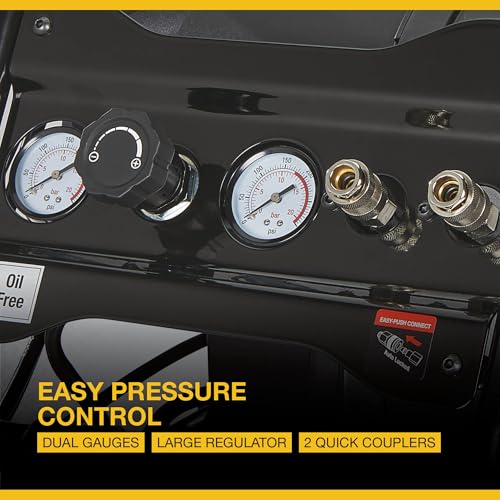
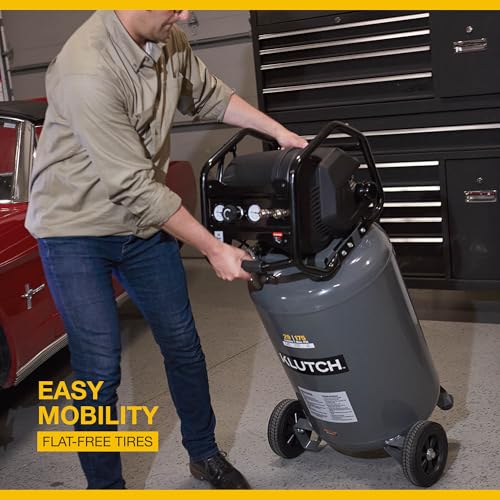
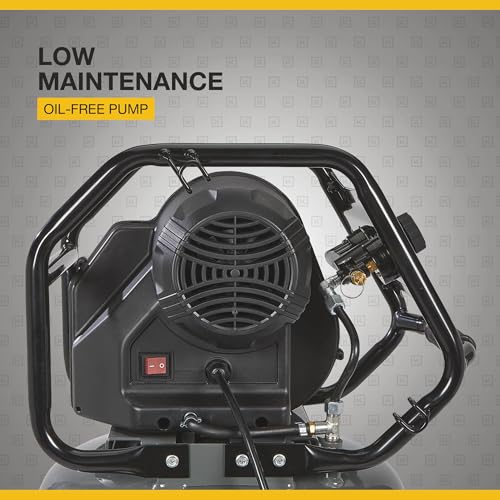
Klutch positions this as a budget-friendly, no-frills compressor, and it delivers on that promise. The 2.5 HP motor and 5.1 SCFM @ 90 PSI won’t wow pros, but it’s enough for basic nailing, inflation, and touch-up spraying. The oil-free pump is a big plus for users who hate maintenance, and the flat-free tires make it easy to roll across garage floors or job sites.
It’s not as powerful or durable as DeWalt or Campbell Hausfeld models, but for the price, it’s a solid entry point. Owners report it works well for weekend projects and light-duty use. If you’re just starting out or need a backup unit, this makes sense. But if you’re running tools all day, step up to a heavier build.
Product photos
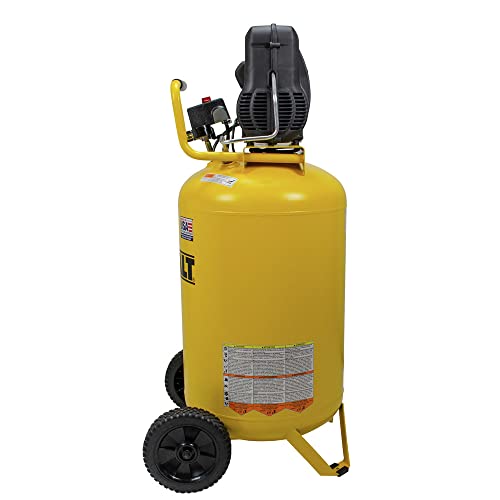
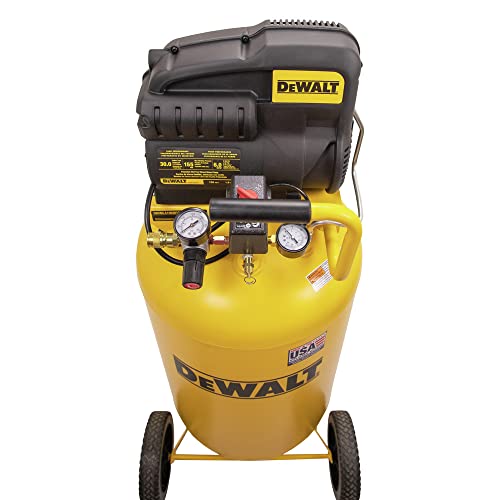
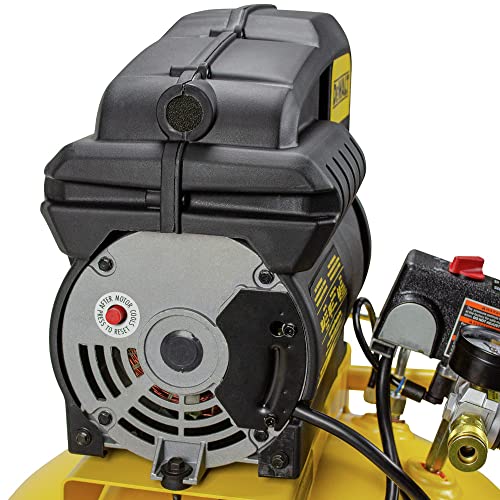
DeWALT DXCMLA1983012 Electric Compressor

Strengths
- Oil-free operation
- Fast recovery
- 120V compatible
Trade-offs
- Less durable pump
- Lower max PSI
- Not for continuous use
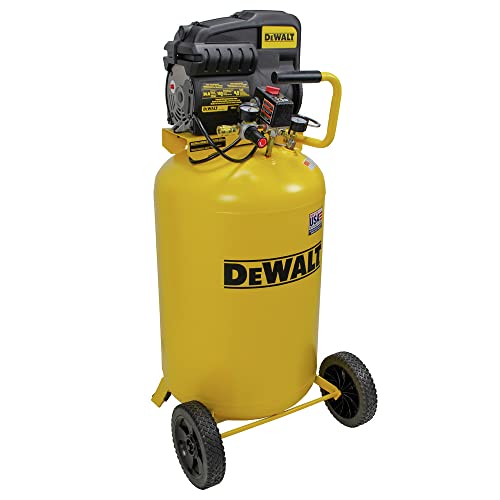
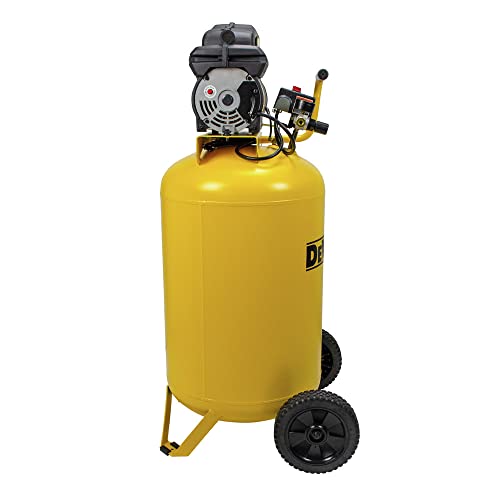
DeWalt’s oil-free, direct-drive design here is all about speed and simplicity. The patented pump claims the highest air delivery in its class, and reviewers confirm the recovery time feels snappier than most 2 HP units. The 6.0 CFM @ 90 PSI isn’t class-leading, but the high-flow regulator pushes more usable air to the tool, which helps when running finish nailers or detail sprayers.
With no oil to change, it’s a low-maintenance winner for occasional users. The vertical tank and wheels make it easy to move, and it runs on standard 120V. Compared to the oil-lubed Dewalt model, it trades some durability for convenience. I’d recommend this for users who value quick startups and minimal upkeep over long-term heavy use.
Product photos
Campbell Hausfeld 3.7 HP 230V Compressor
Strengths
- Oil-lubed pump
- 230V stable power
- Durable build
Trade-offs
- Requires 230V outlet
- Heavier than verticals
- Slower recovery
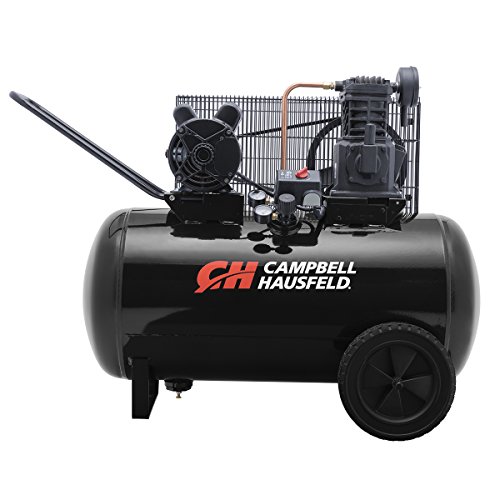
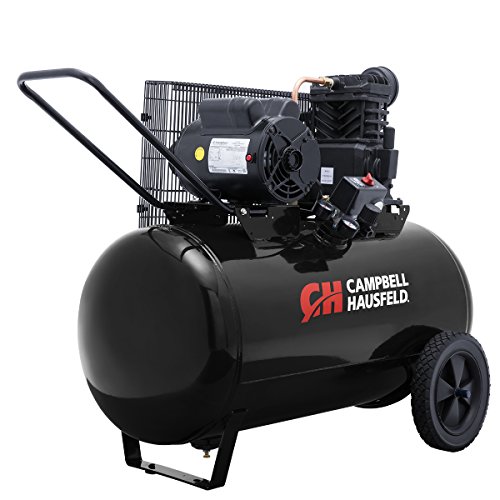
Campbell Hausfeld has long been a trusted name in heavy-duty compressors, and this 3.7 HP horizontal model is built like a tank. The oil-lubricated, single-stage pump is overbuilt for reliability, and owners praise its ability to run all day in shop environments. It’s not flashy, but it’s the kind of compressor you buy once and forget about, until you need it.
Running on 230V, it’s meant for permanent shop setups with proper wiring. The horizontal tank gives it a low center of gravity, and the semi-pneumatic wheels help with shop mobility. While it doesn’t have the peak PSI of some vertical units, its consistent delivery at 135 PSI is plenty for sanders, impact wrenches, and spray guns. Compared to DeWalt’s electric models, it’s less portable but more durable for constant use.
Product photos

VEVOR 15HP Gas Powered Compressor

Strengths
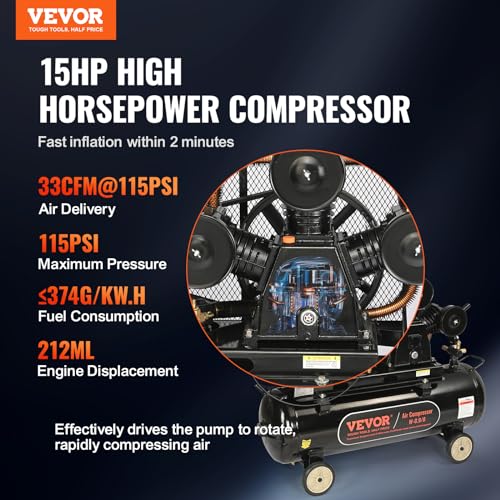
- 33 CFM output
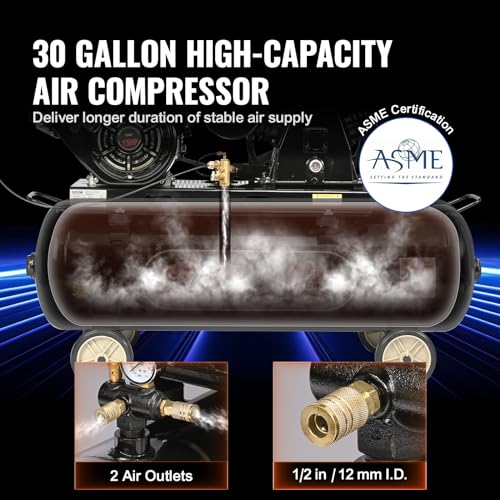
- Dual air outlets
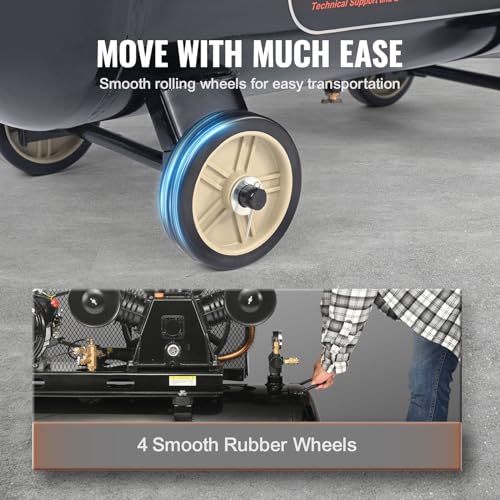
- 4 smooth wheels
Trade-offs
- 115 PSI max
- High fuel consumption
- Bulky frame
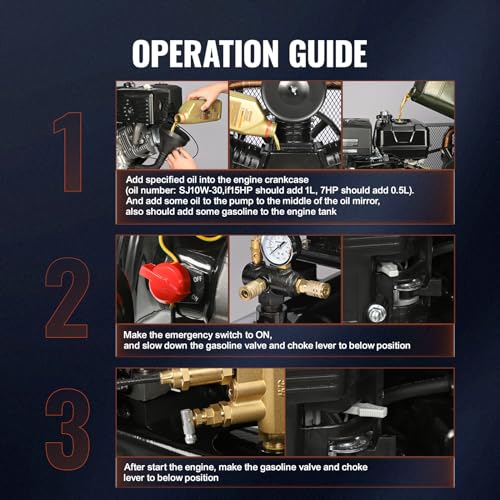
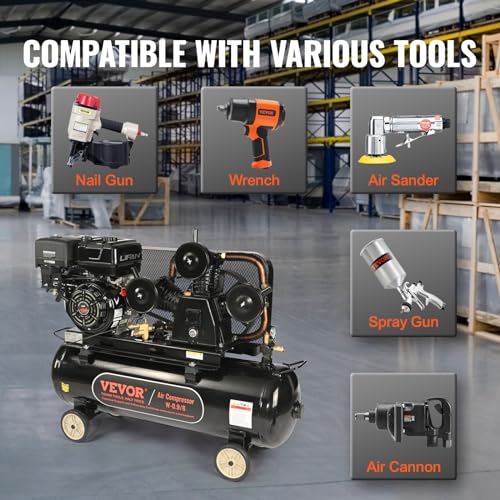
The VEVOR throws big numbers at the problem, 15 HP and 33 CFM @ 115 PSI, and that kind of output is rare in the 30-gallon range. That kind of air delivery means less downtime between tool cycles, which matters when running multiple users or high-demand tools like sandblasters. Reviewers note it’s loud, as expected, but the cast iron pump inspires confidence for long-term job site use.
Its dual outlets are a real advantage over most competitors, letting two users run tools simultaneously without pressure drops. The 4-wheel base makes it easier to move than many rivals, though it’s still bulky. It’s limited to 115 PSI, so it won’t suit tools needing higher pressure, but for volume-driven tasks, it’s hard to beat. I’d pick this over the Albott if I needed sheer airflow over max pressure.
Product photos
How We Evaluated 30 gallon air compressors
As someone who’s spent years around power tools and workshops, I know a good air compressor is essential. Rather than a hands-on lab test of each model, my approach to recommending these 30-gallon compressors was research-led. I compared published specifications and features across numerous models, then weighed owner reviews from multiple sources alongside expert opinions from sites I trust. This allowed me to rank the compressors against criteria important to a range of users.
For 30-gallon air compressors, consistent air delivery (CFM @ 90 PSI) and tank material are paramount. High CFM ensures tools run without significant pressure drop, especially important for demanding applications like spray painting or running impact wrenches. ASME-certified tanks are also crucial for safety and longevity; a well-built tank prevents failures and provides years of reliable service. Finally, motor power (HP) is considered, though it’s often less telling than CFM.
Specifications reliably indicate tank capacity, maximum PSI, and motor horsepower. However, I placed more weight on owner feedback regarding noise levels, durability, and real-world CFM performance. Reputable review sites helped validate claims and identify potential weaknesses not obvious from specs alone. If you’re looking for even larger capacity options, you might also consider checking out our guide to 80-gallon air compressors.
How To Choose The 30 gallon air compressors
Choosing the right air compressor isn’t just about CFM and tank size; it’s about matching the tool to the job, and understanding what you really need.
A quality air compressor delivers consistent pressure and airflow for powering pneumatic tools. Key considerations include the motor’s horsepower, the tank’s capacity (measured in gallons), the CFM rating at a specific PSI (typically 90 PSI), and whether it’s gas or electric powered. Look for durable construction, reliable components, and features that enhance portability and ease of use.
Power Source: Gas vs. Electric
The first big decision is fuel. Gas compressors, like the Albott 13HP model, offer incredible portability and power, making them ideal for job sites without easy access to electricity. However, they require more maintenance (oil changes, spark plug replacements) and produce exhaust fumes. Electric compressors, such as the DEWALT 30 Gallon Electric Compressor, are quieter, cleaner, and generally require less upkeep. But they’re tethered to a power outlet, which can limit where you can use them. Consider how and where you’ll be using the compressor most often. If you need mobility and aren’t concerned about fumes, gas is the way to go. Otherwise, electric is often the more convenient choice.
CFM and PSI: Matching Airflow to Your Tools
CFM (cubic feet per minute) and PSI (pounds per square inch) are the two most important specifications. PSI indicates the maximum pressure the compressor can generate, while CFM at 90 PSI tells you how much air it can sustain for continuous use. Don’t get hung up on maximum PSI; focus on the CFM at 90 PSI. A nailer might need 2 CFM, while a sandblaster could demand 10 CFM or more. Always check the air consumption requirements of your pneumatic tools and choose a compressor that can comfortably exceed them. If you’re considering a unit for a wider range of tasks, or think you might upgrade to more demanding tools in the future, it’s always better to err on the side of higher CFM. For a deeper look at various options, you can find a review of top-rated air compressors on our site.
Tank Size and Portability
Tank size impacts how consistently the compressor can deliver air. A larger tank, like those found in high-capacity air compressors, allows for longer run times between compressor cycles, which is crucial for tools with high air consumption. However, larger tanks also mean a heavier, less portable unit. Consider how often you’ll be moving the compressor.
Here’s a breakdown of portability considerations: * Wheels: Almost a must-have for models over 20 gallons. * Weight: A 30-gallon compressor will likely be over 100 pounds, so consider if you can realistically move it. * Handle Design: A well-designed handle makes a significant difference when maneuvering. A simple top handle is fine for short distances, but a telescoping handle is much more comfortable for longer moves.
A good rule of thumb: add up the CFM requirements of all the tools you plan to use simultaneously, then add 50% to that number when selecting a compressor. This buffer ensures sufficient airflow and prevents the compressor from running constantly.
30 Gallon Air Compressors Compared
Here is a comparison of key specifications for several 30-gallon air compressors.
| Product Title | HP | Voltage | Max PSI | CFM @ 90 PSI | Tank Capacity | Oil Type |
|---|---|---|---|---|---|---|
| Albott 13HP Gas | 13 | N/A | 180 | 18 | 30 | Oil-Lubed |
| DEWALT 30 Gallon Electric | N/A | 120V | 175 | 6.2 | 30 | Oil-Free |
| Dewalt 2 HP Vertical | 2 | 120V | 175 | 6.2 | 30 | Oil-Lubed |
| Klutch 29-Gallon Oil-Free | 2.5 | 120V | 175 | 5.1 | 29 | Oil-Free |
| DeWALT DXCMLA1983012 | 1.9 | 120V | 155 | 6.0 | 30 | Oil-Free |
| Campbell Hausfeld 3.7 HP | 3.7 | 230V | N/A | N/A | 30 | Oil-Lubed |
| VEVOR 15HP Gas | 15 | N/A | 115 | 33 | 30 | Oil-Lubed |
Frequently Asked Questions
What’s the difference between oil-lubed and oil-free compressors?
Oil-lubed compressors generally last longer and run cooler due to the lubrication reducing friction, but they require regular oil changes. Oil-free compressors are lower maintenance, but often louder and have a shorter lifespan because of increased wear on internal components.
What CFM rating do I actually need for most DIY projects?
For typical DIY tasks like nailing, stapling, and inflating tires, 3 to 5 CFM at 90 PSI is usually sufficient. If you plan to use more demanding tools such as impact wrenches or sanders, you’ll want to look for a compressor that delivers at least 6 CFM, or even higher depending on the tool’s specifications.
Can I run a 30-gallon compressor on a standard 120V outlet?
Most 30-gallon electric compressors can run on a standard 120V outlet, but you should verify the amperage draw and ensure your circuit isn’t overloaded. Some higher-powered models might require a dedicated 20-amp circuit; running one on an inadequate circuit can trip breakers or even create a fire hazard.
Are gas-powered compressors louder than electric ones?
Yes, gas-powered compressors are typically significantly louder than electric models. This is due to the combustion engine. If noise is a concern, especially in residential areas, an electric compressor is the better choice; look for models advertised as quiet operation.
What are the benefits of a two-stage compressor, and should I consider one?
High-efficiency air compressors deliver more consistent pressure and are more efficient than single-stage models, making them ideal for professional or heavy-duty use. While more expensive upfront, they offer improved performance and longevity for demanding applications.
The Bottom Line
Choosing a 30-gallon air compressor often comes down to balancing consistent performance with convenience. While specifications are important, the DEWALT 30 Gallon Electric Compressor strikes a solid balance for most homeowners and DIY enthusiasts needing a reliable, portable power source that doesn’t require constant maintenance. It delivers enough CFM for a wide range of tasks without the hassle of gas.
For those on a tighter budget, or who primarily need air for basic inflation and light-duty tasks, the Klutch 29-Gallon Oil-Free model is a smart pick. If you foresee needing serious power for more demanding applications like automotive work or professional construction, the VEVOR 15HP Gas compressor provides the muscle and portability required, though it does come with the trade-offs of a gas-powered unit. If you find a 30-gallon tank is still too large for your needs, you might also want to explore options in our guide to 20-gallon air compressors.
Ultimately, the best compressor isn’t about the highest numbers on a spec sheet. It’s about matching the tool to your needs and prioritizing consistent airflow (CFM at 90 PSI) and a durable, ASME-certified tank over flashy features. A compressor that delivers steady pressure will always outperform one with high max PSI but inconsistent delivery.
