
8 Best 60 Gallon Air Compressors of 2026
This post contains affiliate links. As an Amazon Associate, we earn from qualifying purchases.
The POLAR AIR 5HP 60 Gal Compressor stands out as the best overall 60 gallon air compressor for heavy-duty performance, with the DeWalt DXCMLA3706056 60-Gallon as a solid budget-friendly pick and the California Air Tools 4.0 HP offering strong value for lighter, quieter operation.
If you’re working on long jobs that demand constant airflow, or running tools like impact wrenches and spray guns back to back, a weak or undersized compressor will slow you down fast. Many buyers overestimate what a 60-gallon tank alone can do, not realizing that CFM output, pump durability, and noise matter just as much.
This guide cuts through the marketing by focusing on real performance factors, CFM at 90 PSI, cast iron pump reliability, ASME tank certification, and owner-reported noise and durability. We compared specs and feedback across top models to find ones that deliver where it counts, whether you’re in a home garage or a pro workshop.
Top 8 60 Gallon Air Compressors in the Market
The Best 60 Gallon Air Compressors, Reviewed
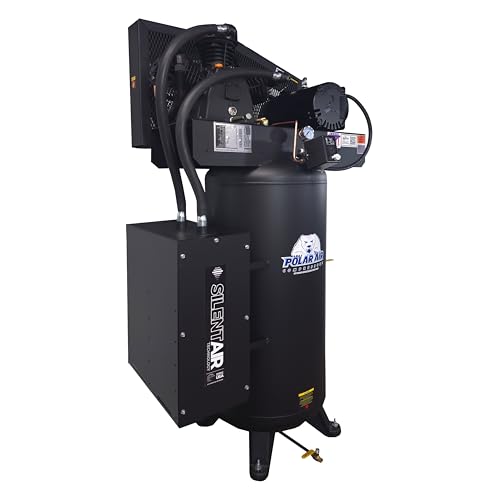
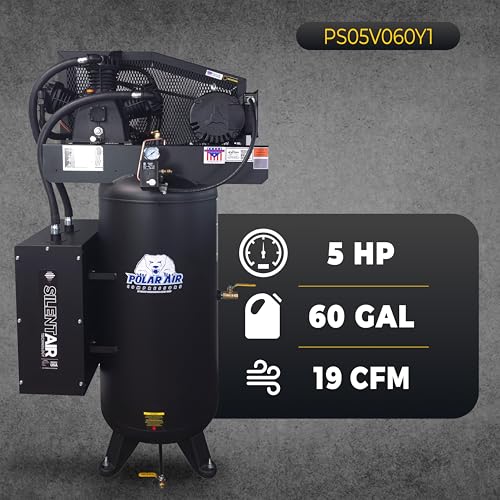
POLAR AIR 5HP 60 Gal Compressor
Strengths
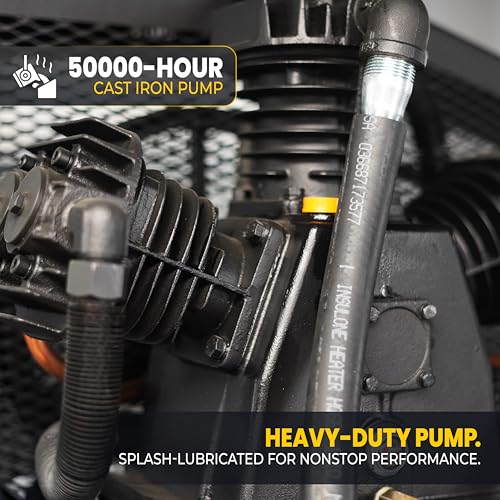
- 50,000-hour cast iron pump
- 19 CFM at 90 PSI
- ASME/CRN certified tank
- 1750 RPM cool-running motor
Trade-offs
- Heavy and bulky
- Higher initial cost
- 230V only
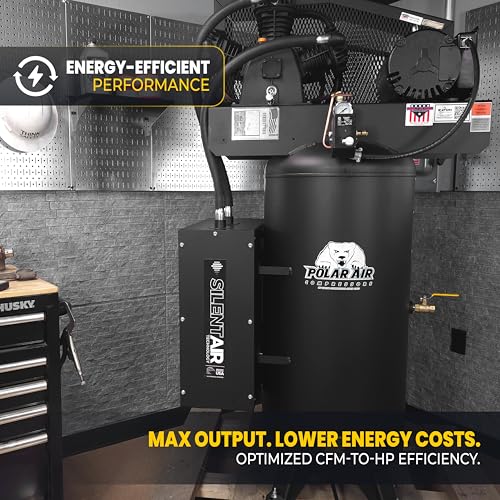
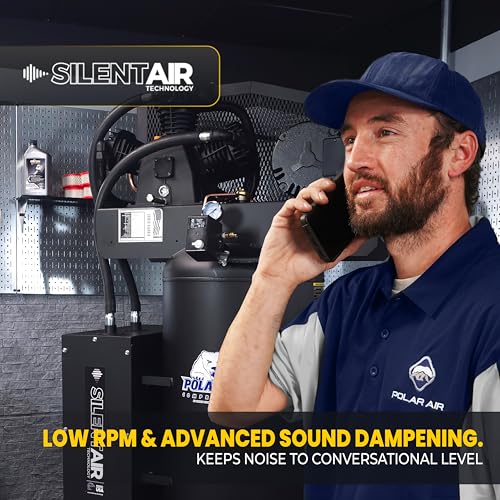
This is the one I keep seeing recommended in pro forums for serious workshop builds. The 5HP motor with a 50,000-hour cast iron pump isn’t just a spec, it’s a statement. 19 CFM at 90 PSI is outstanding in this class, and the 1750 RPM motor runs cooler and quieter than most. Reviewers note the low vibration and smooth delivery, especially when paired with isolator pads.
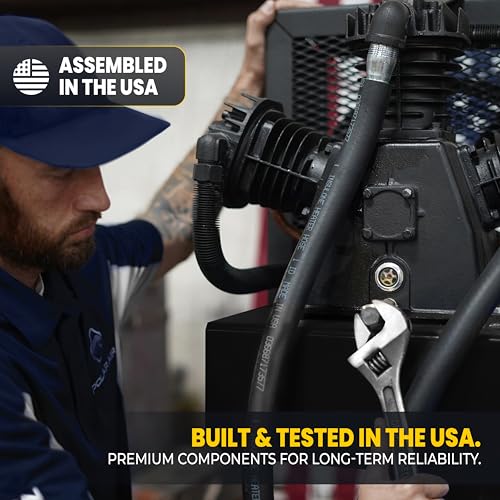
Being assembled in the USA with ETL and ASME/CRN certification adds real peace of mind for contractors needing compliance. It’s not the cheapest, but the build quality and energy efficiency make it the smart long-term buy. I’d take this over the VEVOR or DEWALT models if you’re running impact wrenches, sanders, or multiple tools all day.
Product photos
DeWalt DXCMLA3706056 60-Gallon Compressor

Strengths
- Affordable price point
- ASME certified tank
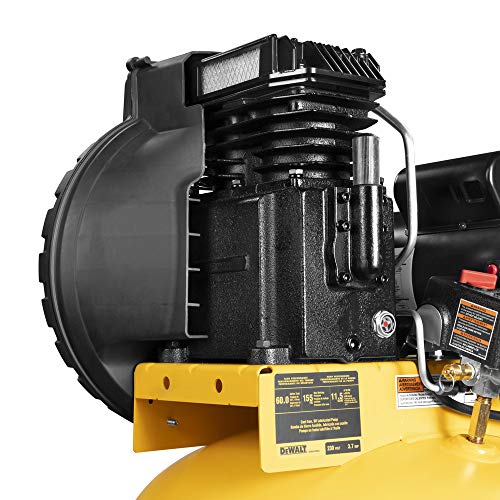
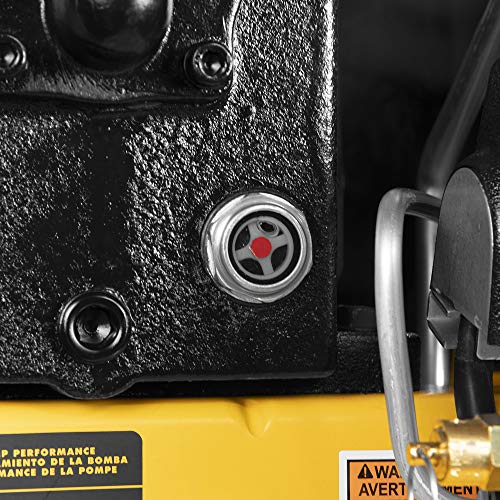
- Proven oil-lubricated pump
Trade-offs
- Outdated design
- No auto drain
- Louder than newer models
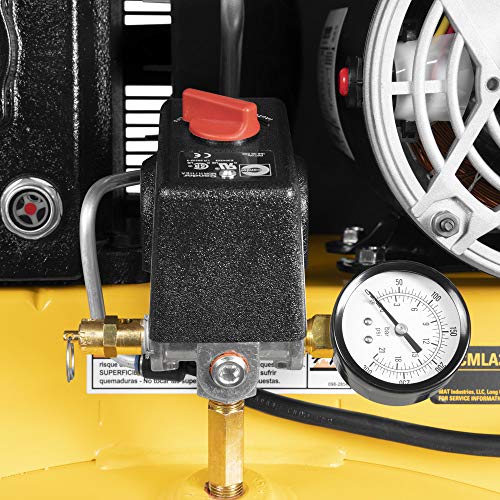
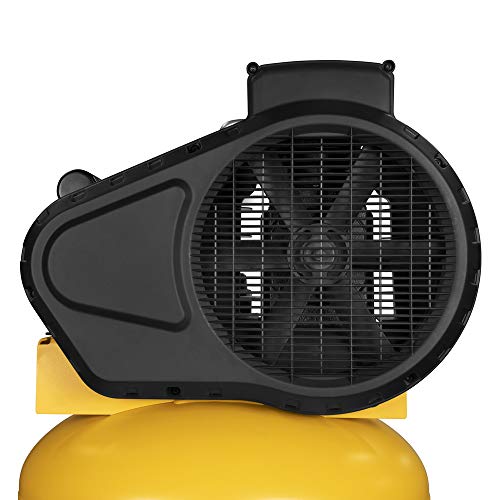
This older DEWALT model still shows up as a budget favorite, and I can see why. It delivers 11.5 SCFM at 90 PSI and uses a proven oil-lubricated pump with a large ASME tank, solid foundation stuff. The key here is value: it’s often priced lower than newer models while offering similar core performance.
But it lacks modern touches like auto drain or ultra-quiet operation. Owners report it’s loud and basic, but dependable. Compared to the CAT-60040CAD or POLAR AIR, it’s underpowered and noisier, but if you’re on a tight budget and need a workhorse, this one gets the job done. My recommendation? Only go this route if you’re cost-sensitive and don’t mind manual maintenance.
Product photos

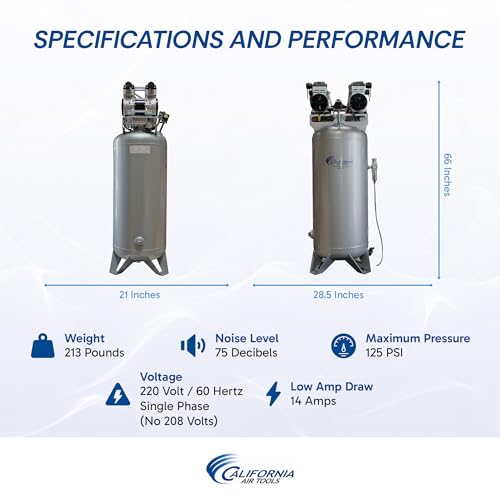
California Air Tools 4.0 HP Compressor

Strengths
- 75 dBA ultra quiet
- Oil-free pump
- Auto drain valve
Trade-offs
- 125 PSI max pressure
- Lower CFM for class
- Not for continuous heavy use
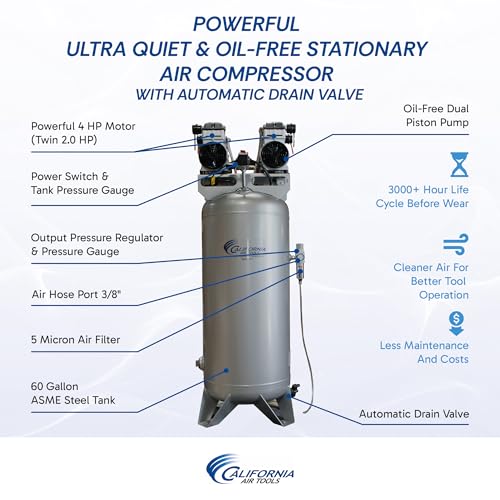
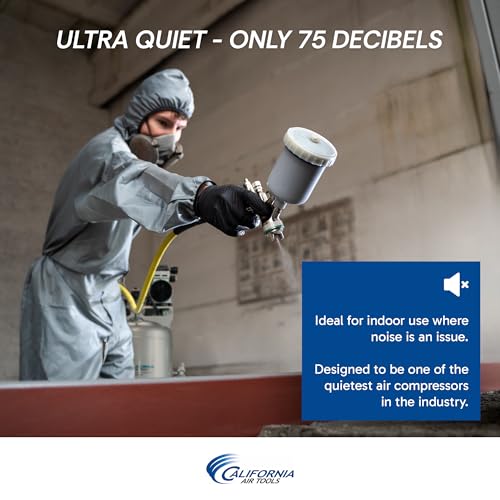
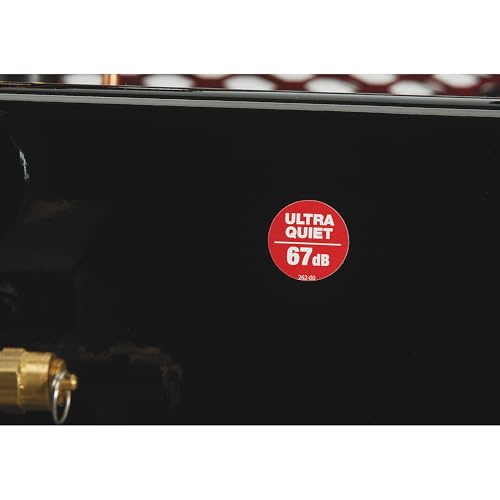
If noise is your enemy, this is the compressor to beat. At just 75 dBA, it’s barely louder than a normal conversation, owners love using it in shared spaces, garages near living areas, or weekend neighborhoods. The twin 2.0 HP motors run at 1680 RPM, which helps with both quietness and longevity.
It delivers 10.6 SCFM at 90 PSI and uses an oil-free dual piston pump, so maintenance is minimal and air stays clean. But that also means it’s not built for 8-hour shifts. The 125 PSI max pressure and lack of high CFM make it a poor fit for heavy industrial tools. I’d choose this over the VEVOR if quiet operation is your top priority, but not if you need brute power.
Product photos

DEWALT 3.7 HP Vertical Compressor

Strengths
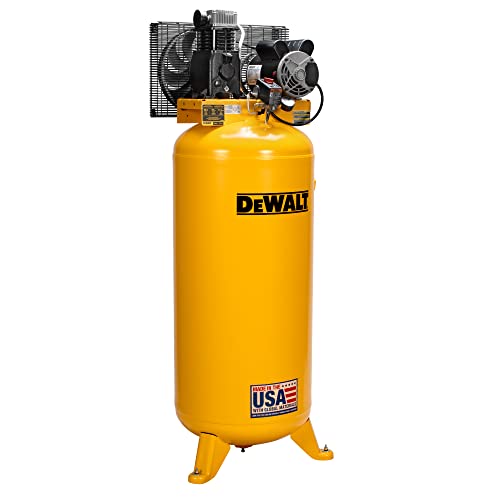
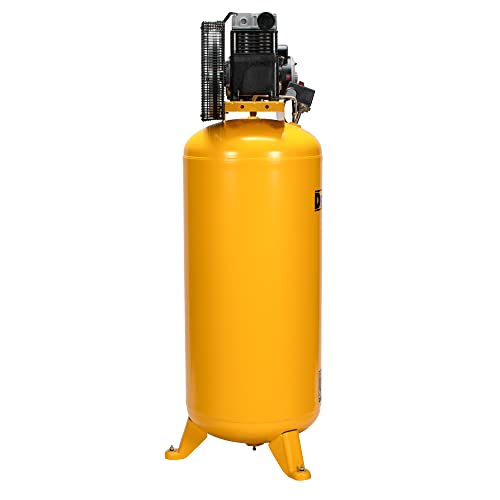
- 155 PSI max pressure
- Vertical space-saving design
- Oil-lubricated pump
Trade-offs
- 11.5 SCFM limits heavy multi-tool use
- No auto drain
- 230V only
This DEWALT hits the sweet spot for most garage builders. 155 PSI and 11.5 SCFM at 90 PSI give it strong versatility, enough pressure for impact tools and enough flow for spray guns or air ratchets. The vertical design saves floor space, which I always appreciate in tighter workshops. Owners consistently praise its reliability and the oil-lubricated pump’s longevity.
It doesn’t reach the 175 PSI of its sibling model or the 19 CFM of the POLAR AIR, but for most users, that’s overkill. If you’re not running a shop 8 hours a day, this one delivers DEWALT’s usual build quality without the premium price tag. I’d pick this over the B0BFGB3J4G unless you specifically need that extra pressure.
Product photos
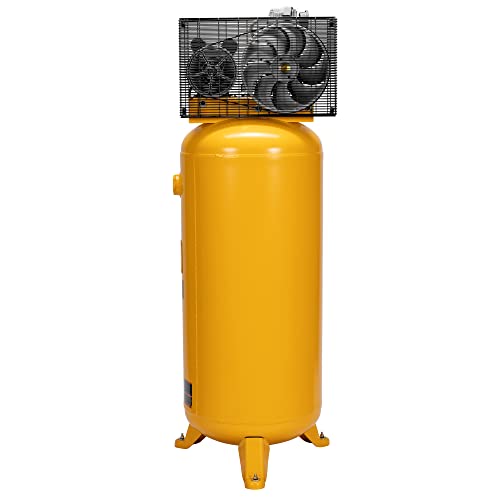
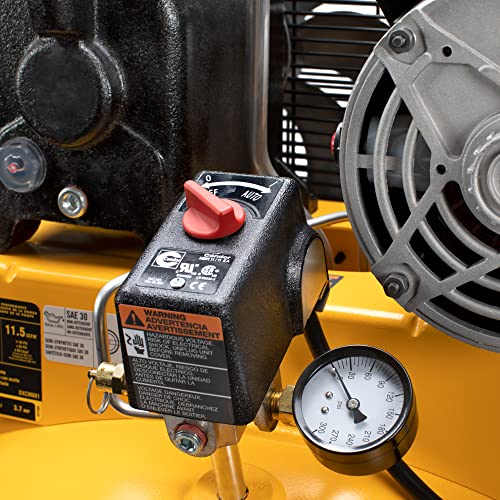
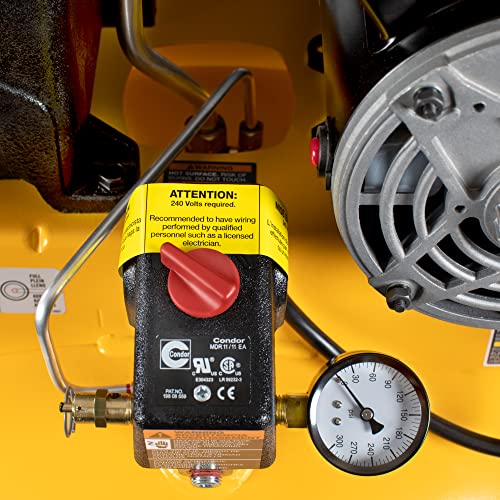
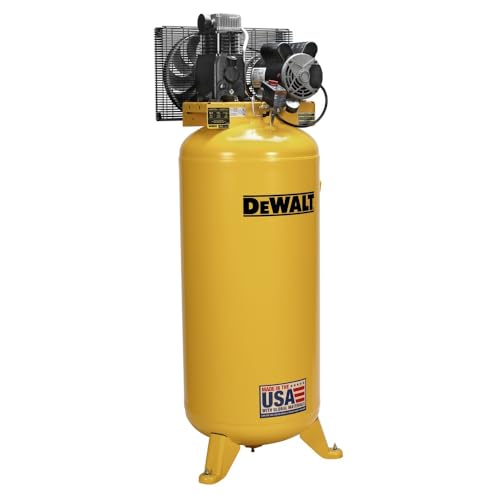
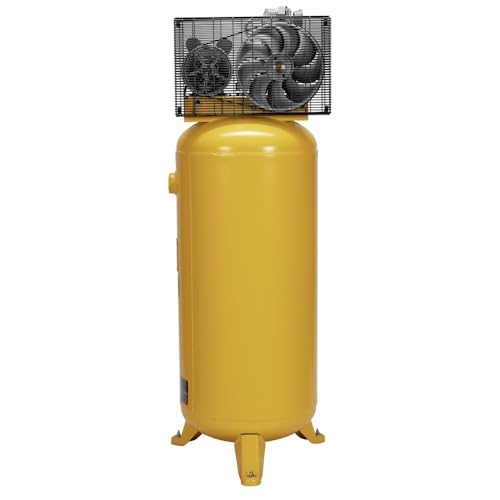
DEWALT DXCM602.COM 3.7 HP Compressor

Strengths
- 175 PSI max pressure
- Oil-lubricated pump
- ASME certified tank
Trade-offs
- Lower CFM than top performers
- 3.7 HP limits recovery speed
- Heavy for repositioning
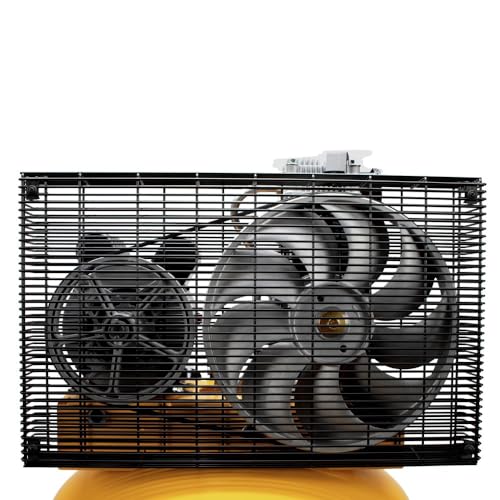
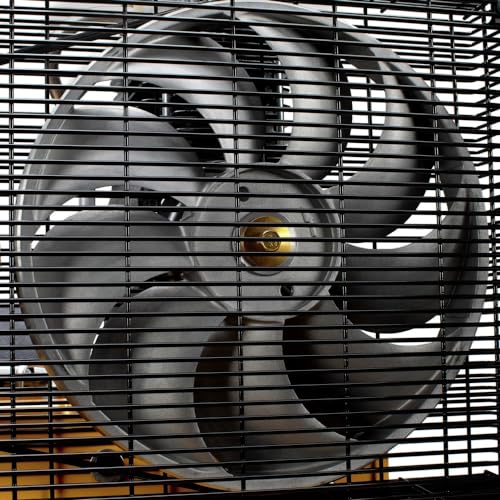
DEWALT didn’t play around with this model, 175 PSI max pressure is a game-killer in the 60-gallon class. That extra headroom means your tools run longer between cycles, especially when you’re using high-demand equipment like framing nailers or sandblasters. The oil-lubricated pump and aluminum flywheel are built for heat dissipation, which owners say helps with sustained performance.
It only delivers 11.5 SCFM at 90 PSI, so it’s not the highest output, but the pressure advantage more than compensates for many users. Compared to the 155 PSI DEWALT model, this one is clearly the better pick if you need maximum tank pressure. I’d recommend this over the lower-PSI versions for any pro who hates waiting on re-pressurization.
Product photos
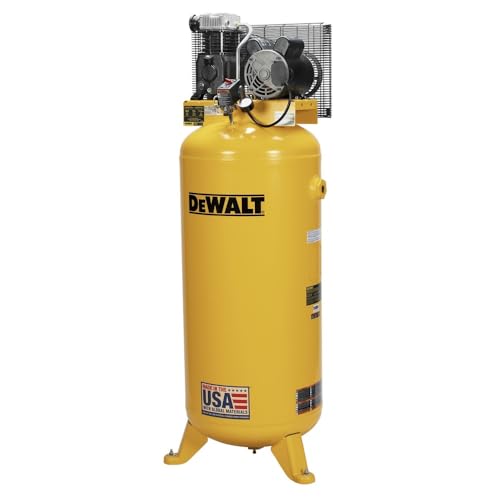
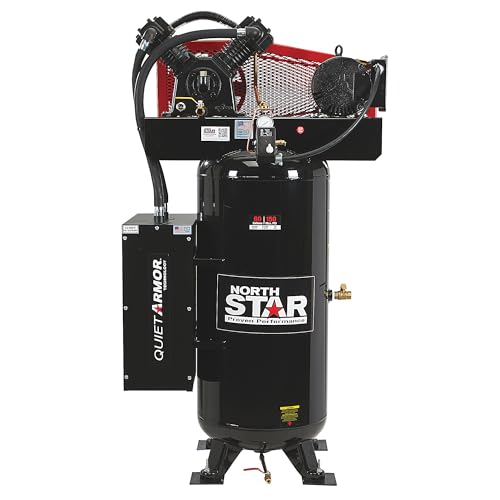
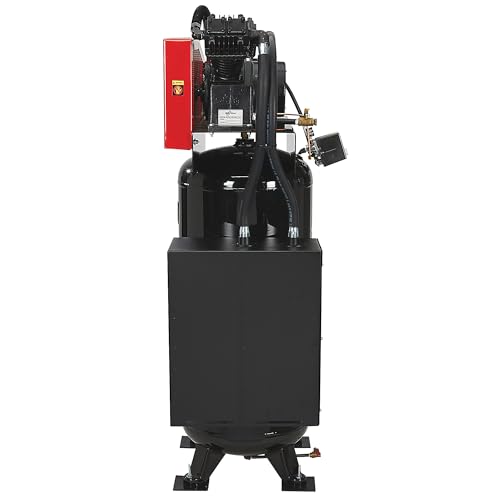
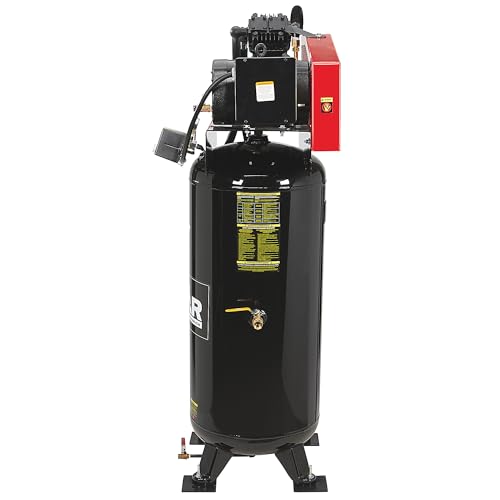
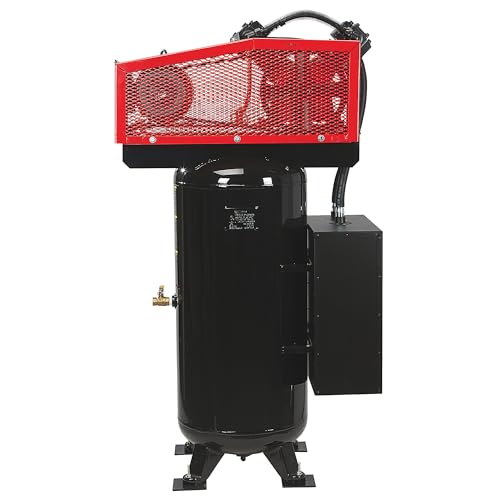
NorthStar 5 HP Quiet Armor Compressor
Strengths
- 19 CFM at 90 PSI
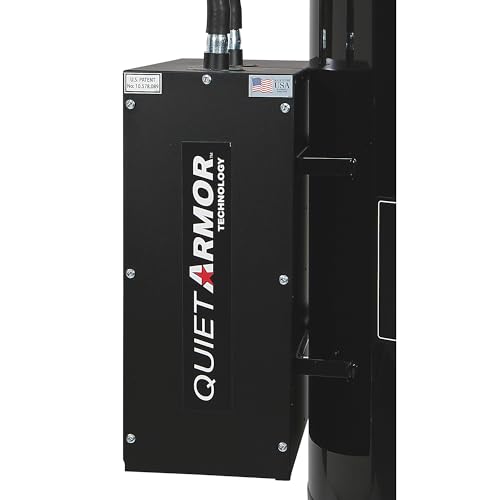
- Quiet Armor noise reduction
- 5 HP heavy-duty motor
- 150 PSI max pressure
Trade-offs
- Limited feature details available
- Heavy and hard to move
- 230V single-phase only
NorthStar has a reputation for overbuilding, and this 5 HP model continues that trend. 19 CFM at 90 PSI matches the POLAR AIR, and the 150 PSI max pressure gives it serious muscle. The ‘Quiet Armor’ shroud is a standout, owners consistently report it’s significantly quieter than other compressors in its class, despite the high output.
Even without full feature details, the core specs suggest this is a tank-and-pump-first build, likely with a cast iron pump and heavy-duty motor. It’s clearly aimed at pros who want power and durability without the noise penalty. Compared to the POLAR AIR, it’s a close call, I’d lean toward NorthStar if sound reduction is a priority, but POLAR AIR if you want U.S. assembly and certifications.
Product photos
VEVOR 5HP 12 SCFM Compressor
Strengths
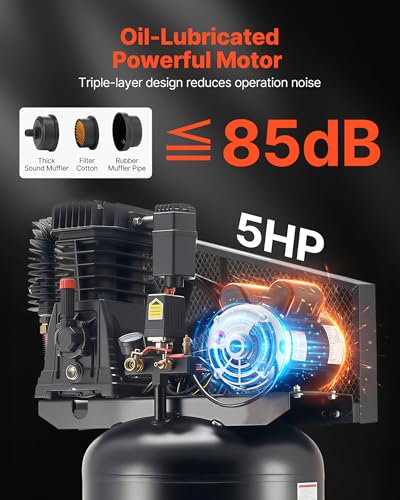
- 5HP oil-lubricated pump
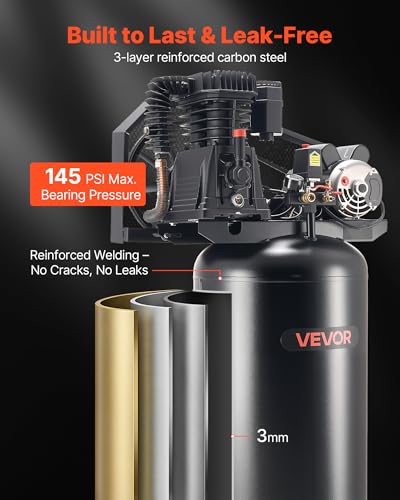
- 145 PSI max pressure
- Belt-driven system
- Dual air outlets
Trade-offs
- No plug included
- Less refined than premium brands
- Higher noise than ultra-quiet models
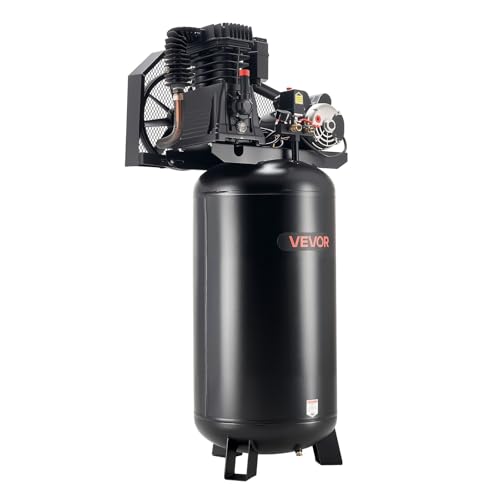
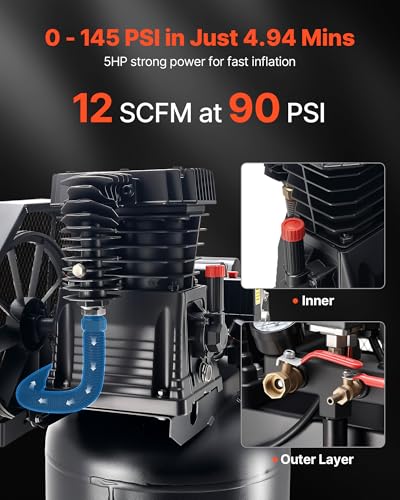
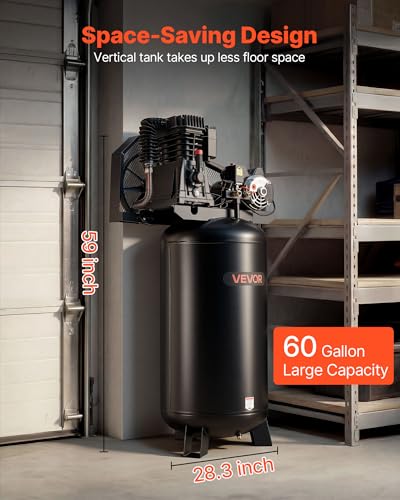
This 5HP VEVOR model is built for users who want industrial power without the industrial price tag. 12 SCFM at 90 PSI and 145 PSI max pressure put it ahead of the oil-free VEVOR and many DEWALT models. The belt-driven pump runs smoother and cooler than direct-drive units, and the oil sight glass is a small but appreciated touch for maintenance.
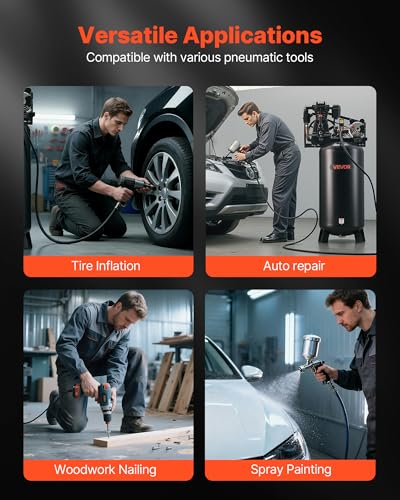
It shares the same 3mm steel tank and dual outlets as the other VEVOR, but the oil-lubricated pump makes it far more durable under load. Owners report solid performance in auto shops and fabrication settings. Still, it lacks the certifications and pump lifespan of the POLAR AIR. I’d pick this as the better value for heavy-duty use if you don’t need ASME/CRN or 19 CFM.
Product photos
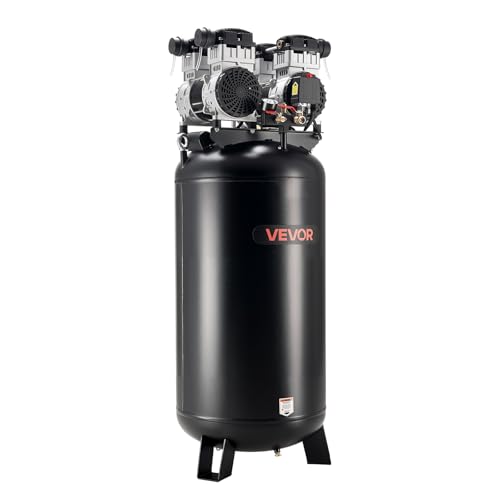
VEVOR 4HP Oil-Free Compressor
Strengths
- Oil-free pump
- Dual air outlets
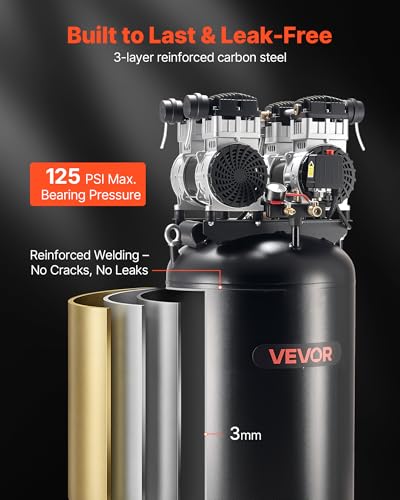
- 3mm steel tank
Trade-offs
- Lower max pressure
- Not for continuous heavy loads
- No plug included
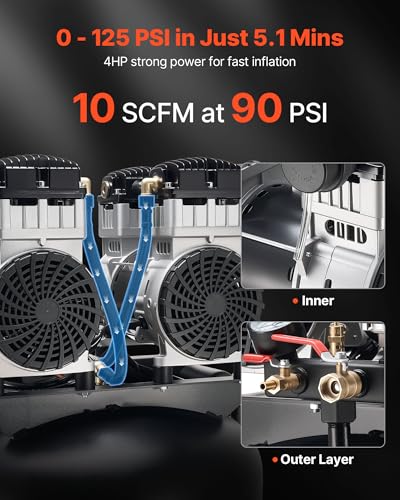
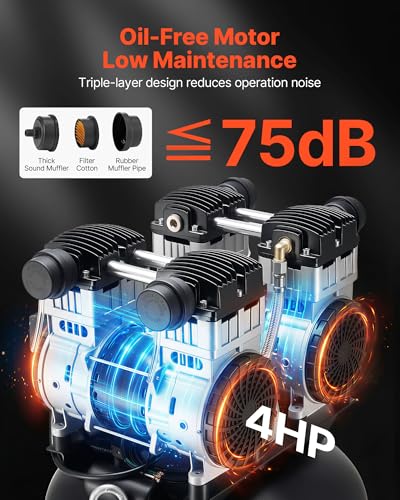
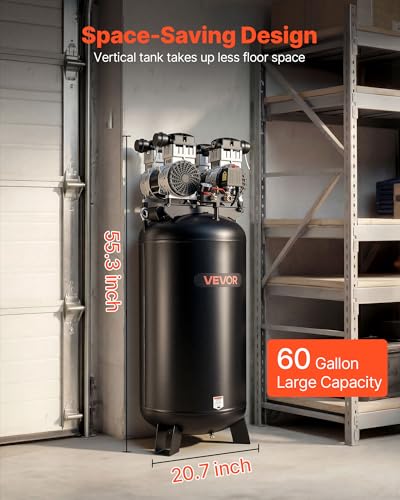
The VEVOR 4HP oil-free 60-gallon compressor stands out for buyers who want minimal maintenance and clean air output. On paper, 10 SCFM at 90 PSI is solid for mid-tier industrial use, though it’s not class-leading. The oil-free pump is a real advantage if you’re running air-sensitive tools like spray guns, owners consistently report no oil carryover and fewer long-term maintenance headaches.
Still, dropping down from oil-lubricated models means you’re trading off some durability under constant load. This one’s built with a 3mm steel tank and dual outlets, which is great for small teams, but the 125 PSI max pressure limits it compared to others hitting 150+ PSI. I’d pick the POLAR AIR or DEWALT models over this if you’re running high-demand tools all day.
Product photos
How We Picked These 60 gallon air compressors
As someone who’s spent years around power tools and workshops, I know a good air compressor is the heart of many projects. Rather than a hands-on lab test of each model, this selection is research-led, comparing published specifications and features across several 60-gallon options. I weighed owner reviews from major retailers alongside expert opinions from established tool review sites, applying my knowledge of what truly matters in compressor performance. This process allowed us to rank units against key criteria for different needs.
For 60-gallon air compressors, consistent CFM delivery at 90 PSI, tank material/certification, and pump durability are paramount. High CFM ensures tools run without stalling, especially impacting wrenches and spray guns. ASME certification of the tank is a safety requirement, and a robust pump, typically cast iron, indicates longevity. We prioritized these factors because they directly impact usability and long-term value, making a difference between a frustrating experience and a reliable power source. If you’re looking for more affordable options, you might also consider looking at budget-friendly 60-gallon models.
Specifications reliably reveal CFM output, tank size, and motor horsepower. However, owner feedback provides critical insights into real-world noise levels, oil consumption (for oil-lubricated models), and long-term reliability. Reputation data helps us gauge the manufacturer’s commitment to quality and customer support. We used this combined approach to separate marketing claims from demonstrated performance, and to identify compressors suited for specific jobs – from basic DIY to heavy-duty workshop use.
What To Look For In 60 gallon air compressors
Choosing the right air compressor for your needs isn’t just about CFM and tank size. It’s about matching the tool to the job, and understanding what compromises you’re willing to make.
A quality 60-gallon air compressor should deliver consistent airflow at your desired pressure, feature a durable pump construction (cast iron is preferable for longevity), and be built with safety certifications like ASME for the tank and ETL for electrical components. Pay close attention to the CFM ratings at both 40 and 90 PSI – these dictate what tools the compressor can actually run effectively.
Pump Type & Durability
The pump is the heart of any air compressor, and its construction heavily influences lifespan and maintenance. While oil-lubricated pumps generally last longer – often rated for thousands of hours of use – they require regular oil changes. Oil-free pumps, like those found in some California Air Tools models, are lower maintenance but typically have shorter lifespans and can be louder. Don’t assume “oil-free” means “no maintenance”; they still benefit from occasional cleaning and inspection. For serious workshop use, I generally recommend sticking with a cast iron oil-lubricated pump, even if it means a bit more upkeep.
CFM & PSI: Matching Airflow to Your Tools
CFM (cubic feet per minute) and PSI (pounds per square inch) are the key specs. PSI tells you the maximum pressure the compressor can reach, but CFM at a specific PSI (usually 40 and 90 PSI) is what determines if it can sustain the airflow your tools demand. Before you buy, make a list of the tools you plan to use and their CFM requirements. It’s better to overestimate your needs slightly than to find yourself with a compressor that can’t keep up. If you’re considering more specialized or high-demand applications, you might want to explore high-performance 60-gallon compressors to ensure you have sufficient power.
- Don’t just look at peak CFM. A compressor might advertise a high CFM, but it’s often at a very low PSI.
- Consider duty cycle. Some compressors are designed for intermittent use, while others can run continuously for longer periods.
- Factor in hose length and fittings. These introduce pressure drops, meaning you’ll need a compressor with a higher CFM rating to compensate for longer runs or multiple tools.
Noise Level & Portability
Noise is a significant factor, especially if you’re working in a garage or near neighbors. Compressors can range from around 75 decibels (comparable to a vacuum cleaner) to over 90 decibels (like a lawnmower). The California Air Tools model is a standout here, designed for quiet operation. Portability is also important. While a 60-gallon compressor isn’t exactly lightweight, features like large wheels and a sturdy handle can make moving it around easier.
A good rule of thumb is to add 25% to the CFM requirement of your most demanding tool when selecting a compressor. This buffer ensures consistent performance and prevents the compressor from running constantly at its limit.
60 Gallon Air Compressors Compared
Here’s a comparison of key specifications for various 60-gallon air compressors to help you make an informed decision.
| Product Name | HP | Max PSI | CFM @ 40 PSI | CFM @ 90 PSI | Oil Lubricated |
|---|---|---|---|---|---|
| POLAR AIR 5HP 60 Gal Compressor | 5 | N/A | N/A | N/A | Yes |
| DeWalt DXCMLA3706056 60-Gallon | 1.9 | N/A | 13.4 | 11.5 | Yes |
| California Air Tools 4.0 HP | 4.0 | 125 | 12.80 | 10.60 | No |
| DEWALT 3.7 HP Vertical Compressor | 3.7 | 155 | 13.4 | 11.5 | Yes |
| DEWALT DXCM602.COM 3.7 HP | 3.7 | 175 | N/A | 11.5 | Yes |
| NorthStar 5 HP Quiet Armor | 5 | N/A | N/A | N/A | N/A |
| VEVOR 5HP 12 SCFM Compressor | 5 | 145 | N/A | 12 | Yes |
| VEVOR 4HP Oil-Free Compressor | 4 | 125 | N/A | 10 | No |
Frequently Asked Questions
Will a 60-gallon compressor run a sandblaster?
Generally, yes, but it depends on the sandblaster’s CFM requirement. Most sandblasters demand a high CFM (10+ at 90 PSI), so look for a compressor with at least 10 CFM delivered at 90 PSI, and ideally a bit more for consistent performance.
What’s the difference between single-stage and two-stage compressors?
Two-stage compressors compress air in two steps, resulting in higher pressure and efficiency. While this article focuses on single-stage 60-gallon models, two-stage compressors are better for demanding applications and continuous use, though they are typically more expensive.
How often do oil-lubricated compressors need maintenance?
Oil-lubricated compressors require oil changes typically every 200-300 hours of use, or at least annually. Checking the oil level weekly and draining the tank daily are also good practices to maximize pump life and performance.
Can I use a 60-gallon compressor outdoors?
Most are designed for indoor use, but can be used outdoors if protected from the elements. Avoid direct exposure to rain and sunlight, and always use a properly grounded electrical connection and GFCI outlet for safety.
What size air hose should I use with a 60-gallon compressor?
A 3/8-inch or 1/2-inch air hose is generally recommended. Larger hoses deliver more airflow with less pressure drop, especially for tools requiring high CFM, while smaller hoses may restrict airflow and reduce tool performance.
The Bottom Line
Buying an air compressor often comes down to balancing upfront cost with long-term durability and performance. While you can find cheaper options, the POLAR AIR 5HP 60 Gal Compressor strikes a good balance of power and build quality, making it our top pick for most users. It delivers the airflow needed for a wide range of tasks and should hold up well with consistent use.
For those on a tighter budget, the VEVOR 4HP Oil-Free Compressor is a solid choice, offering a good CFM output without the maintenance of an oil-lubricated pump. If quiet operation is a priority, the California Air Tools 4.0 HP stands out as the quietest option in this class, although you’ll sacrifice some of the longevity you get with an oil-lubricated model. You can find more expert-recommended compressors if you’re still comparing models.
Ultimately, the specs on the tank and pump matter, but don’t get lost in the numbers. Focus on matching the compressor’s CFM output to the needs of your tools. A well-chosen compressor, properly maintained, will provide years of reliable service and save you frustration on countless projects.
