
7 Best Two Stage Air Compressors of 2026
This post contains affiliate links. As an Amazon Associate, we earn from qualifying purchases.
The Ingersoll Rand 7.5HP 80 Gal 2-Stage is the best overall two-stage air compressor for heavy-duty performance and reliability, with the POLAR AIR 7.5HP 80 Gal Silent standing out as a quieter, well-built alternative for noise-sensitive environments. For those on a tighter budget, the Ingersoll-Rand 5HP 80 Gal 2-Stage delivers proven durability at a lower price point.
Most people shopping for a two-stage air compressor are trying to power demanding tools like sandblasters, impact wrenches, or spray guns, often for long stretches. The real problem isn’t just finding one that runs, but picking a unit that won’t wear out, overheat, or drown out conversation every time it kicks on.
This guide cuts through the marketing noise. I looked at specs, owner feedback, and long-term reliability to find compressors that deliver consistent airflow, use durable cast iron pumps, and are built to last. These picks are based on what actually matters in a real shop, not just paper horsepower.
Top 7 Two Stage Air Compressors in the Market
The Best Two Stage Air Compressors, Reviewed
Ingersoll Rand 7.5HP 80 Gal 2-Stage
Strengths
- 7.5 HP continuous duty
- Cast iron durability
- Extended oil life
Trade-offs
- Heavy weight
- Higher initial cost
- Requires 240V circuit
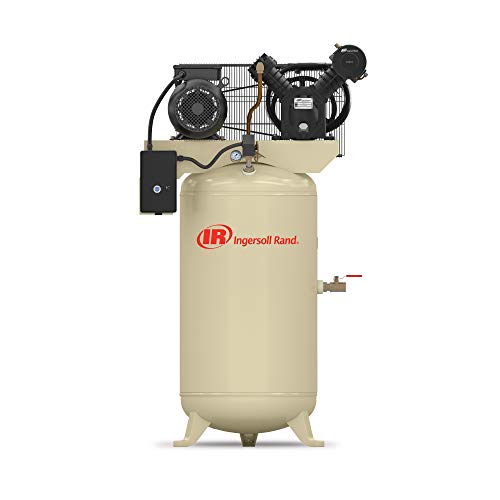
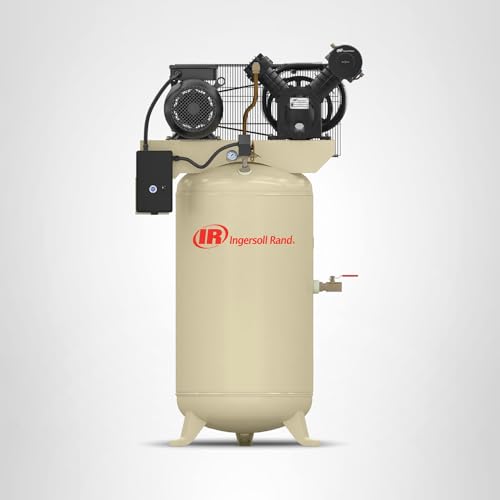
Ingersoll Rand has been a gold standard in industrial compressors for decades, and this 7.5HP two-stage model lives up to the reputation. The 80-gallon ASME tank and 100% continuous duty cycle are ideal for shops running air hammers, sandblasters, or production-line tools all day. Owners consistently report these units lasting well beyond 15,000 hours with basic maintenance, thanks to the cast iron pump and overhung crankshaft design that simplifies servicing.
What really sets it apart is the All Season Select lubricant, which extends oil change intervals to 2,000 hours, four times longer than standard oils. That’s a real cost saver over time. Paired with the two-year extended warranty when using the startup kit, this is the kind of compressor you buy once and forget about. I’d choose this over the DEWALT if I knew I’d be running heavy loads daily.
Product photos
POLAR AIR 7.5HP 80 Gal Silent
Strengths
- 31 CFM output
- 70,000-hour pump
- Energy efficient
Trade-offs
- Very high cost
- Large footprint
- Requires professional installation
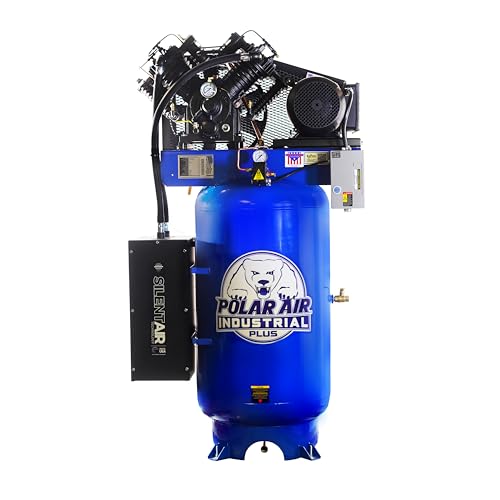
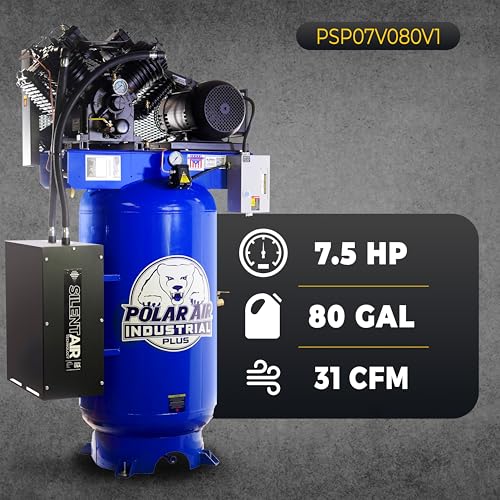
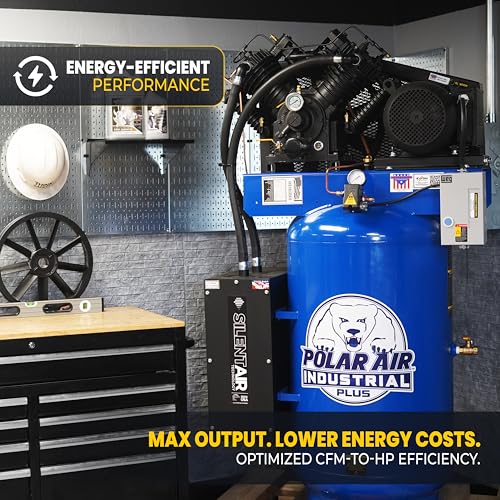
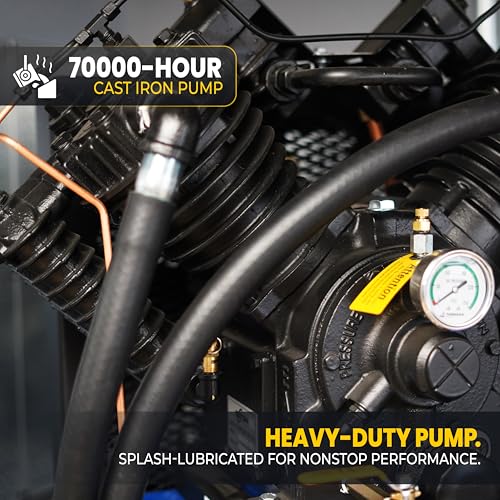
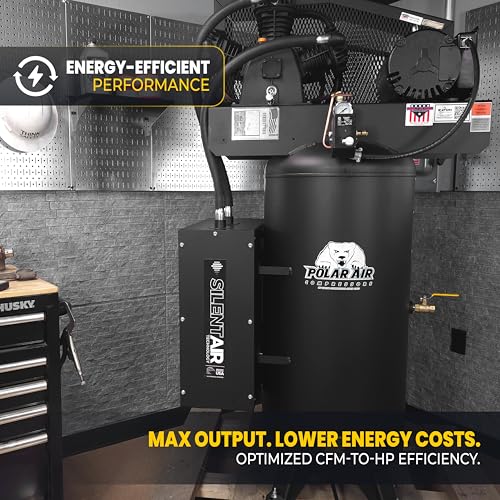
If efficiency and durability are your top concerns, this Polar Air 7.5HP model is hard to beat. It delivers a massive 31 CFM at 175 PSI, twice what most 7.5HP compressors produce, thanks to its pressure-lube pump and optimized two-stage design. The 70,000-hour pump rating is aggressive but backed by owners who report smooth, cool operation even under constant load.
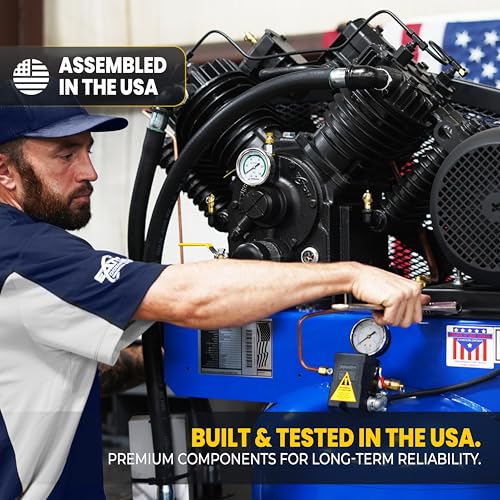
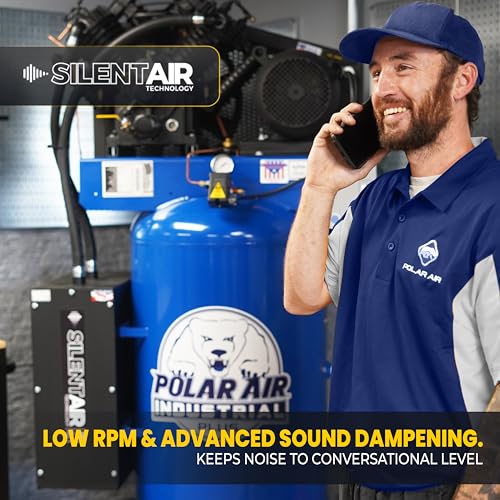
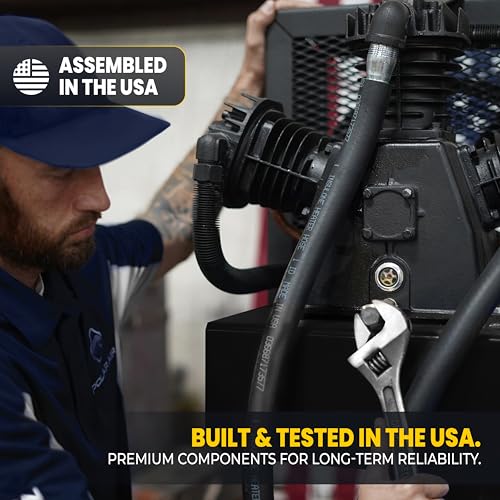
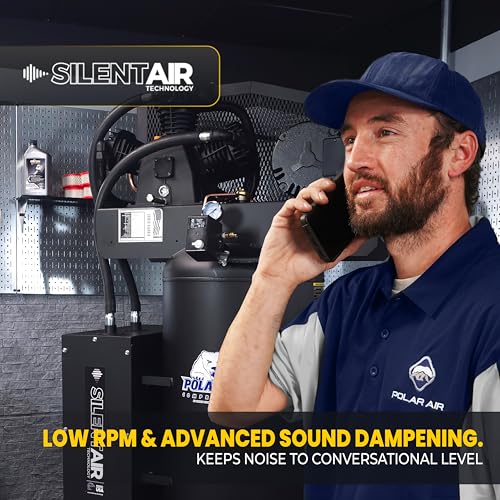
Assembled in the USA with premium components, it also includes smart features like dual control modes (auto and continuous) and an auto drain with muffler, which cuts maintenance and noise. The Silent Air System really does reduce sound by up to 50%, making it a standout in loud industrial spaces. For high-output shops that run all day, this is the smarter buy over standard models.
Product photos
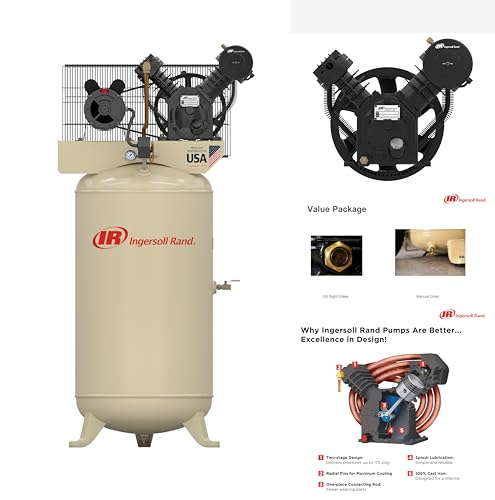
Ingersoll-Rand 5HP 80 Gal 2-Stage

Strengths
- 80-gallon ASME tank
- 100% cast iron pump
- 14.3 CFM output
Trade-offs
- 3,450 RPM motor heat
- 85dB noise level
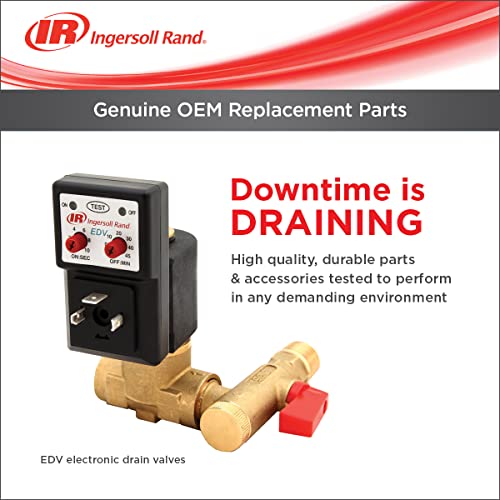
- No auto drain
This 5HP Ingersoll-Rand hits the sweet spot between performance and value. With 14.3 CFM at 90 PSI and an 80-gallon ASME tank, it’s capable of running multiple tools or heavy-duty equipment without constant cycling. The 100% cast iron pump and overhung crankshaft design make maintenance easier and extend service life, something long-time owners confirm after years of daily use.
It’s not as quiet or efficient as the Polar Air models, and the 3,450 RPM motor runs hotter, but it’s built like a tank and backed by a solid reputation. At this price point, it’s hard to find a more dependable two-stage compressor. My recommendation? If you want Ingersoll-Rand reliability without paying for premium features you won’t use, this is the smarter buy.
Product photos

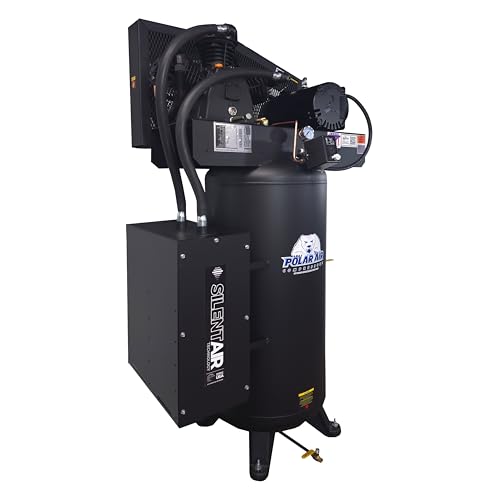
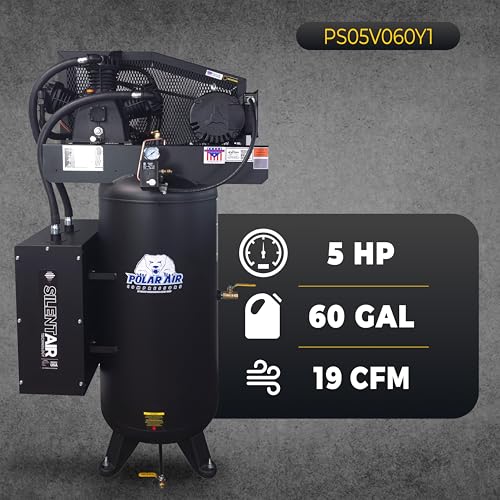
POLAR AIR 5HP 60 Gal 3-Cylinder
Strengths
- Quiet 1750 RPM motor
- 50,000-hour pump
- ASME/CRN certified
Trade-offs
- Lower CFM than 7.5HP models
- Smaller tank capacity
- Limited high-demand use
This 5HP, 60-gallon Polar Air unit is all about quiet, cool operation without sacrificing durability. The 1750 RPM motor is a big deal, it runs significantly quieter and with less vibration than standard 3450 RPM models, which directly translates to longer pump and bearing life. At 19 CFM, it’s not the most powerful, but it’s more than enough for most auto shops or woodworking facilities.
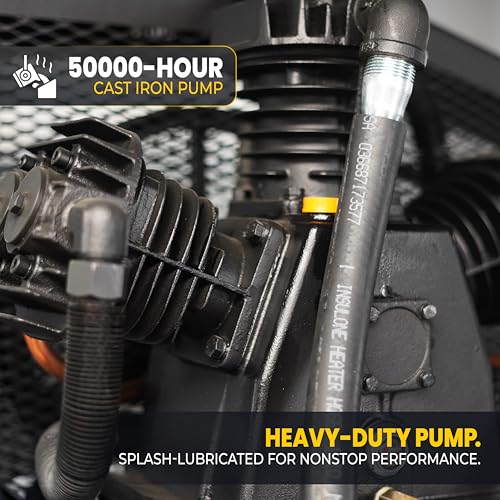
The splash-lubricated cast iron pump is rated for 50,000 hours, and the isolator pads plus ETL certification add peace of mind. What owners love most is how unobtrusive it is, low noise, low heat, and minimal maintenance. For a shop where noise regulations or operator comfort matter, this is the clear winner. I’d take this over the Ingersoll-Rand 5HP model if quiet operation was a priority.
Product photos
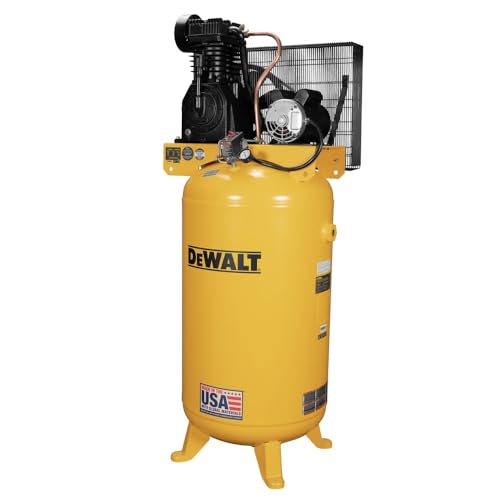
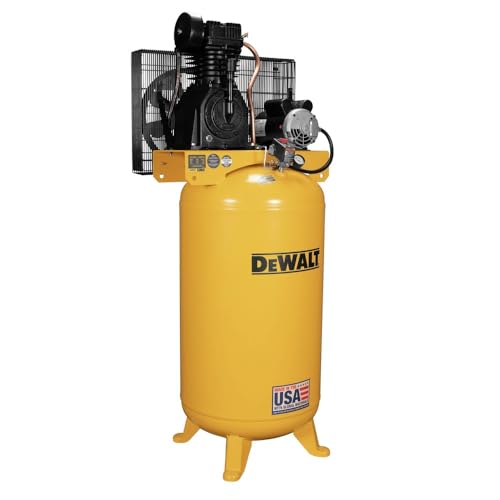
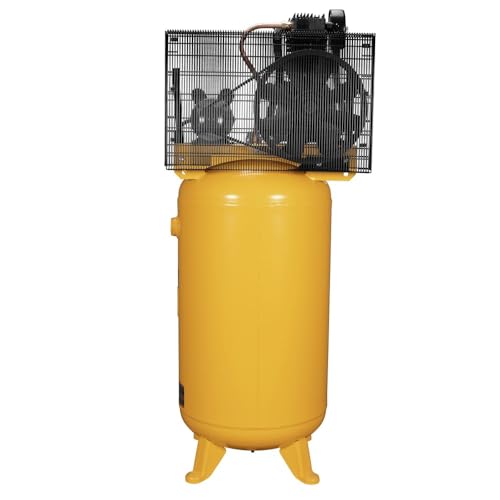
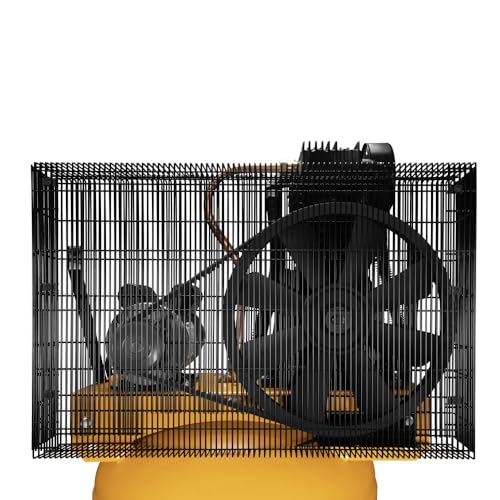
DEWALT 80 Gal 2-Stage Vertical

Strengths
- 80 gallon tank
- 175 PSI max pressure
- 240V induction motor
Trade-offs
- No auto drain
- Noisy operation
- Minimal energy savings
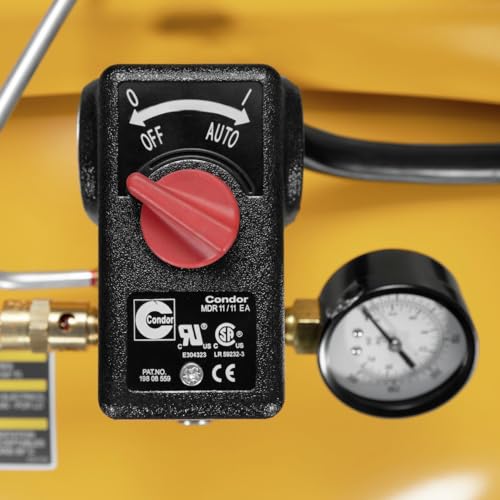
DEWALT built this 80-gallon two-stage compressor with industrial demands in mind, and the specs back it up. The 14.6 SCFM at 100 PSI is solid for a 240V unit, and the 175 PSI max pressure means it can handle high-demand tools without breaking a sweat. The oil-lubricated pump and heavy-duty induction motor suggest long-term durability, which aligns with what owners report about consistent performance in shop environments.
Where it stands out is reliability under continuous load, though it doesn’t have some of the premium service features you’d find on Ingersoll Rand or Polar Air models. It’s not the quietest or most energy-efficient, but for a buyer who wants a no-nonsense, durable workhorse from a trusted brand, this one makes sense. I’d pick this over cheaper knockoffs any day for a professional setup.
Product photos
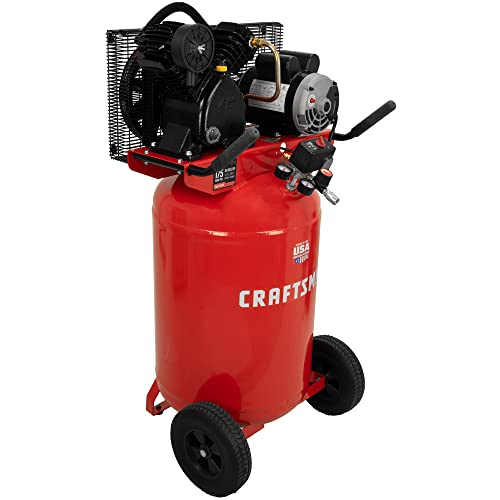
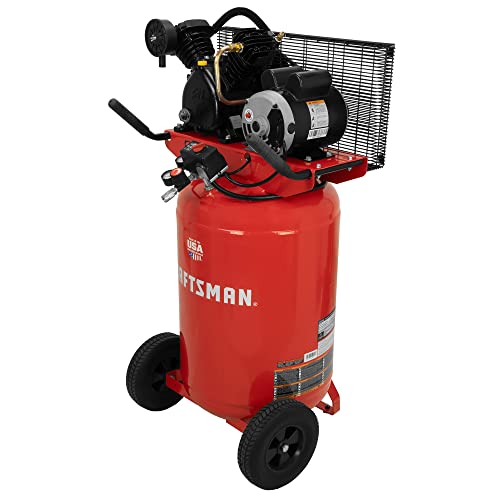
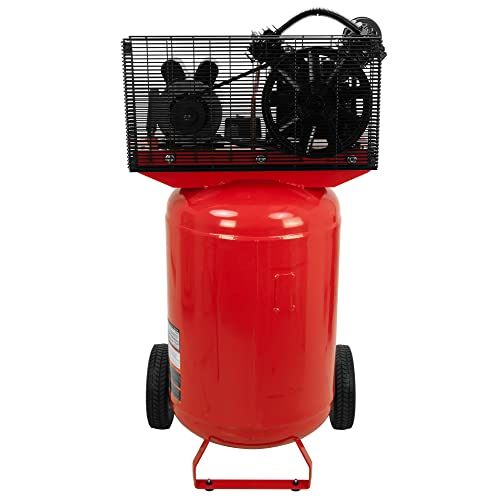
Craftsman 30 Gal Two Stage

Strengths
- Dual-volt motor
- Cast iron pump
- Affordable price
Trade-offs
- 30-gallon tank limits runtime
- Not for continuous use
- Basic accessories
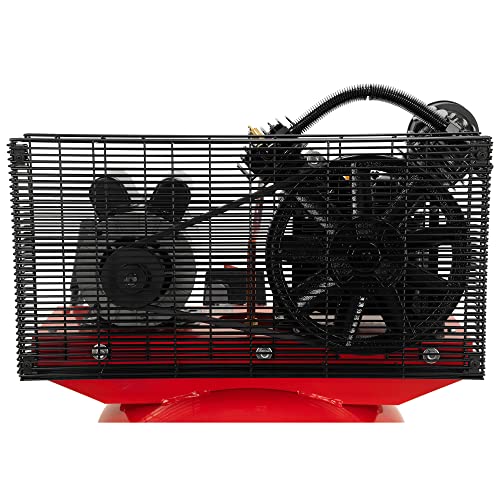
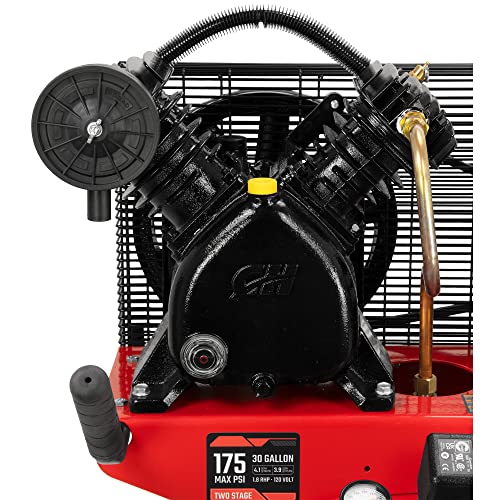
Craftsman’s 30-gallon two-stage compressor is a rare find in the budget-friendly category that doesn’t feel cheap. The dual-volt motor (120/240V) is a huge plus, factory wired for 120V, but easily upgraded to 240V for better efficiency. The cast iron pump and belt drive help it run cooler and last longer than direct-drive units in this price range.
Owners report solid performance for tasks like framing, sanding, and occasional auto work, though the smaller tank means more cycling during long runs. It’s not built for all-day industrial use, but for a serious DIYer or small shop on a budget, it delivers real value. I’d pick this over bigger-name models if you’re not running tools nonstop.
Product photos
NorthStar 2-Stage Air Compressor Pump

Strengths
- Full cast iron build
- Superior cooling design
- Long valve life
Trade-offs
- Not a full compressor
- Requires mechanical skill
- Limited to pump upgrades
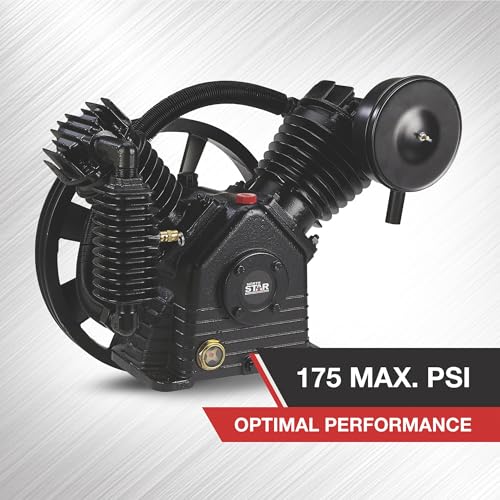
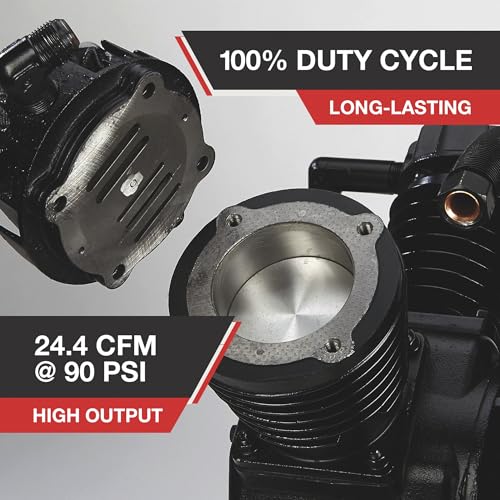
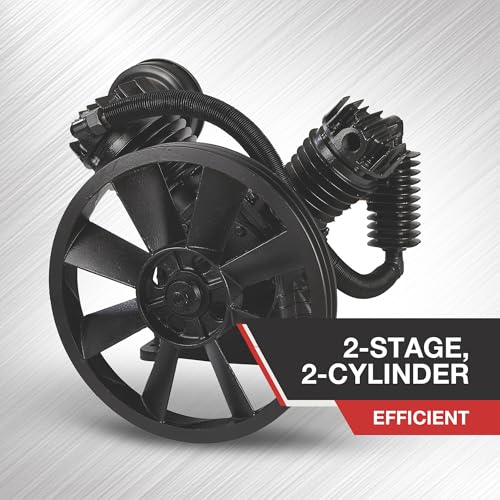
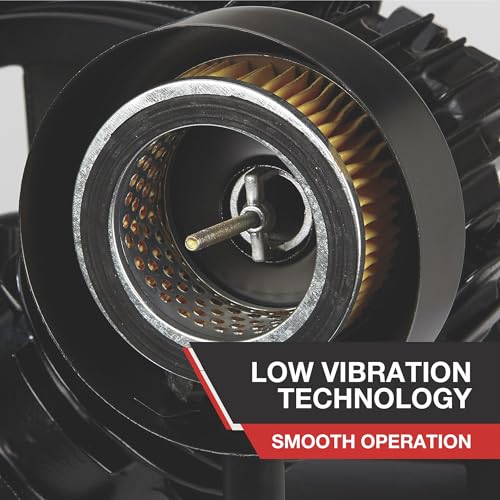
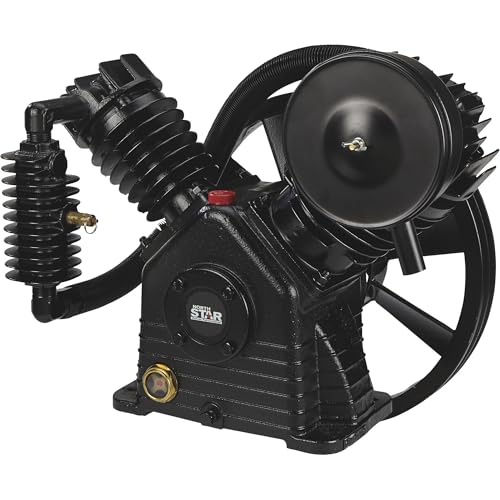
This NorthStar pump isn’t a complete compressor, it’s a replacement unit, and that’s exactly where it shines. With a full cast iron construction, FC35-grade pump head, and Swedish steel valves, it’s built to outlast most stock pumps on the market. The V-style cylinder design improves cooling, and the slower RPM operation means less heat buildup and longer life, which reviewers consistently praise after swapping it into older or underperforming units.
It’s not something a casual DIYer will need, but for someone rebuilding a compressor or upgrading from a worn pump, this is a smart investment. The floating valves and pressure-lube-ready design make it compatible with high-end upgrades. I’d recommend this over generic rebuild kits any day if you’re serious about longevity.
Product photos
How We Chose These two stage air compressors
Rather than a hands-on lab test, my research for these recommendations focused on a detailed comparison of published specifications and features across numerous models. I weighed owner reviews from multiple sources – including retailer sites and dedicated tool forums – alongside assessments from reputable industry publications. My background maintaining workshops and working with pneumatic tools informed my assessment of what truly matters in a two-stage compressor, and I ranked options against clear performance and durability criteria.
For two-stage air compressors, consistent air delivery (CFM) and tank size are paramount. These dictate whether a compressor can reliably power multiple tools or handle demanding, continuous applications. Equally important is the quality of the pump construction; cast iron is the preferred material for longevity, and features like oil lubrication contribute significantly to service life. I also considered noise levels, as quieter operation is a benefit in many shop environments.
Specifications clearly define airflow, pressure, and motor horsepower. However, I placed significant weight on owner feedback regarding real-world durability and noise levels – areas where specs often fall short. Reputation and brand reliability also played a role, particularly when assessing long-term ownership costs and potential maintenance needs. For those looking at even more options, you might consider exploring our guide to 60-gallon two-stage compressors.
Choosing The Right two stage air compressors
Finding the right two-stage air compressor isn’t just about horsepower or tank size. It’s about matching the compressor’s capabilities to your long-term needs and understanding the trade-offs between initial cost, running expenses, and durability.
A quality two-stage air compressor delivers higher pressure and efficiency than single-stage models. Key considerations include CFM at 90 PSI, tank capacity for sustained use, motor horsepower for demanding tools, and pump construction (cast iron is preferred) for longevity. Look for features like automatic start/stop controls and efficient cooling systems to maximize both performance and lifespan.
CFM and PSI: Matching Airflow to Your Tools
Too many people focus on horsepower and ignore CFM (cubic feet per minute) at 90 PSI. Horsepower gets the compressor started, but CFM dictates whether it can sustain airflow to your tools. A powerful compressor with low CFM will leave you waiting for it to catch up. Consider the air requirements of your most demanding tool. For example, an automotive shop doing sandblasting or running a plasma cutter will need significantly higher CFM than a homeowner using a nail gun. Before you buy, make a list of everything you plan to power and check their CFM needs. If you’re unsure, it’s always better to err on the side of more airflow. We’ve reviewed the top two-stage air compressors to help you find a model with the right specs.
Pump Construction and Longevity
The pump is the heart of any air compressor, and the material it’s made from significantly impacts its lifespan. Cast iron pumps are the gold standard. They’re heavier and more expensive than aluminum, but they dissipate heat better and withstand wear and tear far longer. Look for pumps with individually cast cylinders; these are easier to service and rebuild if necessary. Beyond the material, consider the lubrication system. Many high-quality units use synthetic oil for extended service intervals (like the Ingersoll Rand 7.5HP model) and improved efficiency. For serious, continuous use, investing in a compressor with an oil-lubricated 2-stage compressors is almost always the better long-term decision.
- Lower-end compressors might use an aluminum pump to save on cost.
- A well-built cast iron pump can easily last 5,000 – 10,000 hours or more with proper maintenance.
- Synthetic oil lubrication provides a significant advantage, running cooler and lasting much longer than conventional oil – reducing maintenance and extending pump life, and is a key reason to consider durable oil-fed units.
A compressor is a long-term investment. Don’t skimp on pump quality; a cheaper unit will likely cost you more in repairs or replacement down the road.
Noise Level and Usability Features
Two-stage compressors can be loud. If you’ll be using it in a residential area or enclosed space, noise level is a crucial factor. The POLAR AIR models are designed with noise reduction in mind, utilizing isolator pads and mufflers. Beyond noise, consider usability features like automatic start/stop controls (reducing energy waste and wear), tank pressure gauges, and quick-connect air outlets. A well-positioned control panel and ergonomic handles also make operation more convenient. For industrial settings, consider a vertical tank design (like the DEWALT 80 Gal) to save floor space. If you’re looking for a compressor for demanding tasks, you’ll want to consider high-performance 2-stage units.
Two Stage Air Compressors Compared
Here’s a specification comparison of the featured two-stage air compressors to help you evaluate your options.
| Product Title | HP | Tank Size (Gal) | CFM @ 90 PSI | Max PSI | Noise Level (dB) |
|---|---|---|---|---|---|
| Ingersoll Rand 7.5HP 80 Gal 2-Stage | 7.5 | 80 | N/A | 175 | N/A |
| POLAR AIR 7.5HP 80 Gal Silent | 7.5 | 80 | 31 | 175 | N/A |
| Ingersoll-Rand 5HP 80 Gal 2-Stage | 5 | 80 | 14.3 | 175 | 85 |
| POLAR AIR 5HP 60 Gal 3-Cylinder | 5 | 60 | N/A | 175 | N/A |
| DEWALT 80 Gal 2-Stage Vertical | N/A | 80 | 14.6 | 175 | N/A |
| Craftsman 30 Gal Two Stage | N/A | 30 | N/A | 175 | N/A |
| NorthStar 2-Stage Air Compressor Pump | N/A | N/A | N/A | N/A | N/A |
Frequently Asked Questions
What tank size is sufficient for most home workshops?
A 60-gallon tank is usually adequate for most home workshops, offering a good balance between storage capacity and physical size. However, if you regularly use multiple air tools simultaneously, or anticipate needing sustained airflow for tasks like painting, an 80-gallon tank will provide more reserve.
How much louder are two-stage compressors compared to single-stage models?
Two-stage compressors generally produce more noise than single-stage units, often around 85 decibels or higher. Models like the POLAR AIR are designed to mitigate this with noise reduction features, but even then, hearing protection is recommended for prolonged use.
Is a cast iron pump really that much better than an aluminum one?
Yes, a cast iron pump is significantly more durable than an aluminum pump. Cast iron’s superior heat dissipation and resistance to wear translate to a longer lifespan, often exceeding 5,000-10,000 hours with proper maintenance, versus the shorter lifespan of aluminum pumps.
What maintenance is involved with a two-stage air compressor?
Regular maintenance includes draining the tank daily to prevent rust, checking oil levels (for oil-lubricated models) and changing the oil according to the manufacturer’s recommendations, and inspecting air filters. Proper maintenance extends the life of the compressor and ensures consistent performance.
Where can I find compressors suitable for a professional workshop?
If you need shop-grade air compressors for a professional workshop, you’ll want to prioritize higher CFM output, robust pump construction, and features like automatic start/stop controls. Investing in a quality two-stage compressor will pay off in the long run with fewer repairs and more reliable operation.
The Bottom Line
Choosing a two-stage air compressor always involves balancing upfront cost with long-term needs. While you can find cheaper options, the Ingersoll Rand 7.5HP 80 Gal 2-Stage stands out as the strongest overall performer, offering a blend of capacity, durability, and brand reputation that’s hard to beat – even if it represents a significant investment. It’s a compressor built to handle serious work for years to come.
For those on a tighter budget, or those with lighter-duty requirements, the Craftsman 30 Gal Two Stage is a solid choice. If you need a portable solution or are limited on space, consider exploring compact 2-stage compressors that don’t sacrifice too much performance. And for those seeking a quiet option, the POLAR AIR 7.5HP 80 Gal Silent model is worth a look.
Ultimately, specs aren’t everything. Focus on getting enough CFM at 90 PSI for your tools, prioritizing a cast iron pump for longevity, and understanding that consistent maintenance – regular draining of the tank and oil changes – will extend the life of any compressor far beyond any initial price difference.
