
8 Best Wood Planers of 2026
This post contains affiliate links. As an Amazon Associate, we earn from qualifying purchases.
The DEWALT 13-inch Thickness Planer stands out as the overall best choice for most woodworkers, thanks to its reliable performance and rugged build. For those on a tighter budget, the WEN PL1326 Spiral Benchtop Planer delivers impressive results with its spiral cutterhead, while the WOODERS 13-Inch Spiral Cutter Planer offers strong versatility for finish work.
If you’re dealing with rough lumber or uneven boards, a good planer isn’t just helpful, it’s essential. Without one, you’re stuck sanding down thick stock by hand or settling for inconsistent thickness and surface quality. After comparing the field and reviewing owner feedback, I focused on models that deliver clean cuts, solid construction, and real-world reliability. This guide breaks down exactly what to look for and why these three stand out for different needs.
Top 8 Wood Planers in the Market
The Best Wood Planers, Reviewed
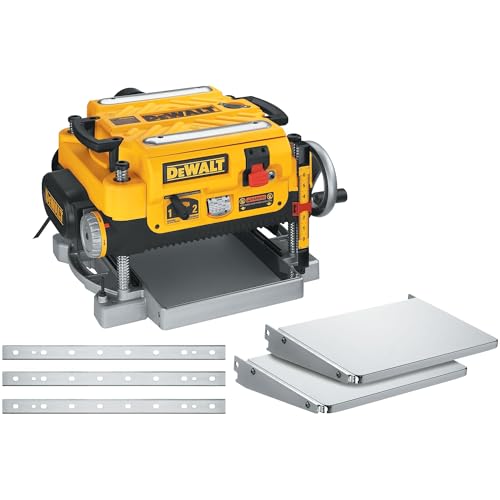
DEWALT 13-inch Thickness Planer
Strengths
- Two-speed gearbox
- Automatic snipe reduction
- Cast aluminum base
- 3-year warranty
Trade-offs
- Heavy
- Expensive
- Louder than spiral models
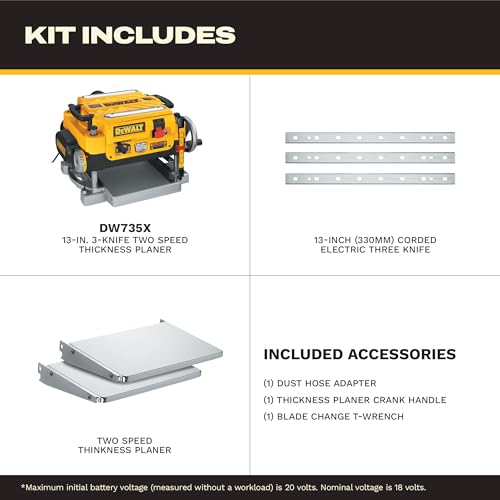
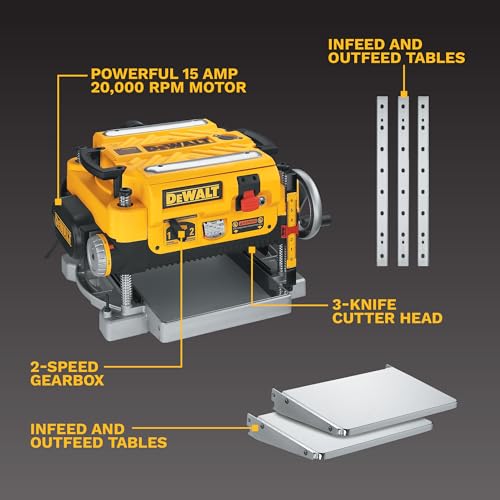
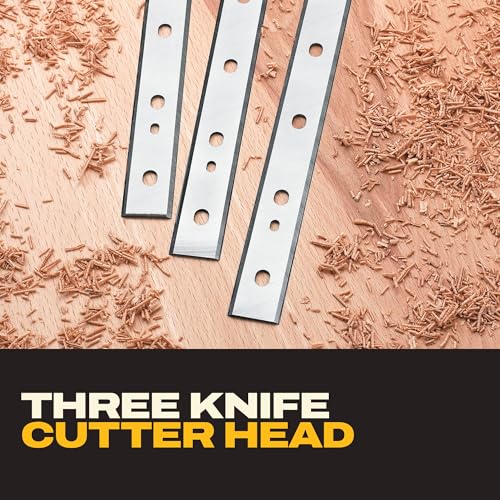
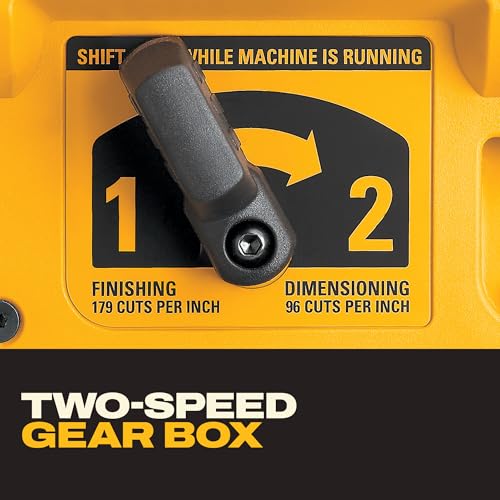
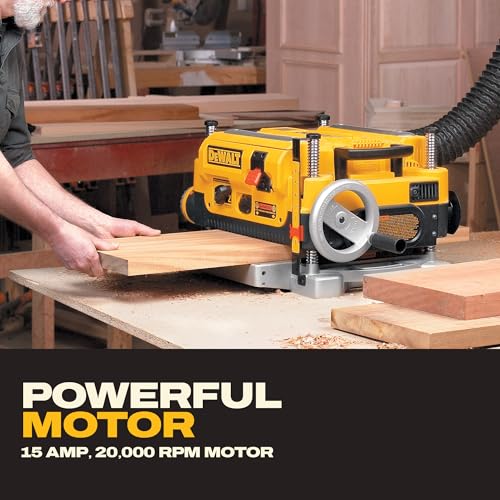
The DEWALT DW735X is the gold standard for a reason. Its three-knife cutterhead and two-speed gearbox let you dial in 96 or 179 cuts per inch, which means you can balance speed and finish like few others. The cast aluminum base is rock-solid, and the automatic carriage lock is a standout for reducing snipe – reviewers note it works flawlessly out of the box.
Owners consistently praise its reliability, even after years of heavy use. The fan-assisted chip ejection keeps the cutter clean, and the extra-large thickness scale makes setup intuitive. It’s heavier than some, but that adds to the stability. My recommendation? If you want one planer that does it all, this is the smarter buy over flashier models with unproven track records.
Product photos
WOODERS 13-Inch Spiral Cutter Planer
Strengths
- Spiral helical cutterhead
- Tungsten carbide inserts
- Micro-adjustable depth
- Aluminum top cover
Trade-offs
- Slower feed rate
- Heavier build
- Higher initial cost
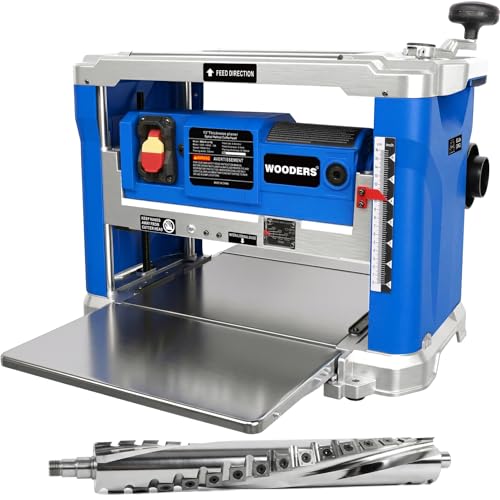
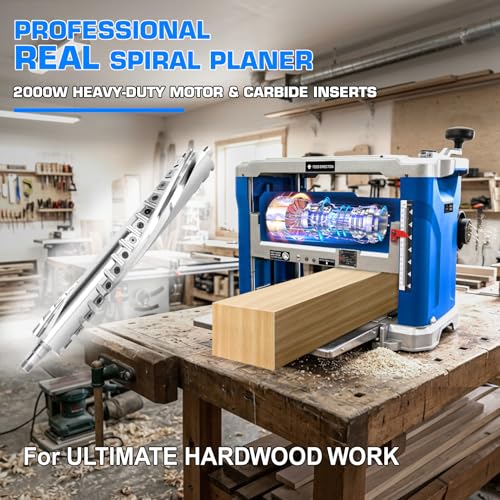
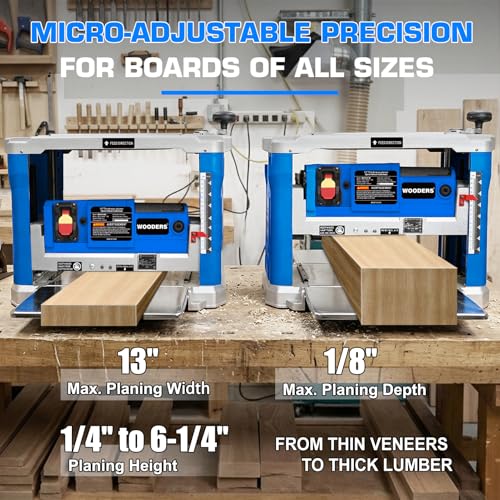
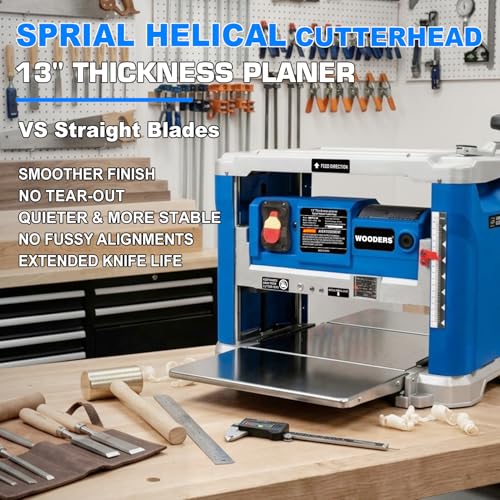
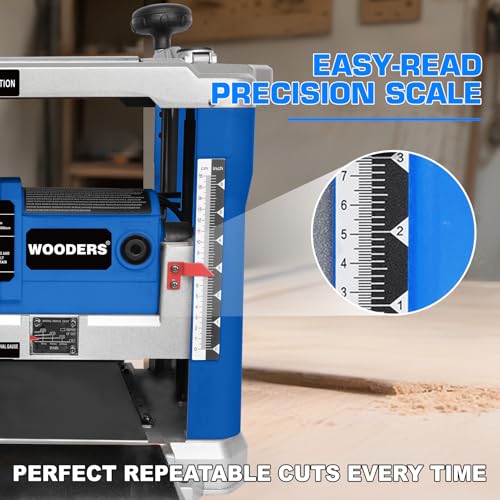
If you’re serious about surface quality, the WOODERS spiral helical planer stands out. The 45# steel spiral cutterhead with tungsten carbide inserts is a big deal – owners rave about how it eliminates tear-out, even on figured maple or curly walnut. That’s rare at this price point. The 10,000 RPM speed and micro-adjustable depth control give you surgical precision, and the aluminum top cover helps with heat dissipation during long runs.
This isn’t just about finish – the build feels more industrial than many competitors. The 13-inch bed handles wide stock, and the consistent feedback on durability suggests it can keep up in a pro shop. It’s not the fastest feed rate, but you’re trading speed for that silky surface. I’d take this over a standard three-knife head any day for fine woodworking.
Product photos

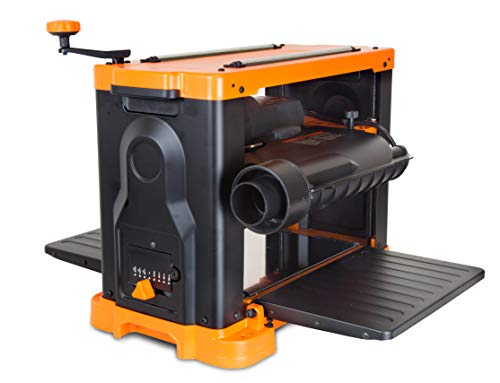
WEN PL1326 Spiral Benchtop Planer
Strengths
- Spiral cutterhead
- 26 HSS blades
- Onboard depth gauge
Trade-offs
- Less rigid frame
- Moderate vibration
- Basic dust collection
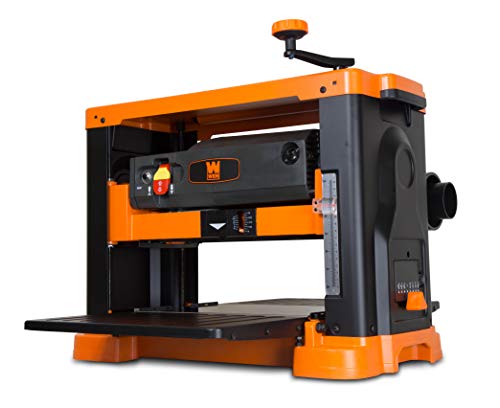
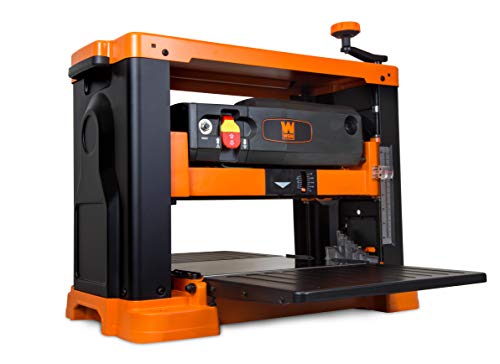
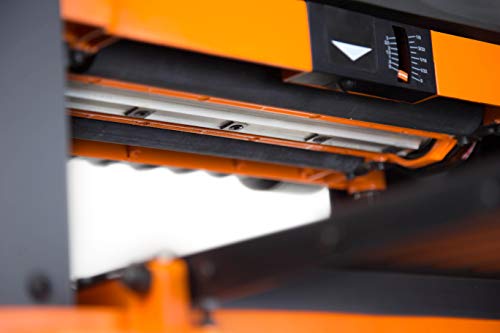
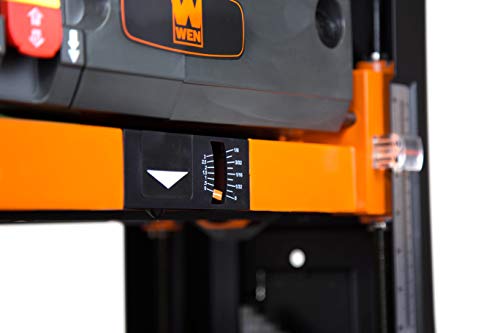
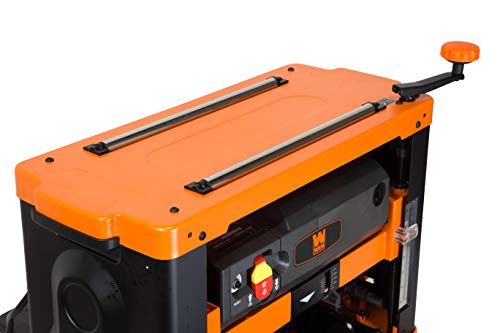
WEN took a smart step with the PL1326 by swapping in a spiral cutterhead with 26 staggered HSS blades. That design spreads the cutting load and reduces tear-out, and owners confirm it leaves a noticeably smoother surface than the PL1303. The 10,000 RPM speed matches the DEWALT DW735X’s cutterhead, and the onboard depth gauge is a nice touch for repeatable passes.
But it’s still a WEN – the chassis isn’t as rigid as DEWALT or WOODERS, and vibration can creep in during heavy cuts. It’s a middle ground: better finish than the PL1303, but not as robust as the top-tier models. If you want spiral benefits without the premium price, this is a smart compromise.
Product photos
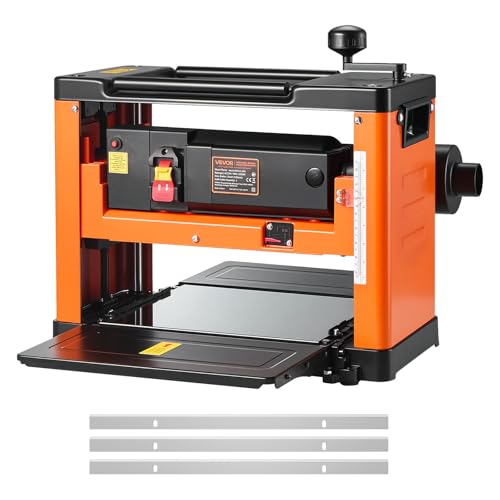
VEVOR 13-Inch Three-Blade Planer
Strengths
- Dual-roller feed
- Hardwood-ready motor
- Dual dust port
Trade-offs
- Finish not glass-smooth
- Build quality average
- Setup can be finicky
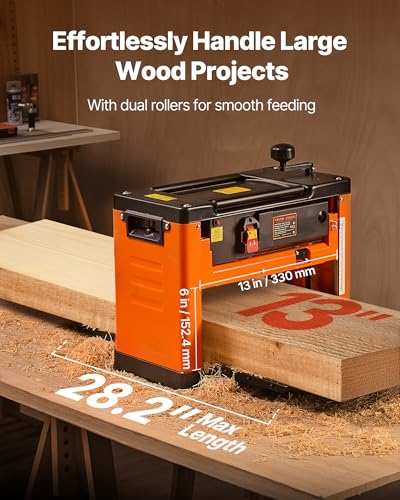
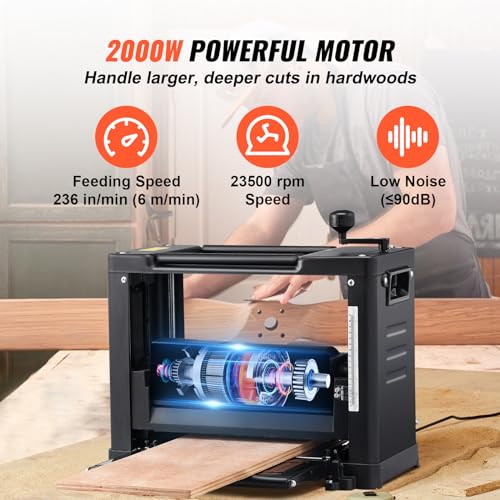
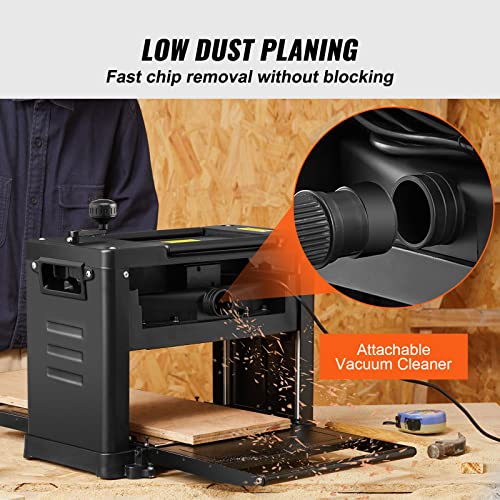
This VEVOR model is built for hardwood. The 2000W motor and 24,000 CPM output give it serious bite, and the dual-roller feeding system helps maintain consistent pressure – crucial when planing dense oak or maple. Owners report fewer jams and smoother feed compared to single-roller budget models. The three HSS blades deliver a decent finish, though not quite on par with spiral heads.
It’s also one of the few benchtop planers with dual dust port compatibility (2-inch and 4-inch), which is a win for shop cleanup. But like most VEVOR tools, the fit and finish are functional, not refined. I’d pick this over the two-blade VEVOR any day if you’re regularly working with thick hardwoods.
Product photos

VEVOR 13-Inch Benchtop Planer

Strengths
- 13-inch bed
- Cast iron table
- Overload protection
Trade-offs
- Two-knife cutterhead
- Average finish quality
- Noisy operation
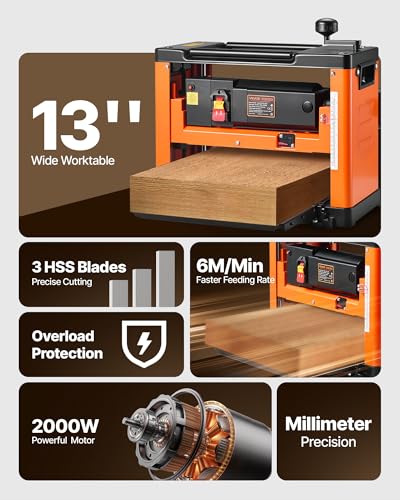
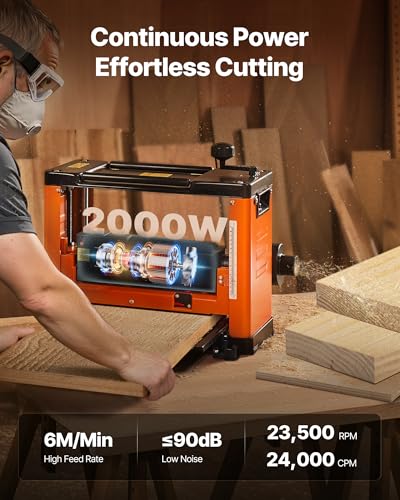
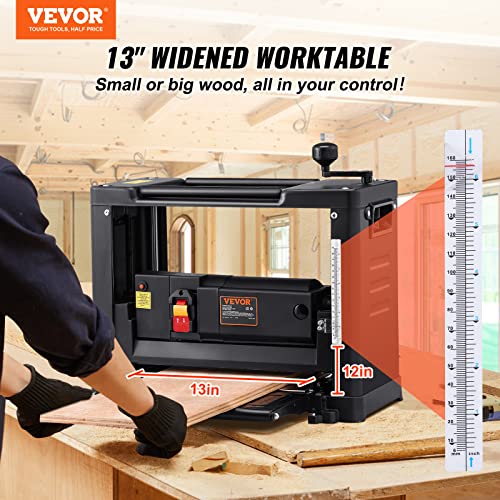
On paper, the VEVOR two-blade planer looks like a solid budget contender with a 15-amp motor and a 13-inch bed. The cast iron table is a real plus for stability, and owners consistently report it handles softwoods well with minimal snipe when tuned right. But compared to models with spiral or three-knife heads, the surface finish is just okay – you’ll likely still need to sand after a pass or two.
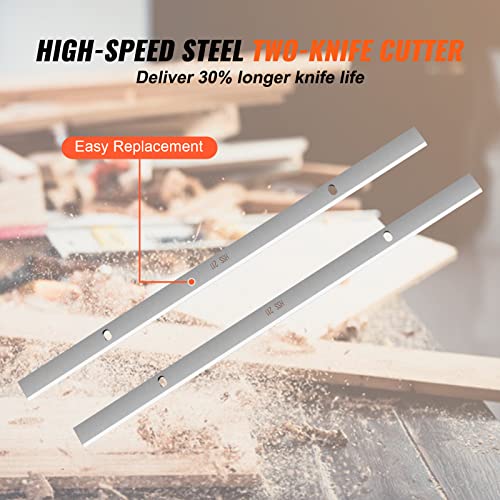
The two-knife cutterhead is durable, especially with the HRC55-60 hardness rating, but it doesn’t deliver the same smoothness as the more advanced designs. I’d pick this for rough stock prep or shop use where absolute surface perfection isn’t critical. It’s loud, and dust collection is functional but not great, even with the vacuum port.
Product photos

WEN PL1303 Three-Blade Planer
Strengths
- Affordable
- Three reversible blades
- Lightweight
Trade-offs
- Plastic components
- Limited dust control
- Chatter on hardwoods
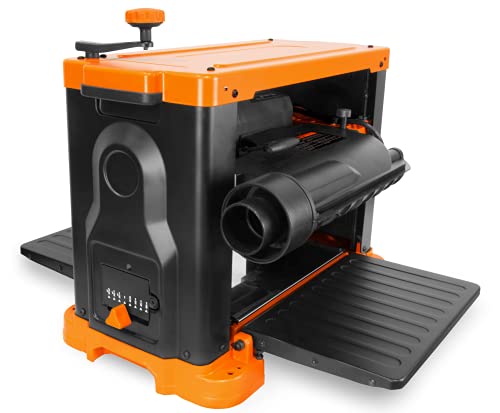
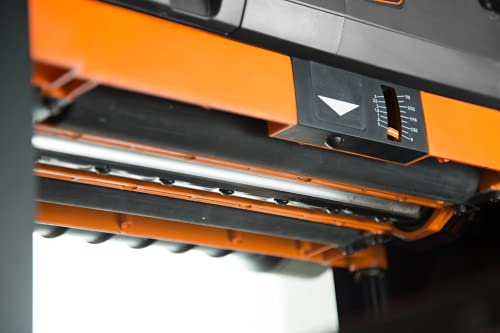
The WEN PL1303 is the bare-bones workhorse of this group. It’s light, compact, and gets the job done for hobbyists who don’t plane every week. The 15-amp motor and three reversible SK5 blades offer decent value, and at 30,000 cuts per minute, it’s fast on paper. But real-world feedback shows it struggles with harder woods and can leave chatter marks if you push it too fast.
It lacks the cast iron bed or advanced dust collection of pricier models, and the build feels flimsier. But for someone just starting out or doing light trim work, it’s hard to beat the price. I wouldn’t trust it for wide slabs or consistent production work, but for small projects, it’s a functional entry point.
Product photos
DEWALT DW734 12.5-Inch Planer

Strengths
- Compact footprint
- Four-column lock
- Reversible knives
Trade-offs
- 12.5-inch width limit
- Shorter tables
- Less capacity than 13-inch models
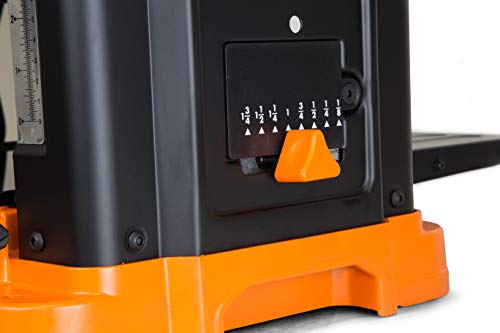
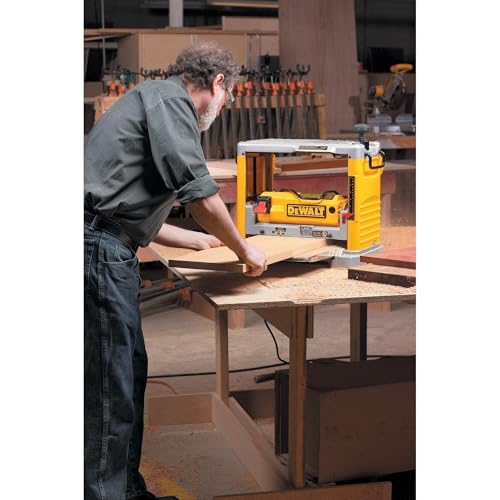
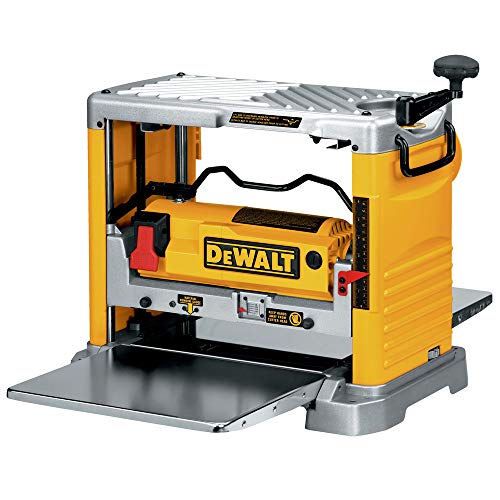
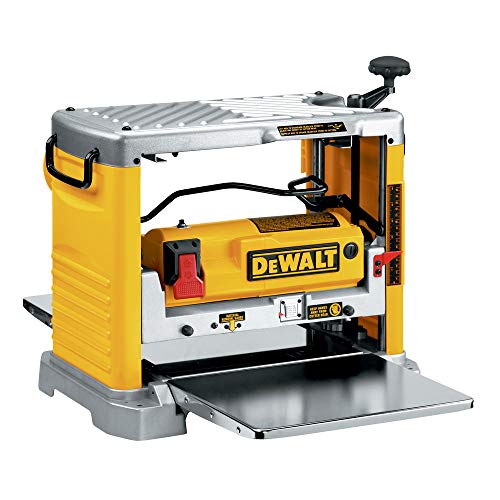
The DEWALT DW734 is the compact sibling of the DW735X, and it’s built for small shops. At 12-1/2 inches wide, it sacrifices some capacity but gains serious portability. The three-knife cutterhead and 20,000 RPM motor still deliver that signature DEWALT finish, and the four-column carriage lock does a great job minimizing snipe – a real pain point on lesser models.
Owners love how it fits on crowded benches, and the extra-long tables help with support. It’s not meant for 13-inch slabs, but for standard 8/4 stock or furniture parts, it’s more than capable. I’d recommend this over the full-size DW735X if space is tight – you’re giving up width, but not quality.
Product photos
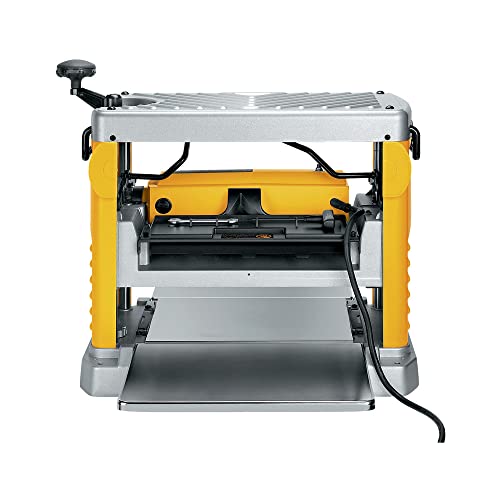
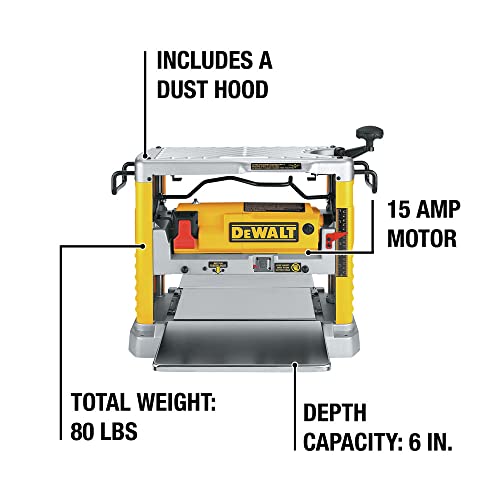
Amazon Basics No.4 Bench Plane
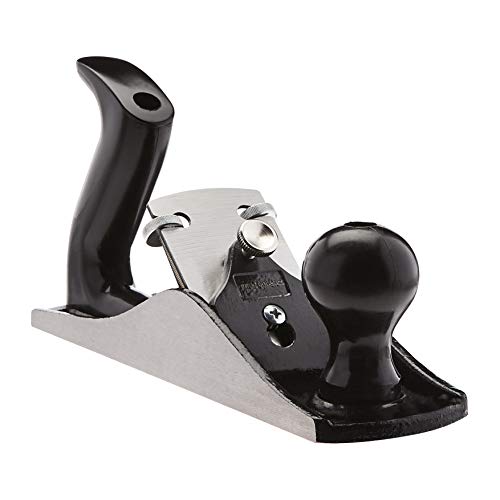
Strengths
- Cast iron body
- Adjustable mouth
- Comfortable handles
Trade-offs
- Blade not premium steel
- No blade guard
- Basic packaging
The Amazon Basics No.4 hand plane is a surprise. For the price, it delivers real value – the cast iron body is substantial, and the blade adjustment works smoothly out of the box. It’s not Lie-Nielsen quality, but for flattening small boards, tuning joints, or cleaning up edges, it performs like a proper tool. Owners say it holds an edge well and is easy to tune.
I keep a hand plane like this in my kit for when power tools are overkill. It’s not a replacement for a benchtop planer, but it’s essential for fine tuning. The ergonomic handles help reduce fatigue, and the adjustable mouth lets you switch between rough and fine shavings. If you’re building a starter toolkit, this earns a spot.
Product photos


How We Picked These wood planers
As someone who’s spent years around workshops and power tools, I know selecting a wood planer comes down to matching capability with your needs. Rather than a hands-on lab test of each model, this selection is based on a research-led comparison of published specifications, features, and, critically, owner and expert reviews. I weighed data from multiple sources to identify models consistently praised for performance, accuracy, and durability. This process allows us to present a focused set of recommendations.
For wood planers, consistent cut quality, motor power, and build quality stood out as the most important factors. A powerful motor is essential for handling hardwoods without bogging down, and a well-built machine minimizes vibration and delivers smoother results. Cut quality, whether from a standard knife system or a spiral cutterhead, directly impacts the amount of sanding needed after planing, a significant time saver.
Specifications reliably reveal motor horsepower, max cutting depth, and feed rate. However, owner feedback proved crucial for assessing real-world performance – things like dust collection effectiveness, how easily the machine handles snipe (uneven cuts at the ends of boards), and long-term durability. Reputable woodworking publications further helped validate build quality and the accuracy of those published specs. Understanding basic table saw techniques can also help you prepare boards for planing.
How To Pick The Right wood planers
Choosing the right wood planer depends heavily on the scale and type of projects you tackle, and how much finish quality you demand.
A quality wood planer should offer precise depth control, consistent material removal, and a robust motor capable of handling the wood types you typically work with. Look for features like adjustable feed rates, effective dust collection, and durable cutterheads – spiral cutterheads are generally preferred for minimizing tear-out and creating smoother surfaces. Assess the bed length relative to the boards you plan to joint, and consider the overall build quality for longevity.
Motor Power and Cutterhead Type
The motor is the heart of any planer, and its power directly dictates what kinds of wood you can effectively process. Softer woods like pine and fir require less power than dense hardwoods like oak or maple. I generally recommend a minimum of 15 amps for consistent performance, especially if you plan to work with thicker stock. But equally important is the cutterhead. Traditional three-knife cutterheads are common and affordable, but spiral cutterheads – like those found on some of the top benchtop planers – offer a significantly smoother finish with reduced tear-out. This is because the spiral arrangement maintains a shearing action across the entire width of the cut.
Feed Rate and Depth of Cut
Controlling the feed rate – how quickly the wood moves through the planer – is crucial for achieving a clean cut. Two-speed gearboxes, like the one on the DEWALT 13-inch, are a great feature, allowing you to slow down for harder woods or more delicate cuts, and speed up for faster material removal on softer woods. Don’t assume ‘faster is better’; aggressive feed rates with an insufficient depth of cut can lead to burning or chipping.
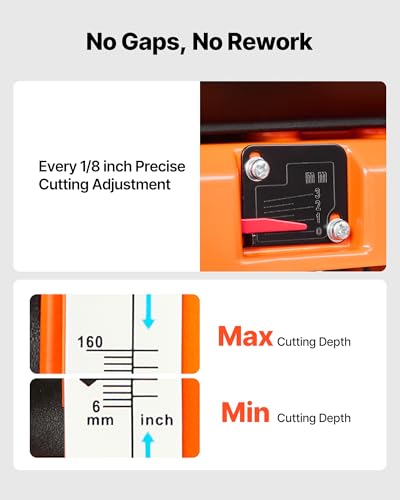
Here’s how I approach depth of cut: * Light Passes: Taking very shallow cuts (1/32″ or less) each time is best for achieving a truly smooth surface, especially with figured wood. * Moderate Passes: A depth of 1/16″ to 1/8″ is a good all-around setting for general planing tasks. * Aggressive Passes (Use Caution): While tempting, taking cuts deeper than 1/8″ significantly increases the risk of tear-out, snipe, and motor strain, and is generally only suitable for rough stock preparation.
Build Quality and Features
Beyond the core mechanics, build quality and convenient features make a big difference. A solid, cast-iron base and tables are essential for minimizing vibration and ensuring accurate results. Look for planers with effective dust collection ports; woodworking generates a lot of debris, and keeping your shop clean is important for both health and safety. Also, consider features like automatic carriage locks (to reduce snipe) and easy-to-adjust depth stops. Don’t underestimate the value of sharp blades; regular table saw blade maintenance principles apply to planer knives too, though it’s often more cost-effective to simply replace them when they become dull.
A good rule of thumb: if you’re primarily working with hardwood or need a flawless finish, prioritize a planer with a spiral cutterhead. The initial investment is higher, but the reduction in sanding and the overall quality of the cut are worth it.
Wood Planers Compared
Here’s a comparison of key specifications for the wood planers described.
| Product Name | Motor (Amps) | Max. Width (in) | Max. Depth (in) | Cutter Type | Feed Rate (FPM) |
|---|---|---|---|---|---|
| DEWALT 13-inch Thickness Planer | 15 | 13 | 6.25 | Three-Knife | N/A |
| WOODERS 13-Inch Spiral Cutter Planer | 15 | 13 | 6.25 | Spiral | N/A |
| WEN PL1326 Spiral Benchtop Planer | 15 | 13 | 6 | Spiral | 26 |
| VEVOR 13-Inch Three-Blade Planer | N/A | 13 | 6 | Three-Blade | N/A |
| VEVOR 13-Inch Benchtop Planer | N/A | 13 | 6 | Two-Knife | N/A |
| WEN PL1303 Three-Blade Planer | 15 | 13 | 6 | Three-Blade | 26 |
| DEWALT DW734 12.5-Inch Planer | 15 | 12.5 | N/A | Three-Knife | N/A |
| Amazon Basics No.4 Bench Plane | N/A | 2 | N/A | Steel Blade | N/A |
Frequently Asked Questions
What’s the difference between a spiral cutterhead and a standard three-knife cutterhead?
A spiral cutterhead maintains a shearing action throughout the cut, resulting in a smoother finish and reduced tear-out compared to the traditional three-knife design. While more expensive upfront, spiral cutterheads often reduce the amount of sanding required afterward.
How can I minimize snipe (uneven cuts at the ends of boards)?
Automatic carriage locks are a helpful feature to reduce snipe, but applying consistent downward pressure on the board as it enters and exits the planer is the most effective method. Also, feeding scrap wood through first and last can help create a more even starting and ending point.
What amperage motor do I really need for a wood planer?
A 15-amp motor is generally sufficient for most users, but if you frequently work with very hard woods or thick stock, you may want to consider a model with higher amperage. Lower amperage planers can bog down and produce inconsistent results with challenging materials.
Are benchtop planers powerful enough for serious woodworking?
While generally less powerful than floor-standing models, many benchtop planers, like those discussed in our guide to benchtop thickness planers, offer sufficient power and capacity for a wide range of projects. They are a good option if you have limited space or portability is a concern.
How often should I replace the blades in my wood planer?
Blade replacement frequency depends on usage and wood type, but as a rule of thumb, replace blades when you notice tear-out, burn marks, or a decrease in cut quality. For heavy use, this may be several times a year, while occasional users might get away with replacing them less often.
The Bottom Line
Choosing a wood planer always involves balancing your budget with the level of precision and ease-of-use you require. While cheaper options exist, I consistently find that the WOODERS 13-Inch Spiral Cutter Planer delivers the best overall combination of power, accuracy, and finish quality for most woodworkers. It’s an investment, but the reduced sanding time and superior results make it worthwhile in the long run.
For those on a tighter budget, the VEVOR 13-Inch Three-Blade Planer provides a functional entry point into thickness planing. Similarly, if versatility is key and you need a compact option for smaller projects, the WEN PL1303 Three-Blade Planer offers a good balance of portability and performance. Don’t forget that mastering common table saw applications can help you prepare stock for even better planing results.
Ultimately, remember that horsepower and cutterhead type are important, but they don’t replace careful setup and technique. A well-maintained machine, sharp blades, and a methodical approach to planing – taking light passes and paying attention to grain direction – will always yield the best results, regardless of how much you spend.
