7 Best Benchtop Planers of 2026
This post contains affiliate links. As an Amazon Associate, we earn from qualifying purchases.
The DEWALT 13-Inch Thickness Planer stands out as the best overall benchtop planer for its reliable performance, solid build, and consistent results. For those on a tighter budget, the WEN PL1326 Spiral Thickness Planer offers impressive value with a smooth-cutting spiral cutterhead. If you want versatility in feed speed, the VEVOR 13-Inch Two-Speed Planer is a strong pick.
Every woodworker knows the frustration of warped or uneven lumber. A good benchtop planer solves that, but choosing one that won’t waste your time or money isn’t always easy. I’ve spent years evaluating tools based on real-world needs, and for this guide, I focused on what actually matters: motor power, cutterhead design, and long-term reliability.
These picks are based on a close look at specs, verified owner feedback, and the kind of performance you can count on project after project. We prioritized machines that deliver flat, smooth results with minimal snipe and solid dust collection, because a planer should make your work easier, not add to the mess.
Top 7 Benchtop Planers in the Market
The Best Benchtop Planers, Reviewed
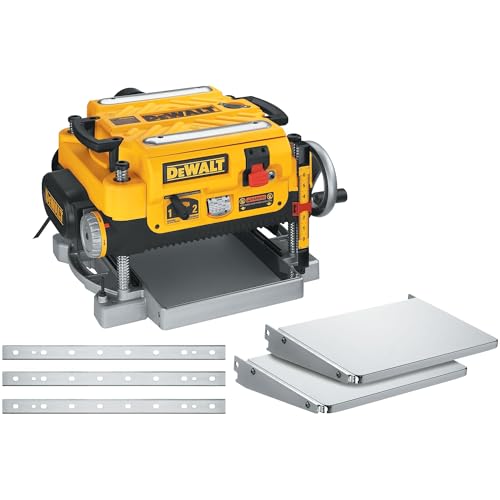
DEWALT 13-Inch Thickness Planer
Strengths
- Durable cast base
- Includes extra knives
- Automatic snipe reduction
Trade-offs
- HSS blades wear faster than carbide
- No helical cutterhead
- Heavier than some
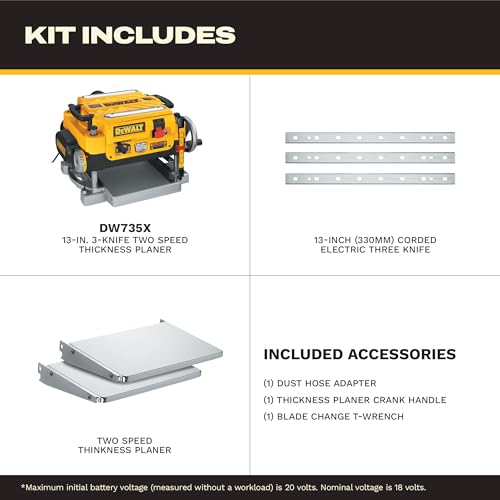
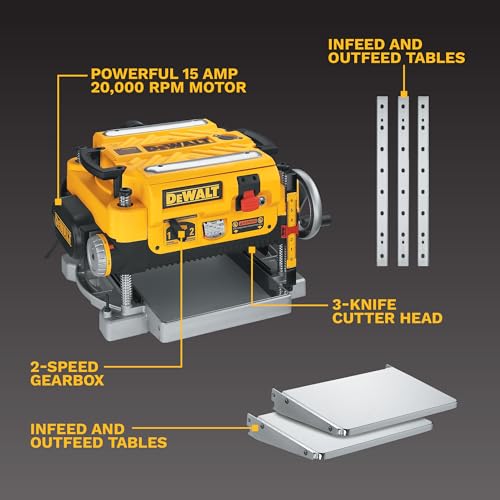
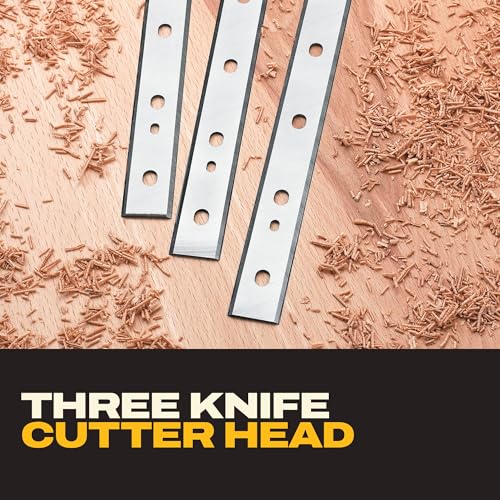
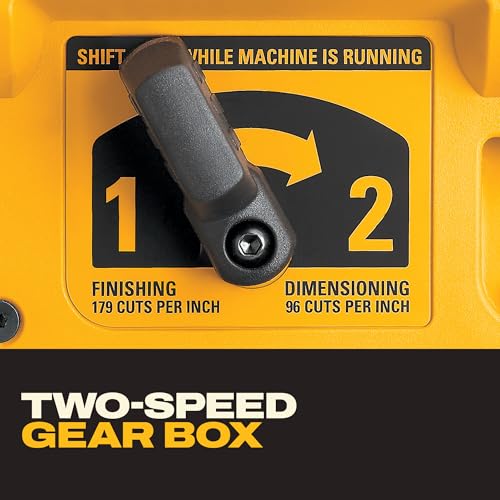
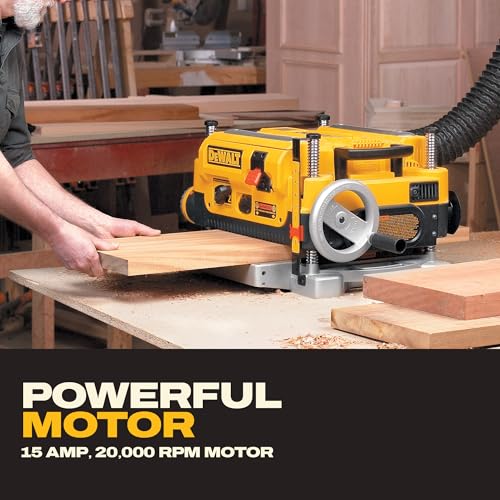
The DEWALT DW735X keeps showing up in pro workshops for a reason. It’s not flashy, but everything about it, from the cast aluminum base to the automatic carriage lock, feels engineered for consistency. The three-knife cutterhead delivers reliable cuts, and the two-speed gearbox (96 vs 179 CPI) lets you balance finish quality and feed rate intelligently.
Owners praise its durability and the fact that DEWALT includes an extra set of knives right in the box. The fan-assisted chip ejection works well, and the depth-stop turret is a small touch that saves time on repeat jobs. While it doesn’t have a helical head, its overall build, warranty, and service network make it the most dependable all-rounder here. I’d pick this over the VEVOR or WEN models for long-term reliability.
Product photos
WOODERS 13-Inch Spiral Planer
Strengths
- Helical carbide cutterhead
- Excellent surface finish
- Robust motor cooling
Trade-offs
- Limited service network
- No included spare knives
- Brand unfamiliar to some
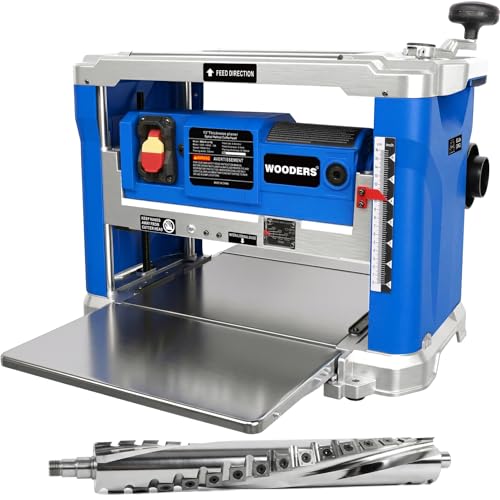
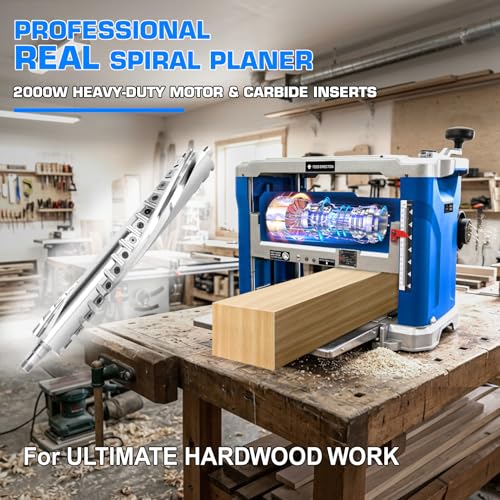
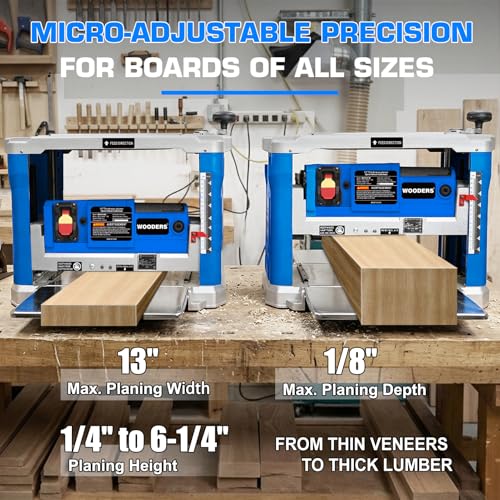
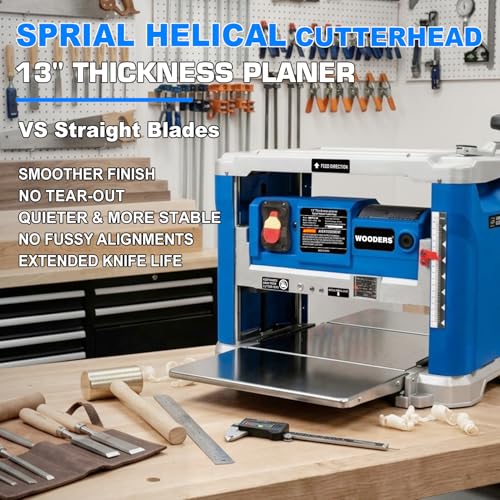
This WOODERS model is built like a pro machine. The spiral helical cutterhead with tungsten carbide inserts delivers a glass-smooth finish, and owners confirm it handles end grain and interlocked wood with minimal tear-out. The 15A all-copper motor runs cool under load, and the aluminum top cover helps with heat dissipation, a thoughtful touch for extended runs.
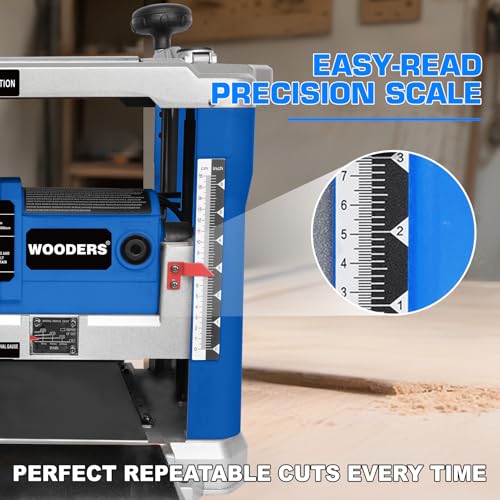
The micro-adjustable depth control is precise, and the high-visibility scale makes repeat passes consistent. Compared to the JET JWP-13BT, it’s lighter and more compact but packs similar performance. It doesn’t have the brand recognition of DEWALT or JET, but the specs and owner feedback suggest it’s a strong contender for woodworkers who want near-commercial performance in a benchtop footprint.
Product photos

JET 13-Inch Helical Planer

Strengths
- Excellent build quality
- Smooth helical cut
- Dual feed speeds
Trade-offs
- Higher price point
- Heavier than average
- No carbide inserts
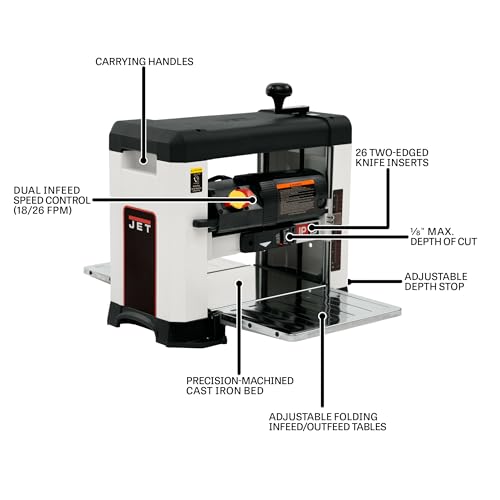
The JET JWP-13BT feels like it was built to last. The helical cutterhead with 26 HSS inserts delivers a quiet, smooth cut, and the four-post design ensures the head stays aligned under load. The 2 HP motor is robust, and the dual feed speeds (18 and 26 FPM) give real control over the cut quality vs throughput trade-off.
Owners consistently praise its build quality, the cast iron bed and steel cover reduce vibration and snipe. It’s heavier and pricier than most on this list, but that weight translates to stability. When compared to the DEWALT DW735X, it’s quieter and offers better finish quality, though DEWALT wins on brand accessibility. If you want the most solid, pro-grade benchtop planer here, this is it.
Product photos

WEN PL1326 Spiral Thickness Planer
Strengths
- Affordable helical design
- Compact footprint
- Decent finish for price
Trade-offs
- HSS blades dull quickly
- No feed speed control
- Basic build quality
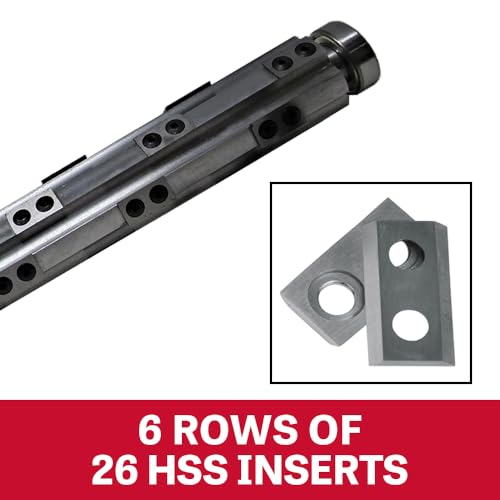
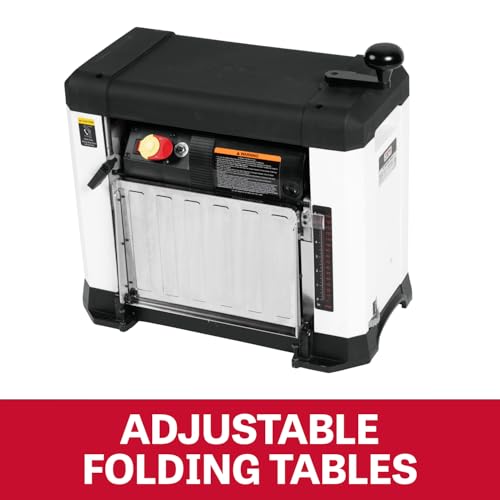
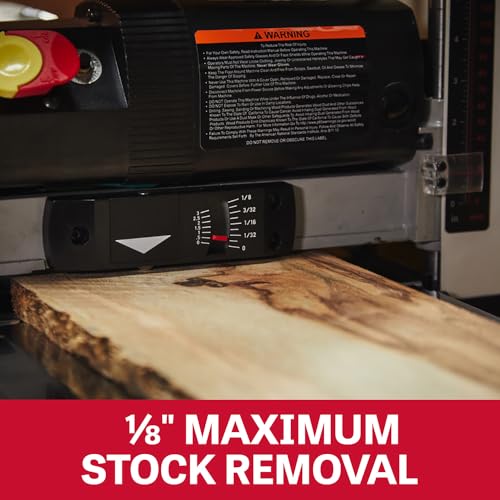
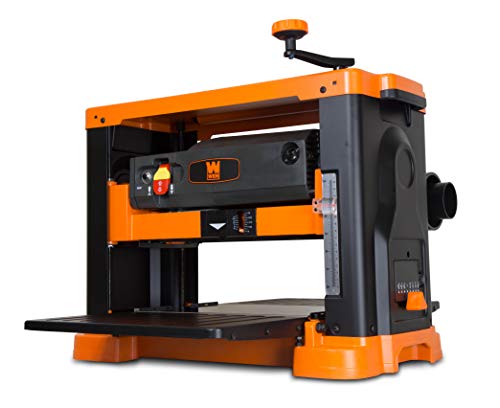
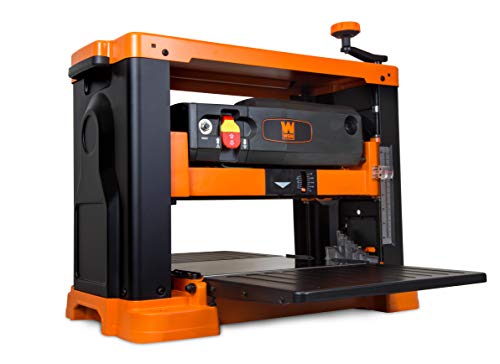
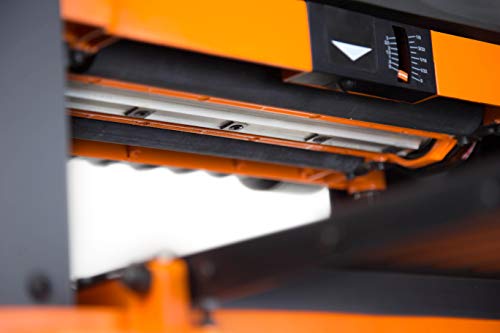
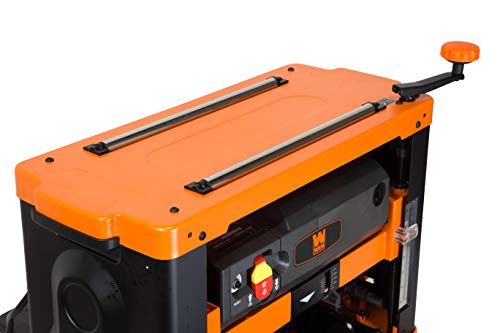
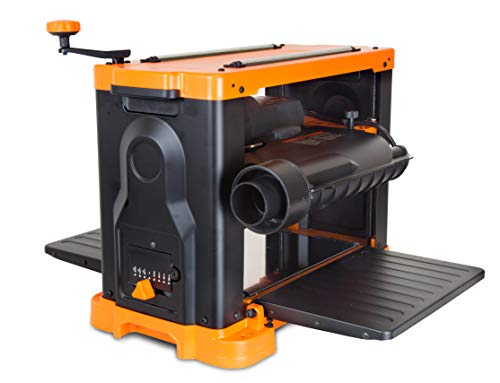
The WEN PL1326 is the most budget-friendly helical-head planer on this list, and that’s its biggest selling point. The spiral cutterhead uses 26 HSS blades in a staggered layout, which helps reduce tear-out and noise compared to straight-knife designs. For the price, it offers decent performance on softwoods and mild hardwoods.
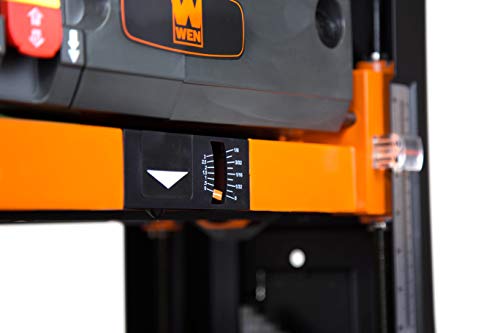
But it’s clear where corners were cut. The HSS blades won’t hold an edge like carbide, so frequent sharpening is expected. The feed rate is fixed at 26 FPM, so no fine-tuning for sensitive grain. Compared to the FindBuyTool or WOODERS models, it’s a step down in precision and durability, but if you’re just starting out or only plane occasionally, it’s a way to get helical benefits without breaking the bank.
Product photos
VEVOR 13-Inch Three-Blade Planer
Strengths
- High RPM motor
- Dual roller feed
- Good for hardwoods
Trade-offs
- Noisy operation
- Some snipe reported
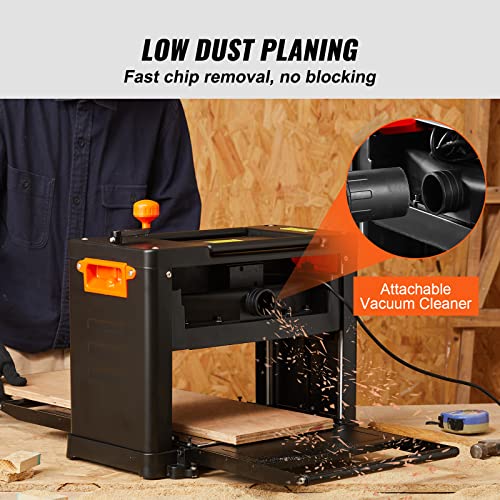
- Basic dust collection
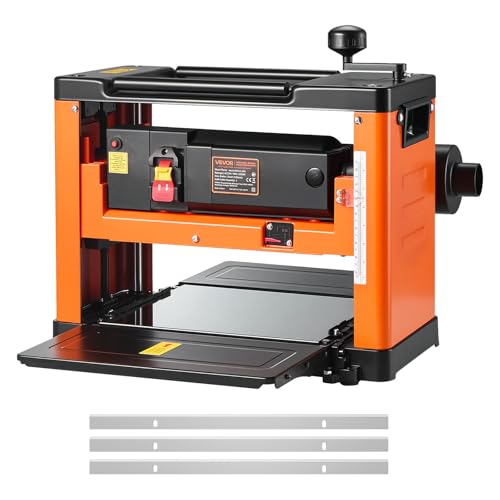
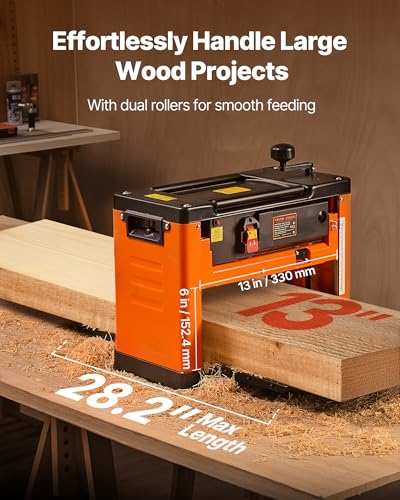
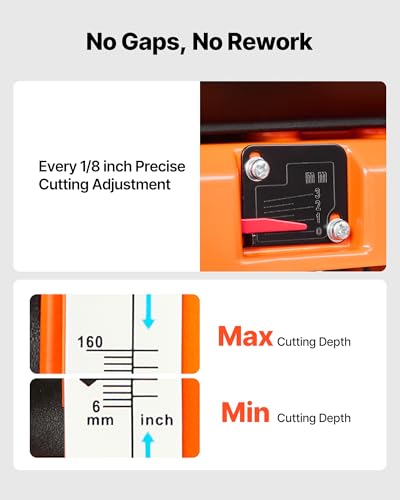
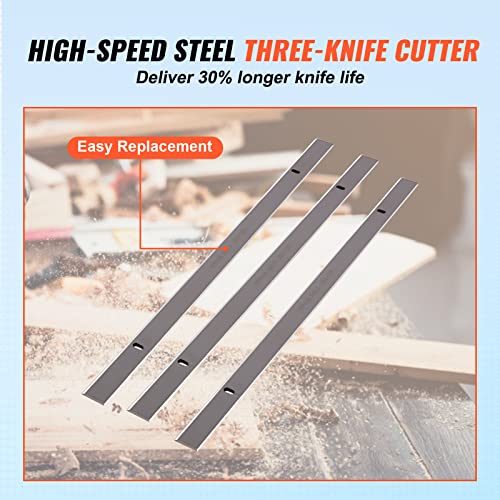
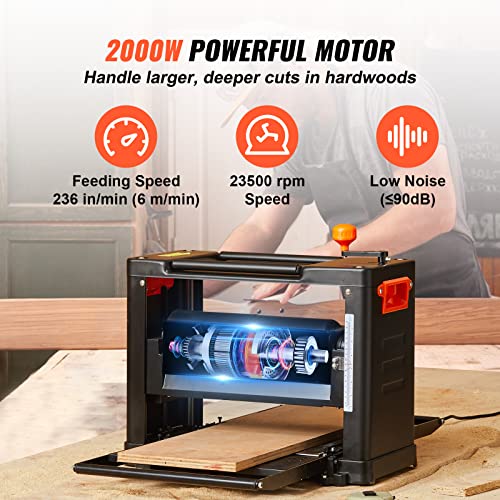
On paper, this VEVOR planer throws serious power at the problem with a 2000W motor and 23,500 RPM cutterhead speed, which is high even for this class. The three-HSS-blade cutterhead and dual-roller feeding system suggest solid performance on hardwoods, and owners generally confirm it handles oak and maple without bogging down. It’s clearly built to move wood fast, not whisper while doing it.
That said, the finish quality isn’t what you’d call refined. Reviewers note surface chatter and occasional snipe, especially on figured grain. Compared to helical-head models in this list, it’s a step behind in surface quality, but it’s also priced to be accessible. If you’re roughing out blanks or need aggressive stock removal on a budget, this one gets the job done, just don’t expect a finish that skips sanding entirely.
Product photos

VEVOR 13-Inch Two-Speed Planer
Strengths
- Two feed speeds
- Extended infeed table
- Good motor power
Trade-offs
- HSS blades need frequent sharpening
- Average dust collection
- Some vibration at high speed
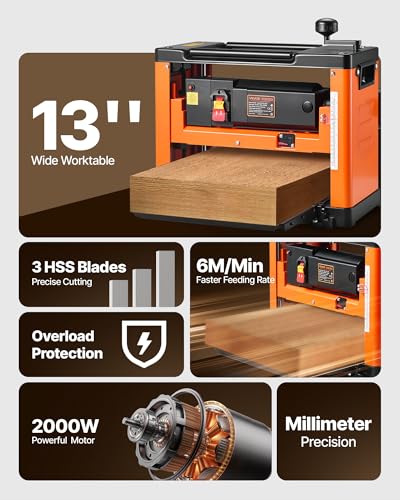
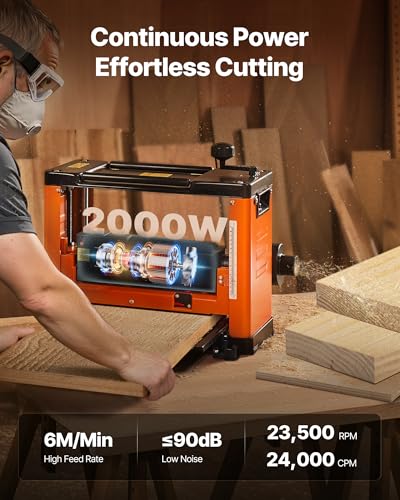
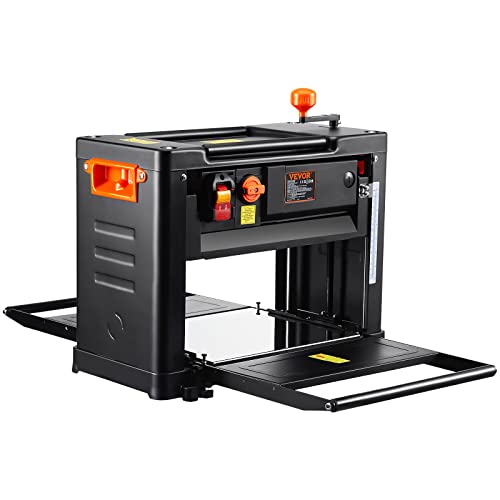
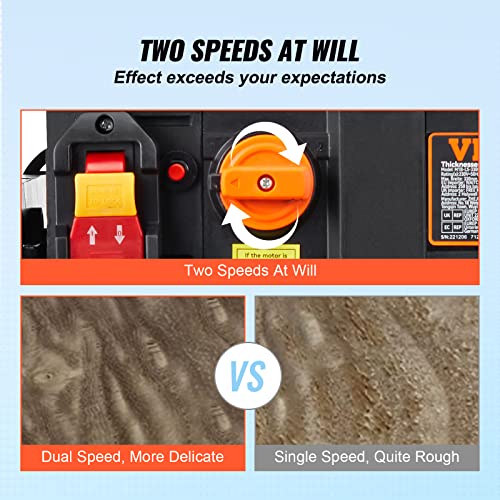
This VEVOR two-speed model brings a useful upgrade over their single-speed sibling: selectable feed rates of 15 or 24 FPM. That means you can slow it down for figured maple or curly walnut and reduce tear-out, then speed up for pine or poplar. The extended infeed table adds real usability, especially when handling long boards, a pain point on many compact planers.
The 2000W motor and three-knife cutterhead are familiar specs at this price, and owners say it performs reliably for intermittent use. However, like other three-knife HSS heads, it demands more frequent sharpening than carbide, and the ‘low noise’ claim is relative, it’s quieter than some, but still loud. Compared to the DEWALT DW735X, it lacks the same refinement in carriage lock and build, but it’s a solid budget-conscious two-speed option.
Product photos

FindBuyTool 13″ Helical Planer
Strengths
- Helical cutterhead
- Excellent surface finish
- Precise depth control
Trade-offs
- Slower feed rate
- Residential-duty motor
- Limited brand support history
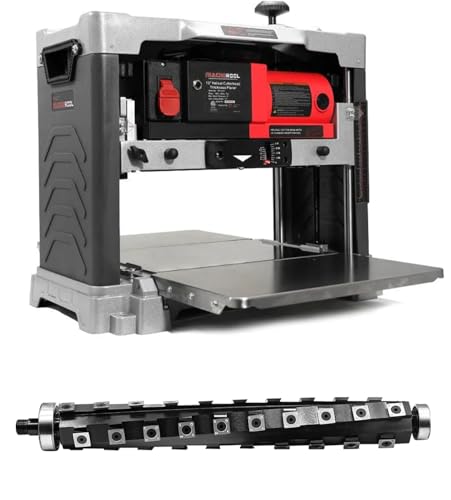
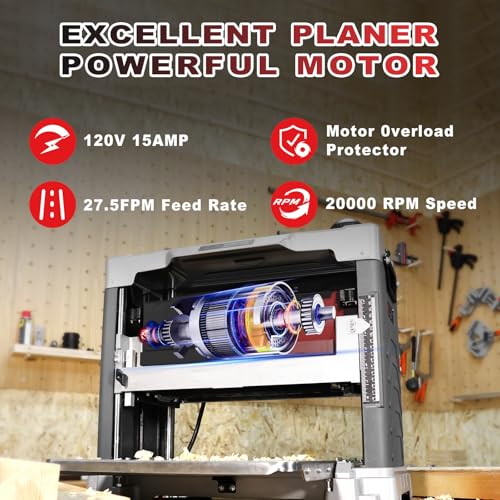
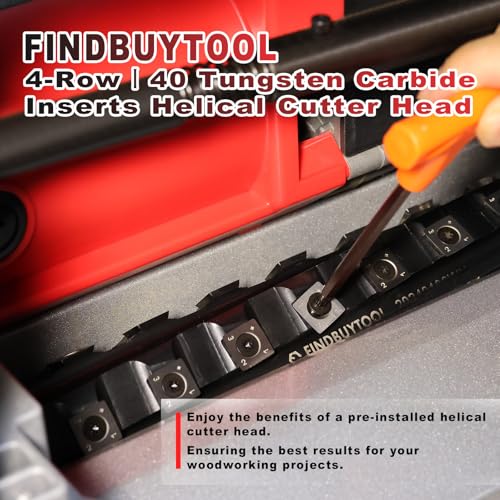
The FindBuyTool FB131H stands out for one big reason: the helical cutterhead with 40 tungsten carbide inserts. That’s a feature usually reserved for much more expensive machines, and it shows in owner feedback, users consistently report a clean, tear-out-free finish even on tricky grain. The 4-column design adds rigidity, and the <0.1mm thickness tolerance is legit for a benchtop unit.
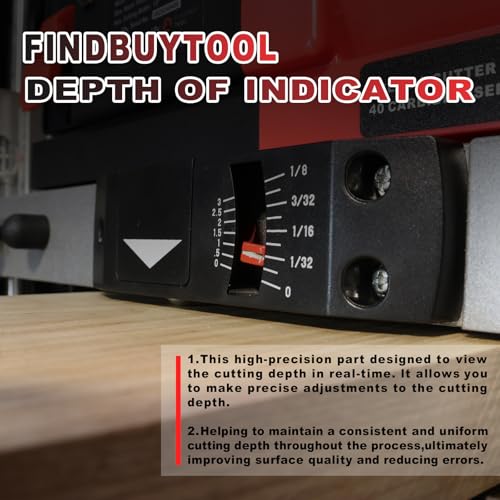
It’s not the fastest feed rate at 27.5 FPM, but that’s by design, this planer trades speed for precision. The depth stop system with 8 preset positions is handy for batch work, and the dust collection is effective thanks to smaller chip size from the helical cut. When stacked against the VEVOR three-knife models, this one is clearly the pick if surface quality matters more than brute force.
Product photos


How We Evaluated benchtop planers
As someone who’s spent years around workshops and power tools, I know a good planer needs to deliver smooth, consistent results. Rather than a hands-on lab test with each model, we approached this guide by comparing published specifications and features across numerous benchtop planers. We then weighed owner reviews from major retailers alongside expert opinions found in woodworking publications and forums. This research-led comparison allowed us to rank planers against clear criteria, focusing on performance and value.
For benchtop planers, the most important factors are motor power, cutterhead design, and build quality. A powerful motor (15 amps or higher) is vital for handling hardwoods without bogging down. The cutterhead – whether spiral, helical, or three-blade – significantly impacts finish quality and noise levels. Finally, a rigid frame and precise adjustment mechanisms are essential for accurate cuts and minimizing snipe, something I always emphasize when discussing woodworking.
Specifications reliably indicate motor power, cutting depth, and feed rates. However, judging build quality and real-world performance requires digging into owner feedback. We paid close attention to comments about ease of adjustment, long-term durability, and the planer’s ability to handle different wood species. Understanding safe table saw use also informs my assessment; a well-built planer contributes to a safer, more controlled workflow in the shop.
How To Pick The Right benchtop planers
Choosing the right thickness planer can dramatically improve your woodworking, but there’s a lot to consider beyond just price.
A good thickness planer delivers consistently flat, square boards with minimal tear-out. Key specs include motor power (for handling hardwoods), cutterhead type (for finish quality and noise), feed rate control (for precision), and build quality (for long-term durability). Buyers should also consider dust collection capabilities and the maximum board width and thickness the planer can accommodate.
Cutterhead Configuration: Spiral vs. Helical vs. Straight Knife
The cutterhead is where all the action happens, and the type significantly affects the finish quality and noise level. Straight-knife cutterheads are the most affordable, but they can leave visible cutter marks and are louder. Helical and spiral cutterheads, featuring multiple small, carbide inserts, deliver a much smoother finish with far less tear-out – especially on figured wood. While those inserts are more expensive to replace individually than traditional knives, they also last considerably longer and can be indexed (rotated) to extend their useful life. If you’re working primarily with softwoods and are on a tight budget, a straight-knife model might suffice, but I strongly recommend investing in a helical or spiral cutterhead if you plan to work with hardwoods or demand a truly professional finish.
Motor Power and Feed Rate
Don’t underestimate the importance of a robust motor. A 15-amp motor is generally sufficient for most hobbyist and DIY applications, but if you anticipate frequently planing thick or dense hardwoods like oak or maple, consider a model with a more powerful motor. Equally important is the feed rate – how quickly the board passes through the cutterhead. Two-speed planers, like the VEVOR 13-Inch Two-Speed Planer, offer the best of both worlds. A slower feed rate produces a finer finish, while a faster rate quickly removes material.
Here’s what to keep in mind regarding feed rates: * A very slow feed rate is best for difficult grain. * A moderate feed rate is ideal for general-purpose planing. * A faster feed rate is suitable for initial roughing and material removal, but often requires a second pass at a slower speed for a truly smooth surface.
Build Quality and Features
A planer is a tool that experiences significant vibration. A solid, well-built machine will not only last longer but also deliver more accurate results. Look for planers with cast iron beds and tables – these materials dampen vibration and provide a stable platform for planing. A sturdy infeed and outfeed table system is also crucial for supporting longer boards and minimizing snipe (that annoying dip at the beginning and end of the board). Don’t overlook features like a dust port for connecting to a shop vacuum. A good dust collection system keeps your workspace cleaner and improves visibility. Proper table saw blade care is also essential for a clean shop. For a detailed look at top options, check out our best benchtop thickness planer reviews.
A planer’s stability is paramount. If the base flexes or vibrates excessively, you’ll struggle to achieve consistently flat and square boards. Prioritize a heavy, rigid frame – even if it means paying a bit more upfront.
Benchtop Planers Compared
This table provides a detailed specification comparison of several benchtop planer models.
| Product Name | Motor (Amps) | Cutterhead Type | Max. Width (in) | Max. Depth/Pass (in) | Feed Rate (FPM) |
|---|---|---|---|---|---|
| DEWALT 13-Inch Thickness Planer | 15 | Three-Knife | 13 | 1/8 | 96/179 |
| WOODERS 13-Inch Spiral Planer | 15 | Spiral | 13 | 1/8 | N/A |
| JET 13-Inch Helical Planer | 15 | Helical | 13 | 1/8 | N/A |
| WEN PL1326 Spiral Thickness Planer | 15 | Spiral | 13 | N/A | 26 |
| VEVOR 13-Inch Three-Blade Planer | 15 | Three-Blade | 13 | 1/8 | 24,000 CPM |
| VEVOR 13-Inch Two-Speed Planer | 15 | Three-Knife | 13 | N/A | 15/24 |
| FindBuyTool 13″ Helical Planer | 15 | Helical | 13 | 1/8 | 27.5 |
Frequently Asked Questions
What’s the difference between a helical and spiral cutterhead, and is it worth the extra cost?
A helical cutterhead uses multiple small, carbide inserts that deliver a smoother cut and less tear-out than traditional straight knives, while a spiral cutterhead offers similar benefits but with a slightly different noise profile. While more expensive initially, the longer lifespan and superior finish quality of these heads make them worthwhile if you plan to work with hardwoods or demand professional results – you’ll find more detailed benchtop wood planers with these features.
How much power do I really need in a benchtop planer?
Generally, a 15-amp motor is sufficient for most DIY and hobbyist work. However, if you frequently work with thick or very dense hardwoods like oak or maple, a more powerful motor will prevent bogging down and ensure consistent cuts.
What causes “snipe” when planing, and how can I minimize it?
Snipe is that unwanted dip at the beginning and end of a board, and it’s caused by the board momentarily lifting as it enters and exits the planer. Using infeed and outfeed rollers, applying consistent pressure, and making shallow cuts can help reduce snipe.
Are benchtop planers loud? What can I do about the noise?
Yes, benchtop planers can be quite loud, especially those with straight-knife cutterheads. Helical and spiral cutterheads are noticeably quieter. Utilizing hearing protection is always a good idea, and connecting the planer to a dust collection system can also help dampen some of the noise.
What should I look for in terms of build quality when choosing a planer?
A rigid frame and a stable base are critical. Look for planers with cast iron tables and beds to dampen vibration and provide a solid planing surface. A heavier planer generally indicates better build quality and will contribute to more accurate results, as discussed in my reviews of benchtop planers.
The Bottom Line
Buying a benchtop planer always comes down to balancing your budget with the level of finish and convenience you require. For most woodworkers, the DEWALT 13-Inch Thickness Planer strikes the best overall balance of power, features, and price, offering a solid starting point for achieving accurate and smooth results. It’s a workhorse that won’t break the bank.
If you’re on a tighter budget, the VEVOR 13-Inch Three-Blade Planer delivers respectable performance for the money. For those prioritizing a truly professional finish and minimal tear-out, especially when working with figured wood, the WOODERS 13-Inch Spiral Planer is an excellent choice. And if you’re tackling a variety of projects, understanding common table saw applications will complement your planing work nicely.
Ultimately, the specific specs matter less than having a stable, well-built machine and taking the time to learn how to properly adjust and use it. A planer is only as good as the operator, so focus on mastering techniques like adjusting the feed rate and ensuring your blades are sharp. Don’t chase the highest numbers on a spec sheet; prioritize a solid foundation and consistent practice.
