7 Best Table Saw Blades of 2026
This post contains affiliate links. As an Amazon Associate, we earn from qualifying purchases.
The DEWALT 10″ 80-Tooth blade stands out as the best overall for clean, precise cuts in hardwoods and plywood, especially if finish quality is your priority. For those on a budget, the WEN BL1060 60-Tooth delivers solid performance at a fraction of the cost. And if you need versatility without switching blades constantly, the Freud LU83R010 50T is a reliable combo choice that handles both ripping and crosscutting well.
Most people buying a table saw blade don’t realize how much the right one affects cut quality, safety, and even how hard their saw has to work. A poor blade can burn wood, cause tear-out, or force you to make multiple passes, wasting time and material.
As Robert A. Bennett from PowerToolGuide.net, I’ve spent over 15 years studying how tools perform in real workshops. This guide reflects what I’ve learned from specs, owner feedback, and years of hands-on experience, not just marketing claims. I compared tooth count, carbide quality, kerf thickness, and real-world user reports to find blades that deliver consistent results across different materials and saw types.
Top 7 Table Saw Blades in the Market
The Best Table Saw Blades, Reviewed
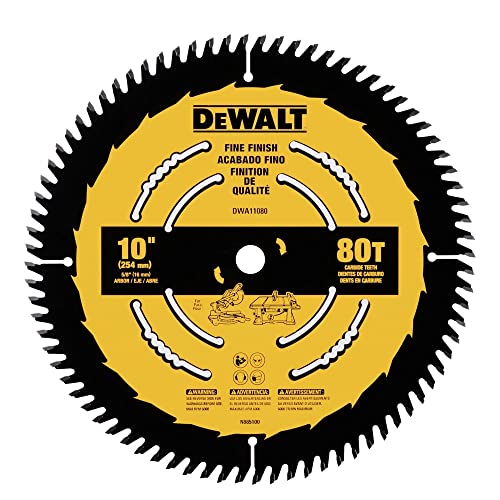
DEWALT 10″ 80-Tooth Fine Finish Blade
Strengths
- 80 teeth for smooth cuts
- Low vibration
- Long edge life
Trade-offs
- Not for ripping
- Standard kerf
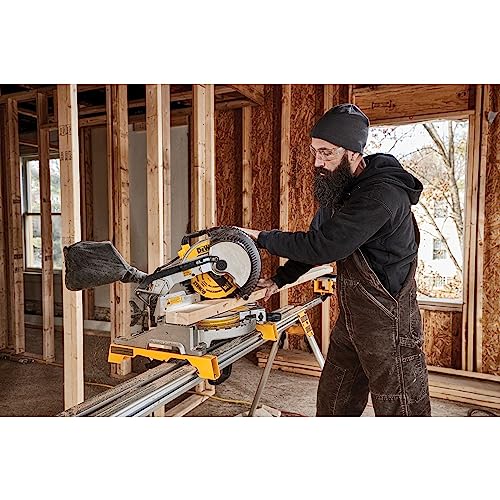
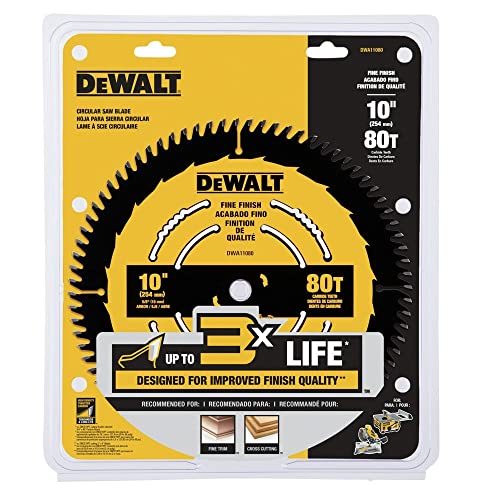
This 80-tooth DEWALT blade is the real deal for finish work, and on paper, it justifies its ‘Best Overall’ label. The high tooth count, optimized geometry, and ultra sharp carbide deliver a cut that’s smooth right out of the saw, minimal sanding needed on cherry, maple, or veneered plywood. The patented body slots help dampen vibration, and owners note fewer burn marks, even at slower feed rates.
Against the Freud LU88R010, it’s very close, but the DEWALT feels slightly more consistent in softer woods. It’s not a rip blade by any stretch, and the kerf is standard, so it demands more from your saw’s motor. But if you’re building cabinets or doing trim work where finish matters, this is the smarter buy over mid-tooth-count combos.
Product photos
Freud LU83R010 50T Industrial Combo Blade
Strengths
- Thin kerf
- TiCo carbide
- Perma Shield coating
Trade-offs
- Not ultra-fine finish
- 50T limits crosscut precision
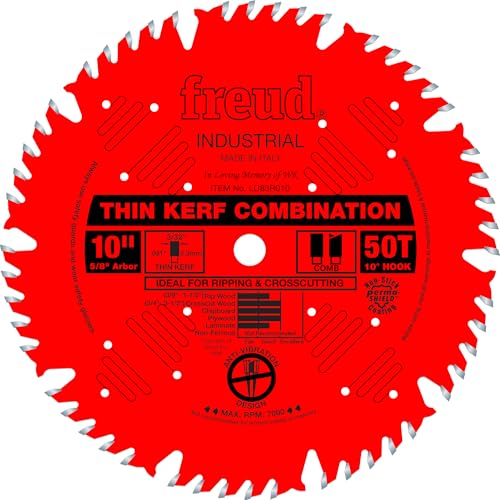
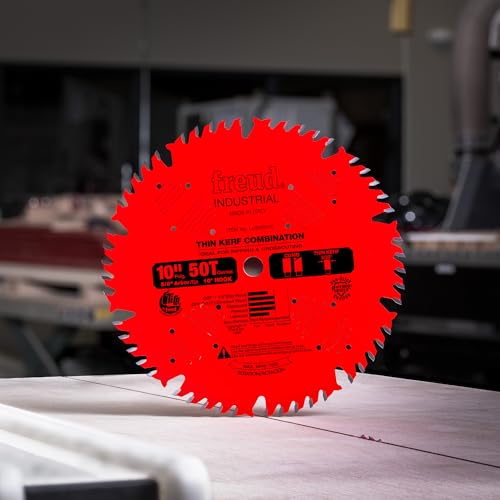
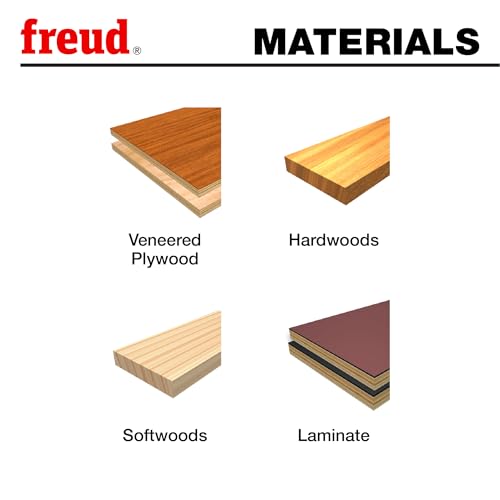
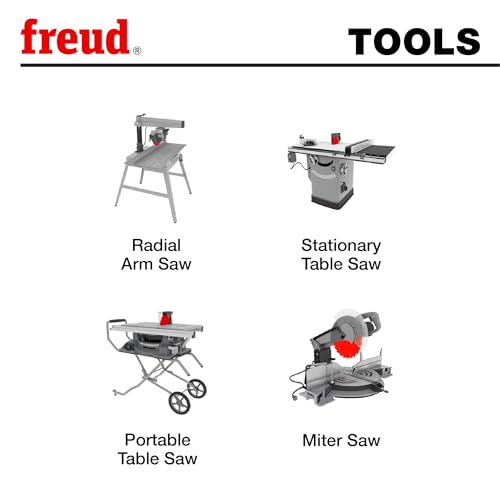
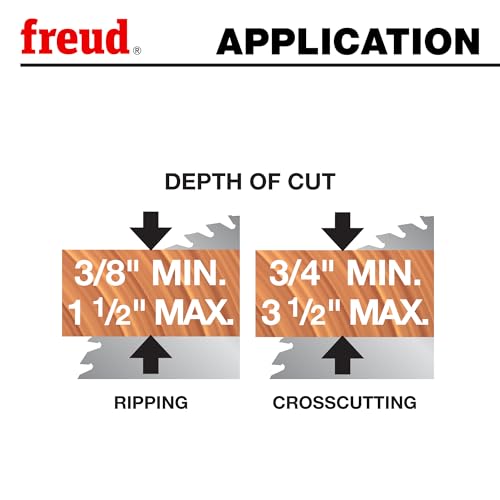
If you want one blade that can rip, crosscut, and handle plywood without constant switching, the Freud LU83R010 is as good as it gets in the combo category. The 50-tooth ATB grind with Freud’s TiCo carbide blend strikes a near-perfect balance, clean enough for hardwood crosscuts, aggressive enough for ripping, and thin enough (0.090″ kerf) to reduce load on 15A circuits. The Perma Shield coating is a real perk, cutting pitch buildup and making cleanup easier, which owners really appreciate after long sessions.
Compared to DEWALT’s combo pack, this is a single, more refined tool. It’s not the absolute finest for any one job, but it’s excellent at all of them. For a contractor running a jobsite saw who needs versatility and durability, this blade saves time and delivers consistent results.
Product photos
Freud LU88R010 60T Thin Kerf Crosscut
Strengths
- Thin kerf
- TiCo carbide
- Smooth crosscuts
Trade-offs
- Not for ripping
- Plate flex risk
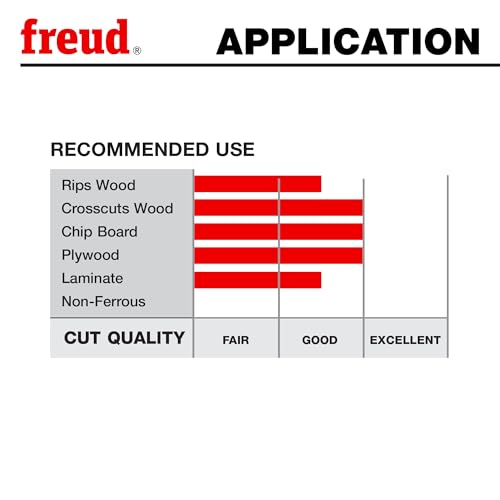
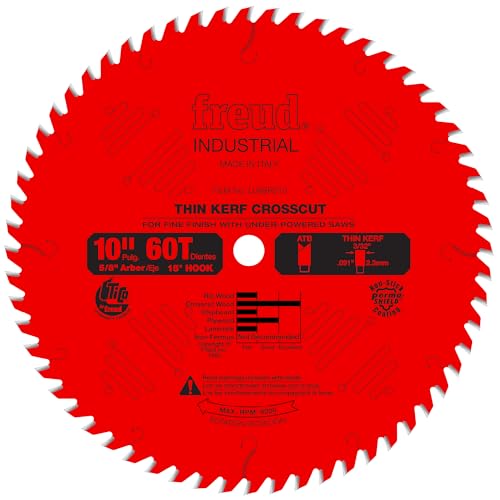
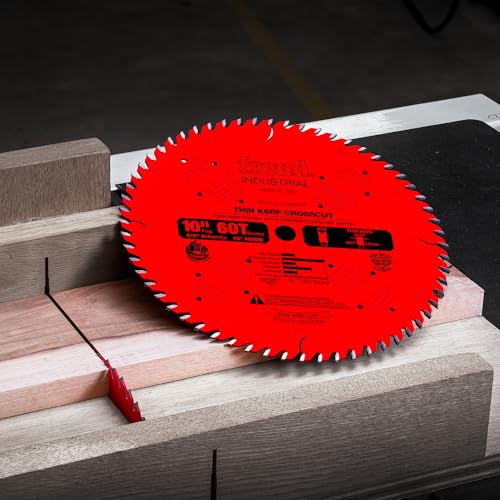
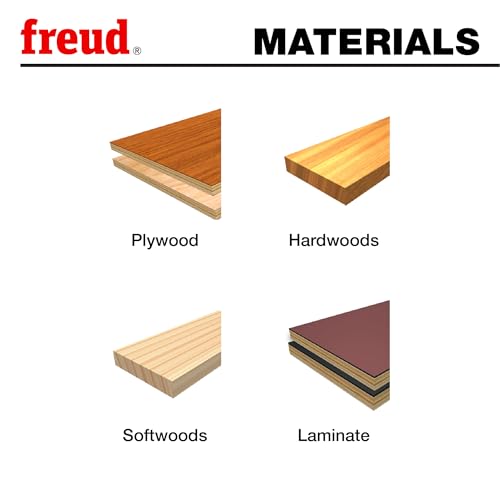
When crosscut quality is essential, the Freud LU88R010 is what serious woodworkers reach for. The 60-tooth ATB grind with a 15° hook angle is engineered for clean, chip-free cuts across the grain, and the thin kerf (.090″) means less waste and easier feeding, especially on less powerful saws. The TiCo carbide blend and Perma-Shield coating stand out in owner feedback: they report fewer resharpenings and less resin buildup, even after cutting oily exotics.
It’s not meant for ripping, and the thin plate can flex under heavy load. But compared to the DEWALT 80T, it’s more specialized, better for crosscuts in hardwoods, slightly less versatile. If your work is 80% crosscutting, this is the blade to beat.
Product photos
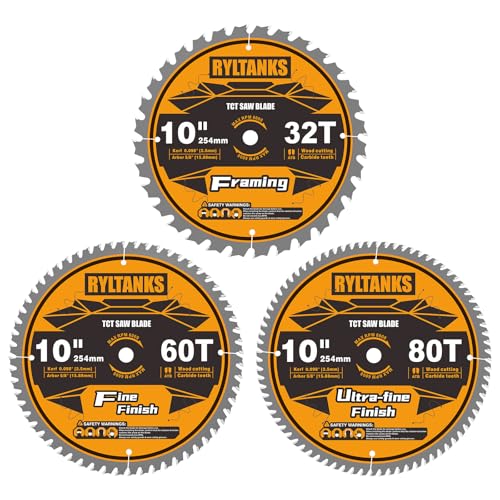
Ryltanks 10″ 32T/60T/80T 3-Pack Blades
Strengths
- 3 blades for one price
- Good tooth variety
- Thin kerf design
Trade-offs
- Finish not pro-grade
- Durability lags premium brands
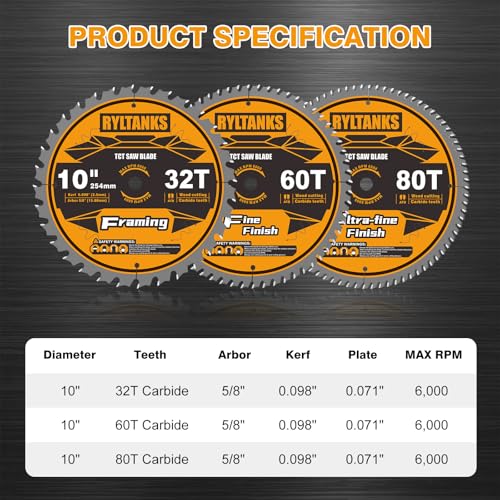
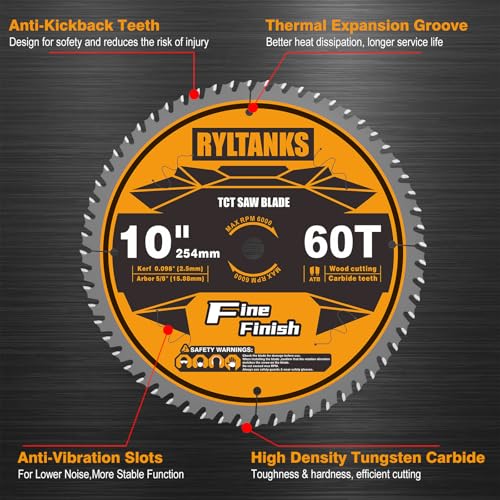
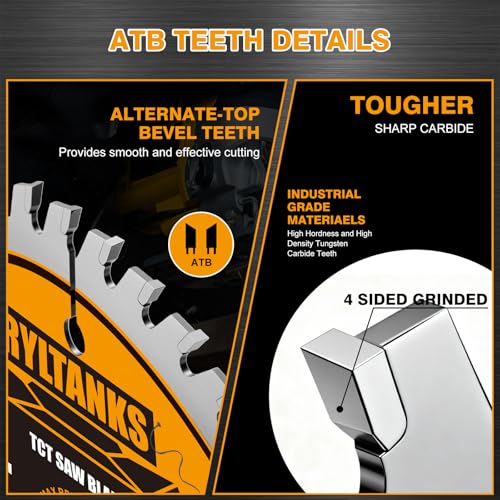
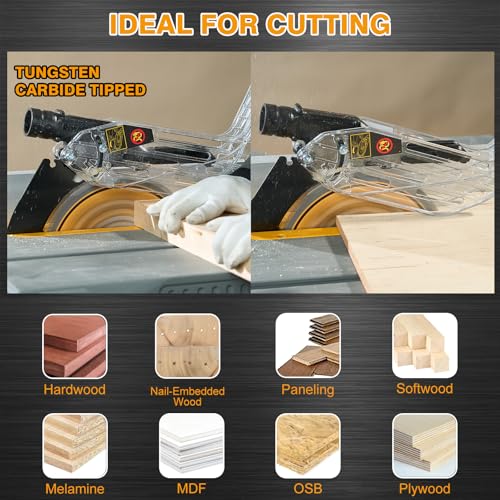
The Ryltanks 3-pack is the ultimate value play, three blades covering framing, general use, and fine finish work, all under one price that’s hard to beat. The 32T handles nail-embedded wood better than most, thanks to thick carbide tips, while the 60T and 80T deliver surprisingly clean cuts in plywood and hardwood. The C3-grade tungsten carbide and laser-cut stabilizer vents help with durability and vibration control, and owners say they’re impressed for the price.
It’s not Freud-level precision, and the 80T still shows minor tearout on delicate veneers. But stacked against buying three mid-tier blades, this set wins on practicality. For a new workshop or a rental crew needing spares, it’s a no-brainer.
Product photos

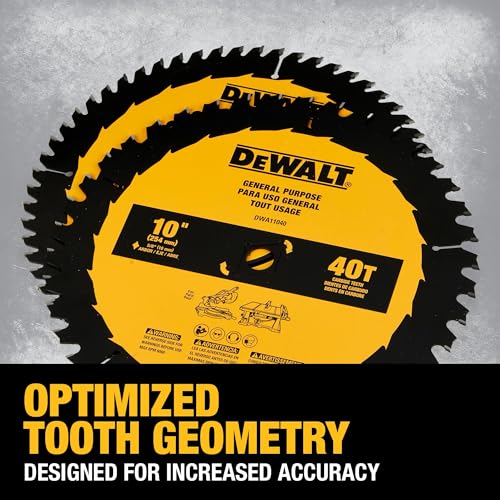
DEWALT 10″ 40T/60T Combo Pack

Strengths
- Ultra sharp carbide
- Low vibration design
- Good tooth count balance
Trade-offs
- Not for fine woodworking
- 40T lacks crosscut finesse
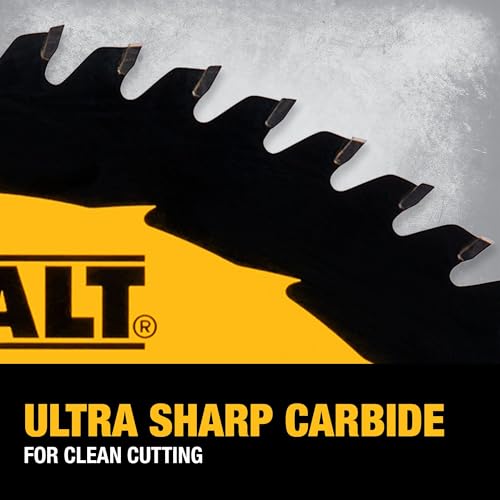
This DEWALT combo pack gives you two solid all-around blades for the price of one premium single, and for DIYers just setting up a workshop, that’s a smart entry point. The 40-tooth is built for ripping through lumber quickly with less strain on mid-tier table saws, while the 60-tooth handles crosscuts and sheet goods with noticeably cleaner edges than a standard 24T combo blade. Owners consistently report these hold an edge longer than expected, likely due to the ultra sharp carbide and DEWALT’s patented body slot design that cuts vibration.
It’s not a high-end solution, but for weekend projects and general framing or cabinetry prep, this set covers a lot of ground without breaking the bank. Compared to single specialty blades, it’s a balanced compromise, especially if you don’t want to swap blades constantly. Still, if you’re doing precise furniture work, you’ll want something finer than the 40T for clean crosscuts.
Product photos


WEN BL1060 60-Tooth Fine-Finish Blade
Strengths
- Thin kerf
- 60 teeth for clean cuts
- Affordable
Trade-offs
- Shorter lifespan
- Not ideal for rip cuts
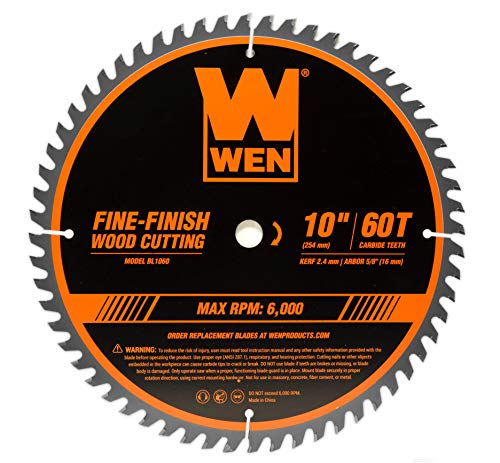
The WEN BL1060 stands out in the budget fine-finish space by delivering a clean cut without the premium price tag. With a 60-tooth ATB grind and a thin 2.4mm kerf, it slices through hardwoods and plywood with less tearout than most combo blades, and the high tooth count helps reduce sanding time. It’s not built for heavy ripping, but for crosscuts and finish work on moldings or cabinets, owners say it performs well beyond its cost.
It won’t match the longevity of Freud or CMT, but for a homeowner running occasional precision cuts, this blade hits the sweet spot of affordability and performance. Against the DEWALT 80T, it’s a step down in finish quality, but if you’re not doing high-volume work, that difference isn’t worth doubling the price.
Product photos


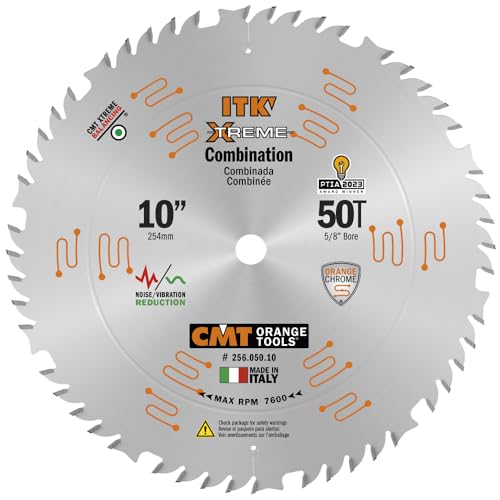
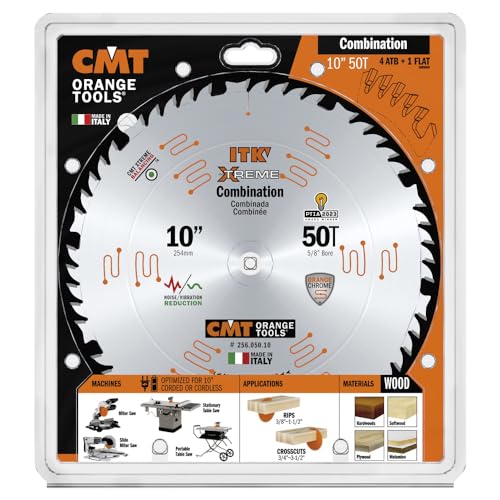
CMT Orange Tools 10″ Combination Blade
Strengths
- ATB + raker design
- Excellent for hardwoods
- Durable build
Trade-offs
- Thicker kerf
- Needs powerful saw
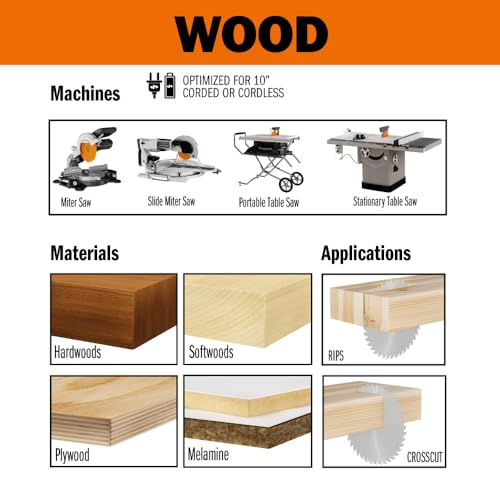
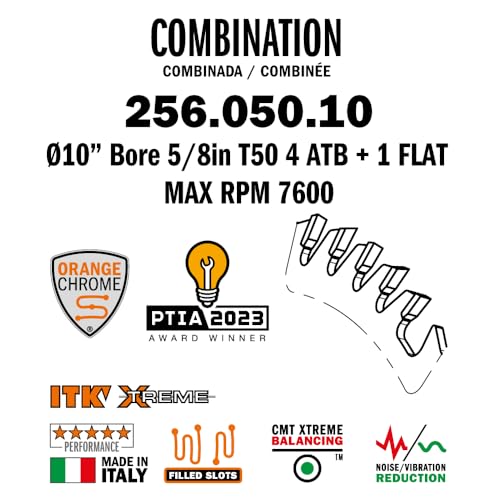
The CMT Orange Tools 50T combo blade is a favorite among hardwood workers for good reason. The 40° alternate top bevel (ATB) with a flat top raker gives it a dual personality, sharp enough for clean crosscuts in cherry or maple, aggressive enough to rip dense lumber without bogging down. The 0.102″ kerf is slightly thicker than thin-kerf models, which adds stability but demands more motor power.
Owners praise its balance and the quality of cut in tough materials, often calling it the best all-rounder for hardwoods. Compared to the Freud LU83R010, it’s a bit heavier and less forgiving on light-duty saws, but on a 1.5HP+ cabinet saw, it shines. If you work mostly solid wood and want one blade that won’t flinch, this is it.
Product photos
How We Chose These table saw blades
As someone who’s spent years around workshops and helping folks choose the right tools, I know a table saw blade is crucial – but there’s a lot of variation out there. My assessment wasn’t about owning and using each blade personally, but rather a research-led comparison of published specifications, features, and – most importantly – what other users are saying. I weighed owner reviews and expert opinions from sites like woodworking magazines and forums to build a clear picture of real-world performance.
For table saw blades, tooth count, carbide quality, and blade thickness (kerf) stood out as the biggest differentiators. A higher tooth count generally means a cleaner finish, but slower cutting. Carbide quality directly impacts how long the blade stays sharp, and that’s key for long-term value. Kerf affects the amount of material removed and the power needed to make a cut; thin-kerf blades are popular for easier cutting but may require more frequent replacement.
Specifications give you a solid baseline – arbor size, blade diameter, tooth count, and kerf are all important. However, owner feedback is where the nuances emerge. I paid close attention to comments about cut quality, durability, and how well a blade performed with different wood types. Understanding how to sharpen blades sharpening table saw blades is also important for maximizing a blade’s life, and that factored into my overall assessment.
How To Choose The table saw blades
Choosing the right table saw blade can dramatically improve cut quality and efficiency. It’s not a one-size-fits-all situation; the ideal blade depends heavily on the materials you’re cutting and the type of cut you need to make.
A quality table saw blade delivers clean, accurate cuts with minimal material waste. Key considerations include tooth count, blade material (carbide grade), kerf thickness, and the specific application – ripping, crosscutting, or a combination of both. Pay attention to the arbor size required by your saw, and look for blades with features like anti-vibration technology and non-stick coatings for improved performance and longevity.
Tooth Count Matters
I’ve seen a lot of folks assume more teeth always mean a better cut, but that’s not necessarily true. Tooth count really dictates the type of cut you’ll get. Lower tooth counts (around 24-30) are ideal for ripping – cutting with the grain – because they quickly remove material. Higher tooth counts (60-80) are better for crosscutting – cutting across the grain – providing a cleaner, less splintered finish. For general-purpose work, a blade in the 40-50 tooth range is a good compromise, though you’ll sacrifice some specialization.
Carbide Grade and Blade Material
The quality of the carbide used in the blade’s teeth is a major factor in its performance and lifespan. TiCo (Titanium Cobalt) carbide blends are common and offer a good balance of toughness and wear resistance. For demanding applications or cutting abrasive materials, blades with a higher percentage of Cobalt will hold their edge longer, but they’re also more brittle and expensive. Don’t skimp here; a cheap blade will dull quickly, leading to inaccurate cuts and frustration. Consider what you’ll be cutting most often. If you regularly work with hardwoods or materials containing hidden nails, investing in a premium blade is worthwhile.
- A 24-tooth blade is best for fast, rough cuts in framing lumber.
- A 40-tooth blade provides a good all-around option for both ripping and crosscutting softer woods.
- An 80-tooth blade delivers the cleanest finish in hardwoods and plywood, but it cuts more slowly and is less forgiving if the wood is not perfectly flat.
Kerf and Value Considerations
Kerf refers to the width of the cut the blade makes. Thin-kerf blades (less than 0.090 inches) remove less material, reducing waste and requiring less power from the saw. However, they can sometimes be more prone to wandering. Standard-kerf blades (around 0.125 inches) are more stable but create more sawdust. If you’re looking for a great value, a multi-pack like the Ryltanks 10″ 32T/60T/80T 3-Pack Blades can give you versatility for different projects.
Don’t neglect blade maintenance. A dull blade is more dangerous than a sharp one, as it requires more force and can lead to kickback. Regular cleaning and sharpening will extend the life of your blade and improve the quality of your cuts. For tips on cleaning table saw blades, check out our detailed guide.
Table Saw Blades Compared
Here’s a specification breakdown of the table saw blades to help you compare features.
| Product Name | Teeth | Arbor Size | Kerf | Max RPM | Blade Type |
|---|---|---|---|---|---|
| DEWALT 10″ 80-Tooth | 80 | N/A | N/A | N/A | Fine Finish |
| Freud LU83R010 50T | 50 | N/A | N/A | N/A | Combo |
| Freud LU88R010 60T | 60 | 5/8″ | .090″ | N/A | Crosscut |
| Ryltanks 10″ 32T/60T/80T | 32/60/80 | 5/8″ | .098″ | 6,000 | Combo |
| DEWALT 10″ 40T/60T | 40/60 | N/A | N/A | N/A | Combo |
| WEN BL1060 60-Tooth | 60 | 5/8″ | .10″ | 6,000 | Fine Finish |
| CMT Orange Tools 10″ | N/A | N/A | N/A | N/A | Combination |
Frequently Asked Questions
What blade should I buy if I primarily cut plywood?
A blade with a high tooth count, typically 60 to 80 teeth, is best for plywood. These blades produce very clean cuts with minimal tear-out, which is especially important with the face veneer of plywood.
Are more expensive blades actually better?
Generally, yes, more expensive blades use higher-quality carbide and manufacturing processes. This translates to a longer-lasting blade that stays sharper for more cuts and delivers more precise results, but the benefits are most noticeable with frequent use or demanding cuts.
What does “kerf” really mean for my cutting?
Kerf is the width of the cut the blade makes, and affects how much power your saw needs. A thinner kerf blade requires less power, but a standard kerf blade may offer more stability, especially when cutting thicker materials.
Can I use any blade on my table saw, regardless of its size?
No, you must match the blade’s arbor size (the diameter of the center hole) to your saw’s specifications. Most table saws use either a 5/8-inch or 1-inch arbor, so confirming compatibility is crucial for safe operation.
Where can I find more information on blades designed for specialized cuts?
If you’re looking for blades that maximize efficiency, explore efficient thin kerf options to reduce material waste and improve cutting speed. These blades are particularly useful for projects where precise cuts and minimal material loss are important.
The Bottom Line
Choosing a table saw blade always comes down to balancing control and convenience. You can spend a lot to get a blade that excels in one area, or you can opt for a versatile option that handles most tasks adequately. For most homeowners and DIYers, the Freud LU83R010 50T offers the best overall combination of performance, durability, and price – it’s a blade you can reliably reach for across a wide range of projects.
If you’re on a tighter budget or want a blade for specific tasks, there are excellent alternatives. The Ryltanks 10″ 32T/60T/80T 3-Pack Blades is a fantastic value for those who want versatility, and the DEWALT 10″ 80-Tooth is an ideal choice if you prioritize exceptionally clean cuts in fine woodworking. Understanding teeth per inch explained is a great start to narrowing your options.
Ultimately, the specs matter less than understanding what you’ll be cutting. Don’t get too hung up on chasing the highest tooth count or the most exotic carbide. A sharp blade, properly maintained, and matched to the material will always deliver better, safer results than a fancy blade used incorrectly.
