What Is a Hammer Drill? Definition, Uses, and How It Works
This post contains affiliate links. As an Amazon Associate, we earn from qualifying purchases.
A hammer drill is a power tool that combines rotary motion with a rapid, hammering action to pulverize hard, brittle materials like concrete, brick, and masonry. It spins a drill bit while simultaneously punching it forward thousands of times per minute, breaking material apart so the flutes can clear it away. This dual action makes it at least 30% faster for drilling into concrete than a standard drill with the hammer function turned off.
That 30 percent speed boost isn’t a marketing guess. It’s the documented result from standardized drilling speed tests cited in engineering sources. The tool doesn’t just spin harder; it mechanically crushes the material in front of the bit.
What follows is a breakdown of the cam-and-clutch mechanism that makes this possible, the specs that separate a decent hammer drill from a weak one, and the clear line between a hammer drill and its heavier-duty cousin, the rotary hammer. By the end, you’ll know exactly which tool you’re holding and what it’s truly capable of.
Key Takeaways
- A hammer drill’s hammering action is generated by a cam or clutch mechanism that moves the entire chuck and bit forward and backward along the axis of rotation thousands of times per minute (BPM).
- The primary advantage is speed in concrete, brick, and masonry; standardized tests show a 30% or greater improvement over drilling with rotation alone.
- Blows Per Minute (BPM) and Revolutions Per Minute (RPM) are independent settings; higher BPM increases hammering force, while RPM controls rotational speed.
- Never use a hammer drill’s hammer function on wood, metal, or plastic; it will damage the material, the bit, and the tool’s internal mechanism.
- For holes larger than 1/2 inch in diameter or for frequent masonry work, a rotary hammer with an SDS chuck is the correct tool, not a standard hammer drill.
How a Hammer Drill Works (The Internal Mechanism)
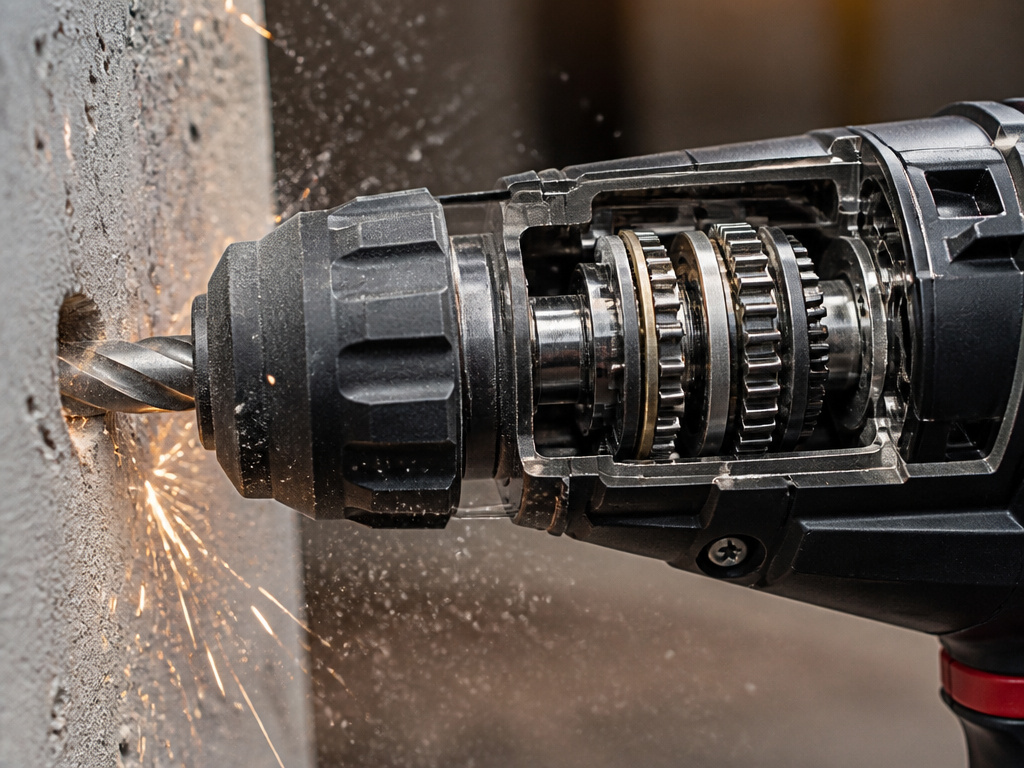
The core of a hammer drill is a cam-action or percussion clutch mechanism. Two sets of interlocking toothed gears inside the tool’s head force the entire chuck, and the bit locked inside it, to slide forward a tiny distance and then back, along the same axis it’s spinning on.
This isn’t a separate hammer hitting the back of the bit. The chuck itself is the hammer. The rotation of the motor over the cam lobes is what creates the hammering motion. You cannot use the hammer action without the drill spinning; they are mechanically linked.
The cam-action mechanism converts the motor’s rotary force into a linear, hammering motion. As the motor turns, it rides over raised lobes on a cam plate, pushing a drive sleeve and the attached chuck forward. A spring then returns the assembly, ready for the next lobe. This cycle repeats for every revolution, generating the rapid hammer blows.
The travel distance is small, often just a couple of millimeters. The force of each individual blow is relatively low. But the rate is immense, ranging from 7,200 to over 50,000 blows per minute (BPM) depending on the tool’s speed setting. This rapid-fire, low-impact pounding is perfect for brittle materials. The carbide tip of a masonry bit acts like a chisel, micro-fracturing the concrete, while the drill’s flutes whisk the dust away.
If that sounds intricate, it is. For a deeper look at the engineering, our article on the hammer drill mechanism breaks it down step-by-step.
What a Hammer Drill Is Used For
The job list is specific. A hammer drill exists to create holes in hard, non-ductile materials where a standard drill would stall, overheat, or simply take forever.
Its primary function is drilling into concrete, brick, cinder block, stone, and masonry. You use it when you need to install anchor bolts, concrete screws, plastic wall plugs, or run wiring through a masonry wall. It’s the go-to tool for attaching ledger boards to foundation walls, mounting exterior light fixtures on brick, or securing a fence post anchor into a concrete patio.
The hammer function is a switch. Turn it off, and the tool becomes a competent, if sometimes bulky, standard drill for drilling materials like wood and metal. This dual personality is why electricians and handymen often carry one: they can drill into a wood stud or a concrete block wall with the same tool.
Common mistake: Using the hammer setting on wood or metal. The hammering action will splinter wood grain, dull metal bits instantly, and create an oval, ragged hole. It also places unnecessary stress on the tool’s clutch. Switch to “drill only” mode.
Key Specs to Understand
Reading a hammer drill spec sheet means decoding two critical numbers that work together: RPM and BPM.
RPM (Revolutions Per Minute): This is the rotational speed of the chuck. A higher RPM means the bit spins faster, which is better for drilling larger diameters or in softer materials. Many hammer drills have a 2-speed gearbox. Low speed (0-450 RPM) delivers high torque for driving large screws or drilling big holes. High speed (0-1,700 RPM) is for faster drilling in smaller diameters.
BPM (Blows Per Minute): This is the hammering rate. It changes with the RPM setting because the hammer mechanism is tied to the motor’s rotation. On the low-speed setting, BPM is lower but each blow has more force. On high speed, BPM skyrockets for rapid percussion. For example, the RIDGID R8411503 offers 0-7,200 BPM on low gear and 0-25,600 BPM on high gear.
| Specification | What It Means | Typical Range (Corded Hammer Drill) |
|---|---|---|
| BPM (Blows Per Minute) | Hammering impact rate | 7,200 – 51,300 |
| RPM (Revolutions Per Minute) | Chuck rotational speed | 0 – 2,700 (2-speed) |
| Chuck Size | Maximum bit shank diameter | 1/2″ (13mm) keyed or keyless |
| Amperage (Corded) | Power draw / torque potential | 5.5A – 8.0A |
| Concrete Drilling Capacity | Max recommended hole diameter | 3/8″ – 1/2″ (10mm – 13mm) |
Amperage (for corded models) or Voltage (for cordless): This indicates power. A 7.8-amp corded drill will handle heavier work than a 5.5-amp model. For cordless, an 18V or 20V drill is standard for homeowner use; 36V or higher platforms exist for prosumers.
Drilling Capacity: This is the maximum recommended hole diameter. Crucially, it’s different for each material. A drill might handle a 1-inch hole in wood but only a 3/8-inch hole in concrete. Exceeding the concrete capacity burns out the motor.
Hammer Drill vs. Rotary Hammer: The Critical Difference
 This is where DIYers buy the wrong tool. A standard hammer drill and a rotary hammer are different species.
A hammer drill uses a cam-action mechanism that hammers by moving the chuck. It’s effective for holes up to about 1/2 inch in concrete. A rotary hammer uses a piston-driven mechanism, like a tiny jackhammer, to drive a hammering action that is separate from the rotation. This delivers significantly more impact energy, measured in Joules (J).
Where this goes sideways: Using a hammer drill for a 3/4-inch anchor hole. The motor will bog down, the bit will overheat and dull, and you’ll likely crack the concrete around the hole. That’s rotary hammer territory.
The rotary hammer comparison is stark. A typical hammer drill might have an impact energy of 1-2 Joules. A compact rotary hammer drill starts around 2.5J, with pro models hitting 10J or more. They also use an SDS or SDS-Plus chuck, which allows the bit to slide back and forth independently, transferring hammer energy more efficiently and allowing for faster bit changes.
| Feature | Standard Hammer Drill | Rotary Hammer (SDS-Plus) |
|---|---|---|
| Mechanism | Cam-action clutch | Piston-driven hammer |
| Impact Energy | Low (Not formally rated) | 1.5J – 10J+ (Measured) |
| Best For | Holes up to 1/2″ in concrete, occasional use | Holes 1/4″ – 1-1/4″, frequent masonry, light chiseling |
| Chuck Type | 3-jaw keyed/keyless | SDS or SDS-Plus |
| Vibration/Noise | Moderate | High (requires firm grip) |
For drilling many holes or larger diameters, the SDS drill is the only rational choice. Its SDS mechanism is a game-changer for masonry work.
Safety and Operation Essentials
 The forces involved demand respect. Before you pull the trigger, understand the basics of safe operation.
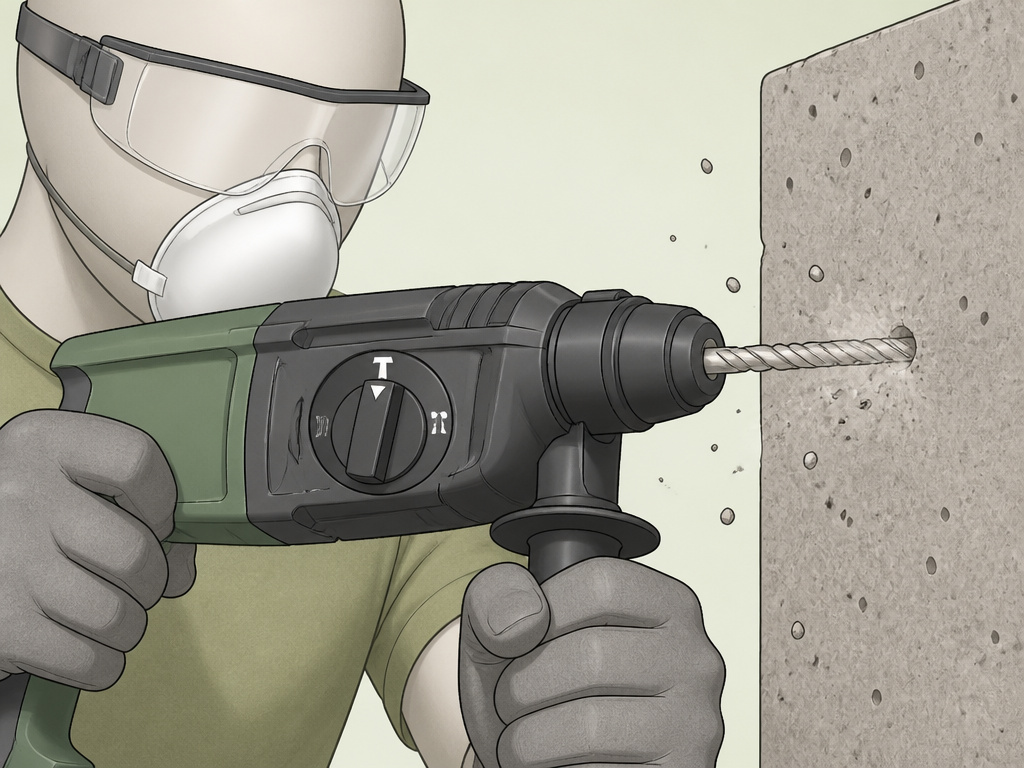
Before you start: Always wear ANSI Z87.1 safety glasses, concrete dust and flying chip particles are constant. Wear hearing protection; these tools run at 85-100 dB, enough to cause hearing damage over time. Use a dust mask or respirator when drilling indoors. Always secure your workpiece.
Start by selecting the correct mode on the function selector: hammer icon for masonry, drill icon for wood/metal. Insert a sharp, carbide-tipped masonry bit. For corded tools, ensure your extension cord is heavy-duty (14 AWG for up to 50 feet). Use the auxiliary side handle for maximum control and to counteract the rotational torque.
Begin drilling at a slow speed to establish a pilot dimple, then increase speed. Let the tool do the work, excessive pressure won’t make it drill faster, but it will overheat the bit and strain the motor. Periodically pull the bit out to clear dust from the hole, which prevents binding.
When you’re done, blow out the tool’s air vents with compressed air to remove concrete dust. That dust is abrasive and will accelerate wear on the moving parts.
Choosing the Right Tool for Your Needs
Your project scope dictates the tool. For a homeowner hanging a few shelves or a TV mount in concrete, a cordless hammer drill and regular drill differences are vital to grasp. A combo kit that includes a hammer drill and an impact driver covers 95% of tasks.
For heavier work, drilling more than a dozen holes, installing a deck into a concrete footing, or drilling holes larger than 1/2 inch, you need to step up. Renting a rotary hammer for a day is often smarter than burning up a homeowner-grade hammer drill.
If you’re buying, look at the best hammer drills in the category that matches your expected use. For general DIY, the SKIL HD527801 20V cordless hammer drill is a solid, affordable starting point. For more frequent use, the RIDGID R8411503 18V offers a robust clutch and good power. For serious masonry, you leave the hammer drill category entirely and look at an SDS hammer drill like the Bosch Bulldog.
The internal hammering action is a clever solution to a specific problem. Understanding it helps you use the tool correctly and know its limits.
Frequently Asked Questions
Can a hammer drill be used as a regular drill?
Yes. Every quality hammer drill has a selector switch to turn off the hammer function. In “drill only” mode, it operates exactly like a standard rotary drill for wood, metal, and plastic. This versatility is its main advantage over a dedicated rotary hammer.
Do you need special bits for a hammer drill?
Yes, for masonry. You must use carbide-tipped masonry bits. These are designed to withstand the hammering impact and have a specially shaped tip to fracture concrete. Using a standard twist drill bit in hammer mode will destroy the bit in seconds and can damage the drill.
How is it different from an impact driver?
An impact driver delivers rotational impacts (torque pulses) to drive screws and loosen frozen fasteners. It does not hammer linearly. A hammer drill delivers linear impacts along the axis of the drill bit to break material. They are completely different tools for different jobs. An impact driver cannot drill into concrete.
Is a hammer drill worth it for a homeowner?
If your home has any concrete, brick, or masonry and you plan to mount anything to it, then yes. The time and frustration saved on just one project compared to using a standard drill often justifies the cost. For a house with only wood and drywall, a standard drill/driver is sufficient.
Why does my hammer drill stop hammering?
The most common cause is a worn or broken hammer clutch, often from using the tool in hammer mode on materials other than masonry. The clutch plates can glaze over or the springs can fail. Another cause is a buildup of fine dust inside the hammer mechanism, jamming the cam action. This usually requires service by a qualified technician.
The Bottom Line
A hammer drill is a specialized hybrid. It’s a drill that can hammer, designed to conquer materials that would defeat a standard drill. Its value is measured in the 30 percent time savings on concrete and the versatility of a two-in-one tool.
Choose one based on your hardest anticipated material. For brick and occasional concrete, a hammer drill is perfect. For frequent, larger, or deeper masonry work, its heavier cousin, the rotary hammer, is the actual tool you need. Match the mechanism to the material, and you’ll never burn out another motor on a job that was simply too big.
