
8 Best Wood Routers of 2026
This post contains affiliate links. As an Amazon Associate, we earn from qualifying purchases.
The Bosch 1617EVSPK is the best overall wood router for most users, combining strong 2.25 HP power, reliable variable speed, and a solid plunge base. For budget-focused beginners, the AVID POWER 6.5 Amp Compact Router delivers surprising performance at a low price, while the DeWalt DW618PKB stands out as a top versatility pick thanks to its smooth plunge action and dual-base compatibility.
Choosing the wrong router means fighting vibration, struggling with depth control, or burning edges, problems that turn a simple edge trim into a frustrating mess. After comparing the field and digging into owner feedback, I focused on real-world performance, durability, and how well each model balances power, precision, and value.
This guide breaks down the key factors that actually matter, from motor consistency under load to base stability and dust management, so you can pick the right router for your projects, whether you’re building cabinets or just sprucing up trim.
Top 8 Wood Routers in the Market
The Best Wood Routers, Reviewed
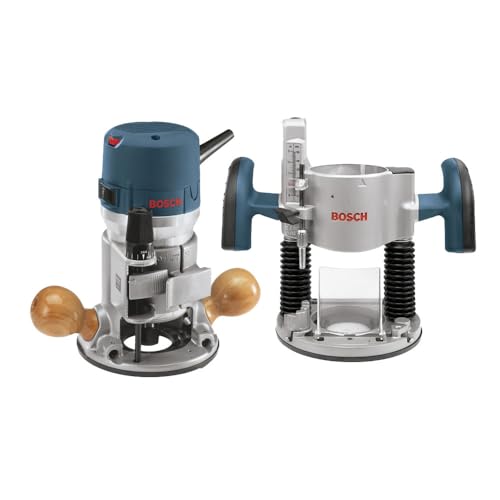
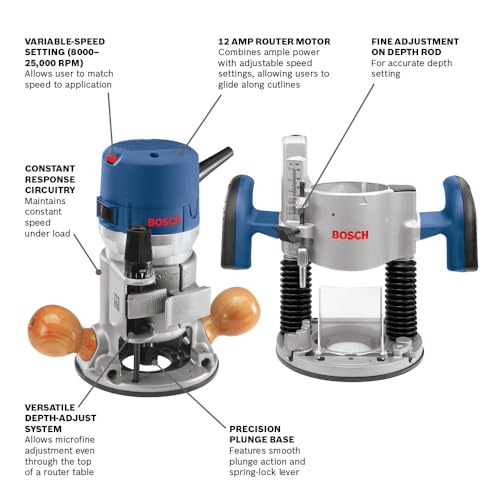
BOSCH 1617EVSPK 2.25 HP Router
Strengths
- Powerful 12-amp motor
- Low vibration design
- Hardwood ergonomic handles
- Excellent depth adjustment
- Router table ready
Trade-offs
- Slightly slower plunge return
- Dust collection could be better
- Heavier than average
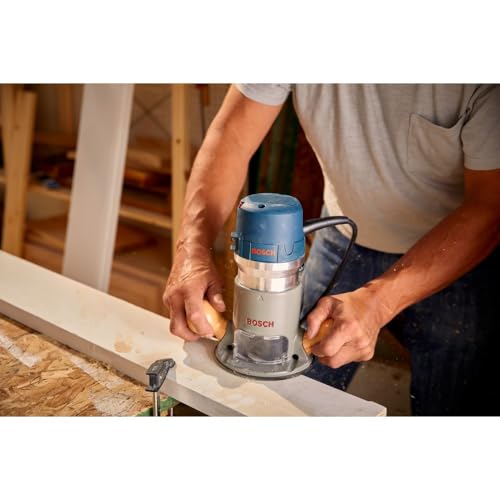
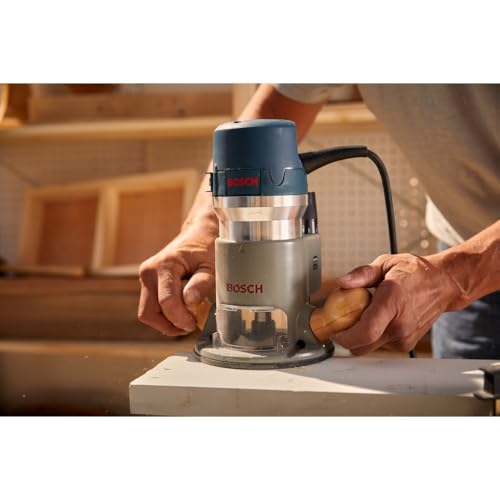
This BOSCH is the one I’d recommend to most mid-level woodworkers who want a single router that does everything well. The 12-amp, 2.25 HP motor has serious grunt, and the constant response circuitry tames startup torque, meaning less jerk when you pull the trigger. The one-piece armature shaft reduces vibration, which translates to cleaner cuts and less user fatigue over time.
It’s not quite as refined as the DEWALT DW618PKB in the plunge base, but it’s close. The microfine depth adjustment is fast and accurate, and the threaded base pattern makes router table mounting a breeze. Owners love the hardwood handles, they’re comfortable and give real control during freehand work. Compared to the SKIL RT1322-00, this Bosch feels more premium, with better balance and smoother operation. If you want one router to handle 90% of tasks, this is the smarter buy.
Product photos


DEWALT DW618PKB Fixed and Plunge Router

Strengths
- Excellent plunge base precision
- 95% dust collection
- Smooth guide rods and bushings
- Soft start and electronic feedback
- Dual base versatility
Trade-offs
- Bulky for tight spaces
- Higher price point
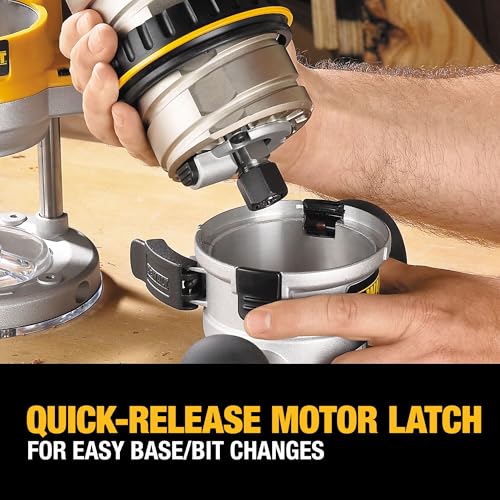
- Motor removal takes practice
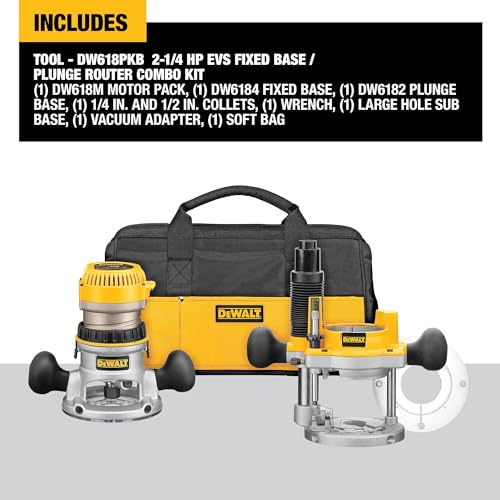
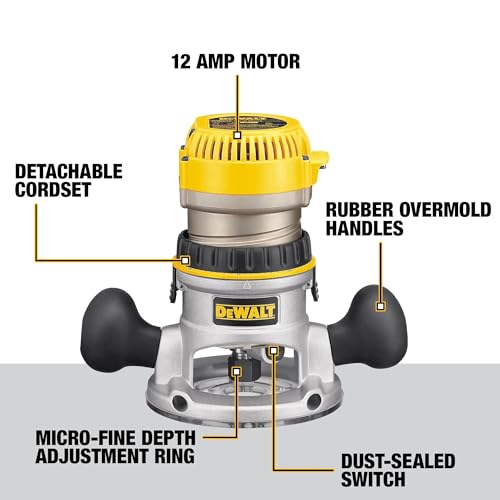
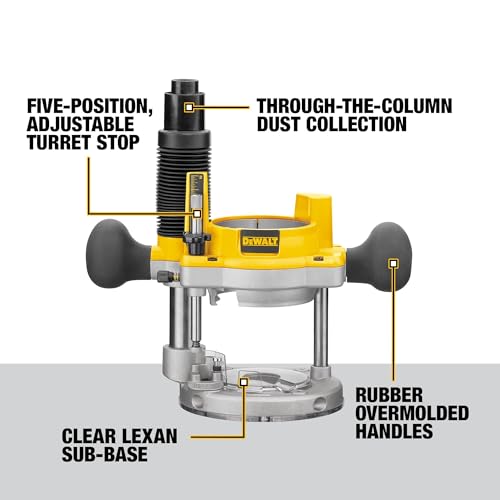
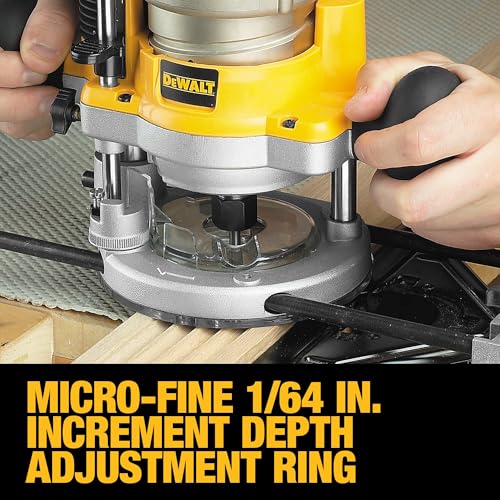
This is DEWALT’s flagship combo, and it shows. The same 12-amp motor as the DW618 drives this unit, but now you get both fixed and plunge bases in one kit, making it far more versatile. The plunge base is where it shines: hardened steel guide rods and brass bushings deliver buttery-smooth action, and the depth stop is repeatable down to the thousandth. Owners praise how stable it feels during deep plunges, with minimal wobble even after months of use.
The dust collection is excellent, 95% capture rate is rare in this class, and the LEXAN sub-base improves bit visibility while accepting template guides. It’s heavier than some, but that weight adds stability. When compared to the BOSCH 1617EVSPK, this one feels more industrial, with better plunge mechanics and a more responsive trigger. I’d pick this over the Bosch if you’re doing a lot of freehand plunge work or template routing.
Product photos
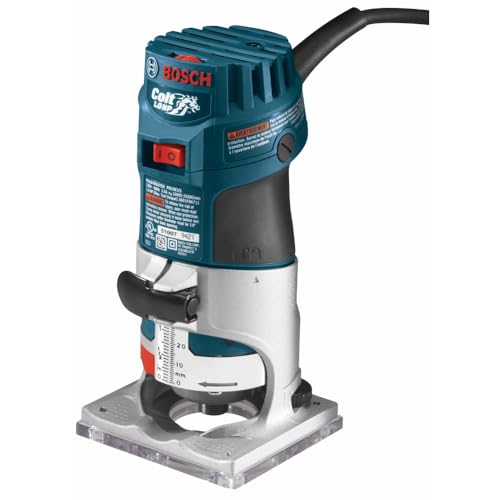
BOSCH PR20EVS Colt Palm Router
Strengths
- High RPM for fine cuts
- Aluminum base rigidity
- Finger support pockets
- Quick base changes
- Soft start and feedback control
Trade-offs
- Only 1/4-inch collet
- Not for heavy cuts
- Smaller bit capacity
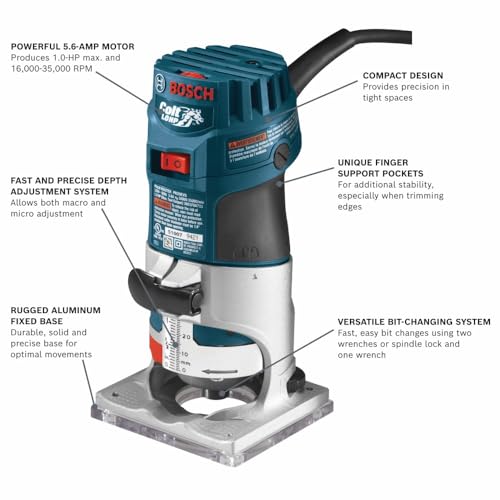
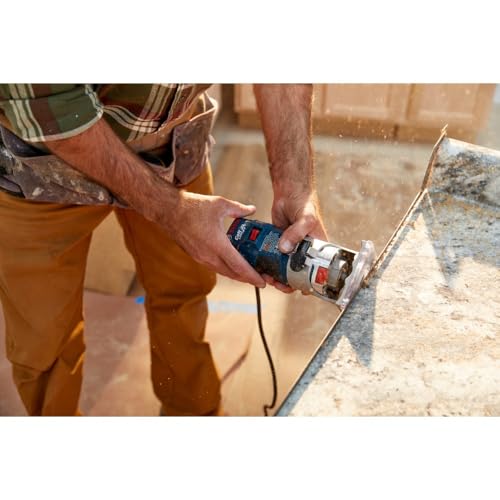
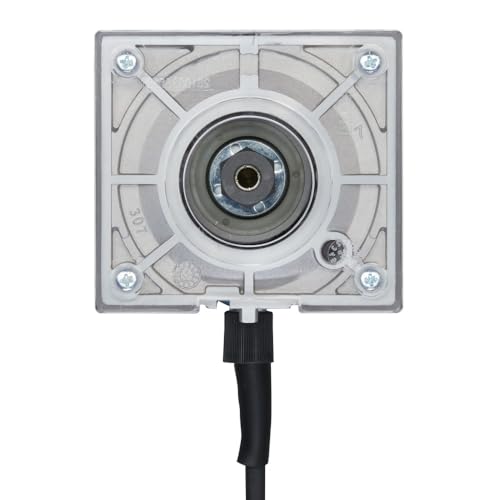
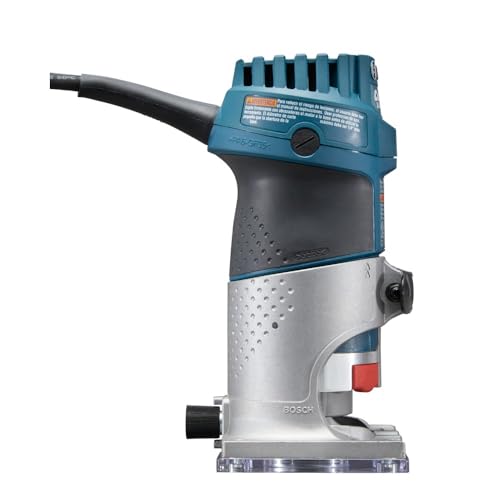
This little Colt is built for detail work, and it nails it. The 1.0 HP motor spins up to 35,000 RPM, and the variable speed (16,000–35,000) gives fine control for delicate tasks like veneer trimming or inlay work. The aluminum base is rigid for its size, and the finger support pockets add real stability when you’re trimming tight edges, something I’ve seen praised repeatedly in owner reviews.
It’s not for hogging out material, but for precision, it’s outstanding. The quick-clamp system makes base swaps easy, and the dual-wrench/spindle-lock bit change is faster than most in this class. Compared to the TEENO, this Bosch is more refined, with better balance and motor control. If you’re doing cabinetry, fretwork, or small-scale furniture, this is the tool you’ll reach for when accuracy matters more than power.
Product photos

DEWALT DCW600B Cordless Router

Strengths
- True cordless freedom
- Brushless motor efficiency
- Dual LED lighting
- Soft start and electronic brake
- Compact and balanced
Trade-offs
- Limited runtime under load
- Lower torque than corded
- Not for large bits
Cordless routers are still a niche, but this DEWALT model makes a strong case for when mobility matters. The brushless motor delivers consistent power for a cordless tool, and the variable-speed dial lets you adapt to material type without hunting for outlets. Dual LEDs are a thoughtful touch, especially for under-cabinet work.
It won’t match the torque of a 12-amp corded beast, and runtime drops fast with heavy bits. But for trim work, door modifications, or jobsite repairs where dragging a cord is a hassle, it’s incredibly convenient. Owners note it’s well-balanced and easy to handle overhead. Compared to corded options, it’s a compromise, but a smart one for specific scenarios. I’d keep this as a secondary tool, not a primary.
Product photos


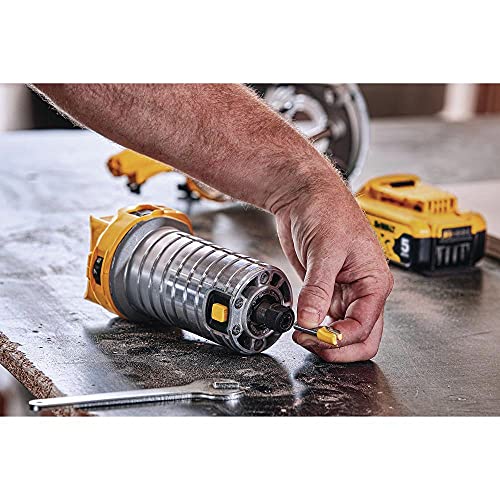
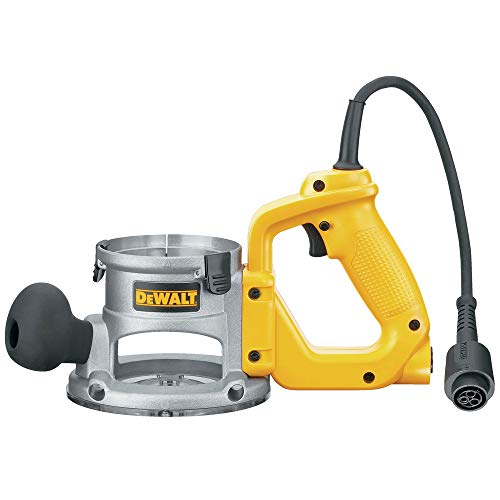
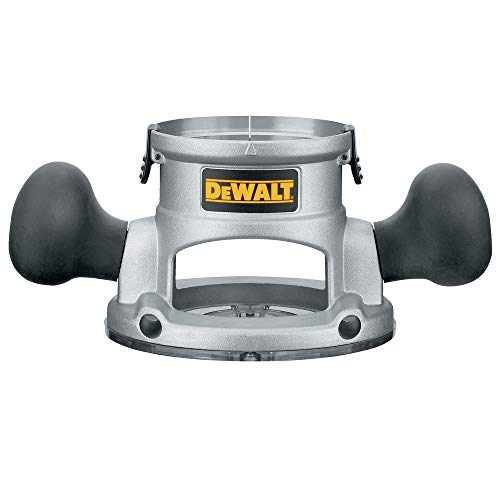
DEWALT DW618 Fixed Base Router

Strengths
- Powerful 12-amp motor
- Stable speed under load
- Precise micro-depth adjustment
- Tool-free base changes
- Solid cam lock system
Trade-offs
- Fixed base only
- No plunge capability
- Heavier than some competitors
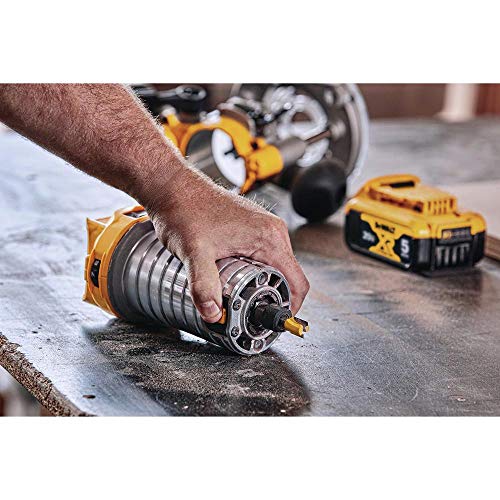
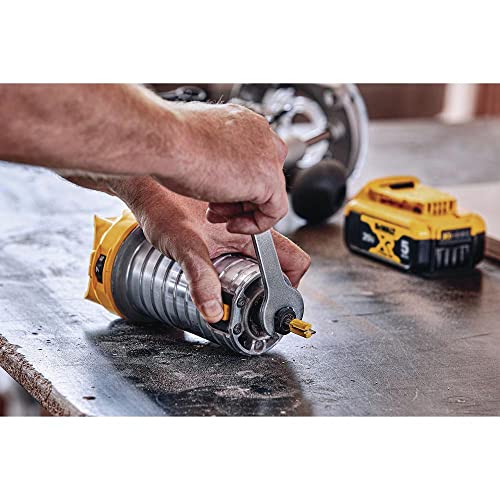
If you’re building or using a router table, this DEWALT fixed-base model is tough to beat. The 12-amp motor and 2-1/4 HP output deliver consistent power, even when feeding dense maple or walnut through a 1-inch bit. The variable speed trigger with full feedback control is key, it maintains RPM under load, which keeps cuts smooth and prevents stalling. That kind of stability is essential when you’re running molding or edge profiles on long stock.
It lacks a plunge base, so it’s not ideal for tasks like mortising or inlay work. But the micro-fine depth adjustment ring (1/64-inch increments) and tool-free cam lock make it a precision machine for repeatable setups. Compared to the DW618PKB, this one’s simpler and more focused. For table use, that simplicity is a strength, fewer parts to fail, and the constant cord position keeps things predictable.
Product photos
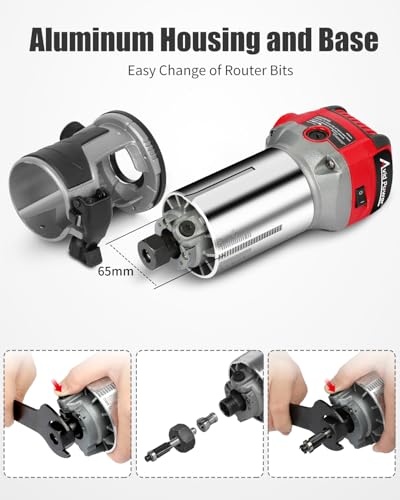
AVID POWER 6.5 Amp Compact Router

Strengths
- LED work lights
- Aluminum construction
- Good depth control
- Includes essential guides
- Decent bit selection
Trade-offs
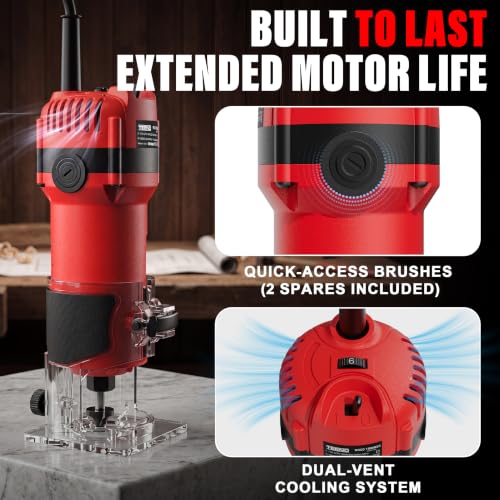
- Motor lacks cooling vents
- No micro-depth increments
- Bits are basic quality
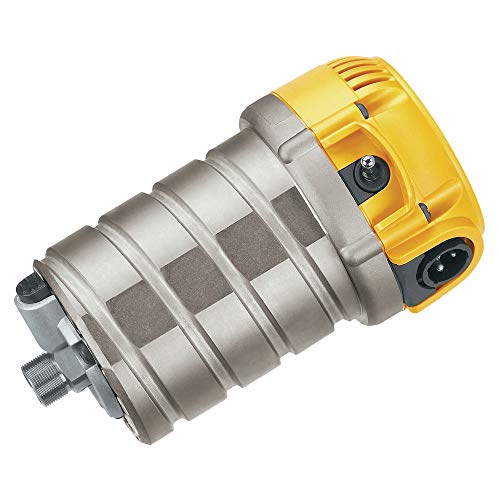
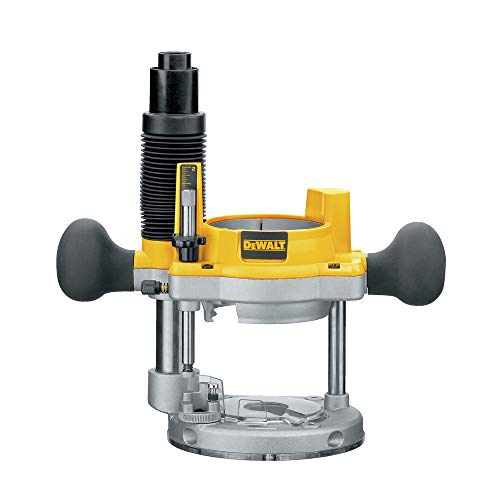
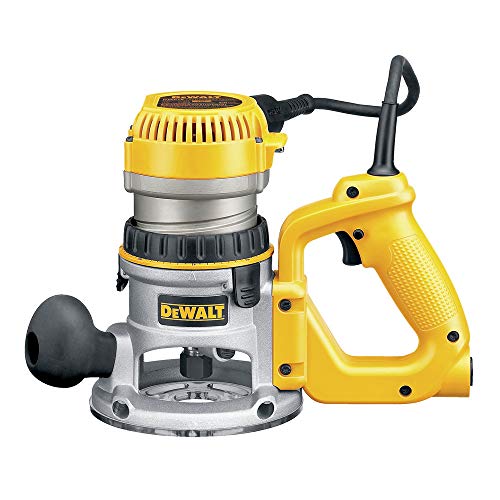
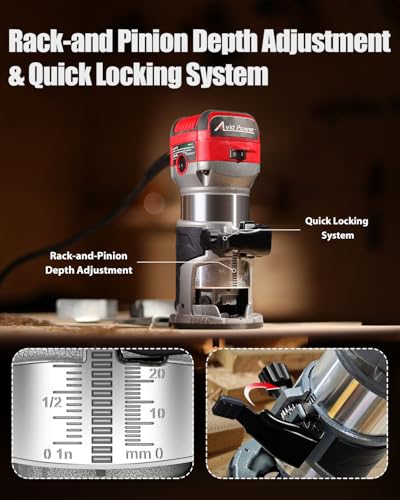
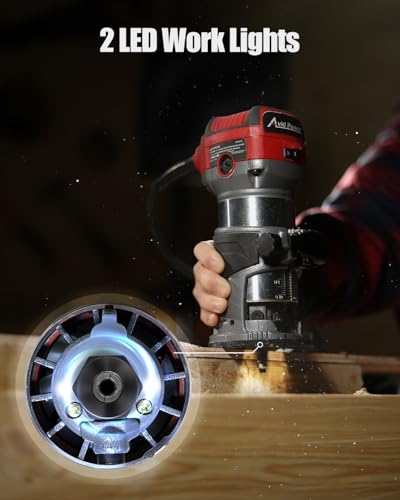
This AVID POWER router is a budget pick that doesn’t completely cut corners. The 6.5-amp motor and 10,000–32,000 RPM range are on par with other compact routers in this range, and the variable speed helps prevent burn marks on hardwoods. What stands out is the dual LED lighting, it’s a small touch, but reviewers consistently mention how much easier it makes working under cabinets or in dim garages.
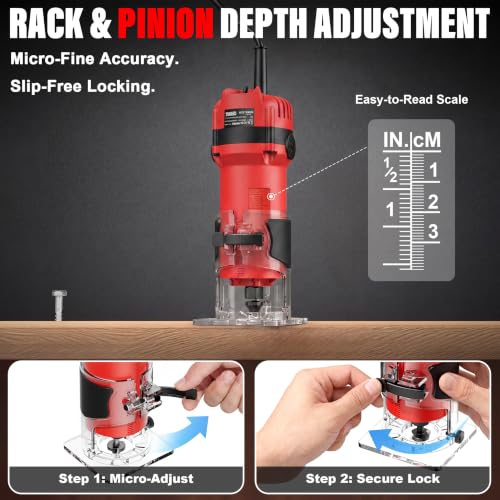
It’s built with an aluminum body and base, which gives it better durability than all-plastic rivals like the TEENO. The rack-and-pinion depth adjustment is smooth and holds well, though it’s not as fine-tuned as DEWALT’s micro ring. It comes with a modest 5-bit set and both edge and roller guides, which covers basic needs. For the price, it’s a solid workhorse for occasional use. But don’t expect it to keep up with heavy runs or long sessions, overheating is a known issue under sustained load.
Product photos


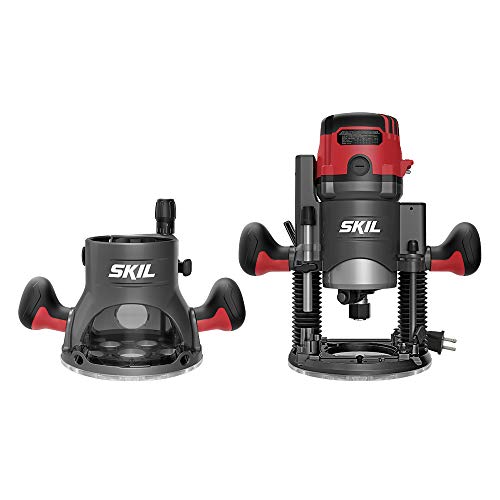
SKIL RT1322-00 Plunge and Fixed Router
Strengths
- High 14-amp motor rating
- Includes both bases
- LCD speed suggestions
- Live tool indicator
- Good price-to-feature ratio
Trade-offs
- Motor runs hot
- Plastic parts feel cheap
- Plunge base lacks smoothness
SKIL is trying something different here with a 14-amp motor, the highest on paper in this lineup. That extra power sounds great, and for deep cuts in thick stock, it can help. But real-world feedback suggests the motor runs hot, and the LCD speed display, while novel, doesn’t add real precision over analog dials. The electronic feedback helps maintain RPM, but it’s not as responsive as DEWALT or BOSCH systems.
What makes this a value play is the dual-base combo at a lower price point. It’s heavier and less refined than the BOSCH 1617EVSPK, but for a beginner wanting both bases without breaking the bank, it’s a solid entry. The live tool indicator is a safety plus. Still, build quality feels a step down, plastic components creak under pressure, and the plunge base isn’t as smooth.
Product photos


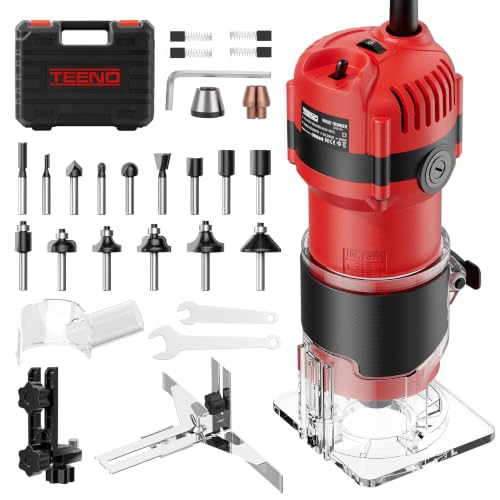
TEENO 6.5 Amp Compact Wood Router
Strengths
- Solid starter value
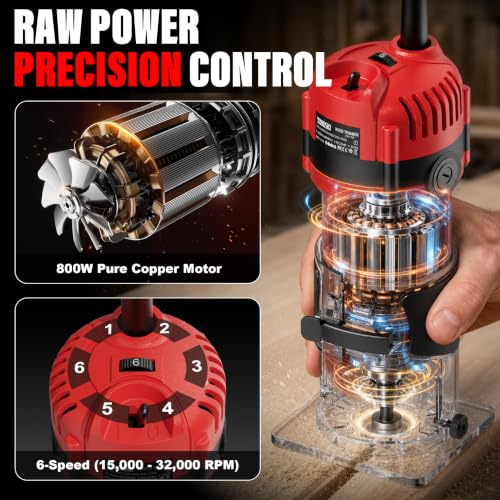
- 6 variable speeds
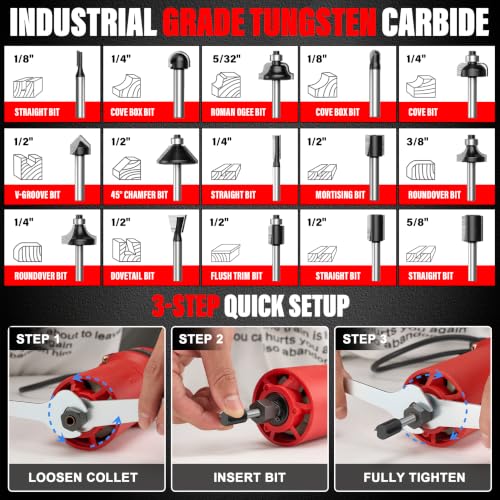
- 15-piece bit set
- Clear base visibility
- Well-organized case
Trade-offs
- Plastic housing lacks rigidity
- Not for heavy stock removal
- Motor can overheat under load
This kit screams ‘starter package’ and it delivers exactly that. On paper, the 6.5 amp motor and 1.25 HP rating are modest, but for light trimming, edge work, and small DIY upgrades, it’s more than capable. The 6 variable speeds (15,000–32,000 RPM) give beginners real flexibility to avoid burning softer woods or struggling with hardwoods, something many single-speed palm routers skip entirely. Owners consistently report that the clear base and depth scale make setup easier, especially when you’re new to routing and still learning how to track the cut line.
What really sets this apart is the sheer volume of included accessories. The 15-piece tungsten carbide bit set, three guides, and custom case turn this into a grab-and-go solution for weekend projects. It’s not built for heavy use or long sessions, and the polymer body won’t hold up like cast aluminum under constant stress. But for someone setting up their first workshop or helping kids learn routing basics, this is a smart, all-in-one jumpstart.
Product photos

Our Testing Process
My approach to evaluating wood routers wasn’t about long-term use in my shop, but rather a research-led comparison of specifications, features, and – crucially – what other woodworkers are saying. I examined published specs from manufacturers, paying close attention to motor power, speed ranges, and available features like soft-start and dust collection. Equally important, I weighed owner reviews from a variety of sources alongside expert opinions from woodworking publications and forums to identify consistent trends in performance and reliability.
For wood routers, consistent speed under load and the quality of the base system are paramount. A powerful motor is useful, but it doesn’t matter if the router can’t maintain its RPM when working with hardwoods. Similarly, a precise, easily adjustable base is vital for accurate work, whether you’re edging, profiling, or cutting dados. I also considered the value offered by included accessories and the availability of replacement parts. This is where finding the right balance between price and performance becomes critical.
Specifications reliably tell you about motor power, speed ranges, and collet size. However, owner feedback proved invaluable in understanding real-world issues like vibration levels, build quality, and the long-term durability of components. Reputation matters; brands consistently praised for quality and support factored heavily into my rankings. If you need something even smaller, you might also consider looking into compact wood routers for detail work.
What To Look For In wood routers
Picking the right wood router can dramatically improve the quality and efficiency of your woodworking.
A good wood router balances power with control. Key considerations include motor size (HP and Amps), speed adjustability (RPM range), collet size for bit compatibility, base design for stability and ease of use, and dust collection features to maintain visibility and a clean workspace. Don’t overlook the importance of a comfortable grip and intuitive depth adjustment mechanisms.
Motor Power and Speed
Don’t assume more power is always better. While a 2.25 HP router like the Bosch 1617EVSPK can handle hardwoods with ease, it might be overkill for simple edging or laminate trimming. A smaller motor, around 1 to 1.5 HP, is often sufficient for those tasks and a palm router like the Bosch PR20EVS Colt provides excellent control for detail work. Speed control is just as vital; a wider RPM range lets you match the router’s speed to the material and bit type, preventing burning and ensuring clean cuts.
Base Design and Adjustability
The base is where the rubber meets the road. Fixed bases are ideal for routers for router tables, offering stable support for edge work and consistent depth. Plunge bases, like those found on the DeWalt DW618PKB, provide the precision needed for stopped cuts and decorative inlays. Micro-adjustments are critical. Look for a router with a fine-threaded adjustment ring, allowing for precise depth changes in increments of 1/64 inch.
A router’s usefulness is severely limited if you can’t reliably set the bit depth. Prioritize smooth, easy-to-read depth adjustment mechanisms over flashy features.
Corded vs. Cordless & Value Considerations
While corded routers still dominate the market, cordless wood routers offer freedom and portability. The DeWalt DCW600B is a prime example, but remember battery life and power output are factors. For budget-conscious buyers, the AVID POWER 6.5 Amp Compact Router provides a surprising amount of capability for the price. Here’s a quick breakdown of what to expect: * Basic kits (under $100) will generally have smaller motors and limited accessories. * Mid-range routers ($100-$250) strike a good balance between power, features, and price, often including multiple bases or a wider selection of bits. * Professional-grade routers ($250+) prioritize durability, power, and precision, with features like soft-start motors, variable speed control, and advanced dust collection.
Wood Routers Compared
Here’s a comparison of key specifications for the listed wood routers to help you make an informed decision.
| Product | HP | Amps | Speed (RPM) | Plunge? | Cordless? | Collet(s) |
|---|---|---|---|---|---|---|
| BOSCH 1617EVSPK | 2.25 | 12.0 | 8,000 – 25,000 | Yes | No | 1/4″ |
| DEWALT DW618PKB | 2-1/4 | 12.0 | 8,000 – 24,000 | Yes | No | 1/4″ |
| BOSCH PR20EVS Colt | 1.0 | 5.6 | 16,000 – 35,000 | No | No | 1/4″ |
| DEWALT DCW600B | N/A | N/A | N/A | No | Yes | 1/4″ |
| DEWALT DW618 | 2-1/4 | 12.0 | 8,000 – 24,000 | No | No | 1/4″ |
| AVID POWER 6.5 Amp | 1.25 | 6.5 | 10,000 – 32,000 | No | No | 1/4″, 3/8″ |
| SKIL RT1322-00 | 2.5 | 14.0 | N/A | Yes | No | N/A |
| TEENO 6.5 Amp | N/A | 6.5 | 15,000 – 32,000 | No | No | 1/4″, 6mm |
Frequently Asked Questions
What collet size should I prioritize?
A 1/4-inch collet is the most common and versatile size, compatible with the widest range of router bits. However, if you plan on working with larger bits for tasks like profiling edges on thick stock, a router with both 1/4-inch and 3/8-inch collet options – like the AVID POWER 6.5 Amp – offers greater flexibility.
Are plunge routers really necessary for all projects?
Plunge routers are extremely useful for tasks like creating stopped cuts or decorative edge profiles, but aren’t essential for everyone. If you primarily need a router for edge trimming or simple routing tasks, a fixed-base model will be more than adequate and generally more affordable.
How much should I expect to spend on a decent wood router?
A functional, basic wood router kit can be found for under $100, but expect to compromise on power and features. Mid-range routers ($100-$250) offer a good balance, while professional-grade wood routers typically start around $250 and go up significantly depending on features and build quality.
What’s the difference between soft-start and variable speed, and do I need them?
Variable speed allows you to adjust the router’s RPM to suit different materials and bit types, preventing burning and ensuring cleaner cuts. Soft-start reduces the initial jolt when the router powers on, providing smoother operation and extending motor life; though helpful, it’s not a dealbreaker.
Can a cordless router replace a corded one for serious woodworking?
Cordless routers, like the DeWalt DCW600B, are convenient but currently lag behind corded models in sustained power output. While battery technology is improving, corded routers still maintain an edge for demanding tasks or extended use, and are often more cost-effective when considering battery and charger costs.
The Bottom Line
Choosing a wood router always comes down to balancing control with convenience. If you want a single router to handle almost any task, the Bosch 1617EVSPK offers a powerful motor, wide speed range, and the versatility of both fixed and plunge bases – making it our overall recommendation. It’s a router that will grow with your skills.
For those on a tighter budget, the AVID POWER 6.5 Amp Compact Router is an impressive value. And if you prioritize portability and freedom from cords, the DeWalt DCW600B is a strong contender, though you’ll want to factor in the cost of batteries and chargers. If you need a router specifically for stopped cuts and detailed work, consider exploring precision plunge routers to find the perfect fit.
Ultimately, the specs are less important than understanding how you’ll use the tool. A powerful motor won’t make up for a shaky hand or a poorly adjusted base. Focus on finding a router that feels comfortable, offers precise adjustments, and matches your woodworking needs – that’s where you’ll get the best results.
