
7 Best Wood Routers Under $100 of 2026
This post contains affiliate links. As an Amazon Associate, we earn from qualifying purchases.
The TWOWIN 1.25 HP Variable Speed Router is the best overall wood router under $100, offering strong power, reliable speed control, and a full kit. For those on a tighter budget, the AVID POWER 1.25 HP Compact Router delivers solid performance and a well-rounded accessory set at a lower price.
Most people shopping for a router under $100 are trying to balance real performance with a hard budget limit. You don’t want to waste money on something that quits after a few projects or can’t handle hardwoods without bogging down.
As someone who’s spent years evaluating tools for real-world use, I looked at motor specs, owner feedback, and included accessories to find models that actually deliver beyond the price tag. This guide cuts through the noise to highlight routers that offer durability, usable power, and the right features for common tasks like edge shaping, dadoes, and joinery.
Top 7 Wood Router Under 100S in the Market
The Best Wood Router Under 100S, Reviewed
TWOWIN 1.25 HP Variable Speed Router

Strengths
- 15 included router bits
- 6 variable speeds
- Soft start feature
- Comfortable grip
- Good accessory bundle
Trade-offs
- Plastic housing less durable
- Not ideal for heavy cuts
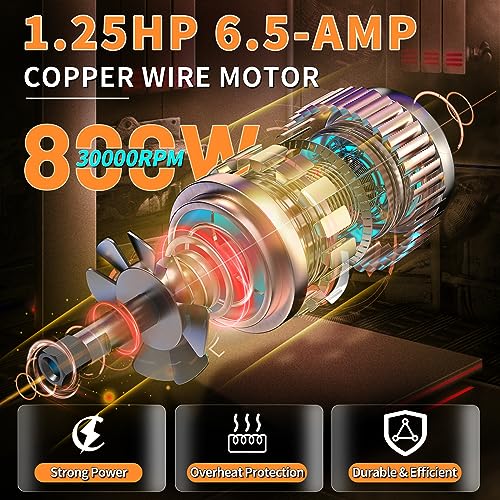
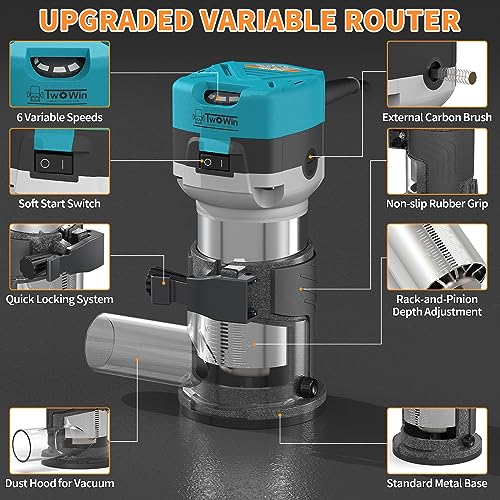
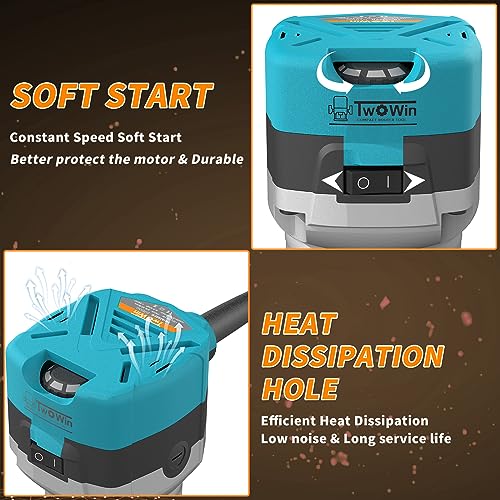
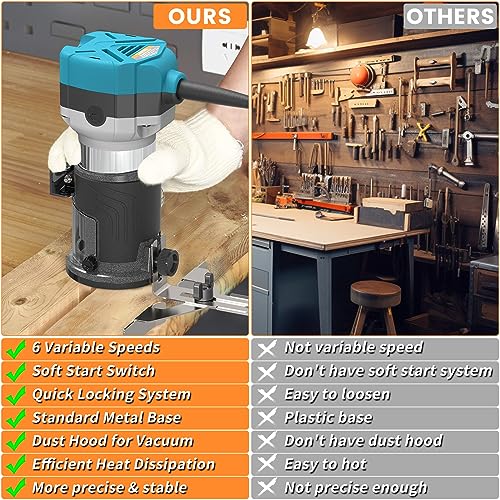
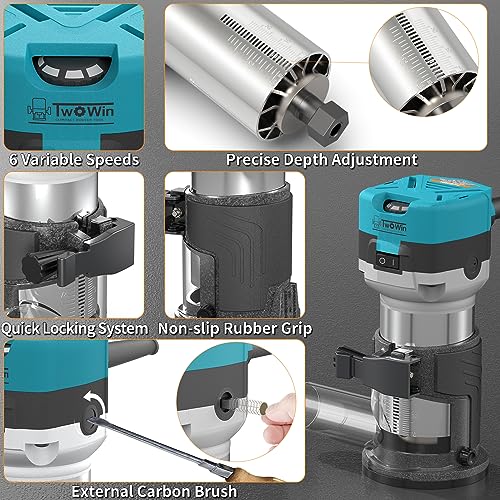
This TWOWIN router punches above its weight in the budget segment, especially with the sheer volume of included bits. The 1.25 HP motor and 30,000 RPM max speed are competitive, and the 6-speed settings let you adapt to different woods, though owners note it’s best suited for lighter tasks like edge trimming or laminate work. The ABS and aluminum build keeps it light, and the rubberized grip helps reduce fatigue during short jobs.
Where this model really wins is in the kit: 15 router bits, multiple guides, and even sandpaper and carbon brushes. For a beginner setting up their first workshop, that’s a huge value boost. But it’s not as rigid or vibration-free as the Bosch models. I’d take the 1617EVSPK for serious joinery, but this TWOWIN is the smarter buy if you need a starter tool with everything in one box.
Product photos
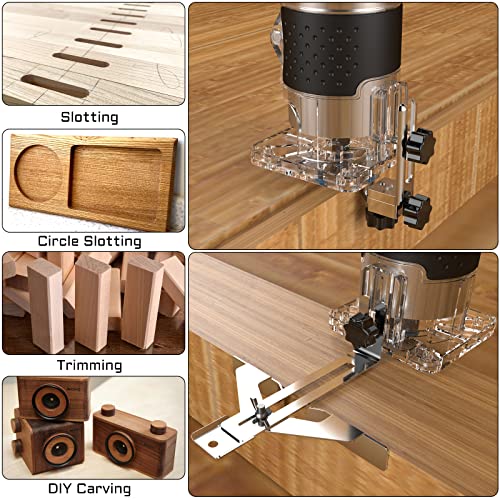
TwoWin 800W Compact Palm Router

Strengths
- Transparent base
- Lightweight design
- 15 carbide bits included
- Easy depth scale
- Good for detail work
Trade-offs
- No dust hood included
- Limited depth control
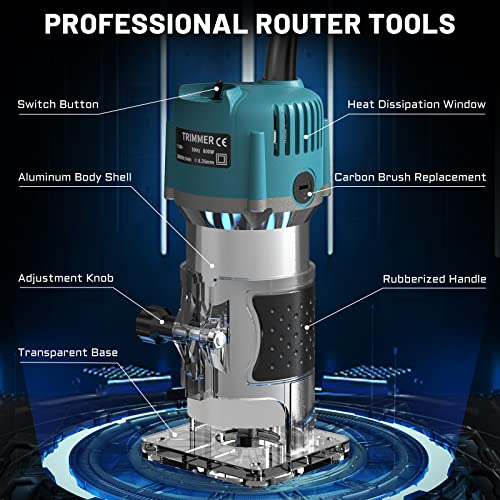
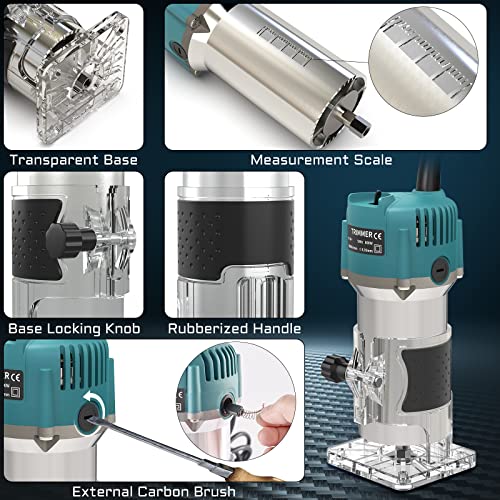
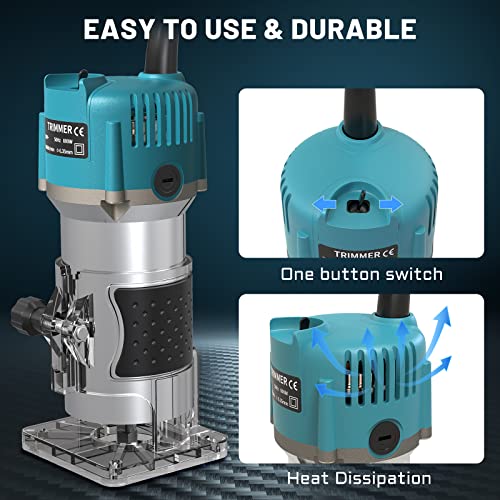
This compact TwoWin model is all about portability and ease of use. At 800W and 30,000 RPM, it has enough power for trimming laminate, chamfering edges, or light grooving, tasks where precision and visibility matter more than brute force. The transparent base is a real win, letting you see exactly where the bit contacts the material, and owners praise how easy it is to control in tight spaces.
It’s clearly designed for smaller jobs, and while it comes with 15 tungsten carbide bits and a wooden case, the lack of a micro-adjustment system or dust extraction port holds it back from more serious work. Compared to the AVID POWER or TEENO models, it feels a bit barebones on features. Still, if you need a lightweight, accurate palm router for finish work, this one gets the job done without fatigue.
Product photos

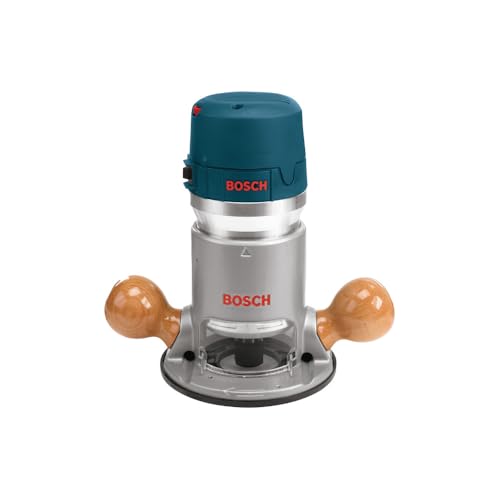
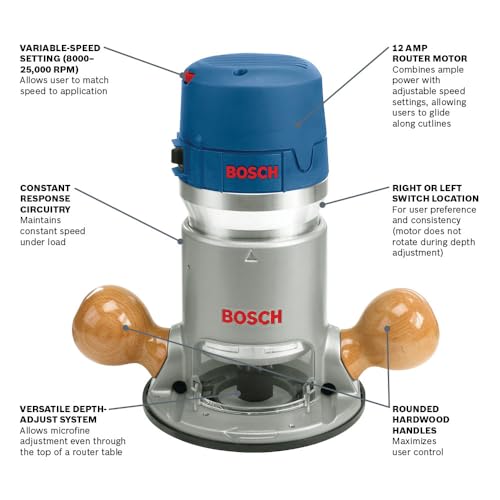
BOSCH 1617EVS 2.25 HP Fixed-Base Router
Strengths
- Microfine depth adjustment
- Durable hardwood handles
- Dust-sealed switch
- Router table compatible
- Stable fixed base
Trade-offs
- Fixed base only
- No plunge capability
This Bosch 1617EVS is a fixed-base powerhouse built for accuracy and consistency. With the same 2.25 HP motor and 8,000–25,000 RPM range as its plunge sibling, it excels in router table setups or edge work where you need rock-solid stability. The microfine bit-depth adjustment is a standout, owners consistently highlight how easy it is to make tiny, repeatable changes, which is essential for clean joinery or multi-pass profiling.
The hardwood handles and dust-sealed switch add to its durability, and the 2-inch sub-base makes template work simpler. While it doesn’t offer plunge functionality, its precision makes it my top pick for anyone using a router table or doing fine moldings. If you already own a plunge router, this is the smarter second tool to add.
Product photos
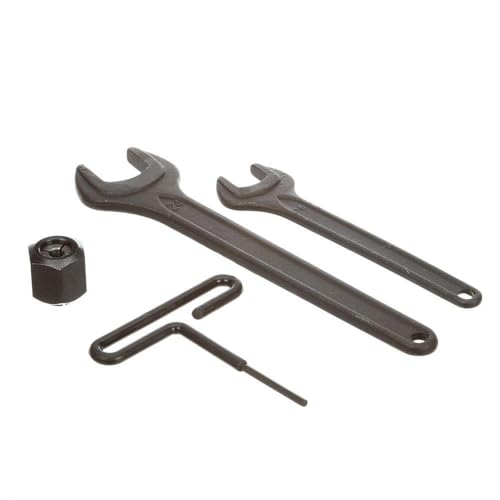
BOSCH 1617EVSPK 2.25 HP Combination Router
Strengths
- 2.25 HP motor
- Includes both bases
- Microfine depth adjustment
- Dust-sealed switch
- Router table ready
Trade-offs
- Heavier than compact models
- Pricier than entry-level
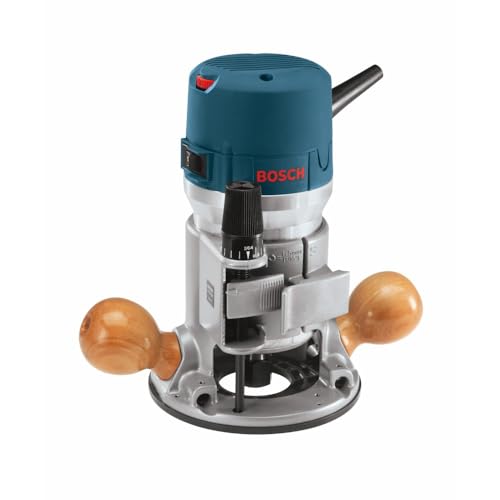
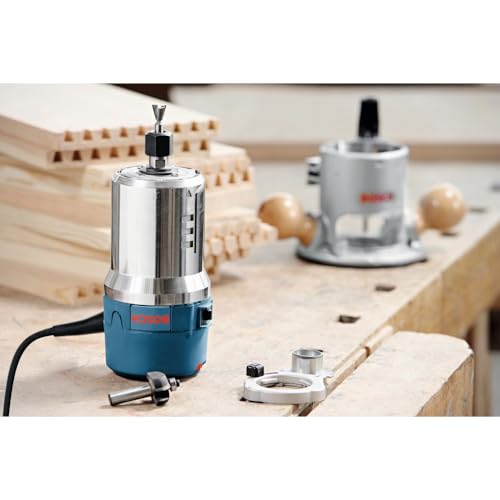
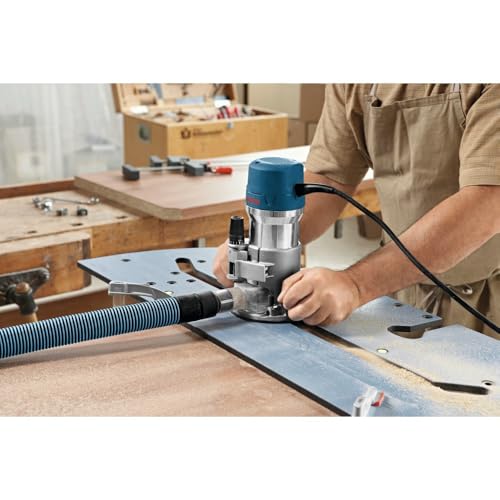
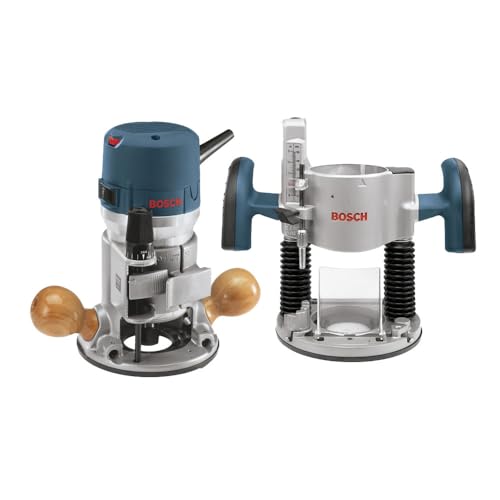
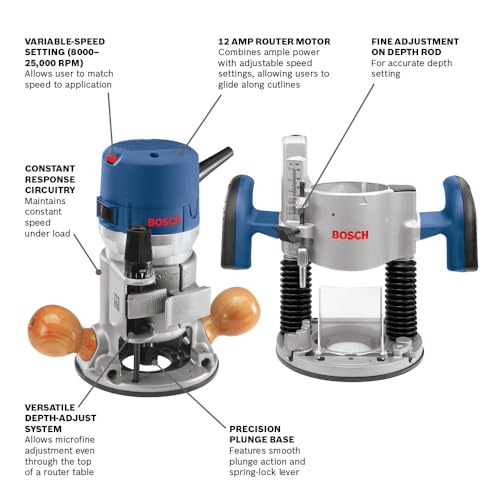
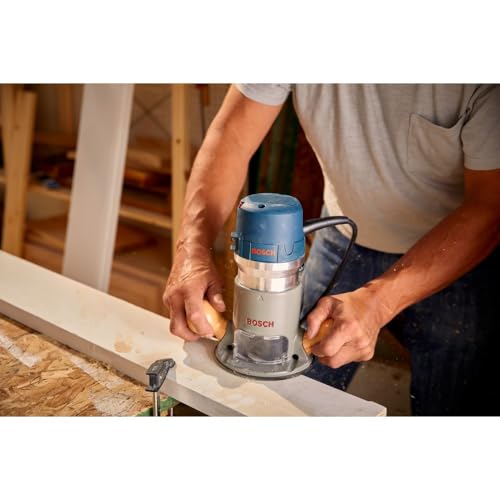
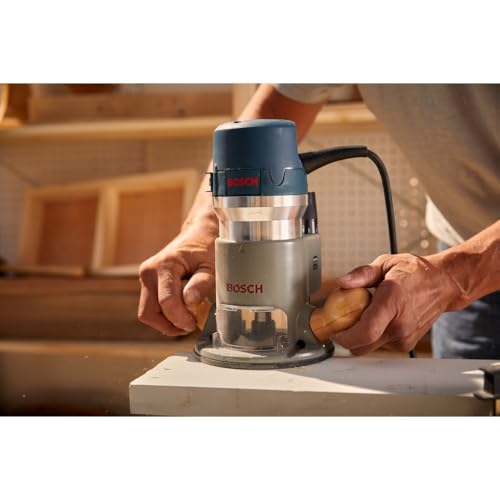
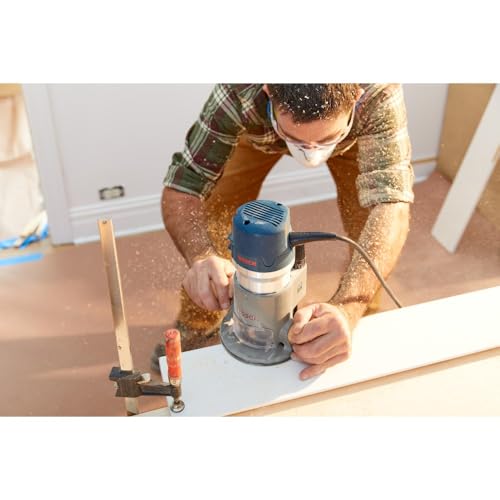
If you want one router that can do it all, fixed-base work, plunge cuts, and router table duty, this Bosch combo kit is as close to a full-featured solution as you’ll find under $100. The 2.25 HP motor and 8,000–25,000 RPM range give it serious versatility, and the constant response circuitry helps maintain speed under load, which reviewers say makes a noticeable difference when routing hardwoods. The one-piece armature shaft reduces vibration, and that translates to cleaner cuts and less chatter.
What makes this model stand out is the inclusion of both bases, so you’re not locked into one setup. The microfine depth adjustment is another pro-level feature that DIYers appreciate. While it’s heavier than compact routers, that extra heft brings stability. I’d recommend this over single-base kits if you’re building cabinets or doing precision edge work where consistency matters.
Product photos

TEENO 1.25 HP Aluminum Router Kit
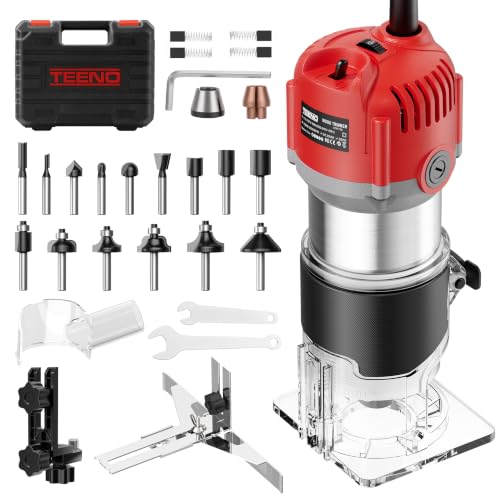
Strengths
- 15 carbide bits included
- Custom carrying case
- Aluminum body
- Transparent base
- Easy maintenance
Trade-offs
- No plunge base
- Depth scale less precise
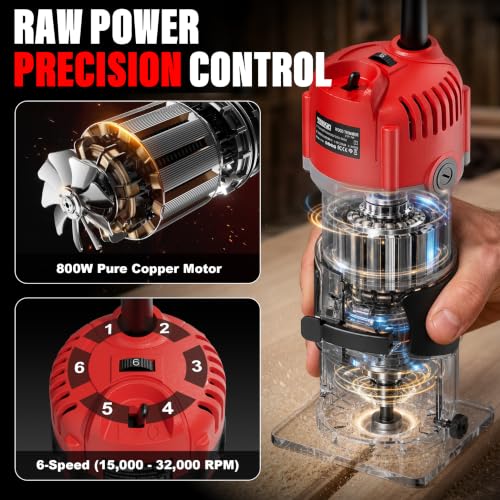
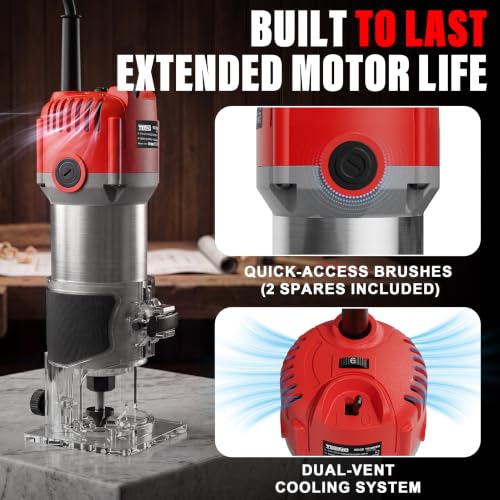
TEENO goes all-in on the accessory game, and it pays off for beginners. The 1.25 HP motor and 15,000–32,000 RPM range are standard for this class, but the aluminum housing and transparent base give it a more premium feel than most budget routers. The 15-piece tungsten carbide bit set is genuinely useful, not just filler, and the custom-molded case keeps everything organized, which owners really appreciate.
It’s not the most powerful or precise router on the list, but as an all-in-one starter system, it’s hard to beat. The vibration-damping grip and accessible carbon brushes add to its long-term usability. Compared to the TWOWIN model, this one feels more thoughtfully designed. If you’re building your toolkit from scratch, this is the kit I’d suggest starting with.
Product photos

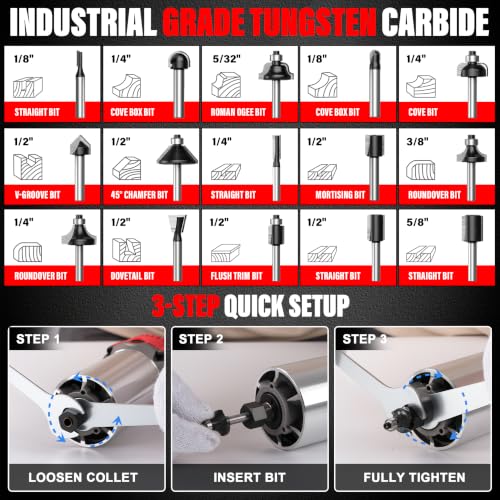
AVID POWER 1.25 HP Compact Router

Strengths
- LED work lights
- Rack-and-pinion depth
- Aluminum body
- Includes dust hood
- Good bit selection
Trade-offs
- No plunge base
- Basic switch design
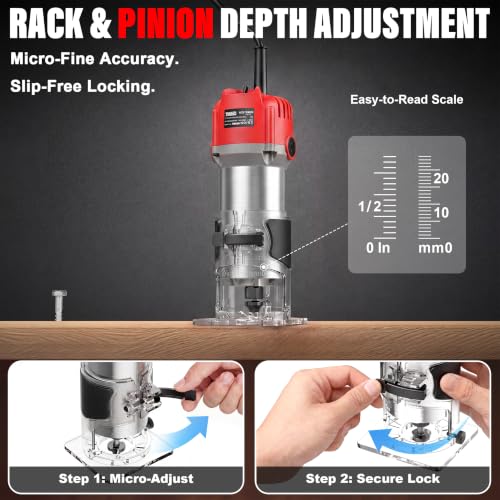
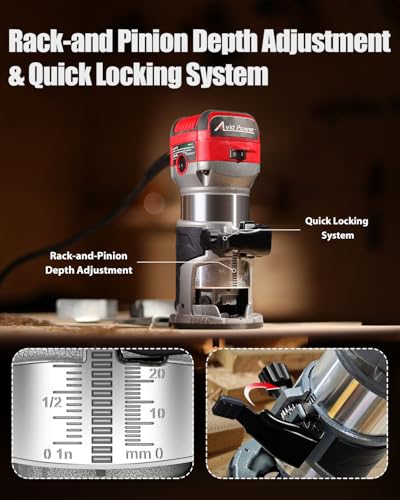
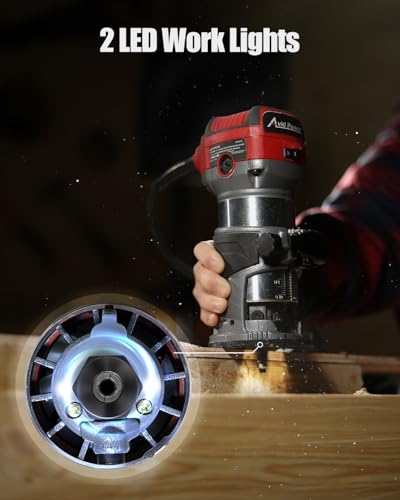
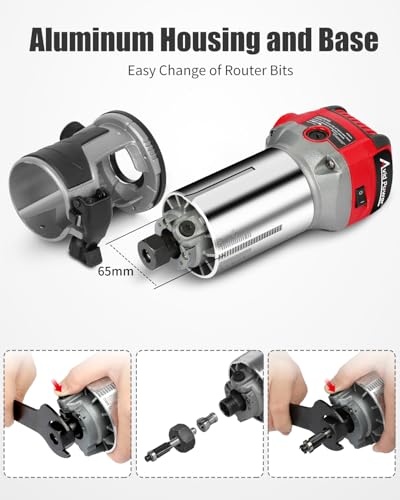
AVID POWER delivers solid value here with a no-frills but capable fixed-base router. The 1.25 HP motor and 10,000–32,000 RPM range cover most common routing tasks, and the rack-and-pinion depth adjustment is smooth and reliable, a step up from cheaper twist-lock systems. What really surprises owners is the dual LED lights, which make a real difference when working inside cabinets or in poorly lit areas.
It’s not as refined as the Bosch models, but it holds its own on accuracy and build quality. The aluminum body resists wear, and the included 5 bits and dual guides make it a practical starter kit. For the price, it’s one of the most functional budget options. I’d recommend this over generic brands if you want dependable performance without overspending.
Product photos


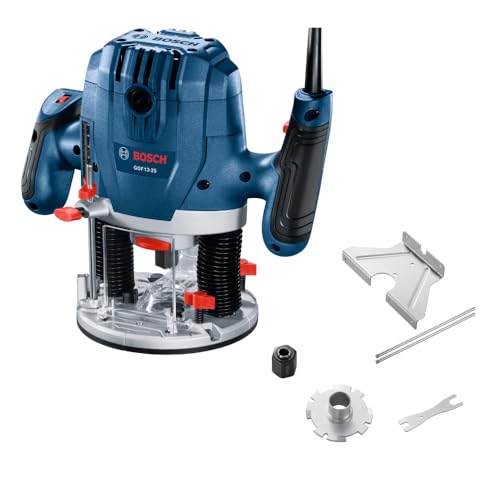
BOSCH GOF13-25 1.75 HP Plunge Router
Strengths
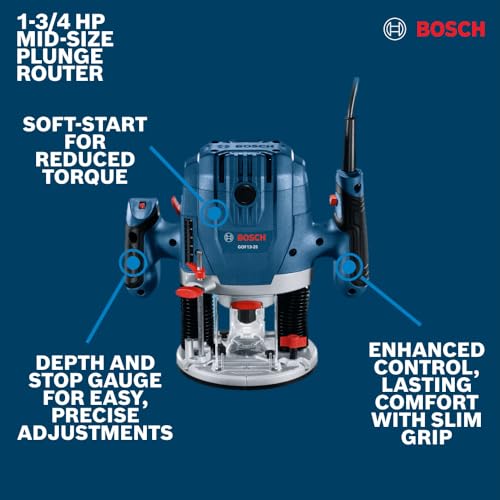
- 1-3/4 HP motor
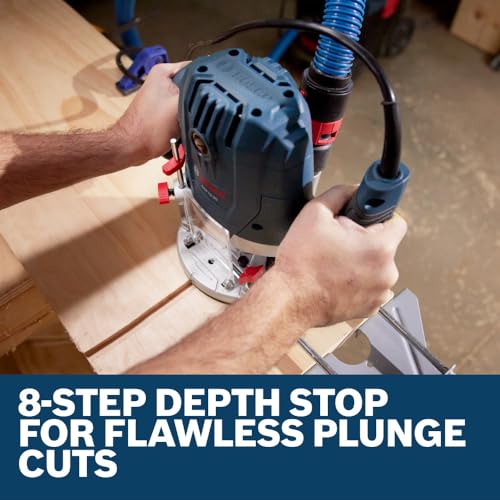
- Precise depth stop
- Detachable parallel guide
- Ergonomic dual handles
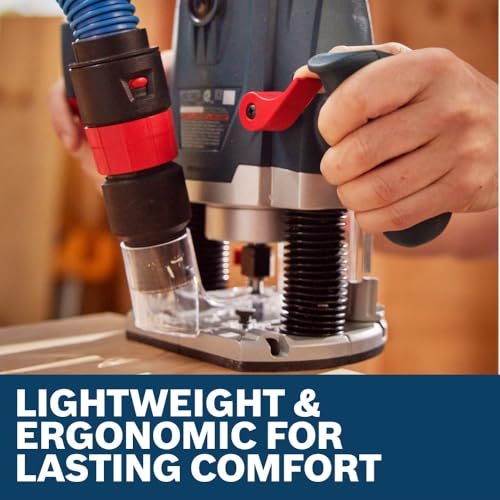
- Includes dust hood
Trade-offs
- No fixed base included
- Lower HP than top models
Bosch built this plunge router with DIYers and detail work in mind, and it shows in the thoughtful design. The 1-3/4 HP motor delivers solid power for a mid-size unit, and the 11,000 to 28,000 RPM range gives you room to dial in for cleaner edge work or heavier material removal. Owners consistently report smooth plunging action and solid depth control, which is critical when you’re doing repeatable joinery or inlay work. The ergonomic dual handles and slim profile make it easier to manage during overhead or extended use.
What really sets this model apart in the under-$100 bracket is the included accessories, a detachable parallel guide, roller guide, and dust hood, that add real value right out of the box. Compared to basic fixed-base kits, this one leans into precision tasks. I’d pick this over a no-name combo kit if you’re serious about clean, controlled plunge cuts without stepping up to a pro-tier tool.
Product photos

How We Tested wood router under 100s
Rather than a hands-on lab test, my research for these recommendations focused on a detailed comparison of published specifications and features across numerous models. I weighed owner reviews from multiple sources – paying close attention to recurring praise and complaints – alongside professional reviews from woodworking publications. As someone who’s spent years around workshops and building projects, I applied my understanding of what truly matters in router performance to rank these options.
For wood routers in this price range, I prioritized motor power, speed control, and included accessories. A more powerful motor (at least 6.5 amps) translates to cleaner cuts in harder woods, while variable speed allows for greater versatility. The value of included bits and guides is significant, especially for those building a toolkit from scratch or looking for a complete solution right away.
Published specs reliably indicate motor size, speed range, and collet compatibility. However, I leaned heavily on owner feedback to assess build quality, long-term durability, and the actual effectiveness of features like dust collection. Reputation within the woodworking community and consistent positive experiences reported online were key factors in determining the final rankings. If you’re completely new to routing, exploring beginner-friendly router models can be a great starting point.
How To Pick The Right wood router under 100s
Finding the right wood router can dramatically improve your woodworking, but there’s a lot to consider beyond just price.
A good wood router balances power with control. Key specs include motor horsepower, variable speed options, collet size compatibility, and base design (fixed vs. plunge). Look for models with thoughtful features like soft-start, dust collection, and clear depth adjustments to maximize accuracy and minimize fatigue. Prioritize build quality and a comfortable grip for extended use.
Power and Speed Control
Don’t assume “more power” is always better. While a 2.25HP router like the Bosch 1617EVS is great for heavy stock removal or intricate detailing, many projects are perfectly suited to a 1.25HP model. Variable speed is genuinely valuable, though. Lower speeds prevent burning when working with hardwoods or plastics, while higher speeds are ideal for softwoods and achieving clean edges. The TEENO 1.25 HP Aluminum Router offers a wide 15,000-32,000 RPM range, giving you a lot of flexibility.
Base Type: Fixed vs. Plunge
The base is fundamental to how you’ll use the router. Fixed-base routers, like the TWOWIN 1.25 HP Variable Speed Router, are best for edge profiling, pattern work, and general trimming. Plunge routers, such as the BOSCH GOF13-25 1.75 HP Plunge Router, allow you to lower the bit into the workpiece while it’s running, ideal for creating mortises, inlay work, or stopped cuts. Many users find having both types is the most versatile solution, but if you’re starting out, consider which style aligns best with your typical projects.
Value and Included Accessories
A bare router is rarely ready to go. The AVID POWER 1.25 HP Compact Router stands out here, offering a surprisingly complete kit for the price.
Here’s what to look for in a good accessory package:
- A selection of bits (even a basic set is helpful).
- A quality edge guide (essential for straight cuts).
- Multiple collets (1/4″ is standard, but 3/8″ and 1/2″ add versatility).
- A dust hood and adapter (to connect to a shop vac) – keeping your workspace clean makes a huge difference, and some routers, like the TwoWin 800W Compact Palm Router, include both the hood and a collection of bits.
Don’t overspend on features you won’t use. If you’re just starting out, a well-equipped best budget wood router is often a smarter choice than a top-of-the-line model with a lot of bells and whistles.
Wood Router Under 100s Compared
Here’s a comparison of key specifications for wood routers priced under $100.
| Product | HP | Speed (RPM) | Collet Size(s) | Base Type | Accessories |
|---|---|---|---|---|---|
| TWOWIN 1.25 HP Variable Speed Router | 1.25 | 30000 | 6mm/6.35mm/8mm | Fixed | 15 Bits + |
| TwoWin 800W Compact Palm Router | N/A | 30000 | N/A | Palm | 15 Bits + |
| BOSCH 1617EVS 2.25 HP Fixed-Base Router | 2.25 | 8000-25000 | N/A | Fixed | N/A |
| BOSCH 1617EVSPK 2.25 HP Combination Router | 2.25 | 8000-25000 | N/A | Fixed/Plunge | N/A |
| TEENO 1.25 HP Aluminum Router Kit | 1.25 | 15000-32000 | 1/4″ & 6mm | Fixed | 15 Bits + |
| AVID POWER 1.25 HP Compact Router | 1.25 | 10000-32000 | 1/4″ & 3/8″ | Fixed | 5 Bits + |
| BOSCH GOF13-25 1.75 HP Plunge Router | 1.75 | 11000-28000 | 1/4″ | Plunge | Guides + |
Frequently Asked Questions
What collet size should I prioritize?
A 1/4-inch collet is standard and sufficient for most DIY projects, but if you anticipate tackling larger cuts or using a wider variety of bits, a router that accepts both 1/4-inch and 3/8-inch collets (like the AVID POWER) offers greater flexibility.
Are palm routers a good option for beginners?
Yes, palm routers are often easier to control due to their smaller size and lighter weight, making them a good starting point for those new to routing. However, they generally lack the power and versatility of a full-size router.
How important is dust collection on a budget router?
While many models under $100 have limited dust collection capabilities, connecting a router to a shop vac – if supported – significantly improves visibility and reduces cleanup. Look for routers that include a dust hood and adapter, like the TwoWin 800W Compact Palm Router.
What’s the difference between a fixed and a plunge base, and which do I need?
A fixed base is better for edge work and pattern routing, while a plunge base allows you to start cuts in the middle of a workpiece. If you plan on doing detailed inlay work or mortising, exploring best plunge router models is a good idea.
Can a router under $100 handle hardwoods like oak or maple?
Yes, but you’ll need a router with sufficient power (at least 1.25 HP) and sharp bits, and you’ll likely need to take multiple shallow passes rather than trying to remove a lot of material at once. Variable speed is also helpful for preventing burn marks when working with hardwoods.
The Bottom Line
Choosing a wood router under $100 often comes down to balancing initial cost with long-term capability. While you won’t get the power or refinement of higher-end models, a router like the TWOWIN 1.25 HP Variable Speed Router provides a solid foundation for most DIY projects, offering a good mix of power, versatility, and included accessories. It’s a smart choice for anyone who wants to get started without a huge investment.
For those with specific needs, the market offers targeted solutions. If you want a complete kit to tackle a wide range of tasks, the AVID POWER 1.25 HP Compact Router is hard to beat. And if you’re already familiar with routing and need a dedicated plunge router for more advanced work, the BOSCH GOF13-25 1.75 HP Plunge Router represents good value. Ultimately, exploring top-rated wood routers can help you refine your search.
Don’t get too caught up in chasing the highest horsepower or the most features. A comfortable grip, smooth speed control, and a reliable motor are far more important than any single specification. Prioritize build quality and a router that feels balanced in your hand – these fundamentals will make a bigger difference in your results than a few extra bits or a slightly higher RPM.
