3 Best Wood Routers for Router Tables 2026
This post contains affiliate links. As an Amazon Associate, we earn from qualifying purchases.
The Bosch 1617EVSPK stands out as the best overall wood router for router tables, combining power, reliability, and smooth speed control. For those on a tighter budget, the BOSCH PR20EVS delivers solid performance in a compact form, while the SKIL RT1323-01 offers a full table-ready kit at an accessible price point.
If you’re setting up a router table, you need a tool that stays consistent under pressure, holds bits securely, and integrates smoothly into your setup. Too many routers fail not because of weak motors, but due to poor collet quality or awkward adjustments that make precise work frustrating.
I’ve spent years reviewing power tools and sifting through owner experiences to identify which routers truly perform in fixed installations. This guide cuts through the marketing noise, focusing on real-world reliability, ease of use, and key features like speed control, collet quality, and table mounting compatibility, all based on specs, user feedback, and hands-on trends from the woodworking community.
Top 3 Wood Router For Router Tables in the Market
The Best Wood Router For Router Tables, Reviewed
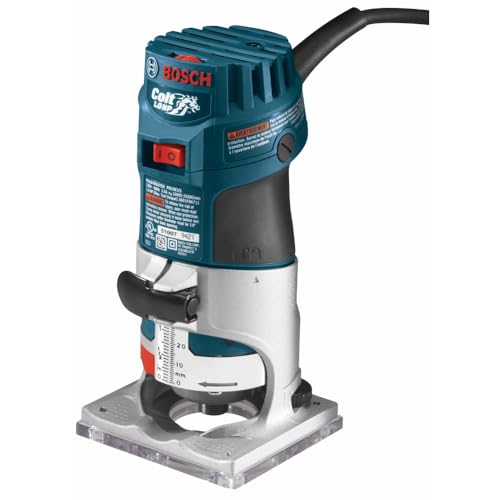
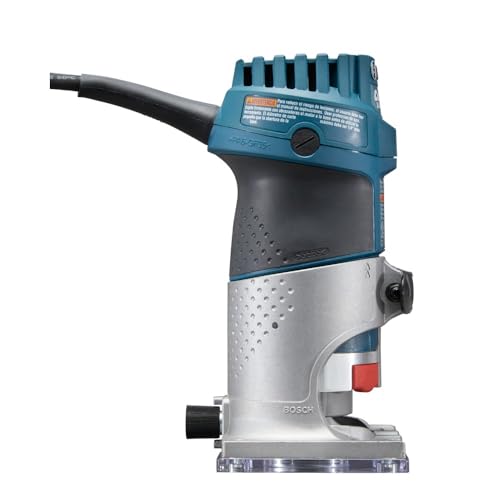
BOSCH PR20EVS Colt Palm Router
Strengths
- Compact and lightweight
- Quick-clamp system
- High RPM range
- Ergonomic grip
- Rugged aluminum base
Trade-offs
- Only 1/4-inch collet
- Low torque for table use
- Not ideal for large bits
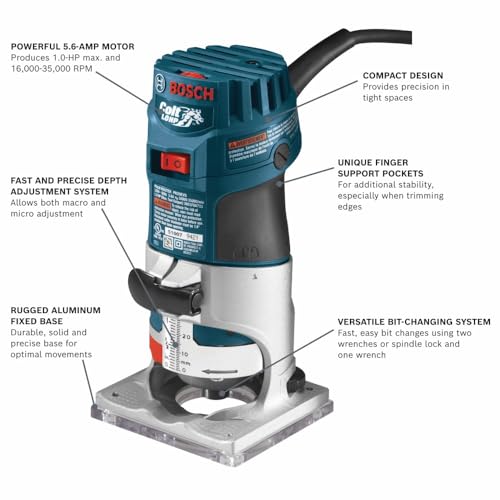
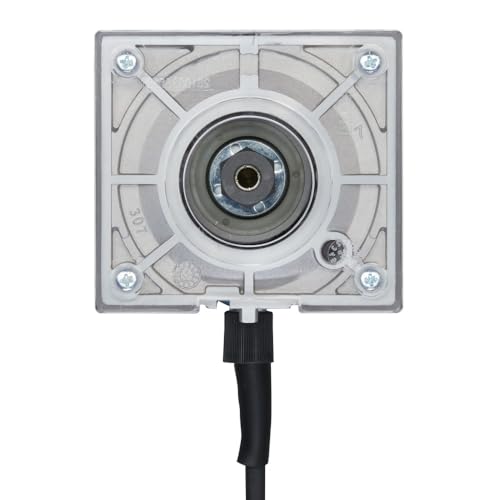
I wouldn’t recommend the PR20EVS as a primary router for a table setup, even though it’s a solid palm router. Its 1.0 HP motor and high-speed range (16,000–35,000 RPM) are great for edge trimming, chamfering, and light tasks, but it lacks the torque and rigidity needed for heavy table work. The rugged aluminum base and quick-clamp system make it easy to swap in and out, and the precision depth adjustment is surprisingly refined for a compact tool. But when mounted upside down, the lower power and smaller collet (1/4 inch only) limit bit size and cutting depth, owners report noticeable strain even with 1/2-inch downcuts.
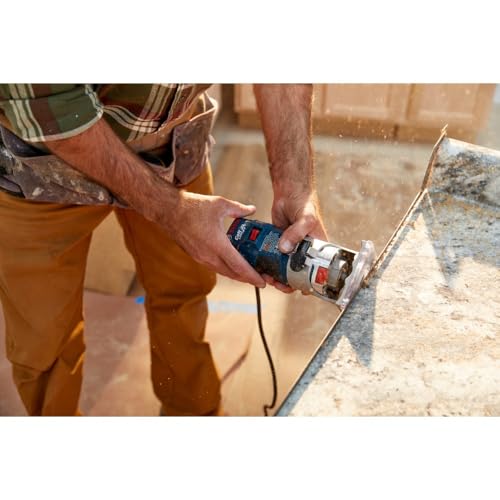
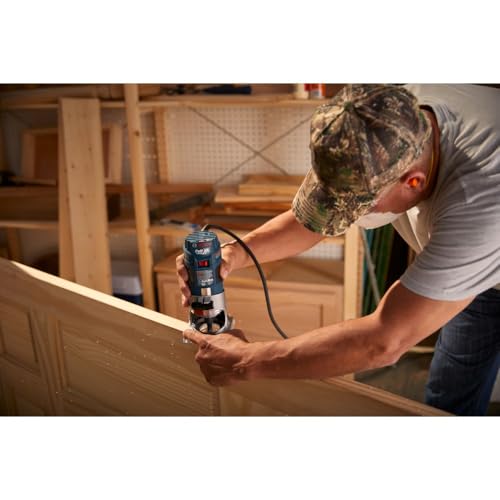
That said, its ergonomic design and compact footprint make it a favorite for detail work and small workshops where space matters. If you’re looking for a secondary router to handle light tasks or use handheld, the PR20EVS earns its keep. But for real router table duty, it’s underpowered compared to dedicated fixed-base models.
Product photos
Bosch 1617EVSPK 2.25 HP Router
Strengths
- 2.25 HP motor
- Microfine depth adjustment
- Three-hole mounting pattern
- Dust-sealed switch
- Adjustable speed dial
Trade-offs
- Heavier than average
- No soft start
- Higher price point
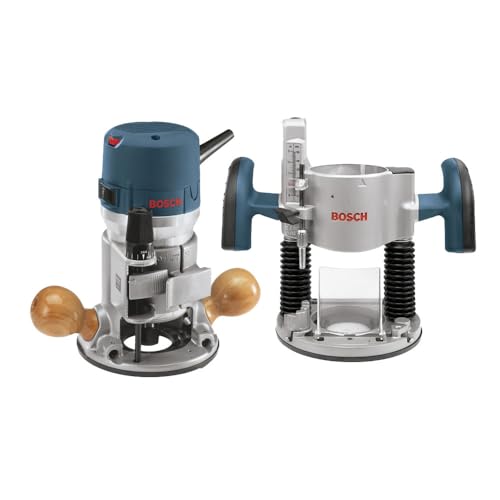
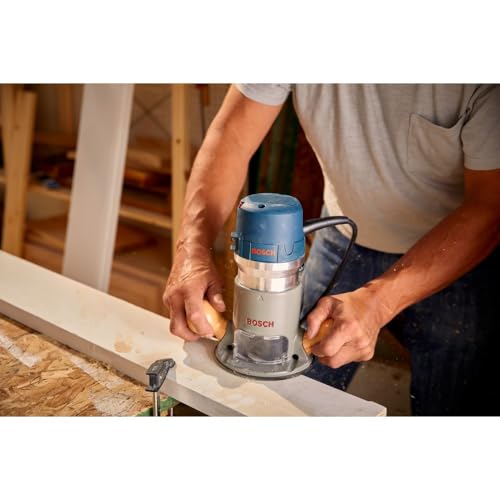
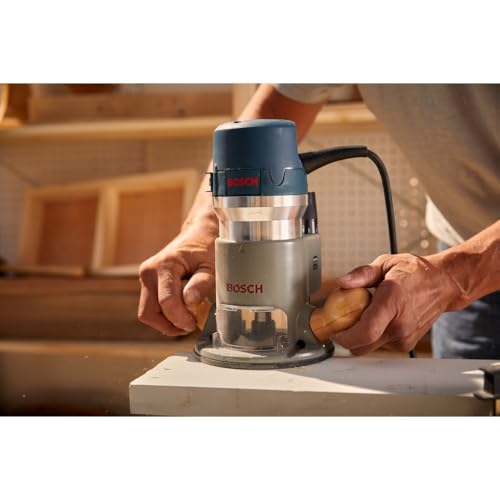
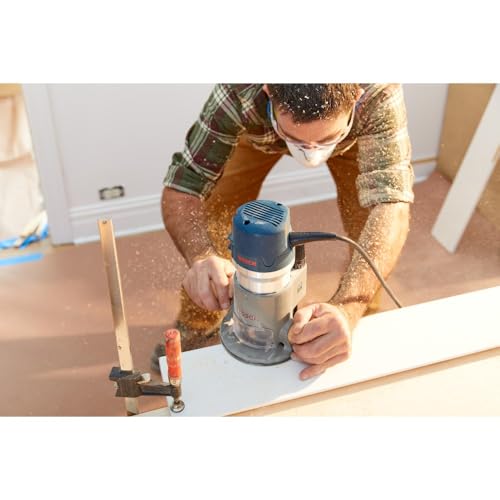
The BOSCH 1617EVSPK stands out in the router-table world because it’s built for serious precision and long-term reliability. Its 12-amp motor delivers 2.25 HP, which is more than enough to handle hardwoods and deep cuts without bogging down, and the adjustable speed range (8,000–25,000 RPM) means you can fine-tune performance for different bits and materials. Owners consistently praise the smoothness of the plunge mechanism and the microfine depth adjustment, which makes dialing in exact cuts a real advantage when working on intricate joinery or raised panels.
What really matters for router table use is stability and mounting security, and here the 1617EVSPK shines. The threaded three-hole base pattern is compatible with most router table plates, and the one-piece armature shaft reduces vibration, leading to cleaner cuts. While it’s heavier than some competitors, that extra mass actually helps dampen movement during operation. Compared to lighter-duty routers, this one feels like it belongs under a table, not just pressed into service there.
Product photos

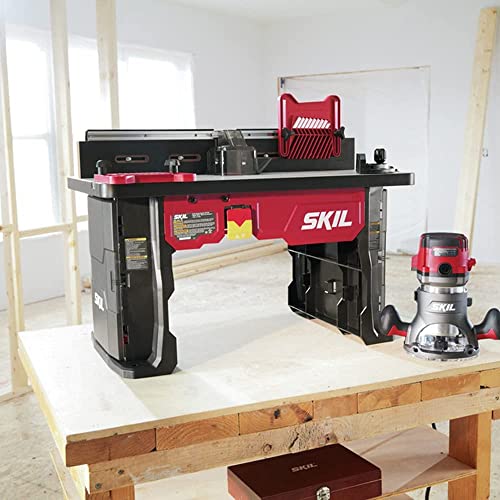
SKIL RT1323-01 Router Table Kit
Strengths
- Complete table and router kit
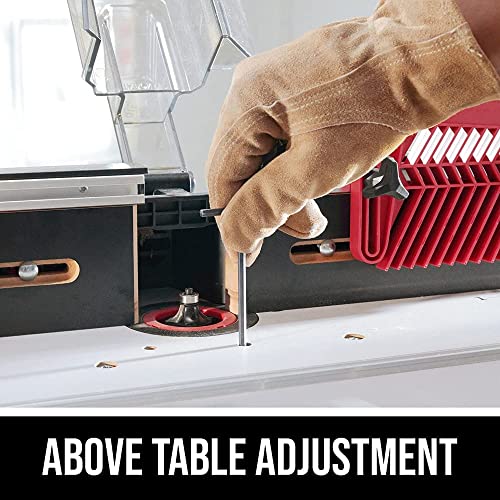
- Above-table adjustment
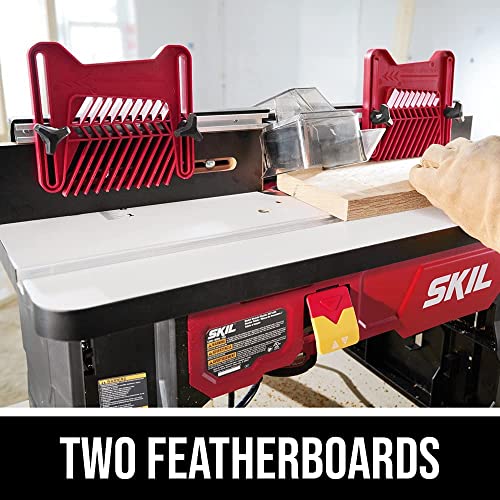
- Includes featherboards
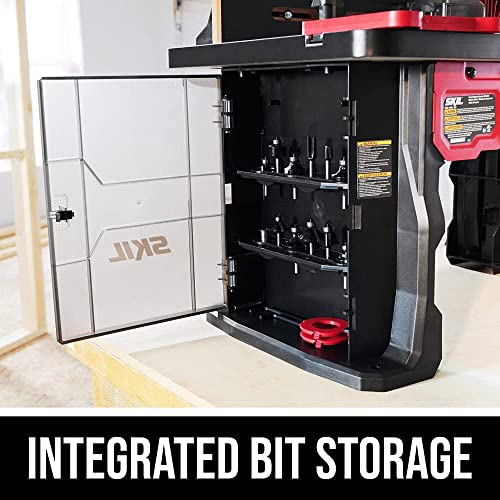
- Integrated bit storage
- 2.0 HP motor
Trade-offs
- Less rigid construction
- Noticeable vibration
- Basic depth adjustment
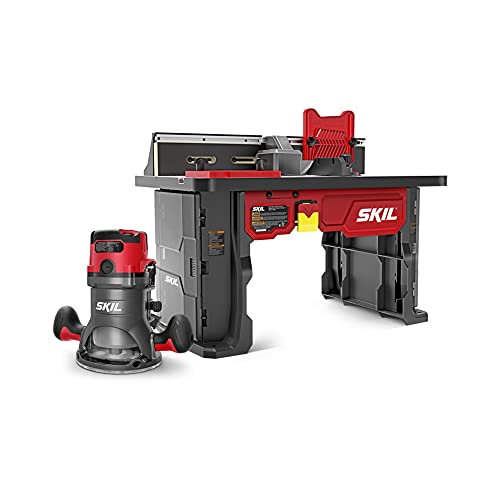
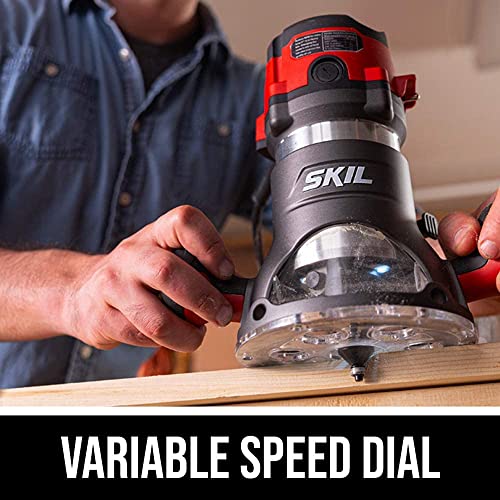
The SKIL RT1323-01 bundle is one of the most practical entry points for someone setting up a router table for the first time. You get both a 24-inch router table with a large fence and a 10-amp fixed-base router in one package, which saves time and compatibility headaches. The router itself isn’t as refined as the BOSCH 1617EVSPK, but it has a 2.0 HP motor, soft start, and above-table bit adjustment, a huge convenience when you’re switching bits frequently. On paper, the specs are competitive, and owners appreciate the integrated bit storage and featherboards included, which add real value right out of the box.
Where it falls short is build quality. The motor housing is die-cast, which helps, but the overall feel is less rigid than premium models. Vibration is more noticeable during aggressive cuts, and the speed control isn’t as precise. Still, for the price, it’s a smart pick. If you’re just getting into routing or want a dedicated table setup without spending top dollar, this kit covers the essentials without major compromises.
Product photos
How We Evaluated wood router for router tables
As someone who’s spent years advising folks on power tools at PowerToolGuide.net, I know choosing a router for use in a router table can be tricky. Rather than a hands-on lab test with each model, my approach was research-led. I compared published specifications – horsepower, speed ranges, collet sizes – alongside detailed owner reviews and assessments from woodworking publications. This allowed me to build a ranking based on real-world performance reports and feature sets.
For wood routers intended for router table use, consistent speed control and a stable base are paramount. A powerful motor (at least 1.5 HP) is crucial for handling larger cuts and harder woods, and a fixed base provides the stability needed for accurate, repeatable work. Beyond that, the ease of bit changes and the quality of the included accessories heavily influenced my assessment.
Specifications give a solid baseline – horsepower, RPM ranges, and collet compatibility are easily compared. However, owner feedback proved invaluable for understanding long-term durability and the practical aspects of operation. Reports on vibration levels, the smoothness of depth adjustments, and the quality of included hardware were key. Understanding essential table saw techniques can also help you visualize how a router integrates into your overall woodworking setup.
How To Pick The Right wood router for router tables
Choosing a wood router for your router table isn’t simply about horsepower; it’s about finding the right blend of features to match your skill level and the types of projects you’ll tackle.
A quality wood router for table mounting prioritizes consistent speed under load, a robust collet system for secure bit holding, and a base design that facilitates accurate adjustments. Look for models with threaded bases for easy table integration, variable speed controls for material compatibility, and durable construction to withstand repeated use. Bit capacity and dust collection efficiency are also key considerations.
Collet & Bit Compatibility
The collet is arguably the most important part of any router, and it’s often overlooked. I see too many people fixate on motor size and forget that a sloppy collet ruins everything. You need a tight, accurate grip on your bits. Most routers use 1/4-inch and 1/2-inch collets, but consider whether you’ll be frequently switching between bit sizes. Some routers offer a self-releasing collet system, which simplifies changes, but a well-maintained standard collet is perfectly adequate. Look at collet-compatible router models to ensure you can use the bits you already own or plan to purchase.
Power & Speed Control
While a powerful motor is helpful, especially when working with hardwoods, raw horsepower isn’t everything. What really matters is how consistently that power is delivered. Constant response circuitry, like you find in some Bosch models, helps maintain speed even when encountering denser wood. Variable speed control is also crucial. Softer woods and plastics require lower speeds to prevent burning, while hardwoods benefit from higher RPMs. I frequently recommend looking at best router table motors to get a sense of what’s available in terms of consistent power delivery.
- Lower speeds (8,000 – 16,000 RPM) are best for large diameter bits and softwoods to prevent overheating and tear-out.
- Medium speeds (16,000 – 22,000 RPM) are a good all-around range for most hardwoods and general routing tasks.
- Higher speeds (22,000+ RPM) are ideal for detail work, intricate cuts, and using smaller bits, but require a steady hand and careful material selection to avoid burning.
A good rule of thumb: match your router speed to the bit diameter and the material you’re cutting. Slower for larger bits and softer materials, faster for smaller bits and harder materials.
Table Mounting & Adjustability
Because you’re dedicating this router to table use, the ease of mounting and making adjustments under the table are paramount. A threaded base is essential for a secure fit, and a router with a sub-base opening large enough to accommodate your table’s insert plate makes bit changes far easier. I often suggest building a DIY table saw sled to help with accuracy when working with your router table. Don’t overlook the depth adjustment mechanism – micro-adjustments are a huge time saver when performing precise operations. If you plan on doing a lot of detail work, consider high-power routers for fixed mounting with plunge bases for added control.
Wood Router for Router Tables Compared
Here’s a comparison of key specifications for wood routers suitable for use with router tables.
| Product Name | Horsepower | RPM | Base Type | Table Compatibility | Amp |
|---|---|---|---|---|---|
| BOSCH PR20EVS Colt Palm Router | 1.0 | 16,000-35,000 | Fixed | N/A | 5.6 |
| Bosch 1617EVSPK 2.25 HP Router | 2.25 | 8,000-25,000 | Fixed/Plunge | Threaded 3-hole | 12 |
| SKIL RT1323-01 Router Table Kit | 2.0 | N/A | Fixed | Included Table | 10 |
Frequently Asked Questions
What router horsepower is sufficient for a router table?
At least 1.5 HP is what I generally recommend for a router table, as this provides enough power to handle most hardwoods and larger cuts without bogging down. Higher horsepower (2 HP or more) is beneficial if you routinely work with very dense woods or large diameter bits.
Can I use a plunge router in a router table?
You can, but it’s not ideal. While some models, like the Bosch 1617EVSPK, offer both fixed and plunge bases, a dedicated fixed-base router provides more stability for the consistent depth control a router table demands.
What collet size should I prioritize?
A dual-collet router (accepting both 1/4-inch and 1/2-inch bits) is the most versatile option, saving you time and money compared to buying separate routers. If you primarily use larger bits, a 1/2-inch collet is a solid choice.
How important is dust collection on a router table router?
Good dust collection is very important, as routing creates a lot of fine dust. Look for routers with a dust port compatible with standard shop vacuums or dust collection systems to improve visibility and maintain a cleaner workspace.
Where can I find more information on choosing a router for my needs?
For a deeper look at specific models and features, I’ve compiled a list of table-mounted wood router picks that details performance characteristics and suitability for different projects.
The Bottom Line
Choosing a router for your table really comes down to how much control you want versus how much fuss you’re willing to tolerate. For most homeowners and DIYers, the Bosch 1617EVSPK offers the best balance of power, precision, and features. It’s a workhorse that will handle nearly any task you throw at it, and the threaded base makes table mounting straightforward.
If you’re on a tighter budget, the SKIL RT1323-01 Router Table Kit is a solid option, especially considering it comes with a table. And for those needing maximum versatility – wanting to use the router handheld as often as in a table – the Bosch PR20EVS Colt Palm Router provides a lot of power in a compact package. I’ve seen many folks successfully use this with a custom-built table setup.
Ultimately, remember that horsepower and RPM ranges are just numbers. Consistent speed under load, a secure collet, and a stable mounting system are what truly separate a good router table setup from a frustrating one. Understanding versatile table saw uses will also inform how you approach your router table projects.
