
7 Best Wood Hand Planers of 2026
This post contains affiliate links. As an Amazon Associate, we earn from qualifying purchases.
The JORGENSEN No.4 Smoothing Hand Plane is the best overall choice for precision and durability, backed by solid owner feedback and high-quality O1 tool steel. For those on a tighter budget, the Amazon Basics No.4 Bench Hand Plane delivers decent performance for the price, while the JORGENSEN No.60-1/2 Low Angle Block Plane stands out for versatility in detail work and end grain.
Most people shopping for a wood hand planer are looking for a tool that actually works when they need it, not something that fights the wood or quits after a few months. I’ve seen too many beginners burn out on a project because they started with a poorly built or ill-suited plane.
This guide cuts through the noise by focusing on real-world performance, built around what actually matters: blade steel, body material, adjustability, and intended use. These picks are based on specs, owner experiences, and brand reputation, not hype.
Top 7 Wood Hand Planers in the Market
The Best Wood Hand Planers, Reviewed
JORGENSEN No.4 Smoothing Hand Plane

Strengths
- O1 tool steel blade
- Ductile iron body
- Smooth flat sole
- Ergonomic beech handles
- Ready for light tuning
Trade-offs
- Slight tuning may be needed
- Heavier than block planes
- No blade guard included
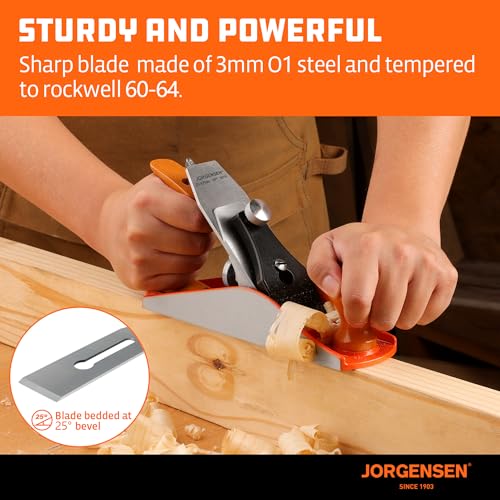
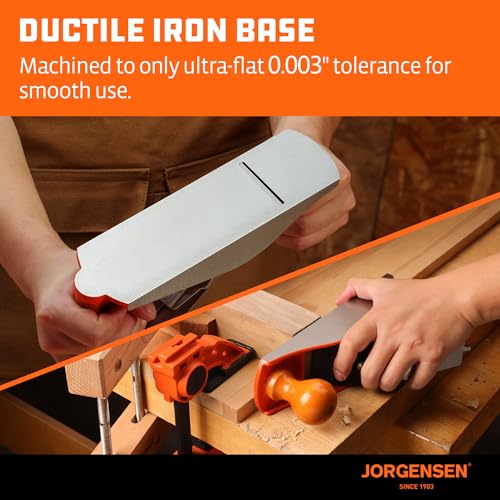
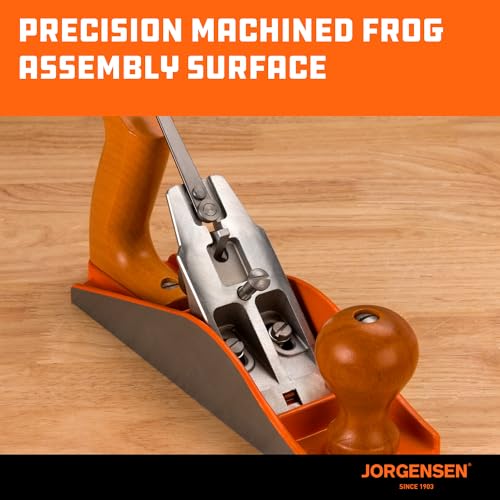
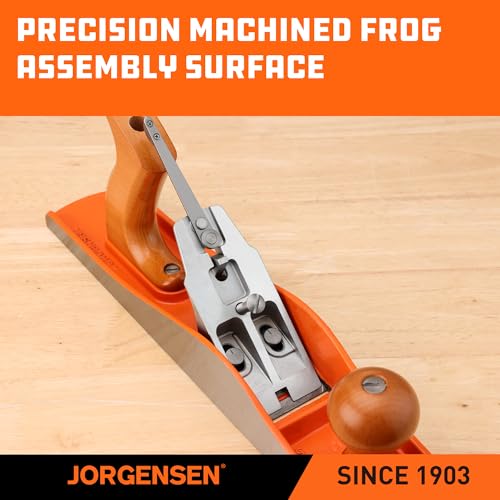
This JORGENSEN No.4 hits the sweet spot between performance and value, earning its ‘Best Overall’ label for good reason. It’s a full-featured smoothing plane with an O1 tool steel blade, ductile iron body, and fully adjustable depth control, specs that rival tools twice the price. The 10-inch sole tracks steadily across boards, making it ideal for final smoothing after jointing or dimensioning.
Owners consistently report it arrives nearly ready to use, with only minor tuning needed. The beechwood handles feel secure and reduce fatigue during longer sessions. Compared to the Amazon Basics model, it’s more refined and durable; against the KAKURI, it’s easier to adjust for Western users. It won’t replace a powered planer for stock removal, but for hand-tool finishing, it’s tough to beat.
Product photos


Amazon Basics No.4 Bench Hand Plane
Strengths
- Affordable price
- Cast-iron body
- Smooth sole out of box
- Comfortable dual handles
- Good for beginners
Trade-offs
- Blade steel is average
- Finish could be better
- Limited adjustability range
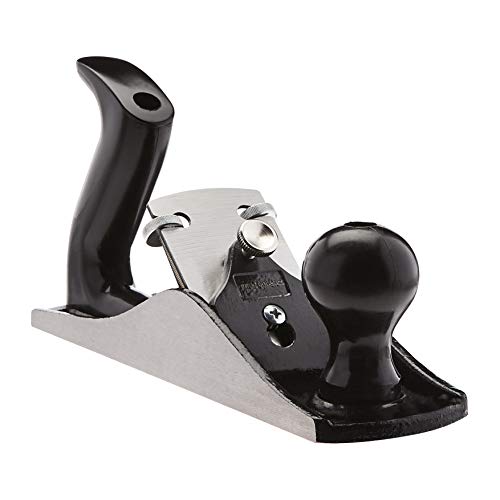
Don’t let the name fool you, the Amazon Basics No.4 is a surprisingly competent smoothing plane for the price. It’s built like a traditional bench plane, with a cast-iron body that helps it glide smoothly and resist chatter. The 2-inch blade is made of decent steel, and while it may not hold an edge as long as O1 tool steel, it’s replaceable and easy to adjust using the knob and lever cap.
Owners consistently report that it works right out of the box with minimal tuning, which is rare at this price. It’s not going to replace a Lie-Nielsen, but for hobbyists or those building out a starter kit, it delivers real value. Compared to pricier JORGENSEN models, it lacks some refinement in fit and finish, but for trimming doors, smoothing edges, or light joinery, it gets the job done.
Product photos


JORGENSEN No.60-1/2 Low Angle Block Plane
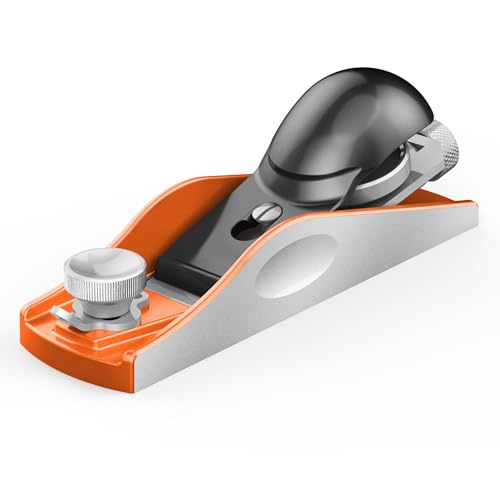
Strengths
- O1 tool steel blade
- Adjustable mouth
- Compact and precise
- Ductile iron body
- Good for one-handed use
Trade-offs
- Shorter sole limits reach
- Not for wide surfaces
- Blade adjustment can be stiff
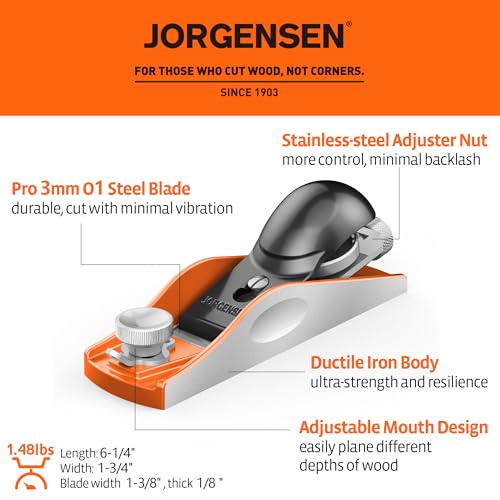
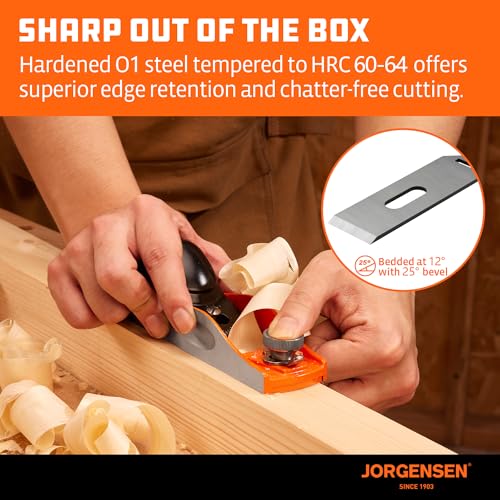
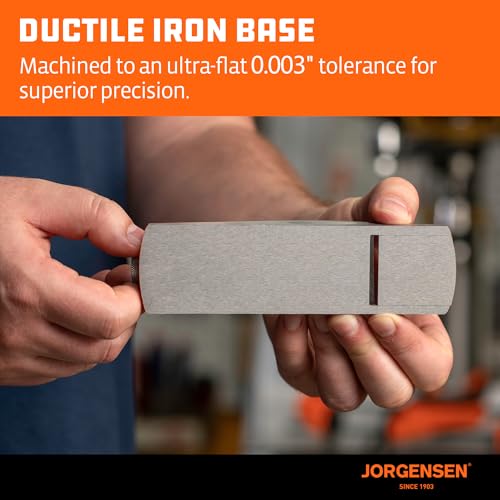
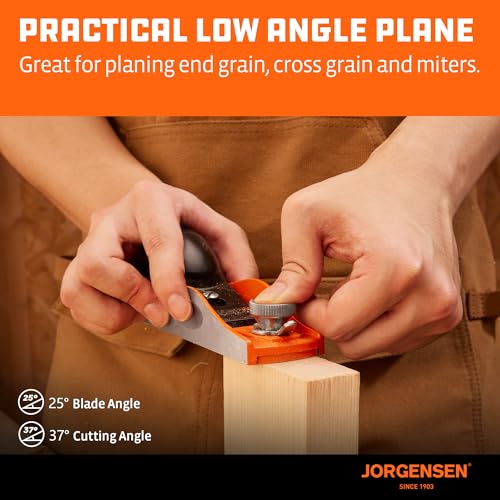
The JORGENSEN NO.60-1/2 is a low-angle block plane built for precision, exactly the kind of tool you’d reach for when fitting dovetails or cleaning up miters. Its compact size and ductile iron body give it enough heft to stay stable during one-handed use, while the adjustable mouth lets you fine-tune for fine shavings or slightly heavier cuts. The O1 tool steel blade is a standout, offering durability and good edge retention, which reviewers say makes it a go-to for detailed work.
It’s not meant for long boards or flattening, but in tight corners or end grain, it performs well. The zinc alloy lever cap feels solid, and the flat sole ensures consistent contact. When compared to the larger JORGENSEN No.4 or No.5, this one trades reach for agility. For anyone doing cabinetry, trim, or fine joinery, it’s a smart addition.
Product photos

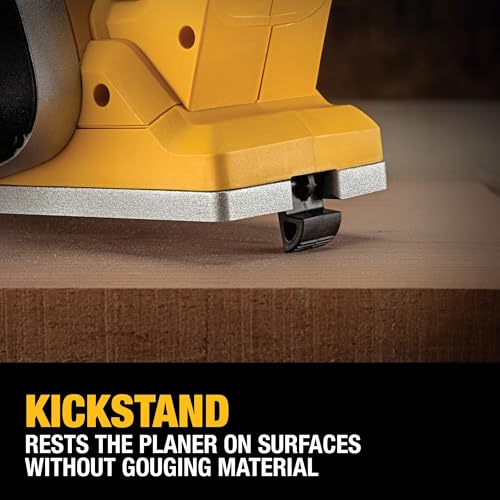
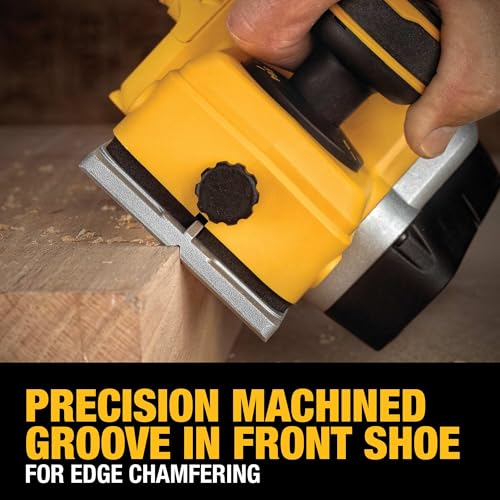
DEWALT 20V MAX Cordless Planer

Strengths
- Cordless convenience
- Brushless motor
- Precise depth adjustment
- Aluminum shoes for flat cuts
- Kickstand included
Trade-offs
- Bare tool only
- Battery not included
- Less aggressive than corded
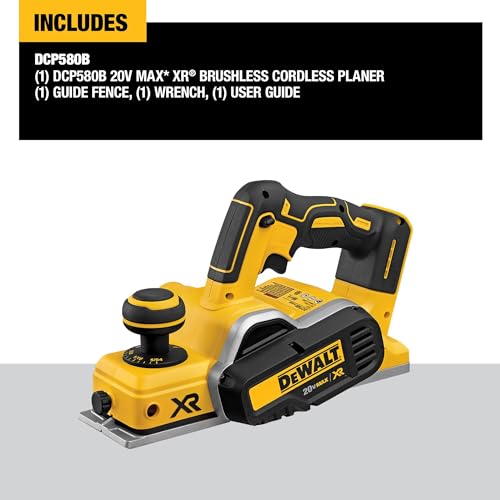
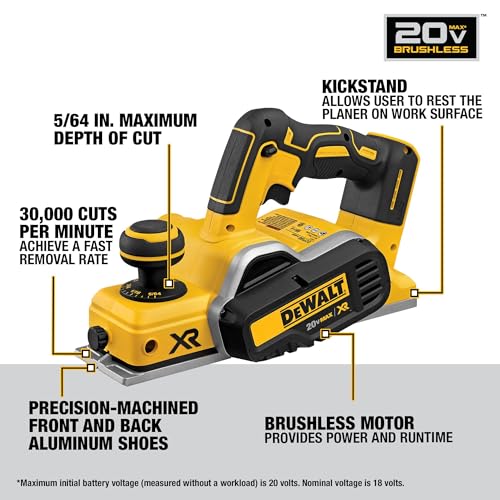
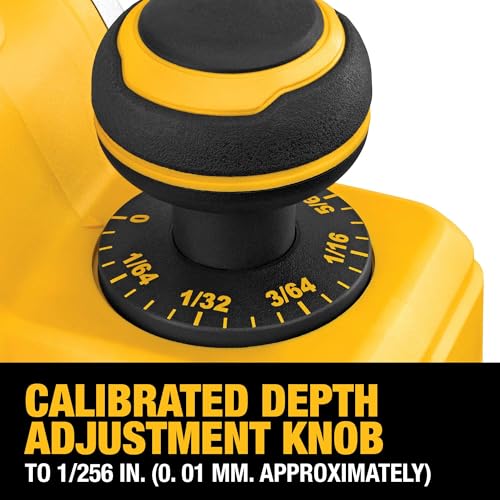
The DEWALT DCP580B changes the game by offering cordless convenience without sacrificing performance. Its brushless motor delivers 30,000 cuts per minute and up to 2 mm of cut depth, impressive for a battery-powered tool. The calibrated depth knob allows adjustments down to 1/256 inch, giving pro-level precision, and the aluminum shoes stay parallel, which owners say results in clean, even passes.
It’s lightweight and easy to maneuver, especially on ladders or in tight job sites where cords are a hassle. The kickstand is a small but smart feature, letting you set it down safely between cuts. Battery and charger aren’t included, which stings, but if you’re already in the DEWALT 20V ecosystem, it’s a seamless addition. Compared to the corded WEN, it’s more portable and refined, though not quite as aggressive on thick stock.
Product photos
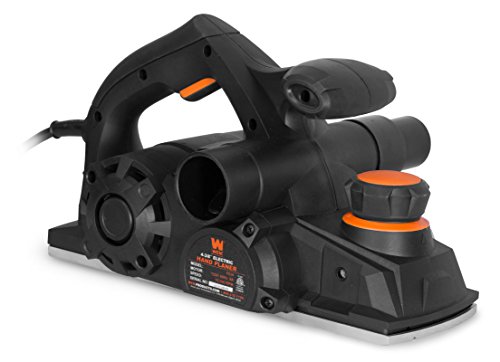
WEN 6534 8-Amp Electric Planer
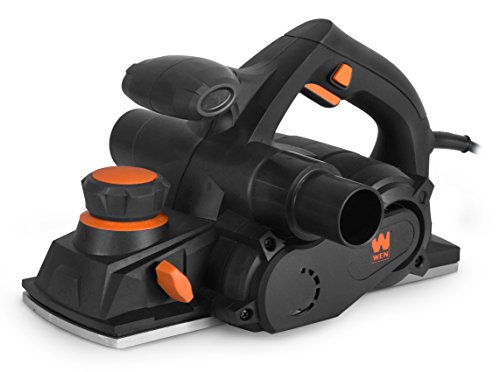
Strengths
- Wide 4-3/8-inch cut
- Reversible HSS blades
- Rabbeting guide included
- Two-way dust port
- Positive depth stops
Trade-offs
- Heavy for prolonged use
- Plastic housing feels budget
- Dust collection could be better
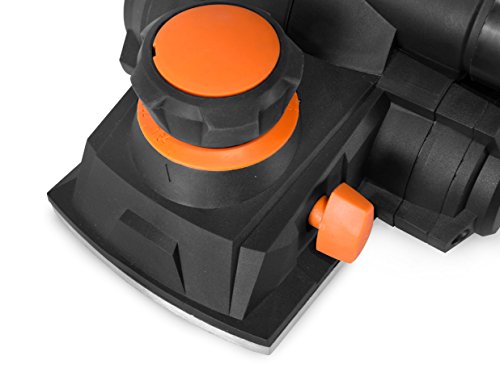
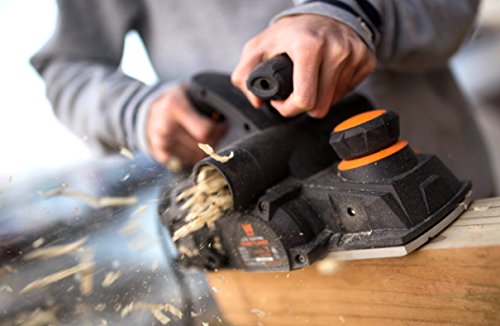
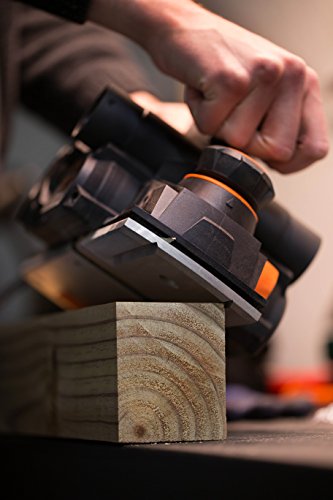
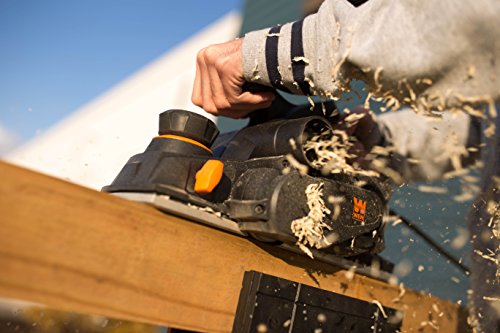
If you’re dealing with dimensional lumber or need to knock down warped 2x4s fast, the WEN 6534 is a budget-friendly electric option that delivers solid performance on paper. Its 8-amp motor and 32,000 cuts per minute are competitive in this class, and the 4-3/8-inch width means you can plane full-width stock without multiple passes. The depth adjustment has 16 positive stops, which reviewers note makes repeatable settings easier, a big plus when matching boards.
Owners praise the included accessories, especially the rabbeting guide and reversible blades, which extend tool life. The two-way dust port is a thoughtful touch, letting left- or right-handed users route shavings away cleanly. Still, it’s heavier than some corded models, and while the build feels sturdy, it doesn’t match the refinement of pricier brands. For DIYers tackling decks, sheds, or framing, it’s a capable tool that punches above its price point.
Product photos
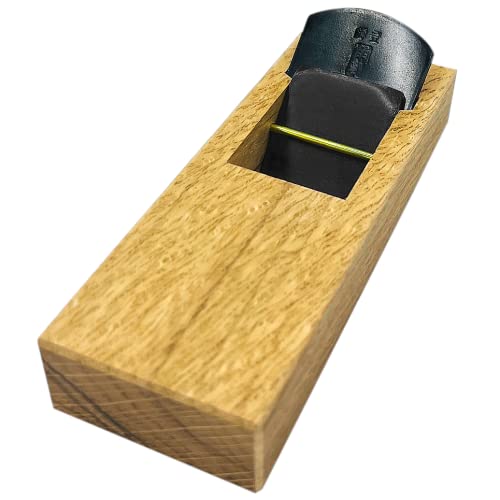
KAKURI Japanese KANNA Hand Plane
Strengths
- Razor-sharp Japanese blade
- Compact and lightweight
- Excellent for fine cuts
- Traditional pull-stroke control
- Includes English manual
Trade-offs
- Requires tuning skill
- Not for heavy stock removal
- Blade adjustment takes practice
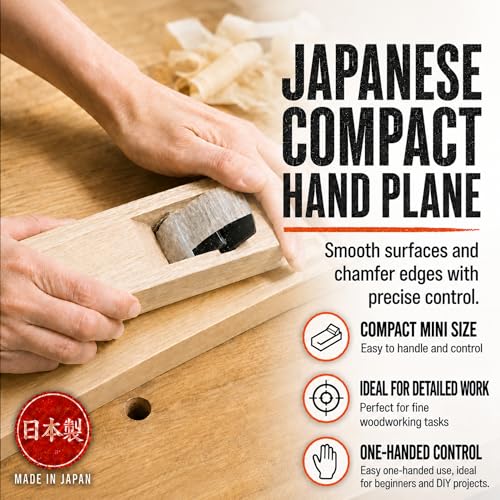
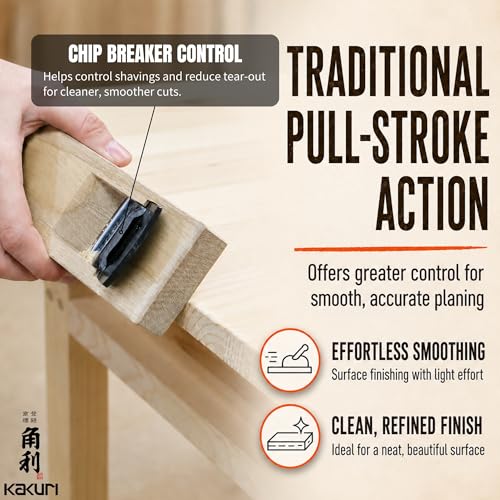
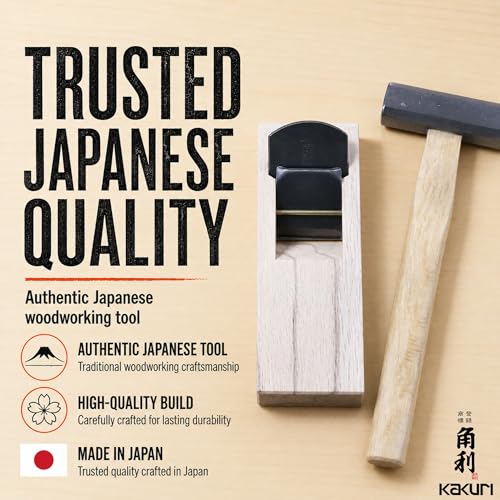
The KAKURI 42mm KANNA is a masterclass in minimalist design, light, precise, and built for finesse. Japanese planes like this one operate differently than Western models; they’re pulled, not pushed, which owners say gives better control and cleaner shear cuts, especially on tricky grain. The high-carbon steel blade comes sharp out of the box, and the chipbreaker design helps prevent tear-out, a real win on hardwoods.
It’s not a tool for hogging off material. Instead, it excels at final smoothing, chamfering edges, or fitting joints. The ECO oak body is lighter than iron-bodied planes, making it easy to maneuver with one hand. Some users mention it takes a bit of practice to master blade adjustment with the hammer tap method, but once dialed in, the results are consistently silky. For purists and hand-tool advocates, this is a no-brainer.
Product photos


JORGENSEN No.5 Jack Hand Plane
Strengths
- O1 tool steel blade
- Ductile iron body
- Adjustable depth knob
- Flat polished sole
- Ergonomic beech handle
Trade-offs
- Heavier than some
- No blade cap included
- Slight tuning may be needed
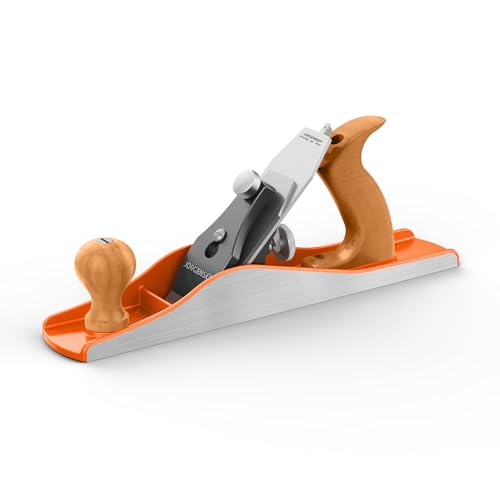
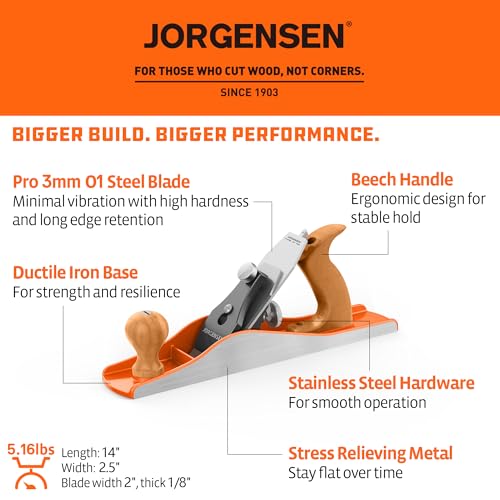
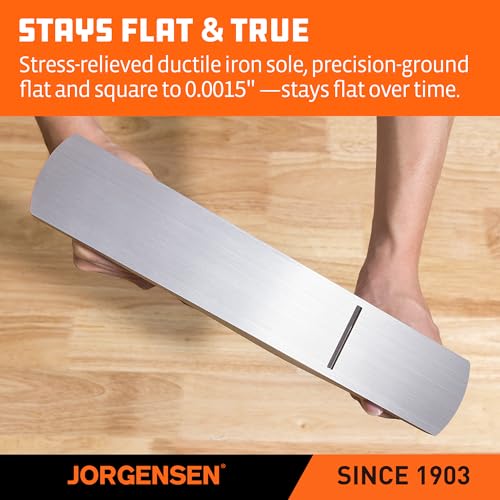
The JORGENSEN No.5 stands out as a serious bench plane built for flattening wide stock and knocking down high spots on rough-sawn lumber. On paper, it mirrors the performance of legacy brands, its O1 tool steel blade holds an edge well and responds nicely to sharpening, which owners consistently report makes it a reliable workhorse over time. The ductile iron body adds heft, helping dampen chatter during aggressive passes, and the adjustable depth knob makes dialing in fine cuts more intuitive than on vintage-style planes.
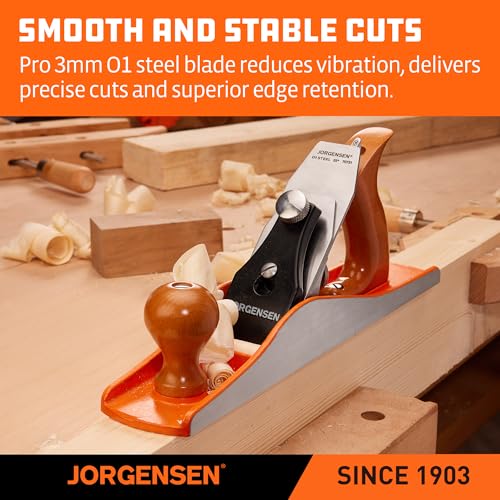
Where it really shines is in early-stage project work, like prepping tabletops or leveling twisted boards before finer smoothing. Compared to smaller block planes, this one covers more surface per stroke, and the flat, polished sole helps it track straight. It’s not the lightest option, but that weight works in its favor when you’re removing material quickly.
Product photos

How We Picked These wood hand planers
Rather than a hands-on lab test, my research for these recommendations centered on comparing published specifications and features across numerous models. I weighed owner reviews from a variety of sources – Amazon, woodworking forums, and home improvement retailer sites – alongside professional reviews from publications specializing in woodworking tools. This process allowed me to build a picture of real-world performance and reliability, factoring in both intended use and reported issues. Ultimately, I ranked planers based on how well they met key criteria for different woodworking tasks.
For wood hand planers, blade material and body construction were the most significant factors. A high-quality blade (like O1 tool steel) holds an edge longer and makes planing easier, while a ductile iron body offers the durability needed for consistent, accurate work. Adjustability also weighed heavily; the ability to fine-tune blade depth and mouth opening is crucial for achieving the desired finish. These elements directly impact the tool’s effectiveness and longevity.
Specifications reliably indicate blade material, body construction, and cutting capacity. However, owner feedback proved essential for assessing ease of use, long-term durability, and the quality of the factory-applied edge on the blade. Reputation also played a role, particularly for brands with a long history in woodworking. If you’re considering an electric model, you might also want to explore our guide to the best electric hand planers for a deeper look at powered options.
How To Choose The wood hand planers
Finding the right wood hand planer can dramatically improve your woodworking, but there’s a lot to consider beyond just price.
A quality hand planer blends durable materials – typically ductile or gray iron for the body and high-carbon steel for the blade – with precise adjustability. Look for a planer where the blade can be easily sharpened and set for depth, and where the sole is flat and stays flat. A comfortable grip and a well-designed lever cap are also key for control and efficiency.
Blade Steel and Sharpening
The heart of any hand planer is the blade, and the steel it’s made from dictates how long it will stay sharp and how easily you can resharpen it. O1 tool steel, as found in many JORGENSEN models, is a popular choice because it holds an edge well and is relatively easy to sharpen with basic tools. A2 steel is another good option, offering even more wear resistance, but can be a bit harder to sharpen. Avoid planers with blades made from lower-grade steel; you’ll spend more time sharpening and less time working. Don’t assume a “razor sharp” blade means it stays sharp. Consider your skill level and willingness to learn sharpening techniques when making your choice.
Planer Type and Intended Use
Hand planers aren’t one-size-fits-all. Different designs excel at different tasks. A smoothing plane (like the JORGENSEN No.4) is best for final surface preparation, leaving a beautifully polished finish. Block planes (like the JORGENSEN No.60-1/2) are smaller and ideal for detail work, end grain, and trimming. Jack planes (JORGENSEN No.5) are a versatile middle ground, good for general purpose work and flattening larger surfaces. If you’re considering a cordless electric model, like the DEWALT 20V MAX, remember you’re trading traditional control for speed and convenience. For those interested in learning more about the variety available, check out recommended hand planer models.
Ergonomics and Adjustability
A comfortable grip and easy-to-use adjustments are crucial, especially if you plan on using the planer for extended periods. Look for a planer with a well-shaped handle made from a durable material like beech wood. The adjustment mechanism for blade depth should be smooth and precise.
- A simple knob adjustment is fine for occasional use.
- A more refined, threaded adjustment offers greater control for precise depth settings.
- A lateral adjustment lever allows you to fine-tune the blade alignment, which is essential for achieving a consistent cut across the entire width of the blade and avoiding skewed edges.
A properly adjusted hand planer should glide smoothly across the wood, removing a consistent shaving without requiring excessive force.
Finally, don’t overlook the importance of a flat sole. This is where the planer contacts the wood, and any imperfections will translate directly into your workpiece. Before committing to a purchase, read reviews carefully to see if owners report issues with sole flatness. If you’re just starting out, exploring top handheld power planers can give you a solid foundation for understanding your options.
Wood Hand Planers Compared
Here’s a comparison of key specifications for the wood hand planers discussed.
| Product Title | Blade Material | Body Material | Max Depth of Cut | Plane Type | Weight (lbs) |
|---|---|---|---|---|---|
| JORGENSEN No.4 Smoothing Hand Plane | O1 Tool Steel | Ductile Iron | N/A | Smoothing | N/A |
| Amazon Basics No.4 Bench Hand Plane | High-Quality Steel | Cast Iron | N/A | Bench | N/A |
| JORGENSEN No.60-1/2 Low Angle Block Plane | O1 Tool Steel | Ductile Iron | N/A | Block | N/A |
| DEWALT 20V MAX Cordless Planer | N/A | Aluminum | 2 mm (0.08 in) | Electric | N/A |
| WEN 6534 8-Amp Electric Planer | HSS Steel | N/A | 1/8 in | Electric | N/A |
| KAKURI Japanese KANNA Hand Plane | High-Carbon Steel | Japanese Oak | N/A | Japanese Kanna | N/A |
| JORGENSEN No.5 Jack Hand Plane | O1 Tool Steel | Ductile Iron | N/A | Jack | N/A |
Frequently Asked Questions
What’s the difference between a jack plane, a smoothing plane, and a block plane?
Each type serves a distinct purpose. Jack planes are all-purpose, smoothing planes prepare surfaces for finishing, and block planes excel at detail work and end grain, making them ideal for smaller tasks.
Can I sharpen the blades on these hand planers myself?
Yes, most blades are designed to be sharpened, but it requires practice and the right tools. O1 and A2 steel blades are popular choices because they are reasonably easy to sharpen with basic honing guides and stones.
Are electric hand planers really a good substitute for traditional hand planers?
Electric planers prioritize speed and convenience, but they lack the control and finesse of hand planers. Consider your project needs; for delicate work or a refined finish, a hand planer is generally preferred, while electric models are better for rapid material removal.
What material should I look for in a planer body?
Ductile iron is the best material for a planer body because it’s durable and resists warping. Gray iron is an acceptable alternative, but it’s not quite as strong. Avoid planers with plastic bodies, as they won’t hold up to regular use.
Where can I find more in-depth information about choosing the [best overall wood planers]?
You’ll find detailed reviews, comparisons, and buying advice in our thorough guide to wood planers, which covers everything from blade materials to ergonomic considerations and will help you make the right choice for your needs.
The Bottom Line
Choosing a hand planer often comes down to balancing control and convenience. You can spend a little more for a beautifully made, traditional tool like the JORGENSEN No.4 Smoothing Hand Plane, which offers the precision and feel that experienced woodworkers appreciate. Or, you can opt for the speed and ease of use of an electric model.
For those on a budget, the Amazon Basics No.4 Bench Hand Plane provides a solid entry point into the world of hand planing. If you need something versatile for a variety of tasks, I recommend the JORGENSEN No.5 Jack Hand Plane. And for detail work or trimming, the JORGENSEN No.60-1/2 Low Angle Block Plane is a superb choice. If you’re considering an electric model, exploring top handheld planer picks is a good place to start.
Ultimately, the most important factors aren’t blade steel or body material, but your skill in sharpening and setting the blade, and your commitment to developing a smooth, consistent technique. A well-maintained, properly adjusted planer – even a basic one – will always outperform an expensive tool in the hands of someone who hasn’t taken the time to learn how to use it correctly.
