
8 Best Hand Planers of 2026
This post contains affiliate links. As an Amazon Associate, we earn from qualifying purchases.
The JORGENSEN No.4 stands out as the best overall hand planer for its durable ductile iron body, O1 tool steel blade, and precise adjustability. If you’re on a budget, the Amazon Basics No.4 delivers solid performance for the price. For fine detail work, the KAKURI Japanese hand plane offers exceptional control and a razor-sharp high-carbon steel blade right out of the box.
Most people don’t realize how much difference a well-tuned hand planer makes until they use one that’s poorly built or difficult to adjust. A bad plane fights you every stroke, leaving tear-out, uneven surfaces, and frustration. After comparing the field, analyzing specs, owner feedback, and expert insights, I focused on what actually matters: blade quality, build durability, and ease of tuning. This guide cuts through the hype to help you pick a planer that performs reliably, whether you’re smoothing hardwood or cleaning up rough stock.
Top 8 Hand Planers in the Market
The Best Hand Planers, Reviewed
Amazon Basics No.4 Adjustable Bench Plane
Strengths
- Cast-iron body
- Smooth blade adjustment
- Ergonomic handles
Trade-offs
- Blade may need tuning
- No chipbreaker
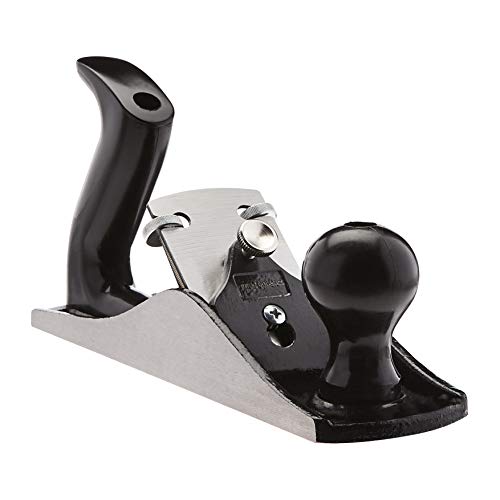
If you’re after a well-rounded No.4 plane that balances performance and price, this Amazon Basics model makes a strong case for being the best overall choice. The cast-iron body is substantial enough to dampen vibration, and owners report it planes cleanly right out of the box, some say it performs close to planes twice the price. The 2-inch blade and adjustable mouth make it versatile for both smoothing and light stock removal.
It’s not flashy, but it’s reliable. The front knob and rear tote are ergonomically shaped, reducing fatigue during longer sessions. When compared to the other Amazon Basics No.4 model with wooden handles, this one offers better adjustability and a more refined feel. For a beginner or even a seasoned DIYer building a starter kit, this is the smarter buy.
Product photos


JORGENSEN No.4 10″ Wood Plane

Strengths
- Ductile iron construction
- O1 tool steel blade
- Excellent sole flatness
Trade-offs
- Higher price point
- Heavier than some
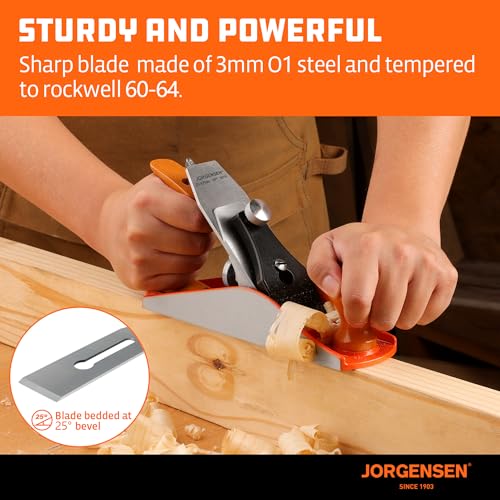
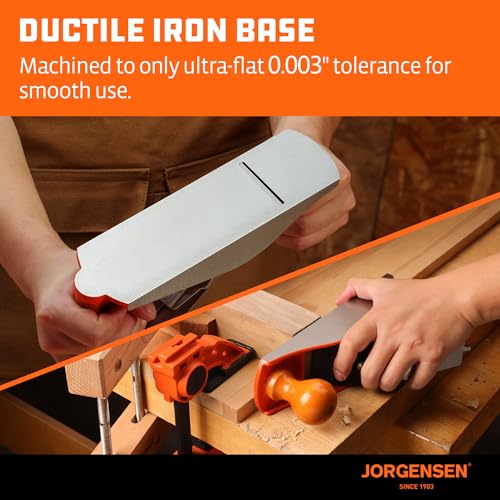
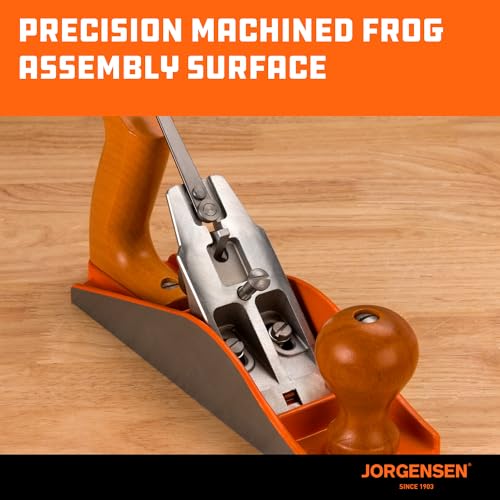
This is the premium hand plane in the lineup, and it shows in both materials and execution. The ductile iron body is precision-machined, and the O1 tool steel blade is sharpened to a fine edge, delivering clean, consistent shavings with minimal setup. Owners report it works straight out of the box, requiring only minor tweaks, some say it rivals planes costing twice as much.
Compared to the Amazon Basics models, this one has better mass, superior blade retention, and a more refined adjustment mechanism. The beechwood handle fits the hand naturally, and the flat sole tracks true across the board. If you’re building a collection of hand tools and want a No.4 you can rely on for decades, this is the one to get.
Product photos


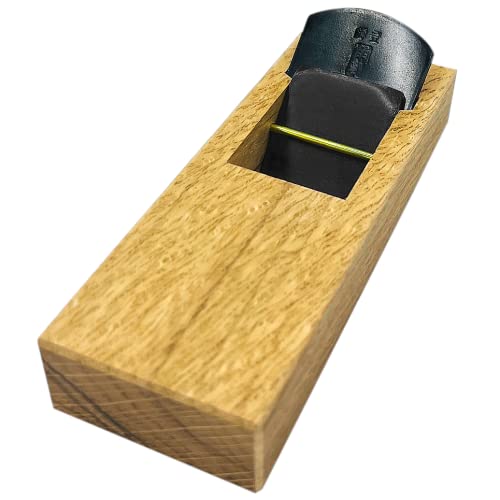
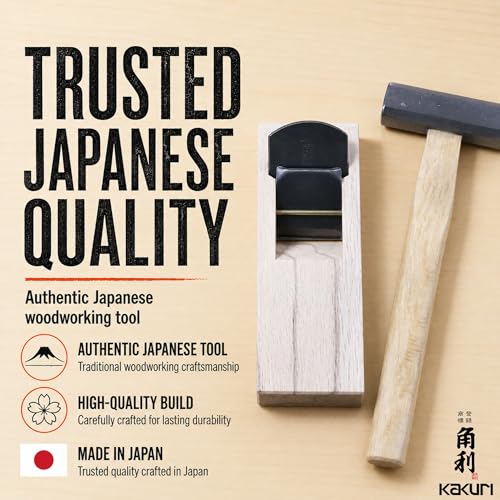
KAKURI Japanese Hand Plane 42mm
Strengths
- Superior cutting finish
- Chipbreaker design
- Authentic Japanese craftsmanship
Trade-offs
- Requires blade tuning
- Not for heavy material removal
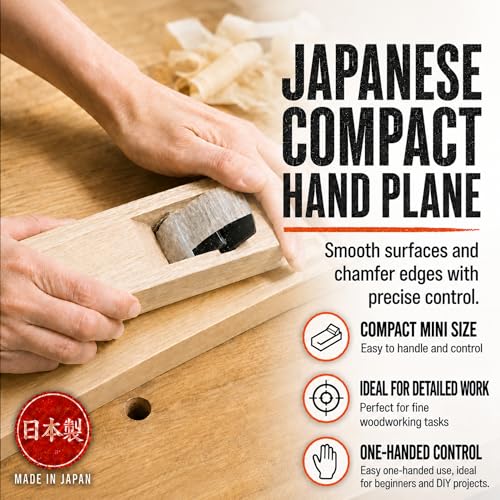
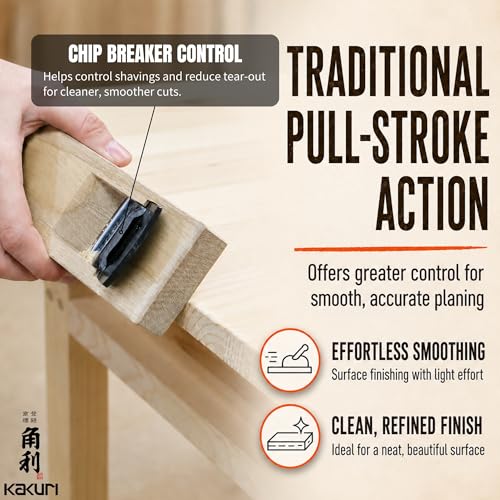
The KAKURI 42mm Kanna is in a class of its own when it comes to precision. Japanese planes pull instead of push, and that changes everything, owners consistently report cleaner, more controlled cuts with less effort, especially on end grain and delicate chamfers. The high-carbon steel blade is razor-sharp and paired with a chipbreaker to prevent tear-out, which is rare at this size.
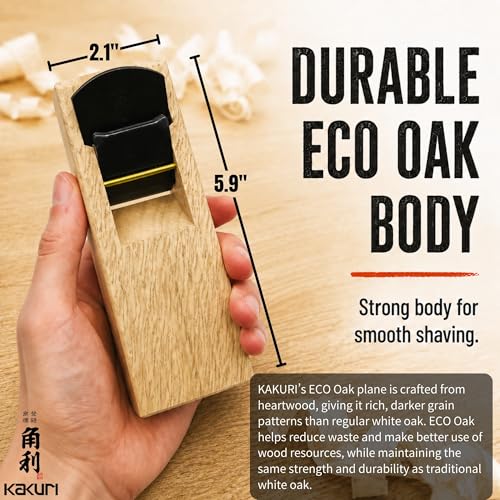
It’s not a plane for flattening doors or wide boards. But for fine joinery, fitting drawers, or cleaning up dovetails, it’s unmatched. The ECO oak body is lightweight yet stable, and while the grain may vary, it doesn’t affect performance. I’d pick this over any Western-style block plane for detail work, even if it requires a bit more setup with blade tuning.
Product photos

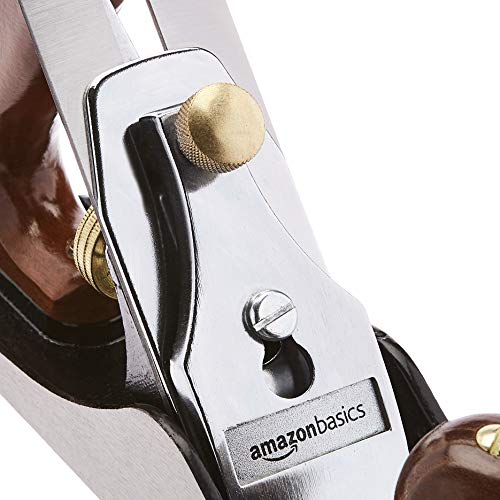
Amazon Basics No.4 Smoothing Hand Plane

Strengths
- Low cost
- Solid cast iron base
- Simple adjustment
Trade-offs
- Basic blade quality
- No chipbreaker
- Handles lack ergonomics
This is the budget pick through and through, functional, no-frills, and priced to move. The cast iron body gives it decent heft, and the wooden handles offer a classic feel, though they’re not as contoured as the higher-end Amazon Basics model. The blade is serviceable but may need honing and lapping out of the box, which some owners note.
It won’t match the performance of the JORGENSEN or even the other Amazon Basics plane, but for someone testing the waters of hand planing or building a basic toolkit, it gets the job done. I’d recommend this only if you’re on a tight budget and don’t mind doing a little setup. Otherwise, spend a bit more for smoother operation.
Product photos


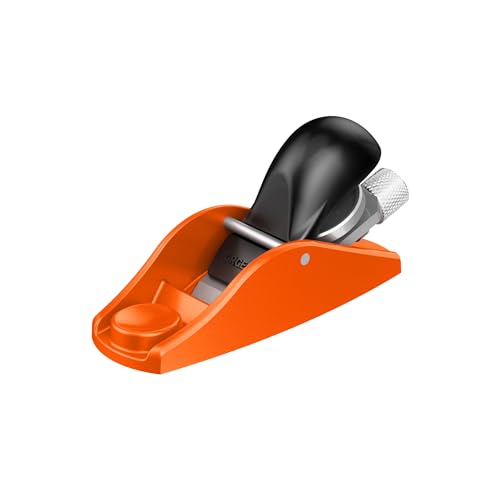
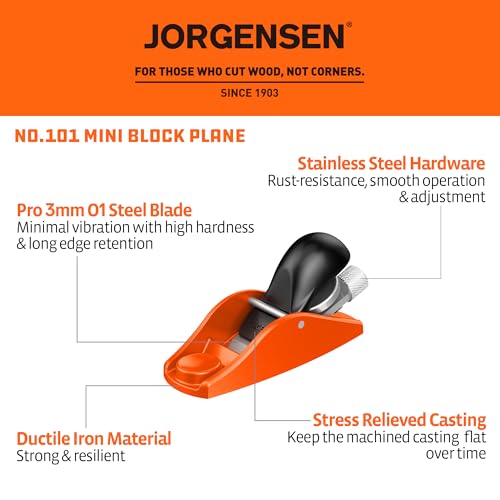
JORGENSEN No.101 Mini Wood Planer
Strengths
- Ductile iron body
- O1 steel blade
- True mini plane size
Trade-offs
- No chipbreaker
- Limited cutting width
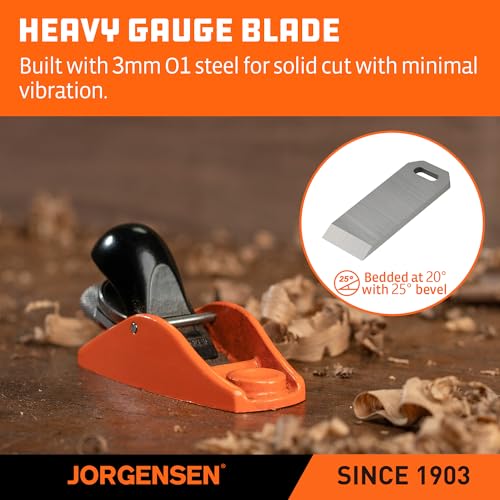
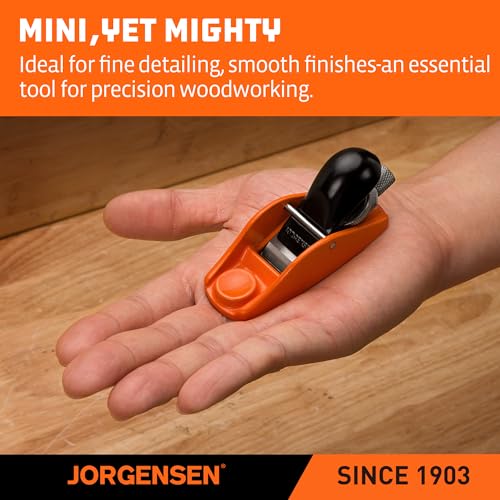
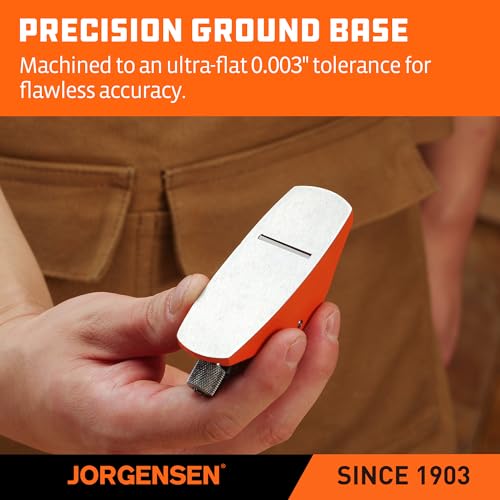
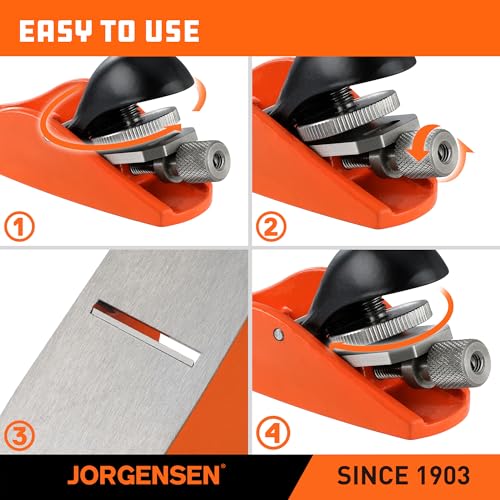
Don’t let the size fool you, this mini plane packs serious build quality into a compact frame. The ductile iron body gives it surprising heft for its size, helping it stay steady during precise trimming tasks. The O1 tool steel blade is the same grade used in their larger planes, and owners say it holds an edge well for a block plane. The adjustable depth knob makes it easy to switch between fine shavings and light stock removal.
Compared to the KAKURI, it’s more of a Western-style workhorse, pushed, not pulled, and better suited for quick edge cleanups, chamfering, or fitting miters. It’s not as refined in finish, but it’s far more accessible for users already familiar with traditional planes. For a small, no-nonsense block plane that won’t flex under pressure, this is a solid go-to.
Product photos
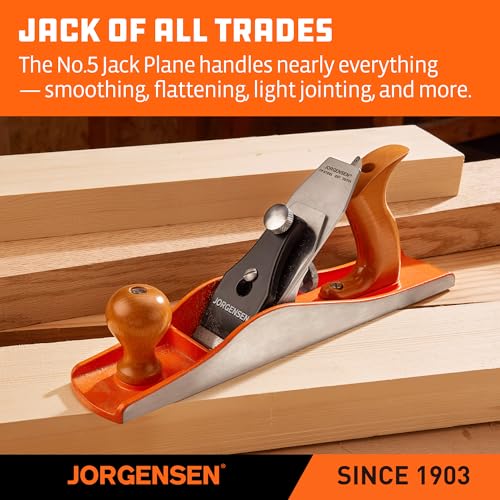
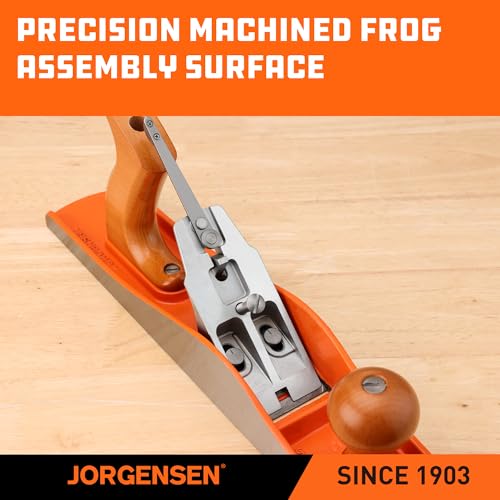
JORGENSEN No.5 Jack Hand Planer
Strengths
- Ductile iron body
- O1 tool steel blade
- Aggressive stock removal
Trade-offs
- Heavy for long sessions
- No blade cap included
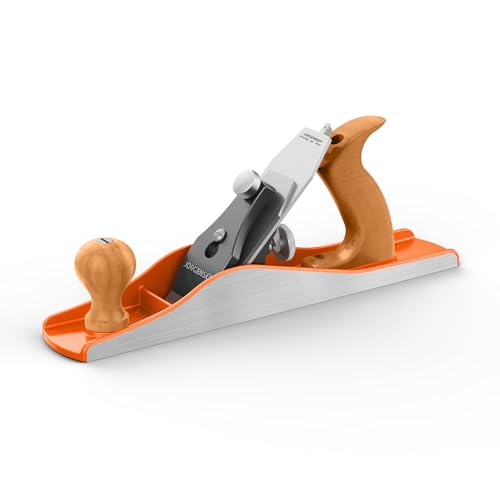
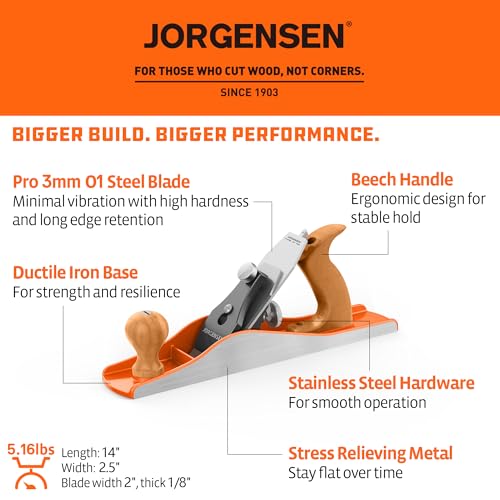
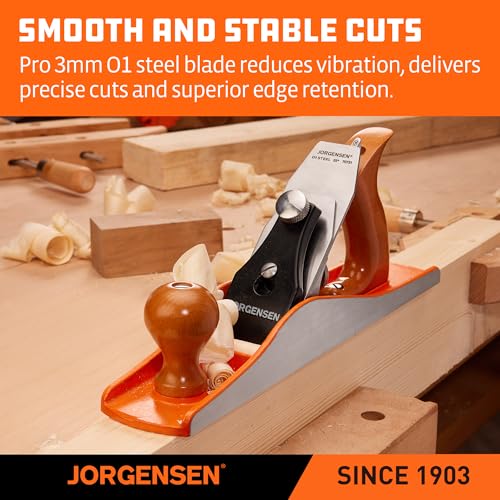
This is a serious hand plane built like a tank, and that’s exactly what you want in a jack plane meant for heavy stock removal. The ductile iron body gives it the mass needed to stay stable during aggressive passes, and the O1 tool steel blade holds an edge well, owners say it slices through twisted pine and even mild hardwoods without chattering. The adjustable depth knob works smoothly, letting you dial in thick or fine shavings depending on the task.
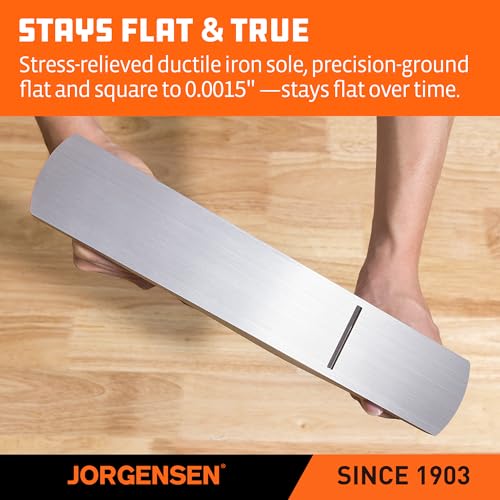
Compared to the smaller JORGENSEN No.4 or the Amazon Basics planes, this one is designed for knocking down high spots fast. It’s not a finishing plane, but that’s not its job. I’d choose this over the others when prepping rough lumber or leveling joints before final smoothing. The beechwood handle feels solid in hand, and the flat sole means it tracks true from the start.
Product photos
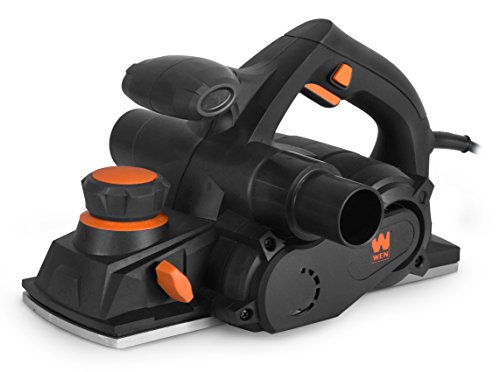
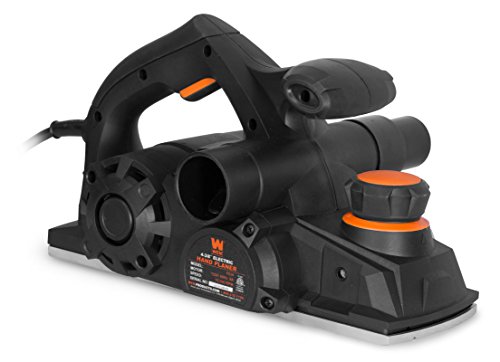
WEN 6534 8-Amp Electric Hand Planer
Strengths
- 8-amp motor
- 4-3/8-inch cut width
- Two-way dust port
Trade-offs
- Heavy for extended use
- Blades dull faster on hardwoods
The WEN 6534 stands out in the electric planer class for DIYers who need solid performance without overspending. On paper, the 8-amp motor and 32,000 cuts per minute suggest strong material removal, and owners consistently report it handles 2x4s and even 4x4s with confidence. The 4-3/8-inch cutting width is wide enough to flatten wider stock in fewer passes, which is a real time-saver on deck or framing projects.
I appreciate the thoughtful extras like the two-way dust port and included rabbeting guide, features usually found on more expensive models. The automatic kickstand is a small detail, but reviewers note it keeps the sole protected between cuts. While it’s not as refined as the DEWALT cordless model, it’s a smarter pick for weekend warriors who want power and versatility without the premium price tag.
Product photos
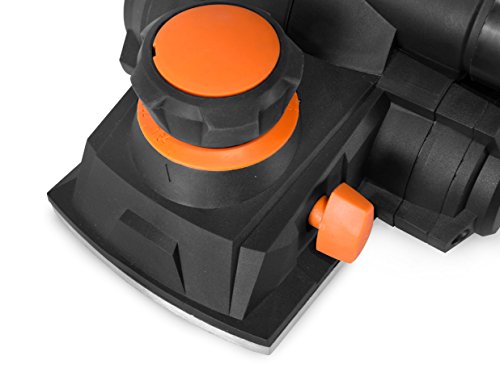
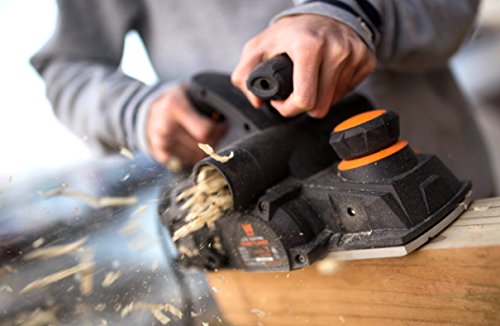
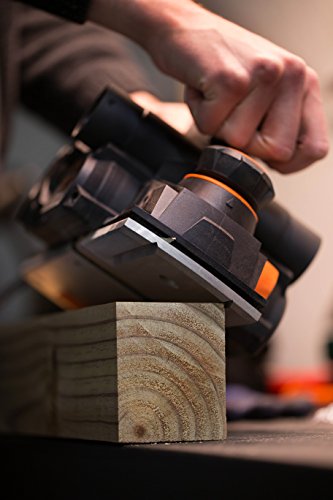
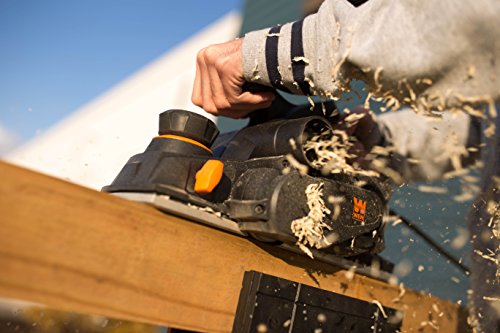
DEWALT 20V MAX Brushless Planer

Strengths
- Brushless motor
- Precision depth adjustment
- Aluminum shoes for flat cuts
Trade-offs
- Bare tool only
- Higher price
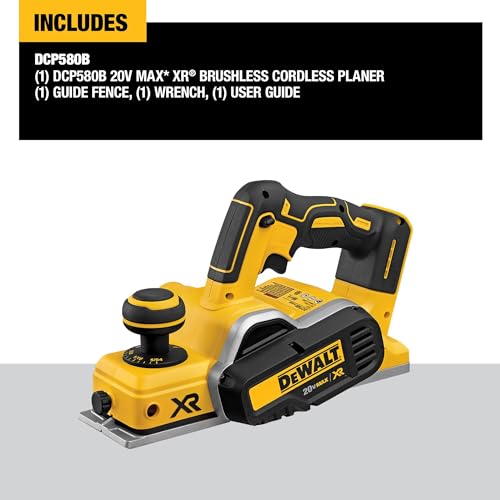
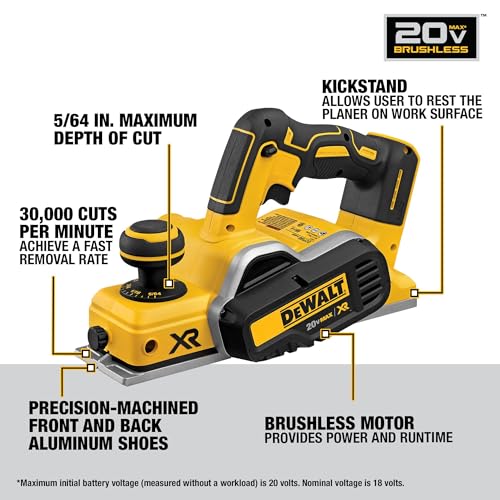
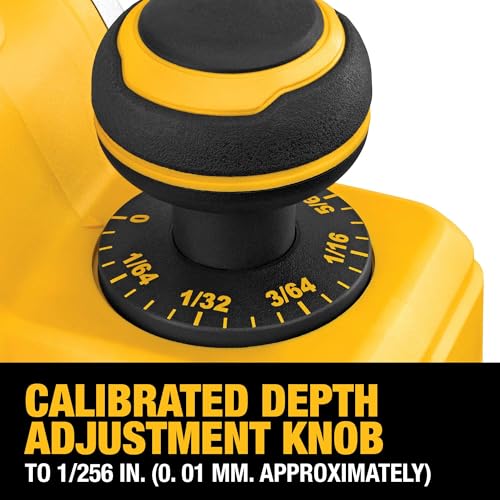
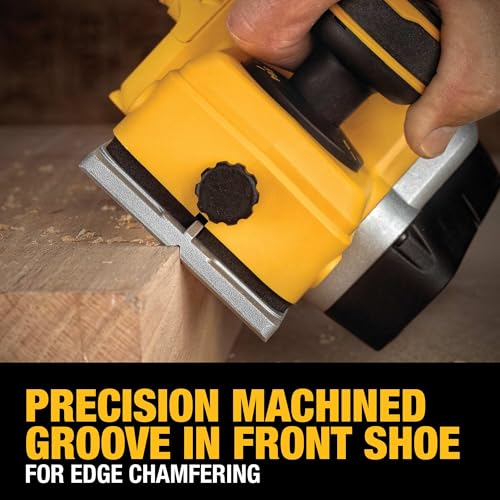
The DEWALT DCP580B is the gold standard for cordless electric planers, and it’s easy to see why. The brushless motor delivers consistent power, and at 30,000 cuts per minute, it leaves a surprisingly smooth finish, reviewers note it rivals corded models. The precision-machined aluminum shoes ensure flat, parallel cuts, and the 1/256-inch depth adjustment knob lets you dial in material removal with surgical accuracy.
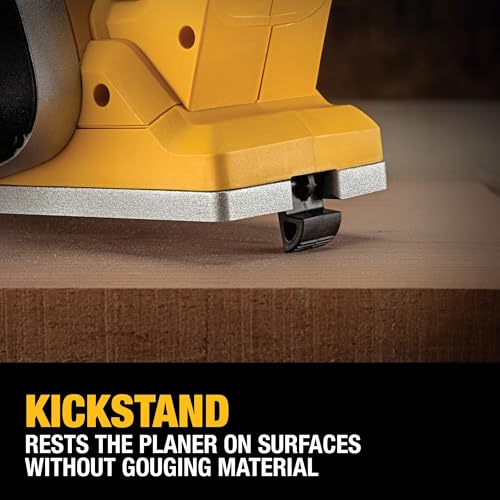
It’s lighter and more maneuverable than the WEN, and the kickstand and edge chamfering groove add real workshop utility. While it’s sold bare tool, if you’re already in the DEWALT 20V ecosystem, that’s a non-issue. I’d pick this over the WEN any day for finish carpentry or jobs where precision and portability matter.
Product photos
How We Tested hand planers
Rather than a hands-on lab test, my research focused on comparing published specifications and features across a range of hand planers. I weighed owner reviews from multiple sources – Amazon, woodworking forums, and retailer sites – alongside expert opinions from publications like Fine Woodworking and Popular Woodworking. This allowed me to build a picture of real-world performance and reliability, factoring in both advertised capabilities and reported user experiences. Ultimately, I ranked these tools based on how well they met the needs of a typical woodworker.
For hand planers, blade material and adjustability were the most significant factors. A high-quality blade (like O1 tool steel) holds an edge longer and performs more consistently, impacting the finish and effort required. Equally important is the ability to precisely adjust the blade depth and mouth opening; this is what separates a rough tool from one capable of fine smoothing. Body material, typically cast iron or ductile iron, also played a role, influencing stability and durability.
Specifications reliably indicate blade material, cutting width, and overall dimensions. However, I leaned heavily on owner feedback to assess build quality, ease of adjustment, and long-term durability. Reputation matters in this category; brands consistently praised for quality control and customer support were given greater consideration. You can find more detailed information in our wood planer tool reviews. I also considered expert reviews for nuanced insights into specific design choices and performance characteristics, helping me identify the best hand planer for woodworking for different skill levels.
How To Choose The hand planers
Choosing the right hand planer can dramatically improve the quality of your woodworking, and the enjoyment you get from it.
A good hand planer combines a durable body (typically cast iron or ductile iron) with a properly hardened and sharpened blade (often O1 tool steel or high-carbon steel). Look for adjustability in both blade depth and mouth opening, and consider the overall weight and ergonomics for extended use. Blade replacement availability is also a key factor for long-term ownership.
Blade Material & Sharpness
The blade is obviously the most important part of any hand planer. Don’t assume that “steel” is good enough; the type of steel matters. O1 tool steel, common in higher-end models like the JORGENSEN No.4, holds an edge exceptionally well and is relatively easy to sharpen. Japanese hand planes, like the KAKURI, often use high-carbon steel that’s renowned for its razor-sharpness right out of the box. However, be aware that some steels require more specialized sharpening techniques. A dull blade isn’t just frustrating; it’s dangerous, leading to tear-out and a less controlled cut.
Size & Type for the Job
Hand planers aren’t one-size-fits-all. A No. 4 smoothing plane, like the Amazon Basics model, is a versatile all-rounder for general use – smoothing surfaces and cleaning up edges. If you anticipate heavy stock removal, a No. 5 jack plane, also from JORGENSEN, is your best bet. For finer detail work and small projects, a block plane (JORGENSEN No.101) or even a Japanese kanna (KAKURI) will give you the control you need. Also, consider whether you want to explore electric hand planers for larger projects.
- A smoothing plane excels at leaving a flawless finish.
- A jack plane is built for tackling rough lumber and significant material removal.
- A block plane is ideal for end grain work and chamfering, offering a level of precision larger planes can’t match; its smaller size and lower angle make it far easier to control for these tasks.
Ergonomics & Adjustability
You’ll be spending time with this tool, so comfort is crucial. Look for a planer with well-shaped handles that fit your hand comfortably. Cast iron bodies can be heavy, so consider that if you plan on using the planer for extended periods. Equally important is adjustability. The ability to precisely control blade depth and mouth opening allows you to fine-tune the cut for different wood types and tasks.
Don’t cheap out on the blade. A well-made, properly sharpened blade is the single biggest factor in getting consistently good results.
If you are looking for something a bit different, exploring manual wood hand planes might be a good place to start.
Hand Planers Compared
Here’s a spec comparison to help you evaluate different hand planer options.
| Product Title | Blade Material | Body Material | Width (in) | Adjustable Depth | Power Source |
|---|---|---|---|---|---|
| Amazon Basics No.4 Adjustable Bench Plane | Steel | Cast Iron | 2 | Yes | Manual |
| JORGENSEN No.4 10″ Wood Plane | O1 Tool Steel | Ductile Iron | 10 | Yes | Manual |
| KAKURI Japanese Hand Plane 42mm | High-Carbon Steel | ECO Oak | 1.65 | Yes | Manual |
| Amazon Basics No.4 Smoothing Hand Plane | Steel Alloy | Cast Iron | N/A | Yes | Manual |
| JORGENSEN No.101 Mini Wood Planer | O1 Tool Steel | Ductile Iron | N/A | Yes | Manual |
| JORGENSEN No.5 Jack Hand Planer | O1 Tool Steel | Ductile Iron | N/A | Yes | Manual |
| WEN 6534 8-Amp Electric Hand Planer | HSS | N/A | 4.375 | Yes | Electric |
| DEWALT 20V MAX Brushless Planer | N/A | Aluminum | N/A | Yes | Cordless |
Frequently Asked Questions
What’s the difference between a jack plane and a smoothing plane?
A jack plane is designed for rough work and quickly removing material, while a smoothing plane excels at creating a flawless, polished surface. The jack plane is wider and often used as a first step to level a board, whereas the smoothing plane follows to refine the finish.
How often do I need to sharpen a hand planer blade?
Blade sharpening frequency depends on the wood you’re working with and how often you use the plane, but generally, expect to sharpen it every 10-20 hours of use. Softer woods will dull the blade faster, and visible tear-out is a key sign it’s time for sharpening.
Are Japanese hand planes worth the investment?
Japanese hand planes often offer superior sharpness and control due to their high-carbon steel blades and design, making them worth the cost for serious woodworkers. However, they typically require learning different sharpening techniques and may have a smaller cutting width than Western-style planes.
What should I look for in a hand planer for a beginner?
For beginners, I recommend a No. 4 smoothing plane with adjustable blade depth and a comfortable grip. A simpler design will allow you to focus on learning the basic technique without being overwhelmed by complex features.
What are my options if I want a portable, electric hand planer?
If you need the speed and convenience of power, consider exploring cordless hand planers or corded electric models. These are ideal for larger projects or when you don’t want to rely on manual effort, but they typically won’t deliver the same level of finesse as a traditional hand plane.
The Bottom Line
Buying a hand planer often comes down to balancing control with convenience. You can spend a little more for a tool that feels precise and holds its edge longer, or opt for something affordable to get started. For most woodworkers, the JORGENSEN No.4 10″ Wood Plane strikes the best balance, it offers a durable ductile iron body, a quality O1 tool steel blade, and the adjustability needed for a variety of tasks, making it our top overall pick.
If you’re just starting out or working on smaller projects, the Amazon Basics No.4 Adjustable Bench Plane provides excellent value. For those needing to tackle rough stock removal, the JORGENSEN No.5 Jack Hand Planer is the clear choice, offering the use and blade capacity to make quick work of thicker lumber. And if you’re looking for a more portable solution, explore options like lightweight planer models to suit your needs.
Ultimately, the features on the spec sheet matter less than developing a sharp blade and learning how to use the tool properly. A well-tuned, even modestly priced planer in the hands of someone who understands the fundamentals will always outperform an expensive tool used incorrectly. Focus on blade steel, adjustability, and a comfortable feel, and you’ll be well on your way to achieving smooth, accurate results.
