
7 Best Wood Band Saws of 2026
This post contains affiliate links. As an Amazon Associate, we earn from qualifying purchases.
After comparing the field and weighing specs against owner feedback, the WEN 10-Inch Band Saw stands out as the overall best pick for most woodworkers, thanks to its strong motor and solid cutting depth. For those on a tighter budget, the SHOPMAX 10-Inch Band Saw offers reliable performance at a lower price, while the DeWalt 9-Inch Band Saw brings portability and jobsite toughness to the table.
Most buyers struggle to balance power, precision, and price when shopping for a wood band saw. Too often, a cheap model introduces frustration with vibration, poor blade tracking, or underpowered motors that bog down on hardwood.
This guide cuts through the noise by focusing on what actually matters: motor strength, cutting capacity, blade guidance, and build quality. I researched these models based on published specs, real-world owner experiences, and the kind of durability that keeps a saw running smoothly for years.
Top 7 Wood Band Saws in the Market
The Best Wood Band Saws, Reviewed
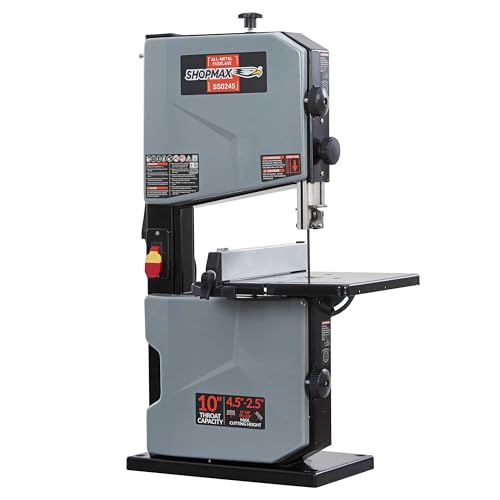
SHOPMAX 4.2 Amp 10-Inch Band Saw
Strengths
- Strong 4.2-amp motor
- 4.5” resaw capacity
- Durable steel frame
Trade-offs
- No stand included
- Dust port sold separately
- Assembly takes time
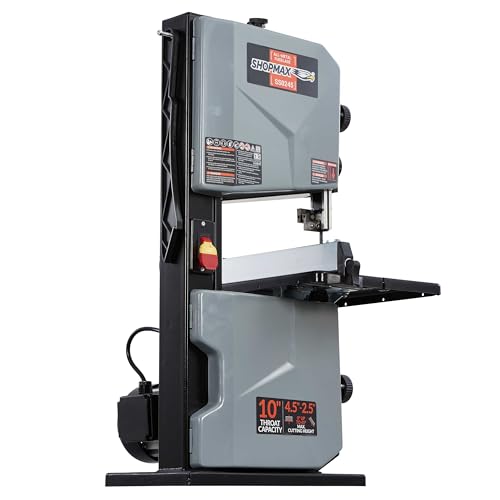
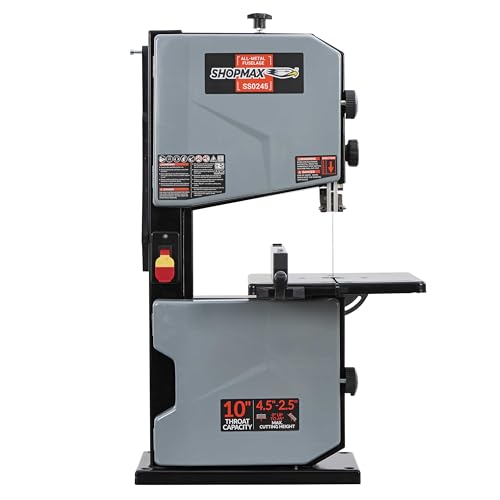
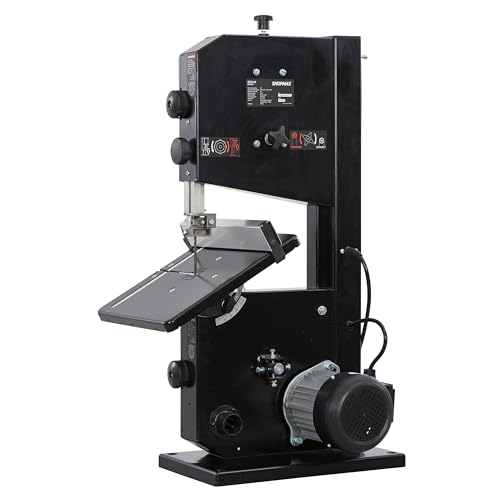
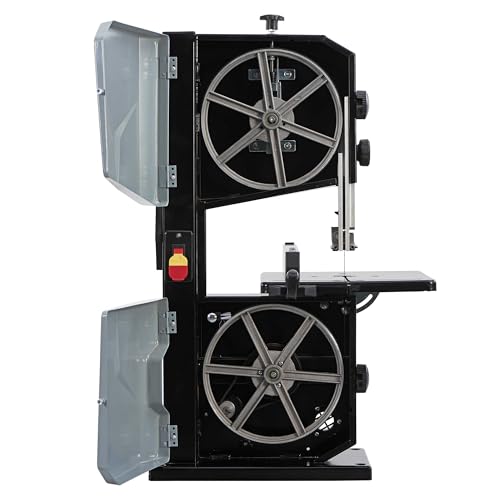
When balancing power, build quality, and cutting capacity, the SHOPMAX 4.2-amp model makes a strong case as the best overall pick. The motor delivers noticeably more torque than 2.5–3.5 amp units, and the 4.5-inch resaw capacity opens doors for thicker stock, something the SKIL and QD-KYOHO simply can’t match. The heavy-duty steel construction gives it a rigidity that cheaper frames lack, reducing flex during aggressive cuts.
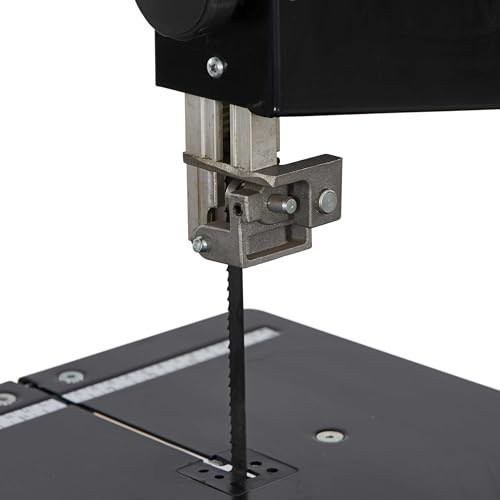
Owners highlight consistent blade tracking and smooth operation, crediting the ball-bearing guides and solid assembly. The 67.4-inch blade allows for tighter tension and better control, and while it doesn’t come with a stand, the base is designed for secure mounting. It’s not flashy, but it’s built like a workhorse. Compared to similarly sized models, it strikes the best balance between performance and reliability for the money.
Product photos
JET 10-Inch Woodworking Band Saw with Stand
Strengths
- 1/2 HP motor for heavy cuts
- Poly-V drive system
- Sturdy floor stand
Trade-offs
- Expensive
- Heavy and less portable
- Overkill for light tasks
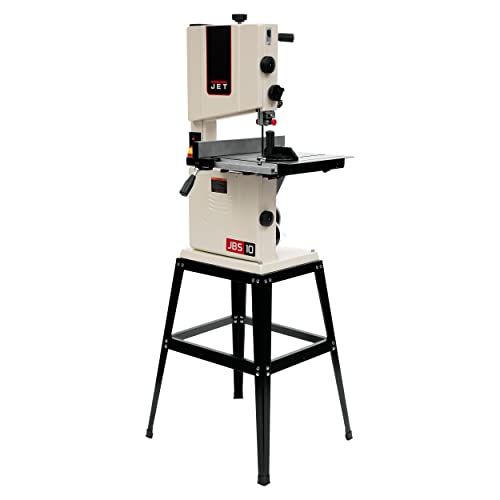
The JET JWB-10 is built for one thing: resawing. With a 1/2 HP induction motor and a rigid floor stand, it delivers the power and stability needed to slice thick blanks into veneers or double-thickness boards without bogging down. The Poly-V drive system reduces slippage and vibration, something you feel immediately when pushing hardwood through the blade.
While it’s technically benchtop-capable, most owners mount it permanently. The aluminum fence glides smoothly and stays aligned, a must for repeatable cuts. It’s heavier and pricier than entry models, but when compared to others in this class, the JET stands out for precision and long-term durability. If you’re resawing regularly, this is the type of saw you build your shop around.
Product photos
WEN 10-Inch Band Saw with Stand
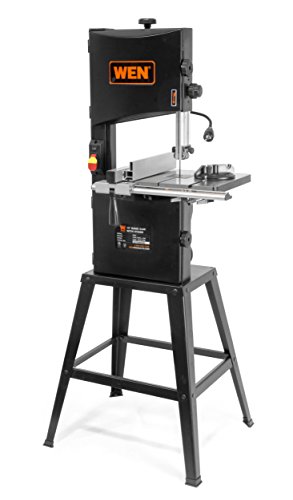
Strengths
- Comes with stand
- Two-speed motor
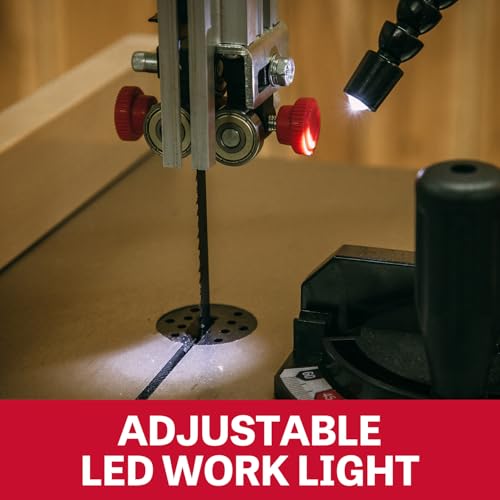
- Work light included
Trade-offs
- Fence alignment issues reported
- Blade quality could be better
- Stand feels lightweight
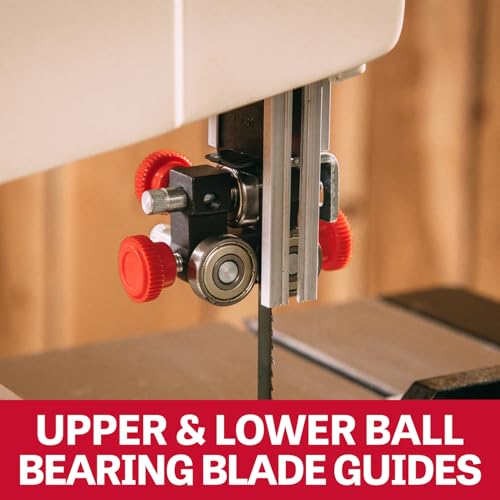
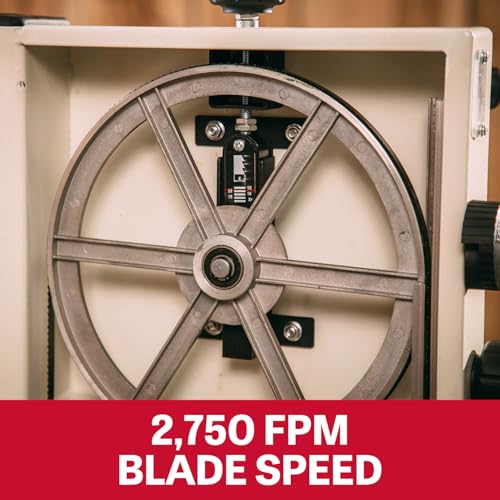
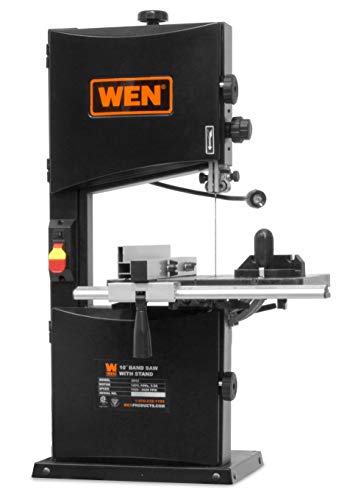
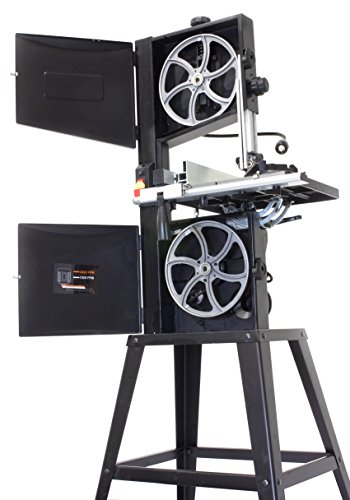
WEN delivers again with a value-packed package, and the BA3962 is a standout for buyers who want a complete setup without hunting down extras. The inclusion of a sturdy stand changes the game, this isn’t just a benchtop saw you’ll have to mount yourself. With a 3.5-amp motor and two speeds (1520 and 2620 FPM), it handles both softwoods and denser hardwoods with more confidence than most budget models.
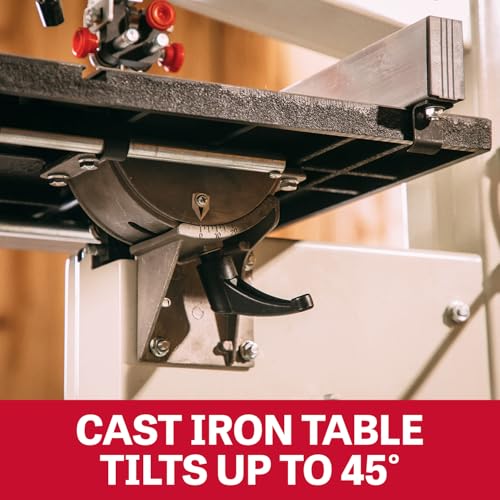
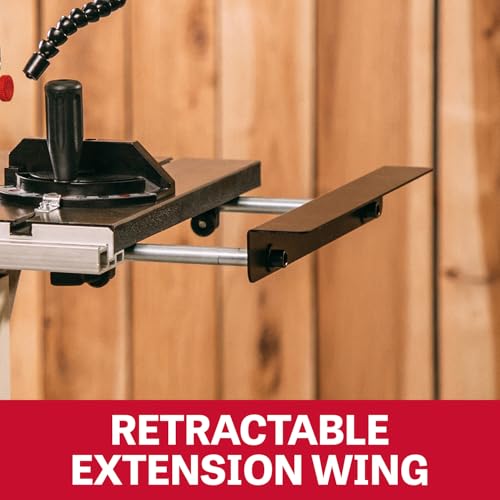
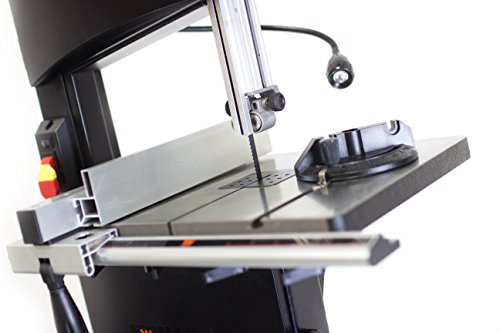
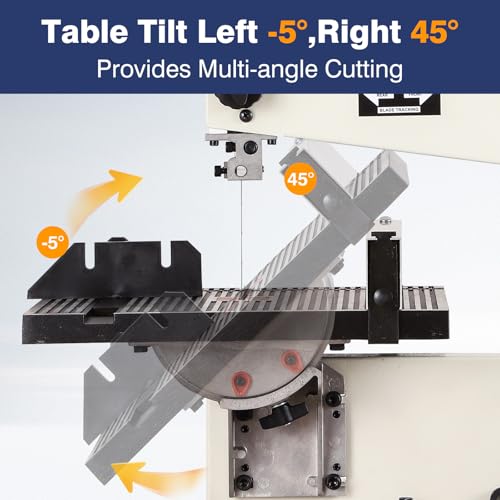
The cast aluminum table is larger than average, and the 45-degree bevel capability adds real utility. Reviewers note the dust collection system works well when paired with a shop vac, and the built-in work light is a thoughtful touch for dim garages. It won’t outperform a $600 saw, but the balance of features, performance, and included accessories makes it a smarter buy than pricier models with fewer extras.
Product photos


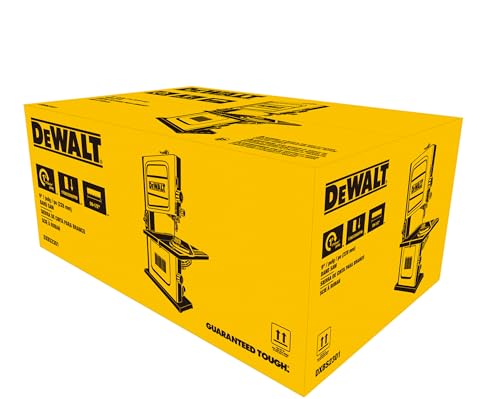
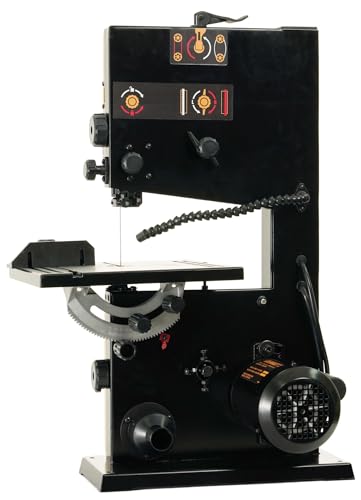
DeWalt 9-Inch Band Saw
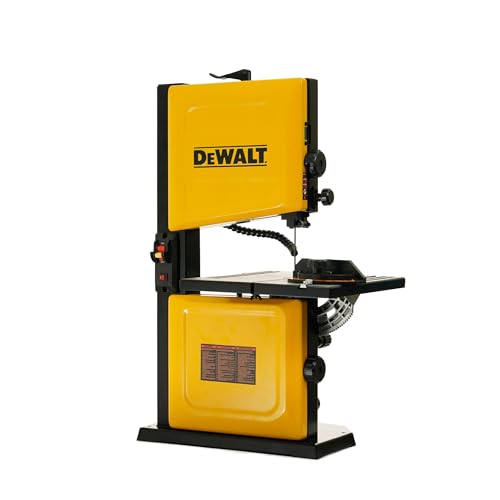
Strengths
- LED worklight improves accuracy
- Dual speed settings
- Clean dust collection
Trade-offs
- 9” throat limits resawing
- No stand included
- Higher price for size
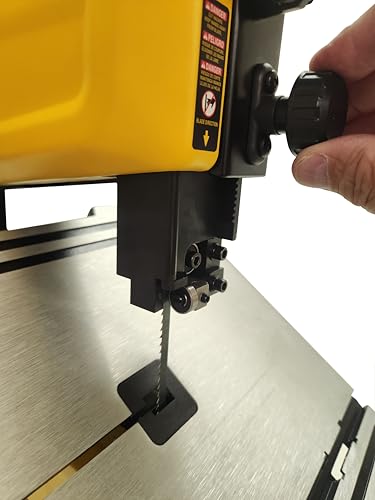
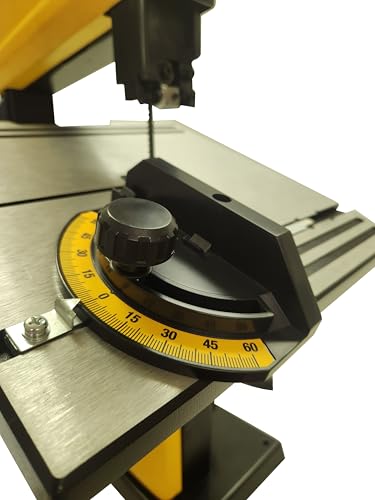
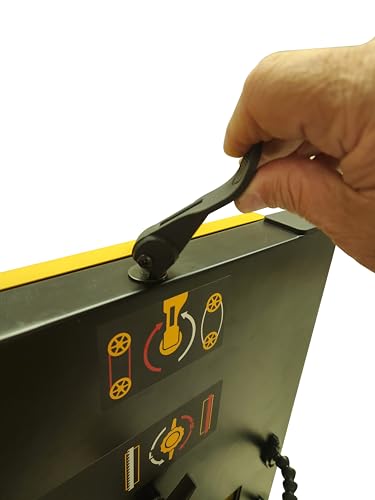
DeWalt’s 9-inch model leans hard into precision and visibility, and it shows. The integrated LED worklight is more than a gimmick, it makes a real difference when cutting fine curves or doing detailed scrollwork, especially in poorly lit areas. The two-speed options let you dial in the right FPM for delicate versus aggressive cuts, and the 3.5-amp motor keeps up without hesitation.
Compared to the SKIL or Woodskil, this one feels more refined, with smoother blade guidance and better dust management thanks to the dual port adapters. It’s not the most powerful, but for joinery, shaping templates, or model-making, the control it offers is unmatched in this size. Reviewers consistently call it their go-to for intricate work, not bulk material processing.
Product photos
Woodskil 3-Amp 9-Inch Band Saw
Strengths
- Lowest price point
- Cast aluminum table
- Dust brush included
Trade-offs
- Inconsistent blade tracking
- Fence alignment issues
- Noisy under load
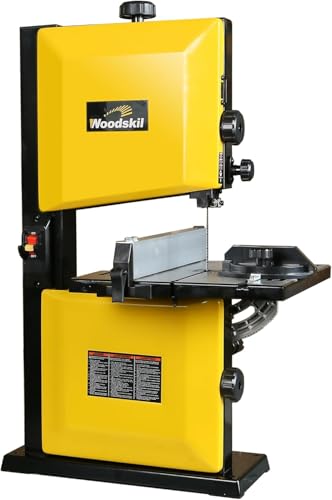
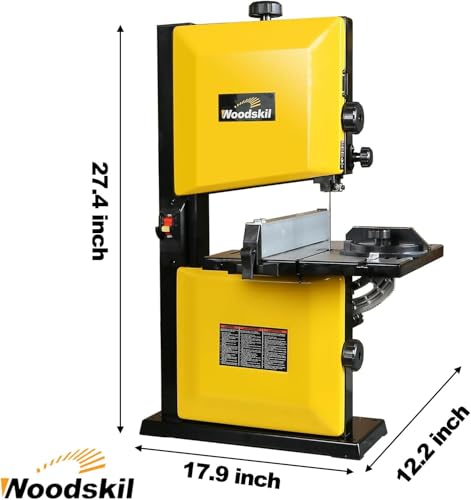
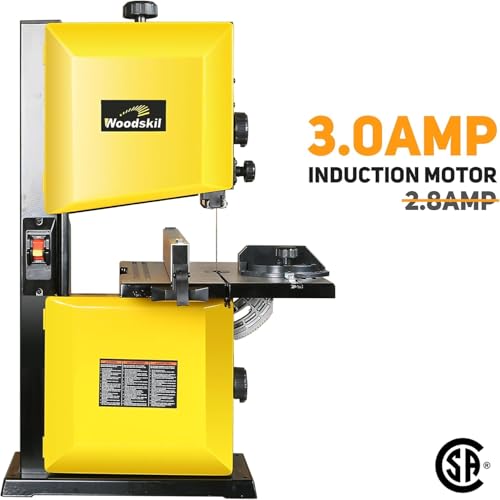
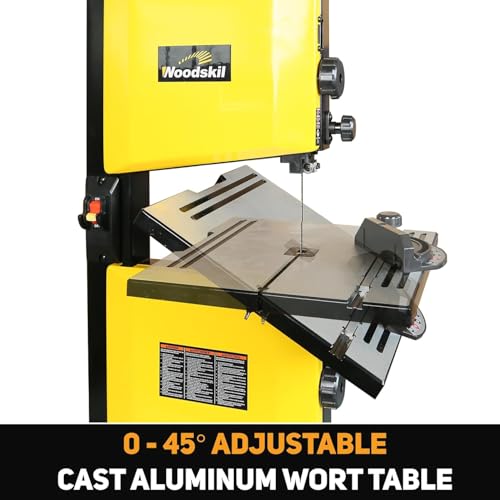
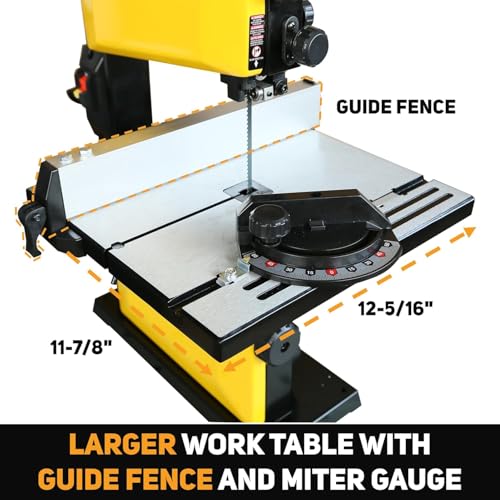
The Woodskil 9-inch saw is clearly engineered to hit the lowest price point without sacrificing all essentials. The 3-amp motor and 2500 FPM speed handle typical softwood and thinner hardwoods, and the cast aluminum table adds stability you don’t always get at this level. It’s basic, but the removable safety key and dust brush are thoughtful inclusions for a budget tool.
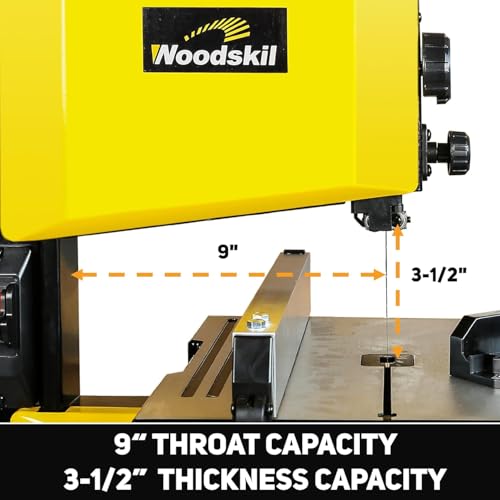
That said, owners report mixed results with blade tracking and fence alignment, common trade-offs at this price. It’s loud under load, and the 3-1/2 inch cutting depth keeps it out of serious resawing territory. But if you’re on a tight budget and need any band saw to start learning curves and bevels, this one gets the job done without breaking the bank.
Product photos
SKIL 2.8 Amp 9-Inch Band Saw
Strengths
- 2-speed operation
- Tool-free tensioning
- Dust port included
Trade-offs
- Limited cutting depth
- Light-duty motor
- Not for thick resawing
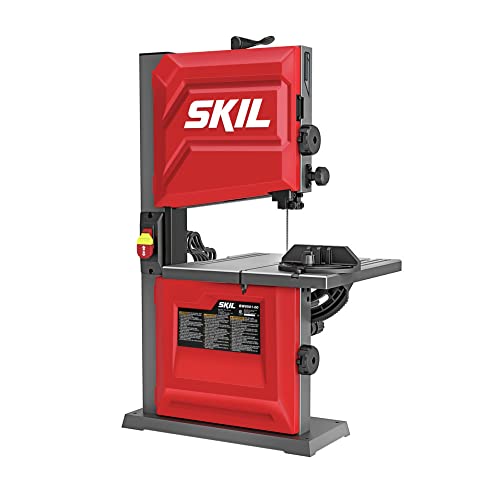
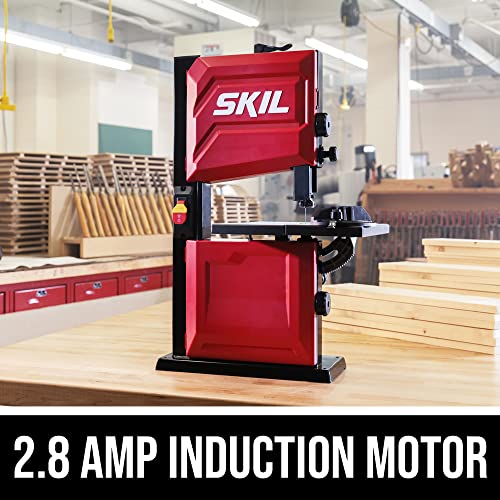
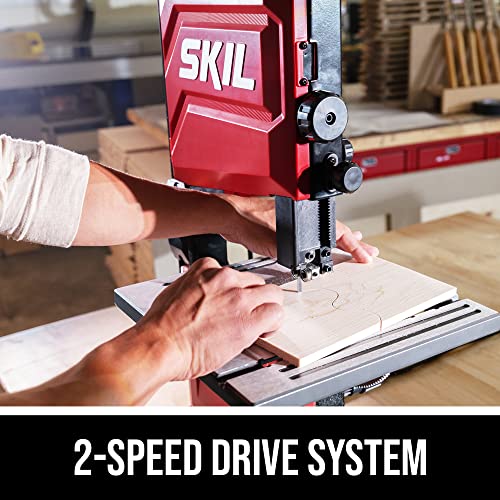
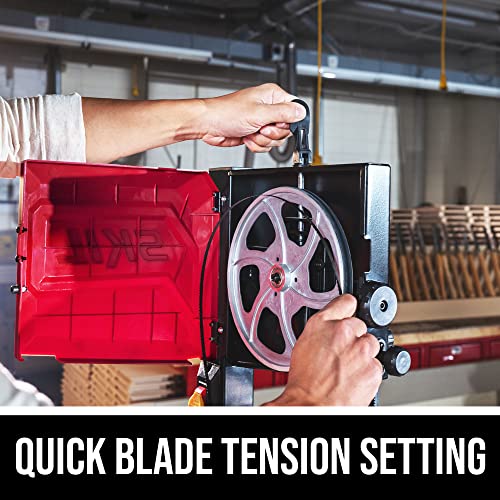
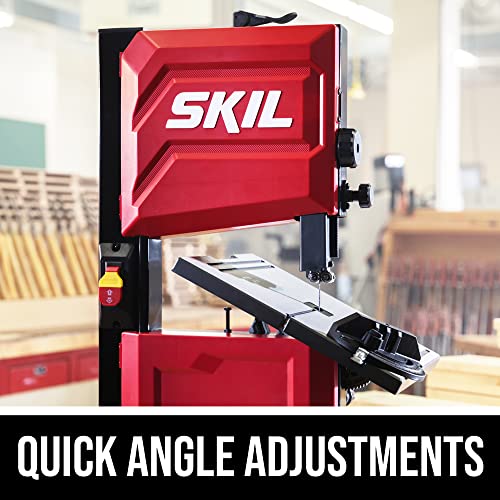
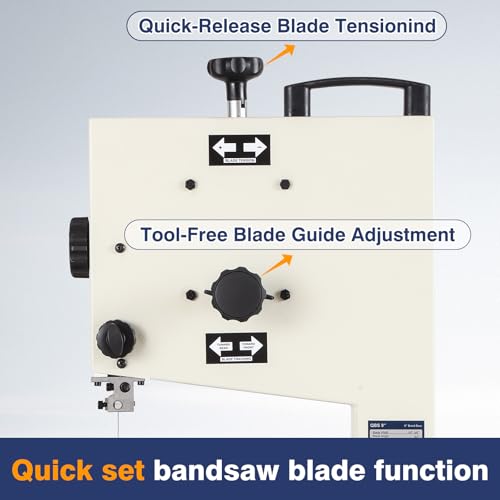
The SKIL BW9501-00 is an entry-level machine built with new users in mind. On paper, the 2.8 amp motor delivers enough power for softwood and small hardwood cuts, but heavier resawing or dense exotics will push it to its limits. I like that it includes a 2-speed drive system and tool-free blade tensioning, features that reduce setup time and make blade changes less of a chore for someone still getting comfortable with band saw operation.
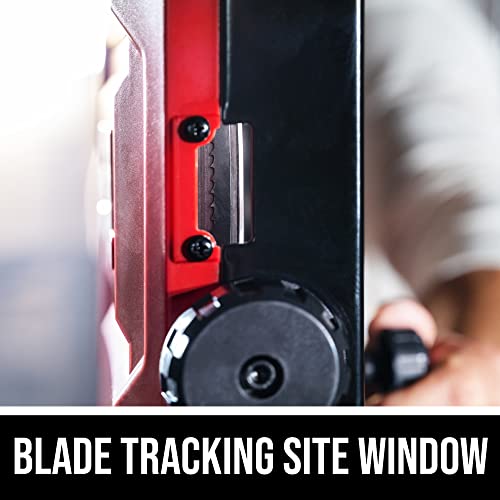
Owners consistently report solid tracking right out of the box, thanks to the ball bearing blade guides and the blade-tracking sight window, which is a small but useful touch. The dust port works with standard shop vacs, and while it won’t eliminate all sawdust, it keeps the workspace reasonably clean. It’s not going to impress a seasoned woodworker, but for a first-time buyer setting up a garage shop, it checks the right boxes without complexity.
Product photos
QD-KYOHO 9-Inch Portable Band Saw
Strengths
- True portability
- 45° bevel capacity
- Low vibration design
Trade-offs
- Shallow resaw capacity
- Motor lacks torque
- No stand included
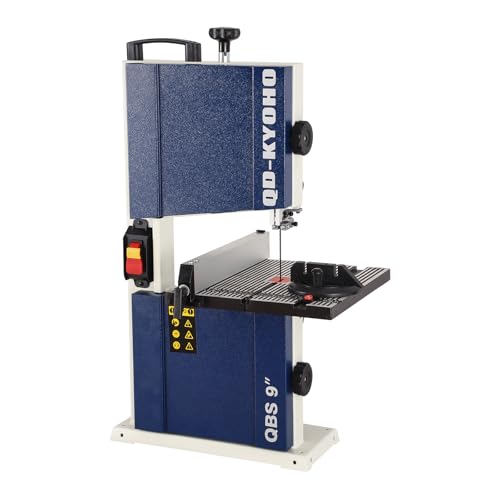
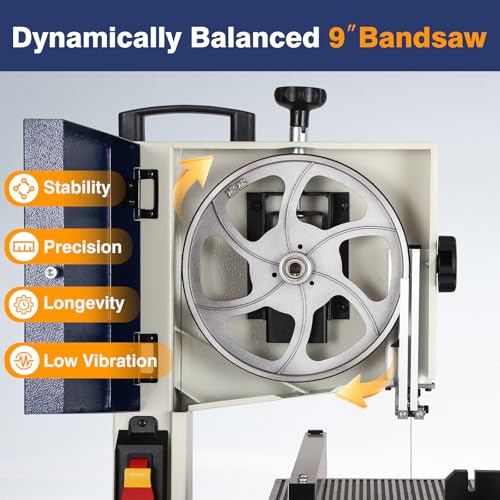
If portability is a priority, the QD-KYOHO stands out in a field of mostly stationary units. The integrated top-carry handle and lightweight steel frame make it easy to move between job sites or stash it in a corner when not in use. The 2.5 amp motor isn’t the strongest here, but paired with a dynamically balanced blade system, it delivers smooth, low-vibration cuts, a big plus for extended use.
Owners praise the cast-aluminum table for staying flat and resisting warping, and the 45-degree right tilt gives real flexibility for bevel cuts. The 3-1/2 inch cutting height limits resawing, but for trim work, framing components, or cabinetry mock-ups, it’s plenty. It’s not going to match the rigidity of a floor-standing model, but as a portable 9-inch saw, it’s one of the more dependable builds in this price tier.
Product photos


How We Chose These wood band saws
Rather than a hands-on lab test, my research for these recommendations focused on a detailed comparison of published specifications and features across numerous models. I weighed owner reviews from multiple sources, alongside assessments from reputable woodworking publications and sites. This data was then ranked against criteria important to a range of woodworkers, from hobbyists to more serious DIYers.
For wood band saws, cutting capacity and motor power were heavily weighted. The ability to resaw thicker stock is a major draw for many, so depth and horsepower mattered significantly. Equally important was build quality; a sturdy frame and well-engineered blade guides contribute directly to precision and longevity. Understanding band saw basics is key to appreciating these factors.
Specifications reliably indicate a saw’s maximum cutting depth and width, as well as motor power. However, I placed more emphasis on owner feedback regarding vibration levels, ease of blade changes, and the overall smoothness of operation. Reputation also played a role – brands consistently praised for durability and accuracy received higher consideration, reflecting long-term value rather than just initial specs.
What To Look For In wood band saws
Choosing the right band saw can dramatically improve the quality and efficiency of your woodworking. It’s more than just picking a price point; thoughtful consideration of your needs will pay off in the long run.
A quality band saw balances power with control. Key characteristics include a robust motor, adequate table size for your typical workpieces, effective blade guidance for accuracy, and a frame rigid enough to minimize vibration. Look for models with adjustable blade guides, a decent dust port, and a blade tensioning system that’s easy to use and maintain. Consistent blade tracking is crucial for clean, accurate cuts, and a well-designed fence is essential for straight lines.
Motor Power and Cutting Capacity
The motor is the heart of any band saw, and selecting the right horsepower is critical. Don’t automatically assume more power is always better. A smaller saw with a 3/4-HP motor will be sufficient for thinner stock and hobbyist projects, but if you plan on resawing thicker lumber regularly, you’ll want to step up to at least a 1-HP motor. The cutting capacity – both depth and width – is directly tied to the saw’s design. Consider the largest piece you’ll realistically need to cut.
Blade Guidance and Stability
Precise cuts rely on stable blade control. Ball-bearing blade guides are almost universally superior to plastic bushings, offering smoother operation and longer blade life. Pay attention to how easily the blade guides are adjustable; you’ll be tweaking them as you switch blade widths. A rigid frame is equally important. Vibration transmits directly into the cut, leading to inaccuracies. I often recommend looking at models with heavy steel frames, even if it adds to the weight.
- A basic band saw might only offer upper blade guides.
- Better models include both upper and lower guides, providing support on both sides of the cut.
- Premium saws incorporate ceramic blade guides, which dissipate heat more effectively for extended blade life, especially when cutting hardwoods or metals.
A wobbly band saw is a frustrating band saw. Prioritize a solid frame and effective blade guides above all else.
Value, Features, and Portability
While top-of-the-line band saws can be fantastic, they aren’t always necessary. For many users, a mid-range model provides an excellent balance of features and price. Consider whether you need a stand; benchtop models are more portable, but a stand adds stability and working height. If you’re short on space, a compact saw like the DeWalt 9-Inch Band Saw might be ideal. If you want to learn more about top band saw models, check out our extensive guide. Don’t overlook the importance of dust collection; a good dust port and the ability to connect to a shop vac will significantly improve your workspace. And remember to consider measuring band saw blades for replacement blades.
Wood Band Saws Compared
Here’s a comparison of key specifications for several wood band saws to help you choose the right tool for your needs.
| Product Name | Motor (HP) | Max Cut Depth (in) | Blade Length (in) | Max Cut Width (in) | Blade Width Range (in) | Stand Included |
|---|---|---|---|---|---|---|
| SHOPMAX 10-Inch Band Saw | 1/2 | 4.5 | 67.4 | 10 | 0.14 – 0.47 | No |
| JET 10-Inch Woodworking Band Saw | 1/2 | N/A | N/A | N/A | N/A | Yes |
| WEN 10-Inch Band Saw | 3.5 | 6 | 72 | 9.75 | 1/8 – 1/2 | Yes |
| DeWalt 9-Inch Band Saw | 3.5 | N/A | N/A | N/A | N/A | No |
| Woodskil 9-Inch Band Saw | 1/2 | 3.5 | 59.5 | 9 | 1/8 – 3/8 | No |
| SKIL 9-Inch Band Saw | 2.8 | N/A | N/A | N/A | N/A | No |
| QD-KYOHO 9-Inch Portable Band Saw | 1/3 | 3.5 | 62 | 9 | N/A | No |
Frequently Asked Questions
What blade width should I use for resawing?
A wider blade, typically 3/8-inch or 1/2-inch, is best for resawing. Wider blades provide more stability and cut through thicker stock with less wandering, though they remove more material.
Are portable band saws suitable for serious woodworking?
While convenient, portable band saws generally lack the power and rigidity for frequent, demanding cuts. They excel at site work or quick cuts, but for consistent precision, a stationary model is preferable.
How much space do I really need for a band saw?
Beyond the saw’s footprint, allow at least 3 feet of clearance around the machine for safe operation and material handling. Consider space for an outfeed table, which is incredibly useful when resawing.
What’s the difference between upper and lower blade guides?
Upper blade guides support the blade above the table, while lower guides support it below. Having both provides stability on both sides of the cut, resulting in straighter, cleaner cuts, especially with thicker material.
My workshop is small; should I consider one of the best benchtop band saws?
Yes, benchtop models offer a good compromise for limited spaces. Though they typically have less power and capacity than floor-standing saws, they can still handle many common woodworking tasks and are easily moved if needed.
The Bottom Line
Buying a band saw often comes down to balancing how much control and precision you want against how much fuss you’re willing to deal with. For the vast majority of woodworkers, the WEN 10-Inch Band Saw strikes that balance exceptionally well. It offers a generous cutting capacity, a robust 3.5-amp motor, and a stand – all at a price that won’t break the bank. It’s a solid all-around performer that will handle a wide variety of projects.
If you’re on a tighter budget or need something truly portable, the SHOPMAX 10-Inch Band Saw is a great starting point. For those prioritizing versatility and willing to spend more, the JET 10-Inch Woodworking Band Saw delivers professional-grade features and build quality. And for smaller projects and detailed cuts, the DeWalt 9-Inch Band Saw is a compact powerhouse.
Ultimately, the specifications are just numbers. What truly matters is a sturdy frame, smooth blade operation, and a well-designed set of blade guides. Don’t get caught up chasing the highest horsepower if it means sacrificing stability. Understanding band saw cutting techniques and practicing safe band saw safety tips will make a bigger difference than any single feature.
